Jama Assisted Living LLC.
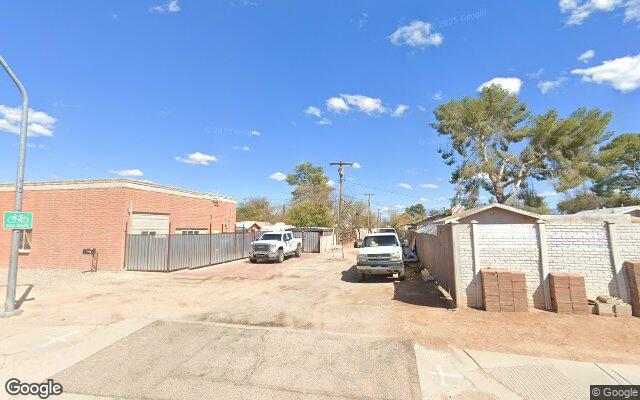
A medium home, reviewed on public record.
© Google Street View
Compared to similar Arizona facilities.
Care · 36-month window. Higher percentile = better performance on inspection record. Source: Arizona Dept. of Health Services · Bureau of Residential Facilities Licensing.
Citation history, plotted month by month.
6 deficiencies on record. Each bar is a month with a citation.
Finding distribution
none · 36 monthsScope × Severity (CMS A–L)
Every inspection visit, verbatim.
4 inspections in the public record, most recent first. Plain-language summaries open first — click into any row for the full citation text.
2026-06-11Complaint InvestigationNo findings
2026-01-14Complaint InvestigationNo findings
2025-07-10Complaint InvestigationR9-10-803.A.9 · 6 findings
“Based on record review and interview, the governing authority failed to ensure compliance with A.R.S. § 36-411 for three of three personnel records reviewed. The deficient practice posed a safety risk to residents. Findings include: 1. ARS § 36-411(C)(4) states: "C. Each residential care institution, nursing care institution, and home health agency shall make documented, good faith efforts to: (4) On or before March 31, 2025, verify that each employee is not on the adult protective services registry pursuant to section 46-459. If an employee is found to be on the adult protective services registry, the residential care institution, nursing care institution, or home health agency shall take action to terminate the employment of that employee." 2. A review of E1’s, E2’s, and E3’s personnel records revealed E1, E2, and E3 were hired prior to March 31, 2025. The records further revealed no documentation that verified the employee was not on the adult protective services registry. 3. A review of the adult protective services Registry revealed E1, E2, and E3 were not on the registry. 4. In an interview, E1 acknowledged the governing authority did not make good faith efforts to verify each employee was not on the adult protective services registry.”
“Based on record review and interview the manager failed to provide written notification to the Department of a resident’s self-injury, within two working days, after the resident inflicts a self-injury that requires immediate intervention by an emergency services provider. Findings include: 1. A review of R2’s medical record revealed a progress note from R2's date of admission. The progress note and medical documentation revealed R2 attempted to scratch R2’s arm and A-V fistula. The site was bleeding and first aid was provided by E4. E4 asked why R2 scratched R2’s arm, R2 replied, “I want to kill myself.” The documentation further detailed 911 and the crisis team were called and R2 was transported to a hospital. 2. A review of Department documentation revealed no evidence the manager notified the Department of R2’s self-injury. 3. In an interview, E1 acknowledged the manager failed to notify the Department of a resident’s self-injury within two working days.”
“Based on record review and interview, the manager failed to ensure a resident had a written service plan which included the a description of the resident’s medical or health problems, including physical, behavioral, cognitive, or functional conditions or impairments; the amount, type, and frequency of assisted living services and ancillary services being provided to the resident; and the psychosocial interactions or behaviors for which the resident requires assistance, for one of two resident records reviewed. The deficient practice posed a risk as the service plan did not reinforce and clarify services to be provided to a resident. Findings include: 1. A review of R2’s medical record revealed a service plan which indicated R2 was to receive personal care level services, and included a diagnosis of “Depression”, among others. Further review revealed R2 was to receive numerous assisted living services, such as medication administration, bathing, and oral care. The service plan also included a section titled “Depression Symptoms: Withdrawal”, which indicated “1. Encourage daily social interactions with other residents at group activities and meals. 2. Monitor daily for increasing signs of depression which include: withdrawal, sadness, crying, more emotional, or any change in mood that last more than 48 hours. Report any of these to doctor. 3. Care staff encourage R2 to engage in conversation with other residents and attend group activities.” 2. Further review of R2’s medical record revealed medical documentation for a hospital stay on the date of admission for suicidal ideation and self-harm. R2 was medically and psychologically cleared to return to the assisted living facility; however, the service plan did not include suicidal ideation as a symptom of R2’s depression. 3. In an interview, E1 reported the caregivers ensure there are no sharps in R2’s room. A review of R2’s service plan did not include the intervention to assist with R2’s behavior of self-harm. 4. In an interview, E1 acknowledged R2’s service plan did not accurately describe R2’s medical or health problems, including behavioral; the assisted living services and ancillary services provided to the resident; and the behaviors for which the resident required assistance.”
“Based on documentation review, observation, and interview, the manager failed to ensure there was a means of exiting the facility for a resident who does not have a key, special knowledge for egress, or the ability to expend increased physical effort which provided access to an outside area which monitored or alerted employees of the egress of a resident from the facility. The deficient practice posed a risk if the facility was unaware of the general or specific whereabouts of a resident. Findings include: 1. A review of Department documentation revealed the facility was licensed to provide directed care services. 2. During an inspection of the facility, the Compliance Officer observed a door leading to the side yard. The door had two alert devices. However, when the door was opened, no alert sounded, and no monitoring system was in place. 3. In an interview, E1 acknowledged the back door had no alert or monitoring system for egress of residents from the facility. E1 further reported it was a battery issue and replaced the battery before the Compliance Officer left the facility.”
“Based on observation and interview, the manager failed to ensure that food stored in a refrigerator used by the assisted living facility to store food or medication contained a thermometer, accurate to plus or minus 3° F, and was placed at the warmest part of the refrigerator. The deficient practice posed a risk for potential food-borne illnesses. Findings include: 1. During the environmental inspection, the Compliance Officer observed a refrigerator in the kitchen that contained mayonnaise, other food for the residents, and medication. 2. The Compliance Officer observed a plastic thermometer attached to the door of the refrigerator. The glass inside the thermometer was broken and unable to measure temperature. 3. The Compliance Officer measured the temperature with an infrared thermometer and found the temperature to measure 47 degrees Fahrenheit. 4. In an interview, E1 acknowledged that a refrigerator used by the facility to store food or medication did not contain a working thermometer.”
“Based on observation and interview, the manager failed to ensure that frozen food was stored at a temperature of 0° F or below. The deficient practice posed a risk for potential food-borne illnesses. Findings include: 1. During the environmental inspection, the Compliance Officer observed a refrigerator freezer in the kitchen which contained frozen meat and other food for the residents. 2. The Compliance Officer observed a plastic thermometer attached to the door of the freezer. The glass inside the thermometer contained a red substance to measure the temperature. The red substance formed a broken line and was unable to measure temperature. 3. The Compliance Officer measured the temperature with an infrared thermometer and found the temperature to measure 14° F. 4. In an interview, E1 acknowledged that frozen food in the freezer was being stored above 0° F.”
2024-09-11Annual Compliance VisitNo findings
Other facilities in Tucson.
Other memory care facilities near Tucson with similar care offerings.

Contract Decoder
Family reviews
No reviews yet — be the first to share your experience