Inspirations of River Centre.

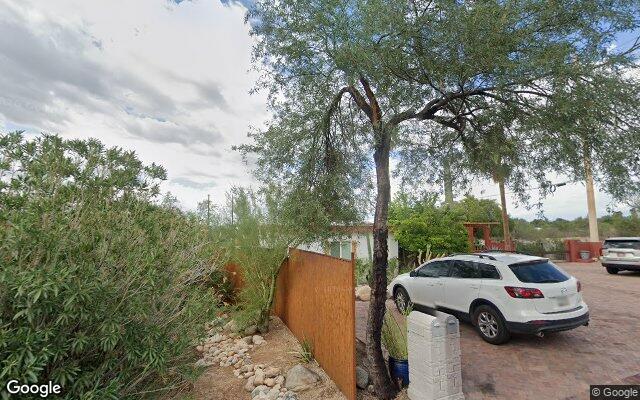
A large home, reviewed on public record.
© Google Street View
Compared to 116 Arizona facilities with a similar number of beds.
Care · 36-month window. Higher percentile = better performance on inspection record. Source: Arizona Dept. of Health Services · Bureau of Residential Facilities Licensing.
among peers to rank.
Rankings based on 36-month ADHS inspection data. Severity and frequency: fewer citations = higher percentile. Repeat rate: lower repeat citation share = higher percentile.
Citation history, plotted month by month.
14 deficiencies on record. Each bar is a month with a citation.
Finding distribution
14 total · 36 monthsScope × Severity (CMS A–L)
Every inspection visit, verbatim.
8 inspections in the public record, most recent first. Plain-language summaries open first — click into any row for the full citation text.
2026-08-13Complaint InvestigationNo findings
2026-08-07Complaint InvestigationNo findings
2026-07-14Complaint InvestigationNo findings
2025-08-22Other VisitNo findings
2024-12-03Complaint InvestigationA.A.C. · 1 finding
“Based on record review and interview, the manger failed to ensure each resident had a written service plan which the amount, type, and frequency of assisted living services being provided to the resident, including medication administration or assistance in the self-administration of medication, and for a resident who will be storing medication in the resident's bedroom or residential unit, how the medication will be stored and controlled. The deficient practice posed a risk as the service plan did not reinforce and clarify services to be provided to a resident. Findings include: 1. A review of R2's medical record revealed a written service plan. However, the service plan stated R2 would receive medication administration by trained staff, the facility stores medication, and also R2 self-administers medication. 2. No Medication Administration Record (MAR) was available for review. 3. In an interview E1 reported R2 does not receive medication administration and R2 does not self-administer medication. E1 reported R2's family fills medication organizer and assists R2 with medications daily. The service plan did not include this information or how the medication organizer would be stored and controlled. 4. In an interview, E1 acknowledged the provided service plan, did not accurately include whether R2 received medication administration or assistance in the self-administration of medication, or how R2's medication would be stored and controlled.”
2024-07-01Complaint InvestigationNo findings
2024-02-13Complaint InvestigationA.A.C. · 1 finding
“Based on record review and interview, the manager failed to ensure a caregiver's skills and knowledge are verified and documented before the caregiver provides physical health services or behavioral health services, for four of four caregivers sampled. The deficient practice posed a risk if employees were unable to meet the needs of residents. Findings include: 1. A review of E3, E4, E5, and E6's personnel records revealed documentation of skills and knowledge verification was not available for review. 2. In an interview, E2, and E7 acknowledged documentation of skills and knowledge training for E3, E4, E5, and E6 were unavailable for review.”
2023-10-24Complaint InvestigationA.A.C. · 12 findings
“Based on record review, documentation review, and interview, the manager failed to ensure documentation required by this Article was provided to the Department within two hours after a Department request. Findings include: 1. On October 24, 2023, the Compliance Officers requested the following document during the on-site inspection: - Documentation of incident reports for R1, R2, R3, R4, R5, R6, R7, and R8, - Medical records for R2, and R8; - TB documentation for E1, E2, E3, E4, E5, E6, and E7; - TB documentation for R3, R4, R5, and R6; - Documentation of reference checks for caregivers: E1, E2, E3, E4, and E5; - Documentation of skills and knowledge for caregivers E1, E2, E3, E4, and E5; - Documentation of services provided (ADLs); - Documentation of current First Aid for E3; - Documentation of current CPR for E5; - Resident Residency Agreements for R1, R2, R3, R4, R5, R6, R7, and R8; - TB training program, or policy; and - Disaster Plan Review. However, this documentation was not provided for review within two hours after a Department request. 2. In an interview, E8 acknowledged the requested documentation had not been provided for review within two hours after a Department request.”
“Based on observation, documentation review, record review, and interview, the manager failed to ensure a caregiver provided documentation of completion of a caregiver training program approved by the Department or the Board of Examiners for Nursing Care Institution Administrators and Assisted Living Facility Managers (NCIA Board), for one of four individuals hired as caregivers. The deficient practice posed a health and safety risk to the residents if the employee was not trained or certified to provide services to meet the residents needs. Findings include: 1. A review of E4's personnel record revealed a caregiver certificate from "Adult Care Learning Systems, Incorporated". The Compliance Officer observed this caregiver certificate had E10's name listed as the person who completed the course. 2. A review of documentation revealed E10's name was not on the facility's employee roster. 3. A review of documentation revealed E4's name was on the facility's employee roster. 4. A review of documentation revealed E10's name was not on staffing schedules for September and October. 5. A review of documentation revealed E4's name was on staffing schedules for September and October. 6. The Compliance Officer asked E8 why E10's caregiver certificate was in E4's personnel record. E8 reported that [E10] is now going by the name [E4]. The Compliance Officer asked E8 if E10 had provided any documentation to substantiate this name change. E8 provided the Compliance Officer with a document from "The Superior Court Of Arizona In Pima County". The Compliance Officer observed E10's name listed however, the document did not have any information to show a legal name change had been completed between E4 and E10. 7. The Compliance Officer asked E8 if there were any other documents to show E10 was now going by the legal name of E4. E8 provided a social security card from the "Social Security Administration". The Compliance Officer observed the card had E4's name listed, and was dated March 3, 2023. E8 provided an Arizona driver's license with E4's name on the card. The Compliance Officer observed this card was issued on January 9, 2023. No other documentation for review to show E10 is now going by the legal name of E4. 8. The Compliance Officer asked E8 if E4 had a caregiver certificate from the Department or the Board of Examiners for Nursing Care Institution Administrators and Assisted Living Facility Managers (NCIA Board) and E8 reported no. 9. In an interview, E8 reported E4 did not have a valid caregiver certificate in E4's personnel record, and E10's name was listed on the caregiver certificate in E4's personnel record. E8 acknowledged no legal documentation to show E10 is now going by the legal name of E4.”
“Based on record review, documentation review, observation and interview, the manager failed to ensure an employee provided documentation of freedom from infectious tuberculosis (TB) as specified in R9-10-113, for seven of seven employees sampled. The deficient practice posed a potential TB exposure risk to residents. The Department was unable to determine substantial compliance as the licensee did not provide the Department with the requested documentation required by this Article. Findings include: 1. R9-10-113.A states "If a health care institution is subject to the requirements of this Section, as specified in an Article in this Chapter, the health care institution's chief administrative officer shall ensure that the health care institution establishes, documents, and implements tuberculosis infection control activities that...2. Include: a. For each individual who is employed by the health care institution, provides volunteer services for the health care institution, or is admitted to the health care institution and who is subject to the requirements of this Section, screening, on or before the date specified in the applicable Article of this Chapter, that consists of: i. Assessing risks of prior exposure to infectious tuberculosis, ii. Determining if the individual has signs or symptoms of tuberculosis, and iii. Obtaining documentation of the individual's freedom from infectious tuberculosis according to subsection (B)(1)..." 2. A review of E1, E2, E3, E4, E5, E6, and E7's personnel records revealed no documentation of freedom from infectious tuberculosis (TB) as specified in R9-10-113. The Compliance Officer observed no risk assessments of prior exposure to infectious TB or a determination if the employees had signs or symptoms of TB. Based on E1, E2, E3, E4, E5, E6, and E7's hire dates, this documentation was required. 3. In an interview, E8 acknowledged that E1, E2, E3, E4, E5, E6, and E7 did not have documentation of freedom from infectious tuberculosis (TB) as specified in R9-10-113, and no risk assessments of prior exposure to infectious TB or a determination if the employees had signs or symptoms of TB.”
“Based on record review, documentation review, and interview, the manager failed to ensure, before providing assisted living services to a resident, a manager or caregiver provided current documentation of first aid training for two of four caregivers sampled. The deficient practice posed a risk if the employees were unable to meet a resident's needs during an emergency. The Department was unable to determine substantial compliance as the licensee did not provide the Department with the requested documentation required by this Article. Findings include: 1. A review of E3's personnel record revealed, E3 was hired as a caregiver in November 2022. 2. A review of E3's personnel record revealed documentation of a "BASIC LIFE SUPPORT BLS Provider (CPR and AED) Program" with the American Heart Association logo affixed. However, current documentation of first aid training certification was unavailable for review at the time of the inspection. 3. A review of staff schedules revealed E3 was scheduled to work as a med tech and caregiver on October 1, 2, 3, 4, 5, 8, 9, 10, 11, 12, 15, 16, 17, 18, 19, 23, and 24, 2023. 4. A review of E5's personnel record revealed, E5 was hired as a caregiver in October 2022. 5. A review of E5's personnel record revealed a National CPR Foundation CPR/Automated External Defibrillator (AED)/First Aid training certification. The course was taken March 6, 2022. 6. A review of a policy's and procedures revealed a policy titled "CPR and First Aid Training- Arizona" This document stated 1. Upon hire, a wellness associate will provide documentation of certification of First Aid and CPR training specific to adults. If the associate does not have First Aid and CPR training, they will be required to obtain and provide documentation of First Aid and CPR training specific to adults prior to providing assisted living services to a resident. 2. Training, which includes hands on demonstration of the ability to perform CPR, will be conducted through an organization accredited by or to teach such as a. American Red Cross b. American Heart Association c. National Safety Council". 7. During an interview, E8, called E3, and E5 to verify if E3 had documentation of first aid training, E3 reported to E8 the BLS card was the only card E3 had. E5 reported only having the National CPR Foundation card. 8. In an interview, E8 acknowledged E3, did not have documentation of first aid training, and and E5 did not have a valid CPR certification.”
“Based on record review, documentation review, observation, and interview, the manager failed to ensure a personnel record for each employee or volunteer included documentation of compliance with the requirements in A.R.S. \'a7 36-411(A) and (C), for seven of seven personnel sampled. The deficient practice posed a risk if the employees were a danger to a vulnerable population. The Department was unable to determine substantial compliance as the licensee did not provide the Department with the requested documentation required by this Article. Findings include: 1. A.R.S. \'a7 36-411(C) states .... " as a condition of licensure or continued licensure of a residential care institution, a nursing care institution or a home health agency and as a condition of employment in a residential care institution, a nursing care institution or a home health agency, employees and owners of residential care institutions, nursing care institutions or home health agencies or contracted persons or volunteers who provide medical services, nursing services, behavioral health services, health-related services, home health services or supportive services and who have not been subject to the fingerprinting requirements of a health professional's regulatory board pursuant to title 32 shall have valid fingerprint clearance cards that are issued pursuant to title 41, chapter 12, article 3.1 or shall apply for a fingerprint clearance card within twenty working days of employment or beginning volunteer work, and "C. Owners shall make documented, good faith efforts to: 1. Contact previous employers to obtain information or recommendations that may be relevant to a person's fitness to work in a residential care institution, nursing care institution or home health agency". 2. A review of E4's personnel record revealed a fingerprint clearance card with [E10's] name. The Compliance Officer observed no documentation of a fingerprint clearance card in R4's name. 3. A review of documentation revealed E10's name was not on the facility's employee roster. 4. A review of documentation revealed E4's name was on the facility's employee roster. 5. A review of documentation revealed E10's name was not on staffing schedules for September and October. 6. A review of documentation revealed E4's name was on staffing schedules for September and October. 7. In an interview, E8 reported [E10] is now going by the name [E4]. The Compliance Officer asked E8 if there was any documentation to show E4 is now going by the legal name of E10. E8 handed the Compliance Officer observed a document from "Superior Court Of Arizona In Pima County" stating this is all I have. This document revealed E10 filed paperwork for a name change on October 20, 2022, however, the name E10 was changing to was nowhere on the document. The document did not have any information to show a legal name change had been completed between E4 and E10. 8. A review of E1, E2, E3, E4, E5, E6, and E7's personnel records revealed no evidence of documentation of contact with previous employers to obtain information or recommendations that may be relevant to their fitness to work in a residential care institution. 9. In an interview, E8 acknowledged reference checks were not completed and documented for E1, E2, E3, E4, E5, E6, and E7, and E4 did not have a valid fingerprint clearance card.”
“Based on record review, documentation review, and interview, the manager failed to ensure a resident provided documentation of freedom from infectious tuberculosis (TB) as specified in R9-10-113, for six of six residents reviewed. The deficient practice posed a TB exposure risk to residents. The Department was unable to determine substantial compliance as the licensee did not provide the Department with the requested documentation required by this Article. Findings include: 1. R9-10-113.A states "If a health care institution is subject to the requirements of this Section, as specified in an Article in this Chapter, the health care institution's chief administrative officer shall ensure that the health care institution establishes, documents, and implements tuberculosis infection control activities that...2. Include: a. For each individual who is employed by the health care institution, provides volunteer services for the health care institution, or is admitted to the health care institution and who is subject to the requirements of this Section, screening, on or before the date specified in the applicable Article of this Chapter, that consists of: i. Assessing risks of prior exposure to infectious tuberculosis, ii. Determining if the individual has signs or symptoms of tuberculosis, and iii. Obtaining documentation of the individual's freedom from infectious tuberculosis according to subsection (B)(1)..." 2. A review of R1, R3, R4, R5, R6, and R7's medical record revealed no documentation of freedom from infectious TB. Based on their acceptance dates, this documentation was required. 3. A review of documentation of R2, and R8's medical records revealed no documentation was provided. These records were unavailable for review during the requested time. 4. In an interview, E8 acknowledged current documentation of freedom from infectious TB for R1, R2, R3, R4, R5, R6, R7, and R8 were not provided during the investigation.”
“Based on record review, and interview, the manager failed to ensure before or at the time of an individual's acceptance by the assisted living facility, there was a documented residency agreement with the assisted living facility which included the requirements in R9-10-807(D)(1-10), for one of six residents sampled. The Department was unable to determine substantial compliance as the licensee did not provide the Department with the requested documentation required by this Article. Findings include: 1. During the on-site inspection the Compliance Officer requested to review R1, R2, R3, R4, R5, R6, R7, and R8's medical records, including their residency agreements. However, residency agreements were not included in each resident's medical record and were not provided for review. Medical records for R2, and R8 were unavailable for review. 2. In an interview, E8 acknowledged residency agreements for R1, R2, R3, R4, R5, R6, R7, and R8 had not been provided for review during the inspection.”
“Based on record review, documentation review, and interview, the manager failed to ensure a resident had a written service plan signed and dated by the resident or resident's representative and the manager when initially developed and when updated, for six of six residents sampled. The deficient practice posed a risk if the service plan was not developed to articulate decisions and agreements. Findings include: 1. A review of R1's medical record revealed a service plan dated September 27, 2023, for directed care services. However, the service plan was not signed and dated by the resident or the resident's representative and was not signed and dated by the manager. 2. A review of R3's medical record revealed a service plan dated September 21, 2023, for personal care services. However, the service plan was not signed and dated by the resident or the resident's representative and was not signed and dated by the manager. 3. A review of R4's medical record revealed a service plan dated September 14, 2023, for personal care services. However, the service plan was not signed and dated by the resident or the resident's representative and was not signed and dated by the manager. 4. A review of R5's medical record revealed a service plan dated September 18, 2023, for personal care services. However, the service plan was not signed and dated by the resident or the resident's representative and was not signed and dated by the manager. 5. A review of R6's medical record revealed a service plan dated August 24, 2023, for personal care services. However, the service plan was not signed and dated by the resident or the resident's representative and was not signed and dated by the manager. 6. A review of R7's medical record revealed a service plan dated August 31, 2023, for personal care services. However, the service plan was not signed and dated by the resident or the resident's representative and was not signed and dated by the manager. 7. In an interview, E1 acknowledged the service plans for R1, R3, R4, R5, R6, and R7 had not been signed and dated by the residents or their representatives and had not been signed and dated by the manager.”
“Based on record review, and interview, the manager failed to ensure that a caregiver or an assistant caregiver documents the services provided in the resident's medical record for six of six residents sampled. The Department was unable to determine substantial compliance as the licensee did not provide the Department with the requested documentation required by this Article. Findings include: 1. During the on-site inspection the Compliance Officer requested to review R1, R2, R3, R4, R5, R6, R7, and R8's medical records. The Compliance Officer requested the resident's assistance with daily activities (ADLs) documentation. This documentation was not provided to the Compliance Officer during the on-site inspection. 2. In an interview, E8 acknowledged the ADLs documentation was not provided during the on-site inspection.”
“Based on record review, and interview, the manager failed to ensure a medical record included all required information for two of six resident records sampled. The deficient practice posed a risk as the Department was unable to verify compliance regarding R2 and R8's care at the assisted living facility. The Department was unable to determine substantial compliance as the licensee did not provide the Department with the requested documentation required by this Article. Findings include: 1. The Compliance Officer requested the medical records for R1, R2, R3, R4, R5, R6, R7, and R8. 2. The Compliance Officer asked E8 and E9 several times to produce the medical records for R2 and R8. These medical records were unavailable for review during the on-site inspection. 3. In an interview, E8 acknowledged the medical records were not available to the Compliance Officer during the time of the on-site inspection.”
“Based on documentation review, and interview, the manager failed to ensure a disaster plan was reviewed at least once every 12 months. The deficient practice posed a risk as a disaster plan reinforces and clarifies standards expected of employees. The Department was unable to determine substantial compliance as the licensee did not provide the Department with the requested documentation required by this Article. Findings include: A.A.C. R9-10-818.A.3. states, "A manager shall ensure that documentation of the disaster plan review required in subsection (A)(2) includes: a. The date and time of the disaster plan review; b. The name of each employee or volunteer participating in the disaster plan review; c. A critique of the disaster plan review; and d. If applicable, recommendations for improvement" 1. During an inspection the Compliance Officer requested the facility's disaster plan review. E8 reported being unable to locate this document. This document was unavailable to review during the on-site inspection. 2. In an interview, E8 acknowledged the disaster plan reviewed was not provided during the on-site inspection.”
“Based on an interview, the manager failed to ensure when a resident had an incident resulting in the resident needing medical services, a caregiver documented the date and time of the incident, the names of individuals who observed the incident, the individuals notified by the caregiver, and any action taken to prevent the incident from occurring in the future, for one resident sampled who had an incident resulting in the resident needing medical services. The Department was unable to determine substantial compliance as the licensee did not provide the Department with the requested documentation required by this Article. Findings include: 1. The Compliance Officer requested incident reports for the following residents: R1, R2, R3, R4, R5, R6, R7, and R8. 2. In an interview, E8 acknowledged the incident report documentation requested by the Compliance Officer were not provided in the requested time.”
Other facilities in Tucson.
Other memory care facilities near Tucson with similar care offerings.



Contract Decoder
Family reviews
No reviews yet — be the first to share your experience