Eternal Life Care Center LLC.

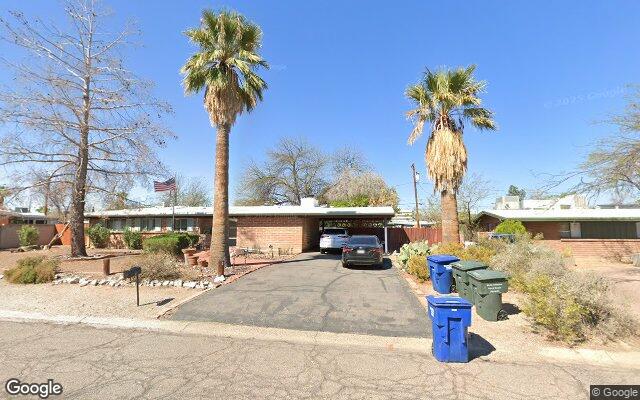
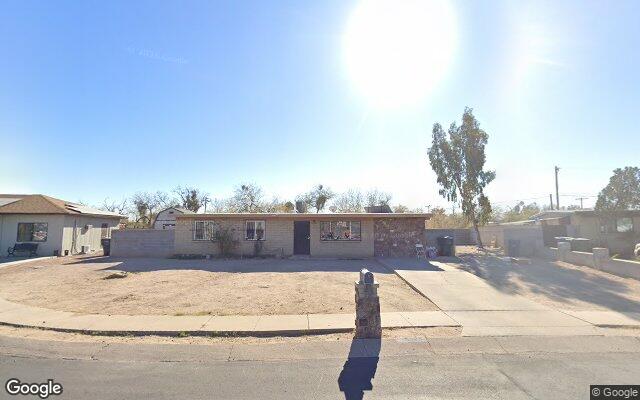
A medium home, reviewed on public record.
© Google Street View
Compared to 1,661 Arizona facilities with a similar number of beds.
Care · 36-month window. Higher percentile = better performance on inspection record. Source: Arizona Dept. of Health Services · Bureau of Residential Facilities Licensing.
among peers to rank.
Rankings based on 36-month ADHS inspection data. Severity and frequency: fewer citations = higher percentile. Repeat rate: lower repeat citation share = higher percentile.
Citation history, plotted month by month.
10 deficiencies on record. Each bar is a month with a citation.
Finding distribution
10 total · 36 monthsScope × Severity (CMS A–L)
Every inspection visit, verbatim.
3 inspections in the public record, most recent first. Plain-language summaries open first — click into any row for the full citation text.
2026-08-04Other VisitNo findings
2025-12-30Complaint InvestigationEnforcement · 6 findings
“Based on record review, documentation review, and interview, the health care institution failed to ensure a training program for all staff regarding fall prevention and fall recovery, which included initial training and continued competency, was implemented. Findings include: 1. A review of E3’s personnel record revealed E3 was hired as an assistant caregiver on April 7, 2025. Further review revealed evidence of documentation indicating E3 had received initial training in fall prevention and fall recovery was unavailable for review. 2. A review of facility documentation revealed documentation titled “Fall Policy and Prevention,” outlining the facility’s practices related to fall prevention. However, evidence of a formal training program for all staff, which included initial training and continued competency training in fall prevention and fall recovery, as required, per A.R.S. § 36-420.01, was unavailable for review. 3. In an exit interview, the findings were reviewed with E1, and no additional information was provided.”
“Based on document review and interview, the manager failed to notify the Department of a resident’s elopement within 24 hours of the elopement being discovered. The deficient practice posed a risk as the facility did not know the whereabouts of a resident. Findings include: 1. A review of facility documentation revealed an incident report, dated December 14, 2025, which documented the elopement of R1 from the facility, after activity personnel had propped open the security gate in the fence surrounding the facility. According to the report, the caregiver on duty was inside the facility, assisting another resident, at the time of the elopement. 2. A request was made to review evidence of documentation of the facility’s written notification to the Department of R1’s elopement. However, evidence of such documentation was unavailable for review. 3. In an interview, E1 advised they were aware of the requirements of R9-10-803(K)(3). E1 also advised they had failed to notify the Department of R1’s elopement within 24 hours. 4. In an exit interview, the findings were reviewed with E1, and no additional information was provided.”
“Based on record review and interview, for three of eight residents sampled, the manager failed to ensure a resident had a written service plan, when initially developed and when updated, was signed and dated by the resident or resident’s representative. The deficient practice posed a risk if a resident was unable to exercise the right to participate or have the resident's representative participate in the development of, or decisions concerning, the resident's service plan. Findings include: 1. A review of R1’s and R2’s medical records revealed service plans dated November 5, 2025, indicating R1 and R2 received directed care services. The service plans had a signature page, which included a line for the “Resident or Resident Representative” to sign. However, the signature line on R1’s and R2’s service plans were blank. 2. In an exit interview, the findings were reviewed with E1, and no additional information was provided. This is a repeat citation from a compliance survey conducted on June 12, 2024.”
“Based on record review, observation, and interview, the manager failed to ensure a resident medical record contained a medication order from a medical practitioner for each medication that was administered, for one of two residents sampled. The deficient practice posed a health and safety risk. Findings include: 1. A review of R2's medical record revealed a current written service plan for directed care services, including medication administration. 2. A review of R2’s December 2025 medication administration record (MAR) revealed documentation of administration of “Digoxin 125 MCG Tab 1 tab PO QD, Check HR prior to Administration Hold for HR<60.” The MAR included documentation the medication was not administered on numerous days in December. 3. A review of R2’s December 2025 medical record revealed a document titled “Vitals,” which included a section for documenting R2’s daily heart rate. The record contained numerous gaps in documentation of R2’s heart rate. 4. A review of R2’s signed medication orders revealed an order dated October 31, 2025, for “Digoxin 125 mcg tab Take 1 tab by mouth every other day. 5. In a telephone interview, O1 advised the October 31, 2025 medication order for Digoxin was no longer valid, and a new order had been placed to administer one tablet of Digoxin 125 mcg daily, and to hold the medication if R2’s heart rate was below 60 beats per minute. The Compliance Officer reviewed R2’s MAR with O1 who confirmed the medication was being administered as ordered. 6. The Compliance Officer requested a copy of the current order for Digoxin from E1; however, evidence of documentation of the order was unavailable for review. 7. In an exit interview, the findings were reviewed with E1, and no additional information was provided.”
“Based on document review, record review, and interview, the manager failed to implement the facility’s policy to ensure the safety of a resident who may wander. The deficient practice posed a risk as policies and procedures reinforce and clarify standards expected of employees. Findings include: 1. A review of facility documentation revealed an incident report, dated December 14, 2025, which documented the elopement of R1 from the facility, after activity personnel had propped open the security gate in the fence surrounding the facility. According to the report, the caregiver on duty was inside the facility, assisting another resident, at the time of the elopement. 2. A review of facility policy and procedures, last reviewed January 24, 2025, revealed a policy titled “Elopement, Risk Reduction Strategies, and Management of Missing Residents.” The policy included a section titled “B. Risk Reduction Measures,” which outlined numerous measures to ensure the safety of a resident at risk of elopement. Measures included “Frequent monitoring of the resident’s whereabouts to assure he or she remains in the facility (e.g., every one-half hour check),” and “Environmental controls such as:…Fenced perimeters.” 3. A review of R1’s medical record revealed a current service plan for directed care services. The service plan included a section titled “Behavioral,” which indicated R1 demonstrated “increased wandering and constantly into all the rooms, requires observation for location and redirection.” In addition, the service plan indicated “Close observation provided.” 4. In an interview, E1 indicated they had confirmed that activity personnel had propped open the security door, thereby allowing an unsecured exit from the facility’s perimeter, against facility policy. E1 stated R1 had not been observed leaving the facility, but had been located by police approximately 45 minutes after his elopement from the facility. 5. In an exit interview, the findings were reviewed with E1, and no additional information was provided.”
“Based on observation and interview, the manager failed to ensure medication was stored in a separate locked room, closet, cabinet, or self-contained unit used only for medication storage. Findings include: 1. During a tour of the facility, the Compliance Officer observed a mediation cart in a common hallway of the facility, outside E1’s office. The cart’s drawers were secured, and below the drawers was an open shelf containing numerous plastic medicine cups with lids. The lids of the cups were labeled with resident names, and timeframes such as “AM,” or “PM.” One of the medicine cups was labeled “[R2] AM,” and contained a single, yellow tablet. 2. In an interview, E2 advised the yellow tablet was “Digoxin,” and it had not been administered to R2 earlier that day. E2 said they had forgotten to secure the medication after their morning medication pass. 3. In an interview, E1 agreed the medication was not secured as required. The findings were reviewed with E1 and no additional information was provided.”
2024-06-12Annual Compliance VisitA.A.C. · 4 findings
“Based on documentation review, observation, and interview, the governing authority failed to designate a manager who had either a temporary or permanent manager's certificate from the Arizona Board of Nursing Care Institution Administrators and Assisted Living Facility Managers, which posed a health and safety risk. The deficient practice posed a risk as the assisted living facility was unable to ensure compliance with applicable rules. Findings include: 1. A review of department documentation revealed the following information: "3/8/24 Notification Melissa Waterfall is NO LONGER MANAGER effective 03/08/2024" and "I will be removing my managers licence as of today from this assisted living facility". 2. On June 12, 2024, the Compliance Officer asked E1 who the facilities new manager was. E1 reported not having a manager at this time due to being unable to find one. E1 stated E4 is taking the manager course and has passed the first test and will be taking the second test soon. The Compliance Officer asked E1 and E4 if E4 had a temporary managers license for the facility. They reported "No". E1 reported E1 thought O1 was going to give them thirty days. The Compliance Officer asked E1 if there was documentation from O1 stating that. E1 reported "No". The Compliance Officer reminded E1 that thirty days would have been April 8, 2024, and the facility still didn't have a manager. 3. During a tour of the facility the Compliance Officer observed no managers license was hanging on the facility wall. 4. In an interview, E1 acknowledged the facility did not designate a manager who had either a temporary or permanent manager's certificate from the Arizona Board of Nursing Care Institution Administrators and Assisted Living Facility Managers.”
“Based on record review and interview, the manager failed to ensure a resident provided documentation of freedom from infectious tuberculosis (TB) as specified in R9-10-113, for one of three residents sampled. Findings include: 1. R9-10-113.A states "If a health care institution is subject to the requirements of this Section, as specified in an Article in this Chapter, the health care institution's chief administrative officer shall ensure that the health care institution establishes, documents, and implements tuberculosis infection control activities that...2. Include: a. For each individual who is employed by the health care institution, provides volunteer services for the health care institution, or is admitted to the health care institution and who is subject to the requirements of this Section, screening, on or before the date specified in the applicable Article of this Chapter, that consists of: i. Assessing risks of prior exposure to infectious tuberculosis, ii. Determining if the individual has signs or symptoms of tuberculosis, and iii. Obtaining documentation of the individual's freedom from infectious tuberculosis according to subsection (B)(1)..." 2. A review of R2's medical record revealed documentation of R2's freedom from infectious TB was not available for review. 3. In an interview, E1 acknowledged documentation of R2's freedom from infectious TB had not been provided for review”
“Based on record review and interview, the manager failed to ensure a resident had a written service plan signed and dated by the resident or resident's representative and the manager when initially developed and when updated, for two of three residents sampled. Findings include: 1. A review of R1's medical record revealed a service plan dated May 6, 2024, for directed care services and was receiving medication management. The service plan was not signed and dated by R1's representative, the manager, or the nurse as required. 2. A review of R2's medical record revealed a service plan dated May 23, 2024, for directed care services and was receiving medication management. The service plan was not signed and dated by R2's representative, the manager, or the nurse as required. 3. In an interview, E1 acknowledged the service plans for R1 and R2 had not been signed and dated by the resident or their representative, the manager or the nurse as required when the plan was developed or updated.”
“Based on documentation review, record review, observation and interview, the chief administrative officer failed to implement tuberculosis (TB) infection control activities including baseline screening, for two of three personnel sampled. Findings include: 1. Arizona Administrative Code (A.A.C.) R9-10-113(B)(1)(a)(i) states: "B. A health care institution's chief administrative officer shall: 1. For an individual for whom baseline screening and documentation of freedom from infectious tuberculosis is required by an Article in this Chapter, as specified in subsection (A)(2)(a), obtain one of the following as evidence of freedom from infectious tuberculosis: a. Documentation of a negative Mantoux skin test or other tuberculosis screening test that: i. Is recommended by the U.S. Centers for Disease Control and Prevention (CDC)." 2. A review of the CDC website revealed a web page titled "Baseline Tuberculosis Screening and Testing for Health Care Personnel." The web page stated: "If the Mantoux tuberculin skin test (TST) is used for baseline testing of health care personnel, use two-step testing. Purpose: Two-step testing is recommended for the initial TB skin test for adults who may be tested periodically, such as health care personnel." 3. A review of Department documentation revealed this rule went into effect after May 2022. 4. A review of E2's personnel record revealed E2 was hired as a caregiver in May 2024. The Compliance Officer observed the following document. "2 Step TB Skin Consent Form". The document was signed by E2 giving permission for the test. The document had two sections, one section stated, Step 1, and one stated Step 2. The part of the document that stated Step 2 had been filled in and was dated April 11, 2024, however the section for Step 1 was left blank. No other documentation was available for review to show E2 had a second skin test or a blood test less than 12 months, and no documentation of baseline screening for TB to include assessing risks of prior exposure to infectious tuberculosis, determining if the individual has signs or symptoms of tuberculosis, and obtaining documentation of the individual's freedom from infectious tuberculosis according to R9-10-113(B)(1). 5. A review of E3's personnel record revealed E3 was hired as a caregiver in April 2024. The Compliance Officer observed documentation of a TB skin test given by CVS Minute Clinic on August 2, 2022, however, no other documentation was available for review for a second TB skin test or a blood test less than 12 months, and documentation of baseline screening for TB to include assessing risks of prior exposure to infectious tuberculosis, determining if the individual has signs or symptoms of tuberculosis, and obtaining documentation of the individual's freedom from infectious tuberculosis according to R9-10-113(B)(1). 6. In an interview, E1 acknowledged the personnel records provided for E2 and E3 did not include a second TB test skin test or blood test as required, and documentation of baseline screening for TB to include assessing risks of prior exposure to infectious tuberculosis, determining if the individual has signs or symptoms of tuberculosis, and obtaining documentation of the individual's freedom from infectious tuberculosis according to R9-10-113(B)(1).”
1 older inspection from 2023 are not shown above.
Get the complete record, translated into plain language — emailed to you.
Other facilities in Tucson.
Other memory care facilities near Tucson with similar care offerings.

Full Inspection Record
Family reviews
No reviews yet — be the first to share your experience