Care Haven Trejo LLC.
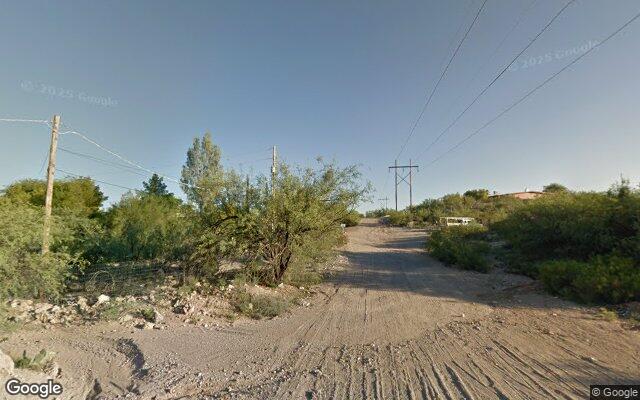
A medium home, reviewed on public record.
© Google Street View
Compared to 1,661 Arizona facilities with a similar number of beds.
Care · 36-month window. Higher percentile = better performance on inspection record. Source: Arizona Dept. of Health Services · Bureau of Residential Facilities Licensing.
among peers to rank.
Rankings based on 36-month ADHS inspection data. Severity and frequency: fewer citations = higher percentile. Repeat rate: lower repeat citation share = higher percentile.
Citation history, plotted month by month.
6 deficiencies on record. Each bar is a month with a citation.
Finding distribution
6 total · 36 monthsScope × Severity (CMS A–L)
Every inspection visit, verbatim.
3 inspections in the public record, most recent first. Plain-language summaries open first — click into any row for the full citation text.
2026-04-10Complaint InvestigationNo findings
2026-03-11Annual Compliance VisitR9-10-819.A.4 · 1 finding
“Based on documentation review and interview, the manager failed to ensure a disaster drill for employees was conducted on each shift at least once every three months and documented. Findings include: 1. A review of facility staffing schedules revealed the facility operated two twelve-hour shifts. 2. A review of facility documentation revealed documentation of two separate disaster drills for day shift and night shift employees conducted on January 8, 2025, April 4, 2025, October 15, 2025, and January 7, 2026; however, further evidence of disaster drills conducted for employees on or around July 2025 for both shifts was unavailable for review. 3. In an interview, the findings were reviewed with E1. E1 stated they must have mistakenly conducted an evacuation drill instead of a disaster drill in July 2025 which would explain the missing disaster drills. 4. In an exit interview, the findings were reviewed with E1 and no further information was provided.”
2024-09-16Complaint InvestigationA.A.C. · 5 findings
“Based on record review and interview, the manager failed to ensure an employee did not act as a resident's representative for a resident who was not a family member of the employee, for one of two residents sampled. The deficient practice posed a risk to the resident. Findings include: 1. A review of R1's medical record revealed a document titled, "State of Arizona Durable Health Care Power of Attorney," (MPOA). The document identified R1 as "the Principal," and E2 as the "agent or surrogate." The document was signed by R1 on March 2, 2020, and notarized on the same date. Further review of R1's medical record revealed a document titled "General Power of Attorney," (POA) which identified R1 as the "Principal," and E2 as the "Agent/Attorney-in-Fact." The document granted E2 powers over R1's, "Personal Finances," "Personal property," and "To do and perform every and all acts required, necessary or appropriate to be done in and about the premises as fully to all intents and purposes as Principal might or could do if personally present, hereby ratifying all that Attorney-in-Fact shall lawfully do or cause to be done by virtue of this General Power of Attorney." The document included a section for identifying a "General Regular Power of Attorney," with identified beginning and ending dates, or a ""General Durable Power of Attorney," with a beginning date and lasting "until the death of the Principal or until revocation." The General Durable Power of Attorney section was selected which identified an "Effective Date" of "March 2, 2020." 2. In an interview E2 agreed they were named as R1's MPOA and POA in March 2020. E2 reported while E2 was related to E1, E2 did not work at the facility at the time the MPOA and POA were put into place. 3. In a joint interview, E1 and E2 reported R1 did not have a representative or local family at the time E2 was given MPOA and POA by R1. 4. In an interview, E1 acknowledged they were the manager of the facility in March 2020 and they were the parent of E2. E1 acknowledged a family member of the manager acted as a resident's representative for a resident who was not a family member of the employee.”
“Based on document review, record review and interview, after the manager had a reasonable basis, according to A.R.S. \'a7 46-454, to believe abuse, neglect, or exploitation had occurred on the premises, the manager failed to document the report made to a peace officer or to the adult protective services central intake unit, or any actions taken by the manager to prevent the suspected abuse from occurring in the future. The deficient practice posed a potential safety risk for residents and potential rights violation if alleged abuse, neglect, or exploitation was not reported, investigated or documented as required. Findings include: 1. A review of facility quality management reports for September 2023 through August 2024 revealed evidence of documentation of any incident reports related to abuse, neglect, or exploitation had occurred at the facility. 2. A review of E1's medical record revealed a letter from "Banner University Health Plans, Clinical Quality of Care Department," dated August 6, 2024. The letter, in part, read, "It is alleged E1 was managing R1's checking account and made [E1] a beneficiary of [R1's] life insurance policy and was applying for stimulus checks on [R1's] behalf." 3. In an interview, E1 advised there had been no visits to the facility by adult protective services in the last twelve months pertaining to any allegations of abuse, neglect or exploitation. E1 advised a representative from Banner Health had been to the facility recently and E1 was cooperating with Banner Health's investigation. E1 denied notifying a peace officer or adult protective services of the allegation. E1 further denied taking any action required per R9-10-803.J.3-6.”
“Based on record review and interview, the manager failed to ensure each resident's written service plan accurately included the amount, type and frequency of assisted living services being provided to the resident for one of two sampled residents. Findings include: 1. A review of R2's medical record revealed an order, dated July 14, 2024, to "wrap bilateral legs from foot to knee with 3" compression wrap daily..." 2. A review of R2's medical record revealed a service plan, dated July 18, 2024, which reflected R2 received directed care services. However, R2's service plan did not include assisting R2 with compression leg wraps as ordered. 3. A review of R2's medical record revealed a document used for documenting activities of daily living (ADL), dated September 2024. The documented reflected services provided to R2, however, the document did not include assistance with compression leg wraps. 4. In an interview, E1 reported R2 was picking at the leg wraps and causing skin tears. E1 advised the primary care provider gave a verbal order to discontinue the leg wraps in "July or August" 2024. However, E1 was not able to provide evidence of documentation of a verbal order to discontinue R2's compression leg wraps, or documentation of a written order to discontinue R2's compression leg wraps. 5. In an interview, E1 acknowledged the service plan provided for R2 did not accurately include the type, amount, and frequency of assisted living services being provided to R2.”
“Based on documentation review, observation, and interview, the manager failed to ensure the means of exiting the facility for a resident who does not have a key, special knowledge for egress, or the ability to expend increased physical effort, controlled or alerted employees of the egress of a resident from the facility. The deficient practice posed a risk if the facility was unaware of the general or specific whereabouts of a resident. Findings include: 1. A review of the license issued by the Department revealed the facility was authorized to provide directed care services. 2. During the facility tour with E1, the compliance officer observed a sliding glass door leading out to the backyard. Above the door was an illuminated Exit sign. The outside area, in the backyard, allowed residents to be a least 30 feet away from the facility. The sliding door was not equipped with a control or device intended to alert employees to the egress of a resident to the outside area, and the compliance officer was able to open the sliding glass door with little effort. 3. During an interview, E1 acknowledged there was a means of exiting the facility which allowed residents to be at least 30 feet away from the facility, which did not control or alert employees of the egress of a resident.”
“Based on documentation review, record review and interview, the manager failed to ensure a caregiver or an assistant caregiver documented an event in which a resident had an emergency and needed medical services, as required per R9-10-818.D.2. Findings include: 1. A review of facility quality management documentation from November 2023 revealed there was one hospitalization incident. A review of facility documentation revealed a document titled "Progress & Communication Notes," dated November 28, 2023, which indicated R1 was sent to the hospital after R1 "couldn't get up." The entry reflected efforts to contact R1's "POA," however the entry did not include a description of the accident, emergency or injury, the names of the individuals who observed the accident, emergency or injury, or any action taken to prevent the accident, emergency or injury from occurring in the future. 2. In an interview, E1 agreed the incident reports did not contain all documented required per R9-10-818.D.2.”
1 older inspection from 2023 are not shown above.
Get the complete record, translated into plain language — emailed to you.
Other facilities in Tucson.
Other memory care facilities near Tucson with similar care offerings.
Tour Prep
Family reviews
No reviews yet — be the first to share your experience