Gentle Care Assisted Living.
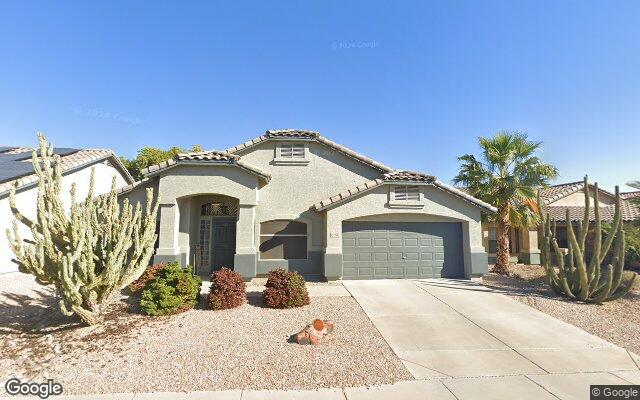
A medium home, reviewed on public record.
© Google Street View
Compared to 1,661 Arizona facilities with a similar number of beds.
Care · 36-month window. Higher percentile = better performance on inspection record. Source: Arizona Dept. of Health Services · Bureau of Residential Facilities Licensing.
among peers to rank.
Rankings based on 36-month ADHS inspection data. Severity and frequency: fewer citations = higher percentile. Repeat rate: lower repeat citation share = higher percentile.
Citation history, plotted month by month.
7 deficiencies on record. Each bar is a month with a citation.
Finding distribution
7 total · 36 monthsScope × Severity (CMS A–L)
Every inspection visit, verbatim.
1 inspection in the public record, most recent first. Plain-language summaries open first — click into any row for the full citation text.
2025-04-14Annual Compliance VisitR9-10-120.F.4 · 7 findings
“Based on record review and interview, for one of three residents reviewed, who received opioid medication, without an active malignancy or an end of life condition, the manager failed to ensure an individual authorized to administer opioids documented in the resident's medical record; an identification of the resident's need for the opioid before the opioid was administered, and the monitoring of the effect of the opioid administered. The deficient practice posed a risk to a resident's health and safety if the facility did not appropriately assess and monitor opioid administration for a resident. Findings include: 1. In observation, R3 had Tramadol medication stored by the facility (a Schedule IV-controlled substance). The medication label indicated 30 tablets were dispensed on March 28, 2025. The bottle had one tablet remaining. 2. In record review, R3's medical record (received directed care and medication administration services) included a medication order for Tramadol HCL 50 mg, take 1 tablet by mouth twice a day scheduled QAM and PM. R3's medication administration record (MAR) included documentation R3 received the medication twice daily April 1 - 12, 2025. The record did not include an identification of the resident's need for the opioid before the opioid was administered, and the monitoring of the effect of the opioid administered. 3. In documentation review, the facility had policies and procedures which covered opioid medication administration, and indicated a caregiver would identify the need for the opioid before the opioid was administered, and would monitor the effect of the opioid administered. 4. During an interview, E1 and E2 reported R3 did not have an end of life condition or an active malignancy, and acknowledged the caregivers did not document the resident's need for the opioid before the opioid was administered, and the monitoring of the effect of the opioid administered, as required by R9-10-120.F.”
“Based on documentation review, observation, record review, and interview, the governing authority failed to notify the Department according to A.R.S. § 36-425(I) when there was a change in the manager, and identify the name and qualifications of the new manager. The deficient practice posed a risk as the Department was unable to ensure the facility maintained a qualified manager. Findings include: 1. A.R.S. § 36-425(I) states "A health care institution shall immediately notify the department in writing when there is a change of the chief administrative officer..." 2. In observation, the Compliance Officer observed a manager's license for E3, posted at the facility. 3. A review of Department documentation revealed O1 was reported as the manager. 4. In record review, E3's personnel record identified E3 as the facility's manager. 5. During an interview, E1 reported E3 had been the manager since August 15, 2024, and acknowledged the Department was not notified of a change in manager.”
“Based on observation, interview and record review, for two of three residents reviewed, who were confined to a bed or chair and unable to ambulate even with assistance, the manager failed to ensure the facility did not retain a resident unless the facility obtained a signed and dated determination from a primary care provider (PCP) or medical practitioner (MP), every six months, that stated resident’s needs could be met by the assisted living facility within the assisted living facility’s scope of services. The deficient practice posed a safety risk to a resident if the facility retained a resident without the required authorization. Findings include: 1. In observation, the Compliance Officer observed R1 and R2 at the facility. 2. During an interview, E2 reported R1 and R2 were unable to ambulate, even with assistance. 3. In record review, R1's medical record (received directed care services) included a signed and dated determination on October 3, 2023, and April 30, 2024, that documented R1 was confined to a bed or chair, and unable to ambulate even with assistance. R1's record did not include a signed and dated determination every six months, as required. 4. In record review, R2's medical record (received directed care services) included a signed and dated determination on October 20, 2023, and April 24, 2024, that documented R2 was confined to a bed or chair, and unable to ambulate even with assistance. R2's record did not include a signed and dated determination every six months, as required. 5. During an interview, E1 acknowledged the facility did not obtain a signed and dated determination from the residents' MP or PCP every six months, stating the residents' needs were being met by the facility. 6. This is a repeat deficiency from the inspection conducted on May 1, 2023.”
“Based on observation and interview, for a facility that provided directed care services, the manager failed to ensure there was a means of exiting the facility that provided access to an outside area which controlled or alerted employees of the egress of a resident from the facility. The deficient practice posed a risk if the facility was unaware of the general or specific whereabouts of a resident, and a resident exited the facility without notice. Findings include: 1. A review of the license issued by the Department revealed the facility was licensed at the directed care level. 2. During an environmental inspection with E2, the Compliance Officer (CO) observed a patio door had a non-working alarm, exited to the backyard, and did not control or alert employees of the egress of a resident. The CO observed an unlocked door (by resident bedrooms) had a non-working alarm; exited to the garage, and an unlocked door in the garage exited to the side yard. The side yard had an unlocked gate that exited to the front yard of the facility. 3. During an interview, E2 reported the door alarms were controlled by a remote and E2 found the remote and was able to turn on the alarm to the patio door; however, the alarm to the garage door required battery replacement. E1 and E2 acknowledged the exit doors from the facility did not control or alert employees of the egress of a resident. 4. This is a repeat deficiency from the inspection conducted on May 1, 2023.”
“Based on observation, record review, and interview, for one of three residents reviewed, the manager failed to ensure a medication administered to a resident was documented in the resident's medical record. The deficient practice posed a health and safety risk to a resident if a manager or caregiver did not document medication administration. Findings include: 1. In observation, R3's medications were observed on site. 2. In record review, R3's medical record (received directed care and medication administration services) included medication orders for Amlodipine Besylate 5 mg, take 1 tablet by mouth daily, Citalopram 20 mg, take 1 tablet by mouth daily, Aspirin 81 mg, take 1 tablet my mouth daily, Meclizine HCI 25 mg, take 1 tablet by mouth daily, Tylenol 500mg, take 2 tablets by mouth twice a day, Senna Plus 8.6 mg-50, take 2 times a day, Tramadol HCL 50 mg, take 1 tablet by mouth twice a day scheduled... 3. In record review, R3's medication administration record, dated April 2025, did not include documentation R3 received the medications, as ordered, on April 13 and April 14, 2025. 4. During an interview, E1 reported the medications were administered to R3, as ordered; however, acknowledged the medication administration was not documented by the caregiver, as required. 5. This is a repeat deficiency from the inspection conducted on May 1, 2023.”
“Based on observation, record review, documentation review, and interview, for one of three residents reviewed, who received a controlled substance, the manager failed to ensure that policies and procedures were implemented for inventorying controlled substances. The deficient practice posed a risk if controlled substances were not inventoried and accounted for by the facility. Findings include: 1. In observation, R3 had Tramadol medication stored by the facility (a Schedule IV-controlled substance). The Tramadol medication bottle contained one tablet. The medication label indicated 30 tablets were dispensed on March 28, 2025. 2. In record review, R3's medical record (received directed care and medication administration services) included a medication order for Tramadol HCL 50 mg, take 1 tablet by mouth twice a day scheduled QAM and PM. R3's medication administration record (MAR) included documentation R3 received the medication twice daily April 1 - 12, 2025. The medication administration was not documented on April 13 and 14, 2025. R3's record did not include documentation of an inventory of the controlled substance. 3. In documentation review, a facility policy, titled, "Storing, Dispensing and Disposing Controlled Substances," on page 135, documented, "... The receipt, administration and disposal of controlled substances or drugs must be recorded in a "register." The register must include the balance remaining for each product with a separate record page being maintained for each resident..." 4. During an interview, E1 and E2 acknowledged the facility did not maintain an inventory of controlled substances, per the facility's policies and procedures.”
“Based on observation and interview, the manager failed to ensure toxic materials stored by the facility were stored in a locked area and inaccessible to residents. The deficient practice posed a risk to the physical health and safety of a resident if toxic materials were accessible. Findings include: 1. During an environmental inspection with E2, the Compliance Officer observed an unlocked door (located by resident bedrooms) that allowed entry to the garage. The Compliance Officer observed an unlocked cabinet which contained cleaning supplies, including, but not limited to: Windex, Lysol All Purpose cleaner, Clorox Toilet Bowl Cleaner, Fabulosa, Febreeze Air Freshener, Clorox wipes, and a can of Paint. 2. During an interview, E1 and E2 acknowledged the toxic materials were not stored in a locked area and were not inaccessible to residents. 3. This is a repeat deficiency from the inspection conducted on May 1, 2023.”
Other facilities in Surprise.
Other memory care facilities near Surprise with similar care offerings.
Full Inspection Record
Family reviews
No reviews yet — be the first to share your experience