Granite Gate Senior Living.

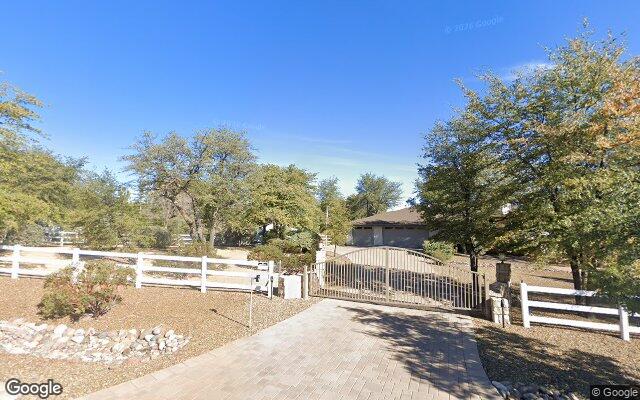
A large home, reviewed on public record.
© Google Street View
Compared to 116 Arizona facilities with a similar number of beds.
Care · 36-month window. Higher percentile = better performance on inspection record. Source: Arizona Dept. of Health Services · Bureau of Residential Facilities Licensing.
among peers to rank.
Rankings based on 36-month ADHS inspection data. Severity and frequency: fewer citations = higher percentile. Repeat rate: lower repeat citation share = higher percentile.
Citation history, plotted month by month.
32 deficiencies on record. Each bar is a month with a citation.
Finding distribution
32 total · 36 monthsScope × Severity (CMS A–L)
Every inspection visit, verbatim.
16 inspections in the public record, most recent first. Plain-language summaries open first — click into any row for the full citation text.
2026-08-04Other VisitNo findings
2026-04-27Complaint InvestigationNo findings
2026-04-09Complaint InvestigationEnforcement · 3 findings
“Based on documentation review and interview, the health care institution failed to provide appropriate first aid before the arrival of emergency medical services (EMS) to a non-injured resident who had fallen, appeared to be uninjured, and was unable to reasonably recover independently. The deficient practice posed a risk as a caregiver was unable to meet a resident's needs. Findings include: 1. A review of facility documentation revealed an “Incident Report” which indicated R5 had an unwitnessed fall on October 1, 2025. The report stated: “The resident was walking around [R5’s] apartment with [R5’s] walker, the walker got away from the resident [and R5] fell face first on the floor. We called the non emergency number for help getting the resident off the floor, we are not strong enough…The resident said [R5] had no pain.” The report further stated: Did the resident sustain any injuries? No.” 2. In an interview, when the Compliance Officer informed E1 facility personnel needed to provide appropriate first aid (e.g., lift the resident) to a non-injured resident who had fallen, appeared to be uninjured, and was unable to reasonably recover independently, E1 stated, “Okay.” 3. In the exit interview, the Compliance Officer reviewed the findings with E1, who offered no further comment.”
“Based on documentation review and interview, the manager failed to ensure that a caregiver or an assistant caregiver immediately notified the resident's emergency contact and primary care provider (PCP) when a resident had an accident, emergency, or injury that resulted in the resident needing medical services, for two of six sampled residents. The deficient practice posed a potential risk of re-injury if a resident did not receive adequate follow-up care. Findings include: 1. A review of facility documentation revealed an “Incident Report” which indicated R3 had a witnessed fall at 4:32 PM on October 4, 2025. The report stated: “After some convincing from staff and [R3’s] friend, [R3] agreed to have the friend take [R3] to the emergency room. [R3] was admitted to the hospital.” The report revealed facility personnel notified R3’s emergency contact and R3’s PCP at 6:32 AM on October 5, 2025, and not immediately as required by this rule. 2. A review of facility documentation revealed an “Incident Report” which indicated R5 had an unwitnessed fall at 7:30 PM on October 1, 2025. The report stated: “The resident was walking around [R5’s] apartment with [R5’s] walker, the walker got away from the resident [and R5] fell face first on the floor. We called the non emergency number for help getting the resident off the floor, we are not strong enough." The report revealed facility personnel notified R5’s PCP at 6:37 PM on October 14, 2025, and not immediately as required by this rule. 3. In an interview, E1 acknowledged that facility personnel did not notify R3’s emergency contact and R3’s and R5’s respective PCPs immediately. 4. In the exit interview, the Compliance Officer reviewed the findings with E1, who offered no further comment. This is an uncorrected citation from the complaint inspection conducted on December 23, 2024.”
“Based on observation and interview, the manager failed to ensure the premises was free from a condition or situation that may have caused a resident or other individual to suffer physical injury. The deficient practice posed a risk to the health and safety of a resident. Findings include: 1. The Compliance Officer observed the corners of some of the flooring pieces in the living room and kitchen area of unit 245 were slightly raised off the floor, causing a slight tripping hazard. 2. In a series of interviews, R5 and R6 shared complaints about the flooring needing to be replaced. R5 reported R5’s feet caught the raised edges of the flooring from time to time, but had not caused R5 to fall. R6 reported R6 had stubbed R6’s toe a few times on the raised edges of the flooring. 3. In an interview, E1 reported E1 was aware of the issues with the flooring and had spoken to R5’s and R6’s family member about replacing the flooring. E1 reported E1 was in the process of replacing it but was waiting for R5’s and R6’s family member to make a decision regarding when and whether to temporarily move R5 and R6 to another unit during the replacement process. 4. In the exit interview, the Compliance Officer reviewed the findings with E1 who offered no further comment.”
2026-03-09Complaint InvestigationR9-10-808.C.1.a · 3 findings
“Based on record review and interview, the manager failed to ensure a caregiver or an assistant caregiver provided a resident with the assisted living services in the resident's service plan, for one of three sampled residents. The deficient practice posed a risk as services were not provided per a resident's service plan. Findings include: 1. A review of R1’s current service plan dated January 29, 2026. This service plan revealed R1 received full assist bathing services Monday, Wednesday, and Saturday at 12:00 pm. 2. A review of R1’s “Care History” for February 2026 revealed on February 14, 2026 the following note, “we don’t have the staff for this showers and several attempts were tried to shower and they-” 3. In an interview, E1 acknowledged R1 did not receive a shower on February 14, 2026. 4. In an exit interview, the findings were reviewed with E1 and E3, and no additional information was provided.”
“Based on record review and interview, the manager failed to ensure a caregiver or assistant caregiver documented the services provided in the resident's medical record, for one of three residents sampled. Findings include: 1. A review of R2’s current service plan dated January 30, 2026 revealed R2 received AM/PM dressing assistance twice daily. 2. A review of R2’s “Care History” for the months of March 2026 and February 2026 revealed dressing assistance was not documented on the following days: March 8, 2026; March 7, 2026; March 5, 2026; March 4, 2026; March 2, 2026; March 1, 2026; February 28, 2026; February 26, 2026; February 25, 2026; February 23, 2026; February 22, 2026; February 21, 2026; February 19, 2026; February 18, 2026; February 16, 2026; February 15, 2026; February 14, 2026; February 12, 2026; February 11, 2026; February 9, 2026; February 8, 2026; February 7, 2026; February 5, 2026; February 4, 2026; February 2, 2026; and February 1, 2026. 3. In an interview, E1 acknowledged R2’s dressing assistance was not documented on R2’s “Care History”. 4. In an exit interview, the findings were reviewed with E1 and E3, and no additional information was provided. 5. This was a repeat citation from the complaint inspection conducted on April 14, 2023, and the complaint and compliance inspection conducted on September 19, 2023.”
“Based on record review and interview, the manager failed to ensure that medication administered to a resident was administered in compliance with a medication order for one of three residents sampled. The deficient practice posed a risk if the resident experienced a change in condition due to improper administration of medication. Findings include: 1. A review of R3’s medical record revealed R3’s current service plan dated December 2025, which revealed R3 received medication administration. 2. A review of R3’s medical record revealed a medication order signed in November 2025 for Keflex 250 mg one tablet, one time a day. However, the medication order did not indicate a stop date. 3. A review of R3’s medical record revealed a medication administration record (MAR) for March 2026. On March 1, 2025, it was stated in the MAR notifications, “Finished”. On March 2, 2026, it was stated in the MAR notifications, “infection tablets are done”. 4. In an interview, E3 reported that R3 did not receive Keflex 250 mg from March 1, 2026, to March 2, 2026. 5. In an exit interview, the findings were reviewed with E1 and E3, and no additional information was provided. 6. This was a repeat citation from the complaint and compliance inspection conducted on September 19, 2023.”
2025-12-01Complaint InvestigationR9-10-120.F.4 · 12 findings
“Based on observation, record review, documentation review and interview, for two of two residents sampled, who received opioid medication, without an active malignancy or an end of life condition, the manager failed to ensure an individual authorized to administer opioids documented in the resident's medical record; an identification of the resident's need for the opioid before the opioid was administered, and the monitoring of the effect of the opioid administered. The deficient practice posed a risk to a resident's health and safety if the facility did not appropriately assess and monitor opioid administration for a resident. Findings include: 1. During the environmental inspection, R1's medications were observed at the facility, and included "TRAMADOL HCL 50MG TABLET, 1 TAB BY MOUTH THREE TIMES DAILY for pain.” 2. A record review of R1's medical record revealed a service plan for directed care services and medication administration services. A review of R1's medication order revealed "TRAMADOL HCL 50MG TABLET, 1 TAB BY MOUTH THREE TIMES DAILY for pain.” A review of R1's electronic medication administration record (eMAR) included documentation that R1 received the TRAMADOL HCL 50MG medication daily from October 2025 to present. The medical record did not include documentation of monitoring of the effect of the opioid administered. R1's medical record did not include documentation of an active malignancy or an end-of-life condition. 3. During the environmental inspection, R8's medications were observed at the facility, and included "TRAMADOL HCL 50MG TABLET, 1 TAB BY MOUTH TWICE A DAY for pain.” 4. A record review of R8's medical record revealed a service plan for directed care services and medication administration services. A review of R8's medication order revealed "TRAMADOL HCL 50MG TABLET, 1 TAB BY MOUTH TWICE A DAY for pain.” A review of R8's eMAR included documentation that R8 received the TRAMADOL HCL 50MG TABLET medication daily from November 2025 to present. The medical record did not include documentation of an identification of the need for the opioid before the opioid was administered, nor did it include monitoring of the effect of the opioid administered. R8's medical record did not include documentation of an active malignancy or an end-of-life condition. 5. A review of facility policies revealed a policy titled "Arizona Opioid Policy | HW 120." The policy stated, "4. Ensure that an Individual authorized by the HCIs policies and procedures to administer an opioid in treating a resident or to provide assistance in the self-administration medication for a prescribed opioid: a. Identifies the resident’s need for the opioid before administering or providing assistance with the self-administration of an opioid; i. Pain Scale will be used and noted in ECP. b. Monitors the residents response to the opioid; and i. RAs, HWD or HWC to revisit resident and check effectiveness one hour after administration. c. Documents in the resident medical record: i. An identification of the residents need for the opioid before the opioid was administered or assistance in the self-administration of a medication for the prescribed opioid was provided; and i. Located on Resident’s orders. ii. The effect of the opioid administered or for which assistance in the self-administration of the medication for a prescribed opioid was provided. 1. Located in ECP/EMAR." 6. In an exit interview, the findings were reviewed with E2 and E3, and no additional information was provided.”
“Based on the record review, and interview, the manager failed to ensure that a caregiver's skills and knowledge were verified and documented before the caregiver provided physical health services for three of nine caregivers sampled. The deficient practice posed a risk if the employees did not have the skills and knowledge required to ensure the health and safety of residents. Findings include: 1. A review of E4’s personnel record revealed E4 was hired as a caregiver in October 2025. 2. A review of E5’s personnel record revealed E5 was hired as an assistant caregiver in October 2025. 3. A review of E6’s personnel record revealed E6 was hired as an assistant caregiver in November 2025. 4. A review of E4's, E5’s and E6’s personnel records revealed no documented verification of E4's, E5’s and E6’s skills and knowledge. 5. In an exit interview, the findings were reviewed with E1 and E10, and no additional information was provided. This is a repeat deficiency from an inspection conducted on September 20, 2023, and this is an uncorrected deficiency from the inspection conducted on November 6, 2025.”
“Based on observation, record review, and interview, the manager failed to ensure a caregiver received orientation that was specific to the duties to be performed before providing assisted living services to a resident, for three of nine caregivers. The deficient practice posed a risk if the employees were unable to meet residents' needs. Findings include: 1. A review of E4’s personnel record revealed E4 was hired as a caregiver in October 2025. 2. A review of E4’s personnel record revealed E5 was hired as an assistant caregiver in October 2025. 3. A review of E4’s personnel record revealed E6 was hired as an assistant caregiver in November 2025. 4. A review of E4’s, E5’s, and E6’s personnel records revealed that E4, E5, and E6 did not receive orientation. 5. In an exit interview, the findings were reviewed with E1 and E10, and no additional information was provided. This is a repeat citation from an inspection conducted on September 20, 2023.”
“Based on record review and interview, the manager failed to ensure that a resident accepted by the assisted living facility submitted documentation signed by a medical practitioner or a registered nurse that stated whether the individual required continuous medical services, continuous or intermittent nursing services, or restraints for one of eight residents sampled. The deficient practice posed a risk if the facility was unable to meet a resident's needs. Findings include: 1. A review of R5’s medical record revealed documentation stated whether the resident required continuous medical services, continuous or intermittent nursing services, or restraints; however, this documentation was not completed within 90 calendar days before the individual was accepted by the assisted living facility. 2. In an exit interview, the findings were reviewed with E1 and E10, and no additional information was provided. This is a repeat deficiency from the inspection conducted on October 23, 2024.”
“Based on record review and interview, the manager failed to ensure before or at the time of an individual's acceptance by the assisted living facility, there was a documented residency agreement with the assisted living facility, which included the manager's signature and date signed, for one of eight residents sampled. Findings include: 1. A review of R3’s medical record revealed a residency agreement that included the manager’s signature and date; however, the manager’s signature was dated ten days after the date of occupancy. 2. In an exit interview, the findings were reviewed with E1, E10, and no additional information was provided.”
“Based on documentation review, record review, and interview, the manager failed to ensure a resident's written service plan included the amount, type, and frequency of assisted living services being provided to the resident, for one of eight residents sampled. The deficient practice posed a risk as the service plans did not reinforce and clarify services to be provided to a resident. Findings include: 1. In an interview, E11 reported that R4 was non-ambulatory and was repositioned every two hours. 2. A review of R4's medical record revealed a current service plan. The service plan reported transfer assistance: one-person transfer, help the resident to a stable position, and put on the gait belt around their waist. However, there was no documentation of the need for repositioning the resident. 3. In an interview, E1 acknowledged R4's service plans did not include the frequency of the repositioning provided to the residents. 4. In an exit interview, the findings were reviewed with E1 and E10, and no additional information was provided.”
“Based on observation, documentation, and interview, the manager failed to ensure that a resident was treated with dignity, respect, and consideration. The deficient practice violated a resident's rights. Findings include: 1. During the environmental inspection of the facility, the Compliance Officers entered R6's and R9's rooms. The Compliance Officers pulled the pull cord in the bathroom to alert staff and check wait time; however, the pull cord did not work, and the staff member never came to check on the residents. 2. During the environmental inspection of the facility, the Compliance Officers entered R2's, R7's and R8's rooms in the memory care unit. The residents in the memory care units were supposed to have a pendant. The Compliance Officers pushed the pendant to check wait time; however, no staff member came to the room. Upon further investigation, the staff member in the memory care unit did not have the walkie-talkie or beeper that alerts them. 3. The Compliance Officers requested to see the pendant/bath call alert system. Upon reviewing the pendant/bath call alert system, it revealed that several residents had pushed their pendants, and the wait time was up to 50 minutes. 4. A review of R2’s, R7’s, and R8's medical records revealed service plans for directed care. The service plans stated “safety and evacuation: emergency call pendant; check that resident has pendant in arm's reach. Resident has been provided with and has demonstrated ability to use an emergency call pendant and pull cord in the bathroom for emergent and urgent needs.” 5. In an interview, E12 reported that they did not have the walkie-talkie or beeper that alerts them to the needs of a resident in the memory care unit. 6. In separate interviews, R6 and R9 reported that the facility staff member takes a while to come check on them when they push the pendants or bathroom cords. 7. In an exit interview, the findings were reviewed with E1 and E10, and no additional information was provided.”
“Based on interview and record review, the manager failed to ensure the facility did not accept or retain a resident who was confined to a bed or chair because of an inability to ambulate even with assistance, unless the facility obtained a written determination from a medical practitioner, that stated the resident's needs could be met by the facility and the resident's needs were within the facility's scope of services, for one of one residents reviewed who were confined to a bed or chair. The deficient practice posed a risk if the facility was unable to meet a resident's needs. Findings include: 1. In an interview, E11 reported that R4 was non-ambulatory and was repositioned every two hours. 2. A review of R4's medical record revealed no documentation of a written determination from a medical practitioner, every six months, that stated the resident's needs could be met by the facility and the resident's needs were within the facility's scope of services, for R4, who was confined to a bed or chair. 3. In an exit interview, the findings were reviewed with E1, E10, and no additional information was provided.”
“Based on observation, documentation review, record and interview, the manager failed to ensure a bell, intercom, or other mechanical means to alert employees to a resident's needs or emergencies was available in a bedroom being used by a resident receiving directed care services, or had implemented another means to alert a caregiver or assistant caregiver to a resident's needs or emergencies. The deficient practice posed a risk to the physical health and safety of a resident. Findings include: 1. During the environmental inspection of the facility, the Compliance Officers entered R2's, R7's and R8's rooms in the memory care unit. The residents in the memory care units were supposed to have a pendant. The Compliance Officers pushed the pendant check wait time; however, no staff member came to the room. Upon further investigation, the staff member in the memory care unit did not have the walkie-talkie or beeper that alerts them. 2. A review of R2’s, R7’s, and R8's medical records revealed service plans for directed care. The service plans stated “safety and evacuation: emergency call pendant; check that resident has pendant in arm’s reach. Resident has been provided with and has demonstrated ability to use an emergency call pendant and pull cord in the bathroom for emergent and urgent needs.” 3. In an interview, E12 reported that they did not have the walkie-talkie or beeper that alerts them to the needs of a resident in the memory care unit. 4. In an exit interview, the findings were reviewed with E1 and E10, and no additional information was provided.”
“Based on documentation review, observation, and interview, the manager failed to ensure a means of exiting the facility for a resident who did not have a key, special knowledge for egress, or the ability to expend increased physical effort that monitored or alerted employees of the egress of a resident from the facility. The deficient practice posed a risk if the facility was unaware of the egress of a resident from the facility. Findings include: 1. A review of Department documentation revealed the facility is licensed for direct care. 2. During the environmental inspection of the facility, the Compliance Officers observed ambulatory residents on all three levels of the facility. 3. During the environmental inspection, the Compliance Officers observed that the facility’s fire exit doors on all three levels were not monitored, did not alert staff when a resident exited the facility, and did not have a mechanism that met the requirements for special egress-control devices. 4. In an exit interview, the findings were reviewed with E1 and E10, and no additional information was provided.”
“Based on documentation review and interview, the manager failed to ensure that a disaster drill for employees was conducted on each shift at least once every three months and documented. The deficient practice posed a risk if employees were unable to implement a disaster plan. Findings include: 1. A review of facility documentation disaster drills revealed documentation for one disaster drill being conducted on October 31, 2025. No other documentation was available for review of the disaster drill being done at least once every three months and documented within the last 12 months. 2. In an exit interview, the findings were reviewed with E1 and E10, and no additional information was provided.”
“Based on documentation review and interview, the manager failed to ensure that an evacuation drill for employees and residents was conducted once every six months and documented. The deficient practice posed a risk if employees were unable to evacuate the residents in an emergency. Findings include: 1. A review of facility documentation evacuation drill revealed documentation for two evacuation drills being conducted on August 22, 2024, and November 31, 2025. No other documentation was available for review of the evacuation drill being conducted once every six months and documented within the last 12 months. 2. In an exit interview, the findings were reviewed with E1 and E10, and no additional information was provided.”
2025-11-06Complaint InvestigationR9-10-806.A.4 · 2 findings
“Based on the observation, record review, and interview, the manager failed to ensure that a caregiver's skills and knowledge were verified and documented before the caregiver provided physical health services for two of two caregivers sampled. The deficient practice posed a risk if the employees did not have the skills and knowledge required to ensure the health and safety of residents. Findings include: 1. During the environmental inspection of the facility, the Compliance Officer observed E2 at the facility. The Compliance Officer observed E2 providing health care services to residents at the time of inspection 2. During the environmental inspection of the facility, the Compliance Officer observed E3 at the facility. The Compliance Officer observed E3 providing health care services to residents at the time of inspection 3. A review of E2's and E3’s personnel records revealed no documented verification of E2's and E3's skills and knowledge. 4. In an exit interview, the findings were reviewed with E1, and no additional information was provided.”
“Based on documentation, record review, and interview, the manager failed to ensure a medical record was maintained at the facility for three of four sampled residents, which posed a health and safety risk for lack of information provided to caregivers. Findings include: 1. E1 reported that R1, R3, and R4, had been residents, but were no longer at the facility. 2. A request for R1, R3, and R4 medical records revealed no medical records available for review at the time of inspection. 3. In an exit interview, the findings were reviewed with E1, and no additional information was provided.”
2025-04-14Complaint InvestigationNo findings
2025-04-09Complaint InvestigationNo findings
2025-03-12Complaint InvestigationNo findings
2025-02-13Complaint InvestigationNo findings
2024-12-23Complaint InvestigationA.A.C. · 3 findings
“Based on record review and interview, the manager of an assisted living center who contacted emergency responders on behalf of a resident failed to provide to the emergency responders a written document that included all information required in A.R.S. \'a7 36-420.04, for one of one applicable resident sampled. The deficient practice posed a risk if the emergency responder was not aware of critical health information for the resident. Findings include: 1. A review of R2's medical record revealed a document titled, "#557" dated December 12, 2024. The document outlined an incident description in which R2 was "gasping for air when the writer entered the room". The document detailed that Emergency Medical Services (EMS) arrived to assist; however, EMS was not provided with the assisted living facilities standardized form to include the reason or reasons the emergency responder was requested on behalf of R2 as required. 2. In an interview, E1 reported that emergency responders were provided with some of the written documentation required in the statute; however, E1 was unaware that the facility's standardized form for R2 was required to be provided if R2 was not being transported. This standardized form included the reason or reasons the emergency responder was requested. 3. In an interview, E1 acknowledged the documentation provided to emergency medical services did not include all information required in A.R.S. \'a7 36-420.04.”
“Based on record review, documentation review, and interview, the manager failed to ensure a manager, caregiver, or assistant caregiver provided current documentation of first aid and cardiopulmonary resuscitation (CPR) training before providing assisted living services, for one of two caregivers reviewed. The deficient practice posed a risk if a manager, caregiver, or assistant caregiver was unable to meet a resident's needs during an emergency. Findings include: 1. A review of E1's personnel record revealed E1 worked as a manager. The personnel record revealed a first aid and CPR card with an expiration date of May 2024. A current first aid and CPR card was available with an issue date of August 8, 2024. There was no other documentation of first aid and CPR training in E1's record between May 2024 to August 2024. 2. In an interview, E1 acknowledged current documentation of first aid and CPR training between May 2024 and August 2024 were not maintained for E1 as required. This is a repeat deficiency from the on-site compliance inspection conducted on September 20, 2023.”
“Based on record review and interview, the manager failed to ensure when a resident had an incident that resulted in the resident needing medical services, a caregiver immediately notified the resident's primary care provider, for one of two residents sampled. The deficient practice posed a health and safety risk. Findings include: 1. A review of R2's medical record revealed a document titled, "#557" dated December 12, 2024. The document outlined an incident description in which the R2 was "gasping for air when the writer entered the room". The document detailed that 911 was called and remained on the line until Emergency Medical Services (EMS) arrived to assist; however, documentation was not available that showed R2's primary care provider was notified of this incident. 2. In an interview, E1 reported that R2's emergency contact was present at the facility and immediately notified; however, E1 reported not being sure why R2's primary care provider was not contacted. 3. In an interview, E1 acknowledged R2's medical record did not include documentation that showed a caregiver immediately notified the resident's primary care provider.”
2024-11-19Complaint InvestigationNo findings
2024-10-23Complaint InvestigationA.A.C. · 8 findings
“Based on documentation review and interview, the health care institution failed to develop and administer a training program for all staff regarding fall prevention and fall recovery. The deficient practice posed a risk to the physical health and safety of a resident. Findings include: 1. A review of E4's personnel record revealed documentation of fall prevention and fall recovery training was not available for review at the time of inspection. 2. In an interview, E8 acknowledged E4's personnel record did not include documentation of a fall prevention and fall recovery training at the time of inspection.”
“Based on record review and interview, the manager failed to ensure a resident accepted by the assisted living facility submitted documentation signed by a medical practitioner or a registered nurse that stated whether the individual required continuous medical services, continuous or intermittent nursing services, or restraints, for one of nine residents sampled. The deficient practice posed a risk if the facility was unable to meet a resident's needs. Findings include: 1. A review of R8's medical record revealed no documentation that stated whether the resident required continuous medical services, continuous or intermittent nursing services, or restraints. Based on R8's date of acceptance, this documentation was required. 2. In an interview, E8 acknowledged R8 did not provide documentation signed by a medical practitioner or a registered nurse that stated whether the resident required continuous medical services, continuous or intermittent nursing services, or restraints.”
“Based on record review and interview, the manager failed to ensure a resident had a written service plan that was developed with assistance and review from the resident or resident's representative, for two of nine residents sampled. The deficient practice posed a risk if the resident or resident's representative were unable to participate in the development or review the service plan to provide essential information. Findings include: 1. Review of R4's medical record contained a service plan dated September 8, 2024, for personal care services. The service plan revealed no signature of the resident or the resident's representative indicating the service plan was developed with assistance and reviewed by the resident or the resident's representative. 2. Review of R7's medical record contained a service plan dated June 24, 2024, for personal care services. The service plan revealed no signature of the resident or the resident's representative indicating the service plan was developed with assistance and reviewed by the resident or the resident's representative. 3. In an interview, E8 acknowledged the service plans for R4 and R7 were not signed to indicate the service plans were developed with assistance of the resident or the resident's representative. This is a repeat deficiency from the compliance/complaint inspection conducted September 20, 2023.”
“Based on documentation review, record review, and interview, the manager failed to ensure a resident medical record contained documentation of notification of the resident of the availability of vaccination for influenza (flu) and pneumonia, according to A.R.S. \'a7 36-406(1)(d). The deficient practice posed a potential illness risk to residents. Findings include: 1. A.R.S. \'a7 36-406(1)(d) states "The department shall: Require as a condition of licensure that nursing care institutions and assisted living facilities make vaccinations for influenza and pneumonia available to residents on site on a yearly basis. The department shall prescribe the manner by which the institutions and facilities shall document compliance with this subdivision, including documenting residents who refuse to be immunized. The department shall not impose a violation on a licensee for not making a vaccination available if there is a shortage of that vaccination in this state as determined by the director." 2. Review of R8's medical record revealed no documentation that showed the flu and pneumonia vaccinations were received or refused. Based on R8's acceptance date, this documentation was required. 3. In an interview, E8 acknowledged R8's medical record did not include current documentation that showed the flu and pneumonia vaccinations were received or refused.”
“Based on observation and interview, the manager failed to ensure garbage and refuse were stored in covered containers. The deficient practice posed a health risk to residents. Findings include: 1. During an environmental tour of the facility, the Compliance Officer observed a shared bathroom located in the main hallway near the stairwell to the second level. Inside the bathroom, the Compliance Officer observed a trashcan next to the toilet. The trash can was lined with a plastic bag but did not have a lid. The trash can contained a soiled disposable sanitation pad. 2. During an environmental tour of the facility, the Compliance Officer observed uncovered garbage containers in the kitchen, located near the food preparation areas. The Compliance Officer also observed an uncovered trash can next to the medicine cart located in the kitchen in the memory care unit. 3. In an interview, E8 and E9 acknowledged garbage and refuse were not stored in covered containers at the time of inspection.”
“Based on observation and interview, the manager failed to ensure soiled linen stored by the facility was stored in closed containers away from food storage, kitchen, and dining areas. The deficient practice posed a health risk to the residents as infection control procedures were not implemented. Findings include: 1. During an environmental inspection of the facility's central kitchen, the Compliance Officer observed a container full of soiled linen being stored uncovered in the facility's kitchen. 2. In an interview, E8 acknowledged the soiled linen was not stored in a closed container away from the kitchen.”
“Based on observation and interview, the manager failed to ensure toxic materials stored by the facility were stored in a locked area and inaccessible to residents. The deficient practice posed a risk to the physical health and safety of a resident. Findings include: 1. During an environmental tour of the facility, the Compliance Officer observed an unlocked cabinet under the sink located in the memory care unit. The unlocked cabinet contained two cans of W-40. 2. In an interview, E8 acknowledged toxic materials were stored in an unlocked cabinet accessible to residents.”
“Based on documentation review and interview, the health care institution failed to establish, document, and implement tuberculosis (TB) infection control activities including annually assessing the health care institution's risk of exposure to infectious TB. The deficient practice posed a TB exposure risk to residents and staff. Findings include: 1. Review of facility documentation revealed no documentation of annually assessing the health care institution's risk of exposure to infectious TB. 2. In an interview, E8 and E9 acknowledged an assessment of the health care institution's risk of exposure to infectious TB was not available. Technical assistance was provided on this Rule during the compliance/complaint inspection conducted September 20, 2023.”
2024-04-01Complaint InvestigationNo findings
2024-03-04Complaint InvestigationHigh Risk · 1 finding
“Based on documentation review, record review, and interview, the administrator, who had a reasonable basis to believe abuse had occurred on the premises or while a resident was receiving services from a assisted living facility's manager, caregiver, or assistant caregiver, failed to report the suspected abuse of the resident for a resident 18 years of age or older according to A.R.S. \'a7 46-454(A), for one of one resident sampled. Findings include: A.R.S.\'a7 46-454(A) "...person who has responsibility for the care of a vulnerable adult and who has a reasonable basis to believe that abuse, neglect or exploitation of the adult has occurred shall immediately report or cause reports to be made of such reasonable basis to a peace officer or to the adult protective services central intake unit." R9-10-101.110 "Immediate" means without delay. 1. A review of Department documentation revealed a facility self-reported incident. E1 reported an alleged incident occurred June 26, 2023. E1 reported that bruises were observed on R1's arms on June 26, 2023. 2. In an on-site complaint investigation, E1 provided the printed documentation that was received after reporting the incident via the Public Health Licensing Online Complaint Form portal. The documentation reported the complaint was received by the Department at 3:44 PM on June 27, 2023. 3. Further review of facility documentation revealed the incident was reported to Adult Protective Services (APS) at 4:05 PM on June 27, 2024. 4. A review of the facility's policy and procedures revealed a policy titled, "Abuse, Neglect, and Exploitation Prohibition and Prevention Program." Under the heading "Reporting Requirements" the policy stated, "...2. Reporting to State Agencies. All "Covered Individuals," including mandated reporters, employees, and LTC communities, have an obligation to report any reasonable suspicions of a crime against a resident and all allegations of abuse, neglect, exploitation or mistreatment, including injuries of unknown source and misappropriation of resident property, to the appropriate state authorities, including the State Certification Agency and all other agencies, as required, after the allegation or occurrence. If the allegation or occurrence involves abuse or serious bodily injury, notification must occur immediately but no later than 2 hours. If the allegation or occurrence does not involve abuse or does not result in serious bodily injury, notification must occur immediately but no later than 24 hours..." 5. A review of facility documentation revealed an internal investigation was started June 26, 2023 and completed June 30, 2023. The documentation revealed the facility conducted numerous personnel interviews. The facility determined that R1 did not have any bruising on R1's arms on Sunday, June 25, 2023. The investigation concluded that R1's bruising occurred sometime Sunday night and the bruising was noticed Monday morning, June 26, 2023. 6. In an interview, E1 acknowledged the facility did not notify a peace officer or Adult Protective Services immediately as required in A.R.S. \'a7 46-454(A).”
2024-02-20Complaint InvestigationNo findings
1 older inspection from 2023 are not shown above.
Get the complete record, translated into plain language — emailed to you.
Other facilities in Prescott.
Other memory care facilities near Prescott with similar care offerings.
Full Inspection Record
Family reviews
No reviews yet — be the first to share your experience