Marie's Board and Care II.
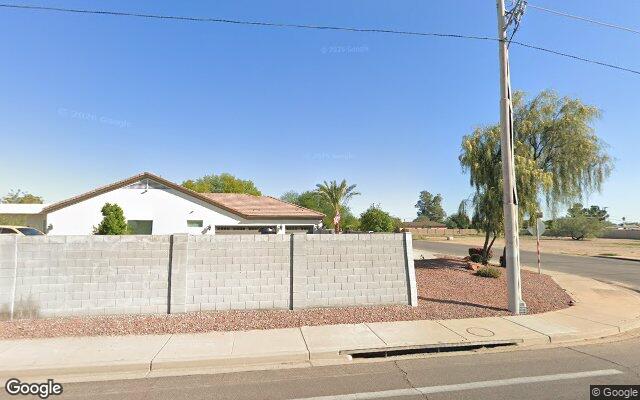
A medium home, reviewed on public record.
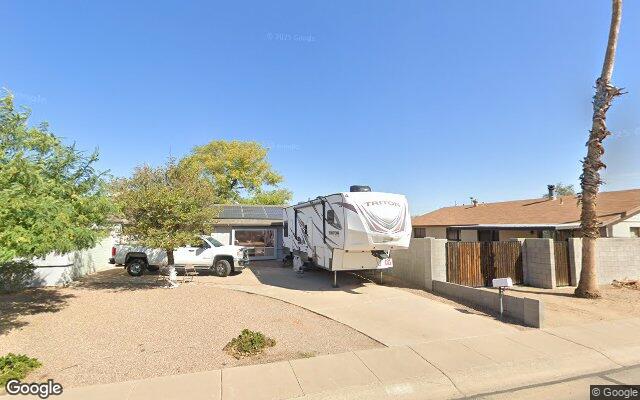
© Google Street View
Compared to 1,661 Arizona facilities with a similar number of beds.
Care · 36-month window. Higher percentile = better performance on inspection record. Source: Arizona Dept. of Health Services · Bureau of Residential Facilities Licensing.
among peers to rank.
Rankings based on 36-month ADHS inspection data. Severity and frequency: fewer citations = higher percentile. Repeat rate: lower repeat citation share = higher percentile.
Citation history, plotted month by month.
33 deficiencies on record. Each bar is a month with a citation.
Finding distribution
33 total · 36 monthsScope × Severity (CMS A–L)
Every inspection visit, verbatim.
3 inspections in the public record, most recent first. Plain-language summaries open first — click into any row for the full citation text.
2025-12-05Annual Compliance VisitA.A.C. · 9 findings
“Based on record review and interview, the assisted living home failed to maintain a standardized form for each resident that included the information prescribed in subsection A of this section, except for the information prescribed in subsection A, paragraph 1 of this section, which shall be provided at the time the emergency responder was contacted. Findings include: 1 . A review of R1's, R2's, R3's, R4's and R5's medical records revealed documentation of a maintained standardized form for the emergency responder was not available for review at the time of inspection. 2 . In an exit interview, the findings were discussed with E1 and no additional information was provided.”
“Based on record review and interview, the manager failed to ensure a caregiver provided evidence of freedom from infectious tuberculosis (TB) as specified in R9-10-113, for one of two caregivers sampled. The deficient practice posed a potential TB exposure risk to residents. Findings include: 1 . A review of E3's personnel record revealed documentation of negative TB skin tests. However, documentation of a signs and symptoms screening and risk assessment was not available for review at the time of inspection. 2 . In an exit interview, the findings were discussed with E1 and no additional information was provided. This is a repeat deficiency from the compliance inspection conducted on December 13, 2024.”
“Based on record review and interview, the manager failed to ensure a resident provided evidence of freedom from infectious tuberculosis (TB) as specified in R9-10-113, for three of five residents sampled. The deficient practice posed a TB exposure risk to residents. Findings include: 1 . A review of R1's and R3's medical records revealed no documentation of a negative TB test or signs and symptoms screening and risk assessment at the time of inspection. 2 . A review of R2's medical record revealed a negative TB test. However, documentation of a signs and symptoms screening and risk assessment was not available for review at the time of inspection. 3 . In an exit interview, the findings were discussed with E1 and no additional information was provided. This is a repeat deficiency from the compliance inspection conducted on December 13, 2024.”
“Based on record review and interview, the manager failed to ensure that a resident had a service plan that was established, documented, and implemented, that was completed no later than 14 calendar days after the resident’s date of acceptance for one out of five residents sampled. The deficient practice posed a risk as there was no service plan to direct services to be provided to a resident. Findings include: 1. A review of R6's medical record revealed service plan updates dated December 1, 2024, June 1, 2025, and October 3, 2025. However, documentation of a service plan completed within 14 calendar days after the resident's acceptance was not available for review at the time of inspection. 2. In an exit interview, the findings were reviewed with E1 and no additional information was provided. This is a repeat deficiency from the compliance inspection conducted on December 13, 2024.”
“Based on record review and interview, the manager failed to ensure a caregiver documented services provided in the resident's medical record, for two of six residents sampled. The deficient practice posed a risk as services could not be verified as provided against a service plan. Findings include: 1 . A review of R1's medical record revealed a current service plan. The service plan listed R1 received assistance with dressing and grooming daily. However, review of R1's activities of daily living (ADL) sheet for the month of December 2025 revealed services not marked as provided on December 4, 2025. 2 . A review of R2's medical record revealed a current service plan. The service plan listed R2 received assistance with combing hair, washing face, nail care and oral hygiene daily. However, review of R2's ADL sheet for the month of December 2025 revealed services not marked as provided on December 4, 2025. 3 . In an exit interview, the findings were discussed with E1, and no additional information was provided. This is a repeat deficiency from the compliance inspection conducted on December 13, 2024.”
“Based on record review and interview, the manager failed to ensure medication administered to a resident was documented in the resident's medical record, for three of five residents sampled. The deficient practice posed a risk as medication could not be verified as administered against a medication order. Findings include: 1 . A review of R2's medical record revealed signed medication orders for the following: -Pantoprazole 40 MG, 1 tablet once daily; -Losartan 50 MG, 1/2 tablet once daily; and -Senokot 8.5 MG, 1 tablet once daily. However, a review of R2's medication administration record (MAR) sheet revealed all medications listed above were not documented as administered on December 4, 2025. 2 . A review of R3's medical record revealed signed medication orders for the following: -Prozac 10 MG, 1 tablet once daily; -Seroquel 25 MG, 1 tablet once daily; -Aspirin 81 MG, 1 tablet once daily; -Zyrtec 10 MG, 1 tablet once daily; -Losartan 50 MG, 1 tablet once daily; -Amlodipine 5 MG, 1 tablet once daily; -Flonase 50 MG, 2 puffs in each nostril daily; -Latanoprost one drop in each eye daily; -Wixela 25/50 inhaler, one puff twice daily; -Trazodone 100 MG, 1 tablet once daily; and -Senokot 8.5 MG, 1 tablet once daily. However, a review of R3's medication administration record (MAR) sheet revealed all medications listed above were not documented as administered on December 4, 2025. 3 . A review of R4's medical record revealed signed medication orders for the following: -Primidone 50 MG, 1 and a half tablets three times daily; -Hydroxyzine HCL 25 MG, 1 tablet three times daily; -Senokot 8.5 MG, 1 tablet twice daily; -Lispro 100 insulin three times daily; -Oxycodone 5 MG, 1 tablet four times daily; -Amlodipine 5 MG, 1 tablet once daily; -Bupropion 150 MG, 1 tablet once daily; -Donepezil 10 MG, 1 tablet once daily; -Farxiga 10 MG, 1 tablet once daily; -Fluoxetine 20 MG, 2 tablets once daily; -Isosorbide 30 MG, 1 tablet once daily; -Solifenacin 10 MG, 1 tablet once daily; -Tradjenta 5 MG, 1 tablet once daily; -Pramipexole 1 MG, 1 tablet once daily; -Pregabalin 50 MG, 1 tablet twice daily; and -Comtess 75 MG, 1 tablet once daily. However, a review of R4's medication administration record (MAR) sheet revealed all medications listed above were not documented as administered on December 4, 2025. 4 . In an exit interview, the findings were discussed with E1 and no additional information was provided. This is a repeat deficiency from the compliance inspection conducted on December 13, 2024.”
“Based on observation and interview, the manager failed to ensure medication stored by the assisted living facility was stored in a separated locked room, closet, cabinet, or self-contained unit used only for medication storage. Findings include: 1 . During an environmental inspection of the facility, the Compliance Officer observed a box of "Albuterol Sulfate" sitting on top of the TV stand in a resident room. 2 . In an exit interview, the findings were discussed with E1 and no additional information was provided.”
“Based on observation and interview, the manager failed to ensure poisonous or toxic materials stored by the assisted living facility were inaccessible to residents. The deficient practice posed a risk to the physical health and safety of a resident. Findings include: 1 . During an environmental inspection of the facility, the Compliance Officer observed a bottle of "Downy" laundry detergent sitting on the shelf in the shower of the resident bathroom. Further inspection revealed a can of "Walgreens" disinfectant spray sitting on a shelf above the toilet. 2 . During an environmental inspection of the facility, the Compliance Officer observed a can of "Lysol" disinfectant spray sitting on the counter of the common hallway bathroom sink. Further inspection revealed a bottle of "Simple Green" cleaner in a basket behind a curtain in the same bathroom. 3 . In an exit interview, the findings were discussed with E1 and no additional information was provided. This is a repeat deficiency from the compliance inspection conducted on December 13, 2024.”
“Based on observation and interview, the manager failed to ensure the swimming pool was locked when the swimming pool was not in use. Findings include: 1 . During an environmental inspection of the facility, the Compliance Officer observed a padlock on the door gate latch for the pool. However, the padlock was unlocked. 2 . In an exit interview, the findings were discussed with E1 and no additional information was provided.”
2025-04-15Annual Compliance VisitA.A.C. · 12 findings
“A. A manager shall ensure that: 4. A caregiver's or assistant caregiver's skills and knowledge are verified and documented: a. Before the caregiver or assistant caregiver provides physical health services or behavioral health services, and b. According to policies and procedures;”
“A. A manager shall ensure that: 8. A manager, a caregiver, and an assistant caregiver, or an employee or a volunteer who has or is expected to have more than eight hours per week of direct interaction with residents, provides evidence of freedom from infectious tuberculosis: a. On or before the date the individual begins providing services at or on behalf of the assisted living facility, and b. As specified in R9-10-113;”
“C. A manager shall ensure that a personnel record for each employee or volunteer: 1. Includes: c. Documentation of: iii. The individual's completed orientation and in-service education required by policies and procedures;”
“A. Except as provided in R9-10-808(B)(2), a manager shall ensure that a resident provides evidence of freedom from infectious tuberculosis: 1. Before or within seven calendar days after the resident's date of occupancy, and 2. As specified in R9-10-113.”
“A. Except as required in subsection (B), a manager shall ensure that a resident has a written service plan that: 1. Is completed no later than 14 calendar days after the resident's date of acceptance;”
“C. A manager shall ensure that: 1. A caregiver or an assistant caregiver: g. Documents the services provided in the resident's medical record; and”
“C. A manager shall ensure that a resident's medical record contains: 1. Resident information that includes: a. The resident's name, and b. The resident's date of birth; 2. The names, addresses, and telephone numbers of: a. The resident's primary care provider; b. Other persons, such as a home health agency or hospice service agency, involved in the care of the resident; and c. An individual to be contacted in the event of emergency, significant change in the resident's condition, or termination of residency; 3. If applicable, the name and contact information of the resident's representative and: a. The document signed by the resident consenting for the resident ' s representative to act on the resident's behalf; or b. If the resident's representative: i. Has a health care power of attorney established under A.R.S. § 36-3221 or a mental health care power of attorney executed under A.R.S. § 36-3282, a copy of the health care power of attorney or mental health care power of attorney; or ii. Is a legal guardian, a copy of the court order establishing guardianship; 4. The date of acceptance and, if applicable, date of termination of residency; 5. Documentation of the resident's needs required in R9-10-807(B); 6. Documentation of general consent and informed consent, if applicable; 7. Except as allowed in R9-10-808(B)(2), documentation of freedom from infectious tuberculosis as required in R9-10-807(A); 8. A copy of resident's health care directive, if applicable; 9. The resident's signed residency agreement and any amendments; 10. Resident's service plan and updates; 11. Documentation of assisted living services provided to the resident; 12. A medication order from a medical practitioner for each medication that is administered to the resident or for which the resident receives assistance in the self-administration of the medication; 13. Documentation of medication administered to the resident re”
“B. If an assisted living facility provides medication administration, a manager shall ensure that: 3. A medication administered to a resident: c. Is documented in the resident's medical record.”
“A. A manager shall ensure that: 1. A food menu: a. Is prepared at least one week in advance, b. Includes the foods to be served each day, c. Is conspicuously posted at least one calendar day before the first meal on the food menu is served, d. Includes any food substitution no later than the morning of the day of meal service with a food substitution, and e. Is maintained for at least 60 calendar days after the last day included in the food menu;”
“C. A manager shall ensure that food is obtained, prepared, served, and stored as follows: 5. A refrigerator used by an assisted living facility to store food or medication contains a thermometer, accurate to plus or minus 3° F, placed at the warmest part of the refrigerator;”
“A. A manager shall ensure that 5. An evacuation drill for employees and residents: a. Is conducted at least once every six months; and b. Includes all individuals on the premises except for: i. A resident whose medical record contains documentation that evacuation from the assisted living facility would cause harm to the resident, and ii. Sufficient caregivers to ensure the health and safety of residents not evacuated according to subsection (A)(5)(b)(i);”
“A. A manager shall ensure that: 11. Poisonous or toxic materials stored by the assisted living facility are maintained in labeled containers in a locked area separate from food preparation and storage, dining areas, and medications and are inaccessible to residents;”
2024-12-13Annual Compliance VisitA.A.C. · 12 findings
“Based on documentation review, record review, and interview, the manager failed to ensure a caregiver's skills and knowledge was verified and documented before the caregiver provided physical health services and according to policies and procedures, for two of two caregivers sampled. Findings include: 1. A review of the facility's policies and procedures revealed a policy titled "Job Description." This policy stated in the Employee Qualifications: "Include the specific skills and knowledge necessary for the caregiver or assistant caregiver to provide the expected assisted living services." 2. A review of E2's and E3's personnel record revealed no documentation of skills and knowledge. 3. In an interview, E1 acknowledged E2's and E3's record did not contain documentation of E2's and E3's skills and knowledge before E2 and E3 provided physical health services, and according to policies and procedures.”
“Based on documentation review, record review, and interview, the manager failed to ensure an employee provided documentation of freedom from infectious tuberculosis (TB) as specified in R9-10-113, for two of three employees who were expected to have more than eight hours of direct interaction with residents, which posed a potential health and safety risk to residents and staff of TB exposure. Findings include: 1. A review of facility's policies and procedures revealed a policy titled "Facility Job Description, Duties, and Qualifications." The policy stated, "Documentation of free of pulmonary tuberculosis within six (6) months of the hire date and then within plus or minus thirty (30) days of the twelve (12) month anniversary date of the most recent test." 2. A review of E2's personnel record revealed two negative TB skin tests. However, E2's personnel record did not contain a TB risk assessment and signs and symptoms questionnaire as required. 3. A review of E3's personnel record revealed a chest xray for TB dated July 2023. No additional documentation of freedom from infectious TB was available to review. E3's personnel record did not contain the TB risk assessment and signs and symptoms questionnaire as required. 4. In an interview, E1 acknowledged E2's and E3's personnel record did not contain a TB screening test and TB risk assessment and signs and symptoms questionnaire as recommended by the CDC. E1 acknowledged E2 and E3 had more than eight hours of direct interaction with residents and did not have current documentation of freedom from infectious TB. .”
“Based on documentation review, record review, and interview, the manager failed to ensure a personnel record for each employee included documentation of the individual's completed orientation. Findings include: 1. A review of the facility's policies and procedures stated, "Before providing assisted living services to a resident, a manager, caregiver or assistant caregiver receives orientation that is specific to the duties to be performed by the manager, caregiver or assistant caregiver" 2. A review of E1's personnel record revealed a hire date of July 15, 2024. 3. A review of E1's personnel record revealed no documentation to demonstrate E1 completed orientation prior to providing services to residents. 4. In an interview, E1 reported E1 did not know that a manager needed an orientation. E1 acknowledged E1 did not complete orientation.”
“Based on documentation review, record review, and interview the manager failed to ensure a resident provided evidence of freedom from infectious tuberculosis (TB) as specified in R9-10-113, for two of two residents reviewed, which posed a potential health and safety risk to residents and staff of TB exposure. Findings include: 1. A review of the facility's policies and procedures stated, "Documentation of freedom from pulmonary tuberculosis" was required in the resident's record. 2. A review of R1's and R2's record revealed no documentation of freedom from infectious TB. 3. In an interview, E1 reported E1 was new and did not know if R1 and R2 had submitted evidence of freedom from infectious TB and could not find any evidence in R1's and R2's medical record. E1 acknowledged R1's and R2's medical record did not contain evidence of freedom from infectious TB.”
“Based on record review and interview, the manager failed to ensure a resident had a written service plan completed no later than 14 calendar days after the resident's date of acceptance, for one of two residents sampled. The deficient practice posed a risk as there was no service plan to direct services to be provided to a resident. Findings include: 1. A review of R2's medical record revealed no service plan was available for review. Based on the resident's date of acceptance, this documentation was required. 2. In an interview, E1 acknowledged R2's medical record did not contain a completed service plan.”
“Based on record review and interview, the manager failed to ensure a caregiver documented the services provided in the resident's medical record, for two of two residents reviewed. The deficient practice posed a risk as services could not be verified as provided. Findings include: 1. A review of R1's medical record revealed Activities of Daily Living (ADL) documentation was not available for the months of October 2024, November 2024, and December 2024. 2. A review of R2's medical record revealed ADL documentation was not available for review. 3. In an interview, E1 reported E1 was unsure where R1's ADL documentation for the months of October, November and December were located. E1 acknowledged the caregiver did not document the services provided in R1's and R2's medical record.”
“Based on record review and interview, the manager failed to ensure a medical record was maintained at the facility, for one of two resident records requested. The deficient practice posed a risk as required information could not be verified for one of two sampled residents. Findings include: 1. In an on-site compliance investigation, the Compliance Officers requested R2's medical record. However, R2's medical record was not available for review. 2. In an interview, E1 reported the hospice documentation was the only record available for R2. E1 acknowledged R2's medical record was not available.”
“Based on record review and interview, the manager failed to ensure a medication administered to a resident was accurately documented in the resident's medical record, for one of two residents reviewed, which posed a health and safety risk to the resident if a caregiver did not know if a medication was administered. Findings include: 1. A review of R2's medical record revealed a medication order dated September 26, 2024 for Senna 50mg, 2 tablets by mouth at bedtime. 2. A review of R2's medical record revealed documentation of a current medication administration record (MAR). However, the MAR indicated Senna was not administered from December 9, 2024 to December 12, 2024. 3. In an interview, E1 reported E2 forgot to fill out the MAR. E1 acknowledged medication was not accurately documented in R2's medical record as administered.”
“Based on observation, documentation review, and interview, the manager failed to ensure a food menu was prepared at least one week in advance and conspicuously posted at least one calendar day before the first meal on the food menu was served. The deficient practice posed a risk if the source of a potential food borne illness could not be identified. Findings include: 1. In an environmental inspection of the facility, the Compliance Officers observed a menu dated November 2024. 2. A review of the facility's policies and procedures stated, "Menus are prepared at least one week in advance, dated and conspicuously posted." 3. In an interview, E1 reported there was not a December 2024 menu available for review. E1 acknowledged the menu was not posted.”
“Based on observation, record review, and interview, the manager failed to ensure a refrigerator used by an assisted living facility to store food contained a thermometer. The deficient practice posed a health and safety risk if the refrigerator was not maintained at a proper temperature. Findings include: 1. In an environmental inspection of the facility, the Compliance Officers observed a thermometer in the refrigerator in the kitchen. The thermometer was broken. This refrigerator contained food used for the residents. 2. During the environmental inspection of the facility, the Compliance Officers observed a second refrigerator. This refrigerator did not have a thermometer and contained food used for the residents. 3. In an interview, E2 reported the refrigerator was used to store food for the residents. E2 reported E2 did not know that the thermometer was broken. In a telephone interview, E3 reported there was a thermometer in the second refrigerator but E3 was not present to find it. E1 acknowledged the refrigerators did not contain a thermometer.”
“Based on documentation review and interview, the manager failed to ensure an evacuation drill for employees and residents was conducted at least once every six months; and included all individuals on the premises except for a resident whose medical record contains documentation that evacuation from the assisted living facility would cause harm to the resident. The deficient practice posed a health and safety risk to residents and employees if the employee were unable to implement the evacuation plan. Findings include: 1. In a documentation review, the most recent evacuation drill was dated October 15, 2024. However, the documentation indicated no residents participated in the drill. 2. In an interview, E1 acknowledged the evacuation drills for employees and residents were not conducted at least once every six months.”
“Based on observation and interview, the manager failed to ensure that poisonous or toxic materials stored by the assisted living facility were maintained in labeled containers in a locked area separate from food preparation and storage, dining areas, and medications and were inaccessible to residents, which posed a health and safety risk if a resident inappropriately used the toxic material. Findings include: 1. In an environmental inspection of the facility, the Compliance Officers observed a closet in the bathroom. However, the closet was not locked. The unlocked closet contained a bottle of Household disinfectant cleaner from Walgreens. 2. The Compliance Officers observed a cabinet under the kitchen sink. However, the cabinet was not locked and contained a bottle of bleach. 3. In an interview, E1 reported that E1 told E2 to keep the poisonous or toxic materials under lock and key. E1 acknowledged poisonous or toxic materials stored by the assisted living facility were not maintained in labeled containers in a locked area separate from food preparation and storage, dining areas, and medications and were inaccessible to residents.”
Other facilities in Phoenix.
Other memory care facilities near Phoenix with similar care offerings.
Full Inspection Record
Family reviews
No reviews yet — be the first to share your experience