Liberty Home Care Assisted Living LLC.
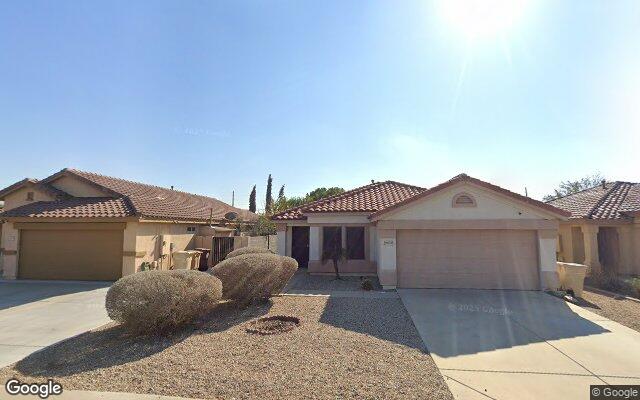
A small home, reviewed on public record.
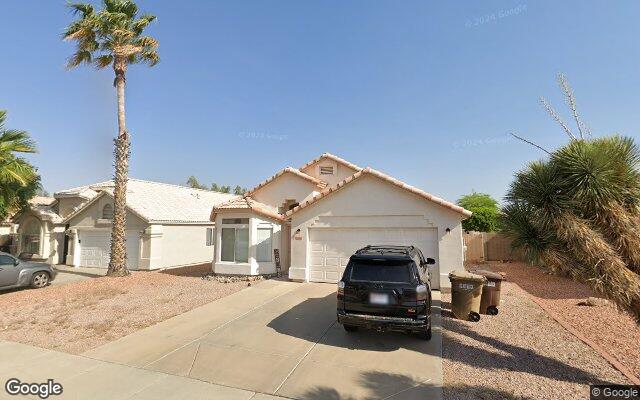
© Google Street View
Compared to 1,661 Arizona facilities with a similar number of beds.
Care · 36-month window. Higher percentile = better performance on inspection record. Source: Arizona Dept. of Health Services · Bureau of Residential Facilities Licensing.
among peers to rank.
Rankings based on 36-month ADHS inspection data. Severity and frequency: fewer citations = higher percentile. Repeat rate: lower repeat citation share = higher percentile.
Citation history, plotted month by month.
5 deficiencies on record. Each bar is a month with a citation.
Finding distribution
5 total · 36 monthsScope × Severity (CMS A–L)
Every inspection visit, verbatim.
1 inspection in the public record, most recent first. Plain-language summaries open first — click into any row for the full citation text.
2025-05-01Annual Compliance VisitR9-10-815.B.1 · 5 findings
“Based on observation, interview, and record review, for one resident confined to a bed or chair and unable to ambulate, the manager failed to ensure the facility did not retain a resident who was confined to a bed or chair because of an inability to ambulate even with assistance, unless the facility obtained a signed and dated determination from a primary care provider (PCP) or medical practitioner (MP), every six months, that stated the resident's needs could be met by the facility and the resident's needs were within the facility's scope of services. The deficient practice posed a safety risk to a resident if a facility retained a resident without the required authorization. Findings include: 1. In observation, R1 was in bed during the inspection. 2. During an interview, R1 reported being unable to walk, even with assistance. 3. In record review, R1's service plan (received personal care services), dated December 18, 2024, included documentation R1 was "bedbound, chair bound." R1's record had a signed determination from an MP or PCP, dated June 10, 2024, however, the record did not have the required documentation every six months which indicated R1's needs were being met by the facility. 4. During an interview, E1 reported R1 was unable to walk even with assistance, and acknowledged a written determination stating the resident's needs could be met by the facility, every six months, was not available.”
“Based on documentation review and interview, the chief administrative officer failed to implement tuberculosis (TB) infection control activities, including annually assessing the health care institution's (HCI) risk of exposure to infectious tuberculosis (TB). The deficient practice posed a potential TB exposure risk to residents. Findings include: 1. In documentation review, the facility did not have documentation assessing the facility's risk of exposure to infectious TB. 2. During an interview, E1 acknowledged the facility did not annually assess the facility's risk of exposure to infectious TB. 3. Technical assistance was provided on this rule during the inspection conducted on September 26, 2023.”
“Based on record review and interview, for one of two residents reviewed, the manager failed to ensure medications were administered to a resident in compliance with a medication order. The deficient practice posed a health and safety risk to a resident if the facility did not administer a resident's blood pressure medication in compliance with a medication order, and the resident did not receive the medication as ordered. Findings include: 1. In record review, R2's medical record included the following medication orders: "HydrALAZINE 10 mg oral tablet; Take 10 milligrams oral every 8 hours as needed for hypertension [Comments: Give when SBP >170; check BP 1 hr after given]. "Losartan 100 mg orag tablet; Take 1 tab(s) orally once a day (in the morning) [comments: Hold for SBP<100, HR,60]. 2. In record review, R2's medical record included a document titled, "Vital Sign - Weight Flow Sheet." The record included documentation of R2's blood pressure once daily on "03/17, 3/18, 3/19, 3/20, 3/21, 3/22, 3/24, 3/25, 3/26, 3/27, 3/28, 3/29, 3/30, 04/01, 04/01 (twice this day), 04/07, 04/8, 4/18." The record included documentation of R2's heart rate on those same days, except no heart rate was documented on March 25, and April 18, 2025. In summary, the facility did not have documentation R2's blood pressure was measured three times daily, and R2's heart rate was measured daily, to facilitate the administration of R2's medications, as ordered. 3. In record review, R2's medication administration record (MAR) dated April, 2025, indicated Losartan medication was administered daily by E1 or E2 at 8:00 am, and Hydralazine medication was not administered to R1 in April 2025. 4. During an interview, E1 reported the Hydralazine medication was to be administered "as needed;" however, acknowledged R2's vitals were not obtained to determine the need for the medication. E1 acknowledged the facility did not measure R2's blood pressure and heart rate, and did not administer the Hydralazine and Losartan medications per the medication order, as indicated by the measurement of R2's vital signs.”
“Based on observation, record review, and interview, the manager failed to ensure a written order verifying a verbal order was obtained from the medical practitioner within 14 calendar days after receiving the verbal order. The deficient practice posed a health risk to the resident. Findings include: 1. In observation, R1 had Morphine medication on site. 2. In record review, R1's record included a verbal order for Morphine concentrate 100 mg/5ml (20 mg/ml) oral solution, dated April 7, 2025. The record did not include documentation of a written order verifying the verbal order. 3. During an interview, E1 acknowledged a written order verifying the verbal order was required to be obtained within 14 calendar days, and the facility had not met the requirement.”
“Based on observation, record review, documentation review, and interview, for one of two residents reviewed, who received a controlled substance, the manager failed to ensure policies and procedures were implemented for inventorying controlled substances. The deficient practice posed a risk if controlled substances were not inventoried and accounted for by the facility. Findings include: 1. In observation, the Compliance Officer observed R1 had three opened bottles of Lorazepam medication on site. Lorazepam bottle - 15 tablets dispensed on March 13, 2025, and 10 tablets remained. Lorazepam medication - 15 tablets dispensed on April 10, 2025, and 9 tablets remained. Lorazepam medication - 15 tablets dispensed on April 21, 2025, and 10 tablets remained. 2. In record review, the facility had an inventory for one of the Lorazepam medications, which indicated a new bottle was started on 4/18/2025, and 10 tablets remained; however, the inventory did not match the contents of the Lorazepam medication dispensed on April 10, 2025. 3. In documentation review, the facility had a policy, titled "Storing & Dispensing Controlled Substances," however, the policy did not indicate how the facility inventoried controlled substances. 4. During an interview, E1 reported R1 was administered the Lorazepam medication. E1 acknowledged the facility did not have a policy for inventorying controlled substances, and did not maintain an inventory of R1's Lorazepam medications.”
1 older inspection from 2023 are not shown above.
Get the complete record, translated into plain language — emailed to you.
Other facilities in Peoria.
Other memory care facilities near Peoria with similar care offerings.
Facility Watch · Premium
Family reviews
No reviews yet — be the first to share your experience