A Touch of Elegance Care Home, LLC.
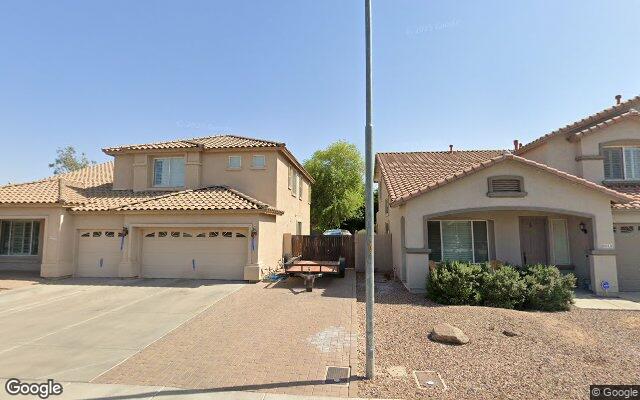
A medium home, reviewed on public record.
© Google Street View
Compared to 1,661 Arizona facilities with a similar number of beds.
Care · 36-month window. Higher percentile = better performance on inspection record. Source: Arizona Dept. of Health Services · Bureau of Residential Facilities Licensing.
among peers to rank.
Rankings based on 36-month ADHS inspection data. Severity and frequency: fewer citations = higher percentile. Repeat rate: lower repeat citation share = higher percentile.
Citation history, plotted month by month.
7 deficiencies on record. Each bar is a month with a citation.
Finding distribution
7 total · 36 monthsScope × Severity (CMS A–L)
Every inspection visit, verbatim.
2 inspections in the public record, most recent first. Plain-language summaries open first — click into any row for the full citation text.
2026-01-23Annual Compliance VisitR9-10-803.A.9 · 4 findings
“Based on documentation review, record review, and interview, the governing authority failed to ensure compliance with A.R.S. § 36-411, for two of two personnel sampled. The deficient practice posed a risk if E1 and E2 were a danger to a vulnerable population. Findings include: 1. A.R.S. § 36-411(C) states, "Each residential care institution, nursing care institution and home health agency shall make documented, good faith efforts to: 1. Contact previous employers to obtain information or recommendations that may be relevant to a person’s fitness to work in a residential care institution, nursing care institution or home health agency. 2. Verify the current status of a person's fingerprint clearance card. 3. Beginning January 1, 2025, verify that a potential employee is not on the adult protective services registry pursuant to section 46-459. If a potential employee is found to be on the adult protective services registry, the residential care institution, nursing care institution or home health agency may not hire the potential employee. 2.A review of the E1 and E2’s personnel record revealed documentation of a valid fingerprint clearance card (FPCC). However, there was no documented verification of E1 or E2’s FPCC. 3. A review of E1 and E2's personnel records revealed no documentation verifying that they were not on the adult protective service registry. 3. In an exit interview findings were discussed with E3, and no additional information was provided.”
“Based on record review and interview, the manager failed to ensure there was a documented residency agreement with the assisted living facility that included terms of occupancy, including the date of occupancy or expected date of occupancy, for two of two sampled residents. Findings include: 1. A review of R1’s medical record revealed a residency agreement. However, the residency agreement did not include R1’s dates of occupancy or expected dates of occupancy. 2. A review of R2’s medical record revealed a residency agreement. However, the residency agreement did not include R2’s dates of occupancy or expected dates of occupancy. 3. In an exit interview, the findings were discussed with E3 and no additional information was provided.”
“Based on record review and interview, the manager failed to ensure a medication administered to a resident was accurately documented in the resident's medical record for two of two residents sampled. The deficient practice posed a risk as the medical record inaccurately indicated a medication was administered. Findings include: 1. A review of R1’s current service plan dated December 2025, which revealed R1 received medication administration services. 2. A review of R1’s medication orders dated January 16, 2026, revealed R1 had the following medications: -Trazodone 100 mg “tab Take 1 tab PO QHS” -Mirtazapine 7.5 mg “tab Take 1 tab PO QHS” -Aleve 220 mg “Take 1 TAB PO QHS and as needed” -Senna 8.6 mg “50 mg take two TABS QHS” 3. A review of R1’s Medication Administration Record (MAR) for January 2026 revealed the following medications were not documented as administered: -Trazodone 100 mg at 8:00 pm on January 22, 2026; -Mirtazapine 7.5 mg at 8:00 pm on January 22, 2026; -Aleve 220 mg at 8:00 pm on January 22, 2026; -Senna 8.6 mg at 8:00 pm on January 22, 2026; 4. A review of R2’s current service plan dated August 2025, revealed R2 received medication administration services. 5. A review of R2’s medication orders dated January 16, 2026, revealed R2 received the following medications: -Apixaban (Eliquis) 2.5 mg “take 1 tab BID” -Quetiapine 25 mg tab “take 1 tab PO QHS” -Tylenol 500 mg “Tab 2 tablets orally twice daily May give one as needed” -Amlodipine besylate 5 mg “1 tab PO QD hold for SBP<120” -Memantine HCI 5 mg “Take 1 TAB PO QD” 6. A review of R2’s MAR for January 2026 revealed Amlodipine besylate 5 mg was not documented as administered on January 22, 2026, at 5:00 pm. The following medications were not documented as administered: -Apixaban (Eliquis) 2.5 mg on January 22, 2026, at 8:00 pm; -Quetiapine 25 mg tab on January 22, 2026, at 8:00 pm; -Tylenol 500 mg on January 22, 2026, at 8:00 pm; -Memantine HCI 5 mg on January 22, 2026, at 8:00 pm; 7. In an interview, E3 reported that the medications were administered; however, the medications were not documented in the MAR. 8. In an exit interview, the findings were discussed with E3 and no additional information was provided. This is a repeat deficiency from the compliance inspection conducted on October 10, 2024.”
“Based on observation, record review, and interview, the manager failed to ensure medication was stored in a separate locked room, closet, cabinet, or self-contained unit used only for medication storage. The deficient practice posed a risk to residents who could access the medication. Findings include: 1. During an environmental inspection of the facility, the Compliance Officers observed an unlocked room belonging to E4 that contained a box of “Theraflu.” 2. In an interview, E3 acknowledged there was no means to lock the door when E4 was not occupying the room. 3. In an exit interview, the findings were discussed with E3 and no additional information was provided.”
2024-10-10Annual Compliance VisitA.A.C. · 3 findings
“Based on documentation review, record review, and interview, the manager failed to ensure a resident provided evidence of freedom from infectious tuberculosis (TB) as specified in R9-10-113, for one of two residents sampled. The deficient practice posed a TB exposure risk to residents. Findings include: 1. R9-10-113.A states "If a health care institution is subject to the requirements of this Section, as specified in an Article in this Chapter, the health care institution's chief administrative officer shall ensure that the health care institution establishes, documents, and implements tuberculosis infection control activities that...2. Include: a. For each individual who is employed by the health care institution, provides volunteer services for the health care institution, or is admitted to the health care institution and who is subject to the requirements of this Section, screening, on or before the date specified in the applicable Article of this Chapter, that consists of: i. Assessing risks of prior exposure to infectious tuberculosis, ii. Determining if the individual has signs or symptoms of tuberculosis, and iii. Obtaining documentation of the individual's freedom from infectious tuberculosis according to subsection (B)(1)..." 2. A review of R2's medical record revealed no documentation of a baseline symptom screening signed by a registered nurse, medical practitioner or local health department. Based on R2's date of acceptance, this documentation was required. 3. In an interview, E1 acknowledged R2's medical record did not include a baseline symptom screening signed by a registered nurse, medical practitioner or local health department as required.”
“Based on observation, record review, documentation review, and interview, the manager failed to ensure medication was stored by the facility, for one of two residents who received medication administration. The deficient practice posed a risk to residents who were unable to self-administer medications. Findings include: 1. The Compliance Officers observed the following medications in R1's room: - Two containers of prescribed petroleum (white) ointment. - Diclofenac Sodium Topical Gel 1% - A 500 ML container of Acetic Acid .25% 2. A review of R1's medical record revealed a service plan dated August 1, 2024 which revealed R1 required medication administration. 3. A review of the facility's policies and procedures revealed a policy titled, "Medications," which stated, "4. All resident medications must be secured in a locked storage area." 4. In an interview, E2 acknowledged R1 required medication administration and the medications were not stored by the facility.”
“Based on record review and interview, the manager failed to ensure medication administered to a resident was documented in the resident's medical record, for one of two residents sampled receiving medication administration. The deficient practice posed a risk as medication could not be verified as administered against a medication order. Findings include: 1. A review of R2's medical record revealed R2 received medication administration. 2. A review of R2's medical record revealed a signed medication order for Loratadine 10 mg one tablet by mouth. 3. A review of R2's medication administration records (MAR) revealed Loratadine 10 mg was not documented on September's MAR and October's MAR. 4. In an interview, E1 reported R2 received Loratadine 10 mg everyday and acknowledged the medication was not documented on the MAR.”
1 older inspection from 2023 are not shown above.
Get the complete record, translated into plain language — emailed to you.
Other facilities in Peoria.
Other memory care facilities near Peoria with similar care offerings.
Facility Watch · Premium
Family reviews
No reviews yet — be the first to share your experience