Peaceful and Comfort Assisted Living.

A medium home, reviewed on public record.
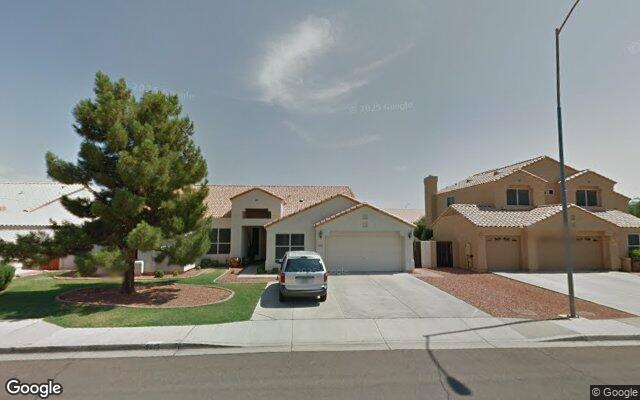
© Google Street View
Compared to 1,661 Arizona facilities with a similar number of beds.
Care · 36-month window. Higher percentile = better performance on inspection record. Source: Arizona Dept. of Health Services · Bureau of Residential Facilities Licensing.
among peers to rank.
Rankings based on 36-month ADHS inspection data. Severity and frequency: fewer citations = higher percentile. Repeat rate: lower repeat citation share = higher percentile.
Citation history, plotted month by month.
14 deficiencies on record. Each bar is a month with a citation.
Finding distribution
14 total · 36 monthsScope × Severity (CMS A–L)
Every inspection visit, verbatim.
1 inspection in the public record, most recent first. Plain-language summaries open first — click into any row for the full citation text.
2025-04-04Annual Compliance VisitA.A.C. · 14 findings
“Based on documentation review, record review, and interview, the health care institution failed to administer a training program for all staff regarding fall prevention and fall recovery, for three of three personnel sampled. The deficient practice posed a risk as organized instruction and information related to resident care and safety was not implemented. Findings include: 1. A review of the facility's policies and procedures revealed a policy titled "Staff Training and In-Services." The policy stated," 4. ALL care staff will complete ongoing training every 12 months based on the date of hire of the employee. 7. Suggested topics are but not limited to the following: ... Falls prevention/ Falls Recovery." 2. A review of E1's personnel record revealed completed training on fall prevention and fall recovery on January 13, 2023. However, documentation of additional training was not available for review. 3. A review of E2's personnel record revealed completed training on fall prevention and fall recovery on October 1, 2023. However, documentation of additional training was not available for review. 4. A review of E3's personnel record did not include documentation of completed fall prevention and fall recovery training. Based on E3's date of hire, this documentation was required. 5. In an interview, E1 acknowledged the facility failed to implement a training program for all staff regarding fall prevention and fall recovery.”
“Based on documentation review, observation, record review, and interview, the governing authority failed to ensure compliance with A.R.S. § 36-411, for three of three personnel sampled. The deficient practice posed a risk if E1, E2 and E3 were a danger to a vulnerable population. Findings include: 1. "C. Each residential care institution, nursing care institution and home health agency shall make documented, good faith efforts to: 1. Contact previous employers to obtain information or recommendations that may be relevant to a person’s fitness to work in a residential care institution, nursing care institution or home health agency... 3. Beginning January 1, 2025, verify that a potential employee is not on the adult protective services registry pursuant to section 46-459. If a potential employee is found to be on the adult protective services registry, the residential care institution, nursing care institution or home health agency may not hire the potential employee. 4. On or before March 31, 2025, verify that each employee is not on the adult protective services registry pursuant to section 46-459. If an employee is found to be on the adult protective services registry, the residential care institution, nursing care institution or home health agency shall take action to terminate the employment of that employee. 5. Beginning March 31, 2025, annually reverify that each employee is not on the adult protective services registry pursuant to section 46-459." 2. While on-site for the compliance inspection, the Compliance Officers observed E1, E2, and E3 at the facility. 3. A review of E1's, E2’s, and E3's personnel records did not include documentation of the facility's documented good faith effort to contact E1's, E2's, and E3's previous employers and verify E1, E2, and E3 were not on the adult protective services registry. 4. In an interview, E1 acknowledged that the governing authority failed to ensure compliance with A.R.S. § 36-411.”
“Based on documentation review and interview, the manager failed to ensure a quality management plan was implemented at the frequency determined by the facility's policies and procedures. The deficient practice posed a risk as a quality management program documents the necessary information required to effectively manage services provided. Findings include: 1. A review of the facility's policies and procedures revealed a policy titled "Quality Management Program." The policy stated "5. Frequency of submitting a document report to the governing authority. A. All QM reports generated shall be submitted to the governing authority (licensee/ owner) on a quarterly basis. D. The QM reports and supporting documentation will be maintained for at least 12 months after the date the QM reports are submitted to the governing authority." 2. While on-site for the compliance inspection, the Compliance Officers requested the facility's quality management documentation. However, no documentation was available for review. 3. In an interview, E1 reported E1 was unaware of the facility's quality management program requirements established in the facility's policies and procedures. E1 acknowledged a quality management plan was not implemented at the frequency determined by the facility's policies and procedures.”
“Based on observation, documentation review, record review, and interview, the manager failed to ensure that a caregiver's skills and knowledge were verified and documented before the caregiver provided health services for two of three personnel sampled. The deficient practice posed a risk if a personnel member was unable to meet a resident's needs. Findings include: 1. While on-site for the compliance inspection, the Compliance Officers observed E1 and E2 on-site providing services to the residents. 2. A review of the facility's policies and procedures revealed a policy titled, "Employee Orientation." The policy stated, "Per R9-10-806.A.4.a.b all caregivers, managers and assistant caregivers (if applicable) skills and knowledge are verified and documented during new employee orientation and completed before providing assisted living services to a resident..." 3. A review of E1's and E2's personnel records did not include documentation of the verification of E1's and E2's skills and knowledge. 4. In an interview, E1 acknowledged verification of skills and knowledge was not documented in E1's and E2's personnel records before E1 and E2 provided health services and per the facility's policies and procedures.”
“Based on observation, documentation review, and interview, the manager failed to ensure documentation was maintained of the caregivers and assistant caregivers working each day, including the hours worked by each. The deficient practice posed a risk as there was no documentation to identify the staff that was present each day to ensure the health and safety of residents. Findings include: 1. During an environmental tour of the facility, the Compliance Officers observed E1 and E2 at the facility, providing services to residents. 2. A review of the facility's personnel schedule revealed no documentation of the caregivers working each day or the hours worked by each caregiver from April 1, 2025 to April 30, 2025. 3. In an interview, E1 acknowledged the facility failed to maintain documentation of the caregivers and assistant caregivers working each day, including the hours worked by each.”
“Based on documentation review, record review, and interview, the manager failed to ensure that an employee provided evidence of freedom from infectious tuberculosis (TB), for one of three personnel sampled. Findings include: 1. R9-10-113.A states, "If a health care institution is subject to the requirements of this Section, as specified in an Article in this Chapter, the health care institution's chief administrative officer shall ensure that the health care institution establishes, documents, and implements tuberculosis infection control activities that...2. Include: a. For each individual who is employed by the health care institution, provides volunteer services for the health care institution, or is admitted to the health care institution and who is subject to the requirements of this Section, screening, on or before the date specified in the applicable Article of this Chapter, that consists of: i. Assessing risks of prior exposure to infectious tuberculosis, ii. Determining if the individual has signs or symptoms of tuberculosis, and iii. Obtaining documentation of the individual's freedom from infectious tuberculosis according to subsection (B)(1)..." 2. A review of the Centers for Disease Control and Prevention website revealed a web page titled "Guidelines for Preventing the Transmission of Mycobacterium tuberculosis in Health-Care Settings, 2005." The web page stated, "If TST (Mantoux Skin Test) is used for baseline testing, two-step testing is recommended for HCWs (Health Care Workers) whose initial TST results are negative. If the first-step TST result is negative, the second-step TST should be administered 1-3 weeks after the first TST result was read. 3. A review of E3's personnel record revealed E3 had a negative TB skin test dated more than 12 months old. However, documentation of additional documentation of E3's freedom from infectious TB was not available for review. 4. In an interview, E1 acknowledged that E3 did not provide evidence of freedom from infectious TB per R9-10-113.”
“Based on observation and interview, the manager failed to ensure a calendar of planned activities was prepared at least one week in advance of the date the activity was provided. Findings include: 1. During an environmental inspection of the facility, the Compliance Officers observed a posted activity calendar for March 2025. However, documentation of an activity calendar for April 2025 was not available for review. 2. In an interview, E1 reported the facility had not established an activity calendar for April 2025 at the time of the inspection. E1 acknowledged a calendar of planned activities was not prepared at least one week in advance.”
“Based on record review and interview, the manager failed to ensure that a resident’s medical record contained all required elements outlined in R9-10-811.A.1-24, for two of two residents sampled. The deficient practice posed a risk as required information could not be verified. Findings include: 1. While on-site for the compliance inspection, the Compliance Officers requested R1’s medical record. However, the only documentation available included an unsigned medication list provided by R1's hospice provider. 2. While on-site for the compliance inspection, the Compliance Officers requested R2’s medical record. However, the only documentation available included an unsigned medication list provided by R2's hospice provider. 3. In an interview, E1 reported the facility provided assisted living services and administered medications to R1 and R2. However, E1 acknowledged the facility did not maintain a medical record for R1 and R2 with all required elements per R9-10-811.A.1-24.”
“Based on documentation review and interview, the manager failed to ensure a food menu was prepared at least one week in advance. Findings include: 1. During an environmental inspection of the facility with E1, the Compliance Officers observed a food menu for March 2025 posted. However, a food menu for April 2025 was not available for review. 2. In an interview, E1 reported the facility had not developed a food menu for April 2025 at the time of inspection. E1 acknowledged that a food menu was not prepared at least one week in advance.”
“Based on observation and interview the manager failed to ensure that foods requiring refrigeration were maintained at 41° F or below. The deficient practice posed a risk for potential food-borne illnesses. Findings include: 1. During an environmental tour of the facility, the Compliance Officers observed the following items opened and stored in the facility’s unrefrigerated pantry: Kikkoman Soy Sauce; Kraft Grated Parmesan Cheese. However, the food items contained a label that stated "refrigerate after opening." 2. In an interview, E2 reported E2 was unaware the aforementioned food products required refrigeration. E1 acknowledged that the foods requiring refrigeration were not maintained at 41° F or below.”
“Based on documentation review and interview, the manager failed to ensure that the disaster plan required in subsection (A)(1) was reviewed at least once every 12 months. Findings include: 1. A review of the disaster plan revealed the disaster plan was last reviewed July 8, 2023. 2. In an interview, E1 acknowledged that the disaster plan required in subsection (A)(1) was not reviewed at least once every 12 months.”
“Based on documentation review and interview, the manager failed to ensure that a disaster drill for employees was conducted on each shift at least every three months and documented. The deficient practice posed a risk if employees were unable to implement a disaster plan. Findings include: 1. A review of the facility's disaster drill documentation revealed documentation of drills on the following dates: May 8, 2024 at 6:00 pm July 17, 2024 at 10:00 am August 14, 2024 at 10:30 am September 12, 2024 at 10:00am 2. In an interview, E1 reported the facility operated two shifts; 7:00 AM - 7:00 PM and 7:00 PM - 7:00 AM. E1 acknowledged a disaster drill was not conducted on each shift at least once every three months and documented.”
“Based on documentation review and interview, the manager failed to ensure an evacuation drill for employees and residents was conducted at least every six months. The deficient practice posed a safety risk if employees were not sufficiently prepared to evacuate residents in an emergency. Findings include: 1. In documentation review, the facility provided documentation of evacuation drills conducted on: June 10, 2024 at 10:00 am September 3, 2024 at 10:00 am 2. During an interview, E1 acknowledged the facility did not have documentation that an evacuation drill was conducted every six months, as required.”
“Based on observation and interview, the manager failed to ensure that oxygen containers were secured in an upright position. The deficient practice posed a potential explosion or leak of compressed gas. Findings include: 1. During an environmental tour of the facility, the Compliance Officers observed three oxygen canisters stored upright in the corner in a hall closet. However, the canisters were not secured in any way. 2. In an interview, E1 acknowledged that oxygen canisters stored by the facility were not secured in an upright position.”
Other facilities in Mesa.
Other memory care facilities near Mesa with similar care offerings.
Tour Prep
Family reviews
No reviews yet — be the first to share your experience