Canyon Winds Retirement LLC.
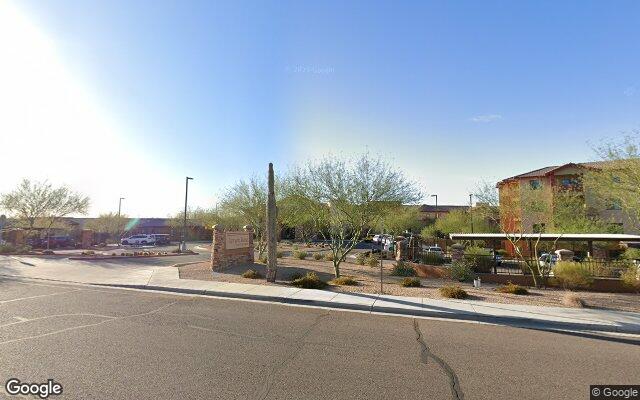
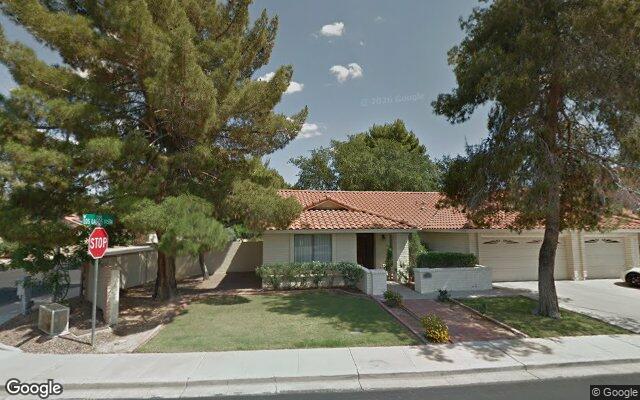
A large home, reviewed on public record.
© Google Street View
Compared to 116 Arizona facilities with a similar number of beds.
Care · 36-month window. Higher percentile = better performance on inspection record. Source: Arizona Dept. of Health Services · Bureau of Residential Facilities Licensing.
among peers to rank.
Rankings based on 36-month ADHS inspection data. Severity and frequency: fewer citations = higher percentile. Repeat rate: lower repeat citation share = higher percentile.
Citation history, plotted month by month.
26 deficiencies on record. Each bar is a month with a citation.
Finding distribution
26 total · 36 monthsScope × Severity (CMS A–L)
Every inspection visit, verbatim.
14 inspections in the public record, most recent first. Plain-language summaries open first — click into any row for the full citation text.
2026-07-28Complaint InvestigationNo findings
2026-06-22Complaint InvestigationNo findings
2026-03-30Complaint InvestigationNo findings
2026-02-10Complaint InvestigationR9-10-810.B.3.e · 1 finding
“Based on documentation review and interview, the manager failed to ensure that a resident or the resident’s representative had access to the resident’s records during normal business hours or at a time agreed upon by the resident or resident’s representative and the manager. Findings include: 1. A review of Department documentation revealed a complaint intake dated January 26, 2026, which reported that R1's representative had concerns regarding the medication management and overall care provided to R1. 2. A review of the facility policies and procedures revealed a policy titled “Resident Records.” The policy stated that “All resident records shall remain confidential and will only be released with written permission from the resident or the representative or as otherwise provided by law.” 3. A review of documentation evidence revealed an email in which R1's representative requested that the facility provide R1's medication administration record (MAR). Further review of the email revealed a response from the Executive Director to the R1's representative stating, “I was just informed today, by my regional nurse, that the Medication Administration Record is an in-house document, meaning we do not supply this to anyone outside of Canyon Winds. We are more than happy to send you a medication list upon request.” 4. In an exit interview, the findings were reviewed with E1, and no additional information was provided.”
2025-10-01Annual Compliance VisitHigh Risk · 3 findings
“Based on documentation review, record review, and interview, after the manager had a reasonable basis, according to A.R.S. § 46-454, to believe abuse, neglect, or exploitation had occurred on the premises, the manager failed to report the suspected abuse, neglect, or exploitation of the resident according to A.R.S. § 46-454. The deficient practice posed a risk as the Department was unable to assess if there was an immediate health and safety concern for residents who resided in the assisted living facility. Findings include: 1. A review of department documentation revealed an intake on September 24, 2025, reported that “R1 was picked up from the facility's memory care unit after EMS was called. Per facility staff, R1 suffered an unwitnessed fall sometime the previous night. A mobile x-ray was done, which showed a fracture to the right wrist. R1 has been diagnosed with Alzheimer's dementia, and R1's mental status is reportedly diminished as a result. R1 was barely verbal when contact was made, and staff stated that R1's mental status is normal for R1. Once in the ambulance, multiple bruises in various stages of healing were observed on the right shoulder, right-sided head, and a large contusion to the sternum measuring approximately one foot in diameter. In addition, there was severe swelling to the right wrist and skin tears to both elbows which were partially healed.” 2. A review of R1’s medical record revealed no incident report indicating whether the facility investigated where the other bruises on R1’s body came from after learning about those bruises. 3. In an interview, E1 stated that there was no incident report created for R1's for when R1 was transport to the hospital by the EMS on September 24, 2025. 4. In an interview, E1 acknowledged that E1 failed to comply with requirements of R9-10-803. J by not completing an incident report or investigation. This is a repeat of the deficiencies cited in a complaint investigation conducted on February 22, 2024.”
“Based on documentation review and interview, the manager failed to ensure a disaster plan was reviewed at least once every 12 months. The deficient practice posed a risk as a disaster plan reinforces and clarifies standards expected of employees. Findings include: 1. A review of facility documents revealed no documentation to indicate the facility's disaster plan was reviewed at least once within the past 12 months that included the date and time of the disaster plan review, the name of each employee participating in the disaster plan review, a critique of the disaster plan review, and any recommendations for improvement. 2. In an interview, E1 acknowledged that documentation indicating that the facility's disaster plan was reviewed within the last 12 months was not available. The requirement for a disaster plan review was provided as Technical Assistance (TA) at the November 13, 2019, compliance survey.”
“Based on documentation review, record review and interview, the manager failed to ensure when a resident had an incident resulting in the resident needing medical services, a caregiver documented the date and time of the incident; a description of the incident; the names of individuals who observed the incident; the action taken by the caregiver; the individuals notified by the caregiver; and any action taken to prevent the incident from occurring in the future, for one of one resident reviewed who had an incident resulting in the resident needing medical services. The deficient practice posed a health and safety risk. Findings include: 1. Review of Department documentation revealed an intake which reported that R1 had been transported from the facility to the hospital by Emergency Medical Services (EMS) on September 24, 2025. 2. In an interview, E1 reported that R1 had been transported to the hospital by EMS on September 24, 2025. 3. Review of R1's medical record revealed no documentation for the incident. 4. In an interview, E1 acknowledged R1's medical record did not include documentation showing the date and time of the incident; a description of the incident; the names of individuals who observed the incident; the action taken by the caregiver; the individuals notified by the caregiver; and any action taken to prevent the incident from occurring in the future.”
2025-06-02Complaint InvestigationNo findings
2025-01-13Complaint InvestigationNo findings
2024-11-08Complaint InvestigationNo findings
2024-07-01Complaint InvestigationNo findings
2024-06-06Complaint InvestigationA.A.C. · 9 findings
“A. A manager shall ensure that: 8. A manager, a caregiver, and an assistant caregiver, or an employee or a volunteer who has or is expected to have more than eight hours per week of direct interaction with residents, provides evidence of freedom from infectious tuberculosis: a. On or before the date the individual begins providing services at or on behalf of the assisted living facility, and b. As specified in R9-10-113;”
“C. A manager shall ensure that a personnel record for each employee or volunteer: 1. Includes: c. Documentation of: i. The individual's qualifications, including skills and knowledge applicable to the individual's job duties;”
“B. If an assisted living facility provides medication administration, a manager shall ensure that: 3. A medication administered to a resident: c. Is documented in the resident's medical record.”
“A. A manager shall ensure that: 4. A disaster drill for employees is conducted on each shift at least once every three months and documented;”
“A. A manager shall ensure that: 5. An evacuation drill for employees and residents: a. Is conducted at least once every six months; and”
“E. A manager of an assisted living center shall ensure that: 3. A fire inspection is conducted by a local fire department or the State Fire Marshal before licensing and according to the time-frame established by the local fire department or the State Fire Marshal;”
“A. A manager shall ensure that: 3. Garbage and refuse are: a. Stored in covered containers lined with plastic bags, and”
“A. A manager shall ensure that: 10. Oxygen containers are secured in an upright position;”
“A. A manager shall ensure that: 11. Poisonous or toxic materials stored by the assisted living facility are maintained in labeled containers in a locked area separate from food preparation and storage, dining areas, and medications and are inaccessible to residents;”
2024-04-18Complaint InvestigationA.A.C. · 9 findings
“Based on record review and interview, the manager failed to ensure an employee provided documentation of freedom from infectious tuberculosis (TB) on or before the date the individual began providing services at or on behalf of the assisted living facility, as specified in R9-10-113, for one of seven employees reviewed. The deficient practice posed a potential TB exposure risk to residents. Findings include: 1. R9-10-113.A states "If a health care institution is subject to the requirements of this Section, as specified in an Article in this Chapter, the health care institution's chief administrative officer shall ensure that the health care institution establishes, documents, and implements tuberculosis infection control activities that...2. Include: a. For each individual who is employed by the health care institution, provides volunteer services for the health care institution, or is admitted to the health care institution and who is subject to the requirements of this Section, screening, on or before the date specified in the applicable Article of this Chapter, that consists of: i. Assessing risks of prior exposure to infectious tuberculosis, ii. Determining if the individual has signs or symptoms of tuberculosis, and iii. Obtaining documentation of the individual's freedom from infectious tuberculosis according to subsection (B)(1)..." 2. Review of the Centers for Disease Control and Prevention website revealed a web page titled "TB Screening and Testing of Health Care Personnel." The web page stated, "If the Mantoux tuberculin skin test (TST) is used to test health care personnel upon hire (preplacement), two-step testing should be used." 3. Review of E8's personnel record revealed a negative TB skin test that was less than 12 months old, however no additional documentation of freedom from infectious TB was available for review. 4. In an interview, E1 acknowledged E8 did not provide documentation of freedom from infectious TB as specified in R9-10-113 on or before the date the individual began providing services at or on behalf of the assisted living facility.”
“Based on record review and interview, the manager failed to ensure that a personnel record for one of seven employees reviewed included documentation of the individual's skills and knowledge applicable to the individual's job duties. The deficient practice posed a risk if an employee was unable to meet a resident's needs. Findings include: 1. Review of E1's personnel record revealed documentation of E1's skills and knowledge was not available for review. 2. In an interview, E1 acknowledged E1's skills and knowledge were not documented in the personnel record.”
“Based on record review, observation, and interview, the manager failed to ensure a medication administered to a resident was accurately documented in the resident's medical record, for one of seven residents reviewed. The deficient practice posed a risk as the medical record inaccurately indicated a medication was administered and the Department was provided false or misleading information. Findings include: 1. Review of R2's medical record revealed a current written service plan dated March 1, 2023. This service plan indicated R2 received medication administration. 2. Review of R2's medical record revealed a signed medication order dated February 9, 2024. This medication order stated "Ketoconazole 2% Shampoo Apply topically to affected area twice a week". 3. Review of R2's medical record revealed an April 2024 medication administration record (MAR). This MAR stated "Ketoconazole 2% Shampoo apply topically to affected area twice a week" and indicated the shampoo was administered at 9am April 2nd, 6th, 9th, 13th, and 16th by facility caregivers. 4. During an observation of R2's medications, Ketoconazole 2% shampoo was not available. 5. In an interview, E10 acknowledged the medication was not available and reported the medication was administered by hospice not facility caregivers. 6. In an interview, E1 acknowledged the medication was not available and acknowledged R2's medical record inaccurately documented the facility caregivers administered the medication.”
“Based on documentation review and interview, the manager failed to ensure an employee disaster drill was conducted on each shift at least once every three months and documented. The deficient practice posed a risk if employees were unable to implement the disaster plan. Findings include: 1. Review of the April 2024 personnel schedule revealed three shifts; AM, PM, and NOC. 2. In an interview, E11 reported the AM shift was 6am-2pm, the PM shift was 2pm-10pm, and the NOC was 10pm-6am. 3. Review of the facility's employee disaster drills revealed a drill conducted as follows: -May 4, 2023 the drill indicated the type of disaster as "Power Outage" and was conducted at 10am; -June 29, 2023 the drill indicated the type of disaster as "All out drill/Evacuation disaster" and was conducted at 1:45pm; -July 5, 2023 the drill indicated the type of disaster as "Evacuation Drill" and was conducted on at 5:45am; -July 13, 2023 the drill indicated the type of disaster as "Missing Resident in Emergency Drill" and was conducted on at 3:00pm; -August 12, 2023 the drill indicated the type of disaster as "Evacuation Drill" and was conducted on at 1pm; -October 13, 2023 the drill indicated the type of disaster as "Fire and Evacuation Drill" and was conducted on at 6am; -October 23, 2023 the drill indicated the type of disaster as "Fire and Evacuation Drill" and was conducted on at 2pm; -November 14, 2023 the drill indicated the type of disaster as "disaster - alarm going off" and was conducted on at 10:30am; and -December 4, 2023 the drill indicated the type of disaster as "Fire and evacuation drill" and was conducted on at 6am; No other employee drills were available in the last year. 4. In an interview, E1 acknowledged the employee disaster drills were not conducted on each shift at least once every three months.”
“Based on documentation review and interview, the manager failed to ensure an evacuation drill for employees and residents was conducted at least once every six months. The deficient practice posed a risk if employees were unable to implement the evacuation plan. Findings include: 1. Review of the facility's employee and resident evacuation drills revealed the most current drill conducted June 29, 2023. No other employee and resident evacuation drills were available after June 29, 2023. 2. During an interview, E1 acknowledged the employee and resident evacuation drills were not conducted at least once every six months.”
“Based on documentation review and interview, the manager failed to ensure a fire inspection was conducted by the local fire department according to the time-frame established by the local fire department. Findings include: 1. Review of facility documentation indicated a fire inspection was conducted by Mesa Fire and Medical Department on March 28, 2022. 2. Review of the Mesa Fire and Medical Department Fire; Prevention Division website revealed the local fire department required annual fire inspections for adult care facilities. 3. In an interview, E1 acknowledged that a fire inspection was not conducted by the local fire department according to the time-frame established by the local fire department.”
“Based on observation and interview, the manager failed to ensure garbage and refuse were stored in covered containers lined with plastic bags. Findings include: 1. During a tour of the facility with E3, the Compliance Officers observed uncovered containers storing garbage and refuse in the residential units, resident laundry rooms, and a common area bathroom. 2. In an interview, E1 and E3 acknowledged garbage and refuse were not stored in covered containers.”
“Based on observation and interview, the manager failed to ensure oxygen containers were secured in an upright position. Findings include: 1. During a tour of the facility with E3, the Compliance Officers observed an unsecured oxygen container in R8's residential unit. 2. In an interview, E1 and E3 acknowledged that an oxygen container was not secured in an upright position.”
“Based on observation and interview, the manager failed to ensure poisonous or toxic materials stored by the assisted living facility were maintained in a locked area inaccessible to residents. The deficient practice posed a risk to the physical health and safety of a resident. Findings include: 1. During a tour of the facility with E3, the Compliance Officers observed the following in an open activities closet: - Goo Gone, which stated "DANGER: Harmful or Fatal if Swallowed"; - Altima 64 M, which stated "DANGER: Keep out of reach of children"; - Pro Clean Surface Cleaner Sanitizer, which stated "Keep out of reach of children". 2. During a tour of the facility with E3, the Compliance Officers observed the following on an unattended housekeeping cart: - A spray bottle labeled "Bleach"; - Lysol disinfectant spray, which stated "Hazards To Humans and Domestic Animals"; - Boardwalk furniture polish, which stated "Caution: Keep out of reach of children"; - Sprayway glass cleaner, which stated "May be fatal if swallowed or enters airways". 3. In an interview, E1 and E3 acknowledged poisonous or toxic materials stored by the assisted living facility were not maintained in a locked area inaccessible to residents.”
2024-03-28Complaint InvestigationA.A.C. · 2 findings
“Based on record review and interview, the manager of an assisted living center who contacted an emergency responder on behalf of a resident failed to provide to the emergency responder a written document that included all required documentation, for two of three residents sampled. Findings include: 1. A review of R1's medical record revealed an incident report dated January 26, 2024. The incident report revealed R1 had an accident, emergency, or injury, the facility contacted an emergency responder, and R1 was taken to the hospital. However, the documented information provided to the emergency responder did not include the following: -The reason or reasons the emergency responder was requested on behalf of R1; -The name, address and telephone number of the resident's current pharmacy; -The point-of-contact information for the assisted living center, including the cell phone number and email address; and -A copy of R1's health insurance portability and accountability act (HIPAA) release authorizing a receiving hospital to communicate with the assisted living center to plan for R1's discharge. 2. A review of R2's medical record revealed an incident report dated February 10, 2024. The incident report revealed R2 had an accident, emergency, or injury, the facility contacted an emergency responder, and R2 was taken to the hospital. However, the documented information provided to the emergency responder did not include the following: -The reason or reasons the emergency responder was requested on behalf of R2; -The name, address and telephone number of the resident's current pharmacy; -The point-of-contact information for the assisted living center, including the cell phone number and email address; and -A copy of R2's health insurance portability and accountability act (HIPAA) release authorizing a receiving hospital to communicate with the assisted living center to plan for R2's discharge. 3. In an interview, E1 reported E1 was not familiar with this statute. E1 had not yet updated the facility documentation to include the required information.”
“Based on observation and interview, the manager failed to ensure food was protected from potential contamination which posed a health and safety risk. Findings include: 1. During an environmental tour of the facility's kitchen, the Compliance Officer observed the walk-in refrigerator and the dry storage area. The walk-in refrigerator contained a pan of partially covered shredded pork, a pan of uncovered chicken pot pie filling, and a large plastic uncovered container of coleslaw. The uncovered items were not protected from potential contamination. 2. In an interview, E1 acknowledged the uncovered foods posed a potential for contamination. E1 acknowledged food was not protected from potential contamination.”
2024-02-29Complaint InvestigationNo findings
2024-02-22Complaint InvestigationA.A.C. · 2 findings
“Based on documentation review, record review, and interview, the governing authority failed to ensure compliance with A.R.S. \'a7 36-411, for one of four employees reviewed. The deficient practice posed a risk if the employee was a danger to a vulnerable population. Findings include: 1. A.R.S. \'a7 36-411 states, "...C. Owners shall make documented, good faith efforts to: 1. Contact previous employers to obtain information or recommendations that may be relevant to a person's fitness to work in a residential care institution..." 2. Review of E6's personnel record revealed E6 worked as an assistant caregiver and had a hire date of December 18, 2023. The personnel record revealed a fingerprint clearance card. However, the personnel record did not contain documentation of good faith efforts to contact previous employers to obtain information or recommendations that may be relevant to E6's fitness to work in a residential care institution. 3. Review of the Department of Public Safety (DPS) fingerprint clearance card database on February 22, 2024, revealed E6's fingerprint clearance card was valid. 4. In an interview, E1 acknowledged documentation was not available that showed E6's work references were obtained upon hire at the facility.”
“Based on documentation review, record review, and interview, the manager failed to ensure if a manager had a reasonable basis, according to A.R.S. \'a7 46-454, to believe abuse had occurred on the premises, the manager complied with all the requirements in R9-10-803(J), which posed a health and safety risk. Findings include: 1. A.R.S. \'a7 46-454. stated, "Duty to report abuse, neglect and exploitation of vulnerable adults; duty to make medical records available; violation; classification A. A health professional...or other person who has responsibility for the care of a vulnerable adult and who has a reasonable basis to believe that abuse, neglect or exploitation of the adult has occurred shall immediately report or cause reports to be made of such reasonable basis to a peace officer or to the adult protective services central intake unit...All of the above reports shall be made immediately by telephone or online. B. If an individual listed in subsection A of this section is an employee or agent of a health care institution as defined in section 36-401 and the health care institution's procedures require that all suspected abuse, neglect and exploitation be reported to adult protective services as required by law, the individual is deemed to have complied with the requirements of subsection A of this section by reporting or causing a report to be made to the health care institution in accordance with the health care institution's procedures." 2. Review of R1's medical record revealed a document titled "Charting Notes" dated February 18, 2024 at 5:22am that stated "This writer received a call from caregiver on shift, stated resident's pendant was going off for 10 mins, caregiver went to resident's room and observed caregiver (E3) asleep on resident's couch." 3. In an interview, E1 reported Adult Protective Services (APS) was at the facility February 21, 2024 investigating a claim of abuse regarding E3 and R1. 4. Review of R1's medical record revealed no documentation that showed the facility took immediate action to stop the suspected abuse regarding E3 and R1 after APS was at the facility. 5. In a telephone interview, E1 acknowledged once E1 became aware of the alleged incident regarding E3 and R1, the facility did not take immediate action to stop the suspected abuse. 6. Review of R2's medical record revealed a document titled "Charting Notes" dated August 5, 2023 at 7pm that stated "Caregiver entered resident's room to assist with medications, resident stated (R2) was raped by (R2's) (family member), resident sent to Banner Baywood Banner Baywood notified of statement made by resident, rape kit performed at ER by Banner Baywood Physician, results were negative, POA notified, PCP notified." 7. Review of R2's medical record revealed no documentation that showed this incident was reported to APS according to A.R.S. \'a7 46-454. 8. In an interview, E1 acknowledged documentation was not available that showed APS was notified of the incident and reported the hospital reported it to APS.”
1 older inspection from 2023 are not shown above.
Get the complete record, translated into plain language — emailed to you.
Other facilities in Mesa.
Other memory care facilities near Mesa with similar care offerings.
Facility Watch · Premium
Family reviews
No reviews yet — be the first to share your experience