Pendo 1 Care Homes LLC.
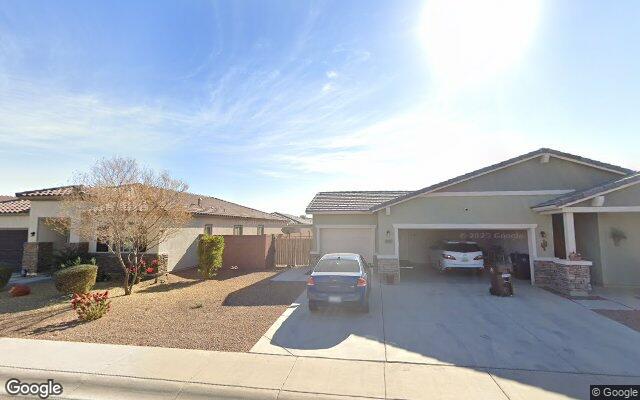
A small home, reviewed on public record.
© Google Street View
Compared to 1,661 Arizona facilities with a similar number of beds.
Care · 36-month window. Higher percentile = better performance on inspection record. Source: Arizona Dept. of Health Services · Bureau of Residential Facilities Licensing.
among peers to rank.
Rankings based on 36-month ADHS inspection data. Severity and frequency: fewer citations = higher percentile. Repeat rate: lower repeat citation share = higher percentile.
Citation history, plotted month by month.
23 deficiencies on record. Each bar is a month with a citation.
Finding distribution
23 total · 36 monthsScope × Severity (CMS A–L)
Every inspection visit, verbatim.
3 inspections in the public record, most recent first. Plain-language summaries open first — click into any row for the full citation text.
2026-03-17Annual Compliance VisitA.A.C. · 20 findings
“Based on documentation review, record review, and interview, the assisted living home failed to maintain a standardized form for each resident that included the information prescribed in A.R.S. 36-420.04.A. Findings include: 1. A.R.S. 36-420.04.A states, "A. An assisted living center or assisted living home that contacts an emergency responder on behalf of a resident shall provide to the emergency responder a written document that includes all of the following: 1. The reason or reasons the emergency responder was requested on behalf of the resident. 2. Whether the resident receives medication services and, if the resident has provided this information to the assisted living center or assisted living home, a list of all the resident's prescription and over-the-counter medications, their dosages and how frequently they are administered. 3. The name, address and telephone number of the resident's current pharmacy. 4. A list of any known allergies to any medications, additives, preservatives or materials like latex or adhesive. 5. The name and contact information for the resident's primary care physician and power of attorney or authorized representative. 6. Basic information about the resident's physical and mental conditions and basic medical history, such as having diabetes or a pacemaker or experiencing frequent falls or cardiovascular and cerebrovascular events, as well as dates of recent episodes, if known. 7. The point-of-contact information for the assisted living center or assisted living home, including the telephone number, if available, cell phone number and email address. A point of contact must be available to respond to questions regarding the information provided twenty-four hours a day, seven days a week. 8. A copy of the resident's health insurance portability and accountability act release authorizing a receiving hospital to communicate with the assisted living center or assisted living home to plan for the resident's discharge. This paragraph does not preclude a resident from revoking the resident's health insurance portability and accountability act release authorization. 9. A copy of the resident's advance directives, if any, on file at the assisted living center or assisted living home. This paragraph does not preclude a resident from revoking or modifying the resident's advance directives." 2. A review of facility documentation did not include a standardized form that included the aforementioned information for each resident of the facility. 3. A review of R1's and R2's medical records revealed all required information; however, a standardized form with all aforementioned information was not available for review. 4. In an exit interview, the findings were reviewed with E3, and no additional information was provided.”
“Based on records review and interview, the manager failed to ensure annual training and education related to recognizing the signs and symptoms of tuberculosis (TB) to individuals employed by the health care institution, for two of three employees sampled. The deficient practice posed a potential risk of illness to residents. Findings include: 1. A review of E1's personnel record revealed E1 was hired on September 1, 2022. E1’s personnel record revealed annual training and education related to recognizing the signs and symptoms of tuberculosis for 2023. However, E1’s personnel record revealed no annual training and education related to recognizing the signs and symptoms of tuberculosis for 2024 or 2025. Based on E1’s hire date, the documentation was required. 2. A review of E2's personnel record revealed E1 was hired on March 4, 2024. E2’s personnel record no annual training and education related to recognizing the signs and symptoms of tuberculosis for 2025. Based on E2’s hire date, the documentation was required. 3. In an exit interview, the findings were reviewed with E3, and no additional information was provided.”
“Based on documentation review, record review, and interview, the governing authority failed to ensure compliance with A.R.S. § 36-411, for three of three personnel sampled. The deficient practice posed a risk if the employees were a danger to a vulnerable population. Findings include: 1. A.R.S. § 36-411(C) states: "C. Each residential care institution, nursing care institution and home health agency shall make documented, good faith efforts to: 3. Beginning January 1, 2025, verify that a potential employee is not on the adult protective services registry pursuant to section 46-459. If a potential employee is found to be on the adult protective services registry, the residential care institution, nursing care institution or home health agency may not hire the potential employee. 4. On or before March 31, 2025, verify that each employee is not on the adult protective services registry pursuant to section 46-459. If an employee is found to be on the adult protective services registry, the residential care institution, nursing care institution or home health agency shall take action to terminate the employment of that employee. 5. Beginning March 31, 2025, annually reverify that each employee is not on the adult protective services registry pursuant to section 46-459.2.” 2. A review of E1's personnel record revealed E1 was hired on September 1, 2022. E1’s employment record contained one APS registry check conducted in 2023. E1’s personnel record did not contain annual good faith efforts to reverify that E1 was not on the APS registry in 2025. 3. A review of E2's personnel record revealed E2 was hired on March 4, 2024. E2’s personnel record did not include annual good faith efforts to reverify that E2 was not on the APS registry in 2025. 4. A review of E3's personnel record revealed E3 was hired on September 1, 2024. E3’s personnel record did not include annual good faith efforts to reverify that E3 was not on the APS registry in 2025. 5. In an exit interview, the findings were reviewed with E3, and no additional information was provided.”
“Based on record review and interview, the manager failed to ensure that before or at the time of acceptance of an individual, the individual submitted documentation that was dated within 90 calendar days before the individual was accepted by the assisted living facility, and if an individual was expected to receive supervisory care services, personal care services, or directed care services, whether the individual required continuous medical services, continuous or intermittent nursing services, or restraints; and was dated and signed by a physician, registered nurse practitioner, registered nurse, or physician assistant for two of three residents sampled. The deficient practice posed a risk if the facility was unable to meet a resident's needs. Findings include: 1. A review of R1’s and R2’s medical records revealed there was no admitting documentation to indicate R1's and R2’s expected level of care that included whether R1 and R2 required continuous medical services, continuous or intermittent nursing services, or restraints, and that was dated and signed by a physician, registered nurse practitioner, registered nurse, or physician assistant. 2. In an exit interview, the findings were reviewed with E3, and no additional information was provided at the time of the inspection. 3. Technical assistance was provided on this rule during the compliance inspection on May 21, 2024.”
“Based on record review and interview, the manager failed to ensure that, before or at the time of an individual’s acceptance by an assisted living facility, there was a documented residency agreement (RA) with the assisted living facility that included: a list of the services to be provided by the assisted living facility to the resident; a list of the services available from the assisted living facility at an additional fee or charge; whether the manager or a caregiver is awake during nighttime hours; the policy and procedure for a resident to terminate residency, including terminating residency because services were not provided to the resident according to the resident’s service plan; the manager’s signature and date signed, for two of two residents sampled. Findings include: 1. A review of R1’s medical record revealed a residency agreement that did not include the following: a. A list of additional services available for an additional fee b. Whether a caregiver was awake during nighttime hours c. A policy for a resident to terminate residency. d. No manager’s signature. The RA was signed by a caregiver. Based on R1's date of acceptance, this documentation was required. 2. A review of R2’s medical record revealed a residency agreement that did not include the following: a. A list of additional services available for an additional fee b. Whether a caregiver was awake during nighttime hours c. A policy for a resident to terminate residency. b. No manager’s signature. The RA was signed by a caregiver. Based on R1's date of acceptance, this documentation was required. 3. In an exit interview, the findings were reviewed with E3, and no additional information was provided.”
“Based on record review and interview, the manager failed to ensure that a resident had a service plan that was established, documented, and implemented that included a description of the resident’s medical or health problems, including physical, behavioral, cognitive, or functional conditions or impairments, for one of two residents sampled. The deficient practice posed a risk if the resident’s needs were not being met. Findings include: 1. A review of R2’s medical record revealed a service plan dated June 16, 2025. Further review of R2’s medical record revealed R2’s service plan did not include a description of R2’s medical or health problems, including physical, behavioral, cognitive, or functional conditions or impairments. 2. In an exit interview, the findings were reviewed with E3, and no additional information was provided.”
“Based on record review and interview, the manager failed to ensure that a resident had a service plan that was established, documented, and implemented that included the frequency of assisted living services being provided to the resident, for one of two residents sampled. The deficient practice posed a risk if the resident’s needs were not being met. Findings include: 1. A review of R1's medical record revealed a service plan dated February 20, 2025. The service plan indicated R1 received supervisory care services. 2. A review of R1’s service plan revealed R1 received the following services: a. Eating/Drinking b. Dressing c. Hair care d. Oral care e. Skin care However, the service plan did not reveal the frequencies for the above listed services provided to R1. 3. In an exit interview, the findings were reviewed with E3, and no additional information was provided.”
“Based on record review and interview, the manager failed to ensure that a resident had a service plan that was established, documented, and implemented that was reviewed and updated at least once every 12 months for a resident receiving supervisory care services, for one of two residents sampled. The deficient practice posed a risk if the resident’s needs were not being met. Findings include: 1. A review of R1's medical record revealed a service plan dated February 20, 2025. The service plan indicated R1 received supervisory care services. However, an updated service plan was not available for review. 2. In an exit interview, the findings were reviewed with E3, and no additional information was provided.”
“Based on record review and interview, the manager failed to ensure that a resident had a service plan that was established, documented, and implemented that was reviewed and updated at least once every six months for a resident receiving personal care services, for one of two residents sampled. The deficient practice posed a risk if the resident's needs were not being met. Findings include: 1. A review of R2's medical record revealed a service plan dated June 16, 2025. The service plan indicated R2 received personal care services. However, an updated service plan was not available for review. 2. In an exit interview, the findings were reviewed with E3, and no additional information was provided.”
“Based on record review and interview, the manager failed to ensure that a resident had a service plan that was established, documented, and implemented that was signed and dated by the manager, for two of two residents sampled. The deficient practice posed a risk if the manager was not informed of the requirements in the service plan. Findings include: 1. A review of R1's medical record revealed a service plan dated February 20, 2025. Further review of R1’s service plan revealed the service plan was not signed or dated by the manager. The service plan was signed by a caregiver. 2. A review of R2's medical records revealed a service plan dated June 16, 2025. Further review of R2’s service plan revealed the service plan was not signed or dated by the manager. The service plan was signed by two caregivers. Furthermore, the service plan signatures were predated on June 7, 2025 3. In an exit interview, the findings were reviewed with E3, and no additional information was provided. 4. Technical assistance was provided on this rule during the abbreviated inspection conducted on May 21, 2024.”
“Based on record review and interview, the manager failed to ensure that a resident had a service plan that was established, documented, and implemented that was signed and dated by the nurse or medical practitioner who reviewed the service plan, for one of two residents sampled. The deficient practice posed a risk if the residents’ needs were not being met. Findings include: 1. A review of R2's medical records revealed a service plan dated June 16, 2025. The service plan revealed R2 received medication administration. Further review of R2’s service plan revealed the service plan was not signed or dated by the nurse or medical practitioner who reviewed the service plan. 2. In an exit interview, the findings were reviewed with E3, and no additional information was provided.”
“Based on record review, documentation review, and interview, the manager failed to ensure a caregiver provided a resident with the assisted living services in the resident’s service plan, for one of two residents sampled. The deficient practice posed a risk if the resident's needs were not being met. Findings include: 1. A review of R1's medical record revealed R1's most recent service plan dated February 20, 2025. The service plan revealed R1 received assistance with activities of daily living (ADLs), including “bathing 3 times/week.” 2. A review of R1’s electronic “Tasks & ADL’s” revealed the following service were documented as provided from March 1, 2026 to present: • “Bathing” However, the ADL did not reveal bathing was provided three times per week. 3. A review of facility documentation revealed a resident shower calendar dated March 2026. The calendar revealed R1 was scheduled for showers two times per week, not three times as required per R1’s service plan. 4. In an interview, E3 reported residents received showers on the days the shower calendar showed they were scheduled for showers, not according to the service plan. 5. In an exit interview, the findings were reviewed with E3, and no additional information was provided.”
“Based on record review and interview, the manager failed to ensure a caregiver documented the services provided in the resident’s medical record, for two of two residents sampled. The deficient practice posed a risk if the residents’ needs were not being met. Findings include: 1. A review of R1's medical record revealed R1's most recent service plan dated February 20, 2025. The service plan revealed R1 received assistance with activities of daily living (ADLs) for the following services: • Incontinence check at least every 2 hours; • Turn every 2 hours; • Eating/drinking; • Toileting as needed; • Dressing; • Hair care; • Oral care; and • Nail care: file toenails every 2 weeks. 2. A review of R1’s ADL documentation revealed the following services were documented as provided from March 1, 2026, to present: • Med/Order Prep; • Bathing; • Daily check; • Exercise; • Night check; • Blood pressure; • Oxygen saturation; • Temperature; • Heart rate; • Weight; • Bowel movements; • Food intake; and • Fluid intake. However, the ADLs did not include the aforementioned services listed in R1’s service plan. 3. A review of R2's medical record revealed R2's most recent service plan dated June 16, 2025. The service plan revealed R2 received the following services: • Eating/drinking; • Toileting assistance; • Dressing; • Shave assistance; • Oral care; • Bathing twice a week; and • Nail care every 2 weeks. 4. A review of R2’s ADL documentation revealed the following assisted living services were documented as provided from March 1, 2026 to present: • Med/Order Prep; • Bathing; • Daily check; • Exercise; • Night check; • Blood pressure; • Oxygen saturation; • Temperature; • Heart rate; • Weight; • Bowel movements • Food intake; and • Fluid intake. However, the ADLs did not include the aforementioned services listed in R2’s service plan. 5. In an interview, E3 reported that the residents received the services listed in R1’s and R2’s service plans. Additionally, E3 reported that E3 did not document services provided on the ADLs because E3 was not familiar with the electronic “Task & ADL’s.” 6. In an exit interview, the findings were reviewed with E3, and no additional information was provided.”
“Based on documentation review, record review, and interview, the manager failed to ensure that a resident's medical record contained documentation of the resident's of freedom from infectious tuberculosis (TB) as specified in R9-10-113, for one of two residents sampled. The deficient practice posed a potential illness risk to residents. Findings include: 1. R9-10-113.A states, "If a health care institution is subject to the requirements of this Section, as specified in an Article in this Chapter, the health care institution's chief administrative officer shall ensure that the health care institution establishes, documents, and implements tuberculosis infection control activities that...2. Include: a. For each individual who is employed by the health care institution, provides volunteer services for the health care institution, or is admitted to the health care institution and who is subject to the requirements of this Section, screening, on or before the date specified in the applicable Article of this Chapter, that consists of: i. Assessing risks of prior exposure to infectious tuberculosis, ii. Determining if the individual has signs or symptoms of tuberculosis, and iii. Obtaining documentation of the individual's freedom from infectious tuberculosis according to subsection (B)(1)..." 2. A review of R1's medical record revealed no documentation of a completed TB skin test. Based on R1's date of admission, the documentation was required. 3. In an interview, E3 reported R1 received the required testing in 2024. However, no documentation was provided during the inspection. 4. In an exit interview, the findings were reviewed with E3, and no additional information was provided.”
“Based on record review, observation, documentation review, and interview, the manager failed to ensure that a resident’s medical record contained a medication order from a medical practitioner for each medication that the resident received assistance in the self-administration of, for one of two residents sampled. The deficient practice posed a risk as medication administered could not be verified against a medication order. Findings include: 1. A review of R1’s medical record revealed a service plan dated February 20, 2025. The service plan indicated R1 received assistance in the self-administration of medication. 2. A review of R1’s electronic medication administration record (eMAR) dated March 2026 revealed the following medications were administered to R1: · Desvenlafaxine succinate 50 mg; · Propranolol hydrochloride 60 mg; and · Fesoterodine fumarate 8 mg. 3. A review of R1’s medical record did not include an order for the following medications: · Desvenlafaxine succinate 50 mg; · Propranolol hydrochloride 60 mg; and · Fesoterodine fumarate 8 mg. 4. The Compliance Officer observed R1’s medication bottles containing the following medications: · Desvenlafaxine succinate 50 mg; · Propranolol hydrochloride 60 mg; and · Fesoterodine fumarate 8 mg. 5. A review of the facility’s policies and procedures revealed a policy titled, “Doctors’ Orders Policy” which stated, “3. a) All medication and treatment orders will be carried out as prescribed. The facility Manager and or caregivers will: i. Consider faxed orders with a doctor’s/practitioner’s signature the same as written orders and forward the fax to the pharmacy for action. The received order shall then be filed in the resident’s medial record and a copy uploaded on the resident’s profile on Synkwise.” 6. In an exit interview, the findings were reviewed with E3, and no additional information was provided.”
“Based on observation, record review, documentation review, and interview, the manager of an assisted living facility providing assistance in the self-administration of medication failed to ensure a resident’s medication was stored by the assisted living facility, for one of two residents sampled. The deficient practice posed a risk to the resident’s health and safety. Findings include: 1. During an environmental tour of the facility, the Compliance Officer observed the following medications being stored in R1’s personal room: · One Albuterol inhaler; · One tube of Lidocaine 3% cream; · One tube of Nystatin 100,000 topical cream; · Several tubes of Zinc Oxide 20% ointment; and · One tube of Diclofenac Sodium 1% topical gel. 2. A review of R1’s medical record revealed a service plan dated February 20, 2025. The service plan indicated R1 received assistance in the self-administration of medication. 3. A review of the facility’s policies and procedures revealed a policy titled, “Medication Administration and Management Policy” which stated, “Medication Assistance: 3. Assistance with self-administration includes, but may not be limited to: storing, reminding, confirming right resident, right dosage, and right application, opening container, pouring and preparing, and observing the resident while medication is taken. 4. Administration of medications shall be by designated staff only in compliance with applicable state regulations and Facility Policy.” 4. In the exit interview, the findings were reviewed with E3, and no additional information was provided.”
“Based on record review, documentation review, and interview, the manager failed to ensure assistance in the self-administration of medication provided to a resident was documented in the resident’s medical record, for one of two residents sampled. The deficient practice posed a risk to the resident’s health and safety. Findings include: 1. A review of R1's medical records revealed a service plan dated February 20, 2025. The service plan indicated R1 received assistance in the self-administration of medication. 2. A review of R1's medications revealed the following medications for R1: • Lidocaine 3% cream; • Nystatin 100,000 topical cream; • Zinc Oxide 20% ointment; • Diclofenac Sodium 1% topical gel; and • Albuterol Sulfate HFA inhalation aerosol. 3. A review of R1's electronic medication administration record (eMAR) revealed the following medications were not listed for R1: • Lidocaine 3% cream; • Nystatin 100,000 topical cream; • Zinc Oxide 20% ointment; • Diclofenac Sodium 1% topical gel; and • Albuterol Sulfate HFA inhalation aerosol. 4. A review of the facility’s policies and procedures revealed a policy titled, “Medication Administration and Management Policy” which stated, “Documentation: 2. Current medications, including topicals used for treatments shall be listed on the eMAR." 5. In an interview, E3 reported R1 self-administered R1’s above-mentioned medications daily. 6. In the exit interview, the findings were reviewed with E3, and no additional information was provided.”
“Based on observation and interview, the manager failed to ensure a rechargeable fire extinguisher was serviced at least once every 12 months. Findings include: 1. During an environmental tour of the facility, the Compliance Officer observed a wall mounted rechargeable fire extinguisher in the kitchen area. The fire extinguisher had a tag indicating the fire extinguisher had last been serviced in February 2025, more than 12 months prior to the on-site inspection. 2. In an exit interview with E3, the findings were reviewed and no additional information was provided.”
“Based on observation, record review, and interview, the manager failed to ensure the premises was free from a condition or situation that may have caused a resident or other individual to suffer physical injury. The deficient practice posed a risk to resident’s health and safety. Findings include: 1. During a review of R1’s medications, the Compliance Officer observed several whole and broken white pills laying loose on the bottom of R1’s medication storage container. The pills were of different sizes and shapes. Some of the pills appeared to have been cut, others were broken into pieces. Three whole pills contained the numbers “7 5” printed on them. One pill was stamped with the number “114.” It could not be determined what specific medications the pills were, nor the original medication containers the pills came from. 2. A review of R1's medical record revealed R1 received assistance in the self-administration of medication. 3. A review of the facility’s policies and procedures revealed a policy titled, “Medication Administration and Management Policy” which stated, “Storage: 1. Medication shall be stored in an orderly manner in the medication cabinet.” 4. In an interview, E3 reported that E3 did not know what the pills were. 5. In the exit interview, the findings were reviewed with E3, and no additional information was provided.”
“Based on observation, documentation review, and interview, the manager failed to ensure poisonous or toxic materials stored by the assisted living facility were in a locked area separate and were inaccessible to residents. The deficient practice posed a risk to the physical health and safety of the residents. Findings include: 1. During the environmental tour, the Compliance Officer observed the following item located in a common bathroom used by residents: · One can Wizard, one can Glade, and two cans Febreze air fresheners. 2. During the environmental tour, the Compliance Officer observed the following item located in an unlocked kitchen cabinet accessible to residents: · One 62-count container of Cascade dishwasher pods. 3. A review of the facility’s policies and procedures revealed a policy titled, “Environmental Standards Policy” which stated, “All cleaning and disinfecting agents are maintained in labeled containers and locked in the laundry room and under the kitchen sink cabinet separate from food preparation and storage, dining areas, and medications and keys kept away from residents.” 4. In the exit interview, the findings were reviewed with E3, and no additional information was provided.”
2024-08-06Complaint InvestigationA.A.C. · 2 findings
“Based on record review, documentation review, and interview, the manager failed to ensure a service plan for a resident receiving personal care services included skin maintenance to prevent and treat bruises, injuries, pressure sores, and infections; offering sufficient fluids to maintain hydration; and incontinence care that ensures that a resident maintained the highest practicable level of independence when toileting, for two of five residents sampled receiving personal care services. Findings include: 1. A review of R1 and R4's medical records revealed documentation of their current written service plans for personal care services did not contain the following: - Skin maintenance to prevent and treat bruises, injuries, pressure sores, and infections; - Offering sufficient fluids to maintain hydration; and - Incontinence care that ensures that a resident maintains the highest practicable level of independence when toileting. 2. A review of R2 and R3's medical records revealed documentation of their current written service plans for personal care services did not contain the following: - Offering sufficient fluids to maintain hydration; and - Incontinence care that ensures that a resident maintains the highest practicable level of independence when toileting. 3. In an interview, E1 reported being unaware the service plans did not include the documentation of skin maintenance to prevent and treat bruises, injuries, pressure sores, and infections; incontinence care that ensures that a resident maintains the highest practicable level of independence when toileting; and offering sufficient fluids to maintain hydration.”
“Based on documentation review, record review, observation, and interview, the manager of a facility providing directed care services failed to ensure a means of exiting the facility providing access to an outside area alerted employee of the egress of a resident from the facility. The deficient practice posed a risk if the facility was unaware of the general or specific whereabouts of a resident. Findings include: 1. A review of the license issued by the Department revealed the facility was licensed at the directed care level. 2. A review of R2, R3, and R4's medical records revealed all three were receiving directed care services. 3. While on-site the Compliance Officer observed R4 wandering about the facility opening and closing doors in the kitchen, the patio and other rooms in the facility. 4. During a tour of the facility the Compliance Officer observed when exiting from the facility onto the patio no alarm alerted employees of an individual exiting the facility. The Compliance Officer observed an alarm at the top of the door, however, the alarm was not on. When turned on the alarm sounded and would not shut off. E2 reported turning it off due to the noise. The Compliance Officer observed part of the alarm was broken and did not make contact with the other part to allow the alarm to shut off. The alarm was not in working condition. 5. During a telephonic interview, E1 reported being unaware the door alarm was not working. This is a repeat citation from the abbreviated inspection conducted on May 21, 2024.”
2024-05-21Annual Compliance VisitA.A.C. · 1 finding
“Based on observation, documentation review, record review, and interview, the manager of a facility providing directed care services failed to ensure a means of exiting the facility providing access to an outside area alerted employee of the egress of a resident from the facility. The deficient practice posed a risk if the facility was unaware of the general or specific whereabouts of a resident. Findings include: 1. A review of the license issued by the Department revealed the facility was licensed at the directed care level. 2. When the Compliance Officers entered the facility they observed the door did not alert employees of the egress of a resident. The Compliance Officers observed an alarm on the top of the door however, the alarm was not on. E2 turned the alarm on. The alarm would only alert when the door was closed, it did not alert when the door opened. The facility's entrance door did not have any means to alert employees of a resident's egress. 3. A review of R1, R2, and R3's medical records revealed all three were receiving directed care services. 4. While on-site the Compliance Officers observed R1 wandering about the facility opening and closing doors in the kitchen, the patio and other rooms in the facility. 5. During a tour of the facility the Compliance Officers observed when exiting from the facility onto the patio no alarm alerted employees of an individual exiting the facility. The Compliance Officers observed an alarm at the top of the door, however, the alarm was not on. E2 tried to turn the alarm on and it was not in working order. 6. Outside the facility the Compliance Officer observed a gate leading into the street and the surrounding neighborhood. The Compliance Officer observed the gate did not have a lock. The Compliance officer was able to open the gate and enter the street and surrounding neighborhood. E2 reported taking the lock off the gate to remove the trash and forgetting to put it back on. The patio door and the gate did not have any means to alert employees of a resident's egress. 7. During an interview, E2 acknowledged the front door alarm was not working, the patio door alarm was not working, and the gate leading to the road did not have any means to alert employees of a resident's egress. 8. During a telephonic interview, E1 and E3 reported being unaware the door alarms were not working and the gate had been left unlocked.”
Other facilities in Maricopa.
Other memory care facilities near Maricopa with similar care offerings.
Full Inspection Record
Family reviews
No reviews yet — be the first to share your experience