Litchfield Park Assisted Living & Memory Care LLC.
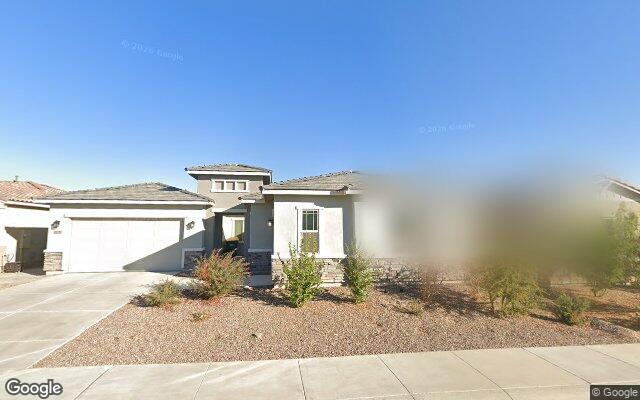
A medium home, reviewed on public record.
© Google Street View
Compared to 1,661 Arizona facilities with a similar number of beds.
Care · 36-month window. Higher percentile = better performance on inspection record. Source: Arizona Dept. of Health Services · Bureau of Residential Facilities Licensing.
among peers to rank.
Rankings based on 36-month ADHS inspection data. Severity and frequency: fewer citations = higher percentile. Repeat rate: lower repeat citation share = higher percentile.
Citation history, plotted month by month.
14 deficiencies on record. Each bar is a month with a citation.
Finding distribution
14 total · 36 monthsScope × Severity (CMS A–L)
Every inspection visit, verbatim.
7 inspections in the public record, most recent first. Plain-language summaries open first — click into any row for the full citation text.
2025-09-26Complaint InvestigationR9-10-817.B.3 · 2 findings
“Based on record review and interview, the manager did not ensure medication administered to a resident was administered in compliance with a medication order and was documented in the resident’s medical record for one of two resident's sampled. The deficient practice posed a risk if the resident experienced a change in condition due to improper administration of medication. Findings include: 1. A review of R1’s medical record revealed a personal level service plan titled “Initial Assessment” from March 2025 which documented R1 was expected to receive administration of medication. 2. A review of R1’s medical record revealed a document titled “Initial Medication Order Form” from June 2025. The documented included the following signed medication orders: Memantine - 10 milligram (MG) by mouth (PO) two times per day (BID); Donepezil - 10MG PO at hours of sleep (QHS); and Duloxetine DR – 60MG PO QHS. 3. A review of R1’s medical record revealed a Medication Administration Record (Mar) from August 2025. The MAR documented the following medications were held: Memantine - 10 milligram (MG) by mouth (PO) two times per day (BID) – August 13, 2025 to August 28, 2025; Donepezil - 10MG PO at hours of sleep (QHS) – August 13, 2025 – August 30, 2025; and Duloxetine DR – 60MG PO QHS – August 13, 2025 – August 29, 2025. However, no medication order to hold the medications was available for review. 4. A review of R1’s medical record revealed a medication order from August 28, 2025 which provided the following instructions to discontinue medications: Duloxetine 60 MG Cap Delayed – 1 Capsule orally at bedtime every other day for 2 weeks, then Mon, Wed, Friday x 1 week, then d/c; and Donapezil 10MG Tab – 1/2 tablet orally daily at bedtime 7 days then d/c. However, no medication order to discontinue the following medication was available for review: Memantine – 10 MG PO BID. 5. A review of R1’s medical record revealed a MAR from September 2025. A review of the August 2025 and September 2025 MARs revealed Memantine 10 MG was discontinued with the aforementioned medication hold and was not administered from August 8, 2025 to September 16, 2025. 6 . In an exit interview, the findings were reviewed with E1 and no additional information was provided.”
“Based on record review and interview, when a resident had an accident, emergency, or injury that resulted in the resident needing medical services, the manager did not ensure the caregiver immediately notified the resident's emergency contact and primary care provider for one of two residents sampled. Findings include: 1 . A review of R1's medical record revealed a document titled "Report of Unusual Occurrence". The documentation revealed an injury from September 16, 2025. The report documented that the fall occurred at 19:02 on September 16, 2025. However, the document revealed notification of R1's injury occurred as follows: Emergency Contact: September 17, 2025 at 8:50AM; Primary Care Provider: September 17, 2025 at 9:45AM; Resident's representative: September 17, 2025 at 8:50AM; Licensee (Owner): September 17, 2025 at 6:50AM; and Manager: September 17, 2025 at 6:45AM. 2 . In an exit interview, E1 reported the facility nurse practitioner was already scheduled to come to the facility on September 17, 2025. E1 reported the facility nurse practitioner ordered X-rays to be completed. E1 acknowledged R1's emergency contact and primary care provider were not immediately notified.”
2025-09-16Complaint InvestigationA.A.C. · 8 findings
“Based on documentation review and interview, the assisted living home/center failed to maintain a copy of the document provided to the emergency responder for a period of two years after the date of the emergency for one of one residents sampled who required an emergency response. This deficient practice posed a risk that the emergency responder may not have access to critical health information for the resident. Findings include: 1. A review of department documentation revealed that on August 8, 2025, R1 was hospitalized for five days with acute kidney failure resulting from severe dehydration and malnutrition. 2. A review of R1's medical record revealed no documentation of being hospitalized. 3. A review of R1’s medical record revealed that a standardized form had been used for R1 to provide to emergency medical services during an emergency. However, the documentation that was provided to the emergency responder on August 8, 2025, was not available for review. 4. In an interview, E2 reported the documents could not be located because E1, who is responsible for handling the facility’s records, was out of town, and the documents were unable to be provided during the inspection. 5. In an exit interview, the findings were reviewed with E2, and no additional information was provided.”
“Based on documentation review, record review, and interview, the manager failed to ensure the caregiver documented the services provided in the resident's medical record, for eight of eight residents sampled. The deficient practice posed a risk as services could not be verified as provided against a service plan. Findings include: 1. A review of R1’s, R2’s, R3’s, R4’s, R5’s, R6’s, and R7’s medical records revealed activities of daily living (ADL) sheets for July, August, and September 2025. The ADL sheets documented that services were provided according to the residents’ service plans; however, the Compliance Officer was unable to verify whether a caregiver or assistant caregiver provided the services, as the ADL sheets used only a ‘Y’ indication rather than staff initials. Although each ADL sheet included a key with staff names and initials, the staff did not use the initials to indicate who provided the services during those months. 2. In an interview, E2 acknowledged that the services documented on the ADL sheets for R1, R2, R3, R4, R5, R6, R7, and R8 could not be verified as to whether a caregiver or assistant caregiver provided them. The ADL sheets used only a ‘Y’ indication rather than staff initials, and staff did not use the key with staff names and initials to indicate who provided the services during those months, as provided in the ADL sheet. 3. In an exit interview, the findings were reviewed with E2, and no additional information was provided.”
“Based on observation, interview, and record review, the manager failed to ensure a resident was treated with dignity, respect, and consideration. The deficient practice posed a risk as a resident's rights were violated. Findings include: 1. In a telephonic interview, O1 reported to the Compliance Officer that R1 was not able to access R1’s clothing. O1 stated that soon after moving in, staff removed all of R1’s clothing and stored it in a utility room, explaining that R1 changed R1’s clothes too often. O1 further reported that R1 liked to wear clean clothes, but frequently said R1 did not have pajamas and slept in R1's day clothes. 2. During the environmental inspection with E3, the Compliance Officer asked where all of R1’s clothing was, as only a few jackets were observed in the closet. E3 reported that R1’s clothing was kept in a different location that was not accessible to R1, because R1 regularly removed clothing and frequently changed into new outfits. Therefore, the facility stored R1’s clothing separately. 3. A review of R1's record revealed a current service plan for personal care services dated March 15, 2025. This service plan documented that R1 was self-care in dressing. 4. During the environmental inspection with E3, the Compliance Officer observed that R5 was struggling to get off the bed, and R5 had a hospital bed with a remote controller to move the bed up and down. 5. In an interview, R5 reported to the Compliance Officer that E3 did not allow R5 to have the remote and prevented R5 from getting up and walking. R5 reported that E3 tries to punish R5 by keeping the remote at the end of the bed, out of reach. 6. A review of R5’s record revealed a current service plan for personal care services dated August 14, 2025. The service plan documented R5’s mental status as alert and oriented. 7. During the environmental inspection with E3, the Compliance Officer observed R7's bed with one side of the bed pushed up against the wall, and a full set of bedrails was observed attached to either side of the bed. 8. In an interview, E3 reported that R7 used the bed rails for safety due to being a fall risk, and the full bed rails were put up at night. E3 reported that R7 was unable to move the rails up or down or move around them. E3 further reported that R7’s hospice had provided an order for the full bed rails. 9. A review of R7's record revealed a current service plan for personal care services dated August 05, 2025. This service plan stated R7 had a diagnosis of "Parkinson’s disease; General weakness; Memory impaired," and physical difficulties, "Abnormal of gait and mobility; Unsteady gait. Difficulty transferring, bathing, toileting, dressing/undressing without assistance." 10. In an exit interview, the findings were reviewed with E2, and no additional information was provided.”
“Based on documentation review, observation, record review, and interview, the manager failed to ensure a resident was not subjected to a restraint. The deficient practice posed a potential for psychological distress and physical injury. Findings include: 1. R9-10-101.199 defines "Restraint" as any physical or chemical method of restricting a patient's freedom of movement, physical activity, or access to the patient's own body. 2. During the environmental inspection with E3, the Compliance Officer observed that R5 was struggling to get off the bed, and R5 had a hospital bed with a remote controller to move the bed up and down. 3. In an interview, R5 reported to the Compliance Officer that E3 did not allow R5 to have the remote and prevented R5 from getting up and walking. R5 reported that E3 tries to punish R5 by keeping the remote at the end of the bed, out of reach. 4. A review of R5’s record revealed a current service plan for personal care services dated August 14, 2025. The service plan documented R5’s mental status as alert and oriented. 5. During the environmental inspection with E3, the Compliance Officer observed R7's bed with one side of the bed pushed up against the wall, and a full set of bedrails was observed attached to either side of the bed. 6. In an interview, E3 reported that the R7's family used the bed rails for safety due to being a fall risk, and the full bed rails were put up at night. E3 reported that R7 was unable to move the rails up or down or move around them. E3 further reported that R7’s hospice had provided an order for the full bed rails. 7. A review of R7's record revealed a current service plan for personal care services dated August 05, 2025. This service plan stated R7 had a diagnosis of "Parkinson’s disease; General weakness; Memory impaired," and physical difficulties, "Abnormal of gait and mobility; Unsteady gait. Difficulty transferring, bathing, toileting, dressing/undressing without assistance." 8. In an exit interview, the findings were reviewed with E2, and no additional information was provided.”
“Based on documentation review, observation, and interview, the manager failed to ensure a resident's medical record was protected from loss, damage, or unauthorized use. The deficient practice posed a risk of protected and sensitive resident health information being disclosed without the resident's consent or knowledge. Findings include: 1. A.R.S. § 12-2291(6): "Medical records" means all communications related to a patient's physical or mental health or condition that are recorded in any form or medium and that are maintained for purposes of patient diagnosis or treatment, including medical records that are prepared by a health care provider or by other providers. 2. During the environmental tour, the Compliance Officer observed residents’ medical records sitting on a kitchen counter. The Compliance Officer also observed multiple ambulatory residents and visitors walking through the area. 3. In an interview, E3 acknowledged that resident medical records were not protected from loss, damage, or unauthorized use. 4. In an exit interview, the findings were reviewed with E2, and no additional information was provided.”
“Based on documentation review, observation, and interviews, the manager failed to ensure there was a means of exiting the facility for a resident who did not have a key, special knowledge for egress, or the ability to expend increased physical effort, which provided access to a secured outside area that monitored or alerted employees of the resident’s egress from the facility. This deficient practice posed a risk if the facility was unaware of the general or specific whereabouts of a resident. Findings include: 1 . A review of Department documentation revealed the facility is licensed to provide directed care services. 2. The Compliance Officer observed multiple ambulatory residents. 3. A review of the facility's policy and procedure titled "Whereabouts of a Resident" stated "Exit doors and windows to the outside of the facility that a wandering resident might exit through will be alarmed to alert employees in the event that a resident is wandering. Facility personnel will check daily to ensure the alarms are functioning correctly. The Manager will be notified immediately if repairs are needed." 4. During the environmental tour, the Compliance Officer observed a door leading to the backyard from R8’s room. The door leading out to the outside had a device that was intended to alert employees to the egress of a resident to the outside area. However, the door chime was turned off. 5. During the environmental tour, the Compliance Officer observed a sliding door leading to the backyard. The door leading out to the backyard had a device that was intended to alert employees to the egress of a resident to the outside area. However, the door alert was missing a part. 6. In an interview, E3 reported that one of the residents ripped the alert off and acknowledged that a means of exiting the facility to an outside area did not alert employees of the egress of a resident from the facility. 7. In an exit interview, the findings were reviewed with E2, and no additional information was provided.”
“Based on record review and interview, the manager failed to ensure that if a verbal order for a resident's medication was received from a medical practitioner by the assisted living facility, the verbal order was documented in the resident's medical record, for two of seven residents sampled. The deficient practice posed a health and safety risk if a resident received medication and the Department was unable to verify an order for the medication. Findings Include: 1. A review of R1's medical record revealed a medication administration record (MAR) for September 2025. The MAR documented the following: -Duloxetine DR 60 mg PO – QHS – Time: 2000, Administered September 1st and 2nd; however, not administered September 2nd to present -Donepezil 10 mg PO – QHS – Time: 2000, not administered September 1st to present -Memantine 10 mg PO – BID – Time: 0800, 2000, not administered September 1st to present. 2. A review of R1's medical record revealed a medication order (dated May 02, 2025) for the following medication: -Donepezil Tab 10 mg — 1 tablet orally daily at bedtime -Duloxetine Cap delayed rel 60 mg — 1 capsule orally at bedtime -Memantine Tab 10 mg — 1 tablet orally twice daily 3. In an interview, E3 reported that the above-mentioned medication had not been administered since staff had been instructed not to administer the medications, as there had been a medication change following R1’s hospitalization. E3 acknowledged that a verbal order was not documented in the resident's medical record. 4. In an exit interview, the findings were reviewed with E2, and no additional information was provided.”
“Based on documentation review, record review and interview, the manager failed to ensure when a resident had an incident that resulted in the resident needing medical services, a caregiver documented the date and time of the incident; a description of the incident; the names of individuals who observed the incident; the action taken by the caregiver; the individuals notified by the caregiver; and any action taken to prevent the incident from occurring in the future, for one of one residents reviewed who had an incident that resulted in the resident needing medical services. The deficient practice posed a health and safety risk. Findings include: 1. A review of department documentation revealed that on August 8, 2025, R1 was hospitalized for five days with acute kidney failure resulting from severe dehydration and malnutrition. However, documentation was not available that included the date and time of the incident; a description of the incident; the names of individuals who observed the incident; the action taken by the caregiver; the individuals notified by the caregiver; and any action taken to prevent the incident from occurring in the future. 2. A review of R1's medical record revealed no documentation of being hospitalized. 3. In an interview, E2 reported that the documents could not be located because E1, who is responsible for handling the facility’s records, was out of town, and the documents were unable to be provided during the inspection. E2 acknowledged R1's medical record did not include documentation of the date and time of the incident; a description of the incident; the names of individuals who observed the incident; the action taken by the caregiver; the individuals notified by the caregiver; and any action taken to prevent the incident from occurring in the future. 4. In an exit interview, the findings were reviewed with E2, and no additional information was provided.”
2025-05-01Complaint InvestigationNo findings
2025-04-15Complaint InvestigationNo findings
2025-03-13Complaint InvestigationR9-10-113.A · 4 findings
“Based on record review and interview, the manager failed to ensure individuals employed by the facility completed Documentation of a negative Mantoux skin test or other tuberculosis screening test that Is recommended by the U.S. Centers for Disease Control and Prevention (CDC), for two of four sampled personnel records. Findings include: 1. According to the CDC’s website (https://www.cdc.gov/tb/hcp/testing-diagnosis/tuberculin-skin-test.html), reflected “Two-step testing if the first TB (tuberculosis) skin test result is negative, a second TB skin test should be done 1 to 3 weeks later.” 2. A review of E3’s and E4‘s medical record revealed there was no documentation a second TB test was completed. 3. In an interview, E1 acknowledged there was no documentation of a second test for E3 and E4 available for review during the survey.”
“The manager failed to ensure a caregiver was designated in writing who would be present on the premises and accountable for the assisted living facility when the manager was not present on the premises. Findings include: 1. A review of E3’s and E4’s personnel records revealed a document titled “Delegation of Manager’s Authority,” which designated E3 and E4 as manager designees to be accountable for the assisted living facility when the manager was not present on the premises. 2. A review of E3’s and E4’s personnel record revealed E3 and E4 were employed as assistant caregivers. A review of E3's and E4's records revealed that E3 and E4 did not have documentation of completing a caregiver program. 3. In an interview, E1 acknowledged E3 and E4 were employed as assistant caregivers and were designated as the manager's designees while the certified manager is not on the premises.”
“Based on record review, documentation review and interview, the manager failed to ensure before providing personal care services or directed care services to a resident, a caregiver provided documentation of first aid training and cardiopulmonary resuscitation (CPR) training certification specific to adults, for two of four caregivers sampled. The deficient practice posed a risk if an employee was unable to meet a resident's needs during an emergency. Findings include: 1. A review of E4's personnel record revealed a card from "NationalCPRFoundation" dated October 14, 2024. The card reflected the program was completed online, and there was no documentation to reflect E4's training included a demonstration of E4's ability to perform CPR. 2. A review of the facility work schedule dated February 24, 2025 through March 23, 2025 reflected E4 was scheduled to work as an assistant caregiver for both the night and day shift. 3. . In an interview, E1 acknowledged E4's CPR training certification was from the NationalCPRFoundation, and there was no additional documentation available for review.”
“Based on record review and interview, the manager failed to ensure an entry in a resident's medical record was not changed to make the initial entry illegible, for one of three sampled residents. The deficient practice posed a risk to the health and safety of residents if the documentation was not accurate and legible. Findings include: 1. A review R3's medical record revealed a document titled “Narcotic Administration Record“ February 2024, which contained white correction fluid above the date "February 24, 2025" 7pm dosage. 2. In an interview, E1 acknowledged R3's Narcotic Administration Record contained white correction fluid, which made the initial entry illegible.”
2024-08-20Annual Compliance VisitNo findings
2024-06-12Annual Compliance VisitNo findings
Other facilities in Litchfield Park.
Other memory care facilities near Litchfield Park with similar care offerings.
Tour Prep
Family reviews
No reviews yet — be the first to share your experience
Other memory care options nearby.
Villa Serene Assisted Living II
Litchfield Park
Litchfield Park Memory Home LLC
Litchfield Park
Sun Health la Loma Assisted Living
Litchfield Park
Litchfield Terrace Assisted Living Home, LLC
Litchfield Park
Grateful and Beyond Assisted Living LLC
Litchfield Park
Hacienda del Rey
Litchfield Park
Litchfield Countryside Home Care
Litchfield Park
Veranda Assisted Living LLC
Litchfield Park