Gems Assisted Living LLC.

A small home, reviewed on public record.
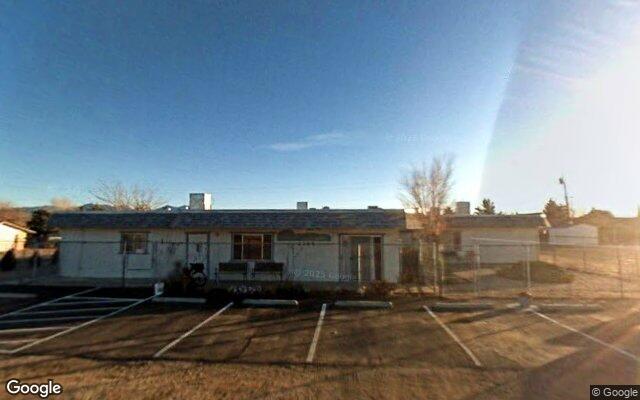
© Google Street View
Compared to 1,661 Arizona facilities with a similar number of beds.
Care · 36-month window. Higher percentile = better performance on inspection record. Source: Arizona Dept. of Health Services · Bureau of Residential Facilities Licensing.
among peers to rank.
Rankings based on 36-month ADHS inspection data. Severity and frequency: fewer citations = higher percentile. Repeat rate: lower repeat citation share = higher percentile.
Citation history, plotted month by month.
22 deficiencies on record. Each bar is a month with a citation.
Finding distribution
22 total · 36 monthsScope × Severity (CMS A–L)
Every inspection visit, verbatim.
3 inspections in the public record, most recent first. Plain-language summaries open first — click into any row for the full citation text.
2026-04-28Complaint InvestigationA.A.C. · 6 findings
“Based on documentation review, record review, and interview, the assisted living home failed to maintain a standardized form for each resident that included the information prescribed in subsection A of this section. Findings include: 1. A.R.S. 36-420.04.A states, "A. An assisted living center or assisted living home that contacts an emergency responder on behalf of a resident shall provide to the emergency responder a written document that includes all of the following: 1. The reason or reasons the emergency responder was requested on behalf of the resident. 2. Whether the resident receives medication services and, if the resident has provided this information to the assisted living center or assisted living home, a list of all the resident's prescription and over-the-counter medications, their dosages and how frequently they are administered. 3. The name, address and telephone number of the resident's current pharmacy. 4. A list of any known allergies to any medications, additives, preservatives or materials like latex or adhesive. 5. The name and contact information for the resident's primary care physician and power of attorney or authorized representative. 6. Basic information about the resident's physical and mental conditions and basic medical history, such as having diabetes or a pacemaker or experiencing frequent falls or cardiovascular and cerebrovascular events, as well as dates of recent episodes, if known. 7. The point-of-contact information for the assisted living center or assisted living home, including the telephone number, if available, cell phone number and email address. A point of contact must be available to respond to questions regarding the information provided twenty-four hours a day, seven days a week. 8. A copy of the resident's health insurance portability and accountability act release authorizing a receiving hospital to communicate with the assisted living center or assisted living home to plan for the resident's discharge. This paragraph does not preclude a resident from revoking the resident's health insurance portability and accountability act release authorization. 9. A copy of the resident's advance directives, if any, on file at the assisted living center or assisted living home. This paragraph does not preclude a resident from revoking or modifying the resident's advance directives." 2. A review of R1's and R2's medical records revealed that documentation of a maintained standardized form for the emergency responder was not available for review at the time of inspection. 3. In an exit interview, the findings were discussed with E1 and E4, and no additional information was provided.”
“Based on record review and interview, the manager failed to ensure that before or at the time of an individual’s acceptance by an assisted living facility, there was a documented residency agreement with the assisted living facility that included a list of the services available from the assisted living facility at an additional fee or charge, whether the manager or a caregiver were awake during nighttime hours, the policy for refunding fees, charges, or deposits, the policy and procedure for a resident to terminate residency, including terminating residency because services were not provided to the resident according to the resident’s service plan, the policy and procedure for an assisted living facility to terminate residency, the complaint process, and the manager’s signature and date signed, for one of two residents sampled. Findings include: 1. A review of R1's medical record revealed a residency agreement. Further review of the residency agreement revealed it did not include a list of the services available from the assisted living facility at an additional fee or charge, whether the manager or caregivers were awake during nighttime hours, the policy for refunding fees, charges, or deposits, the policy and procedure for R1 to terminate residency, the policy and procedure for the facility to terminate residency, the complaint process, or the manager’s signature and date. 2. In an interview, E1 reported the facility had updated its residency agreement forms, but R1 had been given an old form that did not include all required sections. 3. In an exit interview with E1, the findings were reviewed, and no additional information was provided.”
“Based on record review, documentation review, and interview, the manager failed to ensure that a resident had a service plan that was established, documented, and implemented that when initially developed and when updated, was signed and dated by the manager, for one of two residents sampled. The deficient practice posed a risk if the service plan was not developed to articulate decisions and agreements. Findings include: 1. A review of R2's medical record revealed R2’s most current service plan, dated April 21, 2026. However, the serviced plan was not signed or dated by the manager. 2. A review of the facility’s policies and procedures revealed a policy titled, “Service Plan” which stated, “13. All changes to the Service Plan shall be made in writing and signed and dated by the registered nurse or individual designated making the change, the resident/ resident’s representative and the Manager or Manager Designee.” 3. In an exit interview, the findings were discussed with E1, and no additional information was provided.”
“Based on record review and interview, the manager failed to ensure that a caregiver documents the services provided in the resident’s medical record, for one of two residents sampled. The deficient practice posed a risk if a resident did not receive needed services. Findings include: 1. A review of R2's medical record revealed R2’s most current service plan, dated April 21, 2026. The service plan listed the following services for R2: • “Grooming 2x a day/PRN; • Bathing 2x a wk or PRN; and • Dressing 2x a day/PRN.” 2. A review of R2’s medical record revealed Activities of Daily Living (ADL) dated April 2026. The ADL listed services for R2. However, the ADL did not list the following services for R2: • Grooming; • Bathing; and • Dressing. 3. In an interview, E1 reported the resident received all required services listed in their service plan, but they were not documented on the ADLs. 4. In an exit interview, the findings were discussed with E1, and no additional information was provided.”
“Based on record review and interview, the manager failed to ensure that a resident’s medical record contained the name and contact information of the resident’s representative and the document signed by the resident consenting for the resident’s representative to act on the resident’s behalf, for one of four residents sampled. Findings Include: 1. A review of R1's medical record revealed that R1 received directed care services. 2. A review of R1's medical record revealed the "resident's representative" signature throughout the file; however, there was no power of attorney documentation for the resident's representative. 3. In an exit interview, the findings were reviewed with E1, and no additional information was given.”
“Based on observation, documentation review, and interview, the manager failed to ensure a resident’s sleeping area was not used as a passageway to a common area unless the resident’s sleeping area was used as a passageway to another area before October 1, 2013, and written consent was obtained from the resident or the resident’s representative. The deficient practice posed a potential privacy rights violation to the resident. Findings include: 1. During an environmental tour of the facility, the Compliance Officer observed a large refrigerator and freezer plugged in and being used in R2’s private walk-in closet. The refrigerator and freezer contained food and could only be accessed through the resident’s room. 2. A review of Department records revealed the facility was not licensed before October 1, 2013. 3. During an interview, E1 reported the refrigerator and freezer were used to store extra food for all the residents. 4. In an exit interview, the findings were reviewed with E1, and no additional information was given.”
2025-04-08Annual Compliance VisitA.A.C. · 5 findings
“Based on documentation review, record review, and interview, the governing authority failed to administer a training program for all staff regarding fall prevention and fall recovery. The deficient practice posed a risk if a staff member was not properly trained to assist a resident who had fallen and was unable to recover independently. 1. A review of facility documentation revealed a policy and procedure (P&P) titled "Fall Prevention and Fall Recovery” dated April 10, 2024. The P&P stated: "This facility shall develop an initial training, conduct, and administer continued competency Training [underline in original] in Fall Prevention and Fall Recovery Program every 6 months.” 2. A review of E2's personnel record revealed E2 was hired as the manager in 2023. However, the review revealed E2 did not receive training regarding fall prevention and fall recovery. 3. In an interview, regarding the fall training, E2 stated, “I know we’re doing the fall [training] every year.” E2 reported the facility did not administer the training program for all staff regarding fall prevention and fall recovery every six months as stated in facility P&Ps. E2 reported E2 was not attending the training sessions for an undisclosed period of time. E2 and E4 further reported facility caregivers had a habit of getting hired, staying with the facility for a short time, quitting, going to work for another facility in the area, quitting there, getting re-hired at this facility, and going through the process over again, often several times. E2 and E4 reported E5 and E6 were two of the caregivers who had done this. 4. A review of E5's personnel record revealed E5 was hired as a caregiver and housekeeper. The review revealed several hire dates for E5, ranging from 2015 to 2024. However, the review revealed E5 did not receive training regarding fall prevention and fall recovery. 5. A review of E6's personnel record revealed E6 was hired as a caregiver. The review revealed several hire dates for E6, ranging from 2022 to 2024. However, the review revealed E6 did not receive training regarding fall prevention and fall recovery. 6. A review of facility documentation revealed a series of personnel schedules dated between January 2024 and October 2024. The schedules revealed E5 worked in April 2024 and August-October 2024 and E6 worked in January 2024, April 2024, and October 2024. 7. In an interview, E4 reported E6 worked regularly in 2023 as well.”
“Based on documentation review, record review, and interview, the chief administrative officer failed to implement tuberculosis (TB) infection control activities including annually providing training and education related to recognizing the signs and symptoms of tuberculosis, for three of three sampled personnel members. The deficient practice posed a potential TB exposure risk to residents. Findings include: 1. A review of Department documentation revealed this rule went into effect on May 4, 2022. 2. A review of E2's personnel record revealed E2 was hired as the manager in 2023. However, the review revealed E2 did not receive training and education related to recognizing the signs and symptoms of TB until December 4, 2024, nearly two years after E2’s date of hire. 3. In an interview, regarding the TB training, E2 stated, “I’m not sure we were aware of that.” E2 and E4 further reported facility caregivers had a habit of getting hired, staying with the facility for a short time, quitting, going to work for another facility in the area, quitting there, getting re-hired at this facility, and going through the process over again, often several times. E2 and E4 reported E5 and E6 were two of the caregivers who had done this. 4. A review of E5's personnel record revealed E5 was hired as a caregiver and housekeeper. The review revealed several hire dates for E5, ranging from 2015 to 2024. However, the review revealed E5 did not receive training and education related to recognizing the signs and symptoms of TB. 5. A review of E6's personnel record revealed E6 was hired as a caregiver. The review revealed several hire dates for E6, ranging from 2022 to 2024. However, the review revealed E6 did not receive training and education related to recognizing the signs and symptoms of TB. 6. A review of facility documentation revealed a series of personnel schedules dated between January 2024 and October 2024. The schedules revealed E5 worked in April 2024 and August-October 2024 and E6 worked in January 2024, April 2024, and October 2024. 7. In an interview, E4 reported E6 worked regularly in 2023 as well. Technical assistance was provided on this rule during the complaint and compliance inspection conducted on January 29, 2024, and the compliance inspection conducted on May 3, 2022.”
“Based on documentation review, record review, and interview, the manager failed to ensure a manager provided current documentation of first aid and cardiopulmonary resuscitation (CPR) training certification specific to adults before providing assisted living services to a resident, for one of one applicable manager. The deficient practice posed a risk if a manager was unable to meet a resident's needs during an emergency. Findings include: 1. A review of facility documentation revealed a policy and procedure (P&P) titled "CPR AND FIRST AID” dated April 10, 2024. The P&P stated: "It is the policy of this facility to ensure that all facility staff is trained in CPR and First Aid and that their certification is maintained and [is] current as long as they are employed by this facility.” 2. A review of E2's personnel record revealed E2 was hired as the manager in 2023. The review revealed a first aid and CPR certification dated as expired on April 23, 2024. The review further revealed a current first aid and CPR certification dated as issued on December 5, 2024, more than seven months after E2’s previous certification expired. 3. In an interview, when the Compliance Officer asked if E2 had first aid and CPR certification between April 24, 2024, and December 4, 2024, E2 stated, “No.” This is a repeat citation from the complaint and compliance inspection conducted on January 29, 2024.”
“Based on documentation review, observation, and interview, the manager failed to ensure oxygen containers were secured. Findings include: 1. A review of facility documentation revealed a policy and procedure (P&P) titled “FACILITY GROUNDS SAFE AND FREE OF HAZARDS” dated April 10, 2024. The P&P stated: “All oxygen containers must be kept in an upright and secure position in the resident’s closets, away from all heating and cooling elements. Staff will be instructed to monitor…this daily to avoid any issues.” 2. The Compliance Officer observed an unsecured-but-upright oxygen container in the master bedroom closet. 3. In an interview, E2 and E4 acknowledged the oxygen container was not secured. Technical assistance was provided on this rule during the complaint and compliance inspection conducted on January 29, 2024.”
“Based on documentation review, observation, and interview, the manager failed to ensure poisonous or toxic materials stored by the assisted living facility were maintained in a locked area inaccessible to residents. The deficient practice posed a risk to residents with access to the poisonous or toxic materials. Findings include: 1. A review of facility documentation revealed a policy and procedure (P&P) titled “FACILITY GROUNDS SAFE AND FREE OF HAZARDS” dated April 10, 2024. The P&P stated: “The facility manager and/or that [sic] owner and staff will ensure that all poisonous or toxic materials (this is to include all cleaning supplies) will be stored and maintained in labeled containers in a locked area.” 2. The Compliance Officer observed an unlocked cabinet under the sink in the kitchen. In the cabinet, the Compliance Officer observed a variety of poisonous or toxic materials, including air freshener, all-purpose cleaner, disinfecting wipes, glass cleaner, and multi-surface cleaner. The Compliance Officer observed an unlocked outdoor storage closet. In the closet, the Compliance Officer observed several containers of paint and primer. 3. In an interview, E1 and E2 reported the facility had hired cleaners who were cleaning the home and left the poisonous or toxic materials in the unlocked cabinet. E1 and E2 reported the facility had hired painters who were painting the home and left the poisonous or toxic materials in the unlocked outdoor storage closet. Technical assistance was provided on this rule during the complaint and compliance inspection conducted on January 29, 2024.”
2024-01-29Complaint InvestigationA.A.C. · 11 findings
“Based on record review and interview, the health care institution failed to provide appropriate first aid before the arrival of emergency medical services to a non-injured resident who had fallen, appeared to be uninjured, and was unable to reasonably recover independently. Findings include: 1. A review of R5's medical record revealed an incident report dated January 24, 2024. The report stated, "[Caregiver] found resident on floor next to bed fully dressed...Called 911 non emergency...[Caregiver] removed shoes. Fire Department assisted resident off floor and into bed." 2. In an interview, E1 stated, "[The caregiver] couldn't lift [R5] by [the caregiver's] self."”
“Based on documentation review, interview, and record review, the governing authority failed to ensure compliance with Arizona Revised Statutes (A.R.S.) \'a7 36-411, for one of four personnel members sampled. The deficient practice posed a risk if the personnel member was a danger to a vulnerable population. Findings include: 1. A.R.S. \'a7 36-411(A) states: "A. Except as provided in subsection F of this section, as a condition of licensure or continued licensure of a residential care institution, a nursing care institution or a home health agency and as a condition of employment in a residential care institution, a nursing care institution or a home health agency, employees and owners of residential care institutions, nursing care institutions or home health agencies, contracted persons of residential care institutions, nursing care institutions or home health agencies or volunteers of residential care institutions, nursing care institutions or home health agencies who provide medical services, nursing services, behavioral health services, health-related services, home health services or direct supportive services and who have not been subject to the fingerprinting requirements of a health professional's regulatory board pursuant to title 32 shall have valid fingerprint clearance cards that are issued pursuant to title 41, chapter 12, article 3.1 or shall apply for a fingerprint clearance card within twenty working days of employment or beginning volunteer work or contracted work." 2. A.R.S. \'a7 36-411(C)(2) states: "C. Owners shall make documented, good faith efforts to...2. Verify the current status of a person's fingerprint clearance card." 3. A review of facility documentation revealed a policy and procedure titled "JOB DESCRIPTION: CAREGIVERS," dated April 10, 2023. The policy and procedure stated the "Qualifications/Education" for caregivers included a "Fingerprint Clearance Card." The review further revealed a policy and procedure titled "FINGERPRINT," dated April 10, 2023. The policy and procedure stated, "Owner or Manager of this assisted living facility must require prospective employee to obtain fingerprint clearance, and must make efforts to verify with the Department of Public Safety (DPS) the status of prospective employee's fingerprint clearance card...The fingerprint card must be current and valid." 4. In an interview, E2 reported E4 worked as a caregiver. E1 reported not being sure whether E4 had a fingerprint clearance card. 5. A review of facility documentation revealed a personnel schedule dated between July 1, 2023, and January 29, 2024. The schedule revealed E4 worked multiple shifts each month between July 2023 and January 2024, including working some shifts alone. 6. A review of R1's medical record revealed E4 provided R1 with medication services and assistance with activities of daily living in January 2024. 7. A review of E4's personnel record revealed E4 was hired as a caregiver. However, the review revealed no fingerprint clearance card per A.R.S. \'a7 36-411(A) or documentation demonstrating the governing authority made documented good faith efforts to verify the status of E4's fingerprint clearance card upon hire or anytime thereafter per A.R.S. \'a7 36-411(C)(2). 8. A review of the Department of Public Safety website revealed E4 did not have a current fingerprint clearance card at the time of hire or at the time of the inspection. The website revealed E4's most recent fingerprint clearance card was suspended on August 22, 2006, and expired on August 22, 2012. 9. In an interview, E1 and E2 acknowledged the governing authority failed to ensure compliance with A.R.S. \'a7 36-411(A) and (C)(2), for E4. This is a repeat citation from the previous compliance inspection conducted on May 3, 2022.”
“Based on documentation review, record review, and interview, the manager failed to ensure policies and procedures were implemented to protect the health and safety of a resident that cover termination of residency, including termination initiated by the manager of an assisted living facility. Findings include: 1. A review of facility documentation revealed a policy and procedure titled, "TERMINATION OF RESIDENCY" dated April 10, 2023. The policy and procedure stated, "The manager will terminate the resident's Residency Agreement without notice if: The resident exhibits behavior that is an immediate threat to the health and safety of the resident or other individuals in the facility." 2. A review of R1's medical record revealed an incident report dated December 13, 2023. The report stated, "Resident found with lots of pills on [R1's person], some of which were not prescribed to [R1]...Summary of assessment of contributing factors and outcome of investigation: [R1] is suicidal." the review revealed a Behavioral Health Service plan from a third party provider dated December 15, 2023. The service plan stated, "[R1] will be discharged when [R1] has met [R1's] identified goal of managing [R1's] rumminating [sic] thoughts and moments of depression with suicidal ideations." 3. In an interview, E1 and E2 reported R1 was suicidal but was recently put on hospice and more support than in the past. E1 and E2 reported R1 was found with moist pills, and the facility took the pills and called the police who came and disposed of the pills. E1 and E2 reported finding more pills in R1's room after the incident, including some from May 2023. E1 and E2 reported R1 had gone to the doctor and the pharmacy alone. E2 reported R1 had a history of suicidal ideation. E1 and E2 reported R1's residency had not been terminated as required per the facility's policies and procedures.”
“Based on documentation review, observation, and interview, the manager failed to ensure policies and procedures were established, documented, and implemented to protect the health and safety of a resident to cover methods by which the assisted living facility was aware of the general or specific whereabouts of a resident, based on the level of assisted living services provided to the resident and the assisted living services the assisted living facility was authorized to provide. The deficient practice posed a risk if the facility was unaware of the whereabouts of a resident. Findings include: 1. A review of facility documentation revealed a policy and procedure titled "WHEREABOUTS OF RESIDENT" dated April 10, 2023. The policy and procedure stated: "Caregivers will maintain security of locks on the front door, yards and hazardous areas at all times. If alarms are being used on doors and/or windows, the caregiver will check them daily for operation and security." However, the policy and procedure was not based on the level of assisted living services provided to the residents. 2. During an environmental inspection of the facility, the Compliance Officer observed a sign on the inside of the front door which read, "PLEASE KEEP FRONT DOOR LOCKED AT ALL TIMES" as well as a child safety cover on the door knob to make it more difficult to open. The Compliance Officer observed the door was able to be locked by key from the outside, but could be unlocked from the inside without a key, special knowledge for egress, or the need to expend increased physical effort. The Compliance Officer observed the front door had an alert installed. However, the alert was set to the "OFF" position. In the kitchen, the Compliance Officer observed a sliding glass door that opened to the backyard. The Compliance Officer observed the door had an alert installed. However, the alert did not sound when the Compliance Officer opened the door. Upon closing the door and releasing the handle multiple times, the Compliance Officer observed the door slid back open several inches making the non-working alert ineffective even if the alert had been functioning properly. 3. In an interview, E2 reported the facility recently had a resident who would wander out into the front patio, sit or stand there for a time and then go back inside. E2 reported the facility installed a child safety cover on the front door for the resident. Regarding the sliding glass door in the kitchen, E2 reported the facility was "getting it fixed." E1 and E2 acknowledged the two aforementioned doors had alerts but the alerts were not working. E1 and E2 acknowledged caregivers did not maintain security of locks on the front door as required per the facility's policies and procedures.”
“Based on documentation review, record review and, interview, the manager failed to ensure an assisted living facility had caregivers with the qualifications, experience, skills, and knowledge necessary to provide the assisted living services and ancillary services in the assisted living facility's scope of services, meet the needs of a resident, and ensure the health and safety of a resident. The deficient practice posed a risk to the health and safety of a resident. Findings include: 1. A review of facility documentation revealed a policy and procedure titled "SCOPE OF SERVICES" dated April 10, 2023. The policy and procedure revealed the facility's scope of services included supervisory, personal, and directed care services. The review revealed the job description of a caregiver which stated, "Assist with the activities of daily living and personal care including...positioning, transferring, ambulation." 2. A review of R5's medical record revealed an incident report dated January 24, 2024. The report stated, "[Caregiver] found resident on floor next to bed fully dressed...Called 911 non emergency...[Caregiver] removed shoes. Fire Department assisted resident off floor and into bed." 3. In an interview, E1 stated, "[The caregiver] couldn't lift [R5] by [the caregiver's] self."”
“Based on documentation review, interview, and record review, the manager failed to ensure a caregiver provided current documentation of first aid training and cardiopulmonary resuscitation (CPR) training certification specific to adults before providing assisted living services to a resident, for two of four personnel members sampled. The deficient practice posed a risk if a caregiver was unable to meet a resident's needs during an emergency. Findings include: 1. A review of facility documentation revealed a policy and procedure titled "JOB DESCRIPTION: CAREGIVERS," dated April 10, 2023. The policy and procedure stated the "Qualifications/Education" for caregivers included "CPR and First Aid" training. 2. In an interview, E2 reported E3 and E4 worked as caregivers. 3. A review of facility documentation revealed a personnel schedule dated between May 1, 2023, and January 29, 2024. The schedule revealed E3 and E4 worked multiple shifts each month since being hired. 3. A review of the personnel records of E3 and E4 revealed E3 and E4 were hired as caregivers. The review revealed the following: -A photocopy of E3's previous first aid and CPR training certification dated as expired on February 8, 2023, before E3 was hired; -A photocopy of E3's current first aid and CPR training certification dated as issued on August 7, 2023, several months after E3 was hired; and -A photocopy of E4's only available first aid and CPR training certification dated as expired on June 30, 2022. 4. In an interview, E1 and E2 acknowledged E3 and E4 worked several months without first aid and CPR training. E2 reported E4 had signed up for a recent training class on first aid and CPR but did not attend.”
“Based on record review and interview, the manager failed to ensure there was a documented residency agreement with the assisted living facility that included whether the manager or a caregiver would be awake during nighttime hours, for one of two residents sampled. Findings include: 1. A review of R2's medical record revealed a residency agreement. However, the residency agreement did not include whether the manager or a caregiver would be awake during nighttime hours. 2. In an interview, E2 acknowledged R2's residency agreement did not include whether the manager or a caregiver would be awake during nighttime hours. Technical assistance was provided on this rule during the compliance inspection conducted on May 3, 2022.”
“Based on documentation review, observation, and interview, the manager failed to ensure a means of exiting the facility for a resident who did not have a key, special knowledge for egress, or the ability to expend increased physical effort controlled or alerted employees of the egress of a resident from the facility. The deficient practice posed a risk if the facility was unaware of the egress of a resident from the facility. Findings include: 1. A review of Department documentation revealed the facility (AL11108) was authorized to provide directed care services. 2. During an environmental inspection of the facility, the Compliance Officer observed a sign on the inside of the front door which read, "PLEASE KEEP FRONT DOOR LOCKED AT ALL TIMES." The Compliance Officer observed the door was able to be locked by key from the outside, but could be unlocked from the inside without a key, special knowledge for egress, or the need to expend increased physical effort. The Compliance Officer observed the front door had an alert installed. However, the alert was set to the "OFF" position. In the master bedroom, the Compliance Officer observed a sliding glass door that opened to the outdoors. The Compliance Officer observed the door did not have a control or an alert installed. In the kitchen, the Compliance Officer observed a sliding glass door that opened to the backyard. The Compliance Officer observed the door had an alert installed. However, the alert did not sound when the Compliance Officer opened the door. Upon closing the door and releasing the handle multiple times, the Compliance Officer observed the door slid back open several inches making the non-working alert ineffective even if the alert had been functioning properly. 3. In an interview regarding the sliding glass door in the kitchen, E2 stated the facility was "getting it fixed." E1 and E2 acknowledged the three aforementioned doors did not control or alert employees of the egress of a resident from the facility. Technical assistance was provided on this rule during the compliance inspection conducted on May 3, 2022.”
“Based on record review and interview, the manager failed to ensure medication administered to a resident was administered in compliance with a medication order, for two of two residents sampled. The deficient practice posed a risk if a resident experienced a change in condition due to improper administration of medication. Findings include: 1. A review of R1's medical record revealed a current service plan indicating R1 received medication administration services. R1's medical record contained medication orders dated December 22, 2023 for "Alprazolam 0.5 mg (milligrams) 1 tab PO @ HS", "Fenofibrate 160 mg tab PO @ HS", and "Trazodone 100 mg - Take 3 tabs PO @ bedtime". R1's medical record also contained a medication administration record (MAR) dated January 2023. The MAR revealed the following: -R1 did not receive "Alprazolam" on January 1-2, 2024, with the reason documented as "held [for] unsteady gait" without a hold order; -R1 did not receive "Alprazolam" on January 18, 2024, with the reason documented as "not given"; -R1 did not receive "Fenofibrate" on January 1, 2024, with the reason documented as "out of stock"; and -R1 did not receive "Trazodone" on January 10-11, 2024, with the reason documented as "out of stock". 2. A review of R2's medical record revealed a current service plan indicating R2 received medication administration services. R2's medical record contained a medication order dated December 4, 2023 for "Clopidogrel 75 mg (milligrams)...Take 1 tab(s) orally once a day". R2's medical record also contained a MAR dated January 2023. The MAR revealed R2 did not receive "Clopidogrel" on January 1-3, 2024, with the reason documented as "out of stock." 3. In an interview, E1 and E2 acknowledged R1 and R2 did not receive all medications as ordered.”
“Based on observation and interview, the manager failed to ensure medication stored by an assisted living facility was stored in a separate locked room, closet, cabinet, or self-contained unit used only for medication storage. The deficient practice posed a risk to residents who were not prescribed the accessible medication. Findings include: 1. During an environmental inspection of the facility, the Compliance Officer observed an unlocked medication cart and no employee within sight of the cart. Inside the cart, the Compliance Officer observed resident medication. The Compliance Officer also observed an unlocked refrigerator in the kitchen and no employee within sight of the refrigerator. Inside the refrigerator, the Compliance Officer observed a locked box on the top shelf. However, in the door of the refrigerator, and not in the locked box, the Compliance Officer observed four "Bisacodyl 10 mg (milligrams)" suppositories. 2. In an interview, E1 and E2 acknowledged medications were not stored in a separate locked room, closet, cabinet, or self-contained unit used only for medication storage.”
“Based on observation, documentation review, and interview, the licensee failed to submit a request for approval of a modification of a health care institution. Findings include: 1. During an environmental inspection of the facility, the Compliance Officer observed a building on the property not attached to the main facility. In the building, the Compliance Officer observed a bedroom occupied by a resident. 2. A review of Department documentation revealed only the main building on the property was licensed. 3. In an interview, when asked if the second, unattached building was licensed, E1 stated, "No" and E2 stated, "I know that that's not licensed." E1 stated, "We do have a resident back there" and "It's technically not licensed."”
Other facilities in Kingman.
Other memory care facilities near Kingman with similar care offerings.


Full Inspection Record
Family reviews
No reviews yet — be the first to share your experience