Yashua's Cedar.
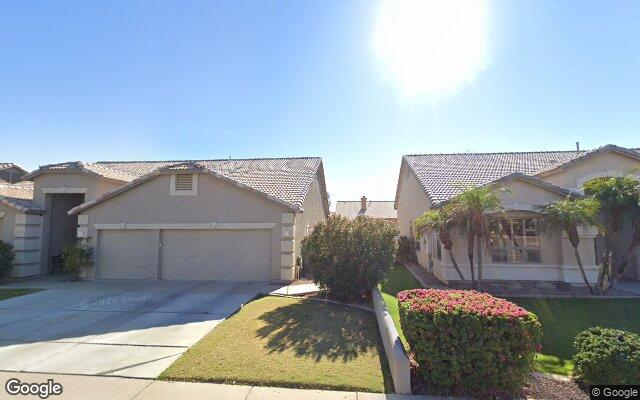
A medium home, reviewed on public record.
© Google Street View
Compared to 1,661 Arizona facilities with a similar number of beds.
Care · 36-month window. Higher percentile = better performance on inspection record. Source: Arizona Dept. of Health Services · Bureau of Residential Facilities Licensing.
among peers to rank.
on file.
Rankings based on 36-month ADHS inspection data. Severity and frequency: fewer citations = higher percentile. Repeat rate: lower repeat citation share = higher percentile.
Citation history, plotted month by month.
7 deficiencies on record. Each bar is a month with a citation.
Finding distribution
7 total · 36 monthsScope × Severity (CMS A–L)
Every inspection visit, verbatim.
3 inspections in the public record, most recent first. Plain-language summaries open first — click into any row for the full citation text.
2026-03-25Complaint InvestigationNo findings
2025-09-10Complaint InvestigationR9-10-806.A.8 · 1 finding
“Based on record review and interview, the manager failed to ensure that an employee provided documentation of freedom from infectious Tuberculosis (TB) as specified in R9-10-113, for one of three sampled employees. The deficient practice posed a potential TB exposure risk to residents. Findings include: 1. A record review of E3’s personnel record revealed, E3 provided one negative TB test. A second TB test was not submitted. 2. In an interview, E1 acknowledged E3 did not provided documentation of freedom from infectious Tuberculosis (TB) as specified in R9-10-113.”
2025-07-23Complaint InvestigationA.A.C. · 6 findings
“Based on documentation review, record review, and interview, the manager failed to ensure that emergency responders were provided a written document that included: reason for request on behalf of the resident, a list of medications, current pharmacy, medical history, advanced directives, HIPAA release, primary care physician, patient representative, and facility contact. The deficient practice posed a risk if safety measures were not in place to meet a resident's needs. Findings include: 1. A review of Department documentation from an incident dated May 19, 2025, revealed an intake report which included sworn testimony which stated, “No patient care form was given to the crew with accordance of SB 1157 [for R1]." 2. A review of Department documentation from an incident dated January 25, 2025, revealed an intake report which included sworn testimony which stated, “No patient care form was given to the crews [for R2]." 3. A review of R1's medical records titled "Incident report" dated May 19, 2025, revealed the resident complained of stomach issues. The resident asked the facility staff to call 911 and was transported to the hospital. 4. A review of R2's medical records, revealed no incident report available for review. 5. A documentation review of the facility's Policies and Procedures titled, "SB1157 Emergency Responder Policy and Procedure" stated, " 5. A form will be used for a written document to emergency responders that includes the reason for the emergency response." 6. In an interview, E4 acknowledged that the manager failed to ensure emergency responders were provided a written document for R1 and R2 that included: reason for request on behalf of the resident, a list of medications, current pharmacy, medical history, advanced directives, HIPAA release, primary care physician, patient representative, and facility contact.”
“Based on record review, documentation review, and interview, the manager failed to obtain, on the documented residency agreement, the signature of the resident, the resident’s representative, the resident’s legal guardian, or another individual who has been designated by the individual under A.R.S. § 36-3221 to make health care decisions on the individual’s behalf, for one out of three sampled residents. The deficient practice posed a risk if the resident, the resident's representative, the resident's legal guardian, or another individual designated by the individual under A.R.S. § 36-3221 was not informed of the terms of residency. Findings include: 1. A review of R3's medical records, revealed that the "Determination for Admission" form signed by the resident's physician on February 5, 2025, determined that the resident was eligible to receive services at the Directed Care level. 2. A review of R3's medical records revealed the Residency Agreement was signed by R3 on February 3, 2025. 3. In an interview, E4 acknowledged the manager did not obtain the signature of the resident's representative on the residency agreement as required.”
“Based on record review, documentation review, and interview, the manager failed to ensure a written service plan included the signature and date from the resident or representative, for two of three residents reviewed. The deficient practice posed a health and safety risk if the resident or representative did not acknowledge the services that were to be provided. Findings include: 1. A review of the medical records for R2 and R3 revealed, both residents received Directed Care services per their service plans. 2. A review of R2's medical records revealed, the resident's service plan dated May 12, 2025, was not signed by the resident's representative. 3. A review of R3's medical records revealed, the resident's service plan dated May 10, 2025 and February 12, 2025, were not signed by the resident's representative. 4. In an interview, E4 acknowledged the manager did not obtain the signature of R2 and R3's resident's representatives on the service plans as required.”
“Based on record review, documentation review and interview, the manager failed to ensure the facility did not retain a resident who was confined to a bed or chair without meeting the requirements in R9-10-814(B)(2), at least once every six months throughout the duration of the resident's condition, for one of two residents sampled who were confined to a bed or chair because of an inability to ambulate even with assistance. The deficient practice posed a risk if the facility was unable to meet a resident's needs. 1. A review of R2's medical records, revealed the “Approval For Continued Residency (Non Ambulatory)” form, was last completed by a medical professional on January 10, 2019. 2. A review of R2's medical records, revealed R2's service plan stated, "Bed bound or wheelchair if out of bed." 3. In an interview, E4 acknowledged that the manager failed to obtain documentation to demonstrate R2's primary care provider or other medical practitioner examined the bedbound resident at least once every six months throughout the duration of the resident's condition.”
“Based on record review and interview, the manager failed to ensure that a resident’s representative was designated for a resident who was unable to direct self-care. The deficient practice posed a risk as no individual was designated to participate in decisions concerning the assisted living services the resident was to receive. Findings include: 1. A review of R3's medical records revealed the resident received services at the Directed Care level. 2. A review of R3's medical records revealed, the residency agreement; resident emergency orientation; and the Flu/Pneumonia vaccine election form, were signed by R3 on February 5, 2025. 3. In an interview, E4 acknowledged R3’s representative was not designated for a resident who was unable to direct self-care.”
“Based on record review, documentation review, and interview, the manger failed to ensure that a caregiver immediately notified a resident’s emergency contact, primary care provider, and document the date and time of the accident or emergency, a description of the accident, emergency, or injury, actions taken by the caregiver, the individuals notified by the caregiver, and action taken to prevent the accident, emergency or injury from occurring in the future. Findings include: 1. A review of Department documentation from an incident dated January 25, 2025, revealed an intake report which included sworn testimony which stated, “No patient care form was given to the crews [for R2]." 2. A review of R2's medical records, revealed no incident report available for review. 3. A documentation review of the facility's Policies and Procedures titled, "Incident Report" stated, "3. The manager shall ensure the incident, emergency, injury is noted in the resident's Progress Notes. INCIDENT REPORT will be filed in the resident's medical record as well as the Monthly Monitoring binder and kept for at least 12 months". 4. In an interview, E4 acknowledged an incident form was not completed as required for R2 who needed emergency services for an accident, injury, or emergency.”
1 older inspection from 2023 are not shown above.
Get the complete record, translated into plain language — emailed to you.
Other facilities in Gilbert.
Other memory care facilities near Gilbert with similar care offerings.
Tour Prep
Family reviews
No reviews yet — be the first to share your experience