Estancia at Elgin Ranch.
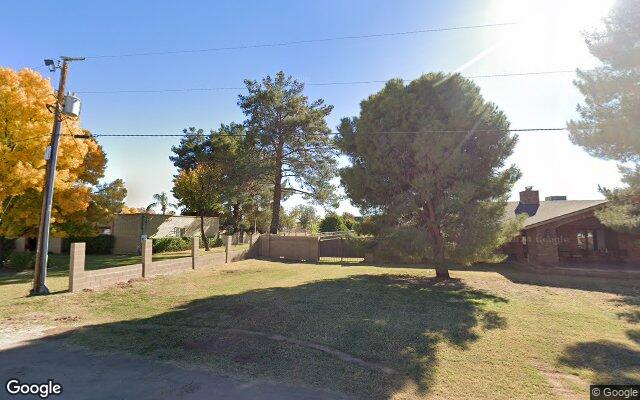
A medium home, reviewed on public record.
© Google Street View
Compared to 1,661 Arizona facilities with a similar number of beds.
Care · 36-month window. Higher percentile = better performance on inspection record. Source: Arizona Dept. of Health Services · Bureau of Residential Facilities Licensing.
among peers to rank.
on file.
Rankings based on 36-month ADHS inspection data. Severity and frequency: fewer citations = higher percentile. Repeat rate: lower repeat citation share = higher percentile.
Citation history, plotted month by month.
15 deficiencies on record. Each bar is a month with a citation.
Finding distribution
15 total · 36 monthsScope × Severity (CMS A–L)
Every inspection visit, verbatim.
4 inspections in the public record, most recent first. Plain-language summaries open first — click into any row for the full citation text.
2026-02-13Complaint InvestigationHigh Risk · 1 finding
“Based on documentation review and interview, after having a reasonable basis to believe abuse occurred on the premises, the manager failed to report the suspected abuse of a resident according to Arizona Revised Statutes (A.R.S.) § 46-454 and document the actions taken by the manager to prevent the suspected abuse or neglect from occurring in the future. The deficient practice posed a risk to the physical health and safety of a resident. Findings include: 1. A.R.S. § 46-454(A) states: "A health professional...or other person who has responsibility for the care of a vulnerable adult and who has a reasonable basis to believe that abuse, neglect or exploitation of the vulnerable adult has occurred shall immediately report or cause reports to be made of such reasonable basis to a peace officer or to the adult protective services central intake unit...The reports required by this subsection shall be made immediately by telephone or online." 2. Arizona Administrative Code R9-10-101(111) states, "'Immediate' means without delay." 3. In an interview, E1 reported an incident which occurred on January 28, 2026, and involved R1. 4. A review of facility documentation revealed a document titled “Incident Report” and dated January 28, 2026. The document detailed an incident which occurred on January 28, 2026, and involved R1. The document stated the “Incident Type [included] Abuse or Neglect.” However, the document did not include the actions taken by the manager to prevent the suspected abuse or neglect from occurring in the future. Furthermore, the review revealed no documentation demonstrating facility personnel reported the suspected abuse or neglect to a peace officer or to Adult Protective Services. 5. In a telephonic interview, E2 reported R1’s family reported the suspected abuse or neglect and E2 was not aware facility personnel needed to report it. When the Compliance Officer asked if the actions taken by the manager to prevent the suspected abuse or neglect from occurring in the future was included on the aforementioned “Incident Report,” E2 stated, “No, it wasn’t.” 6. In the exit interview, the Compliance Officer reviewed the findings and E1 and E1 offered no further comment. This is a repeat citation from the complaint inspection conducted on June 25, 2025.”
2026-02-04Complaint InvestigationA.A.C. · 3 findings
“Based on documentation review, record review, and interview, the assisted living home that contacted an emergency responder on behalf of a resident failed to provide to the emergency responder a written document that included all of the information required in A.R.S. § 36-420.04.A.1-9, for one of two applicable residents reviewed. The deficient practice posed a risk if the emergency responder was not aware of critical health information for the resident. Findings include: 1. A review of Department documentation revealed that, according to Gilbert EMS responders, the facility requested an emergency response on behalf of R2 on December 27, 2025. The documentation also stated that "No patient form / paperwork" was provided to EMS responders for R2 during the incident. 2. While on-site, the Compliance Officer requested E2 to provide any recent incident reports and/or documentation of R2 or R3 going to the hospital. E2 provided documentation of an "Incident Report" and an "Emergency Report" for R3 going out to the hospital on January 28, 2026, which met the requirements of A.R.S. § 36-420.04. 3. In an interview, E2 reported there were no incident reports for R2 or any documentation indicating that R2 went out to the hospital. 4. In an interview, E2 stated that E2 could see a note posted in the "internal group chat" stating that E4 sent R2 to the hospital on December 27, 2025. E2 again stated that there was no documentation in R2's medical record to indicate an Incident Report or Emergency Report had been completed for this incident. 5. In an interview, E2 acknowledged that the assisted living home failed to provide the emergency responder with a written document that included the information required in A.R.S. § 36-420.04.A.1-9 on December 27, 2025, for R2. 6. This is a repeat deficiency from the compliance and compliant inspection conducted on May 5, 2025.”
“Based on record review and interview, the manager failed to ensure that a caregiver or an assistant caregiver documented the services provided in the resident’s medical record, for two of two applicable residents. The deficient practice posed a risk as services could not be verified as provided against a service plan. Findings include: 1. A review of R2's medical record revealed a current service plan dated October 10, 2025, which included the following services: "Afternoon Check In; Brief Change at 6:00 AM, 11:00 AM, 3:00 PM, and 7:00 PM; and Evening Check In." 2. A review of the January 2026 Activities of Daily Living (ADL) sheet for R2 revealed that the Evening Check In was not documented as being provided on January 24, 2026; and the Afternoon Check In, Brief Changes for 11:00 AM, 3:00 PM, and 7:00 PM, and the Evening Check In were not documented as being provided on January 25, 2026 3. A review of R3's medical record revealed a current service plan dated November 17, 2025, which included the following services: "Evening Check In." 4. A review of the January 2026 Activities of Daily Living (ADL) sheet for R3 revealed that the Evening Check In was not documented as being provided on January 24, 2026. 5. In an interview, E3 reported the services were provided but the caregiver was late completing the documentation, at which point the electronic medical records system did not allow for an entry to be made past a certain point. 6. In an interview, E2 and E3 acknowledged the aforementioned services were provided to R2 and R3 but were not documented in the medical records. 7. This is a repeat deficiency from the compliance and compliant inspection conducted on May 5, 2025.”
“Based on documentation review, record review, and interview, when a resident had an accident, emergency, or injury that resulted in the resident needing medical services, the manager failed to ensure that a caregiver or an assistant caregiver documented the incident. The deficient practice posed a risk as there was no documentation of the details of the incident or emergency, including actions taken, individuals notified, and any action taken to prevent the incident or emergency from occurring in the future. Findings include: 1. A review of Department documentation revealed that, according to Gilbert EMS responders, the facility requested an emergency response on behalf of R2 on December 27, 2025. 2. While on-site, the Compliance Officer requested E2 to provide any recent incident reports and/or documentation of R2 going to the hospital. 3. In an interview, E2 reported there were no incident reports for R2 or any documentation indicating that R2 went out to the hospital. 4. In an interview, E2 stated that E2 could see a note posted in the "internal group chat" stating that E4 sent R2 to the hospital on December 27, 2025. E2 again stated that there was no documentation in R2's medical record to indicate an Incident Report or Emergency Report had been completed for this incident. 5. In an interview, E2 acknowledged that the assisted living home failed to complete an incident report for R2 on December 27, 2025. 6. This is a repeat deficiency from the compliance and compliant inspection conducted on May 5, 2025.”
2025-06-25Complaint InvestigationHigh Risk · 1 finding
“Based on documentation review and interview, the manager failed to ensure that a manager who had a reasonable basis, according to A.R.S. § 46-454, to believe abuse had occurred on the premises, the manager complied with all the requirements in R9-10-803(J). The deficient practice posed a risk as the Department was unable to assess if there was an immediate health and safety concern for residents who resided in the assisted living facility. Findings include: 1. A.R.S. § 46-454(A) stated "...other person who has responsibility for the care of a vulnerable adult and who has a reasonable basis to believe that abuse, neglect or exploitation of the adult has occurred shall immediately report or cause reports to be made of such reasonable basis to a peace officer or the Adult Protective Services central intake unit ... All of the above reports shall be made immediately by telephone or online." 2. R9-10-101.111 stated "Immediate" means without delay. 3. A review of Department documentation on June 17, 2025, revealed an allegation that R1 was attempting to get out of bed, and one of the caregivers pushed R1 back down on the bed and would not allow R1 to get up. 4. In an interview, E2 reported that on June 18, 2025, E2 was aware of the incident that took place on June 17, 2025. E2 also reported, the incident was not reported to a peace officer or the Adult Protective Services central intake unit by the facility because O1 was making a report to Adult Protective Services. 5. A documentation review revealed there was no evidence of action taken to immediately stop the suspected abuse, neglect, or exploitation. 6. A documentation review revealed there was no documentation of the report required in R9-10-803.J.5. 7. In an interview, E2 acknowledged documentation was not available showing compliance with the requirements in R9-10-803(J).”
2025-05-05Complaint InvestigationA.A.C. · 10 findings
“Based on interview and documentation review, the manager of an assisted living center who contacted emergency responders on behalf of a resident failed to provide to the emergency responders a written document that included all information required in A.R.S. § 36-420.04, for one of one applicable resident sampled. The deficient practice posed a risk if the emergency responder was not aware of critical health information for the resident. Findings include: 1. While on-site, the Compliance Officer had a difficult time obtaining medical record information as there were no paper records. The only access to medical records was via a tablet. 2. In an interview (via text message), the Compliance Officer asked E3 for incident reports for the month of March 2025. E3 reported R4 went out to the hospital on March 19, 2025, but the caregiver (E4) had not completed an incident report regarding that incident. E3 reported the incident with R4 was the only applicable incident. 3. In an interview with E4 and E7, the Compliance Officer requested a copy of the documentation provided to the emergency responders for R4. E4 reported E4 provided EMS responders with R4's date of birth, diagnosis, and medication list. Then E4 said, "like a face sheet." E7 then showed the Compliance Officer what a sample "Emergency Report" looked like when generated for a resident requiring EMS; however, E7 confirmed that no Emergency Report had been completed for R4 or provided to EMS at the time of the incident. 4. In an interview, E4 and E7 acknowledged the documentation provided to EMS did not include all information required in A.R.S. § 36-420.04, nor was there any information available for review to indicate what documentation was provided to EMS as required in section 9.D. of A.R.S. § 36-420.04.”
“Based on record review, documentation review, and interview, the manager failed to implement policies and procedures to protect the health and safety of a resident, including making vaccination for influenza and pneumonia available to residents for one of two residents reviewed. The deficient practice posed a potential illness risk to residents. Findings include: 1. A review of R1's medical record revealed no documentation of being offered vaccinations for influenza and pneumonia. Based on R1's date of admission, this documentation was required. 2. A review of facility documentation revealed a policy titled "Vaccination Availability." The policy stated, "1. An influenza vaccine will be onsite at least once a year. 2. The manager must encourage residents to get the vaccine. If a resident chooses not to get the vaccine, then refusal will be documented with signature of resident or residents representative." The policy also included a link to the "Flu and Pneumonia Vaccination Authorization/Declination Form." 3. Further review of facility documentation revealed another policy titled "Resident Record Keeping." The policy stated, "9. Items to be included in the medical record are as follows:...25. Documentation of notification of the resident of the availability of vaccination for influenza and pneumonia." 4. In an interview (via text message), E3 acknowledged R1's medical record did not contain documentation of R1 being offered vaccinations for influenza and pneumonia.”
“Based on observation, documentation review, and record review, the manager failed to ensure an assisted living facility met the needs of the residents and ensured the health and safety of the residents by having only one caregiver on-site with nine residents. The deficient practice posed a risk to the physical health and safety of the residents. Findings include: 1. While on-site, the Compliance Officer observed the layout of the home had two separate hallways with residents housed down each hallway. During the inspection, there were several occasions where R1 called out for help, but E4 couldn't hear R1 as E4 was down a separate hallway and inside another resident's room. 2. During the environmental inspection, R1 reported to the Compliance Officer that R1 had pushed R1's call pendant several minutes prior and hadn't received a response. While the Compliance Officer was in R1's room, R1 pushed the call pendant again. The Compliance Officer observed it took approximately an additional 10 minutes for E4 to respond to the R1's room. The Compliance Officer observed E4 was down a separate hallway, assisting another resident and unable to respond to R1. 3. While on-site, the Compliance Officer heard alerts from other residents who had pressed their call pendants to request assistance, specifically R5 and R6. The alerts continued to chime for 10+ minutes without a response because E4 was elsewhere assisting another resident. This occurred through most of the morning hours. 4. While on-site, the Compliance Officer observed O2 arrive for a visit with R3, at which point E4 went into R3's room to change R3's brief and provide other general hygiene services. While E4 was providing services to R3, R1 was calling out for help from the bathroom as R1 had just been given a shower but was left alone, unclothed, in a wheelchair while E4 had to go tend to R3. 5. When E4 later returned to R1's room to assist R1 with finishing up R1's showering/dressing task, R6's call pendant was heard going off. After several minutes, R6 began to call out for assistance from the toilet in R6's room. E4 was unable to hear R6 calling for help because E4 was down a separate hallway in R1's bedroom. 6. A review of R1's medical record revealed a service plan dated February 7, 2025. The service plan indicated that R1 was bed/chair bound; "no longer able to stand or walk"; "had bell at bedside to call for assistance/safety"; required positioning every two hours from 7:00 AM to 7:00 PM; and required "total care" for dressing, bathing, toileting, and transferring. 7. In an interview, R1 stated, "I'm helpless. When I call it takes a long time before they come because there is usually just one caregiver." 8. In an interview, R1 and R7 both reported that R7 would sometimes respond to R1 needing assistance if it was something R7 could assist with because the caregiver would often not be available due to assisting other residents' needs. 9. In an interview, O2 reported O2 often heard the call pendants going off for extended periods of time with no response because the caregiver was busy tending to other residents and unable to respond to the calls for assistance. O2 also reported that there was often only one caregiver present at the home. 10. In an interview, E7 explained E7 was called to come to the home that afternoon to assist E4 because the Compliance Officer was there. 11. In an interview, both E4 and E7 reported that E4 responded to the residents' needs as soon as possible but acknowledged E4 was often unable to respond in a reasonable amount of time and/or meet all of the needs of the residents due to caring for nine residents alone.”
“Based on interview, observation, and record review, the manager failed to ensure a caregiver properly documented the services provided in the resident's medical record. The deficient practice posed a risk as services could not be verified as provided against a service plan. The deficient practice also posed a risk as the Department was provided false or misleading information. Findings include: 1. Upon arrival, the Compliance Officer observed R8 and R9 sitting at the dining table, eating breakfast. 2. During the environmental inspection, the Compliance Officer observed R1 in R1's room with a fresh breakfast bowl that had just been served. 3. In an interview, R1 stated, "I just now got breakfast." The current time was 10:00 AM. 4. A review of the Task Lists [Activities of Daily Living] for R8 and R9 revealed that both R8 and R9 had already received breakfast and eaten 100%. According to the Task List, the completed time was 7:15 AM. 5. A review of the Task List for R1 revealed that R1 had also already received breakfast and eaten 100%. According to the Task List, the completed time was 8:00 AM. 6. Further review of the Task Lists for R1, R8, and R9 revealed that all tasks for the entire day had already been checked off as "Done" by E4, including lunch (with all of the residents eating 100% of the meal); afternoon check in's; dinner (with all of the residents eating 100% of the meal); evening check in's; brief changes for R1 at 11:00 AM, 3:00 PM, and 7:00 PM; and "Turning & Repositioning" for R1 at 11:00 AM, 1:00 PM, 3:00 PM, and 5:00 PM. The current time was 10:47 AM. 7. Additional review of the Task Lists for R1 and R2 for April 2025 revealed no documentation of any tasks being completed on the following dates: April 3-5, 2025; April 10-12, 2025; April 17-20, 2025; and April 24-26, 2025. 8. In an interview, E4 reported E4 provided all necessary services but didn't always have time to document at the accurate time due to caring for so many residents. E7 acknowledged the discrepancies and inaccurate documentation, as well as the lack of documentation for all of the aforementioned days in April 2025.”
“Based on observation and interview, the manager failed to ensure that a calendar of planned activities was prepared at least one week in advance of the date the activity was provided and posted in a location that was easily seen by residents. Findings include: 1. During the environmental inspection, the Compliance Officer observed an "Activity Schedule" posted for April 2025; however, there was no activity schedule posted or available for review for May 2025. 2. During the time the Compliance Officer was on-site from approximately 9:50 AM to 3:45 PM, no activities had been conducted. 3. In an interview, E4 and E7 reported no one had provided or posted the May 2025 Activity Schedule. E4 and E7 acknowledged there was no current activity schedule posted or available for review.”
“Based on record review and interview, the manager failed to ensure that a resident's medical record contained documentation of a medication administered to a resident that included the accurate dosage of administration for one of two residents reviewed. The deficient practice posed a risk if the resident experienced a change in condition due to improper administration of medication. Findings include: 1. A review of R2's medical record revealed R2 received medication administration. 2. Further review of R2's medical record revealed a signed medication order dated April 14, 2025, for Abiraterone 250 milligram (mg) tablet (tab) to be given by mouth (PO) four times a day (4q day). 3. A review of R2's medication administration record (MAR) revealed the following administration instructions regarding the aforementioned medication: "Abiraterone (given on an empty stomach with prednisone) 250 mg; Take 1 Tablet (total of 250 MG) QD - One Time Daily Oral." 4. Further review of R2's MAR revealed that due to the inaccurate dosing instructions that had been documented on the MAR, the Abiraterone had been administered to R2 inaccurately. The medication had been administered in accordance to the inaccurate dosing instructions on the MAR, rather than the dosing instructions on the medication order. 5. In an interview, E3 and E7 acknowledged the inaccurate dosing instructions for R2's Abiraterone had been documented in R2's medical record, and as a result, R2 was not properly administered the Abiraterone from April 17, 2025 through April 24, 2025.”
“Based on record review and interview, the manager failed to ensure a medication administered to a resident was administered in compliance with a medication order and/or documented in the resident's medical record, for two of two residents reviewed. The deficient practice posed a risk if the resident experienced a change in condition due to improper administration of medication and if the medication could not be verified as administered against a medication order. Findings include: 1. A review of R1's medical record revealed R1 received medication administration. 2. Further review of R1's medical record revealed a signed medication order dated March 3, 2025, which included the following medications: - Furosemide [Lasix] 40 milligrams (mg) oral tablet (tab), Take one tab one time daily (QD), HOLD for Systolic Blood Pressure (SBP) less than 100; - Metoprolol 25 mg oral tablet, Take 0.5 tab twice a day (BID), HOLD for SBP less than 110 or HR less than 60; and - Zinc oxide 22% 1 Application Topical Cream, Take 1 cream BID topical and between episodes for incontinence. 3. A review of R1's MAR for April 2025 revealed the following: - Furosemide 40 mg, Take 1 tab QD, was not documented as being administered on April 15, 16, 21, 22, 23, 27, 28, 29, and 30, 2025. No exceptions were noted; - Metoprolol 25 mg, Take 0.5 tab BID, was not documented as being administered on the following dates/times: April 14, 2025 at 7:00 PM; April 15, 2025 at 7:00 AM and 7:00 PM; April 16, 2025 at 7:00 AM and 7:00 PM; April 18, 2025 at 7:00 PM; April 19, 2025 at 7:00 AM and 7:00 PM; April 20, 2025 at 7:00 PM; April 21, 2025 at 7:00 AM and 7:00 PM; April 22, 2025 at 7:00 AM and 7:00 PM; April 23, 2025 at 7:00 AM and 7:00 PM; April 27, 2025 at 7:00 AM and 7:00 PM; April 28, 2025 at 7:00 AM and 7:00 PM; April 29, 2025 at 7:00 AM and 7:00 PM; and April 30, 2025 at 7:00 AM and 7:00 PM. No exceptions were noted; and - Zinc oxide 22% 1 Application Topical Cream BID, was documented as "NG" [Not Given] at 7:00 AM and 7:00 PM on April 25, 2025 and at 7:00 PM on April 26, 2025. The exception notes stated, "We don't have it." 4. A review of R1's MAR for May 2025 revealed the following: - Metoprolol 25 mg, Take 0.5 tab BID, was not documented as "NG" [Not Given] on the following dates/times: May 1, 2025 at 7:00 PM, with an exception note that stated, "We don't have it!"; and May 3, 2025 at 7:00 AM, with an exception note that stated, "We don't it" [sic]. However, the medication was documented at being administered on May 2, 2025 at 7:00 AM and 7:00 PM. 5. A review of R2's medical record revealed R2 received medication administration. 6. Further review of R2's medical record revealed a signed medication order dated April 14, 2025, for Abiraterone 250 milligram (mg) tablet (tab) to be given by mouth (PO) four times a day (4q day). 7. A review of R2's MAR revealed the following administration instructions regarding the aforementioned medication: "Abiraterone (given on an empty stomach with prednisone) 250 mg; Take 1 Tablet (total of 250 MG) QD - One Time Daily Oral." 8. Further review of R2's MAR revealed the Abiraterone had been administered to R2 only one time a day since the time it had been ordered, beginning on April 17, 2025, through April 24, 2025, rather than four times a day as the medication order stated. 9. In an interview, E7 reported R1's Furosemide and Metoprolol were likely administered in April but just not documented as required in R1's medical record. E7 also acknowledged the discrepancies in the R1's May MAR. 10. In an interview, E3 acknowledged R2's Abiraterone medication was not properly administered in compliance with the medication order.”
“Based on observation and interview, the manager failed to ensure a food menu was prepared at least one week in advance; included the foods to be served each day; was conspicuously posted at least one calendar day before the first meal on the food menu was served; and included any food substitution no later than the morning of the day of meal service with a food substitution. Findings include: 1. During the environmental inspection, the Compliance Officer observed there was no menu posted or available for review. 2. In an interview, E4 and E7 reported no one had provided or posted the May 2025 menu. The Compliance Officer asked E4 how E4 knew what to prepare for meals and snacks, and E4 explained that E4 would ask the residents what they would like to eat, and then E4 would prepare it. E4 and E7 acknowledged there was no menu posted or available for review.”
“Based on observation and interview, the manager failed to ensure that meals and snacks provided by the assisted living facility were served according to posted menus. Findings include: 1. During the environmental inspection, the Compliance Officer observed there was no menu posted or available for review. 2. In an interview, E4 and E7 reported no one had provided or posted the May 2025 menu. The Compliance Officer asked E4 how E4 knew what to prepare for meals and snacks, and E4 explained that E4 would ask the residents what they would like to eat, and then E4 would prepare it. E4 and E7 acknowledged meals and snacks were not provided according to a menu as there was no current menu to follow.”
“Based on record review and interview, the manager failed to ensure that a caregiver completed an incident report for a resident that had an accident, emergency, or injury that resulted in the resident needing medical services, for one of one applicable resident. Findings include: 1. While on-site, the Compliance Officer had a difficult time obtaining medical record information as there were no paper records. The only access to medical records was via a tablet. 2. In an interview (via text message), the Compliance Officer asked E3 for incident reports for March 2025. E3 reported R4 went out to the hospital on March 19, 2025, but the caregiver (E4) had not completed an incident report regarding that incident. E3 reported the incident with R4 was the only applicable incident. E3 stated E3 was having E4 print out a blank incident report to complete for the Compliance Officer. 3. In an interview, E4 explained E4 did not know how to complete an incident report on the tablet. 4. In an interview, E4 and E7 acknowledged an incident report had not been completed for R4 for the incident that occurred on March 19, 2025, which resulted in R4 requiring medical services.”
1 older inspection from 2023 are not shown above.
Get the complete record, translated into plain language — emailed to you.
Other facilities in Gilbert.
Other memory care facilities near Gilbert with similar care offerings.
Contract Decoder
Family reviews
No reviews yet — be the first to share your experience