Brookdale North Gilbert.
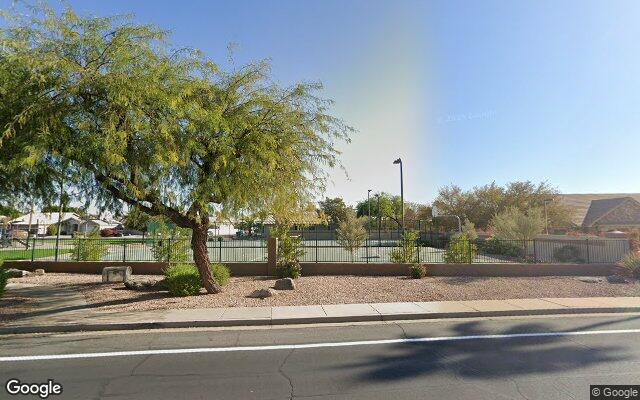
A large home, reviewed on public record.
© Google Street View
Compared to 72 Arizona facilities with a similar number of beds.
Care · 36-month window. Higher percentile = better performance on inspection record. Source: Arizona Dept. of Health Services · Bureau of Residential Facilities Licensing.
among peers to rank.
on file.
Rankings based on 36-month ADHS inspection data. Severity and frequency: fewer citations = higher percentile. Repeat rate: lower repeat citation share = higher percentile.
Citation history, plotted month by month.
15 deficiencies on record. Each bar is a month with a citation.
Finding distribution
15 total · 36 monthsScope × Severity (CMS A–L)
Every inspection visit, verbatim.
15 inspections in the public record, most recent first. Plain-language summaries open first — click into any row for the full citation text.
2026-09-16Complaint InvestigationNo findings
2026-08-18Complaint InvestigationNo findings
2026-07-08Complaint InvestigationNo findings
2026-04-29Complaint InvestigationEnforcement · 1 finding
“Based on documentation review, record review, and interview, the assisted living center that contacted an emergency responder on behalf of a resident failed to provide the emergency responder with a written document that included all requirements in A.R.S. 36-420.A.1-9. Findings include: 1. A.R.S. 36-420.04.A.1-9 states, "A. An assisted living center or assisted living home that contacts an emergency responder on behalf of a resident shall provide to the emergency responder a written document that includes all of the following: The reason or reasons the emergency responder was requested on behalf of the resident. Whether the resident receives medication services and, if the resident has provided this information to the assisted living center or assisted living home, a list of all the resident's prescription and over-the-counter medications, their dosages and how frequently they are administered. The name, address and telephone number of the resident's current pharmacy. A list of any known allergies to any medications, additives, preservatives or materials like latex or adhesive. The name and contact information for the resident's primary care physician and power of attorney or authorized representative. Basic information about the resident's physical and mental conditions and basic medical history, such as having diabetes or a pacemaker or experiencing frequent falls or cardiovascular and cerebrovascular events, as well as dates of recent episodes, if known. The point-of-contact information for the assisted living center or assisted living home, including the telephone number, if available, cell phone number and email address. A point of contact must be available to respond to questions regarding the information provided twenty-four hours a day, seven days a week. A copy of the resident's health insurance portability and accountability act release authorizing a receiving hospital to communicate with the assisted living center or assisted living home to plan for the resident's discharge. This paragraph does not preclude a resident from revoking the resident's health insurance portability and accountability act release authorization. A copy of the resident's advance directives, if any, on file at the assisted living center or assisted living home. This paragraph does not preclude a resident from revoking or modifying the resident's advance directives." 2. A review of R3's medical record revealed documentation of the standardized EMS form for the incident dated March 19, 2026; however, it did not include the reason or reasons the emergency responder was requested on behalf of the resident. 3. In an interview, E1 acknowledged that the standardized emergency responder form was not fully completed for R3. 4. In an exit interview, the findings were reviewed with E1, and no additional information was provided. 5. This is a repeat deficiency from the complaint inspection conducted on June 6, 2025.”
2026-03-16Complaint InvestigationNo findings
2026-02-27Complaint InvestigationNo findings
2026-01-15Complaint InvestigationR9-10-808.C.1.g · 1 finding
“Based on record review and interview, the manager failed to ensure a caregiver or an assistant caregiver documented the services provided to a resident in the resident's medical record, for two of three sampled residents. The deficient practice posed a health and safety risk as services could not be verified as provided against a service plan. Findings include: 1. Review of R1’s current service plan dated, December 2025 revealed the following services were provided to R2: - Dressing: “Resident needs assistance with dressing” - Oral care: “Set up and physical assistance brushing teeth/ dentures” - Meals: “Resident requires assistance with their dining experience cut food in the kitchen” - Night checks: “Resident will receive every 4-6 hours or as determined” 2. Review of R1’s activities of daily living (ADL) for the month of November 2025 revealed the following services were not documented as provided: - Meal attendance on the 8th at 1pm - Dressing assistance on the 8th at (1400-2200) - Oral care on the 8th at (1400-2200) - Night checks on the 8th at (1400-2200) 3. In an interview, E1 reported the services were provided however E3 did not document the provided services. 4. In an exit interview, the findings were reviewed with E1, and no additional information was provided.”
2025-12-18Complaint InvestigationNo findings
2025-11-17Complaint InvestigationR9-10-120.F.1 · 6 findings
“Based on observation, documentation review, record review, and interview, the manager failed to ensure an individual authorized to administer opioids documented in the resident's medical record an identification of the resident's need for the opioid before the opioid was administered, and the effect of the opioid administered, for one of one resident sampled who received an opioid. The deficient practice posed a risk to the physical health and safety of a resident. Findings include: 1. During the review of R4's medication, the Compliance Officer observed "90 TAB - HYDROCODON-ACETA 10-325 MG TAKE 1 TABLET BY MOUTH THREE TIMES DAILY." 2. A review of facility documentation revealed a policy and procedure titled "Medication & Treatment - Administration Assistance - AZ-18," last revised November 2024. The Policy stated "11. Administration of opioid medications requires assessment of resident pain with the use of 0-10 verbal pain scale or faces scale as applicable. a. The assessment of pain is conducted prior to administration. b. Within an hour after administration the resident should be assessed for response and effectiveness of the opioid administration. c. Documentation of the resident's pain before administration of the opioid and the effect of the opioid administration should be documented on the MAR or eMAR." 3. A review of R4's medical record revealed a service plan for directed care services and medication administration. A review of R4's medication orders revealed "HYDROCODON-ACETA 10-325 MG." A review of R4's electronic medication administration record (eMAR) for October and November 2025 revealed that " HYDROCODON-ACETA 10-325 MG," was documented as administered. However, documentation to include an identification of R4's need for the opioid before the opioid was administered, and the effectiveness of the opioid administered, was not available for review. 4. A review of R4's medical record revealed no documentation stating R4 had an end-of-life condition or an active malignancy. 5. In an exit interview, the findings were reviewed with E1, and no additional information was provided.”
“Based on documentation review, record review, and interview, the manager failed to ensure that personnel records for five of five employees sampled included required documentation verifying compliance with A.R.S. § 36-411(A); valid fingerprint clearance cards issued pursuant to Title 41, Chapter 12, Article 3.1, and A.R.S. § 36-411(C)(1) documented efforts to contact previous employers for information relevant to each individual's fitness to work. This deficient practice posed a risk to the health and safety of residents. Findings include: 1. A.R.S. § 36-411(C)(1) states: "1. Contact previous employers to obtain information or recommendations that may be relevant to a person's fitness to work in a residential care institution, nursing care institution or home health agency." 2. Review of E1’s, E2’s, and E5’s personnel records revealed reference checks. However, the reference checks that were completed for E1, E2, and E5 did not have documentation to show that the references contacted were previous employers. 3. A review of E3’s and E4’s personnel records revealed reference checks. However, one reference for E3 revealed the person that was contacted was a caregiver and not a previous employer. E4’s reference checks had one reference that could be identified as a previous employer; however, the second reference that was provided did not have documentation to show that the reference was a previous employer. 4. In an exit interview, the findings were reviewed with E1, and no additional information was provided. Technical assistance was provided on this Rule during the inspection conducted on October 16, 2025.”
“Based on documentation review, observation, record review, and interview, the manager failed to ensure a caregiver’s skills and knowledge were verified and documented before the caregiver provided physical health services. The deficient practice posed a risk if a caregiver did not have the skills and knowledge necessary to meet a resident's needs. Findings include: 1. A review of the facility’s policy and procedures revealed a policy titled, “Skills & Competency Evaluation Policy,” which stated, “2. Upon hire and as needed, the skills sets or competencies will be assessed/ evaluated through a variety of methods, including but not limited to: a. Proof of certifications;/ b. Proof of licensure/ c. Attendance of required state specific training with passing of examinations (if required)./ d. Demonstration and documentation of required competencies prior to providing resident care,” 2. A review of E5’s personnel record revealed documentation of skills and knowledge signed and dated May 1, 2025. However according to the employee schedule it showed E5 working alone From March 11, 2025 to April 5, 2025 from 10pm to 6 am. 3. In an interview, E1 reported the employee work schedule shows when someone is shadowing a trainer when both of their names appear in the same box. 4. In an exit interview, the findings were reviewed with E1, and no additional information was provided. Technical assistance was provided on this Rule during the inspection conducted on October 16, 2025.”
“Based on record review and interview, the manager failed to ensure a resident provided evidence of freedom from infectious tuberculosis (TB) as specified in R9-10-113, for four of six residents sampled. The deficient practice posed a TB exposure risk to residents. Findings include: 1. R9-10-113.A states "If a health care institution is subject to the requirements of this Section, as specified in an Article in this Chapter, the health care institution's chief administrative officer shall ensure that the health care institution establishes, documents, and implements tuberculosis infection control activities that...2. Include: a. For each individual who is employed by the health care institution, provides volunteer services for the health care institution, or is admitted to the health care institution and who is subject to the requirements of this Section, screening, on or before the date specified in the applicable Article of this Chapter, that consists of: i. Assessing risks of prior exposure to infectious tuberculosis, ii. Determining if the individual has signs or symptoms of tuberculosis, ... according to subsection (B)(1)..." 2. A review of R1’s, R2’s, R3’s, and R5’s medical records showed documentation of a TB risk assessment for prior exposure to infectious tuberculosis and a determination of whether the residents had signs or symptoms of TB, which were electronically signed by E7 and E8; however, a review of the National Council of State Boards of Nursing website revealed that E7 and E8 were Licensed Practical Nurses (LPNs), and the documentation was required to have been signed by a registered nurse, medical practitioner, or the local health department. Based on R1’s, R2’s, R3’s, and R5’s admission dates, this documentation was required. 3. In an exit interview, the findings were reviewed with E1, and no additional information was provided. Technical assistance was provided on this Rule during the inspections conducted on June 06, 2025.”
“Based on record review and interview, for five of six residents reviewed, the manager failed to ensure a resident's medical record contained documentation of assisted living services provided to the resident. The deficient practice posed a risk if services provided to a resident could not be verified. Findings include: 1. A review of R1 medical records revealed activities of daily living (ADL) sheets for January, February, and March 2025. The ADL sheets stated "Initials and Signatures: Signatures indicated all ADL's have been completed in accordance to resident service plan." However, the ADL sheet revealed no documentation the services were provided on the following days; -January 3rd days shift, 4th nights shift, 6th evening shift, 22nd nights shift, 24th days shift, 25th days and evenings shift. -February 1st days shift, 3rd night shift, 6th night shift, 9th days shift, 13th nights shift, 14th nights shift, 18th days shift, 20th all shift, 21st nights shift, 22nd nights shift, 24th nights shift, 26th day shift. -March 1st Nights shift, 3rd evening shift, 4th day and evening shifts, 5th days shift, 6th day and nights shift, 8th day shift, 10th nights shift, 13th day shift, 14th night shift, 15 days shift, 20th days and nights shift, 21 days shift, 22nd days shift, 23nd days and evenings shift, 24th all shifts, 25th evening shift, 27th days shift, 28th evenings and nights shift, 30th evenings shift. A further review of electronic ADLs from October 2025 revealed no documentation that the services were provided on the following days; -Bathroom assistance, October 2nd evening shift, 20th evening shift, and 31st NOC shift, -Daily tidy, October 2nd evening shift and 20th evening shift, -Dressing assistance, October 2nd evening shift, and 20th evening shift, -Escort/mobility assistance without assistive device, October 2nd evening shift, 20th evening shift, and 31st NOC shift, -Fall prevention/clean any spills and dry floor, October 2nd evening shift and 20th evening shift, -Fall prevention/ place residents' personal items within reach, October 2nd evening shift, 20th evening shift, -Monitor behaviors, October 2nd evening shift, 20th evening shift, and 31st NOC shift, -Night check q 4 hours, , October 2nd evening shift, 20th evening shift, and 31st NOC shift, -Personal hygiene routine morning and evening, October 2nd evening shift, and October 20th evening shift, -Meal Assistance, October 23rd day shift, and October 20th evening shift, -Meal Attendance October 23rd day (Lunch) shift, and October 20th evening (Dinner) shift. 2. A review of R2 medical records revealed electronic activities of daily living (eADL) sheets for October and November 2025. The eADL sheets revealed no documentation of the services that were provided on the following days; -Daily tidy, October 2nd evening shift -Dressing Assistance, October 2nd evening shift -Escort reminders to activity and meal times, October 2nd evening shift, and October 31st NOC shift, -Fall prevention/clean any spills and dry floor, October 2nd evening shift -Monitor behaviors, October 2nd evening shift, and 31st NOC shift, -Night check q 4 hours, October 2nd evening shift, and 31st NOC shift, -Meal Assistance, October 23rd day (Lunch) shift, November 4th day (Breakfast and Lunch) shift. 3. A review of R3 medical records revealed eADL sheets for October and November 2025. The eADL sheets revealed no documentation of the services that were provided on the following days; -Bathroom assistance, October 2nd evening shift, October 20th day and evening shift, and October 31st NOC shift, -Daily tidy, October 2nd evening shift and October 20th day and evening shift, -Dressing Assistance, October 2nd evening shift and 20th day and evening shift, -Escort/mobility assistance without assistive device, October 2nd evening shift, October 14th NOC shift, and 20th day and evening shift, -Fall prevention/clean any spills and dry floor, October 2nd evening shift, and 20th day and evening shift, -Fall prevention/ place residents' personal items within reach, October 2nd evening shift, and 20th day and evening shift, -Monitor behaviors, October 2nd evening shift, October 14th NOC shift, 20th day and evening shift, and 31st NOC shift, -Night check q 4 hours, October 2nd evening shift and October 20th evening shift, and 31st NOC shift, -Personal hygiene routine morning and evening, October 2nd evening shift, and 20th day and evening shift, -Meal Assistance, October 20th all shifts, 20th day (lunch) shift, 23rd day (lunch) shift, November 2nd evening (dinner) shift, November 4th day shifts (Breakfast and Lunch), November 11th day shift (lunch). 4. A review of R4 medical records revealed eADL sheets for October and November 2025. The eADL sheets revealed no documentation of the services that were provided on the following days; -Daily tidy, October 12th and 13th day shift, -Escort/mobility assistance without assistive device, October 12th and 13th day shifts, and 31st NOC shift -Fall prevention/clean any spills and dry floor, October 12th and 13th day shifts, -Fall prevention/ place residents' personal items within reach, October 12th and 13th day shifts, -Night check q 4 hours, October 31st NOC shift, -Meal Assistance, October 12th, 13th and 16th day shifts (Breakfast and Lunch), 22nd day shift (Lunch), November 6th and 13th day shift (Lunch). 5. A review of R5 medical records revealed eADL sheets for October and November 2025. The eADL sheets revealed no documentation of the services that were provided on the following days; -Daily tidy, October 2nd evening shift and 20th evening shift, -Escort/mobility assistance without assistive device, October 2nd evening shift, 20th evening shift, and 31st NOC shift, -Fall prevention/ Adjust resident bed, October 2nd evening shift and 20th evening shift, -Fall prevention/clean any spills and dry floor, October 2nd evening shift and 20th evening shift, -Fall prevention/ place residents' personal items within reach, October 2nd evening shift and 20th evening shift, -Night check q 4 hours, October 2nd evening shift, 20th evening shift, and 31st NOC shift, -Personal hygiene routine morning and evening, October 2nd evening shift, and 20th day and evening shift, -Meal Assistance, October 20th evening shift (Dinner) and 23rd day shift (Lunch). 6. A review of the eADL sheets showed a key stating “0-Yes, 1-No, 2-Resident not available, 3-Resident refused, 4-Not applicable”; however, none of these keys were used on the eADL sheets for the above-listed dates, and there was no documentation showing that the residents were out of the facility during those times. 7. In separate interviews, E1 and E6 acknowledged that R1’s, R2’s, R3’s, R4’s, and R5’s medical records did not include documentation of the services indicated on the eADL sheets for the above-listed dates; however, E6 reported the services were provided, and staff failed to document. 8. In an exit interview, the findings were reviewed with E1, and no additional information was provided.”
“Based on documentation review, record review, and interview, the manager failed to ensure that staff obtained a certificate of completion, as specified in R9-10-126, which requires staff to complete a minimum of eight hours of initial memory care services training within the first 30 days of hire or provide a copy of a qualifying certificate of completion. The deficient practice posed a risk if the individuals were not qualified to provide the required memory care services. Findings include: 1. A review of Department records revealed the facility is licensed at the Directed Care Level. 2. A review of E1’s, E2’s, E3’s, E4’s, and E5’s employee records revealed no certificate of completion for initial memory care services training, and based on their dates of hire, this documentation was required. 3. In an exit interview, the findings were discussed with E1, and no other information was provided. Technical assistance was provided on this Rule during the inspection conducted on October 16, 2025.”
2025-10-16Complaint InvestigationA.A.C. · 4 findings
“Based on documentation review, record review, and interview, the manager failed to ensure that an assisted living center maintained a copy of the document provided to the emergency responders and documentation of the actions required for a period of two years after the date of the emergency. The deficient practice posed a risk if the emergency responder was not aware of critical health information for the resident, and the Department was provided false or misleading information. Findings include: A.R.S. § 36-420.04.A.1-9 states, “Emergency responders; patient information; hospitals; discharge planning; patient screenings; discharge document A. An assisted living center or assisted living home that contacts an emergency responder on behalf of a resident shall provide to the emergency responder a written document that includes all of the following: (...).” 1. A review of the department documentation revealed an incident requiring medical services for R4 on September 22, 2025, at around 5:00 AM. 2. A review of R4's medical record revealed an incident that occurred on September 22, 2025. The Incident/ Accident Report stated, “At 0535 resident came out of room to hall and reported of “chest pain, trouble breathing at time, tightness of the chest.” Noted resident crying stated [R4] is in “pain.” Called POA to report and permission to call 911. 911 was called, assessment indicated cardiac abnormalities. Firefighter spoke with POA on the phone. [R4] was sent out to BDMC. Notified HWD." 3. In an interview, E2 reported that the facility had completed an EMS packet for the emergency responders on September 22, 2025, and the Compliance Officer was provided a copy of the EMS packet. The EMS packet provided to the Compliance Officer was titled "AZ Emergency Packet/ Cover sheet." The attachments on the packet stated "Date: Sep 22, 2025 - Time: 08:23:06 MT." However, R4 was transported around 5:00 a.m., and the documents were printed approximately three hours later. 4. In an electronic communication, O1 reported on September 22, 2025, that the emergency responders had been dispatched at 4:42 a.m. and transported R4 from the facility at 5:07 a.m. However, O1 reported that R4’s complete documentation, according to A.R.S. § 36-420.04(A)(1)-(9), had not been provided and stated, including "Patient allergies to medications, materials, patient medication information, etc." 5. The Compliance Officer reported to E1 and E2 that the EMS packet titled "AZ Emergency Packet/Cover Sheet," which had been provided to the Compliance Officer, was printed almost three hours after the resident had been transported out. The report provided by O1 corroborated that the documentation had not been provided to the emergency responders. The Compliance Officer also requested E2 to print an EMS packet at the time of the inspection to ensure there was no time-stamp error in the printouts. Once E2 provided the printout, it displayed the time-stamp as the time of the inspection. The Compliance Officer also reported to E1 and E2 that the Department had been provided with false and misleading information. 6. In an exit interview, the findings were reviewed with E1 and E2, and no additional information was provided.”
“Based on documentation review, observation, record review, and interview, the manager failed to ensure the health, safety, or welfare of a resident. The deficient practice posed a risk as the facility was unable to meet a resident's needs, which resulted in harm. Findings include: A.R.S. § 36-401.16 "Directed care services" means programs and services, including supervisory and personal care services, that are provided to persons who are incapable of recognizing danger, summoning assistance, expressing need or making basic care decisions. 1. A review of Department documentation revealed the facility was licensed to provide directed care services. 2. A review of the department documentation revealed an incident involving R1 and R2 on October 10, 2025. The report "A physical and verbal confrontation occurred between residents that reside at the community. [R1] was trying to go into [R2] apartment, when [R2] instructed [R1] to leave the apartment when a [R1] hit [R2] multiple times and [R2] pushed [R1] away..." 3. During the environmental inspection with E1, the Compliance Officer observed R2 sitting on a bench near R1’s bedroom. While speaking with E1, the Compliance Officer and E1 observed R1 walking aggressively toward R2 and appearing ready to engage in a physical altercation. R1 reported that R1 was going to kick R2. E1 promptly redirected R2 to R2’s room, and the Compliance Officer redirected R1 to R1’s room by asking R1 to show where the room was located. Both R1 and R2 were receiving directed care services and were not being monitored by staff at the time of the environmental inspection. 4. A review of R1’s medical records revealed the following progress notes; - “Effective Date: 09/26/2025 10:13 Note Text: It was reported by MT that around breakfast time the [R1] was upset with CP for "dressing [R1] like a ..." When CP attempted to escort [R1] to the dining room, the [R1] became aggressive, grabbing and swinging on the CP’s arms and attempting to drag CP back into the [R1’s] room. CP told MT, who then reported it to HWC.” - “Effective Date: 10/11/2025 14:35 Note Text: The [R1] had a resident v. Resident altercation today. CP witnessed the [R1] go into the wrong room and the second [R2] was upset and hit the [R2] body shots multiple times. No bruises from either Pt, nor complaint of pain…” - “Effective date: 10/11/2025 14:37 Note text: another resident reported that [R1] hit [R2] multiple times after being told to leave... Upon speaking to [R1] … does not recall the incident nor does [R1] recognize the other resident involved in the incident… Will continue to monitor.” 5. In an interview, the Compliance Officer questioned E1 and E2 regarding multiple incidents involving R1’s aggressive behaviors and asked what actions had been taken by the manager to prevent suspected abuse from occurring in the future. E1 and E2 reported that they had been waiting to speak with R1’s representative at a later date; however, no documented plan had been implemented following R1’s aggressive behaviors on September 26, 2025, and October 11, 2025. And during the inspection, the Compliance Officer observed that the facility had not implemented any measures to ensure the safety of R2 or other individuals from R1. 6. A review of department documentation revealed a self-report from the facility involving an incident with R5 on October 07, 2025, at 1:50 AM. The Incident report stated, "On 10/07/2025 at approximately ... [R5] was observed by care partner ... actively cutting left wrist with scissors. Scissors were removed from [R5] and [R5] was also removed from apartment where staff sat with [R5] in the lobby one on one until EMS and Gilbert Police Department arrived on property. [R5] was transported to Chandler Regional Medical Center due to self-harm as well as continuing to state [R5] wanted to die ... Superficial wound to left wrist was noted. [R5] appeared to not be at baseline for cognitive, functional and emotional condition." 7. In an interview, E1 reported that E1 was unaware of where R5 obtained the scissors. 8. In an interview, the findings were reviewed with E1 and E2, and no further information was provided.”
“Based on observation and interview, the facility maintains residents' medical records electronically, and the manager failed to ensure that safeguards existed to prevent unauthorized access. Findings include: 1. During an environmental inspection, the Compliance Officer observed a laptop left unattended on a medication cart in a common area with no staff present. The laptop was open to a list of resident records and was accessible without any safeguards. The device was located in a shared area where residents, visitors, and other guests were present. The Compliance Officer was able to access resident records by selecting a resident’s name. 2. In an exit interview, the findings were reviewed with E1 and E2, and no additional information was provided.”
“Based on documentation review, observation, and interviews, the manager failed to ensure there was a means of exiting the facility for a resident who did not have a key, special knowledge for egress, or the ability to expend increased physical effort, which provided access to a secured outside area that monitored or alerted employees of the resident’s egress from the facility. This deficient practice posed a risk if the facility was unaware of the general or specific whereabouts of a resident. Findings include: 1. A review of Department documentation revealed the facility was licensed to provide directed care services. 2. The Compliance Officer observed multiple ambulatory residents. 3. During the environmental tour with E1, the Compliance Officer observed that the facility was a fully secured memory care unit. The Compliance Officer noted that the three doors leading from the facility to the secured courtyard were not equipped with any device to alert employees of a resident’s egress to the outside area. The Compliance Officer also observed residents in the secured courtyard walking around without staff supervision, and noted that the courtyard design allowed residents to be at least 30 feet away from the facility while still within the secured area. 4. In an interview, the Compliance Officer questioned E1 if the secured courtyard had a monitoring system, and E1 stated that no monitoring system was in place. 5. A review of the facility's policy and procedure titled "Policy Name: Specialized Environmental and Programmatic Features that Support Dementia Care Services," the policy stated, "To help protect residents who wander, Alzheimer’s and Dementia Care communities are alarmed to notify associates in the event residents attempt to leave. In addition, many communities have a delayed egress system that delays the door opening if a security code is not activated prior to exiting. The delay and the alarms give associates time to redirect residents who wander or who may attempt to leave the community." However, the doors leading to the secured courtyard did not have an alarm to notify associates in the event residents attempted to leave, nor a delayed egress system that delayed the door opening if a security code was not activated prior to exiting. Additionally, the policies did not include any procedure for the monitoring of residents when outdoors. 6. In an exit interview, the findings were reviewed with E1 and E2, and no additional information was provided.”
2025-07-18Complaint InvestigationNo findings
2025-07-14Complaint InvestigationNo findings
2025-06-06Complaint InvestigationA.A.C. · 2 findings
“Based on documentation review and interview, the assisted living center that contacted an emergency responder on behalf of a resident failed to provide the emergency responder a written document that included all requirements in Subsection A.1-9. Findings include: 1. A.R.S. 36-420.04.A states, "A. An assisted living center or assisted living home that contacts an emergency responder on behalf of a resident shall provide to the emergency responder a written document that includes all of the following: 1. The reason or reasons the emergency responder was requested on behalf of the resident. 2. Whether the resident receives medication services and, if the resident has provided this information to the assisted living center or assisted living home, a list of all the resident's prescription and over-the-counter medications, their dosages and how frequently they are administered. 3. The name, address and telephone number of the resident's current pharmacy. 4. A list of any known allergies to any medications, additives, preservatives or materials like latex or adhesive. 5. The name and contact information for the resident's primary care physician and power of attorney or authorized representative. 6. Basic information about the resident's physical and mental conditions and basic medical history, such as having diabetes or a pacemaker or experiencing frequent falls or cardiovascular and cerebrovascular events, as well as dates of recent episodes, if known. 7. The point-of-contact information for the assisted living center or assisted living home, including the telephone number, if available, cell phone number and email address. A point of contact must be available to respond to questions regarding the information provided twenty-four hours a day, seven days a week. 8. A copy of the resident's health insurance portability and accountability act release authorizing a receiving hospital to communicate with the assisted living center or assisted living home to plan for the resident's discharge. This paragraph does not preclude a resident from revoking the resident's health insurance portability and accountability act release authorization. 9. A copy of the resident's advance directives, if any, on file at the assisted living center or assisted living home. This paragraph does not preclude a resident from revoking or modifying the resident's advance directives." 2. A review of the facility’s emergency responder documentation from April 3, 2025, did not include the following required elements for R1: The reason or reasons the emergency responder was requested on behalf of the resident; and A copy of the resident's health insurance portability and accountability act release authorizing a receiving hospital to communicate with the assisted living center or assisted living home to plan for the resident's discharge. 3. A review of the facility’s emergency responder documentation from March 21, 2025, did not include the following required elements for R6: The reason or reasons the emergency responder was requested on behalf of the resident; and A copy of the resident's health insurance portability and accountability act release authorizing a receiving hospital to communicate with the assisted living center or assisted living home to plan for the resident's discharge. 4. In an interview, E1 acknowledged that the facility failed to provide emergency responders with all required documents for R1 and R6.”
“Based on record review, and interview, after the manager had a reasonable basis, according to A.R.S. § 46-454, to believe abuse, neglect, or exploitation had occurred on the premises, the manager failed to report the suspected abuse, neglect, or exploitation of the resident according to A.R.S. § 46-454. Findings include: 1. A review of R4’s medical record revealed a progress note dated May 19, 2025. The documentation indicated care staff discovered bruising on R4's body. However, the report required in A.R.S. § 46-454 was not submitted until May 21, 2025. 2. In an interview, E1 reported the facility did not notify Adult Protective Services of the incident until May 21, 2025, as that is when E1 became aware of the incident. E1 acknowledged that after E1 had a reasonable basis, according to A.R.S. § 46-454, to believe abuse, neglect, or exploitation had occurred on the premises, E1 failed to report the suspected abuse, neglect, or exploitation of the resident according to A.R.S. § 46-454.”
2024-10-22Complaint InvestigationA.A.C. · 1 finding
“Based on documentation review, record review, and interview, the manager failed to ensure a personnel record for each employee included documentation of the individual's completed orientation, for six of nine personnel records sampled. The deficient practice posed a risk if the employees were unable to meet residents' needs. Findings include: 1. A review of the staff schedule revealed E4, E5, E6, E7, E8, and E9 worked at the facility during the month of October 2024. 2. A review of E4, E5, E6, E7, E8, and E9's personnel records revealed no documentation of the individual's completed orientation. 3. In an interview, E1 acknowledged E4, E5, E6, E7, E8, and E9's personnel records did not include documentation of the required orientation.”
2024-03-26Complaint InvestigationNo findings
Other facilities in Gilbert.
Other memory care facilities near Gilbert with similar care offerings.
Contract Decoder
Family reviews
No reviews yet — be the first to share your experience