A-z Assisted Living Homes, Inc..

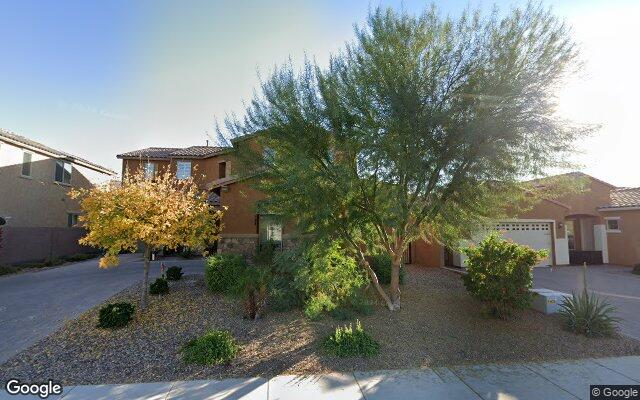
A medium home, reviewed on public record.
© Google Street View
Compared to similar Arizona facilities.
Care · 36-month window. Higher percentile = better performance on inspection record. Source: Arizona Dept. of Health Services · Bureau of Residential Facilities Licensing.
Citation history, plotted month by month.
7 deficiencies on record. Each bar is a month with a citation.
Finding distribution
none · 36 monthsScope × Severity (CMS A–L)
Every inspection visit, verbatim.
2 inspections in the public record, most recent first. Plain-language summaries open first — click into any row for the full citation text.
2026-04-01Complaint InvestigationR9-10-806.A.8 · 1 finding
“Based on documentation review, record review, and interview, the manager failed to ensure that a caregiver provided evidence of freedom from infectious tuberculosis (TB) as specified in R9-10-113 for two of two personnel sampled. The deficient practice posed a potential illness risk to residents. Findings include: 1. R9-10-113.A states, "If a health care institution is subject to the requirements of this Section, as specified in an Article in this Chapter, the health care institution's chief administrative officer shall ensure that the health care institution establishes, documents, and implements tuberculosis infection control activities that...2. Include: a. For each individual who is employed by the health care institution, provides volunteer services for the health care institution, or is admitted to the health care institution and who is subject to the requirements of this Section, screening, on or before the date specified in the applicable Article of this Chapter, that consists of: i. Assessing risks of prior exposure to infectious tuberculosis, ii. Determining if the individual has signs or symptoms of tuberculosis, and iii. Obtaining documentation of the individual's freedom from infectious tuberculosis according to subsection (B)(1)..." 2. A review of the Centers for Disease Control and Prevention website revealed a web page titled, "Guidelines for Preventing the Transmission of Mycobacterium tuberculosis in Health-Care Settings, 2005." The web page stated, "If TST (Mantoux Skin Test) is used for baseline testing, two-step testing is recommended for HCWs (Health Care Workers) whose initial TST results are negative. If the first-step TST result is negative, the second-step TST should be administered 1-3 weeks after the first TST result was read." 3. A review of the facilities' policies and procedures revealed a document titled "Tuberculosis (TB) Screening), which stated: "The manger shall ensure that any individual who is 12 years and older upon accepting or residing in the facility with in 7 days or prior to acceptance o before providing service has dooumentation of Negative TB, Documentation of a negative Mantoux skin test or other type of sereening test that Employee: o Is recommended by the CDC, o Was administered within 6 months before the date individual begins providing services. o Includes the date and type of tb screening. The employee will follow the second steps before start date of employment. In the event that the staff test positive, he or she will be required to see primary doctor to get further determination the next steps or Doctor will document the freedom of tuberculosis. o Staff will also need to complete the tuberculosis screening, Appendi 3. Integrated Tuberculosis (TB) screening and risk assessment form for newly hired HCP, prior to beginning of employment. o Documentation of the individual's freedom from infectious tuberculosis will be included in the personnel record." 4. A review of E2's personnel records revealed Two Step Tuberculosis document with only one Mantoux TB test done. 5. A review of E3's personnel records revealed Two Step Tuberculosis document with only one Mantoux TB test done. 6. In an interview, the findings were reviewed with E1 and no additional documentation was provided.”
2024-03-28Complaint InvestigationA.A.C. · 6 findings
“Based on documentation review, record review and interview, the health care institution failed to implement a training program regarding fall prevention and fall recovery training to include initial training and continued competency, for one of two personnel members sampled. The deficient practice posed a risk as organized instruction and information related to resident care and safety was not implemented. Findings include: 1. A review of facility documentation revealed an undated fall prevention and recovery program which included initial training and continued competency in fall prevention and fall recovery. 2. A review of E2's personnel record revealed E2 was hired as a caregiver on February 19, 2024 as a caregiver. Evidence E2 received initial training in fall prevention and fall recovery was unavailable for review. 3. In an interview E2 acknowledged not receiving initial training in fall prevention and fall recovery. 4. In an interview E1 acknowledged E2's personnel record did not contain evidence E2 completed initial fall prevention and fall recovery training as required.”
“Based on document review, record review and interview, the manager of an assisted living center who contacted an emergency responder on behalf of a resident failed to provide to the emergency responder a written document that included all required documentation, for one of two residents sampled. Findings include: 1. A review of facility quality management reports revealed one incident in March involving the facility calling 911 on behalf of a resident. 2. A review of facility documentation revealed one incident report involving R3 in which a caregiver noticed R3 "was not alert," and when the caregiver "wasn't able to get a reading" of R3's vitals, 9-1-1 was called. R3 was ultimately "transported to the hospital." 3. A review of R3's medical record revealed evidence of the standardized form and documented information provided to the emergency responder was not available for review. 4. In an interview, E1 reported being aware of the implementation of A.R.S. 36-420.02, however E1 acknowledged they had not yet updated the facility documentation to include the standardized form or required information.”
“Based on documentation review, and interview the manager failed to ensure a caregiver's or assistant caregiver's skills and knowledge were verified and documented before providing physical health services, for two of two caregivers sampled. The deficient practice posed a risk if employees were unable to meet the needs of residents. Findings include: 1. A review of E2's personnel record revealed E2 was hired as a caregiver on February 19, 2024. Evidence indicating E2's skills and knowledge were verified and documented before providing physical health services was unavailable for review. 2. A review of E3's personnel record revealed E3 was hired as a caregiver on October 15, 2022. Evidence indicating E3's skills and knowledge were verified and documented before providing physical health services was unavailable for review. 3. A review of the facility's policies and procedures, updated January 2023 revealed a policy covering verification and documentation of a caregiver's or assistant caregiver's skills and knowledge prior to providing physical health services or behavioral health services was unavailable for review. 4. In an interview, E1 reported not having a policy regarding the verification and documentation of a caregiver's or assistant caregiver's skills and knowledge prior to providing services. E1 agreed evidence of documentation of verification of E2's or E3's skills and knowledge was unavailable for review.”
“Based on record review and interview, the manager failed to ensure medication administered to a resident is administered in compliance with a medication order for one of two residents sampled. Findings include: 1. A review of R1's medical record revealed a service plan which indicated R1 received personal care and administration of medication. The medical record contained a doctor's order, dated March 5, 2024, directing R1 take "Lorazepam [1 MG] Tablet, 1 Tablet 1 times a day," and "Pregabalin [75 MG] Capsule, 1 Capsule Oral 1 times a day." 2. A review of R1's Medication Administration Record (MAR) for March 2024 revealed a section documenting the administration of Lorazepam was unavailable for review. The MAR did contain a section for documenting "Pregabalin Cap 75 MG," however the section reflected the medication was being administered every twelve hours at "8AM" and "8PM." 3. In an interview E1 acknowledged R1's medication was not being administered as ordered.”
“Based on observation, documentation review, and interview, the manager failed to ensure policies and procedures were implemented for discarding medication. The deficient practice posed a risk if medications were not properly disposed of and if the standards expected of employees were not followed. Findings include: 1. During a tour of the facility the Compliance Officer observed a cabinet in the kitchen which was not secured and able to be opened with little effort. Inside, the Compliance Officer observed a plastic bin filled with numerous medication bottles with labels identifying R1, R2, or R3, which contained the following medications: "Mirtazapine 30 MG Tabs, amLODIPine Besyl 10 MG Tabs, Atorvastatin 40 MG Tabs, Acetaminophen 500 MG Tabs, Tylenol PM, Melatonin 5 MG Chew, Dextromethorphan HBr, 30 mg with Guaifenesin, 600 mg Tabs, Triamcinolone Acetonide Cream USP, 0.5%, Losartan Pot Tab 50MG, Sertraline Tab 50MG, Diphenhydramine 25MG, Hydroxyzine Pam 25 mg, Diphenhydramine 25MG, Tramadol HCL Tab 50MG, DULoxetine HCL 60 MG." Also in the plastic bin were two medication organizers, with sections "am," or "pm" for each day of the week. Each section contained unidentified medications. The Compliance Officer observed a drawer under a kitchen counter which was unsecured and able to be opened with little effort. Inside the Compliance Officer observed a medication bottle with a label identifying R2. The bottle contained "Atorvastatin 20 MG." 2. A review of facility policy and procedures, reviewed January, 2023, revealed a policy titled, "Medications Left Behind by a Resident." The policy stated, "When a resident moves out of the home, all medications, including over-the-counters, should go with resident if possible." The policy further stated, "1. If the resident dies, prescriptions medications are to be destroyed." 3. In an interview, E1 reported reported E1, E2, and E3 were no longer residents at the facility. E1 advised R1 had left the facility on March 15, 2024, and R3 had left the facility on December 17, 2023. R1 indicated R2 had passed away at the facility on December 24, 2023. E1 acknowledged the medication had not been transferred or discarded according to the facility's policy.”
“Based on observation and interview, the manager failed to ensure the hot water temperature was maintained between 95 \'b0F and 120 \'b0F in areas of the assisted living facility used by residents. Findings include: 1. During a tour of the facility the Compliance Officer observed the hot water temperature measured at 145.6 \'b0F in a shared bathroom. The Compliance Officer observed the hot water temperature in the shower of a bathroom used to bathe residents measured 139.5 \'b0F. 2. In an interview, E1 acknowledged the hot water temperatures were not maintained between 95 \'b0F and 120 \'b0F.”
Other facilities in Gilbert.
Other memory care facilities near Gilbert with similar care offerings.



Facility Watch · Premium
Family reviews
No reviews yet — be the first to share your experience