Brookdale Flagstaff.
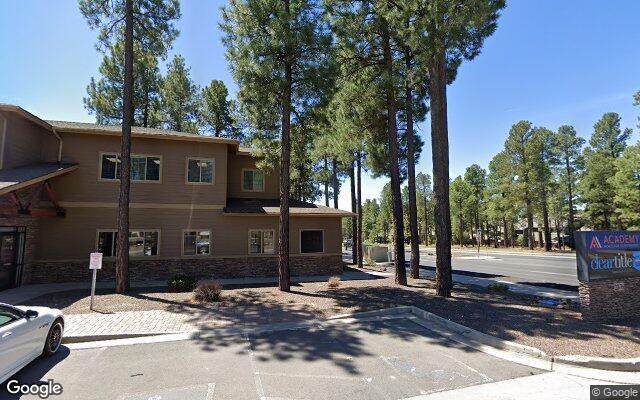
A large home, reviewed on public record.
© Google Street View
Compared to 75 Arizona facilities with a similar number of beds.
Care · 36-month window. Higher percentile = better performance on inspection record. Source: Arizona Dept. of Health Services · Bureau of Residential Facilities Licensing.
among peers to rank.
Rankings based on 36-month ADHS inspection data. Severity and frequency: fewer citations = higher percentile. Repeat rate: lower repeat citation share = higher percentile.
Citation history, plotted month by month.
34 deficiencies on record. Each bar is a month with a citation.
Finding distribution
34 total · 36 monthsScope × Severity (CMS A–L)
Every inspection visit, verbatim.
13 inspections in the public record, most recent first. Plain-language summaries open first — click into any row for the full citation text.
2026-06-19Complaint InvestigationNo findings
2026-02-03Complaint InvestigationA.A.C. · 5 findings
“Based on record review and interview, the assisted living center failed to maintain a standardized form for each resident that included the information prescribed in A.R.S. § 36-420.04.A.1-9 for four out of six residents sampled. The deficient practice posed a risk if the facility was not prepared in case of an emergency. Findings include: 1. A review of R1's medical record revealed a standardized form to be used if an emergency responder was contacted, however, the form was missing the following information: Whether the resident receives medication services and, if the resident has provided this information to the assisted living center or assisted living home, a list of all the resident's prescription and over-the-counter medications, their dosages and how frequently they are administered. 2. A review of R2's medical record revealed a standardized form to be used if an emergency responder was contacted, however, the form was missing the following information: Whether the resident receives medication services and, if the resident has provided this information to the assisted living center or assisted living home, a list of all the resident's prescription and over-the-counter medications, their dosages and how frequently they are administered. 3. A review of R3's medical record revealed a standardized form to be used if an emergency responder was contacted, however, the form was missing the following information: A copy of the resident's health insurance portability and accountability act release authorizing a receiving hospital to communicate with the assisted living center or assisted living home to plan for the resident's discharge. Whether the resident receives medication services and, if the resident has provided this information to the assisted living center or assisted living home, a list of all the resident's prescription and over-the-counter medications, their dosages and how frequently they are administered. 4. A review of R4's medical record revealed a standardized form to be used if an emergency responder was contacted, however, the form was missing the following information: A copy of the resident's health insurance portability and accountability act release authorizing a receiving hospital to communicate with the assisted living center or assisted living home to plan for the resident's discharge. Whether the resident receives medication services and, if the resident has provided this information to the assisted living center or assisted living home, a list of all the resident's prescription and over-the-counter medications, their dosages and how frequently they are administered. 5. In an exit interview, the findings were reviewed with E1 and no additional information was provided.”
“Based on documentation review, and interview, the health care institution failed to ensure that the health care institution established, documented, and implemented tuberculosis (TB) infection control activities that included annually assessing the health care institution's risk of exposure to infectious TB. The deficient practice posed a TB exposure risk to residents. Findings include: 1. A review of the facility's documentation revealed no documentation of annually assessing the health care institution's risk of exposure to infectious tuberculosis. 2. In an exit interview, the findings were reviewed with E1 and no additional information was provided. 3. Technical assistance was provided on this Rule during the inspection conducted on April 24, 2025.”
“Based on documentation review, record review, and interview, the manager failed to ensure that a resident provided evidence of freedom from infectious tuberculosis (TB) within seven calendar days after the resident's date of occupancy, as stated in R9-10-113 for four of six residents sampled. The deficient practice posed a TB exposure risk to residents. Findings include: 1. R9-10-113.A states "If a health care institution is subject to the requirements of this Section, as specified in an Article in this Chapter, the health care institution's chief administrative officer shall ensure that the health care institution establishes, documents, and implements tuberculosis infection control activities that...2. Include: a. For each individual who is employed by the health care institution, provides volunteer services for the health care institution, or is admitted to the health care institution and who is subject to the requirements of this Section, screening, on or before the date specified in the applicable Article of this Chapter, that consists of: i. Assessing risks of prior exposure to infectious tuberculosis, ii. Determining if the individual has signs or symptoms of tuberculosis, and iii. Obtaining documentation of the individual's freedom from infectious tuberculosis according to subsection (B)(1)..." 2. A review of R2, R4, R5, and R6's medical records revealed no documentation of assessing risks of prior exposure to infectious TB and a determination of whether these residents had signs or symptoms of TB. Based on these residents' date of occupancy, this documentation was required. 3. In an exit interview, the findings were reviewed with E1 and no additional information was provided. 4. Technical assistance was provided on this Rule during the inspection conducted on April 24, 2025.”
“Based on record review and interview, the manager failed to ensure a resident accepted by the assisted living facility submitted documentation signed by a medical practitioner or a registered nurse that stated whether the individual required continuous medical services, continuous or intermittent nursing services, or restraints, for two of six residents sampled. The deficient practice posed a risk if the facility was unable to meet a resident's needs. Findings include: 1. A review of R1's medical record revealed no documentation that stated whether the resident required continuous medical services, continuous or intermittent nursing services, or restraints. Based on R1’s acceptance date, this documentation was required. 2. A review of R4's medical record revealed no documentation that stated whether the resident required continuous medical services, continuous or intermittent nursing services, or restraints. Based on R4’s acceptance date, this documentation was required. 3. In an exit interview, the findings were reviewed with E1 and no additional information was provided.”
“Based on record review and interview, the manager failed to ensure a resident received orientation to the exits from the assisted living facility and the route to be used when evacuating the assisted living facility within 24 hours of acceptance, for three of six residents sampled. The deficient practice posed a health and safety risk if the resident needed to exit the facility in an emergency. Findings Include: 1. A review of R1's, R3's, and R4's medical records revealed no documentation of orientation to the exits from the assisted living facility and the route to be used when evacuating the assisted living facility within 24 hours of acceptance. Based on their date of acceptance, this documentation was required. 2. In an exit interview, the findings were reviewed with E1 and no additional information was provided.”
2025-11-03Complaint InvestigationR9-10-808.C.1 · 4 findings
“Based on record review and interview, the manager failed to ensure the caregiver documented the services provided in the resident's medical record for one of six residents reviewed. The deficient practice posed a risk as services could not be verified as provided against a service plan. Findings include: 1. A review of R2's medical record revealed a service plan dated August 7, 2025, and an activities of daily living (ADL) sheet dated September 2025. The ADL sheet indicated the services: 2-hour checks, and brief change every 2 hours or as needed were not provided on September 13, 2025, as stated in the service plan. 2. In an interview, E2 reported that E3, who was scheduled for the night shift on September 13, 2025, confirmed that R2 did not have the services provided. 3. In an exit interview, the findings were reviewed with E2, and no additional information was provided.”
“Based on documentation review and interview, the manager failed to ensure that residents were treated with dignity, respect, and consideration. The deficient practice posed a risk of a resident rights violation. Findings include: 1. A documentation review revealed documentation of an internal investigation stating that a second caregiver found E3 fell asleep in the chair in R5's room, left the window open in R5's room, and did not change R5's brief when it was wet. 2. In an interview, E2 confirmed that the incident happened. 3. In an exit interview, the findings were reviewed with E1, and no additional information was provided.”
“Based on record review, documentation review, and interview, the manager failed to ensure that a resident was provided a diet that met the resident’s nutritional needs as specified in the resident’s service plan. The deficient practice posed a risk as R5's nutritional needs were not met. Findings include: 1. A review of R5's medical record revealed an activities of daily living sheet that indicated R5 did not receive breakfast on September 3 and September 7, 2025. 2. A documentation review revealed an incident investigation dated September 7, 2025. The investigation confirmed that R5 did not receive breakfast on September 3 and September 7, 2025. 3. In an interview, E2 confirmed that R5 did not receive breakfast on September 3 and September 7, 2025. 4. In an exit interview, the findings were reviewed with E2, and no additional information was provided.”
“Based on the documentation review and interview, the manager failed to ensure that the temperature of a resident's room was maintained between 70° F and 84° F. The deficient practice posed a risk to the physical health and safety of a resident. Findings Include: 1. A documentation review revealed documentation of an internal investigation that stated a caregiver observed the temperature of R2's room at 50° F while the resident was lying in bed. 2. In an interview, E2 reported that it was confirmed that R2's room was not at the required temperature. 3. In an exit interview, the findings were reviewed with E2, and no additional information was provided.”
2025-10-10Other VisitNo findings
2025-06-10Complaint InvestigationR9-10-815.F.2 · 1 finding
“Based on the record review, documentation review, and interview, the manager failed to ensure that there was a means of exiting the facility that controlled or alerted employees of the egress of a resident from the facility. The deficient practice posed a risk if the facility was unaware of the general or specific whereabouts of a resident. Findings include: 1. A review of Department documentation revealed the facility was authorized to provide directed care services. 2. A review of R1's medical record revealed that R1 received directed care services. 3. A record review revealed an incident report dated May 25, 2025. The incident report revealed that R1 eloped from the facility through the memory care exit door. At the time of the elopement, the memory care door was not controlled or alerted. 4. In an interview, E1 reported that a church service was taking place in the memory care. When the church members were breaking down their equipment and leaving, R1 followed the church members out of the unit and went outside in front of the facility. A facility staff member noticed that R1 was missing and found R1 sitting on a rock. E1 acknowledged there were means of exiting the facility to an outside area, which did not control or alert employees of the egress of a resident from the facility. 5. During the investigation, the Compliance Officer observed all doors were controlled or alerted.”
2025-04-24Complaint InvestigationR9-10-806.A.8 · 3 findings
“Based on record review and interview, the manager failed to ensure that an employee provided documentation of freedom from infectious tuberculosis (TB) on or before the date the individual began providing services at or on behalf of the assisted living facility, as specified in R9-10-113, for two of four employees sampled. The deficient practice posed a potential TB exposure risk to residents. Findings include: 1. R9-10-113.A states "If a health care institution is subject to the requirements of this Section, as specified in an Article in this Chapter, the health care institution's chief administrative officer shall ensure that the health care institution establishes, documents, and implements tuberculosis infection control activities that...2. Include: a. For each individual who is employed by the health care institution, provides volunteer services for the health care institution, or is admitted to the health care institution and who is subject to the requirements of this Section, screening, on or before the date specified in the applicable Article of this Chapter, that consists of: i. Assessing risks of prior exposure to infectious tuberculosis, ii. Determining if the individual has signs or symptoms of tuberculosis, and iii. Obtaining documentation of the individual's freedom from infectious tuberculosis according to subsection (B)(1)..." 2. A review of E4's and E6's personnel records revealed completion of two-step TST testing. However, no documentation of assessing risks of prior exposure to infectious TB and determining if the E4 and E6 had signs or symptoms of TB was available for review. Based on E4's and E6's hire dates, this documentation was required. 3. In an interview, E1 acknowledged E4 and E6 did not provide documentation of freedom from infectious TB as specified in R9-10-113. This is a repeat deficiency from the inspection conducted on December 27, 2023.”
“Based on record review and interview, the manager failed to ensure a written service plan included the level of service the resident was expected to receive, for one of two residents sampled. The deficient practice posed a risk as the service plan did not reinforce and clarify the services to be provided to a resident. Findings include: 1. A review of R1's medical record revealed a written service plan dated March 15, 2025. The service plan did not include the level of service R1 received. 2. In an interview, E1 and E2 acknowledged R1's service plan did not include the level of service the resident received.”
“Based on interview and record review, the manager failed to ensure a service plan included how the medication was stored and controlled, for one of one resident sampled, who stored medication in the resident's residential unit. The deficient practice posed a health and safety risk. Findings include: 1. In an interview, E2 reported that R2 received personal care services and self-administered medication. 2. A review of R2's medical record revealed a written service plan dated February 12, 2025. This service plan did not include how the medication would be stored and controlled in R2's room. 3. In an interview, E1 and E2 acknowledged that the service plan did not indicate how the medications would be stored and controlled. This is a repeat deficiency from the inspection conducted on January 4, 2023.”
2025-04-02Complaint InvestigationR9-10-803.C.1.g · 1 finding
“Based on documentation review, record review, and interview, the manager failed to ensure that policies and procedures were implemented to protect the health and safety of a resident that covered how a caregiver will respond to a resident's sudden, intense, or out-of-control behavior to prevent harm to the resident or another individual. Findings include: 1. A review of the facility’s policy and procedure revealed a policy titled “Analysis of Behavior Expression in Residents with Dementia” which reflected “ 2. …The interventions identified to address the behavioral expression of the resident should be record on the resident service plan along with a corresponding resident log notation…”. 2. A review of a facility’s documentation revealed a document titled “Incident Investigation” dated March 31, 2025, which revealed a resident-to-resident physical altercation between R1 and R2, and the residents were separated. 3. A review of a facility’s documentation revealed a document titled “Incident Investigation” dated March 31, 2025, which revealed a resident-to-resident physical altercation between R3 and R4. Intervention identified “Immediately separated R3 and R4, and started a 1:1 sitter for R3 at all times until advised otherwise. Removed R3’s cane from the room. R3 ambulates around the community without assistive devices. Notified PCP of R3 behaviors and requested for the Psych provider to review R3’s medication list. Urine sample collected and sent to rule out UTI for R3.” 4. A review of R3’s medical record revealed a service plan dated March 14, 2025, which did not reflect the interventions implemented for R3’s behavior. 5. A review of R1’s medical record revealed a service plan dated March 21, 2025, which reflected “Behavior management: Resident will be able to manage their behaviors with assistance. Resident engages in the following behaviors (demonstrates anxious/disruptive/aggressive behavior requiring additional attention, including throwing objects). However, R1’s service plan did not include interventions implemented for R1’s behavior. 6. In an interview, E1 reviewed R1’s and R3’s service plans and the facility’s procedure and acknowledged that the facility’s policy and procedures were not implemented.”
2025-03-25Complaint InvestigationNo findings
2025-03-17Complaint InvestigationR9-10-817.C.1 · 3 findings
“Based on observation and interview, the manager failed to ensure food stored by the facility was free from spoilage and was safe for human consumption. The deficient practice posed a risk for potential food borne illnesses. Findings include: 1. The Compliance Officer observed the following food stored in the activity room refrigerator: -A block of cheese had greenish/blackish mold spots on the sides and in the middle with an expiration date of November 30, 2024; -A jar of pickles had cloudy liquid with an expiration date of September 25, 2009; -A Greek yogurt was watery with an expiration date of January 11, 2025; -A container of sour cream was watery and had a foul odor with an expiration date of January 6, 2025; and -American Cheese slices with dried white spots on the sides with an expiration date of November 30, 2024. 2. In an interview, E1 acknowledged that food stored by the facility was not free from spoilage.”
“Based on observation and interview, the manager failed to ensure that premises and equipment were cleaned and disinfected. Findings include: 1. During an environmental inspection of the facility, the Compliance Officer observed in R4's bathroom, the extended toilet seat had a thick layer of dried fecal matter on the back and sides. 2. During an environmental inspection of the facility, the Compliance Officer observed the carpets in the hallways and R3's and R4's room had large dark stains on the carpet. 3. During an environmental inspection of the facility, the Compliance Officer observed a strong pungent odor of urine in the East Wing on the first floor and in R2's room. 4. In an interview, E1 acknowledged the premises were not cleaned or disinfected.”
“Based on observation and interview, the manager failed to ensure poisonous or toxic materials were maintained in a locked area and were inaccessible to residents. The deficient practice posed a risk to the physical health and safety of a resident. Findings include: 1. During the compliance inspection, the Compliance Officer observed the following toxins that were not stored in a locked area: In the Activity room: -A container of "Tide" Detergent; -A spray bottle of "Peroxide" Multi-surface cleaner and disinfectant; -A spray bottle of "Oasis 7 Orange Force" multi-surface cleaner; and -A container of "Cerma Bryte" stove cleaner. In R5's bathroom: -A container of "Clorox" wipes; -A half-gallon bottle of bleach; -A bottle of "Clorox" cleaner spray; and -A container of "Lysol' disinfectant. 2. In an interview, E1 acknowledged the materials in the resident bedrooms and activity room were unlocked and were accessible to residents. This is a repeat deficiency from an inspection conducted on January 31, 2024.”
2024-11-07Complaint InvestigationA.A.C. · 1 finding
“Based on record review, documentation review and interview, the manager failed to ensure that when a resident has an accident, emergency, or injury that results in the resident needing medical services, a caregiver documents all of the information required in subsections a. through f. of this rule. Findings include: 1. Review of the record for R1 revealed that on October 19, 2024 the resident experienced a medical emergency that required medical services. The documentation failed to include the following information: The names of individuals who observed the emergency; All of the individuals notified by the caregiver; Any action taken to prevent the emergency from occurring in the future. 2. During an interview, E1 acknowledged the required documentation was not available for review.”
2024-08-16Complaint InvestigationNo findings
2024-01-31Complaint InvestigationA.A.C. · 10 findings
“Based on documentation review, record review and interview, the manager failed to ensure documentation required by Article 8 was provided to the Department within two hours after a Department request. The deficient practice posed a risk as the Department was unable to determine substantial compliance. Findings include: 1. The Compliance Officer requested, at 10:15 AM, documentation to be provided for the facility's complaint investigations. 2. The Compliance Officer conducted the exit interview with E9 and E10 at 4:00 PM and the following documentation had not been provided to the Department for review: -E7's caregiver certificate 3. In an interview, E10 acknowledged the aforementioned documentation was not provided to the Department within two hours after a Department request. E10 reported E7 had a caregiver certification but the facility did not have a copy of it and E7 was at a second job and was unable to provide the requested document.”
“Based on record review, documentation review and interview, the manager failed to ensure a caregiver provided documentation of completion of a caregiver training program approved by the Board of Examiners for Nursing Care Institution Administrators and Assisted Living Facility Managers (NCIA), for five individuals hired as caregivers. The deficient practice posed a risk if E2, E3, E6, E7, or E8 were not qualified to provide the required services. Findings include: 1. A review of E2's personnel record revealed E2 applied for and was hired as a caregiver. However, no caregiver certificate for E2 was provided for review. 2. A review of https://azcg.tmutest.com/search revealed no evidence E2 had completed a caregiver training program. 3. A review of E3's personnel record revealed E3 applied for and was hired as a caregiver. However, no caregiver certificate for E3 was provided for review. 4. A review of https://azcg.tmutest.com/search revealed no evidence E3 had completed a caregiver training program. 5. A review of E6's personnel record revealed E6 applied for and was hired as a caregiver. However, no caregiver certificate for E6 was provided for review. 6. A review of https://azcg.tmutest.com/search revealed no evidence E6 had completed a caregiver training program. 7. A review of E7's personnel record revealed E7 applied for and was hired as a caregiver. However, no caregiver certificate for E7 was provided for review. 8. A review of https://azcg.tmutest.com/search revealed no evidence E7 had completed a caregiver training program. 9. A review of E8's personnel record revealed E8 applied for and was hired as a caregiver. However, no caregiver certificate for E8 was provided for review. 10. A review of https://azcg.tmutest.com/search revealed no evidence E8 had completed a caregiver training program. 11. A review of facility documentation revealed a document that included the personnel members, job titles and hire dates, as requested for the complaint investigation. The document stated the hire dates for each personnel member sampled as well as the following: "Job Titles (see attached JDs): -E1 - Medication Technician -E2 - Caregiver -E3 - Caregiver -E4 - Medication Technician -E5 - Medication Technician -E6 - Caregiver -E7- Medication Technician (-missing AL Caregivers Cert) -E8 - Caregiver -E9 - Health and Wellness Director II" 12. In an interview, E10 reported E2, E3, E6, and E8 were all assistant caregivers. E10 acknowledged the applications and provided documention all stated the aforementioned personnel were caregivers, not assistant caregivers. E10 reported E7 was a certified caregiver but E7's caregiver certificate was unable to be located. E10 acknowledged the facility could not provide caregiver certificates for five of the eight caregivers sampled.”
“Based on documentation review and interview, the manager failed to ensure an assistant caregiver interacted with residents under the supervision of a manager or caregiver.The deficient practice posed a risk as E3 was not qualified to provide the required services. Findings include: A.R.S. \'a7 36-401.A.42. "Supervision" means direct overseeing and inspection of the act of accomplishing a function or activity. 1. A review of facility documentation revealed a document titled "Incident Investigation," dated January 26, 2024. The document contained a section titled "Associate Interview" that stated the following: "E3: Reported to E10 that E3 was a witness of the following. [sic] E3 was assisting E1 in getting R2 into and out of the shower, E3 reported being in and out of R2's bathroom/shower to check on E1. During E3 going in to check on E1 and R2, E3 witnessed R2 using profanity during the shower by saying "what the fuck, oh lord", repeating this statement several times (this is routinely the case for R2, making such statements during a shower.)" 2. In an interview, E3 reported E3 was a caregiver. E3 reported E1 and E3 worked the memory care unit alone on the evening of January 25, 2024, when the aforementioned incident occurred. E3 reported E3 was in and out of R2's bathroom, to assist E1 in providing a shower to R2. E3 reported E3 assisted other residents with showers, preparing for bed and transferring into bed, while E1 assisted R2 with R2's shower. E3 reported E3 worked alone with residents on a regular basis and was not supervised by another personnel. 3. In an interview, E10 reported E3 was hired as an assistant caregiver, though E3's personnel record stated E3 had applied for and been hired as a caregiver. E10 acknowledged E1 and E3 worked alone in the memory care unit on the night of January 25, 2024 and E3 provided care to other residents, unsupervised. E10 reported the facility recently developed an assistant caregiver job description and acknowledged four of the nine personnel members sampled were assistant caregivers, not caregivers, and often worked independent of being supervised by a certified caregiver.”
“Based on documentation review, record review and interview, the manager failed to ensure a caregiver's skills and knowledge were verified and documented before providing physical health services and according to policies and procedures, for eight of eight caregivers or assistant caregivers sampled. Findings include: 1. A documentation review of the facility's policies and procedures revealed a document titled "Resident Assistant Orientation/Med-Tech & Skills Checklist." The document consisted of four pages of checklists that listed trainings, competency evaluations and spaces for initials as well as signatures. 2. A review of E1's personnel record revealed an application for employment as a caregiver. Documentation to demonstrate E1's skills and knowledge were verified was not provided for review. 3. A review of E2's personnel record revealed an application for employment as a caregiver. Documentation to demonstrate E2's skills and knowledge were verified was not provided for review. 4. A review of E3's personnel record revealed an application for employment as a caregiver. Documentation to demonstrate E3's skills and knowledge were verified was not provided for review. 5. A review of E4's personnel record revealed an application for employment as a caregiver. Documentation to demonstrate E4's skills and knowledge were verified was not provided for review. 6. A review of E5's personnel record revealed an application for employment as a caregiver. Documentation to demonstrate E5's skills and knowledge were verified was not provided for review. 7. A review of E6's personnel record revealed an application for employment as a caregiver. Documentation to demonstrate E6's skills and knowledge were verified was not provided for review. 8. A review of E7's personnel record revealed an application for employment as a caregiver. Documentation to demonstrate E7's skills and knowledge were verified was not provided for review. 9. A review of E8's personnel record revealed an application for employment as a caregiver. Documentation to demonstrate E8's skills and knowledge were verified was not provided for review. 10. In an interview, E10 reported to be unaware of the requirement of skills and knowledge being verified. E10 reported the facility did not document any skills and knowledge verification through a checklist or otherwise. E10 reported the facility completed a background check on the personnel members but acknowledged no verification of skills and knowledge was conducted for any caregiver or assistant caregiver. E10 acknowledged the facility had the "Resident Assistant Orientation/Med-Tech & Skills Checklist" available in the policy manual but acknowledged the facility had not completed the document for any caregivers or assistant caregivers hired since E10 became the assisted living manager at this facility.”
“Based on documentation review, record review and interview, the manager failed to ensure a caregiver provided current documentation of cardiopulmonary resuscitation (CPR) training, for two of nine employees. The deficient practice posed a risk if an employee was unable to meet a resident's needs during an emergency. Findings include: 1. A review of the facility's policies and procedures manual, revised dated November 2022, revealed a policy titled "CPR and First Aid Training." The policy stated "Cardiopulmonary Resusitation (CPR) and First Aid Training are required for Arizona nurses, caregivers, managers or volunteers who provide direct care to residents." The policy went on to state "The CPR and first aid certificates will be renewed according to the approved trainer guidelines but no later than 2 years from the issued date of the certificates." 2. A review of E8's personnel record revealed E8 was hired as a caregiver. E8's personnel record revealed a CPR training card, dated December 4, 2022. However, the CPR training card was from an online-only program. 3. A review of E9's personnel record revealed E9 worked in the facility as a Health and Wellness Director. E9's record revealed a CPR training card dated January 4, 2022, issued from National Health and Safety Association. The card stated "Valid 2 years." An additional CPR training certificate was in E9's personnel record, however, the date of issue was January 16, 2024. 4. In an interview, E9 reported to be under the impression E9's CPR certification from National Health and Safety Association was valid until the end of January 2024. E9 acknowledged there was a gap in between January 3, 2024 and January 16, 2024, when E9 was recertified in CPR. 5. In an interview, E10 acknowledged the gap in between E9's CPR certification and E9's newer CPR certification. E10 also acknowledged E8's CPR certificate was issued from an online-only CPR program and that program did not include a hands-on demonstration. 6. In a telephonic interview, on February 1, 2024, O1 reported the card issued from National Health and Safety Association was valid for two years from the issue date, therefore the CPR training card expired on January 3, 2024, not at the end of January 2024. O1 also reported E8's CPR training certificate was from an online only program and never included a hands-on demonstration.”
“Based on record review and interview, the manager failed to ensure a written service plan was signed and dated by the manager, for one of eight residents sampled. Findings include: 1. A review of R1's medical record revealed an updated service plan, dated in December of 2023, for directed care services. However, the service plan was not signed and dated by the manager. 2. In an interview, E10 acknowledged the service plan was not signed and dated by the manager.”
“Based on documentation review and interview, the manager failed to ensure a resident was treated with dignity, respect, and consideration. Findings include: 1. A review of facility documentation revealed a document titled "Incident Investigation," dated January 26, 2024. The document contained a section titled "Associate Interview" that stated the following: "E3: Reported to E10 that E3 was a witness of the following. [sic] E3 was assisting E1 in getting R2 into and out of the shower, E3 reported being in and out of R2's bathroom/shower to check on E1. During E3 going in to check on E1 and R2, E3 witnessed R2 using profanity during the shower by saying "what the fuck, oh lord", repeating this statement several times (this is routinely the case for R2, making such statements during a shower.) E1 was witnessed responding "I am not your fucking god, I am just here to give you a fucking shower." E3 then left and came back when the shower was done. After assisting R2 out of the shower, E3 witnessed E1 using the back of E1's hand, slapping R2 on the shoulder several times. R2 responded "quit hitting me" and E1 responded "if I do I will leave a bruise." The document continued with a response from E1: "When inquired on the specific report (that E1 made statements of "I am not your fucking god" and "I am here to give you a fucking shower"), E1 admitted to have said that on the shower of 1/25/24." 2. In an interview, E3 reported E3 witnessed E1 curse and slap R2 during a shower. E3 acknowledged E1 did not treat R2 with dignity or respect. 3. In an interview, R2 was unable to recount the incident in question. 4. In an interview, E10 reported E1 had been suspended, pending facility investigation regarding the above-named incident. E10 acknowledged E1 had admitted to cursing at the resident and slapping R2 on R2's shoulder. E10 acknowledged E1 had not treated R2 with dignity or respect.”
“Based on observation, record review and interview, the manager failed to ensure medication was stored in a separate locked room, closet, cabinet, or self-contained unit used only for medication storage. Findings include: 1. The Compliance Officer observed the following medication in R1's bedroom: -Flonase on a table -Various prescription and over-the-counter medications in a plastic drawer beside the bed 2. A review of R1's medical record revealed a service plan. The service plan revealed R1's medications were to be stored in the facility's medication storage area. The service plan stated "R1 is a directed level of care. Staff to order, store and administer medication in a cup, which is given to the resident along with fluid of choice." 3. The Compliance Officer observed the following medication in R3's bedroom: -Antacid tablets 4. The Compliance Officer observed the following medication in R3's and R11's shared bathroom's medicine cabinet: -Pepto Bismol -Cough and Chest Congestion DM 5. A review of R3's medical record revealed a service plan. The service plan revealed R3's medications were to be stored in the facility's medication storage area. The service plan stated "R3 is a personal level of care. Staff to order, store and administer medication in a cup, which is given to the resident along with fluid of choice." 6. A review of R11's medical record revealed a service plan. The service plan revealed R11's medications were to be stored in the facility's medication storage area. The service plan stated "R11 is a personal level of care. Staff to order, store and administer medication in a cup, which is given to the resident along with fluid of choice." 7. The Compliance Officer observed the following medication in R6's bathroom drawer: -8 boxes of Lidocaine Topical Gel -6 boxes of Diclofenac Sodium Topical Gel -Lotrimen Ultra -Aspercreme -Clearlax 8. The Compliance Officer observed the following medication in R6's bathroom medicine cabinet: -Bayer Aspirin -Vaporub -Clotrimazole USP 1% -Athlete's Foot Cream 9. A review of R6's medical record revealed a service plan. The service plan revealed R6's medications were to be stored in the facility's medication storage area. The service plan stated "R6 is a personal level of care. Staff to order, store and administer medication in a cup, which is given to the resident along with fluid of choice." 10. In an interview, E10 acknowledged the medications in R1's, R3's and R8's bedrooms and R3's and R11's shared bathroom were unlocked, accessible to residents, and were not stored in a separate locked room, closet, cabinet or self-contained unit.”
“Based on observation and interview, the manager failed to ensure oxygen containers were secured in an upright position. The deficient practice posed a potential explosion or leak of a compressed gas. Findings include: 1. The Compliance Officer observed 10 oxygen containers stored upright in R3's bedroom. One oxygen container was on a two-wheel vertical medical cylinder cart and five oxygen containers were secured in an oxygen storage box. However, four oxygen containers were in a separate regular brown box and were not secured. 2. The Compliance Officer observed 17 oxygen containers stored upright in R4's and R9's shared bedroom. One oxygen container was on a two-wheel vertical medical cylinder cart and 12 oxygen containers were secured in an oxygen storage rack. However, four oxygen containers were not secured. 3. The Compliance Officer observed ten oxygen containers stored upright in R7's and R10's shared bedroom. Two oxygen containers were on two-wheel vertical medical cylinder carts and six oxygen containers were secured in an oxygen storage rack. However, two oxygen containers were not secured. 4. In an interview, E10 acknowledged there were unsecured oxygen containers throughout the facility.”
“Based on observation and interview, the manager failed to ensure poisonous or toxic materials were maintained in a locked area and were inaccessible to residents. The deficient practice posed a risk to the physical health and safety of a resident. Findings include: 1. The Compliance Officer observed the following unlocked toxic on R3's bathroom counter: -Heavy Duty Alkaline Bathroom Cleaner and Disinfectant The bottle contained a toxic warning label. 2. The Compliance Officer observed the following unlocked toxic on R6's kitchen counter: -LA's Awesome Kitchen Cleaner The bottle contained a toxic warning label. 3. The Compliance Officer observed the following unlocked toxic in the upstairs hallway laundry room: -Oasis 137 Orange Force The bottle contained a toxic warning label. 4. In an interview, E10 acknowledged the unlocked materials in the resident bedrooms and laundry room belonged to the facility, were unlocked and were accessible to residents.”
2023-12-27Complaint InvestigationA.A.C. · 6 findings
“Based on documentation review and interview, the manager failed to ensure that a quality management plan was established and documented that included the frequency of submitting a documented report to the governing authority. Findings include: 1. The facility quality management plan indicated that a report would be submitted to the governing authority after a "periodic review". 2. During an interview, E1 acknowledged that a facility quality management plan was not established that included the frequency of submitting a documented report to the governing authority.”
“Based on record review and interview, the manager failed to ensure that three of four sample personnel records contained evidence of freedom from infectious tuberculosis (TB) as specified in R9-10-113. Findings include: 1. The record for E2 (Caregiver, hired June 26, 2023) contained documentation indicating that only one TB test was administered within the past 12 months. No other TB test documentation conducted within the past 12 months was found in the record. 2. The record for E3 (Caregiver, hired July 20, 2023) contained documentation indicating that only one TB test was administered within the past 12 months. No other TB test documentation conducted within the past 12 months was found in the record. 3. The record for E4 (Caregiver, hired January 16, 2023) contained documentation indicating that only one TB test was administered within the past 12 months. No other TB test documentation conducted within the past 12 months was found in the record. 4. During an interview, E1 acknowledged that the employees worked more than 8 hours per week and the documentation did not reflect that the employee records contained evidence of freedom from infectious tuberculosis (TB) as specified in R9-10-113, prior to providing services to residents.”
“Based on record review, observation and interview, the manager failed to ensure that one of one sample service plans for residents who were storing medication in their bedrooms, included how the medication would be stored and controlled. Findings include: 1. During an interview, E1 indicated that R4 self-administered their own medications and stored the medications in their room. 2. The record for R4 contained a current service plan that indicated the resident's medication would have "safe storage". 3. During an interview, E1 acknowledged the service plan did not indicate how the resident's medication would be stored and controlled in their room.”
“Based on record review and interview for one of one sample personal care resident records, the manager failed to obtain the following documentation: documentation reflecting that the resident or resident's representative requested that the resident remain in the facility and a signed and dated statement from a medical practitioner indicating that the resident's needs were being met by the facility as per their scope of services, at least once every six months throughout the duration of the resident's condition. Findings include: 1. During an interview, E1 indicated that R4 was non-ambulatory, has not walked for more than 30 days and cannot walk even when assisted. 2. The resident's record did not contain a request from the resident or their representative to remain in the facility and the last statement from the medical practitioner that the resident's needs were being met as per the facility's scope of services, was dated May 24, 2022. Based on the resident's date of acceptance this documentation was required. 3. During an interview, E1 acknowledged that the required documentation was not in the resident's record.”
“Based on record review and interview, the manager failed to ensure for one of one sample records, that medication administered to a resident was administered in compliance with a medication order. Findings include: 1. The record for R1 contained documentation indicating that on June 26, 2023 at approximately 8pm the resident was given Dilitiazem instead of her regular dosage of Cephalexin. A notation in the record indicated "..the med tech reported to be giving the incorrect medication to the resident." 2. During an interview, E1 acknowledged that a medication prescribed to the resident was not administered in compliance with the medication order.”
“Based on observation and interview, the manager failed to ensure that oxygen cylinders were secured. Findings include: 1. Five small oxygen cylinders were observed sitting on the floor, unsecured in resident apartment #114. 2. Three large oxygen cylinders were observed sitting on the floor, unsecured in resident apartment #116. 3. Four small oxygen cylinders were observed sitting on the closet floor, unsecured in resident apartment #219. 4. During an interview, E1 acknowledged the oxygen cylinders were not secured.”
Other facilities in Flagstaff.
Other memory care facilities near Flagstaff with similar care offerings.

Contract Decoder
Family reviews
No reviews yet — be the first to share your experience