Garden Village Assisted Living V.
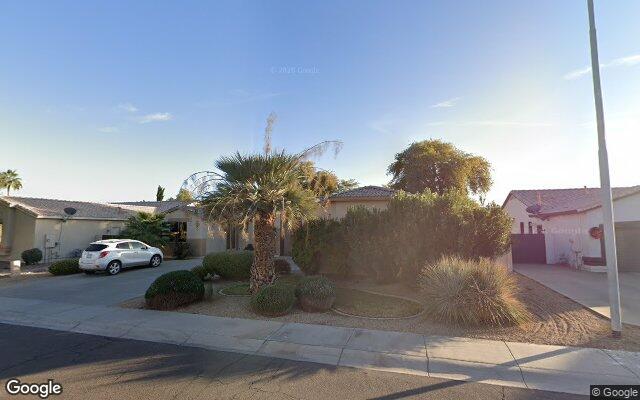
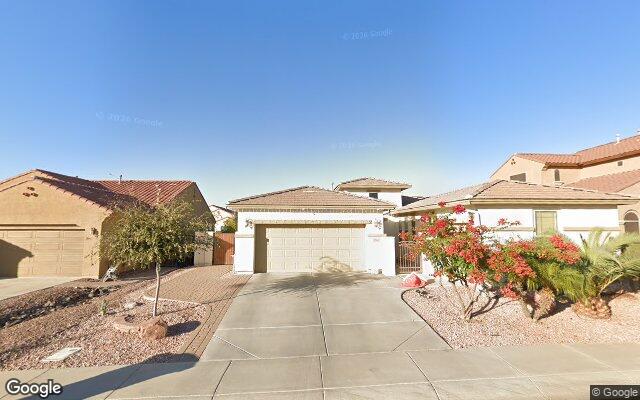
A small home, reviewed on public record.
© Google Street View
Compared to 1,661 Arizona facilities with a similar number of beds.
Care · 36-month window. Higher percentile = better performance on inspection record. Source: Arizona Dept. of Health Services · Bureau of Residential Facilities Licensing.
among peers to rank.
Rankings based on 36-month ADHS inspection data. Severity and frequency: fewer citations = higher percentile. Repeat rate: lower repeat citation share = higher percentile.
Citation history, plotted month by month.
7 deficiencies on record. Each bar is a month with a citation.
Finding distribution
7 total · 36 monthsScope × Severity (CMS A–L)
Every inspection visit, verbatim.
2 inspections in the public record, most recent first. Plain-language summaries open first — click into any row for the full citation text.
2026-05-27Annual Compliance VisitA.A.C. · 5 findings
“Based on documentation review, record review, and interview, the health care institution failed to develop and administer a training program for all staff regarding fall prevention and fall recovery that included initial training. The deficient practice posed a potential risk to the health and safety of a resident if personnel could not respond to the needs of a resident. Findings include: 1. A review of the assisted living home's policies and procedures revealed a policy titled "Orientation" that stated, "New Employee Orientation will be completed prior to producing services to residents and will include the following... Review of Fall Prevention". 2. A review of the assisted living home's policies and procedures revealed a policy titled "In-Service Training Addendum" that contained fall prevention and recovery under "Training Content Requirements". The policy revealed the in-service training was completed by all employees annually. 3. A review of the assisted living home's policies and procedures revealed no fall prevention and recovery training program that included initial training. 4. A review of E1's personnel record revealed no documentation of initial fall prevention and recovery training. 5. In an exit interview, the findings were discussed with E2 and E4, and no additional information was provided.”
“Based on documentation review, record review, and interview, the manager failed to ensure a caregiver’s skills and knowledge were verified and documented before the individual provided physical health services, for one of two personnel sampled. The deficient practice posed a risk if a caregiver did not have the skills and knowledge necessary to meet a resident's needs. Findings include: 1. A review of the facility's personnel schedule revealed E2 began working as a caregiver on July 5, 2025. 2. A review of E2's personnel record revealed E2's skills and knowledge were verified and documented on August 30, 2025. 3. A review of the facility's policies and procedures revealed a policy titled "Administration-Personnel" with a section titled "Caregivers". The "Skills and Knowledge" section under "Caregivers" did not state how caregivers' skills and knowledge would be verified before providing services. 4. In an exit interview, the findings were reviewed with E2 and E4, and no additional information was provided.”
“Based on record review and interview, the manager failed to ensure that before or at the time of acceptance of an individual, the individual submitted documentation that was dated within 90 calendar days before the individual was accepted by an assisted living facility which included if the individual was expected to receive supervisory care services, personal care services, or directed care services, and included whether the individual required continuous medical services, continuous or intermittent nursing services, or restraints; and was dated and signed by a physician, registered nurse practitioner, registered nurse, or physician assistant, for two of two residents sampled. The deficient practice posed a risk if the facility was unable to meet the resident's needs. Findings include: 1. A review of R1's and R2's medical records did not reveal documentation that was dated within 90 calendar days before the individual was accepted by the assisted living facility which included if the individual was expected to receive supervisory care services, personal care services, or directed care services, and included whether the individual required continuous medical services, continuous or intermittent nursing services, or restraints; and was dated and signed by a physician, registered nurse practitioner, registered nurse, or physician assistant. 2. In an interview with E4, E4 reported that E4 was unaware that residents needed the aforementioned documentation dated within 90 calendar days before the individual was accepted by the assisted living facility. 3. In an exit interview, the findings were reviewed with E2 and E4, and no additional information was provided.”
“Based on record review and interview, the manager failed to ensure that a resident had a service plan that was established, documented, and implemented that included the amount, type, and frequency of assisted living services and ancillary services being provided to the resident, for two of two residents sampled. The deficient practice posed a risk as the service plan did not reinforce and clarify services to be provided. Findings include: 1. A review of R1's medical records revealed a service plan, dated April 15, 2026, which indicated that R1 needed assistance with dressing, partial baths, and foot care. However, no frequency was marked on R1's service plan. 2. A review of R1's medical records revealed an "Activities of Daily Living Flowsheet" for May 2026, which indicated that R1 received assistance with dressing, partial baths, and foot care daily. 3. A review of R2's medical records revealed a service plan, dated May 16, 2026, which indicated that R2 needed assistance with dressing and foot care. However, no frequency was marked on R2's service plan. 4. A review of R2's medical records revealed an "Activities of Daily Living Flowsheet" for May 2026, which indicated that R2 received assistance with dressing and foot care once daily. 5. In an exit interview, the findings were reviewed with E2 and E4, and no additional information was provided.”
“Based on documentation review, observation, and interview, the manager failed to ensure that medication was stored in a separate locked room, closet, cabinet, or self-contained unit used only for medication storage. The deficient practice posed a risk to residents who were not prescribed the accessible medication. Findings include: 1. A review of the assisted living home's policies and procedures revealed a policy, approved May 1, 2025, titled "Medication Administration" which states, "All resident medications must be secured in a locked storage area. Only the manager and trained caregivers shall be in possession of the keys to the facility's medication storage area." 2. During an environmental inspection, the Compliance Officers observed an unlocked kitchen cabinet with a sign that stated "MEDICATION Cabinet Keep it LOCKED". The cabinet had a magnetic lock that required a key. However, the cabinet was unlocked, and the key was placed on the refrigerator next to the cabinet where it was accessible to residents. 3. In an interview with E2, E2 reported that the medication cabinet is usually locked. 4. In an exit interview, the findings were reviewed with E2 and E4, and no additional information was provided.”
2024-05-03Annual Compliance VisitA.A.C. · 2 findings
“Based on documentation review and interview, the manager failed to ensure the disaster plan required in subsection (A)(1) was reviewed at least once every 12 months which posed a safety risk. Findings include: 1. During the review of the facility's documents that were requested earlier at the beginning of the compliance inspection revealed there was no documentation as evidence the facility had reviewed the disaster plan and documented as required during the past 12 months. 2. In an interview, E1 acknowledged there was no documented evidence the disaster plan was reviewed and documented as required.”
“Based on documentation review and interview, the manager failed to ensure employee disaster drills were conducted at least once every three months on each shift and documented. Findings include: 1. During a review of the posted personnel current work schedule and an interview, E1 reported the facility had two shifts: First shift from 7:00 AM to 7:00 PM, and the second shift from 7:00 PM to 7:00 AM. 2. Review of the facility's documentation, the compliance officer had requested and was not provided with the documentation of the second shift employee disaster drills during the past 12 months. The personnel schedule showed that E3 worked alone on the second shift. 3. In an interview, E1 acknowledged the employee disaster drills were not conducted at least every three month on the second shift as required.”
Other facilities in Chandler.
Other memory care facilities near Chandler with similar care offerings.
Facility Watch · Premium
Family reviews
No reviews yet — be the first to share your experience