Azalea Villa Assisted Living Center.

A medium home, reviewed on public record.
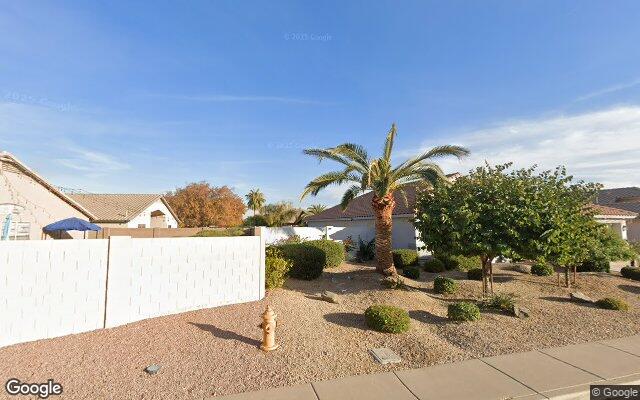
© Google Street View
Compared to 1,661 Arizona facilities with a similar number of beds.
Care · 36-month window. Higher percentile = better performance on inspection record. Source: Arizona Dept. of Health Services · Bureau of Residential Facilities Licensing.
among peers to rank.
Rankings based on 36-month ADHS inspection data. Severity and frequency: fewer citations = higher percentile. Repeat rate: lower repeat citation share = higher percentile.
Citation history, plotted month by month.
17 deficiencies on record. Each bar is a month with a citation.
Finding distribution
17 total · 36 monthsScope × Severity (CMS A–L)
Every inspection visit, verbatim.
5 inspections in the public record, most recent first. Plain-language summaries open first — click into any row for the full citation text.
2026-09-14Complaint InvestigationNo findings
2026-04-17Complaint InvestigationA.A.C. · 9 findings
“Based on record review and interview, the manager failed to ensure that a personnel record for each employee included initial training and continued competency training in fall prevention and fall recovery for one of three employees sampled. The deficient practice posed a risk as the caregiver received no organized instruction or information related to physical health services provided to residents. Findings Include: 1. A review of E1’s personnel record revealed a hire date of December 27, 2025. E1's personnel record did not include documentation of fall prevention and recovery training. 2. In an exit interview, the findings were reviewed with E1, no additional information was provided.”
“Based on record review and interview, the assisted living center that contacted an emergency responder on behalf of a resident failed to provide the emergency responder a written document that included the information prescribed in A.R.S. § 36-420.04.A.1-9 for one out of three residents sampled. The deficient practice posed a risk if the facility was not prepared in case of an emergency. Findings include: 1. A review of the facility's documentation revealed R1 was nonresponsive on April 13, 2026 at 8:30pm. Emergency services were called by the facility and R1 was hospitalized as a result. 2. A review of R1's medical record revealed there was no standardized form given to emergency responders during R1's incident. 3. In an exit interview, the findings were reviewed with E1 and no additional information was provided.”
“Based on record review and interview, the assisted living center failed to maintain a standardized form for each resident that includes the information prescribed in A.R.S. § 36-420.04.C for three out of three residents sampled. The deficient practice posed a risk if the facility was not prepared in case of an emergency. Findings include: 1. A review of R1's medical records revealed there was a standardized form to be used if an emergency responder was contacted, however, the form was missing the following information: Whether the resident receives medication services and, if the resident has provided this information to the assisted living center or assisted living home, a list of all the resident's prescription and over-the-counter medications, their dosages and how frequently they are administered; The name, address and telephone number of the resident's current pharmacy; The name and contact information for the resident's primary care physician and power of attorney or authorized representative; and A copy of the resident's health insurance portability and accountability act release authorizing a receiving hospital to communicate with the assisted living center or assisted living home to plan for the resident's discharge. 2. A review of R2's medical records revealed there was a standardized form to be used if an emergency responder was contacted, however, the form was missing the following information: Whether the resident receives medication services and, if the resident has provided this information to the assisted living center or assisted living home, a list of all the resident's prescription and over-the-counter medications, their dosages and how frequently they are administered; The name, address and telephone number of the resident's current pharmacy; The name and contact information for the resident's primary care physician and power of attorney or authorized representative; and A copy of the resident's health insurance portability and accountability act release authorizing a receiving hospital to communicate with the assisted living center or assisted living home to plan for the resident's discharge. 3. A review of R3's medical records revealed there was a standardized form to be used if an emergency responder was contacted, however, the form was missing the following information: Whether the resident receives medication services and, if the resident has provided this information to the assisted living center or assisted living home, a list of all the resident's prescription and over-the-counter medications, their dosages and how frequently they are administered; The name, address and telephone number of the resident's current pharmacy; The point-of-contact information for the assisted living center or assisted living home, including the telephone number, if available, cell phone number and email address. A point of contact must be available to respond to questions regarding the information provided twenty-four hours a day, seven days a week; and A copy of the resident's health insurance portability and accountability act release authorizing a receiving hospital to communicate with the assisted living center or assisted living home to plan for the resident's discharge. 4. In an exit interview, the findings were reviewed with E1 and no additional information was provided. 5. Technical assistance was provided on this rule during the inspection conducted on July 9, 2025.”
“Based on interview and documentation review, the health care institution failed to ensure that the health care institution implemented tuberculosis (TB) infection control activities that included annually assessing the health care institution's risk of exposure to infectious TB. Findings include: 1. A review of the facility's documentation revealed that an annual assessment of the health care institution's risk of exposure to infectious tuberculosis was unavailable for review. 2. In an exit interview, the findings were reviewed with E1 and no additional information was provided. 3. Technical assistance was provided on this rule during the inspection conducted on July 9, 2025.”
“Based on record review and interview, the manager failed to ensure that a resident's medical record contained the name, address, and contact individual, including contact information, of the hospice service agency, any information provided by the hospice service agency; and a copy of resident follow-up instructions provided to the resident by the hospice service agency. Findings include: 1. A review of R1's medical record revealed documentation titled, "Pre-Determination" completed by a medical practitioner at the time of admittance to the facility. This document stated that R1 required intermittent nursing services from hospice due to the wound on R1's leg upon admittance to the facility. 2. A review of R1's medical record revealed there was no documentation of R1's hospice contact information that included the hospice's name and address. There was also no documentation of the contact individual and no copy of resident follow-up instructions provided to the resident by the hospice service agency. 3. In an interview, E1 and E2 both confirmed R1 was receiving hospice services. 4. A review of the facility's documentation revealed a sign-in sheet used by the facility whenever hospice came to visit R1. According to this document, an organization written as "RCH" came to visit R1 on April 1 and April 8 of 2026. E1 and E2 initially reported they were unable to identify this organization. Upon further investigation, E1 identified this organization as "Revive Community Care," a hospice agency that was newly assigned to R1. This sign-in sheet also listed another organization identified as "Uplift Hospice" that visited R1 on April 13, 2026. However, there was no further documentation of either organization in R1's medical record available for review. 5. A review of R1's medical record revealed a service plan dated January 31, 2026, which stated that R1 had a skin wound on the back of the leg that was being treated by hospice. 6. In an exit interview, the findings were reviewed with E1, and no additional information was provided.”
“Based on documentation review, record review, and interview, the manager failed to ensure that a caregiver who was expected to have more than eight hours per week of direct interaction with residents, provided evidence of freedom from infectious tuberculosis (TB) on or before the date the individual began providing services at or on behalf of the assisted living facility for two of three employees sampled. The deficient practice posed a potential TB exposure risk to residents. Findings include: 1. R9-10-113.A states "If a health care institution is subject to the requirements of this Section, as specified in an Article in this Chapter, the health care institution's chief administrative officer shall ensure that the health care institution establishes, documents, and implements tuberculosis infection control activities that...2. Include: a. For each individual who is employed by the health care institution, provides volunteer services for the health care institution, or is admitted to the health care institution and who is subject to the requirements of this Section, screening, on or before the date specified in the applicable Article of this Chapter, that consists of: i. Assessing risks of prior exposure to infectious tuberculosis, ii. Determining if the individual has signs or symptoms of tuberculosis, and iii. Obtaining documentation of the individual's freedom from infectious tuberculosis according to subsection (B)(1)..." 2. A review of the Centers for Disease Control and Prevention website revealed a web page titled, "Guidelines for Preventing the Transmission of Mycobacterium tuberculosis in Health-Care Settings, 2005." The web page stated, "If TST (Mantoux Skin Test) is used for baseline testing, two-step testing is recommended for HCWs (Health Care Workers) whose initial TST results are negative. If the first-step TST result is negative, the second-step TST should be administered 1-3 weeks after the first TST result was read." 3. A review of E1's personnel record revealed documentation of a TB skin test that was completed before E1's date of hire, however, a second TB skin test was unavailable. Based on E1's date of hire, this documentation was required. 4. A review of E3's personnel record revealed documentation of a TB skin test that was completed before E3's date of hire, however, a second TB skin test was unavailable. Based on E3's date of hire, this documentation was required. 5. In an exit interview, the findings were reviewed with E1 and no additional information was provided.”
“Based on record review and interview, the manager failed to ensure that the caregiver documented the services provided in a resident’s medical record according to the resident’s service plan for three out of three residents sampled. The deficient practice posed a risk as services could not be verified as provided against a service plan. Findings include: 1. A review of R1’s medical record revealed a service plan, which included the following: Bathing, twice a week; Hair combing daily; and Shampoo, twice a week. 2. A review of R1’s activities of daily living sheet for the month of April 2026 revealed the following: Bathing, only documented on April 5 and 6. Hands and face washed only on all other days; No documentation of hair combing; and No documentation of shampoo. 3. A review of R2’s medical record revealed a service plan, which included the following: Bathing, twice a week; Hair combing daily; Shampoo, twice a week; Oral care daily; and Daily nail checks. 4. A review of R2’s activities of daily living sheet for the month of April 2026 revealed the following: Bathing, only documented on April 15; No documentation of hair combing; No documentation of shampoo; No documentation of daily oral care; and No documentation of daily nail checks. 5. In an exit interview, the findings were reviewed with E1 who reported that these services were provided but were not documented, and no additional information was provided.”
“Based on documentation review, observation, and interview, the manager failed to ensure that there was a means of exiting the facility for a resident who did not have a key, special knowledge for egress, or the ability to expend increased physical effort that provided access to an outside area that monitored or alerted employees of the egress of a resident from the facility. The deficient practice posed a risk if the facility was unaware of the general or specific whereabouts of a resident. Findings include: 1. A review of the facility license revealed the facility was licensed at the directed care level. 2. During an environmental inspection of the facility with E1, the Compliance Officer observed there was a door nearest the kitchen that led to the backyard. This door had an alarm, however, the alert was not functioning and was not being monitored. 3. During an environmental inspection of the facility with E1, the Compliance Officer observed a back exit door leading to the outside. This door had an alarm, however, the alert was not functioning and was not being monitored. 4. In an exit interview, the findings were reviewed with E1, and no additional information was provided.”
“Based on record review and interview, the manager failed to ensure that when a resident had an accident, emergency, or injury that resulted in the resident needing medical services, a caregiver documented the individuals notified by the caregiver; and any action taken to prevent the accident, emergency, or injury from occurring in the future. The deficient practice posed a potential risk of re-injury if a resident did not receive adequate follow-up care. Findings include: 1. A review of R1's medical record revealed a document titled "Incident Report" dated April 13, 2026. This document stated, "Resident was non responsive, called On call hospice nurse from Uplift Hospice. Seen and assessed, resident is not DNR, hospice called...POA refuses to sign DNR. RN ... advised to call 911 to transfer as resident is still full code." Documentation was not available showing the individuals notified by the caregiver, and any action taken to prevent the accident, emergency, or injury from occurring in the future. 2. In an exit interview, the findings were reviewed with E1 and no additional information was provided. 3. This is a repeat deficiency from the inspection conducted on July 9, 2025.”
2025-08-28Complaint InvestigationNo findings
2025-07-09Complaint InvestigationR9-10-113.A.2 · 7 findings
“Based on record review and interview, the health care institution's chief administrative officer failed to ensure training and education related to recognizing the signs and symptoms of tuberculosis (TB) was provided annually to individuals employed by the health care institution, for two of two personnel sampled. The deficient practice posed a potential illness risk to residents. Findings include: 1. A review of E1's personnel record revealed E1 completed training on recognizing the signs and symptoms of TB on March 21, 2024. However, documentation of additional training was not available for review. 2. A review of E2's personnel record revealed E2 completed training on recognizing the signs and symptoms of TB on March 21, 2024. However, documentation of additional training was not available for review. 3. In an interview, E2 acknowledged training and education related to recognizing the signs and symptoms of TB was not provided initially and annually to individuals employed by the health care institution.”
“Based on record review and interview, the manager failed to ensure that an entry in a resident's medical record was not changed to make the entry illegible. Findings include: 1. A review of R2's activities of daily living (ADL) documentation for July 2025 revealed multiple entries were made illegible with correction fluid. 2. In an interview, E2 acknowledged the entries on R2's ADL were made illegible. Technical assistance was provided regarding this rule during the compliance and complaint inspection conducted on August 2, 2024.”
“Based on record review, observation, and interview, the manager failed to ensure that a resident's medical record contained a medication order from a medical practitioner for each medication that was administered to the resident, for one of two residents sampled. The deficient practice posed a risk as medication administered could not be verified against a medication order. Findings include: 1. A review of R1's medical record revealed R1 received medication administration. 2. A review of R1's medical record revealed a medication list dated April 4, 2025, signed by a registered nurse (RN) for: Aspirin 81 milligrams (mg), 1 tablet by mouth (po) daily (qd); Citalopram 10 mg, 1 tablet po qd; Colace 100 mg, 1 capsule po qd; Levothyroxine 100 micrograms (mcg), 1 tablet po Monday, Tuesday, Wednesday, Thursday, and Friday; Levothyroxine 100 mcg, 1/2 tablet po Saturday and Sunday; Propafenone HCl 225 mg, 1 tablet po twice a day (bid); Olanzapine 5 mg, 1 tablet po at bedtime (qhs); and Trazodone 50 mg, 1 tablet po qhs. However, the medication list was not signed by a medical practitioner as required. 3. A review of R1's medical record revealed a medication order for Midodrine HCl 5 mg, 1 tablet po qd, dated June 3, 2025. However, the medication order was not signed by a medical practitioner as required. 4. A review of R1's medication administration record (MAR) for July 2025, revealed R1 was administered the following medications July 1, 2025 - present: Aspirin 81 mg, 1 tablet po qd at 8:00 AM; Citalopram 10 mg, 1 tablet po qd at 8:00 AM; Colace 100 mg, 1 capsule po qd at 8:00 AM; Levothyroxine 100 mcg, 1 tablet po Monday, Tuesday, Wednesday, Thursday, and Friday at 8:00 AM; Levothyroxine 100 mcg, 1/2 tablet po Saturday and Sunday at 8:00 AM; Propafenone HCl 225 mg, 1 tablet po bid at 8:00 AM and 8:00 PM; Olanzapine 5 mg, 1 tablet po at 8:00 PM; Trazodone 50 mg, 1 tablet po at 8:00 PM; and Midodrine HCl 5 mg, 1 tablet po qd at 8:00 AM. 5. In an interview, E2 acknowledged R1's medical record did not contain a medication order from a medical practitioner for each medication that was administered to the resident.”
“Based on record review, observation, and interview, the manager failed to ensure that a medication administered to a resident was administered in compliance with a medication order, for one of two residents sampled. The deficient practice posed a risk if the resident experienced a change in condition due to improper administration of medication. Findings include: 1. A review of R2’s medical record revealed a medication order dated June 15, 2025, for Levothyroxine 175 micrograms (mcg), 1 tablet by mouth (po) daily (qd). 2. A review of R2’s medication administration record (MAR) for July 2025 revealed R2 was administered Levothyroxine 112 mcg, 1 tablet po qd, July 1, 2025 - present. 3. A review of R2's medical record revealed a medication order signed by a registered nurse (RN) on June 21, 2025, for Levothyroxine 112 mcg, 1 tablet po qd. However, the medication order was not signed by a medical practitioner as required. 4. The Compliance Officer observed Levothyroxine 112 mcg stored at the facility for administration to R2. 5. In an interview, E2 reported R2’s medications were changed by R2's provider following the signed order on June 15, 2025. However, E2 acknowledged that medication administered to R2 was not administered in compliance with a medication order.”
“Based on documentation review and interview, the manager failed to ensure the facility's disaster plan was reviewed at least once every 12 months. The deficient practice posed a risk as a disaster plan reinforces and clarifies standards expected of employees. Findings include: 1. A review of the facility's policies and procedures revealed the facility's disaster plan, with a review date of June 1, 2023. However, documentation of an additional review was not available for review. 2. In an interview, E2 acknowledged that the facility's disaster plan was not reviewed at least once every 12 months.”
“Based on record review and interview, the manager failed to ensure that a caregiver documented the time of the accident, emergency, or injury, the names of the individuals who observed the accident, emergency, or injury, the actions taken by the caregiver, the individuals notified by the caregiver, and any action taken to prevent the accident, emergency, or injury from occurring in the future, when a resident had an accident, emergency, or injury that resulted in the resident needing medical services. Findings include: 1. A review of R2's medical record revealed R2 had an emergency on June 19, 2025, that resulted in R2 needing medical services.. However, the documentation did not include the following required elements: the time of the accident; the names of individuals who observed the accident; the actions taken by the caregiver; the individuals notified by the caregiver; and any action taken to prevent the accident from occurring in the future. 2. In an interview, E2 acknowledged that when R2 had an accident, emergency, or injury that required medical services, a caregiver did not document all required elements per R9-10-818.D.2”
“Based on observation and interview, the manager failed to ensure that hot water temperatures were maintained between 95º F and 120º F in areas of an assisted living facility used by residents. The deficient practice posed a health and safety risk for residents. Findings include: 1. During an environmental tour of the facility, the Compliance Officer observed a water temperature of 162.3º F in the shared laundry room for residents. 2. In an interview, E2 acknowledged the hot water temperatures were not maintained between 95º F and 120º F in areas used by residents.”
2024-07-29Annual Compliance VisitA.A.C. · 1 finding
“Based on documentation review and interview, the manager failed to ensure a disaster drill for employees was conducted on each shift at least once every three months. The deficient practice posed a risk if employees were unable to implement a disaster plan. Findings include: 1. A review of facility documentation revealed two shifts; an AM shift and a PM shift. 2. A review of the facility's disaster drills revealed a drill conducted as follows: January 3, 2024 on the AM shift; January 4, 2024 on the PM shift; and April 4, 2024 on the AM shift. No other employee disaster drills were available for review. 3. In an interview, E3 acknowledged the disaster drills were not conducted on each shift at least once every three months.”
2 older inspections from 2023 are not shown above.
Get the complete record, translated into plain language — emailed to you.
Other facilities in Chandler.
Other memory care facilities near Chandler with similar care offerings.
Contract Decoder
Family reviews
No reviews yet — be the first to share your experience