Merrill Gardens at Anthem.

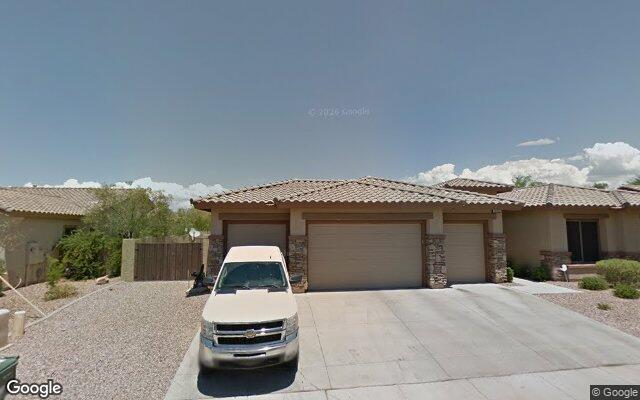
A large home, reviewed on public record.
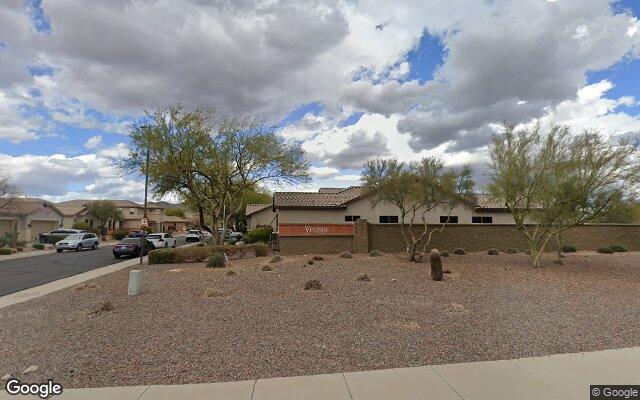
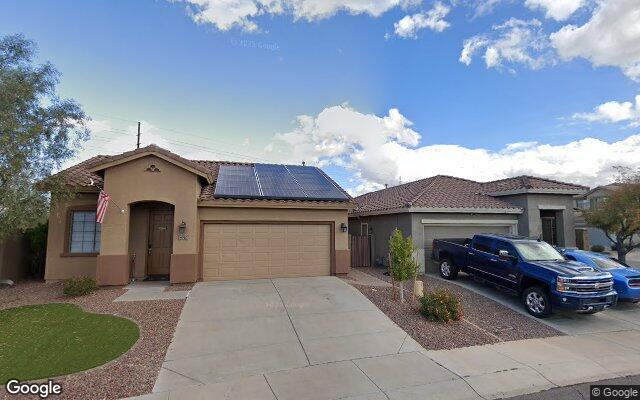
© Google Street View
Compared to 116 Arizona facilities with a similar number of beds.
Care · 36-month window. Higher percentile = better performance on inspection record. Source: Arizona Dept. of Health Services · Bureau of Residential Facilities Licensing.
among peers to rank.
Rankings based on 36-month ADHS inspection data. Severity and frequency: fewer citations = higher percentile. Repeat rate: lower repeat citation share = higher percentile.
Citation history, plotted month by month.
8 deficiencies on record. Each bar is a month with a citation.
Finding distribution
8 total · 36 monthsScope × Severity (CMS A–L)
Every inspection visit, verbatim.
4 inspections in the public record, most recent first. Plain-language summaries open first — click into any row for the full citation text.
2026-09-15Complaint InvestigationNo findings
2026-05-14Annual Compliance VisitNo findings
2025-12-18Complaint InvestigationA.A.C. · 3 findings
“Based on documentation review and interview, the health care institution failed to provide appropriate first aid before the arrival of emergency medical services to a non-injured resident who had fallen, appeared to be uninjured, and was unable to reasonably recover independently. The deficient practice posed a risk as a caregiver was unable to meet a resident's needs. Findings include: 1. A review of facility documentation revealed an incident report dated October 19, 2025. The report stated: “[R5] opened the door to [R5’s] room and was sitting down and asked for help. [R5] informed us not hit [R5’s] head, no injuries, only [R5] wanted help getting up. As an [medication technician] I decided to call 911 for help.” The document further confirmed R5 was not injured and was not taken to the hospital. 2. In an interview, E1 reported E3 called 911 for support lifting R5, confirming the incident report.”
“Based on interview, record review, and documentation review, the manager failed to ensure the health, safety, or welfare of a resident was not placed at risk of harm. The deficient practice posed a risk as a personnel member injured a resident. Findings include: 1. In an interview, E1 reported an incident of E2’s suspected abuse toward R3 which resulted in E2’s employment being terminated. E1 stated, “[R3] told me Wednesday afternoon.” E1 reported R3 informed E1 on Wednesday, November 12, 2025, that E2 hurt R3’s leg and slapped R3’s hand. E1 reported E1 spoke with R3’s family member the next day to inform R3’s family member of the incidents and to determine whether R3’s family member had any further concerns regarding R3’s care. E1 reported E1 moved E2 to a different area of the facility on November 12, 2025, where E2 would not be providing care to R3. E1 reported E1 terminated E2’s employment the next day, November 14, 2025. 2. A review of E2’s personnel record revealed a “TERMINATION DOCUMENTATION FORM” dated November 14, 2025. The form stated: “Reason for today's termination and date of final incident (date and time if applicable): [R3] reported that while receiving care services from [E2] on 11/13/25 [E2] was physically rough with [R3], causing [R3] physical discomfort. [E2] insisted on removing [R3’s] boots even after [R3] stated that they required per doctor’s orders and having weak ankles. [R3] reports [E2] was extremely rude and argumentative with [R3] when [R3] was explaining [R3’s] needs and discomfort...Following this event, [R3] reported to several staff members, including myself [E1], that [R3] feels unsafe under the care of [E2] and does not want [E2] ‘anywhere near [R3] again.’” 3. A review of facility documentation revealed an email between E1 and R3’s family member dated November 17, 2025. The email stated: “[R3] doesn't remember the exact days the incidents occurred, but they were within the week or short time that [E2] was helping [R3]. Two caregivers witnessed some of the occurrences. From what [R3] told me, [E2] didn't want [R3] to wear [R3’s] boots that support [R3’s] weak ankles…[T]hese kinds of boots were prescribed by [R3’s] neurologist to give [R3’s] ankle support…Apparently, [E2] squeezed [R3’s] lower leg so hard that [R3] screamed…(This ankle was hurt many years ago, so it can't be twisted or squeezed.) Another incident involved R3’s] disposable brief. [E2] wanted to throw it away, because [E2] said it was dirty. [R3] told [E2] it wasn't dirty and [R3's] not senile, but [E2] ripped it off anyway and put it on top of [R3’s] trash. [R3] reached for it, and [E2] slapped [R3’s] hand to stop [R3]. [R3] was starting to become afraid of having [E2] come into the room to help [R3].””
“Based on documentation review, interview, and record review, after having a reasonable basis to believe abuse occurred on the premises, the manager failed to report the suspected abuse of a resident according to Arizona Revised Statutes (A.R.S.) § 46-454. The deficient practice posed a risk to the physical health and safety of a resident. Findings include: 1. A.R.S. § 46-454(A) states: "A health professional...or other person who has responsibility for the care of a vulnerable adult and who has a reasonable basis to believe that abuse, neglect or exploitation of the vulnerable adult has occurred shall immediately report or cause reports to be made of such reasonable basis to a peace officer or to the adult protective services central intake unit...The reports required by this subsection shall be made immediately by telephone or online." 2. Arizona Administrative Code R9-10-101(111) states, “‘Immediate' means without delay.” 3. In an interview, E1 reported an incident of E2’s suspected abuse toward R3 which resulted in E2’s employment being terminated. E1 stated, “[R3] told me Wednesday afternoon.” E1 reported R3 informed E1 on Wednesday, November 12, 2025, that E2 hurt R3’s leg and slapped R3’s hand. E1 reported E1 spoke with R3’s family member the next day to inform R3’s family member of the incidents and to determine whether R3’s family member had any further concerns regarding R3’s care. E1 reported E1 moved E2 to a different area of the facility on November 12, 2025, where E2 would not be providing care to R3. E1 reported E1 terminated E2’s employment the next day, November 14, 2025. 4. A review of E2’s personnel record revealed a “TERMINATION DOCUMENTATION FORM” dated November 14, 2025. The form stated: “Reason for today's termination and date of final incident (date and time if applicable): [R3] reported that while receiving care services from [E2] on 11/13/25 [E2] was physically rough with [R3], causing [R3] physical discomfort. [E2] insisted on removing [R3’s] boots even after [R3] stated that they required per doctor’s orders and having weak ankles. [R3] reports [E2] was extremely rude and argumentative with [R3] when [R3] was explaining [R3’s] needs and discomfort...Following this event, [R3] reported to several staff members, including myself [E1], that [R3] feels unsafe under the care of [E2] and does not want [E2] ‘anywhere near [R3] again.’” 5. A review of facility documentation revealed an email between E1 and R3’s family member dated November 17, 2025. The email stated: “[R3] doesn't remember the exact days the incidents occurred, but they were within the week or short time that [E2] was helping [R3]. Two caregivers witnessed some of the occurrences. From what [R3] told me, [E2] didn't want [R3] to wear [R3’s] boots that support [R3’s] weak ankles…[T]hese kinds of boots were prescribed by [R3’s] neurologist to give [R3’s] ankle support…Apparently, [E2] squeezed [R3’s] lower leg so hard that [R3] screamed…(This ankle was hurt many years ago, so it can't be twisted or squeezed.) Another incident involved R3’s] disposable brief. [E2] wanted to throw it away, because [E2] said it was dirty. [R3] told [E2] it wasn't dirty and [R3's] not senile, but [E2] ripped it off anyway and put it on top of [R3’s] trash. [R3] reached for it, and [E2] slapped [R3’s] hand to stop [R3]. [R3] was starting to become afraid of having [E2] come into the room to help [R3].” The review further revealed an email from Adult Protective Services (APS) which indicated E1 did not report the suspected abuse until November 26, 2025. 6. In an interview, E1 reported E1 did not report the abuse until November 26, 2025, because E1 was awaiting instructions from E1’s supervisors.”
2025-05-14Complaint InvestigationR9-10-803.A.9 · 5 findings
“Based on documentation review, record review, and interview, the governing authority failed to ensure compliance with Arizona Revised Statutes (A.R.S.) § 36-411(C), for three of five sampled employees. The deficient practice posed a risk if the employees were a danger to a vulnerable population. Findings include: 1. A.R.S. § 36-411(C)(1) and (4) states: "C. Each residential care institution, nursing care institution and home health agency shall make documented, good faith efforts to: 1. Contact previous employers to obtain information or recommendations that may be relevant to a person's fitness to work in a residential care institution, nursing care institution or home health agency…4. On or before March 31, 2025, verify that each employee is not on the adult protective services registry pursuant to section 46-459.” 2. A review of E1's personnel record revealed E1 was hired as the manager before March 31, 2025. The review revealed a “TEAM MEMBER DOCUMENT CHECK LIST” which indicated facility personnel verified E1 was not on the Adult Protective Services (APS) registry on May 9, 2025. The review revealed a printout from the APS registry which confirmed facility personnel did not verify E1 was not on the APS registry until May 9, 2025. 3. In an interview, E1 reported facility personnel verified E1 was not on the APS registry in November 2024. However, E1 reported the verification had not been documented and printed until facility personnel checked the registry again on May 9, 2025. 4. A review of E5’s personnel record revealed E5 was hired as a caregiver. The review revealed an application and resume which indicated E5 had previous employers. However, the review revealed facility personnel contacted E5’s previous co-workers and not E5’s previous employers. 5. A review of E6’s personnel record revealed E6 was hired as a caregiver. The review revealed an application which indicated E6 had previous employers. However, the review revealed facility personnel contacted E6’s family and friends and not E6’s previous employers. The review revealed E6’s driver license and fingerprint clearance card which confirmed E6’s legal name. The review further revealed a printout from the APS registry which indicated facility personnel used E6’s middle name and not E6’s legal first name to verify E6 was not on the APS registry. 6. A review of the APS registry website revealed E6 was not on the registry. 7. In an interview, E1 acknowledged facility personnel did not use the correct name to verify E6 was not on the APS registry. E1 acknowledged facility personnel contacted friends, family, and previous co-workers and not previous employers for E5 and E6.”
“Based on record review, documentation review, and interview, the manager failed to ensure a caregiver provided current documentation of first aid training and cardiopulmonary resuscitation (CPR) training certification specific to adults before providing assisted living services to a resident, for one of five sampled applicable personnel members. The deficient practice posed a risk if a caregiver was unable to meet a resident's needs during an emergency. Findings include: 1. A review of E4's personnel record revealed E4 was hired as a caregiver. The review revealed a “TEAM MEMBER DOCUMENT CHECK LIST” which indicated E4’s first aid and CPR training certification expired on April 18, 2025. The review revealed a first aid and CPR training certification dated as expired on April 18, 2025, and a current first aid and CPR training certification dated as issued on May 2, 2025. However, the certifications revealed E4 did not have first aid and CPR training certification for approximately two weeks. 2. A review of facility documentation revealed a series of personnel schedules which indicated E4 worked on April 20-23 and 27-29, 2025, and May 1, 2025, without first aid and CPR training certification. 3. In an interview, E1 confirmed E4 did not have first aid and CPR training certification for approximately two weeks.”
“Based on record review and interview, the manager failed to ensure a resident's written service plan included the frequency of assisted living services being provided to the resident, for one of ten sampled residents. Findings include: 1. A review of R1's medical record revealed a service plan dated April 29, 2025. The service plan indicated R1 was to receive assistance with dressing, toileting, and transferring. However, the service plan did not include the frequency of these services. 2. In an interview, E1 stated, “We don’t have frequencies on there.””
“Based on record review and interview, the manager failed to ensure a caregiver or an assistant caregiver documented the services provided to a resident in the resident's medical record, for one of ten sampled residents. The deficient practice posed a risk as services could not be verified as provided against a service plan. Findings include: 1. A review of R1's medical record revealed a service plan dated April 29, 2025. The service plan revealed R1 was to receive assistance with dressing, toileting, and transferring. The review revealed documentation of assisted living services provided to R1 (ADLs) dated April 2025. However, the ADLs revealed no documentation of dressing, toileting, and transferring provided to R1 during the 2:00 PM to 10:00 PM shift on April 28, 2025. 2. In an interview, E1 reported R1 had not been out of the community between 2:00 PM and 10:00 PM on April 28, 2025. E1 reported the aforementioned services were provided but were not documented.”
“Based on documentation review and interview, the manager failed to ensure a disaster drill for employees was conducted on each shift at least once every three months and documented. The deficient practice posed a risk if employees were unable to implement a disaster plan. Findings include: 1. A review of facility documentation revealed no documentation of disaster drills conducted within the last 12 months. 2. In an interview, E1 confirmed facility personnel had not conducted disaster drills for employees within the last 12 months. E1 reported not remembering the last time facility personnel had conducted a disaster drill.”
Other facilities in Anthem.
Other memory care facilities near Anthem with similar care offerings.

Full Inspection Record
Family reviews
No reviews yet — be the first to share your experience