Bella Terra St. George.
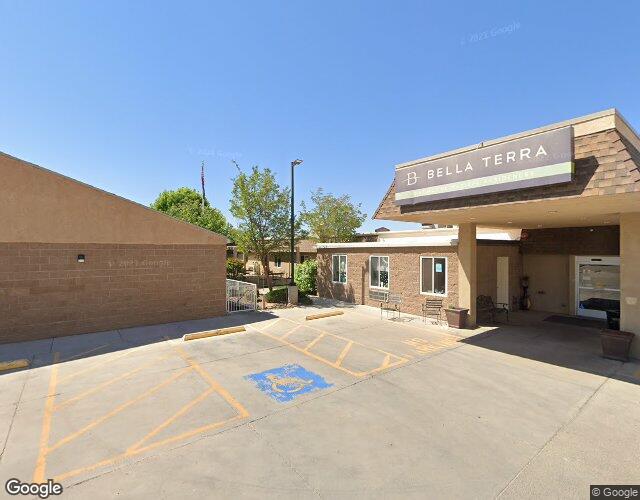
A large home, reviewed on public record.
Compared to 38 Utah facilities with a similar number of beds.
Care · 36-month window. Higher percentile = better performance on inspection record. Source: Utah Dept. of Health & Human Services · Division of Licensing and Background Checks.
among peers to rank.
Rankings based on 36-month DLBC inspection data. Severity and frequency: fewer citations = higher percentile. Repeat rate: lower repeat citation share = higher percentile.
Citation history, plotted month by month.
63 deficiencies on record. Each bar is a month with a citation.
Finding distribution
63 total · 36 monthsScope × Severity (CMS A–L)
Every inspection visit, verbatim.
4 inspections in the public record, most recent first. Plain-language summaries open first — click into any row for the full citation text.
2026-01-05Annual Compliance VisitNo findings
2025-01-23Annual Compliance VisitNo findings
2024-11-13Annual Compliance VisitSerious · 7 findings
Plain-language summary
An annual inspection on this facility found noncompliance with abuse and neglect prevention rules. The facility failed to adequately protect residents with cognitive impairment from sexual contact between residents, including by not assessing their capacity to consent and maintaining inconsistent staff knowledge of safety interventions, and also moved a resident to a locked memory care unit as a form of behavioral control without proper notification or clinical justification. Staff interviews revealed breakdown in communication about resident care plans and interventions.
Read full citation text (7)Hide full citation text
“The provider was not in compliance with this rule. Based on record review and interview it was determined, for 1 of 65 sampled residents, based on the comprehensive assessment of a resident the facility did not ensure that a resident with a pressure ulcer received the necessary treatment and services, consistent with professional standards of practice, to promote healing, prevent infection and prevent new ulcers from developing. Specifically a resident's wound Vacuum-Assisted Closure (VAC) was not working for approximately 24 hours and the physician was not notified until the resident was somnolent. Resident identifier: 371. Findings include: Resident 371 was admitted to the facility on 5/8/24 and re-admitted on 6/4/24 with diagnoses which included paraplegia, cognitive communication deficit, and pressure ulcer of sacral region. Resident 371's medical record was reviewed 11/12/24 through 11/13/24. An admission Minimum Data Set (MDS) dated 5/15/24 revealed resident 371 had a Brief Interview of Mental Status (BIMS) score of 11 which suggested moderate cognitive impairment. The MDS further revealed resident 371 had one unhealed stage 3 pressure ulcer and one stage 4 pressure ulcer. The MDS revealed skin and ulcer treatments were pressure reducing device for chair and bed, turning/repositioning program, nutrition or hydration interventions to manage skin problems, pressure ulcer care, and application of non-surgical dressing other than to feet. A care plan dated 5/23/24 and revised on 6/20/24 revealed, resident 371 had a "Documented pressure ulcer". The care plan did not list a goal. The care plan's only intervention included, "Provide wound care per treatment order". On 5/9/24 a physician wrote an order for wound care to be completed every Monday, Thursday, and Friday with the wound VAC pressure set at a constant setting. On 5/23/24 at 5:53 PM, a skin/wound progress note revealed that resident 371 was seen by the wound specialist physicians assistant, and wound care was completed which included an increase in the wound vac pressure setting. On 5/29/24 at 1:00 AM, a physician documented a progress note that revealed, that they were informed by nursing staff, that resident 371's wound VAC had not been working for at least 24 hours and resident 371 had been somnolent for most of the day. The physician noted that resident 371 had a recent "bout" of sepsis due to this previously. The physician then immediately went to check resident 371's and upon entry of the room "the smell from patient's wounds was overwhelming." The physician assessed the wound and resident 371's mental status, resident 371 was arousable to pain only. The physician called 911 and had resident 371 transferred to a local Emergency Department (ED) due to possible septic shock. [It should be noted that there was no documentation indicated that the physician was contacted about the malfunctioning wound VAC.] On 5/29/24, resident 371 was admitted to a local hospital. The document revealed the wound VAC had broken "at some point" in the last few days. In the physical exam the skin assessment revealed the physician was "unable to assess the ulcer as the patient was unable to roll all the way over, however there was a foul odor distinguishable...". A Computed Tomography (CT) obtained in the hospital revealed resident 371 had an abscess in the left gluteal region, findings were "suspicious for osteomyelitis.", an abscess in the posterior sacral soft tissue, and inflammation in the right gluteal. The hospital documents revealed, resident 371 was diagnosed with osteomyelits of the sacrum and placed on antibiotics. On 11/13/24 at 2:39 PM, an interview was conducted with the Director of Nursing (DON). The DON stated wound VAC's are just checked when they are being changed. The DON stated that if the wound VAC was not working then the nurses should troubleshoot, check for adequate battery, look for a replacement and if none of that helped then the nurses should contact the provider. The DON stated when the nurses contact the provider they should document the response in the progress note. The DON stated the nurses should have contacted the provider for resident 371's wound VAC.”
“The provider was not in compliance with this rule. Based on interview and record review it was determined, for 1 of 65 sampled residents, the facility did not provide the necessary behavioral health care and services to attain or maintain the highest practical physical, mental, and psychosocial well-being. Behavioral health encompasses a resident's whole emotional and mental well-being. Specifically, a resident with a history of suicidal ideation's had a traumatic life event occur with no behavioral health services provided. The resident was found to have taken 4 to 5 bottles of Tylenol and was sent to the Emergency Room for an overdose. Resident identifier: 45, 57. Findings include: 1. Resident 57 was admitted to the facility on 4/23/24 and readmitted on 9/26/24 and discharged on 11/1/24 with diagnoses which included spondylosis without myelopathy or radiculopathy, lumbosacral region, type 2 diabetes mellitus, morbid obesity, bipolar disorder, major depressive disorder, suicidal ideation's, auditory hallucinations, generalized anxiety disorder and manic episode. On 11/3/24 at 4:01 PM, an interview was conducted with Registered Nurse (RN) 5. RN 5 stated that resident 57 initially resided on the locked memory unit with her mother, resident 45. RN 5 stated that resident 45 was placed on hospice services and was bed bound, and was subsequently moved off the locked memory unit. RN 5 stated that resident 45 passed away a week ago. RN 5 stated that resident 57 was currently in the hospital. RN 5 stated that resident 57 was admitted to the hospital for a Tylenol overdose. RN 5 stated that resident 57 had Tylenol at the bedside and no one was aware that she had it. RN 5 stated that resident 57 overdosed last Friday (11/1/24) and they found the bottle of medication at the bedside. RN 5 stated that resident 57 was alert and oriented and was on depression monitoring. RN 5 stated that she was not aware of resident 57 having a history of suicidal ideation (SI). On 11/3/24 at 5:34 PM, a follow-up interview was conducted with RN 5. RN 5 stated that if a resident had a history of suicidal ideation it should be documented in their medical record. RN 5 stated that if a resident had made statements of self harm then they would be placed on every 2 hour visual checks. RN 5 stated that she was not sure where to locate documentation of a past history of suicidal ideation for resident 57. RN 5 stated that any history of SI should be past on in report especially if that was something that they were monitoring for. RN 5 stated that staff were monitoring resident 57 for her mood throughout the shift and every resident with a history of depression was on 2 hour visual checks. RN 5 stated that both the licensed nurse and the Certified Nurse Assistant (CNA) were to conduct visual checks on the resident. RN 5 stated that the CNAs charted on a paper copy and the licensed nurse charted in the Treatment Administration Record (TAR). RN 5 stated that any behavior monitoring should be a part of the resident care plan. RN 5 stated that if they noted an increase in depressive statements they would chart in an alert charting progress note. RN 5 stated that they conducted a facility wide inspection of all patient rooms, and cleared out all supplies that were shipped and not provided by the facility. RN 5 stated that a lot of residents had items shipped from outside retailers and if it included over the counter (OTC) medication the facility would not have known about it. On 11/3/24 at 6:01 PM, an interview was conducted with the Administrator (ADMIN) and the Minimum Data Set (MDS) Coordinator. The ADMIN stated that resident 57 had taken too many Tylenol. The ADMIN stated that after resident 57's incident they conducted a room sweep of all residents. The ADMIN stated that they consulted with the Ombudsman prior to the room sweep. The ADMIN stated that the intention of the room sweep was to ensure that no other residents had any medications at the bedside that they should not have access to. The ADMIN stated that the facility notified the State Survey Agency of the incident with resident 57 on Saturday for the event that occurred on Friday. The MDS Coordinator stated that he was in charge of the room sweep. The MDS Coordinator stated that they identified two other residents that had medication at the bedside. The MDS Coordinator stated that the staff who participated in the room sweep were himself, the CNA Coordinator, Admissions staff, Housekeeping Supervisor, and Medical Records staff. The ADMIN stated that CNA 10 found resident 57 confused and vomiting blue stained emesis. The ADMIN stated that RN 6 assessed that resident 57's pupil was nonreactive to light and sent them out to the hospital for evaluation. The ADMIN stated that RN 6 observed 5 empty bottles of Tylenol at resident 57's bedside. The ADMIN stated that that they thought resident 57 used the Walmart order delivery and that was how she obtained the medication. The ADMIN stated that they were still in the process of their investigation as the incident had just occurred on Friday. The ADMIN stated that resident 57 had a history of SI that was documented in the PreAdmission Screening and Resident Review (PASRR) Level II. The ADMIN stated that resident 57's mother passed away about a week before her suicide attempt. The ADMIN stated that since the incident they had created a protocol to make sure that a resident's care plan needs addressed SI. The ADMIN stated that they provided staff education on Friday on recognition of the signs and symptoms of SI and depression. The ADMIN stated that the education included the Centers for Disease Control and Prevention (CDC) Guidelines for Preventing Suicide, Guiding Others Through Grief, and National Institute of Health (NIH) Depression training. The ADMIN stated that he had began working at the facility 3 months ago and prior to last Friday's education he had not provided education for the identification of risk factors for SI. The ADMIN stated that staff were providing frequent checks of resident 57, the activities coordinator was visiting daily and the resident's religious services had also visited. The ADMIN stated that he was in the process of obtaining staff attestations that demonstrated documentation of the frequent monitoring that was being conducted of resident 57. The ADMIN stated that if staff noted an increase in depressive statements by a resident they should notify the Director of Nursing (DON) and the ADMIN and then document the observations in the electronic medical records. The ADMIN stated that staff did not notify him of any increase in depressive statements made by resident 57 prior to the suicide attempt. Resident 57's medical record was reviewed 11/3/24 through 11/13/24. An admission Minimum Data Set (MDS) dated 4/20/24 revealed a Brief Interview of Mental Status (BIMS) score of 15 which indicated resident 57 was cognitively intact. A mood interview with resident 57 revealed she had thoughts that she would be better off dead or of hurting herself in some way about half or more days. A quarterly MDS dated 10/2/24 was not completed for the question above. A Suicide Lethality form dated 4/24/24 revealed "Rt [resident] responded 'the details of how I would kill myself was supposed to happen on April 8th' 'I don't think about those things anymore.' When RA [Resident Advocate] prompted RT for more info - why don't you think about them anymore? Resident replied, 'I forgot about my obligation' 'My obligation to my mom, I did code, but I was told to come back and take care of my mom.' RA asked RT what would happen if your mom does pass away? RT replies she wants to live because that is what her mom wants, 'Mom wants me to live, and Mom will want me to keep living.'" A Preadmission Screening Resident Review (PASRR) Level II signed 8/26/24 by the evaluator revealed, "Patient was referred for level 2 evaluation due to diagnoses of bipolar, mood disorder due to medical condition, manic episode, major depression, generalized anxiety, auditory hallucinations, and suicidal ideation's. She did not report all the criteria for GAD [generalized anxiety disorder] and she disagreed that she was psychotic during her mania. She denied hearing a command hallucination to kill herself. She said it was her own thought. On 4/3/24 patient was admitted to [name removed] Psychiatric Hospital due to a threat to suicide via overdose. The SI was precipitated by the fact that she was being evicted from her apartment. During that stay she presented with symptoms of bipolar disorder with psychosis. She was grandiose and reported auditory hallucinations commanding her to overdose. Prior to this episode she had not been taking her medications. Bipolar and schizophrenia run in the family. She scored 21 on the PHQ-9 this week indicating significant depression and continued thoughts of suicide. At the age of 15 she had her first depression following grandmother's death. Her father [sic] dad was very depressed and expressed SI and attempted suicide. She said, 'I Turned to drinking.' She also said her mom's side of the family also has depression. At age 18 she started having SI. This SI was precipitated by job loss and money troubles. She felt worthless and attempted to cut her wrist but stopped because it hurt too much. In regards to mania she said, 'I have had manic episodes before, but didn't realize it now.' She said, 'I battle SI every day, but I try to remember that I'm here for a reason.' She said she feels safe and indicated she has no imminent plan to take her life. She said one of the biggest reasons for her current thoughts of wanting to be dead is her back. "The pain in my back is so bad that I can't take care of myself." The PASRR further revealed "Patient suffers from a severe mental illness (bipolar) which has gone untreated for most of her life. Medication is helping. She will also need psychotherapy and possibly case management to remain safe and stable. Lastly, she would benefit from recreation therapy to address social isolation related to her depression." The recommendations for Specialized Services for mental illness treatment revealed, "Please refer for psychotherapy. May also need a psychiatric consultation as she reports agitation just before her next dose of medication. Please refer for recreational therapy to address social isolation related to her depression." A PASRR Letter of Determination dated 8/26/24 revealed that "Recommendations for specialized services are available on the PASRR evaluation which may be obtained through the Nursing Facility. Please consider behavioral health services to ensure present medications and other therapy services are best for your care. The right medications at the correct dosing, paired with appropriate and directed therapy services can be helpful with your overall mental health." A care plan dated 4/23/24 revealed "Resident has mental health diagnoses of Mood disorder, hx [history of] of SI, bipolar disorder, anxiety, MDD [major depressive disorder], mania, auditory command hallucinations and requires the use of antidepressant and anti-psychotic medication." The goal was "Resident will have no adverse side effects r/t [related to] use of psychotropic medication through the review date." Interventions included, "Resident will have no s/s [signs or symptoms] of unmanaged mental health symptoms daily through the review date"; "Administer medication per physician order. Monitor for side effects and notify MD [medical doctor] of any adverse or consistent side effects that occur r/t psychotropic drug use"; "Document target symptoms Q [every] shift. Notify MD of any new/worsened symptoms of mental illness that are not effectively managed with current pharmacological and nonpharmacological interventions"; "Follow PASRR [Preadmission Screening Resident Review] level II recommendations: SI, bipolar disorder, anxiety, MDD, mania, auditory command hallucinations"; "If resident's mental health symptoms become unmanageable in-house or a mental health crisis occurs, call the crisis line or notify the MD to obtain transfer orders for a psychiatric evaluation in the hospital setting"; "Obtain informed consent for use of psychotropic medication. Medication regimen including black box warnings will be reviewed in each care conference meeting"; "Psychotropic committee will review medication regimen, target symptoms and side effects at least quarterly and make recommendations as indicated"; "PASRR II: Has a Level II PASRR due to their diagnosis of General Anxiety Disorder, Bi-Polar Disorder, Major Depressive Disorder"; "Psychosocial, mental and physical needs will be met through the next review date"; "Administer medications as ordered and monitor for adverse effects and notify physician as needed"; "Follow PASRR II plan of care"; "Psychology consult as needed/recommended"; "Staff will utilize facility resources to meet the needs of the resident" and; "Updates will be made to PASRR and appropriate agencies notified as necessary". Progress notes revealed the following: a. On 4/24/24 at 9:45 PM, "...Resident recently admitted to facility, shares room with her mother. Reports having a rough couple of days, but states things are improving..." b. On 7/18/24 at 6:15 AM, a Psych [psychiatric] Evaluation revealed "...She usually shares a room with her mother who is on hospice. She has a significant history of depression with one past suicide attempt with hospitalization..." c. On 8/15/24 at 7:30 AM, a Psych Follow Up note revealed "...has returned to her regular room that she shares with her mother. This has improved her mood and anxiety..." d. On 11/1/24 at 3:14 PM, "Psychosocial Note: Asked the resident if she would like to move rooms. She stated she wanted to stay in her room, but didn't want another roommate. She was worried about someone else coming in the space her mom used to be in. She stated that she didn't want anything taken out of the room. Asked if there was anything we can do for her at [sic] during this difficult time. She denied any needs." e. On 11/1/24 at 9:30 AM and was created on 11/2/24 at 12:12 PM by the Director of Nursing (DON), "IDT Late Entry: Data: Resident was found throwing up blue vomit by CNA. She was observed to have dilated pupils that was unreactive to the light. 5 empty bottles of Tylenol pm in Pts electric wheelchair. Action: IDT [interdisciplinary team] team met to discuss resident including: Admin, DON, regional nurse, activities director, MDS, CNA coordinator, medical records. Response: Resident was taken to the hospital immediately after nurse was notified of incident." f. On 11/1/24 at 3:27 AM, "Discharge Progress Note Date/time of discharge/transfer:: 11/1/2024 0327 [3:27 AM] Discharge/transfer location:: [name of facility] room #322 Mode at transportation at time of discharge/transfer:: [local ambulance company] ambulance on stretcher Reason for Transfer/Discharge: Pt [patient] was found throwing up blue vomit by PN [?]. Pt was observed to have dilated pupils that was unreactive to the light. Pt thought she was at [local hospital] and stated [sic] to throw away her fathers ashes. PN found 5 empty bottles of Tylenol pm in Pts electric wheel chair. Discharge teaching/instructions completed during discharge/transfer process:: discharge teaching to [local ambulance company] Discharge paperwork released with resident at time of discharge/transfer:: paperwork realized [sic] to [local ambulance company] Resident's response to discharge/transfer process:: Resident confused and unaware of situation. How were resident's personal effects stored/handled at time of discharge/transfer?:: Pt was not sent with personal effects. Name of individual to whom report was provided at new location:: [local ambulance company]dispatch Name of resident representative notified (if resident is not self-responsible):: [name removed] Name of Physician notified:: [name removed]." It should be noted there was no information about resident 57's mother passing away in the progress notes. The October 2024 TAR revealed the following: a. Behavior monitoring: # of anxious statements every shift. There were no documented episodes until 10/31/23 when there were 6 episodes during the night shift. b. Behavior monitoring: # of episodes of agitation every shift. There were no episodes until 10/31/23 when there were 8 episodes during the night shift. c. Behavior monitoring: # of episodes of expressions of hopelessness every shift. There were no episodes until 10/28/24 with 1 on day shift and then 2 on the night shift on 10/31/24. On 11/6/24 at 9:08 PM, an interview was conducted with the RA. The RA stated The Director of Acquisitions and Risk Management was not a Social Service Worker (SSW) but was extremely knowledgeable with the federal regulations and the PASRR. The RA stated that the Director of Acquisitions and Risk Management coordinated facility monthly calls for all RA's. The RA stated the monthly calls included RA duties. The RA stated there was another SSW that was willing to sit down with him but was not willing to supervise him. The RA stated for the first 6 months he did not have anyone who was willing to help train him. The RA stated the SSW came by the facility for about an hour a couple times a month and then he took her advise. The RA stated the Business Office Manager at a sister facility, helped with assessments and PASRR level II's. The RA stated the PASRR evaluator was also very helpful. The RA stated the previous RA showed him a lot of what he did. The RA stated he was a mental health case manager prior to working at the facility. The RA stated the previous RA showed him how to track things, priorities and things like that. The RA stated it took a lot of time for him to learn the position. The RA stated that care planning was a big deal and hard for him to understand. The RA stated there was no Licensed Clinical Social Worker (LCSW) to provide guidance. The RA stated if a resident was having behaviors, nurses notified the DON and RA. The RA stated then behaviors were discussed with the clinical team and MD. The RA stated the clinical team included the DON and Administrator. The RA stated the facility had psychiatrist with a local behavioral health facility who came weekly to visit residents. The RA stated the psychiatrist met with resident 57 weekly and notes were in the progress notes of the residents medical record. The RA stated resident 57 was immediately set up with services because of her level II. The RA stated the the PASRR was straight forward with her needing psychiatric services. The RA stated resident 57 was seen on 10/22/24. The RA stated resident 57 shared a room with her mom and resident 57 was upset since her mother passed away. The RA stated if he was at the facility full time, he would have met with the resident 57 the day after her mother had passed away, checked on her, had staff monitor her, and would have set up a psychiatric appointment. The RA stated he had been notified that resident 57's mother passed away through a manager group chat. The RA stated he planned to talk with resident 57 on 11/2/24 when he was planning to work at the facility. The RA stated he worked a few hours on Saturday and Sundays. The RA stated resident 57 had tried to commit suicide, ordered Tylenol through a mobile application and had it delivered to the facility. The RA stated she took the Tylenol and resident 57 was rushed to the hospital. The RA stated that resident 57 had not had suicidal ideation's. The RA stated upon admission he completed a Suicidal Lethality form. The RA stated based on the form, with the answers resident 57 provided, he would complete a safety plan. It should be noted there was no safety plan located in resident 57's medical record. On 11/7/24 at 4:17 PM, a follow-up interview was conducted with the DON and Administrator (ADMIN). The ADMIN stated if someone was admitted with a history of suicidal ideation, facility staff needed to create a care plan based on their PASRR. The ADMIN stated the IDT team which included the RA, ADMIN, Activities Director (AD), DON and MDS coordinator, met to discuss the residents needs. The ADMIN stated while there was not a full time RA, the AD and Medical Records Director helped with RA duties. The ADMIN stated the Regional Nurse Consultant was involved and there was a consultant LCSW that provided oversight to the RA. The ADMIN stated staff were trying to make sure care plans were up-to-date, PASRR's and level II's were done. The ADMIN stated resident 57 ordered a bunch of stuff from a local store and had it delivered. The ADMIN stated the Tylenol was in delivery and he was not sure when the resident took it. The ADMIN stated when a CNA was doing rounds about 3:00 to 3:30 AM, resident 57 had vomited and it was blue. The ADMIN stated resident 57 was confused, eyes were not reacting to light, the nurse sent her to hospital, and then noticed there were 5 empty Tylenol bottles on the ground. The ADMIN stated nurse called the ADMIN, when they found the bottles. The ADMIN stated it was reported to the State Survey Agency and an investigation was being completed. The ADMIN stated that the hospital reported resident 57's Acetaminophen level was 135. The ADMIN stated a sweep of residents rooms was completed to make sure no other residents had medications in their room. The ADMIN stated education was provided to staff on depression, medication labeling and storage, coping with grief, and another one. The ADMIN stated once resident 57's mother passed away the AD made sure that relief society came to visit, the AD checked in on her daily. The ADMIN stated that resident 57 was sad about her mother passing but nothing triggering. The ADMIN stated that during the investigation he obtained statements from staff that had interacted with her, including the housekeeping staff. The ADMIN stated CNA's and nurses reached out to resident 57, when nurses were doing medication pass they were making sure resident 57 was okay. The ADMIN stated he was able to get statements after, but the AD had daily notes. It should be noted there were no progress notes from the AD. On 11/12/24 at 2:05 PM, an interview was conducted with the Director of Nursing (DON). The DON stated the facility did not currently have a full time RA, Social Service Worker or LCSW. The DON stated any behavioral concerns would be referred to behavioral health services who was in contact with the facility. The DON stated if a resident was in a crisis, facility staff would send the resident to the hospital or call the crisis hotline. The DON stated the AD was able to do trauma informed training, but the DON was not sure what the AD's training was. The DON stated the AD could do RA duties if she was trained but not sure who or what she had been trained on. The DON stated there was a mental health screening and a Suicidal Legality assessment done with the RA upon admission. The DON stated resident 57's mental health triggers would be assessed in those assessments. The DON stated the death of resident 57's mother would be a trigger for her. The DON stated staff were checking in on resident 57 and there were statements provided by staff after the resident went to the hospital. The DON stated resident 57 was experiencing escalating episodes of behaviors, there needed to be more training on documenting alert charting, monitoring and letting management know. The DON stated resident 57 needed a safety plan and suicide monitoring. The DON stated there was extra monitoring of resident 57 but there was no documentation of the monitoring. The DON stated when a resident had behaviors, staff were educated on de-escalation and management of trauma. The DON stated the care plan was how staff knew de-escalation techniques, but the DON did not know how CNA's were able to access the care plans. The DON stated she was not sure if the CNA's had access to the Kardex system that was triggered from the care plans. The DON stated nurses should be aware of residents with a history of suicidal ideation by the care plan or diagnoses. The DON stated there would be physician's orders for monitoring of behaviors. The DON stated the number of episodes were documented by nurses in the TAR. The DON stated if nurses noted an increase in episodes of behaviors, the nurses should notify the DON or RA. The DON stated medication adjustments might be needed. On 11/13/24 at 9:03 AM, an interview was conducted with Licensed Practical Nurse (LPN) 3. LPN 3 stated she was on shift when resident 57's mom passed away. LPN 3 stated resident 57 was sad and called her family for comfort. LPN 3 stated it seemed like resident 57 was coping well with her mom passing away. LPN 3 stated that she did not know if the psychologist was contacted after her mom passed away. LPN 3 stated the DON asked a few weeks ago, if resident 57 could call the DON if she was in a crisis. LPN 3 stated she just wanted to listen to resident 57 and let administration know if there were any indications that she had SI. LPN 3 stated staff could let the RA know and behavioral health services know if the resident needed help. LPN 3 stated she was provided company training on a computer for Post Traumatic Stress Disorder and how to deal with traumatic events. On 11/13/24 at 12:43 PM, an interview was conducted with Regional Nurse Consultant (RNC) 2. RNC 2 stated the facility hired an RA but then they took another position at the last minute. RNC 2 stated the facility currently did not have a full time RA.”
“The provider was not in compliance with this rule. Based on observation, interview and record review it was determined, for 17 of 65 sampled residents, that the facility did not employ sufficient staff with the appropriate competencies and skills set to carry out the function of the food and nutrition services, taking into consideration resident assessments, individual plans of care and the number, acuity and diagnoses of the facility's resident population in accordance with the facility assessment. Specifically, meals were observed to be served over an hour later than the posted meal times, a resident was observed to be yelling he was hungry, residents were in the hallways waiting for food, residents were upset in the dining room waiting for meals and residents council minutes revealed complaints of late meals. Resident 16 will be cited at a harm level. Findings included: Posted facility meal time were as follows: "Breakfast: 7:30 - 8:30 Lunch: 12:30 - 1:30 Dinner: .L5:30 [sic] - 6:30" 1. Resident 16 was admitted to the facility on 12/6/17 with diagnoses which included cerebral infarction due to embolism of left middle cerebral artery, cognitive communication deficit, diabetes mellitus and major depressive disorder. On 11/5/24 at 9:19 AM, an observation was made of resident 16. Resident 16 was observed at the kitchen door yelling "I'm [expletive removed] hungry, man!" Resident 16 was observed to tell the Maintenance Director he needed to talk to the kitchen staff. The Maintenance Supervisor was observed to tell resident 16 that he needed to talk to the nurse and could not come through any door he wanted. Resident 16 was observed to tell the kitchen staff he was "[Expletive removed] hungry" and he had not received breakfast. The Dietary Manager (DM) was observed to intervene between resident 16 and the Maintenance Supervisor. The DM asked resident 16 what he would like to eat for breakfast. Resident 16 was observed to tell the DM what he wanted for breakfast. Resident 16 was observed to use his wheelchair to motorize through the hallway to his room. On 11/5/24 at 9:23 AM, an interview was conducted with resident 16. Resident 16 stated he was a "[Expletive removed] Chef" and it was 9:30 AM. Resident 16 stated he needed food before 9:30 AM. Resident 16 stated he asked staff about his food and staff say "I don't know" or they were not sure. Resident 16 stated that he was really trying to be patient, but breakfast was always late. Resident 16 stated he was okay if his breakfast came before 9:00 AM, but the food never came that early. Resident 16 stated the food was either loved or hated. Resident 16 stated the portions were too small. Resident 16 stated he should be getting double portions, but never got that much. Resident 16 stated "I'm hungry." Resident 16 stated he had a stroke 7 years ago and that was why he was at the facility. Resident 16 stated he had been hungry for about a year and a half. Resident 16 stated he was not getting snacks and staff told him that corporate did not allow for snacks. Resident 16 stated that he had to go to the kitchen to get food because if he asked any other staff they tell him he had to wait a minute and then he would not get anything to eat. Resident 16 stated once he yelled about food, then he was able to get food. Resident 16 stated he loved the kitchen staff, but they were so slow and delayed. Resident 16 stated the kitchen staff he received dinner the night before at almost 8:00 PM and he did not get enough food. Resident 16 stated he was not offered a snack last night. Resident 16's room was observed to have 3 cans of Campbell's chicken noodle soup, a bag with uncooked rice, bag of small candy and spicy nacho chips. Resident 16 stated his sister had to bring him snacks. On 11/5/24 at 9:45 AM, an interview was conducted with Housekeeping Supervisor (HS), who was passing meal trays in the 300 hallway. The HS stated resident 16's meal tray should have been on the 300 hallway cart but she did not know where it was. On 11/5/24 at 9:47 AM, an observation was made of resident 16's tray leaving the kitchen. An interview was conducted with the DM. The DM stated resident 16's tray went to the dining room and that was why resident 16 did not have a tray delivered to his room. The DM stated resident 16 should have asked to have his tray sent to his room. The DM stated if a resident wanted to go to the dining room, then their tray was served there. The DM stated staff did not monitor which food trays were not eaten in the dining room. On 11/5/24 at 1:13 PM, an interview was conducted with Certified Nursing Assistant (CNA) 1. CNA 1 stated that resident 16 was friendly with her, as long as everyone respected him and they allowed him time to communicate. CNA 1 stated resident 16 cussed at times which seemed aggressive. CNA 1 stated resident 16 sometimes slept in and often missed breakfast. CNA 1 stated resident 16 tried to store food in his room to eat later. CNA 1 stated resident 16 usually communicated with the kitchen staff regarding his meals. CNA 1 stated if he felt like he was not being heard or listened to, then he would get upset, yell and cuss. Resident 16's progress note revealed the following on 11/3/24 at 11:37 PM, "Order - Administration Note: BEHAVIOR MONITORING: # OF ANGRY OUTBURSTS Q [every] SHIFT. every shift for Behavior monitoring pt [patient] was upset that supper was late." On 11/5/24 at 9:47 AM, an interview was conducted with the Administrator (ADMIN) and Assistant Dietary Manager (ADM). The ADM stated if a resident requested to eat in dining room, then dietary staff put their tray in the dining room. The ADM stated staff were not aware resident 16 wanted to eat in his room. The ADM stated after a meal was left out for longer 5 minutes, then staff needed to find out why the resident was not in the dining room and they needed to take the meal to their room. The ADM stated normally the CNA's put the trays out in the dining room. The ADM also stated the dietary staff put the trays on the table. The ADM stated the dietary staff should be checking in the dining room. On 11/5/24 at 1:07 PM, an interview was conducted with Licensed Practical Nurse (LPN) 5. LPN 5 stated when resident 16 did not get what he needed he became angry and yelled. LPN 5 stated if they did not bring food on time or the food was cold then resident 16 yelled. LPN 5 stated resident 16 was easy to get along with and was able to verbalize his needs. LPN 5 stated if resident 16 received small portions he yelled. LPN 5 stated there were new staff in the kitchen that had not been educated, so they did not send the right food to residents.”
“The provider was not in compliance with this rule. Based on observation, interview and record review, for 3 of 65 sampled residents, the facility did not ensure a resident who was continent of bladder and bowel on admission received services and assistance to maintain continence unless his or her clinical condition is or became such that continence was not possible to maintained. Specifically, a resident had a urine analysis (UA) obtained and 12 days later staff obtained the results and treatment was started for a urinary tract infection (UTI). The resident complained of flank pain during the 12 days and was administered Tylenol. Another resident was occasionally incontinent of bladder upon admission was not provided a bladder retraining program. In addition, the same resident was observed to have a call light on for 8 minutes, yelling for help, and another resident found staff to clean him up after having a bowel movement. Those 2 examples will be cited at a harm level. Resident identifiers: 52, 55 and 60. Findings include: 1. Resident 55 was admitted to the facility on 4/11/24 with diagnoses which included Parkinson's disease with dyskinesia without mention of fluctuations, chronic obstructive pulmonary disease, type 2 diabetes mellitus, tremor, and personal history of other infectious and parasitic disease. On 11/4/24 at 8:40 AM, an interview was conducted with resident 55. Resident 55 stated he had pain in his back, that radiated down his right side to his groin and hip. Resident 55 stated he thought it was a pinched nerve but a nurse got a urine sample on 10/28/24. Resident 55 stated he had not heard about the results from his urine and was not sure if he was taking antibiotics. Resident 55 stated the pain from his back to his groin was new. Resident 55 stated that his catheter was removed about a month ago. Resident 55's medical record was reviewed 11/5/24 through 11/13/24. Resident 55's Admit/Readmit Screener dated 4/29/24, revealed resident 55 had a catheter when admitted. An admission Minimum Data Set (MDS) dated 5/6/24 revealed resident 55 had an indwelling catheter, was not on a toileting program and was always continent of bowel. The care area assessment revealed resident 55 was care planned for urinary incontinence and indwelling catheter. There was no care plan regarding resident's bowel and bladder. Resident 55's Certified Nursing Assistant (CNA) documentation in POC (point of care) revealed resident 55 was continent of bladder from 10/20/24 until 10/24/24, when there was an incontinent episode. Resident 55 was incontinent on 10/28/24, 10/31/24, 11/4/24, 11/6/24 and 11/13/23. A physician's order dated 5/1/24 "(16_ F [french]/ 10_ cc [cubic centimeter] ) (Foley) catheter to down drain for dx [diagnosis] of (urinary retention). May change PRN [as needed] if dislodged or clogged." The order was active and had not been discontinued. Another physician's order dated 10/28/24 revealed "UA [urine analysis] C&S [culture and sensitivity] one time only for 1 Day." Progress notes revealed the following entries: a. On 8/4/24 at 5:25 AM, "Resident stated he took catheter out himself. Resident states he no longer wants to have one in..." b. On 8/4/24 at 6:16 PM, "...Refuses foley catheter reinsertion..." c. On 8/5/24 at 1:00 AM, "...Today patient is being followed up on regarding a catheter displacement. Over the weekend patient's catheter was dislodged. Some how the catheter became tangled up in patient's bed and was dislodged. The catheter has since been replaced. After examination it appears to be placed correctly. There is normal color urine in the bag. Patient states that he feels fine at this point. Patient had no other questions or concerns today. Nursing staff had no new additional concerns on this patient..." d. On 8/11/24 at 8:28 PM, "Change catheter down drain bag every 2 weeks". e. On 8/26/24 at 1:00 AM, a physician's note revealed "...Foley catheter in place..." f. On 9/5/24 at 1:00 AM, a physician's note revealed "...Foley catheter in place..." g. On 10/7/24 at 1:00 AM, a physician's note revealed "...Foley catheter in place.." h. On 10/26/24 at 1:31 AM, "patient complained of pain in-between his lower and upper right abdominal quadrant. The skin looked normal upon palpation no abnormal mass could be felt. Pain only increased when pressing in not on release. Patient said he had no nausea; he has passed gas recently and had a recent bowl [sic] movement. Patient said it's been hurting on and off since yesterday. Gave patient 650 mg acetaminophen for pain." i. On 10/28/24 at 1:00 AM, "...Today patient is being seen regarding flank pain on his right side. Patient states this came on over the past couple days. He states it is around the area of his right kidney. Patient is concerned he might have some type of infection going on. We discussed options of diagnosis including a urinalysis. Today we will go ahead and obtain a urinalysis with culture. I did encourage the patient to hydrate is [sic] much as possible, as this can be an effective way to help clear an infection as well. We did also discuss the possibility of a kidney stone. Patient states that the pain is not very severe at this point. If urinalysis is inconclusive, we can obtain a kidney ultrasound if patient is still having pain. Patient is okay with this plan. Patient had no additional questions or concerns today. Nursing staff had no new concerns on this patient.....Continue Foley catheter use..." j. On 10/28/24 at 9:01 PM, "New order received from [name removed] NP [Nurse Practitioner] for UA with C&S." This note was created by Registered Nurse (RN) 3. k. On 11/2/24 at 8:36 PM, revealed, "Orders -Administration Note: Acetaminophen Oral Tablet Give 650 mg [milligrams] by mouth every 4 hours as needed for Pain, fever c/o [complaints of] pain right lower back and hip". l. On 11/6/24 at 9:21 AM revealed, "Orders -Administration Note: Acetaminophen Oral Tablet Give 650 mg by mouth every 4 hours as needed for Pain ,fever C/O back pain. Will monitor for effectiveness". m. On 11/7/24 at 2:15 PM revealed, "Resident has redness on his groins, perineal area and under R [right] side of abdominal fold. Cleaned with warm wet wash cloth and hand towel to dry, nystatin applied." n. On 11/10/24 at 1:19 AM revealed, "Orders -Administration Note: Acetaminophen Oral Tablet Give 650 mg by mouth every 4 hours as needed for Pain, fever R side flank pain". o. On 11/10/24 at 2:23 AM revealed, "Alert Charting: Resident c/o R flank pain 8/10. Denies pain in bladder or with urination but does state that he has urgency and frequency with small amounts of urine. States he provided a urine sample already. Called lab to get results faxed. UA abnormals [sic]: slightly cloudy, leukocytes 500(large), WBCH [white blood cells] >30, RBC [red blood cells] H 5, bacteria 1+. bacteria from culture is aerococcus urinae [sic]". p. On 11/10/24 at 2:34 AM, "Alert Charting: Secure message sent to [physician's name removed] and his team regarding symptoms and UA results". q. On 11/10/24 at 12:40 PM, "Alert Charting: Called on call provider and got order for abx [antibiotic]. Order added and pulled from stat safe. Faxed to [name removed] Pharmacy". On 11/12/24 at 10:17 AM, an interview was conducted with resident 55. Resident 55 stated he was now taking antibiotics for his urine test. Resident 55 stated he started antibiotics on Sunday (11/10/24) but did not know what the results were. Resident 55 stated he was having back pain on the right side, no burning upon urination, had some incontinent episodes and his brief overflowed during the night. Resident 55 stated it was not normal to have a full brief at night. Resident 55 stated in the last month or so, he had been using a brief at night and it had been overflowing. Resident 55 stated he was using the bathroom every 3.5 to 4 hours. Resident 55 stated he was able to get to the restroom to use the bathroom in the past, but not lately. Resident 55 stated staff had been changing his brief more often. Resident 55 stated he felt like there had been a change to his bladder in the last month or so. Resident 55 stated since starting the antibiotics his back was feeling better. Resident 55 stated his pain in his back was a 7 or 8 and sometimes up to a 9 out of 10. Resident 55 stated he used Tylenol usually, but last week the he took Tylenol for his back pain. Resident 55 stated he did not have a catheter for a long time. On 11/12/24 at 10:09 AM, an interview was conducted with Registered Nurse (RN) 3. RN 3 stated if a resident had signs and symptoms of a UTI, she contacted the physician for an order to obtain a urine analysis. RN 3 stated she documented the UA on 10/28/24 for the day shift nurse. RN 3 stated the day shift nurse obtained the physician's order for the UA. RN 3 stated the UA was obtained on 10/28/24. RN 3 stated resident 55 complained of signs and symptoms of a UTI on 11/10/24. RN 3 stated she called the laboratory to obtain the UA results. RN 3 stated she notified the physician and DON about the results. RN 3 stated she passed on in report to the day shift nurse that she found resident 55's UA results. RN 3 stated she was unable to find any follow-up for resident 55 from 10/28/24 until 11/10/24. RN 3 stated a UA results should available by the next day and the culture and sensitivity within 3 days. RN 3 stated there was a "glitch in the system" with receiving the results from the lab. RN 3 stated the laboratory did not always fax the results to the facility. RN 3 stated nursing staff usually had to call the laboratory and ask for results. RN 3 stated laboratory draws should be passed on verbally during nursing report. RN 3 stated there was a lab book up at nursing station A and with a copy of every lab draw that was done at the facility. RN 3 stated she was not sure if anyone audited the book. RN 3 stated resident 55 complained of flank pain on 11/10/24, some incontinent episodes and frequency of urination with small amounts of urine. RN 3 stated resident 55 told her that a UA probably needed to be done and resident 55 stated he already had his urine collected. RN 3 stated she worked as needed so she worked 10/28/24 and then again on 11/10/24. RN 3 stated resident had a catheter a long time ago but did not have one anymore. On 11/12/24 at 10:36 AM, an interview was conducted with Licensed Practical Nurse (LPN) 3. LPN 3 stated if someone had signs and symptoms of a UTI, she would ask what the symptoms were. LPN 3 stated she would ask if the resident had flank pain, fever, frequency of urination or burning with urination. LPN 3 stated if the resident was unable to verbalize signs and symptoms, then she would monitor for a change in condition. LPN 3 stated if a resident had signs and symptoms she would encourage fluids, let the physician know, obtain a physician's order for a urine sample, send the sample to lab and monitor for a change in condition. LPN 3 stated she would not want a resident to become septic for not treating a UTI. LPN 3 stated she would enter the physicians order for a UA into the residents medical record and then would report that to the next nurse. LPN 3 stated it was very important to communicate to the oncoming nurse. LPN 3 stated if there was a progress note, then the DON or nurse managers would see it and watch for the results. LPN 3 stated at times she has had trouble getting laboratory results. LPN 3 stated she had obtained a urine sample for a UA, but then the lab had not communicated the results like sometimes the urine was contaminated and that was not reported to the facility. LPN 3 stated usually the results for a UA were ready by the next day. LPN 3 stated the DON, physician and nurse manager had access to results from the hospital laboratory. LPN 3 stated resident 55 was on antibiotics for a UTI and the results were provided on 11/11/24. LPN 3 stated she was not sure when the UA was obtained but resident 55 should not have waited 12 days for the results and treatment. LPN 3 stated she was not sure what happened with the UA and results. LPN 3 stated there were no residents on bowel and bladder retraining program. On 11/13/24 at 12:32 PM, an interview was conducted with the MDS coordinator. The MDS coordinator stated resident 55's urinary catheter was replaced on 7/25/24 and then was removed on 7/26/24 and discontinued. On 11/12/24 at 1:24 PM, an interview was conducted with the Director of Nursing (DON) and Regional Nurse Consultant (RNC) 1. The DON stated nurses obtained urine for a UA and then the laboratory picked up the samples twice daily. The DON stated there was a local laboratory and one in Salt Lake City. The DON stated she would expect to get UA results within 1 to 2 days and 3 days for the culture results. The DON stated nurses passed on verbally in report that there was a laboratory draw completed. The DON stated staff should be watching for the results within a few days. The DON stated nurses could call the lab if results were not sent to the facility within a few days. The DON stated results were faxed to the facility but the DON also had access to pull the labs from the lab computer system. The DON stated nurses did not have access to the lab portal. The DON stated if nurses did not receive results within 2 to 3 days, they should be contacting the lab via phone. The DON stated nurses could notify the DON to see if the results were in the system and nurses aware she had access to the portal. The DON stated the culture would provide information to determine the antibiotic that the resident needed. The DON stated the physician will order the antibiotic depending on the culture resulted. The DON stated the nurses entered the antibiotic order into the medical record and staff then monitored for signs and symptoms. The DON stated if the signs and symptoms were not resolved then nurses should contact physician to see if they need another UA or another antibiotic. The DON stated she monitored to ensure the culture was correct. The DON stated the antibiotic and physician notification was on the lab results form that was faxed from the lab and then the lab results form was uploaded into the residents document section of the medical record. The DON stated there was no timeframe to have documents uploaded, it was just when medical records staff had time. RNC 1 stated the facility should have the results of a UA and culture no longer than a week after the sample was obtained and for the results to be uploaded into the system. The DON stated resident 55's UA and culture results were longer than the expected time frame. The DON stated resident 55's catheter was removed but not sure how long ago. 2. Resident 60 was admitted to the facility on 8/29/24 with diagnoses which included type 2 diabetes mellitus, hypertension, dysphagia, history of falling, dementia. On 11/3/24 at 4:03 PM, an interview was conducted with resident 60. Resident 60 stated that he had fallen waiting for staff to answer his call light. Resident 60 stated he got himself up to go to the bathroom and had fallen. On 11/7/24 at 11:54 AM, an interview was conducted with resident 60. Resident 60 was asked if there were enough staff to meet his needs. Resident 60 responded "Oh [expletive removed]" his call light was on for a while and he needed to use the restroom. Resident 60 stated he had to get himself up and ambulated to the bathroom on his own usually. Resident 60 stated sometimes he waited for 15 to 20 minutes before getting himself up to get to the bathroom. On 11/7/24 at 11:16 AM, an observation was made of resident 60's call light flashing outside resident 60's room. Resident 60 was observed in bed trying to pull himself to a seated position using the side rails. Resident 60 was observed yelling he needed help. Resident 60 was observed to get himself to a seated position. Resident 60 stated he wants help to get up. Resident 52 was observed to exit her room and look in resident 60's room and ask resident 60 if he needed help. Resident 60 stated he needed assistance. Resident 60 was observed to yell an expletive. Resident 52 stated to resident 60 to not to get out of bed and just stayed there. At 11:20 AM, a nurse, Administrator, and Corporate staff member were observed to walk past resident 60's room. There was a strong bowel movement odor in the hallway. At 11:22 AM, resident 52 stopped the Administrator and stated resident 60 needed assistance. Resident 60 was observed to have bowel movement on him. The Administrator was observed to ask CNA 6 to assist resident 60. On 11/12/24 at 10:34 AM, an observation was made of resident 60's room. The call light was observed to be wrapped up on the nightstand on the other side of his privacy curtain. The call light was not within reach of resident 60. Resident 60's medical record was reviewed on 11/3/24 through 11/13/24. An admission MDS dated 9/2/24 revealed resident 60 was not provided a urinary toileting program. The MDS revealed resident 60 was occasionally incontinent of urine and was occasionally incontinent of bowel. It was marked no to "Is a toileting program currently being used to manage the resident's bowel continence?" A care area assessment revealed that bowel and bladder would be care planned. A baseline care plan dated 8/26/24 revealed resident 60 was frequently incontinent of bowel and bladder. A care plan dated 8/27/24 revealed "Potential for altered skin integrity related to: Diabetes Type 2, falls, incontinence." The goal was "Resident will have no s/s of skin breakdown at all times through next 90 day review." The interventions included "Encourage good nutritional and oral fluid intake"; "Staff will help promote clean skin by encouraging/assisting resident to bathe regularly. Dry skin thoroughly after bathing. Keep skin moisturized by applying lotions indicated" and "Staff will provide prompt peri-care after incontinent episodes and may apply barrier cream as a skin protectant. CNAs may apply unmedicated barrier creams." A care plan dated 8/27/24 revealed, "The resident is at risk for falls r/t history of falls, weakness, incontinence." The goal was, "The resident will be free of falls with injury through the review date." The interventions included "Anticipate and meet the resident's needs. Keep frequently used items within reach"; "Bed in lowest position, call light within reach and commonly used items within reach. Remind resident to use call light for assistance" and "Orient resident to call light. Keep the resident's call light within reach and encourage the resident to use it for assistance as needed." On 11/6/24 at 3:40 PM, an interview was conducted with CNA 5 and CNA 4. CNA 5 and CNA 4 stated resident 60 was continent of bowel and used his call light to call for assistance to the bathroom. CNA 5 and CNA 4 stated resident 60 was incontinent of bladder and was changed every 2 to 2.5 hours. CNA 5 and CNA 4 stated they were not aware of any residents that were on a toileting program. On 11/12/24 at 10:36 AM, an interview was conducted with Licensed Practical Nurse (LPN) 3. LPN 3 stated there were no residents on bowel and bladder retraining program. On 11/12/24 at 10:47 AM, an interview was conducted with CNA 8. CNA 8 stated resident 60 usually did not press his call light, normally resident 60 yelled out for help. CNA 8 stated he was checked every 2 hours for a brief change. CNA 8 stated she was not aware of a bowel and bladder retraining program. CNA 8 stated resident 60 was not on a bowel and bladder retraining program. On 11/7/24 at 11:26 AM, an interview was conducted with the DON. The DON stated resident 60's cognition depended on the time of day. The DON stated resident 60 was able to use a call light. The DON stated she believed resident 60 was incontinent of bowel and bladder. The DON stated if someone was incontinent, staff should still attempt to get the resident to the bathroom. The DON stated a lot of residents got up on their own, so staff needed to watch them a little closer. The DON stated if a resident was consistently trying to get up, staff could do an hourly rounding checklist that was filled out to see what the resident was doing every hour. The DON stated if a resident needed hourly rounds that would be decided by the interdisciplinary team. The DON stated resident 60 was not on a bowel and bladder retaining program. The DON stated that retraining programs were done when a resident had a catheter removed. The DON stated the facility was working on getting a bladder scanner. The DON stated that resident 60 was potentially a candidate for a bowel and bladder retraining program. The DON stated she had not thought of trying a bowel and bladder retraining program.”
“The provider was not in compliance with this rule. Based on observation, interview, and record review, it was determined for 6 of 65 sampled residents that the facility failed to ensure that the resident environment remained as free of accident hazards as was possible; and that each resident received adequate supervision and assistance devices to prevent accidents. Specifically, a resident fell as a result of the use of damaged medical equipment; no updated interventions were implemented after resident falls, with one resident having sustained a major injury; neurological assessments were not completed after falls and a call light was not within reach. Resident identifier: 5 Findings included: Resident 5 was admitted to the facility on 3/30/18 and readmitted on 10/8/24 with diagnoses which included quadriplegia, dysphagia, chronic kidney disease, chronic obstructive pulmonary disease, paralysis of vocal cords and larynx, congestive heart failure, and major depressive disorder. Resident 5's medical record was reviewed from 11/3/24 through 11/13/24. A Minimum Data Set (MDS) Admission assessment Section GG- Functional Abilities and Goal, dated 10/21/24, indicated resident 5 had impairment on one side of his upper extremity and impairment on both sides of his lower extremities and used a wheelchair. It further indicated, "Chair/bed-to-chair transfer: The ability to safely come to a standing position from sitting in a chair or on the side of the bed ...Dependent - Helper does ALL of the effort. Resident does none of the effort to complete the activity." An Alert Charting note, dated 11/8/24 at 2:55 AM, indicated, "Resident was being lifted up in the hoyer sling x2 CNAs [Certified Nurse Assistant] from wheelchair to bed placed in bed to go to sleep. CNA's stated that sling snapped and Pt [patient] slid onto floor. Pt was assessed by nurse and took Pt vitals were WNL [within normal limits] BP [blood pressure]= 133/80, P [pulse]=73, O2 [oxygen]= 93, R [respirations]=20. Pt got skin tear to Left arm. No other injury appeared at this time. Dressing applied by nurse. No other issues were noted at this time." An Alert Charting note, dated 11/8/24 at 1:05 PM, indicated, "Resident denies c/o [complaints of] pain/discomfort r/t [related to] fall last night. New order for wound care to skin tear on LFA [left forearm]. Silvadene and dressing change QD [every day]." A physician order, dated 11/8/24 at 10:14 AM, indicated, "Silvadene External Cream 1 % (Silver Sulfadiazine) Apply to L [left] arm topically one time a day for skin tear Cleanse arm with NS [normal saline] or wound cleanser; apply silvadene and cover with a bordered dressing QD until healed." An IDT (Interdisciplinary Team) note, dated 11/9/24 at 1:47 PM, indicated, "Data: Resident had a fall due to hoyer sling breaking during transfer. Action: All hoyer slings investigated to determine if there are any ones that need to be thrown away. New slings ordered Response: IDT team met to discuss fall and care plan updated." On 11/13/24 at 8:48 AM, an interview was conducted with the Maintenance Supervisor. The Maintenance Supervisor stated he fixed the facility's medical equipment and that he had not heard about any hoyer lifts that needed repair. On 11/13/24 at 9:21 AM, an interview was conducted with Certified Nurse Assistant (CNA) 6. CNA 6 stated that after resident 5's fall occurred, the CNA Coordinator trained him about what to do when he used a hoyer sling and what to check for. CNA 6 stated the main problem found for the fall was wear and tear of the sling. A concurrent observation was conducted in room 401. Resident 18 was laying in bed and a hoyer sling was laying on a wheelchair next to the bed. The hoyer sling had a ripped strap loop which was not intact at any point. CNA 6 stated that the strap was ripped and that he would not use that on the resident. CNA 6 stated if he found that sling, he would notify the CNA Coordinator. CNA 6 stated resident 18 used that sling multiple times a day to get in and out of her bed to her wheelchair. On 11/13/24 at 10:00 AM, an interview was conducted with the Director of Nursing (DON). The DON stated that they had a mishap with the hoyer lift sling and that it was broken on one of the strap loops, which led to resident 5's fall. The DON stated that after the fall, all of the hoyer lift slings were observed and any damaged slings were taken out of use. The DON stated she did not know how many slings the facility had. The DON stated that the CNA's were then educated to look for any tears or damage before using a sling and that if they noticed any issues they should not use it and notify the CNA Coordinator. The DON stated she was not aware if the facility had a process for this prior to resident 5's fall. The DON stated that the CNA Coordinator, "headed that up" and that she was not directly involved in the corrective action plan. The DON was notified of the broken hoyer lift sling found in room 401. The DON stated she was not aware of the broken hoyer lift sling in room 401 before the surveyor brought it up to staff. On 11/13/24 at 1:41 PM, an interview was conducted with the Administrator (ADMIN). The ADMIN stated that another sweep of hoyer lift slings was completed today through the whole building and that the hoyer lift sling in room 401 was removed from use. On 11/13/24 at 1:45 PM, an interview was conducted with the CNA Coordinator. The CNA Coordinator stated that after resident 5's fall, the CNA's were educated to look for any frayed or damaged slings and to not use them and give them to her. The CNA Coordinator stated the CNA's were to check for damage on the slings before use every time they were used. The CNA stated they did a sweep of all hoyer lift slings in the facility, removed any damaged slings, and ordered new ones. A Quality Assurance and Performance Improvement Plan (PIP), dated 11/13/24, was provided to the State Agency.”
“The provider was not in compliance with this rule. Based on interview, observation and record review it was determined, for 7 of 65 sampled residents, that the facility did not have sufficient nursing staff with the appropriate competencies and skills sets to provide nursing and related services to assure resident safety and attain or maintain the highest practicable physical, mental, and psychosocial well-being of each resident, as determined by resident assessments and individual plans of care and considering the number, acuity and diagnoses of the facility's resident population in accordance with the facility assessment. Specifically, a resident was soiled and calling for help, incontinence cares were not being completed every 2 hours, showers were not provided to residents, there were complaints of staff not answering call lights and resident council minutes revealed complaints of not enough staff. Resident identifiers: 15, 26, 27, 49, 52, 55, 60 and 120. Findings included: 1. Resident 60 was admitted to the facility on 8/29/24 with diagnoses which included type 2 diabetes mellitus, hypertension, dysphagia, history of falling, dementia. On 11/3/24 at 4:03 PM, an interview was conducted with resident 60. Resident 60 stated there were not enough staff and he wet his pants waiting for staff to come and help him to the bathroom. Resident 60 stated he might be able to get to the bathroom if there were enough staff to answer his call light timely. Resident 60 stated that he had fallen waiting for staff to answer his call light. Resident 60 stated he got himself up to go to the bathroom and had fallen. On 11/7/24 at 11:54 AM, an interview was conducted with resident 60. Resident 60 was asked if there were enough staff to meet his needs. Resident 60 responded "Oh [expletive removed]" his call light was on for a while and he needed to use the restroom. Resident 60 stated he had to get himself up and ambulated to the bathroom on his own usually. Resident 60 stated sometimes he waited for 15 to 20 minutes before getting himself up to get to the bathroom. On 11/7/24 at 11:16 AM, an observation was made of resident 60's call light flashing outside resident 60's room. Resident 60 was observed in bed trying to pull himself to a seated position using the side rails. Resident 60 was observed yelling he needed help. Resident 60 was observed to get himself to a seated position. Resident 60 stated he wants help to get up. Resident 52 was observed to exit her room and look in resident 60's room and ask resident 60 if he needed help. Resident 60 stated he needed assistance. Resident 60 was observed to yell an expletive. Resident 52 stated to resident 60 to not get out of bed and just stay there. At 11:20 AM, a nurse, Administrator, and Corporate staff were observed to walk past resident 60's room. There was a strong bowel movement odor into the hallway. At 11:22 AM, resident 52 stopped the Administrator and stated resident 60 needed assistance. Resident 60 was observed to have bowel movement on him. The Administrator was observed to ask CNA (Certified Nursing Assistant) 6 to assist resident 60. On 11/12/24 at 10:34 AM, an observation was made of resident 60's room. The call light was observed to be wrapped up on the nightstand on the other side of his privacy curtain. The call light was not within reach of resident 60. 2. Resident 49 was admitted to the facility on 1/28/24 with diagnoses which included dementia, psychotic disturbance, mood disturbance and anxiety. On 11/3/24 at 6:32 PM, an interview was conducted with resident 49. Resident 49 stated he "Can't find a CNA," when he needed one. Resident 49 stated if he pushed the call light, staff did not come. Resident 49 stated he talked to the Administrator and he was a good guy, but he ran this facility like a union shop. Resident 49 stated the staff had the attitude of "No one wants to do more than they are assigned to do." Resident 49 stated he had to go to the nurses station to get help and CNA's would say it was not their area. Resident 49 stated he wanted showers more often. On 11/3/24 through 11/8/24, an observation was made of resident 49. Resident 49 was observed in the same clothing those days. Resident 49 was observed to have stubby facial hair. On 11/11/24, an observation was made of resident 49. Resident 49 was observed in the same clothing he was wearing the week before. Resident 49 was observed to have different clothing on 11/13/24. Resident 49's medical record was reviewed. A Brief Interview for Mental Status (BIMS) assessment was completed on 5/3/24 and locked on 5/22/24. The BIMS score was 15 which indicated resident 49 was cognitively intact. An admission Minimum Data Set (MDS), dated 2/3/24, revealed resident 49 required supervision or touching assistance with bathing. A quarterly MDS dated 10/25/24 revealed resident 49 had a BIMS of 15. The Certified Nursing Assistant (CNA) documentation in the plan of care tasks section for shower and bathing revealed the following: a. On 10/14/24, it was documented as not applicable (N/A), b. On 10/16/24, the shower was provided, c. On 10/22/24, the shower was refused, d. On 10/23/24, the shower was provided, e. On 10/31/24, it was documented as N/A, f. On 11/5/24, the shower was refused, g. On 11/6/24, the shower was provided, h. On 11/8/24, the resident was unavailable, i. On 11/11/24, the shower was documented as N/A. On 11/12/24 at 11:06 AM, an interview was conducted with CNA 8. CNA 8 stated she was not sure which days resident 49 was scheduled to have showers. CNA 8 stated if a resident did their own shower then N/A might be marked by CNA's. CNA 8 stated she was not sure if resident 49 needed assistance with showering. On 11/12/24 at 1:51 PM, an interview was conducted with the Director of Nursing (DON). The DON stated resident 49 should get showers twice per week. The DON stated she was unsure why showers for resident 49 were marked as N/A. On 11/13/24 at 8:54 AM, an interview was conducted with License Practical Nurse (LPN) 3. LPN 3 stated that resident 49 was scheduled for a shower during the night shift, so she was not sure if resident 49 was getting showered. LPN 3 stated if a resident refused a shower, then staff tried to make accommodations for the resident to shower when they wanted. LPN 3 stated on 11/12/24, CNA 6 told her resident 49 needed a shower. LPN 3 stated she asked to see resident 49's Lidocaine patch and she told resident 49 his back was dirty and smelled, so she offered to shower him. LPN 3 stated resident 49 told her she could shower himself. LPN 3 stated she was not sure the last time resident 49 had showered prior to 11/12/24. LPN 3 stated she sometimes did not notice when resident smelled, but she did notice resident 49 smelled. LPN 3 stated resident 49 was pleasant, fine and picked out his own clothing. LPN 3 stated she had no problem getting resident 49 to shower. 3. Resident 15 was admitted to the facility on 11/15/16 with diagnoses which included hereditary ataxia, cognitive communication deficit, dysphagia, hypothyroidism, major depressive disorder, anemia, peripheral neuropathy, dysarthria and anarthria, speech disturbance, wedge compression fracture of third lumbar, edema, and insomnia. On 11/3/24 at 2:04 PM, an interview was conducted with resident 15. Resident 15 stated she was incontinent and wore a brief. Resident 15 stated that the brief was changed approximately every 3 hours, but that she needed it changed more frequently than that. Resident 15 stated that she did not currently have any issues with a urinary tract infection. A strong odor of urine was noted from resident 15 during the interview. On 9/11/24, resident 15's Minimum Data Set (MDS) Assessment documented a Brief Interview for Mental Status (BIMS) score of 15, which would indicate that the resident was cognitively intact. The assessment documented that resident 15 required a two-person extensive assist for bed mobility, transfer, and toilet use. The assessment documented that the resident was not on a toileting program for urinary or bowel continence. On 11/5/24 at 12:48 PM, an interview was conducted with Certified Nurse Assistant 6. CNA 6 stated that resident 15 was a two-person assist for repositioning, hoyer use, transfer, and incontinence care. CNA 6 stated that resident 15 was incontinent of bowel and bladder. CNA 6 stated that they provided resident 15 with brief changes every 2 hours unless she called for assistance before that. CNA 6 stated that resident 15's briefs were usually saturated with urine at the time of incontinence care. CNA 6 stated that they documented brief changes and incontinence care in the electronic medical records. CNA 6 stated that he was usually able to complete his tasks during a shift. CNA 6 stated that it was always helpful to have more staff. CNA 6 stated that sometimes it was difficult to provide incontinence care every two hours, but they made sure to get it done before shift change. CNA 6 stated that all incontinent residents were changed at least once a shift. On 11/06/24 at 8:10 AM, a continuous observation was started for resident 15. At 8:17 AM, a breakfast meal tray was delivered to resident 15 by CNA 4. Resident 15 was seated in bed in a high fowlers position with the bedside table positioned over their lap. No incontinence care was provided by CNA 4. At 8:46 AM, CNA 5 delivered bed sheets to resident 15's room and placed them at the bedside. No incontinence care was provided by CNA 5. At 9:17 AM, CNA 5 removed resident 15's breakfast tray from the bedside. No incontinence care was provided by CNA 5. At 10:49 AM, the DON and LPN 3 walked by resident 15's room. No incontinence care was provided. At 10:50 AM, CNA 5 was observed to enter resident 15's room. CNA 5 was interviewed upon exit of the room. CNA 5 stated that resident 15 was sleeping and she checked to ensure that the resident was okay. No incontinence care was provided by CNA 5. At 11:51 AM, resident 15's continual observation was completed. It should be noted that a continual observation was conducted of resident 15 from 8:10 AM to 11:51 AM and no observations of incontinence care were provided. On 11/6/24 at 3:17 PM, an interview was conducted with CNA 5. CNA 5 stated that she and another aide got resident 15 up at approximately noon. CNA 5 stated that resident 15's brief was saturated with urine, "she doesn't soak that bad." On 11/6/24 at 3:26 PM, an interview was conducted with the DON. The DON stated that incontinence care expectations were that staff rounded on the residents every 2 hours and checked to see if briefs needed to be changed. The DON stated that staff should check with any resident that required assistance with toileting every 2 hours for toileting needs. 4. Resident 51 was admitted to the facility on 1/11/24 with diagnoses which included intracerebral hemorrhage, hemiplegia and hemiparesis of left side, neurologic neglect syndrome, chronic kidney disease, hypertension, congestive heart failure, cognitive communication deficit, aphasia, visual loss both eyes, and insomnia. On 11/3/24 at 2:48 PM, an interview was conducted with resident 51. Resident 51 stated that she had fallen previously in the morning when attempting to get up and toilet herself. Resident 51 stated that sometimes she had to change her brief because the staff did not come to help her. Resident 51 stated that the call light did not always work either. Resident 51 stated that she could put a pull up brief on by herself, but she could not put the tab briefs on by herself. It should be noted that resident 51 had hemiplegia and hemiparesis of the left side that limited her ability to perform toileting tasks independently. Resident 51 stated that she waited 2 hours the other night for assistance. Resident 51 stated that she requested pull up briefs a couple of days ago but never received them. Resident 51's call light was pushed at the bedside and in the bathroom and both were observed not functioning. Resident 51's medical record was reviewed. On 10/9/24, resident 51's MDS Assessment documented a BIMS score of 14, which indicated that the resident was cognitively intact. The assessment documented that the resident was a one-person limited assist for bed mobility and eating, and a one-person extensive assist for transfers and toilet use. The assessment documented that the resident was not on a urinary or bowel toileting program. On 11/5/24 at 12:53 PM, an interview was conducted with CNA 6. CNA 6 stated that resident 51 required a one-person assist for incontinence care due to the resident's visual impairment and paralysis in the left arm. CNA 6 stated that resident 51 was incontinent of bowel and bladder. CNA 6 stated that they used either pull up briefs or tab briefs for resident 51 and that resident 51 did not have a preference. CNA 6 stated that resident 51 would inform them when she needed a brief change. On 11/6/24 at 8:10 AM, a continuous observation was started for resident 51. No incontinence care was provided by CNA 5. At 8:28 AM, a breakfast meal tray was delivered to resident 51 by CNA 5. No incontinence care was provided. At 9:17 AM, an observation was made of CNA 4 assisting resident 51 with dressing. CNA 4 then removed resident 51's breakfast tray from the bedside. No incontinence care was provided by CNA 4. At 10:04 AM, CNA 5 entered resident 51's room and placed clean linen on the bedside table. CNA 5 assisted resident 51 into bed. No incontinence care was provided by CNA 5. At 10:34 AM, a continual observation continued of resident 51. At 10:49 AM, the DON and LPN 3 walked by resident 51's room. No incontinence care was provided. At 10:50 AM, CNA 5 was observed to enter resident 51's room. CNA 5 was interviewed upon exit of the room. CNA 5 stated that resident 51 was sleeping and she checked to ensure that the resident was okay. No incontinence care was provided by CNA 5. At 11:51 AM, resident 51's continual observation was completed. It should be noted that a continual observation was conducted of resident 51 from 8:10 AM to 11:51 AM and no observations of incontinence care were provided. 5. Resident 55 was admitted to the facility on 4/11/24 and readmitted on 4/29/24 with diagnoses which included Parkinson's disease with dyskinesia, type 2 diabetes mellitus, tremor, and unsteadiness on feet. On 11/4/24 at 8:47 AM, an interview was conducted with resident 55. Resident 55 stated there were not enough staff. Resident 55 stated if he pushed the call light, he had to wait about 20 minutes. 6. Resident 26 was admitted to the facility on 6/23/23 with diagnoses which include facioscapulohumeral muscular dystrophy, unspecified protein-calorie malnutrition, hyperlipidemia, hypomagnesemia, hypo-osmolality and hyponatremia, and weakness. On 11/3/24 at 3:43 PM, an interview was conducted with resident 26. Resident 26 stated that there was less and less staff working at the facility. Resident 26 stated that she required assistance with showers and they were not getting completed because she wanted to be showered by female staff. Resident 26 stated that the meal times had not been consistent and every day meals were getting served later and later. Resident 26 stated that there were usually only CNA's that were working at a time in the facility. Resident 26 stated that the CNA's did not have time to provide her with water and she had to get it for herself. Resident 26 stated that activities at the facility were late or canceled because of the lack of staff. 7. Resident 27 was admitted to the facility on 7/14/20 and readmitted on 2/15/22 with diagnoses which included, but not limited to, aftercare following joint replacement surgery, difficulty in walking, muscle weakness, type 2 diabetes mellitus with hyperglycemia, major depressive disorder, anxiety disorder, essential hypertension, unsteadiness on feet, and history of falling. On 11/4/24 at 8:19 AM, an interview was conducted with resident 27. Resident 27 stated there was not enough staff, especially at night. Resident 27 stated that she never pushed her call light anymore because she knew it would not get answered by staff and she had previously waited almost 90 minutes for the call light to be answered. 8. Resident 120 was admitted to the facility on 9/16/24 with diagnoses which included, but not limited to, lymphedema, superficial mycosis, cellulitis of right lower limb, activated protein c resistance, cellulitis of left lower limb, and morbid (severe) obesity due to excess calories. On 11/3/24 at 2:18 PM, an interview was conducted with resident 120. Resident 120 stated that she had to wait over 90 minutes for the call light to be answered by staff. Resident 120 stated that there had been times that there were only two CNA's to cover all the hallways in the facility. Resident 120 stated that activities were late because of late meal times from the kitchen. Resident 120 stated she required assistance to get out of bed and there had been times she had been incontinent because the call lights were not getting answered. A review of the facility resident council notes revealed the following: a. June 2024: "...RC [resident council] Pres. [president] heard nursing staff are slow to answer call lights. Other concerns mentioned about frequency of (and services offered during) showering, to be followed up with each individual's situation by RA [Resident Advocate] with Nurse Management." b. July 2024: "...Call light issues: seems broken/not regularly working...Nurse Management addressed issue of longer call-light response time and asked if there were any trends residents have noticed and residents responded that night shift seems to take longer to respond..." c. August 2024: "...yesterday's all-staff a training in-service was conducted to educate staff on physically rounding every 2 hours..." d. October 2024: "... pointed out that residents have been injured and unable to reach their call light, so not found until later, because they aren't heard calling out...asked if a staff could be stationed in the 400/500 hall for more attentive/close care to those residents..." On 11/6/24 at 3:00 PM, the facility resident council meeting was attended. Several residents stated that the facility needed more staff and felt that the facility was understaffed at night. A resident stated that if she woke up in the middle of the night with low blood sugar no staff responded to the call lights. Several residents stated that the 100 hallway did not get 2 hour rounding done by staff. The Facility Assessment dated 8/1/24 revealed the facility census for from August 2023 until July 2024 ranged from 57 to 72 residents. The Acuity section revealed 58 to 60 resident required 1 or 2 person staff assistance and 10 residents were dependent of staff for Activities of Daily Living. The Staff Type employed or Contracted staff revealed Nursing services included the Director of Nursing (DON), Assistant Director of Nursing/MDS (Minimum Data Set) Nurse, RN and CNA. The Staffing plan section revealed direct care Licensed Nurses (LN) and there were 3 LN's on day shift from 6 am to 10 pm and 3 LN's from 10 pm to 6 AM. CNA's would be between 1.5 and 2.0 hours per resident day. The distribution of hours across shifts was determined by specific patient needs. Other nursing personnel included DON who was 1 full time RN, primarily days; ADON which was 1 full time; and MDS coordinator which was 1 full time. According to the individual Staff Assignments section, "Direct care staff: Licensed nurses and nurses aides are assigned to the same residents sections each day they work whenever possible. Every effort is made to have consistent staff assignments for each resident. Residents with specific requests regarding staff involved in their care will be managed on an individual basis by the nurse management team." According to the Staff Training/Education and Competencies section revealed, "Licensed nurses and CNA's are required to complete a competency checklist as part of the orientation process. Staff is observed by a qualified trainer performing the tasks on the competency checklist." The facility assessment further revealed a section titled, "Policies and procedures for provision of care." The section revealed "Evaluation of policies and procedures for the provision of patient care is initiated and conducted by the facility QAA [Quality Assessment and Assurance] committee, determinations will be made regarding the need for changes to existing policies or the adoption of new policies." Support from [Name of Company] corporate nursing and administrator consultants will also be used in identifying changes that may be needed for the provision of care in order to assure that the highest quality of care possible is being provided to our residents." On 11/7/24 at 10:24 AM, an interview was conducted with Licensed Practical Nurse (LPN) 2. LPN 2 stated that she was responsible for 23-25 residents daily. LPN 2 stated that she had been asked to stay late after her shift on more than one occasion. LPN 2 stated that the facility should be staffed with at least 4 CNA's. LPN 2 stated that she had heard from multiple residents that there was not enough staff in the facility and that residents had to wait a long time for staff to respond. On 11/7/24 at 10:38 AM, an interview was conducted with Certified Nurse Aide (CNA) 8. CNA 8 stated that lately she had been responsible for 20 or more residents daily. CNA 8 stated that resident showers have not been completed on residents because she did not have time to complete them. CNA 8 stated that she had tried to ask for help from other staff, but all staff were very busy and could not always help. On 11/7/24 at 11:11 AM, an interview was conducted with the Director of Nursing (DON). The DON stated that there were 6 CNA's scheduled during the day and 4.5 CNA's during the night. The DON stated that if there were call outs that management would fill in the shifts. The DON stated that she had had staff come to her with workload concerns. The DON stated that her expectation from staff was to reach out and let management know they needed help. The DON stated that if resident showers were not completed during the day then this should be passed on to the night shift to get completed and she was unaware if that was being completed. On 11/7/24 at 12:04 PM, an interview was conducted with the Administrator (ADMIN). The ADMIN stated staffing needs was based off of the acuity of the residents in the facility. The ADMIN stated that if staff call out then a member of the management team would come in and cover the shift. The ADMIN stated that the facility was fully staffed and all nursing positions were filled. The ADMIN stated that he heard about residents concerns with staffing when he attended the November resident council meeting held on 11/6/24. The ADMIN stated that he was not sure how to review call light logs, but believed there was a system for it.”
“The provider was not in compliance with this rule. Based on record review, observation and interview, the provider did not ensure that residents were free of abuse, neglect, and involuntary seclusion. Findings include: 1. Resident 54 was admitted to the facility on 3/28/24 with diagnoses which included diffuse traumatic brain injury (TBI) with loss of consciousness and adjustment disorder with mixed disturbance of emotions and conduct. On 10/4/24 a Brief Interview for Mental Status (BIMS) was conducted on resident 54 which showed a score of 10. A BIMS score of 8-12 would indicate a moderate cognitive impairment. A review of resident 54’s progress notes revealed that between 4/24/24-6/28/24 there were 10 notes that reported inappropriate sexual comments with staff and inappropriate sexual contact with a resident. On 11/7/24 at 10:40 AM, a communication note documented, “Resident [54] was observed kissing resident [resident 121]. Administration met separately with [resident 54] to discuss his relationship with [resident 121]. [Resident 54] stated that they are just friends and confirmed that both she and [resident 54] consented to the kiss. A review of resident 54’s Treatment Administration Record revealed that resident 54 continued to have sexually inappropriate verbal behaviors that were monitored by staff. Multiple interviews were conducted with staff which revealed conflicting reports of whether resident 54 was able to have female staff assist resident 54 with cares, whether resident 54 had any behaviors that were to be monitored, and what interventions were in place for resident 54. 2. Resident 121 was admitted to the facility on 9/24/24 with diagnoses which included metabolic encephalopathy, unspecified dementia, and mild neurocognitive disorder due to known physiological condition with behavioral disturbance. A Minimum Data Set (MDS) dated 9/20/24 indicated a Brief Interview for Mental Status (BIMS) of 10, which indicated a moderately impaired cognition. The psychiatric Nurse Practitioner (NP) evaluated resident 121 on 10/29/24 and documented that resident 121 was alert and oriented x 2 self, situation. Resident 121 had episodes of confusion. Resident 121 showed signs of anxiety and sadness. Resident 121 was found often pacing the hallways and talking to self. Most recent BIMS was a 10 and Montreal Cognitive Assessment (Moca) of 14 out of 30. Her thought processes were documented as loosening of associations, attention wandered throughout interview, and concentration impaired. Resident 121’s care plan indicated a communication problem related to hearing deficit, neurological symptoms. Interventions were to be conscious of resident position when in groups, activities, dining room to promote proper communication with others. The current interventions that the facility has put in place for Resident 54 are not adequate to ensure the safety of Resident 121 or other vulnerable residents. Interviews with facility staff and administration demonstrate that there is a breakdown of communication as during interviews, staff have been inconsistent about which interventions are actually in place to prevent residents from abusing other residents. Failure to assess residents' capacity to consent and following the facility policy and procedures after staff observed residents kissing place residents at risk. 3. Resident 46 was admitted to the facility on 11/17/24 with diagnoses which included hemiplegia and hemiparesis following cerebral infarction affecting right dominant side. An Alert Charting note, dated 9/11/24 at 5:07 PM, indicated, "Resident caught outside not following the smoking policy. Resident put cigarette out and came back inside. Was very agitated she was caught smoking the [sic] in the front of the building. Yelling out '[expletive redacted]'." A Social Service Note, dated 9/13/24 at 1:38 PM, indicated, "RA [Resident Advocate] contacted RT [resident] daughter [name redacted]- LMTC [left message to contact] regarding move RT to behavior unit due to RT refusal to follow smoking policy." A Psych Follow Up note, dated 10/8/24 at 6:00 AM, indicated, "Discussion Notes Pt is seen today for follow up. She was recently moved to memory care unit as she was not compliant with rules surrounding smoking. This has been a somewhat hard transition for her. However, staff report that she seems to be doing better and meds are well tolerated at this time ..." It further indicated, " ...[Resident 46] is seen today for follow up. She is in her new room in the memory care unit. She is unhappy about this move but seems to understand that it is d/t [due to] her non compliance with smoking rules. She reports her mood as being stable and without concerns Staff report that [resident 46] was upset about move but remained non compliant with rules. She does not have cigarettes at this time which increases her frustration. They report that she seems to be doing better however with less crying spells and anxiety. Medications seems effective at this time." On 11/7/24 at 12:13 PM, an interview was conducted with Social Services (SS). SS stated resident 46 had a history of chain smoking and that staff would take her to smoke at scheduled and off-times, but that she would request to smoke more often than the staff were able to take her. SS stated she would have other residents buy her cigarettes and convince them to give her a lighter. SS stated she would hide the cigarettes in her bra. SS stated they had a meeting with her daughter and a friend and discussed moving resident 46 to the locked unit because they were at a loss. SS stated the daughter said she wanted her mom to stay out of the memory unit. SS stated resident 46 continued to break the rules so he and the ADMIN and DON decided to move her to the memory unit. SS stated he tried to notify the daughter about the move but she did not answer the phone. SS stated resident 46's daughter did call him back and then came to the facility and was shown the memory unit. SS stated the daughter did not like the fact that resident 46 was moved but knew it was necessary. SS stated resident 46 was in the memory unit for a few weeks and was moved out because her daughter came in and wanted us to consider moving her back out.”
Read raw inspector notesClose inspector notes
[R380-80-4(1)] The provider was not in compliance with this rule. Based on record review, observation and interview, the provider did not ensure that residents were free of abuse, neglect, and involuntary seclusion. Findings include: 1. Resident 54 was admitted to the facility on 3/28/24 with diagnoses which included diffuse traumatic brain injury (TBI) with loss of consciousness and adjustment disorder with mixed disturbance of emotions and conduct. On 10/4/24 a Brief Interview for Mental Status (BIMS) was conducted on resident 54 which showed a score of 10. A BIMS score of 8-12 would indicate a moderate cognitive impairment. A review of resident 54’s progress notes revealed that between 4/24/24-6/28/24 there were 10 notes that reported inappropriate sexual comments with staff and inappropriate sexual contact with a resident. On 11/7/24 at 10:40 AM, a communication note documented, “Resident [54] was observed kissing resident [resident 121]. Administration met separately with [resident 54] to discuss his relationship with [resident 121]. [Resident 54] stated that they are just friends and confirmed that both she and [resident 54] consented to the kiss. A review of resident 54’s Treatment Administration Record revealed that resident 54 continued to have sexually inappropriate verbal behaviors that were monitored by staff. Multiple interviews were conducted with staff which revealed conflicting reports of whether resident 54 was able to have female staff assist resident 54 with cares, whether resident 54 had any behaviors that were to be monitored, and what interventions were in place for resident 54. 2. Resident 121 was admitted to the facility on 9/24/24 with diagnoses which included metabolic encephalopathy, unspecified dementia, and mild neurocognitive disorder due to known physiological condition with behavioral disturbance. A Minimum Data Set (MDS) dated 9/20/24 indicated a Brief Interview for Mental Status (BIMS) of 10, which indicated a moderately impaired cognition. The psychiatric Nurse Practitioner (NP) evaluated resident 121 on 10/29/24 and documented that resident 121 was alert and oriented x 2 self, situation. Resident 121 had episodes of confusion. Resident 121 showed signs of anxiety and sadness. Resident 121 was found often pacing the hallways and talking to self. Most recent BIMS was a 10 and Montreal Cognitive Assessment (Moca) of 14 out of 30. Her thought processes were documented as loosening of associations, attention wandered throughout interview, and concentration impaired. Resident 121’s care plan indicated a communication problem related to hearing deficit, neurological symptoms. Interventions were to be conscious of resident position when in groups, activities, dining room to promote proper communication with others. The current interventions that the facility has put in place for Resident 54 are not adequate to ensure the safety of Resident 121 or other vulnerable residents. Interviews with facility staff and administration demonstrate that there is a breakdown of communication as during interviews, staff have been inconsistent about which interventions are actually in place to prevent residents from abusing other residents. Failure to assess residents' capacity to consent and following the facility policy and procedures after staff observed residents kissing place residents at risk. 3. Resident 46 was admitted to the facility on 11/17/24 with diagnoses which included hemiplegia and hemiparesis following cerebral infarction affecting right dominant side. An Alert Charting note, dated 9/11/24 at 5:07 PM, indicated, "Resident caught outside not following the smoking policy. Resident put cigarette out and came back inside. Was very agitated she was caught smoking the [sic] in the front of the building. Yelling out '[expletive redacted]'." A Social Service Note, dated 9/13/24 at 1:38 PM, indicated, "RA [Resident Advocate] contacted RT [resident] daughter [name redacted]- LMTC [left message to contact] regarding move RT to behavior unit due to RT refusal to follow smoking policy." A Psych Follow Up note, dated 10/8/24 at 6:00 AM, indicated, "Discussion Notes Pt is seen today for follow up. She was recently moved to memory care unit as she was not compliant with rules surrounding smoking. This has been a somewhat hard transition for her. However, staff report that she seems to be doing better and meds are well tolerated at this time ..." It further indicated, " ...[Resident 46] is seen today for follow up. She is in her new room in the memory care unit. She is unhappy about this move but seems to understand that it is d/t [due to] her non compliance with smoking rules. She reports her mood as being stable and without concerns Staff report that [resident 46] was upset about move but remained non compliant with rules. She does not have cigarettes at this time which increases her frustration. They report that she seems to be doing better however with less crying spells and anxiety. Medications seems effective at this time." On 11/7/24 at 12:13 PM, an interview was conducted with Social Services (SS). SS stated resident 46 had a history of chain smoking and that staff would take her to smoke at scheduled and off-times, but that she would request to smoke more often than the staff were able to take her. SS stated she would have other residents buy her cigarettes and convince them to give her a lighter. SS stated she would hide the cigarettes in her bra. SS stated they had a meeting with her daughter and a friend and discussed moving resident 46 to the locked unit because they were at a loss. SS stated the daughter said she wanted her mom to stay out of the memory unit. SS stated resident 46 continued to break the rules so he and the ADMIN and DON decided to move her to the memory unit. SS stated he tried to notify the daughter about the move but she did not answer the phone. SS stated resident 46's daughter did call him back and then came to the facility and was shown the memory unit. SS stated the daughter did not like the fact that resident 46 was moved but knew it was necessary. SS stated resident 46 was in the memory unit for a few weeks and was moved out because her daughter came in and wanted us to consider moving her back out. [R432-150-15(3)(a)-(b)] The provider was not in compliance with this rule. Based on record review and interview it was determined, for 1 of 65 sampled residents, based on the comprehensive assessment of a resident the facility did not ensure that a resident with a pressure ulcer received the necessary treatment and services, consistent with professional standards of practice, to promote healing, prevent infection and prevent new ulcers from developing. Specifically a resident's wound Vacuum-Assisted Closure (VAC) was not working for approximately 24 hours and the physician was not notified until the resident was somnolent. Resident identifier: 371. Findings include: Resident 371 was admitted to the facility on 5/8/24 and re-admitted on 6/4/24 with diagnoses which included paraplegia, cognitive communication deficit, and pressure ulcer of sacral region. Resident 371's medical record was reviewed 11/12/24 through 11/13/24. An admission Minimum Data Set (MDS) dated 5/15/24 revealed resident 371 had a Brief Interview of Mental Status (BIMS) score of 11 which suggested moderate cognitive impairment. The MDS further revealed resident 371 had one unhealed stage 3 pressure ulcer and one stage 4 pressure ulcer. The MDS revealed skin and ulcer treatments were pressure reducing device for chair and bed, turning/repositioning program, nutrition or hydration interventions to manage skin problems, pressure ulcer care, and application of non-surgical dressing other than to feet. A care plan dated 5/23/24 and revised on 6/20/24 revealed, resident 371 had a "Documented pressure ulcer". The care plan did not list a goal. The care plan's only intervention included, "Provide wound care per treatment order". On 5/9/24 a physician wrote an order for wound care to be completed every Monday, Thursday, and Friday with the wound VAC pressure set at a constant setting. On 5/23/24 at 5:53 PM, a skin/wound progress note revealed that resident 371 was seen by the wound specialist physicians assistant, and wound care was completed which included an increase in the wound vac pressure setting. On 5/29/24 at 1:00 AM, a physician documented a progress note that revealed, that they were informed by nursing staff, that resident 371's wound VAC had not been working for at least 24 hours and resident 371 had been somnolent for most of the day. The physician noted that resident 371 had a recent "bout" of sepsis due to this previously. The physician then immediately went to check resident 371's and upon entry of the room "the smell from patient's wounds was overwhelming." The physician assessed the wound and resident 371's mental status, resident 371 was arousable to pain only. The physician called 911 and had resident 371 transferred to a local Emergency Department (ED) due to possible septic shock. [It should be noted that there was no documentation indicated that the physician was contacted about the malfunctioning wound VAC.] On 5/29/24, resident 371 was admitted to a local hospital. The document revealed the wound VAC had broken "at some point" in the last few days. In the physical exam the skin assessment revealed the physician was "unable to assess the ulcer as the patient was unable to roll all the way over, however there was a foul odor distinguishable...". A Computed Tomography (CT) obtained in the hospital revealed resident 371 had an abscess in the left gluteal region, findings were "suspicious for osteomyelitis.", an abscess in the posterior sacral soft tissue, and inflammation in the right gluteal. The hospital documents revealed, resident 371 was diagnosed with osteomyelits of the sacrum and placed on antibiotics. On 11/13/24 at 2:39 PM, an interview was conducted with the Director of Nursing (DON). The DON stated wound VAC's are just checked when they are being changed. The DON stated that if the wound VAC was not working then the nurses should troubleshoot, check for adequate battery, look for a replacement and if none of that helped then the nurses should contact the provider. The DON stated when the nurses contact the provider they should document the response in the progress note. The DON stated the nurses should have contacted the provider for resident 371's wound VAC. [R432-150-15(6)(a)-(b)] The provider was not in compliance with this rule. Based on interview and record review it was determined, for 1 of 65 sampled residents, the facility did not provide the necessary behavioral health care and services to attain or maintain the highest practical physical, mental, and psychosocial well-being. Behavioral health encompasses a resident's whole emotional and mental well-being. Specifically, a resident with a history of suicidal ideation's had a traumatic life event occur with no behavioral health services provided. The resident was found to have taken 4 to 5 bottles of Tylenol and was sent to the Emergency Room for an overdose. Resident identifier: 45, 57. Findings include: 1. Resident 57 was admitted to the facility on 4/23/24 and readmitted on 9/26/24 and discharged on 11/1/24 with diagnoses which included spondylosis without myelopathy or radiculopathy, lumbosacral region, type 2 diabetes mellitus, morbid obesity, bipolar disorder, major depressive disorder, suicidal ideation's, auditory hallucinations, generalized anxiety disorder and manic episode. On 11/3/24 at 4:01 PM, an interview was conducted with Registered Nurse (RN) 5. RN 5 stated that resident 57 initially resided on the locked memory unit with her mother, resident 45. RN 5 stated that resident 45 was placed on hospice services and was bed bound, and was subsequently moved off the locked memory unit. RN 5 stated that resident 45 passed away a week ago. RN 5 stated that resident 57 was currently in the hospital. RN 5 stated that resident 57 was admitted to the hospital for a Tylenol overdose. RN 5 stated that resident 57 had Tylenol at the bedside and no one was aware that she had it. RN 5 stated that resident 57 overdosed last Friday (11/1/24) and they found the bottle of medication at the bedside. RN 5 stated that resident 57 was alert and oriented and was on depression monitoring. RN 5 stated that she was not aware of resident 57 having a history of suicidal ideation (SI). On 11/3/24 at 5:34 PM, a follow-up interview was conducted with RN 5. RN 5 stated that if a resident had a history of suicidal ideation it should be documented in their medical record. RN 5 stated that if a resident had made statements of self harm then they would be placed on every 2 hour visual checks. RN 5 stated that she was not sure where to locate documentation of a past history of suicidal ideation for resident 57. RN 5 stated that any history of SI should be past on in report especially if that was something that they were monitoring for. RN 5 stated that staff were monitoring resident 57 for her mood throughout the shift and every resident with a history of depression was on 2 hour visual checks. RN 5 stated that both the licensed nurse and the Certified Nurse Assistant (CNA) were to conduct visual checks on the resident. RN 5 stated that the CNAs charted on a paper copy and the licensed nurse charted in the Treatment Administration Record (TAR). RN 5 stated that any behavior monitoring should be a part of the resident care plan. RN 5 stated that if they noted an increase in depressive statements they would chart in an alert charting progress note. RN 5 stated that they conducted a facility wide inspection of all patient rooms, and cleared out all supplies that were shipped and not provided by the facility. RN 5 stated that a lot of residents had items shipped from outside retailers and if it included over the counter (OTC) medication the facility would not have known about it. On 11/3/24 at 6:01 PM, an interview was conducted with the Administrator (ADMIN) and the Minimum Data Set (MDS) Coordinator. The ADMIN stated that resident 57 had taken too many Tylenol. The ADMIN stated that after resident 57's incident they conducted a room sweep of all residents. The ADMIN stated that they consulted with the Ombudsman prior to the room sweep. The ADMIN stated that the intention of the room sweep was to ensure that no other residents had any medications at the bedside that they should not have access to. The ADMIN stated that the facility notified the State Survey Agency of the incident with resident 57 on Saturday for the event that occurred on Friday. The MDS Coordinator stated that he was in charge of the room sweep. The MDS Coordinator stated that they identified two other residents that had medication at the bedside. The MDS Coordinator stated that the staff who participated in the room sweep were himself, the CNA Coordinator, Admissions staff, Housekeeping Supervisor, and Medical Records staff. The ADMIN stated that CNA 10 found resident 57 confused and vomiting blue stained emesis. The ADMIN stated that RN 6 assessed that resident 57's pupil was nonreactive to light and sent them out to the hospital for evaluation. The ADMIN stated that RN 6 observed 5 empty bottles of Tylenol at resident 57's bedside. The ADMIN stated that that they thought resident 57 used the Walmart order delivery and that was how she obtained the medication. The ADMIN stated that they were still in the process of their investigation as the incident had just occurred on Friday. The ADMIN stated that resident 57 had a history of SI that was documented in the PreAdmission Screening and Resident Review (PASRR) Level II. The ADMIN stated that resident 57's mother passed away about a week before her suicide attempt. The ADMIN stated that since the incident they had created a protocol to make sure that a resident's care plan needs addressed SI. The ADMIN stated that they provided staff education on Friday on recognition of the signs and symptoms of SI and depression. The ADMIN stated that the education included the Centers for Disease Control and Prevention (CDC) Guidelines for Preventing Suicide, Guiding Others Through Grief, and National Institute of Health (NIH) Depression training. The ADMIN stated that he had began working at the facility 3 months ago and prior to last Friday's education he had not provided education for the identification of risk factors for SI. The ADMIN stated that staff were providing frequent checks of resident 57, the activities coordinator was visiting daily and the resident's religious services had also visited. The ADMIN stated that he was in the process of obtaining staff attestations that demonstrated documentation of the frequent monitoring that was being conducted of resident 57. The ADMIN stated that if staff noted an increase in depressive statements by a resident they should notify the Director of Nursing (DON) and the ADMIN and then document the observations in the electronic medical records. The ADMIN stated that staff did not notify him of any increase in depressive statements made by resident 57 prior to the suicide attempt. Resident 57's medical record was reviewed 11/3/24 through 11/13/24. An admission Minimum Data Set (MDS) dated 4/20/24 revealed a Brief Interview of Mental Status (BIMS) score of 15 which indicated resident 57 was cognitively intact. A mood interview with resident 57 revealed she had thoughts that she would be better off dead or of hurting herself in some way about half or more days. A quarterly MDS dated 10/2/24 was not completed for the question above. A Suicide Lethality form dated 4/24/24 revealed "Rt [resident] responded 'the details of how I would kill myself was supposed to happen on April 8th' 'I don't think about those things anymore.' When RA [Resident Advocate] prompted RT for more info - why don't you think about them anymore? Resident replied, 'I forgot about my obligation' 'My obligation to my mom, I did code, but I was told to come back and take care of my mom.' RA asked RT what would happen if your mom does pass away? RT replies she wants to live because that is what her mom wants, 'Mom wants me to live, and Mom will want me to keep living.'" A Preadmission Screening Resident Review (PASRR) Level II signed 8/26/24 by the evaluator revealed, "Patient was referred for level 2 evaluation due to diagnoses of bipolar, mood disorder due to medical condition, manic episode, major depression, generalized anxiety, auditory hallucinations, and suicidal ideation's. She did not report all the criteria for GAD [generalized anxiety disorder] and she disagreed that she was psychotic during her mania. She denied hearing a command hallucination to kill herself. She said it was her own thought. On 4/3/24 patient was admitted to [name removed] Psychiatric Hospital due to a threat to suicide via overdose. The SI was precipitated by the fact that she was being evicted from her apartment. During that stay she presented with symptoms of bipolar disorder with psychosis. She was grandiose and reported auditory hallucinations commanding her to overdose. Prior to this episode she had not been taking her medications. Bipolar and schizophrenia run in the family. She scored 21 on the PHQ-9 this week indicating significant depression and continued thoughts of suicide. At the age of 15 she had her first depression following grandmother's death. Her father [sic] dad was very depressed and expressed SI and attempted suicide. She said, 'I Turned to drinking.' She also said her mom's side of the family also has depression. At age 18 she started having SI. This SI was precipitated by job loss and money troubles. She felt worthless and attempted to cut her wrist but stopped because it hurt too much. In regards to mania she said, 'I have had manic episodes before, but didn't realize it now.' She said, 'I battle SI every day, but I try to remember that I'm here for a reason.' She said she feels safe and indicated she has no imminent plan to take her life. She said one of the biggest reasons for her current thoughts of wanting to be dead is her back. "The pain in my back is so bad that I can't take care of myself." The PASRR further revealed "Patient suffers from a severe mental illness (bipolar) which has gone untreated for most of her life. Medication is helping. She will also need psychotherapy and possibly case management to remain safe and stable. Lastly, she would benefit from recreation therapy to address social isolation related to her depression." The recommendations for Specialized Services for mental illness treatment revealed, "Please refer for psychotherapy. May also need a psychiatric consultation as she reports agitation just before her next dose of medication. Please refer for recreational therapy to address social isolation related to her depression." A PASRR Letter of Determination dated 8/26/24 revealed that "Recommendations for specialized services are available on the PASRR evaluation which may be obtained through the Nursing Facility. Please consider behavioral health services to ensure present medications and other therapy services are best for your care. The right medications at the correct dosing, paired with appropriate and directed therapy services can be helpful with your overall mental health." A care plan dated 4/23/24 revealed "Resident has mental health diagnoses of Mood disorder, hx [history of] of SI, bipolar disorder, anxiety, MDD [major depressive disorder], mania, auditory command hallucinations and requires the use of antidepressant and anti-psychotic medication." The goal was "Resident will have no adverse side effects r/t [related to] use of psychotropic medication through the review date." Interventions included, "Resident will have no s/s [signs or symptoms] of unmanaged mental health symptoms daily through the review date"; "Administer medication per physician order. Monitor for side effects and notify MD [medical doctor] of any adverse or consistent side effects that occur r/t psychotropic drug use"; "Document target symptoms Q [every] shift. Notify MD of any new/worsened symptoms of mental illness that are not effectively managed with current pharmacological and nonpharmacological interventions"; "Follow PASRR [Preadmission Screening Resident Review] level II recommendations: SI, bipolar disorder, anxiety, MDD, mania, auditory command hallucinations"; "If resident's mental health symptoms become unmanageable in-house or a mental health crisis occurs, call the crisis line or notify the MD to obtain transfer orders for a psychiatric evaluation in the hospital setting"; "Obtain informed consent for use of psychotropic medication. Medication regimen including black box warnings will be reviewed in each care conference meeting"; "Psychotropic committee will review medication regimen, target symptoms and side effects at least quarterly and make recommendations as indicated"; "PASRR II: Has a Level II PASRR due to their diagnosis of General Anxiety Disorder, Bi-Polar Disorder, Major Depressive Disorder"; "Psychosocial, mental and physical needs will be met through the next review date"; "Administer medications as ordered and monitor for adverse effects and notify physician as needed"; "Follow PASRR II plan of care"; "Psychology consult as needed/recommended"; "Staff will utilize facility resources to meet the needs of the resident" and; "Updates will be made to PASRR and appropriate agencies notified as necessary". Progress notes revealed the following: a. On 4/24/24 at 9:45 PM, "...Resident recently admitted to facility, shares room with her mother. Reports having a rough couple of days, but states things are improving..." b. On 7/18/24 at 6:15 AM, a Psych [psychiatric] Evaluation revealed "...She usually shares a room with her mother who is on hospice. She has a significant history of depression with one past suicide attempt with hospitalization..." c. On 8/15/24 at 7:30 AM, a Psych Follow Up note revealed "...has returned to her regular room that she shares with her mother. This has improved her mood and anxiety..." d. On 11/1/24 at 3:14 PM, "Psychosocial Note: Asked the resident if she would like to move rooms. She stated she wanted to stay in her room, but didn't want another roommate. She was worried about someone else coming in the space her mom used to be in. She stated that she didn't want anything taken out of the room. Asked if there was anything we can do for her at [sic] during this difficult time. She denied any needs." e. On 11/1/24 at 9:30 AM and was created on 11/2/24 at 12:12 PM by the Director of Nursing (DON), "IDT Late Entry: Data: Resident was found throwing up blue vomit by CNA. She was observed to have dilated pupils that was unreactive to the light. 5 empty bottles of Tylenol pm in Pts electric wheelchair. Action: IDT [interdisciplinary team] team met to discuss resident including: Admin, DON, regional nurse, activities director, MDS, CNA coordinator, medical records. Response: Resident was taken to the hospital immediately after nurse was notified of incident." f. On 11/1/24 at 3:27 AM, "Discharge Progress Note Date/time of discharge/transfer:: 11/1/2024 0327 [3:27 AM] Discharge/transfer location:: [name of facility] room #322 Mode at transportation at time of discharge/transfer:: [local ambulance company] ambulance on stretcher Reason for Transfer/Discharge: Pt [patient] was found throwing up blue vomit by PN [?]. Pt was observed to have dilated pupils that was unreactive to the light. Pt thought she was at [local hospital] and stated [sic] to throw away her fathers ashes. PN found 5 empty bottles of Tylenol pm in Pts electric wheel chair. Discharge teaching/instructions completed during discharge/transfer process:: discharge teaching to [local ambulance company] Discharge paperwork released with resident at time of discharge/transfer:: paperwork realized [sic] to [local ambulance company] Resident's response to discharge/transfer process:: Resident confused and unaware of situation. How were resident's personal effects stored/handled at time of discharge/transfer?:: Pt was not sent with personal effects. Name of individual to whom report was provided at new location:: [local ambulance company]dispatch Name of resident representative notified (if resident is not self-responsible):: [name removed] Name of Physician notified:: [name removed]." It should be noted there was no information about resident 57's mother passing away in the progress notes. The October 2024 TAR revealed the following: a. Behavior monitoring: # of anxious statements every shift. There were no documented episodes until 10/31/23 when there were 6 episodes during the night shift. b. Behavior monitoring: # of episodes of agitation every shift. There were no episodes until 10/31/23 when there were 8 episodes during the night shift. c. Behavior monitoring: # of episodes of expressions of hopelessness every shift. There were no episodes until 10/28/24 with 1 on day shift and then 2 on the night shift on 10/31/24. On 11/6/24 at 9:08 PM, an interview was conducted with the RA. The RA stated The Director of Acquisitions and Risk Management was not a Social Service Worker (SSW) but was extremely knowledgeable with the federal regulations and the PASRR. The RA stated that the Director of Acquisitions and Risk Management coordinated facility monthly calls for all RA's. The RA stated the monthly calls included RA duties. The RA stated there was another SSW that was willing to sit down with him but was not willing to supervise him. The RA stated for the first 6 months he did not have anyone who was willing to help train him. The RA stated the SSW came by the facility for about an hour a couple times a month and then he took her advise. The RA stated the Business Office Manager at a sister facility, helped with assessments and PASRR level II's. The RA stated the PASRR evaluator was also very helpful. The RA stated the previous RA showed him a lot of what he did. The RA stated he was a mental health case manager prior to working at the facility. The RA stated the previous RA showed him how to track things, priorities and things like that. The RA stated it took a lot of time for him to learn the position. The RA stated that care planning was a big deal and hard for him to understand. The RA stated there was no Licensed Clinical Social Worker (LCSW) to provide guidance. The RA stated if a resident was having behaviors, nurses notified the DON and RA. The RA stated then behaviors were discussed with the clinical team and MD. The RA stated the clinical team included the DON and Administrator. The RA stated the facility had psychiatrist with a local behavioral health facility who came weekly to visit residents. The RA stated the psychiatrist met with resident 57 weekly and notes were in the progress notes of the residents medical record. The RA stated resident 57 was immediately set up with services because of her level II. The RA stated the the PASRR was straight forward with her needing psychiatric services. The RA stated resident 57 was seen on 10/22/24. The RA stated resident 57 shared a room with her mom and resident 57 was upset since her mother passed away. The RA stated if he was at the facility full time, he would have met with the resident 57 the day after her mother had passed away, checked on her, had staff monitor her, and would have set up a psychiatric appointment. The RA stated he had been notified that resident 57's mother passed away through a manager group chat. The RA stated he planned to talk with resident 57 on 11/2/24 when he was planning to work at the facility. The RA stated he worked a few hours on Saturday and Sundays. The RA stated resident 57 had tried to commit suicide, ordered Tylenol through a mobile application and had it delivered to the facility. The RA stated she took the Tylenol and resident 57 was rushed to the hospital. The RA stated that resident 57 had not had suicidal ideation's. The RA stated upon admission he completed a Suicidal Lethality form. The RA stated based on the form, with the answers resident 57 provided, he would complete a safety plan. It should be noted there was no safety plan located in resident 57's medical record. On 11/7/24 at 4:17 PM, a follow-up interview was conducted with the DON and Administrator (ADMIN). The ADMIN stated if someone was admitted with a history of suicidal ideation, facility staff needed to create a care plan based on their PASRR. The ADMIN stated the IDT team which included the RA, ADMIN, Activities Director (AD), DON and MDS coordinator, met to discuss the residents needs. The ADMIN stated while there was not a full time RA, the AD and Medical Records Director helped with RA duties. The ADMIN stated the Regional Nurse Consultant was involved and there was a consultant LCSW that provided oversight to the RA. The ADMIN stated staff were trying to make sure care plans were up-to-date, PASRR's and level II's were done. The ADMIN stated resident 57 ordered a bunch of stuff from a local store and had it delivered. The ADMIN stated the Tylenol was in delivery and he was not sure when the resident took it. The ADMIN stated when a CNA was doing rounds about 3:00 to 3:30 AM, resident 57 had vomited and it was blue. The ADMIN stated resident 57 was confused, eyes were not reacting to light, the nurse sent her to hospital, and then noticed there were 5 empty Tylenol bottles on the ground. The ADMIN stated nurse called the ADMIN, when they found the bottles. The ADMIN stated it was reported to the State Survey Agency and an investigation was being completed. The ADMIN stated that the hospital reported resident 57's Acetaminophen level was 135. The ADMIN stated a sweep of residents rooms was completed to make sure no other residents had medications in their room. The ADMIN stated education was provided to staff on depression, medication labeling and storage, coping with grief, and another one. The ADMIN stated once resident 57's mother passed away the AD made sure that relief society came to visit, the AD checked in on her daily. The ADMIN stated that resident 57 was sad about her mother passing but nothing triggering. The ADMIN stated that during the investigation he obtained statements from staff that had interacted with her, including the housekeeping staff. The ADMIN stated CNA's and nurses reached out to resident 57, when nurses were doing medication pass they were making sure resident 57 was okay. The ADMIN stated he was able to get statements after, but the AD had daily notes. It should be noted there were no progress notes from the AD. On 11/12/24 at 2:05 PM, an interview was conducted with the Director of Nursing (DON). The DON stated the facility did not currently have a full time RA, Social Service Worker or LCSW. The DON stated any behavioral concerns would be referred to behavioral health services who was in contact with the facility. The DON stated if a resident was in a crisis, facility staff would send the resident to the hospital or call the crisis hotline. The DON stated the AD was able to do trauma informed training, but the DON was not sure what the AD's training was. The DON stated the AD could do RA duties if she was trained but not sure who or what she had been trained on. The DON stated there was a mental health screening and a Suicidal Legality assessment done with the RA upon admission. The DON stated resident 57's mental health triggers would be assessed in those assessments. The DON stated the death of resident 57's mother would be a trigger for her. The DON stated staff were checking in on resident 57 and there were statements provided by staff after the resident went to the hospital. The DON stated resident 57 was experiencing escalating episodes of behaviors, there needed to be more training on documenting alert charting, monitoring and letting management know. The DON stated resident 57 needed a safety plan and suicide monitoring. The DON stated there was extra monitoring of resident 57 but there was no documentation of the monitoring. The DON stated when a resident had behaviors, staff were educated on de-escalation and management of trauma. The DON stated the care plan was how staff knew de-escalation techniques, but the DON did not know how CNA's were able to access the care plans. The DON stated she was not sure if the CNA's had access to the Kardex system that was triggered from the care plans. The DON stated nurses should be aware of residents with a history of suicidal ideation by the care plan or diagnoses. The DON stated there would be physician's orders for monitoring of behaviors. The DON stated the number of episodes were documented by nurses in the TAR. The DON stated if nurses noted an increase in episodes of behaviors, the nurses should notify the DON or RA. The DON stated medication adjustments might be needed. On 11/13/24 at 9:03 AM, an interview was conducted with Licensed Practical Nurse (LPN) 3. LPN 3 stated she was on shift when resident 57's mom passed away. LPN 3 stated resident 57 was sad and called her family for comfort. LPN 3 stated it seemed like resident 57 was coping well with her mom passing away. LPN 3 stated that she did not know if the psychologist was contacted after her mom passed away. LPN 3 stated the DON asked a few weeks ago, if resident 57 could call the DON if she was in a crisis. LPN 3 stated she just wanted to listen to resident 57 and let administration know if there were any indications that she had SI. LPN 3 stated staff could let the RA know and behavioral health services know if the resident needed help. LPN 3 stated she was provided company training on a computer for Post Traumatic Stress Disorder and how to deal with traumatic events. On 11/13/24 at 12:43 PM, an interview was conducted with Regional Nurse Consultant (RNC) 2. RNC 2 stated the facility hired an RA but then they took another position at the last minute. RNC 2 stated the facility currently did not have a full time RA. [R432-150-23(2)] The provider was not in compliance with this rule. Based on observation, interview and record review it was determined, for 17 of 65 sampled residents, that the facility did not employ sufficient staff with the appropriate competencies and skills set to carry out the function of the food and nutrition services, taking into consideration resident assessments, individual plans of care and the number, acuity and diagnoses of the facility's resident population in accordance with the facility assessment. Specifically, meals were observed to be served over an hour later than the posted meal times, a resident was observed to be yelling he was hungry, residents were in the hallways waiting for food, residents were upset in the dining room waiting for meals and residents council minutes revealed complaints of late meals. Resident 16 will be cited at a harm level. Findings included: Posted facility meal time were as follows: "Breakfast: 7:30 - 8:30 Lunch: 12:30 - 1:30 Dinner: .L5:30 [sic] - 6:30" 1. Resident 16 was admitted to the facility on 12/6/17 with diagnoses which included cerebral infarction due to embolism of left middle cerebral artery, cognitive communication deficit, diabetes mellitus and major depressive disorder. On 11/5/24 at 9:19 AM, an observation was made of resident 16. Resident 16 was observed at the kitchen door yelling "I'm [expletive removed] hungry, man!" Resident 16 was observed to tell the Maintenance Director he needed to talk to the kitchen staff. The Maintenance Supervisor was observed to tell resident 16 that he needed to talk to the nurse and could not come through any door he wanted. Resident 16 was observed to tell the kitchen staff he was "[Expletive removed] hungry" and he had not received breakfast. The Dietary Manager (DM) was observed to intervene between resident 16 and the Maintenance Supervisor. The DM asked resident 16 what he would like to eat for breakfast. Resident 16 was observed to tell the DM what he wanted for breakfast. Resident 16 was observed to use his wheelchair to motorize through the hallway to his room. On 11/5/24 at 9:23 AM, an interview was conducted with resident 16. Resident 16 stated he was a "[Expletive removed] Chef" and it was 9:30 AM. Resident 16 stated he needed food before 9:30 AM. Resident 16 stated he asked staff about his food and staff say "I don't know" or they were not sure. Resident 16 stated that he was really trying to be patient, but breakfast was always late. Resident 16 stated he was okay if his breakfast came before 9:00 AM, but the food never came that early. Resident 16 stated the food was either loved or hated. Resident 16 stated the portions were too small. Resident 16 stated he should be getting double portions, but never got that much. Resident 16 stated "I'm hungry." Resident 16 stated he had a stroke 7 years ago and that was why he was at the facility. Resident 16 stated he had been hungry for about a year and a half. Resident 16 stated he was not getting snacks and staff told him that corporate did not allow for snacks. Resident 16 stated that he had to go to the kitchen to get food because if he asked any other staff they tell him he had to wait a minute and then he would not get anything to eat. Resident 16 stated once he yelled about food, then he was able to get food. Resident 16 stated he loved the kitchen staff, but they were so slow and delayed. Resident 16 stated the kitchen staff he received dinner the night before at almost 8:00 PM and he did not get enough food. Resident 16 stated he was not offered a snack last night. Resident 16's room was observed to have 3 cans of Campbell's chicken noodle soup, a bag with uncooked rice, bag of small candy and spicy nacho chips. Resident 16 stated his sister had to bring him snacks. On 11/5/24 at 9:45 AM, an interview was conducted with Housekeeping Supervisor (HS), who was passing meal trays in the 300 hallway. The HS stated resident 16's meal tray should have been on the 300 hallway cart but she did not know where it was. On 11/5/24 at 9:47 AM, an observation was made of resident 16's tray leaving the kitchen. An interview was conducted with the DM. The DM stated resident 16's tray went to the dining room and that was why resident 16 did not have a tray delivered to his room. The DM stated resident 16 should have asked to have his tray sent to his room. The DM stated if a resident wanted to go to the dining room, then their tray was served there. The DM stated staff did not monitor which food trays were not eaten in the dining room. On 11/5/24 at 1:13 PM, an interview was conducted with Certified Nursing Assistant (CNA) 1. CNA 1 stated that resident 16 was friendly with her, as long as everyone respected him and they allowed him time to communicate. CNA 1 stated resident 16 cussed at times which seemed aggressive. CNA 1 stated resident 16 sometimes slept in and often missed breakfast. CNA 1 stated resident 16 tried to store food in his room to eat later. CNA 1 stated resident 16 usually communicated with the kitchen staff regarding his meals. CNA 1 stated if he felt like he was not being heard or listened to, then he would get upset, yell and cuss. Resident 16's progress note revealed the following on 11/3/24 at 11:37 PM, "Order - Administration Note: BEHAVIOR MONITORING: # OF ANGRY OUTBURSTS Q [every] SHIFT. every shift for Behavior monitoring pt [patient] was upset that supper was late." On 11/5/24 at 9:47 AM, an interview was conducted with the Administrator (ADMIN) and Assistant Dietary Manager (ADM). The ADM stated if a resident requested to eat in dining room, then dietary staff put their tray in the dining room. The ADM stated staff were not aware resident 16 wanted to eat in his room. The ADM stated after a meal was left out for longer 5 minutes, then staff needed to find out why the resident was not in the dining room and they needed to take the meal to their room. The ADM stated normally the CNA's put the trays out in the dining room. The ADM also stated the dietary staff put the trays on the table. The ADM stated the dietary staff should be checking in the dining room. On 11/5/24 at 1:07 PM, an interview was conducted with Licensed Practical Nurse (LPN) 5. LPN 5 stated when resident 16 did not get what he needed he became angry and yelled. LPN 5 stated if they did not bring food on time or the food was cold then resident 16 yelled. LPN 5 stated resident 16 was easy to get along with and was able to verbalize his needs. LPN 5 stated if resident 16 received small portions he yelled. LPN 5 stated there were new staff in the kitchen that had not been educated, so they did not send the right food to residents. [R432-150-15(4)(a)-(d)] The provider was not in compliance with this rule. Based on observation, interview and record review, for 3 of 65 sampled residents, the facility did not ensure a resident who was continent of bladder and bowel on admission received services and assistance to maintain continence unless his or her clinical condition is or became such that continence was not possible to maintained. Specifically, a resident had a urine analysis (UA) obtained and 12 days later staff obtained the results and treatment was started for a urinary tract infection (UTI). The resident complained of flank pain during the 12 days and was administered Tylenol. Another resident was occasionally incontinent of bladder upon admission was not provided a bladder retraining program. In addition, the same resident was observed to have a call light on for 8 minutes, yelling for help, and another resident found staff to clean him up after having a bowel movement. Those 2 examples will be cited at a harm level. Resident identifiers: 52, 55 and 60. Findings include: 1. Resident 55 was admitted to the facility on 4/11/24 with diagnoses which included Parkinson's disease with dyskinesia without mention of fluctuations, chronic obstructive pulmonary disease, type 2 diabetes mellitus, tremor, and personal history of other infectious and parasitic disease. On 11/4/24 at 8:40 AM, an interview was conducted with resident 55. Resident 55 stated he had pain in his back, that radiated down his right side to his groin and hip. Resident 55 stated he thought it was a pinched nerve but a nurse got a urine sample on 10/28/24. Resident 55 stated he had not heard about the results from his urine and was not sure if he was taking antibiotics. Resident 55 stated the pain from his back to his groin was new. Resident 55 stated that his catheter was removed about a month ago. Resident 55's medical record was reviewed 11/5/24 through 11/13/24. Resident 55's Admit/Readmit Screener dated 4/29/24, revealed resident 55 had a catheter when admitted. An admission Minimum Data Set (MDS) dated 5/6/24 revealed resident 55 had an indwelling catheter, was not on a toileting program and was always continent of bowel. The care area assessment revealed resident 55 was care planned for urinary incontinence and indwelling catheter. There was no care plan regarding resident's bowel and bladder. Resident 55's Certified Nursing Assistant (CNA) documentation in POC (point of care) revealed resident 55 was continent of bladder from 10/20/24 until 10/24/24, when there was an incontinent episode. Resident 55 was incontinent on 10/28/24, 10/31/24, 11/4/24, 11/6/24 and 11/13/23. A physician's order dated 5/1/24 "(16_ F [french]/ 10_ cc [cubic centimeter] ) (Foley) catheter to down drain for dx [diagnosis] of (urinary retention). May change PRN [as needed] if dislodged or clogged." The order was active and had not been discontinued. Another physician's order dated 10/28/24 revealed "UA [urine analysis] C&S [culture and sensitivity] one time only for 1 Day." Progress notes revealed the following entries: a. On 8/4/24 at 5:25 AM, "Resident stated he took catheter out himself. Resident states he no longer wants to have one in..." b. On 8/4/24 at 6:16 PM, "...Refuses foley catheter reinsertion..." c. On 8/5/24 at 1:00 AM, "...Today patient is being followed up on regarding a catheter displacement. Over the weekend patient's catheter was dislodged. Some how the catheter became tangled up in patient's bed and was dislodged. The catheter has since been replaced. After examination it appears to be placed correctly. There is normal color urine in the bag. Patient states that he feels fine at this point. Patient had no other questions or concerns today. Nursing staff had no new additional concerns on this patient..." d. On 8/11/24 at 8:28 PM, "Change catheter down drain bag every 2 weeks". e. On 8/26/24 at 1:00 AM, a physician's note revealed "...Foley catheter in place..." f. On 9/5/24 at 1:00 AM, a physician's note revealed "...Foley catheter in place..." g. On 10/7/24 at 1:00 AM, a physician's note revealed "...Foley catheter in place.." h. On 10/26/24 at 1:31 AM, "patient complained of pain in-between his lower and upper right abdominal quadrant. The skin looked normal upon palpation no abnormal mass could be felt. Pain only increased when pressing in not on release. Patient said he had no nausea; he has passed gas recently and had a recent bowl [sic] movement. Patient said it's been hurting on and off since yesterday. Gave patient 650 mg acetaminophen for pain." i. On 10/28/24 at 1:00 AM, "...Today patient is being seen regarding flank pain on his right side. Patient states this came on over the past couple days. He states it is around the area of his right kidney. Patient is concerned he might have some type of infection going on. We discussed options of diagnosis including a urinalysis. Today we will go ahead and obtain a urinalysis with culture. I did encourage the patient to hydrate is [sic] much as possible, as this can be an effective way to help clear an infection as well. We did also discuss the possibility of a kidney stone. Patient states that the pain is not very severe at this point. If urinalysis is inconclusive, we can obtain a kidney ultrasound if patient is still having pain. Patient is okay with this plan. Patient had no additional questions or concerns today. Nursing staff had no new concerns on this patient.....Continue Foley catheter use..." j. On 10/28/24 at 9:01 PM, "New order received from [name removed] NP [Nurse Practitioner] for UA with C&S." This note was created by Registered Nurse (RN) 3. k. On 11/2/24 at 8:36 PM, revealed, "Orders -Administration Note: Acetaminophen Oral Tablet Give 650 mg [milligrams] by mouth every 4 hours as needed for Pain, fever c/o [complaints of] pain right lower back and hip". l. On 11/6/24 at 9:21 AM revealed, "Orders -Administration Note: Acetaminophen Oral Tablet Give 650 mg by mouth every 4 hours as needed for Pain ,fever C/O back pain. Will monitor for effectiveness". m. On 11/7/24 at 2:15 PM revealed, "Resident has redness on his groins, perineal area and under R [right] side of abdominal fold. Cleaned with warm wet wash cloth and hand towel to dry, nystatin applied." n. On 11/10/24 at 1:19 AM revealed, "Orders -Administration Note: Acetaminophen Oral Tablet Give 650 mg by mouth every 4 hours as needed for Pain, fever R side flank pain". o. On 11/10/24 at 2:23 AM revealed, "Alert Charting: Resident c/o R flank pain 8/10. Denies pain in bladder or with urination but does state that he has urgency and frequency with small amounts of urine. States he provided a urine sample already. Called lab to get results faxed. UA abnormals [sic]: slightly cloudy, leukocytes 500(large), WBCH [white blood cells] >30, RBC [red blood cells] H 5, bacteria 1+. bacteria from culture is aerococcus urinae [sic]". p. On 11/10/24 at 2:34 AM, "Alert Charting: Secure message sent to [physician's name removed] and his team regarding symptoms and UA results". q. On 11/10/24 at 12:40 PM, "Alert Charting: Called on call provider and got order for abx [antibiotic]. Order added and pulled from stat safe. Faxed to [name removed] Pharmacy". On 11/12/24 at 10:17 AM, an interview was conducted with resident 55. Resident 55 stated he was now taking antibiotics for his urine test. Resident 55 stated he started antibiotics on Sunday (11/10/24) but did not know what the results were. Resident 55 stated he was having back pain on the right side, no burning upon urination, had some incontinent episodes and his brief overflowed during the night. Resident 55 stated it was not normal to have a full brief at night. Resident 55 stated in the last month or so, he had been using a brief at night and it had been overflowing. Resident 55 stated he was using the bathroom every 3.5 to 4 hours. Resident 55 stated he was able to get to the restroom to use the bathroom in the past, but not lately. Resident 55 stated staff had been changing his brief more often. Resident 55 stated he felt like there had been a change to his bladder in the last month or so. Resident 55 stated since starting the antibiotics his back was feeling better. Resident 55 stated his pain in his back was a 7 or 8 and sometimes up to a 9 out of 10. Resident 55 stated he used Tylenol usually, but last week the he took Tylenol for his back pain. Resident 55 stated he did not have a catheter for a long time. On 11/12/24 at 10:09 AM, an interview was conducted with Registered Nurse (RN) 3. RN 3 stated if a resident had signs and symptoms of a UTI, she contacted the physician for an order to obtain a urine analysis. RN 3 stated she documented the UA on 10/28/24 for the day shift nurse. RN 3 stated the day shift nurse obtained the physician's order for the UA. RN 3 stated the UA was obtained on 10/28/24. RN 3 stated resident 55 complained of signs and symptoms of a UTI on 11/10/24. RN 3 stated she called the laboratory to obtain the UA results. RN 3 stated she notified the physician and DON about the results. RN 3 stated she passed on in report to the day shift nurse that she found resident 55's UA results. RN 3 stated she was unable to find any follow-up for resident 55 from 10/28/24 until 11/10/24. RN 3 stated a UA results should available by the next day and the culture and sensitivity within 3 days. RN 3 stated there was a "glitch in the system" with receiving the results from the lab. RN 3 stated the laboratory did not always fax the results to the facility. RN 3 stated nursing staff usually had to call the laboratory and ask for results. RN 3 stated laboratory draws should be passed on verbally during nursing report. RN 3 stated there was a lab book up at nursing station A and with a copy of every lab draw that was done at the facility. RN 3 stated she was not sure if anyone audited the book. RN 3 stated resident 55 complained of flank pain on 11/10/24, some incontinent episodes and frequency of urination with small amounts of urine. RN 3 stated resident 55 told her that a UA probably needed to be done and resident 55 stated he already had his urine collected. RN 3 stated she worked as needed so she worked 10/28/24 and then again on 11/10/24. RN 3 stated resident had a catheter a long time ago but did not have one anymore. On 11/12/24 at 10:36 AM, an interview was conducted with Licensed Practical Nurse (LPN) 3. LPN 3 stated if someone had signs and symptoms of a UTI, she would ask what the symptoms were. LPN 3 stated she would ask if the resident had flank pain, fever, frequency of urination or burning with urination. LPN 3 stated if the resident was unable to verbalize signs and symptoms, then she would monitor for a change in condition. LPN 3 stated if a resident had signs and symptoms she would encourage fluids, let the physician know, obtain a physician's order for a urine sample, send the sample to lab and monitor for a change in condition. LPN 3 stated she would not want a resident to become septic for not treating a UTI. LPN 3 stated she would enter the physicians order for a UA into the residents medical record and then would report that to the next nurse. LPN 3 stated it was very important to communicate to the oncoming nurse. LPN 3 stated if there was a progress note, then the DON or nurse managers would see it and watch for the results. LPN 3 stated at times she has had trouble getting laboratory results. LPN 3 stated she had obtained a urine sample for a UA, but then the lab had not communicated the results like sometimes the urine was contaminated and that was not reported to the facility. LPN 3 stated usually the results for a UA were ready by the next day. LPN 3 stated the DON, physician and nurse manager had access to results from the hospital laboratory. LPN 3 stated resident 55 was on antibiotics for a UTI and the results were provided on 11/11/24. LPN 3 stated she was not sure when the UA was obtained but resident 55 should not have waited 12 days for the results and treatment. LPN 3 stated she was not sure what happened with the UA and results. LPN 3 stated there were no residents on bowel and bladder retraining program. On 11/13/24 at 12:32 PM, an interview was conducted with the MDS coordinator. The MDS coordinator stated resident 55's urinary catheter was replaced on 7/25/24 and then was removed on 7/26/24 and discontinued. On 11/12/24 at 1:24 PM, an interview was conducted with the Director of Nursing (DON) and Regional Nurse Consultant (RNC) 1. The DON stated nurses obtained urine for a UA and then the laboratory picked up the samples twice daily. The DON stated there was a local laboratory and one in Salt Lake City. The DON stated she would expect to get UA results within 1 to 2 days and 3 days for the culture results. The DON stated nurses passed on verbally in report that there was a laboratory draw completed. The DON stated staff should be watching for the results within a few days. The DON stated nurses could call the lab if results were not sent to the facility within a few days. The DON stated results were faxed to the facility but the DON also had access to pull the labs from the lab computer system. The DON stated nurses did not have access to the lab portal. The DON stated if nurses did not receive results within 2 to 3 days, they should be contacting the lab via phone. The DON stated nurses could notify the DON to see if the results were in the system and nurses aware she had access to the portal. The DON stated the culture would provide information to determine the antibiotic that the resident needed. The DON stated the physician will order the antibiotic depending on the culture resulted. The DON stated the nurses entered the antibiotic order into the medical record and staff then monitored for signs and symptoms. The DON stated if the signs and symptoms were not resolved then nurses should contact physician to see if they need another UA or another antibiotic. The DON stated she monitored to ensure the culture was correct. The DON stated the antibiotic and physician notification was on the lab results form that was faxed from the lab and then the lab results form was uploaded into the residents document section of the medical record. The DON stated there was no timeframe to have documents uploaded, it was just when medical records staff had time. RNC 1 stated the facility should have the results of a UA and culture no longer than a week after the sample was obtained and for the results to be uploaded into the system. The DON stated resident 55's UA and culture results were longer than the expected time frame. The DON stated resident 55's catheter was removed but not sure how long ago. 2. Resident 60 was admitted to the facility on 8/29/24 with diagnoses which included type 2 diabetes mellitus, hypertension, dysphagia, history of falling, dementia. On 11/3/24 at 4:03 PM, an interview was conducted with resident 60. Resident 60 stated that he had fallen waiting for staff to answer his call light. Resident 60 stated he got himself up to go to the bathroom and had fallen. On 11/7/24 at 11:54 AM, an interview was conducted with resident 60. Resident 60 was asked if there were enough staff to meet his needs. Resident 60 responded "Oh [expletive removed]" his call light was on for a while and he needed to use the restroom. Resident 60 stated he had to get himself up and ambulated to the bathroom on his own usually. Resident 60 stated sometimes he waited for 15 to 20 minutes before getting himself up to get to the bathroom. On 11/7/24 at 11:16 AM, an observation was made of resident 60's call light flashing outside resident 60's room. Resident 60 was observed in bed trying to pull himself to a seated position using the side rails. Resident 60 was observed yelling he needed help. Resident 60 was observed to get himself to a seated position. Resident 60 stated he wants help to get up. Resident 52 was observed to exit her room and look in resident 60's room and ask resident 60 if he needed help. Resident 60 stated he needed assistance. Resident 60 was observed to yell an expletive. Resident 52 stated to resident 60 to not to get out of bed and just stayed there. At 11:20 AM, a nurse, Administrator, and Corporate staff member were observed to walk past resident 60's room. There was a strong bowel movement odor in the hallway. At 11:22 AM, resident 52 stopped the Administrator and stated resident 60 needed assistance. Resident 60 was observed to have bowel movement on him. The Administrator was observed to ask CNA 6 to assist resident 60. On 11/12/24 at 10:34 AM, an observation was made of resident 60's room. The call light was observed to be wrapped up on the nightstand on the other side of his privacy curtain. The call light was not within reach of resident 60. Resident 60's medical record was reviewed on 11/3/24 through 11/13/24. An admission MDS dated 9/2/24 revealed resident 60 was not provided a urinary toileting program. The MDS revealed resident 60 was occasionally incontinent of urine and was occasionally incontinent of bowel. It was marked no to "Is a toileting program currently being used to manage the resident's bowel continence?" A care area assessment revealed that bowel and bladder would be care planned. A baseline care plan dated 8/26/24 revealed resident 60 was frequently incontinent of bowel and bladder. A care plan dated 8/27/24 revealed "Potential for altered skin integrity related to: Diabetes Type 2, falls, incontinence." The goal was "Resident will have no s/s of skin breakdown at all times through next 90 day review." The interventions included "Encourage good nutritional and oral fluid intake"; "Staff will help promote clean skin by encouraging/assisting resident to bathe regularly. Dry skin thoroughly after bathing. Keep skin moisturized by applying lotions indicated" and "Staff will provide prompt peri-care after incontinent episodes and may apply barrier cream as a skin protectant. CNAs may apply unmedicated barrier creams." A care plan dated 8/27/24 revealed, "The resident is at risk for falls r/t history of falls, weakness, incontinence." The goal was, "The resident will be free of falls with injury through the review date." The interventions included "Anticipate and meet the resident's needs. Keep frequently used items within reach"; "Bed in lowest position, call light within reach and commonly used items within reach. Remind resident to use call light for assistance" and "Orient resident to call light. Keep the resident's call light within reach and encourage the resident to use it for assistance as needed." On 11/6/24 at 3:40 PM, an interview was conducted with CNA 5 and CNA 4. CNA 5 and CNA 4 stated resident 60 was continent of bowel and used his call light to call for assistance to the bathroom. CNA 5 and CNA 4 stated resident 60 was incontinent of bladder and was changed every 2 to 2.5 hours. CNA 5 and CNA 4 stated they were not aware of any residents that were on a toileting program. On 11/12/24 at 10:36 AM, an interview was conducted with Licensed Practical Nurse (LPN) 3. LPN 3 stated there were no residents on bowel and bladder retraining program. On 11/12/24 at 10:47 AM, an interview was conducted with CNA 8. CNA 8 stated resident 60 usually did not press his call light, normally resident 60 yelled out for help. CNA 8 stated he was checked every 2 hours for a brief change. CNA 8 stated she was not aware of a bowel and bladder retraining program. CNA 8 stated resident 60 was not on a bowel and bladder retraining program. On 11/7/24 at 11:26 AM, an interview was conducted with the DON. The DON stated resident 60's cognition depended on the time of day. The DON stated resident 60 was able to use a call light. The DON stated she believed resident 60 was incontinent of bowel and bladder. The DON stated if someone was incontinent, staff should still attempt to get the resident to the bathroom. The DON stated a lot of residents got up on their own, so staff needed to watch them a little closer. The DON stated if a resident was consistently trying to get up, staff could do an hourly rounding checklist that was filled out to see what the resident was doing every hour. The DON stated if a resident needed hourly rounds that would be decided by the interdisciplinary team. The DON stated resident 60 was not on a bowel and bladder retaining program. The DON stated that retraining programs were done when a resident had a catheter removed. The DON stated the facility was working on getting a bladder scanner. The DON stated that resident 60 was potentially a candidate for a bowel and bladder retraining program. The DON stated she had not thought of trying a bowel and bladder retraining program. [R432-150-15(9)] The provider was not in compliance with this rule. Based on observation, interview, and record review, it was determined for 6 of 65 sampled residents that the facility failed to ensure that the resident environment remained as free of accident hazards as was possible; and that each resident received adequate supervision and assistance devices to prevent accidents. Specifically, a resident fell as a result of the use of damaged medical equipment; no updated interventions were implemented after resident falls, with one resident having sustained a major injury; neurological assessments were not completed after falls and a call light was not within reach. Resident identifier: 5 Findings included: Resident 5 was admitted to the facility on 3/30/18 and readmitted on 10/8/24 with diagnoses which included quadriplegia, dysphagia, chronic kidney disease, chronic obstructive pulmonary disease, paralysis of vocal cords and larynx, congestive heart failure, and major depressive disorder. Resident 5's medical record was reviewed from 11/3/24 through 11/13/24. A Minimum Data Set (MDS) Admission assessment Section GG- Functional Abilities and Goal, dated 10/21/24, indicated resident 5 had impairment on one side of his upper extremity and impairment on both sides of his lower extremities and used a wheelchair. It further indicated, "Chair/bed-to-chair transfer: The ability to safely come to a standing position from sitting in a chair or on the side of the bed ...Dependent - Helper does ALL of the effort. Resident does none of the effort to complete the activity." An Alert Charting note, dated 11/8/24 at 2:55 AM, indicated, "Resident was being lifted up in the hoyer sling x2 CNAs [Certified Nurse Assistant] from wheelchair to bed placed in bed to go to sleep. CNA's stated that sling snapped and Pt [patient] slid onto floor. Pt was assessed by nurse and took Pt vitals were WNL [within normal limits] BP [blood pressure]= 133/80, P [pulse]=73, O2 [oxygen]= 93, R [respirations]=20. Pt got skin tear to Left arm. No other injury appeared at this time. Dressing applied by nurse. No other issues were noted at this time." An Alert Charting note, dated 11/8/24 at 1:05 PM, indicated, "Resident denies c/o [complaints of] pain/discomfort r/t [related to] fall last night. New order for wound care to skin tear on LFA [left forearm]. Silvadene and dressing change QD [every day]." A physician order, dated 11/8/24 at 10:14 AM, indicated, "Silvadene External Cream 1 % (Silver Sulfadiazine) Apply to L [left] arm topically one time a day for skin tear Cleanse arm with NS [normal saline] or wound cleanser; apply silvadene and cover with a bordered dressing QD until healed." An IDT (Interdisciplinary Team) note, dated 11/9/24 at 1:47 PM, indicated, "Data: Resident had a fall due to hoyer sling breaking during transfer. Action: All hoyer slings investigated to determine if there are any ones that need to be thrown away. New slings ordered Response: IDT team met to discuss fall and care plan updated." On 11/13/24 at 8:48 AM, an interview was conducted with the Maintenance Supervisor. The Maintenance Supervisor stated he fixed the facility's medical equipment and that he had not heard about any hoyer lifts that needed repair. On 11/13/24 at 9:21 AM, an interview was conducted with Certified Nurse Assistant (CNA) 6. CNA 6 stated that after resident 5's fall occurred, the CNA Coordinator trained him about what to do when he used a hoyer sling and what to check for. CNA 6 stated the main problem found for the fall was wear and tear of the sling. A concurrent observation was conducted in room 401. Resident 18 was laying in bed and a hoyer sling was laying on a wheelchair next to the bed. The hoyer sling had a ripped strap loop which was not intact at any point. CNA 6 stated that the strap was ripped and that he would not use that on the resident. CNA 6 stated if he found that sling, he would notify the CNA Coordinator. CNA 6 stated resident 18 used that sling multiple times a day to get in and out of her bed to her wheelchair. On 11/13/24 at 10:00 AM, an interview was conducted with the Director of Nursing (DON). The DON stated that they had a mishap with the hoyer lift sling and that it was broken on one of the strap loops, which led to resident 5's fall. The DON stated that after the fall, all of the hoyer lift slings were observed and any damaged slings were taken out of use. The DON stated she did not know how many slings the facility had. The DON stated that the CNA's were then educated to look for any tears or damage before using a sling and that if they noticed any issues they should not use it and notify the CNA Coordinator. The DON stated she was not aware if the facility had a process for this prior to resident 5's fall. The DON stated that the CNA Coordinator, "headed that up" and that she was not directly involved in the corrective action plan. The DON was notified of the broken hoyer lift sling found in room 401. The DON stated she was not aware of the broken hoyer lift sling in room 401 before the surveyor brought it up to staff. On 11/13/24 at 1:41 PM, an interview was conducted with the Administrator (ADMIN). The ADMIN stated that another sweep of hoyer lift slings was completed today through the whole building and that the hoyer lift sling in room 401 was removed from use. On 11/13/24 at 1:45 PM, an interview was conducted with the CNA Coordinator. The CNA Coordinator stated that after resident 5's fall, the CNA's were educated to look for any frayed or damaged slings and to not use them and give them to her. The CNA Coordinator stated the CNA's were to check for damage on the slings before use every time they were used. The CNA stated they did a sweep of all hoyer lift slings in the facility, removed any damaged slings, and ordered new ones. A Quality Assurance and Performance Improvement Plan (PIP), dated 11/13/24, was provided to the State Agency. [R432-150-5(3)(a)-(g)] The provider was not in compliance with this rule. Based on interview, observation and record review it was determined, for 7 of 65 sampled residents, that the facility did not have sufficient nursing staff with the appropriate competencies and skills sets to provide nursing and related services to assure resident safety and attain or maintain the highest practicable physical, mental, and psychosocial well-being of each resident, as determined by resident assessments and individual plans of care and considering the number, acuity and diagnoses of the facility's resident population in accordance with the facility assessment. Specifically, a resident was soiled and calling for help, incontinence cares were not being completed every 2 hours, showers were not provided to residents, there were complaints of staff not answering call lights and resident council minutes revealed complaints of not enough staff. Resident identifiers: 15, 26, 27, 49, 52, 55, 60 and 120. Findings included: 1. Resident 60 was admitted to the facility on 8/29/24 with diagnoses which included type 2 diabetes mellitus, hypertension, dysphagia, history of falling, dementia. On 11/3/24 at 4:03 PM, an interview was conducted with resident 60. Resident 60 stated there were not enough staff and he wet his pants waiting for staff to come and help him to the bathroom. Resident 60 stated he might be able to get to the bathroom if there were enough staff to answer his call light timely. Resident 60 stated that he had fallen waiting for staff to answer his call light. Resident 60 stated he got himself up to go to the bathroom and had fallen. On 11/7/24 at 11:54 AM, an interview was conducted with resident 60. Resident 60 was asked if there were enough staff to meet his needs. Resident 60 responded "Oh [expletive removed]" his call light was on for a while and he needed to use the restroom. Resident 60 stated he had to get himself up and ambulated to the bathroom on his own usually. Resident 60 stated sometimes he waited for 15 to 20 minutes before getting himself up to get to the bathroom. On 11/7/24 at 11:16 AM, an observation was made of resident 60's call light flashing outside resident 60's room. Resident 60 was observed in bed trying to pull himself to a seated position using the side rails. Resident 60 was observed yelling he needed help. Resident 60 was observed to get himself to a seated position. Resident 60 stated he wants help to get up. Resident 52 was observed to exit her room and look in resident 60's room and ask resident 60 if he needed help. Resident 60 stated he needed assistance. Resident 60 was observed to yell an expletive. Resident 52 stated to resident 60 to not get out of bed and just stay there. At 11:20 AM, a nurse, Administrator, and Corporate staff were observed to walk past resident 60's room. There was a strong bowel movement odor into the hallway. At 11:22 AM, resident 52 stopped the Administrator and stated resident 60 needed assistance. Resident 60 was observed to have bowel movement on him. The Administrator was observed to ask CNA (Certified Nursing Assistant) 6 to assist resident 60. On 11/12/24 at 10:34 AM, an observation was made of resident 60's room. The call light was observed to be wrapped up on the nightstand on the other side of his privacy curtain. The call light was not within reach of resident 60. 2. Resident 49 was admitted to the facility on 1/28/24 with diagnoses which included dementia, psychotic disturbance, mood disturbance and anxiety. On 11/3/24 at 6:32 PM, an interview was conducted with resident 49. Resident 49 stated he "Can't find a CNA," when he needed one. Resident 49 stated if he pushed the call light, staff did not come. Resident 49 stated he talked to the Administrator and he was a good guy, but he ran this facility like a union shop. Resident 49 stated the staff had the attitude of "No one wants to do more than they are assigned to do." Resident 49 stated he had to go to the nurses station to get help and CNA's would say it was not their area. Resident 49 stated he wanted showers more often. On 11/3/24 through 11/8/24, an observation was made of resident 49. Resident 49 was observed in the same clothing those days. Resident 49 was observed to have stubby facial hair. On 11/11/24, an observation was made of resident 49. Resident 49 was observed in the same clothing he was wearing the week before. Resident 49 was observed to have different clothing on 11/13/24. Resident 49's medical record was reviewed. A Brief Interview for Mental Status (BIMS) assessment was completed on 5/3/24 and locked on 5/22/24. The BIMS score was 15 which indicated resident 49 was cognitively intact. An admission Minimum Data Set (MDS), dated 2/3/24, revealed resident 49 required supervision or touching assistance with bathing. A quarterly MDS dated 10/25/24 revealed resident 49 had a BIMS of 15. The Certified Nursing Assistant (CNA) documentation in the plan of care tasks section for shower and bathing revealed the following: a. On 10/14/24, it was documented as not applicable (N/A), b. On 10/16/24, the shower was provided, c. On 10/22/24, the shower was refused, d. On 10/23/24, the shower was provided, e. On 10/31/24, it was documented as N/A, f. On 11/5/24, the shower was refused, g. On 11/6/24, the shower was provided, h. On 11/8/24, the resident was unavailable, i. On 11/11/24, the shower was documented as N/A. On 11/12/24 at 11:06 AM, an interview was conducted with CNA 8. CNA 8 stated she was not sure which days resident 49 was scheduled to have showers. CNA 8 stated if a resident did their own shower then N/A might be marked by CNA's. CNA 8 stated she was not sure if resident 49 needed assistance with showering. On 11/12/24 at 1:51 PM, an interview was conducted with the Director of Nursing (DON). The DON stated resident 49 should get showers twice per week. The DON stated she was unsure why showers for resident 49 were marked as N/A. On 11/13/24 at 8:54 AM, an interview was conducted with License Practical Nurse (LPN) 3. LPN 3 stated that resident 49 was scheduled for a shower during the night shift, so she was not sure if resident 49 was getting showered. LPN 3 stated if a resident refused a shower, then staff tried to make accommodations for the resident to shower when they wanted. LPN 3 stated on 11/12/24, CNA 6 told her resident 49 needed a shower. LPN 3 stated she asked to see resident 49's Lidocaine patch and she told resident 49 his back was dirty and smelled, so she offered to shower him. LPN 3 stated resident 49 told her she could shower himself. LPN 3 stated she was not sure the last time resident 49 had showered prior to 11/12/24. LPN 3 stated she sometimes did not notice when resident smelled, but she did notice resident 49 smelled. LPN 3 stated resident 49 was pleasant, fine and picked out his own clothing. LPN 3 stated she had no problem getting resident 49 to shower. 3. Resident 15 was admitted to the facility on 11/15/16 with diagnoses which included hereditary ataxia, cognitive communication deficit, dysphagia, hypothyroidism, major depressive disorder, anemia, peripheral neuropathy, dysarthria and anarthria, speech disturbance, wedge compression fracture of third lumbar, edema, and insomnia. On 11/3/24 at 2:04 PM, an interview was conducted with resident 15. Resident 15 stated she was incontinent and wore a brief. Resident 15 stated that the brief was changed approximately every 3 hours, but that she needed it changed more frequently than that. Resident 15 stated that she did not currently have any issues with a urinary tract infection. A strong odor of urine was noted from resident 15 during the interview. On 9/11/24, resident 15's Minimum Data Set (MDS) Assessment documented a Brief Interview for Mental Status (BIMS) score of 15, which would indicate that the resident was cognitively intact. The assessment documented that resident 15 required a two-person extensive assist for bed mobility, transfer, and toilet use. The assessment documented that the resident was not on a toileting program for urinary or bowel continence. On 11/5/24 at 12:48 PM, an interview was conducted with Certified Nurse Assistant 6. CNA 6 stated that resident 15 was a two-person assist for repositioning, hoyer use, transfer, and incontinence care. CNA 6 stated that resident 15 was incontinent of bowel and bladder. CNA 6 stated that they provided resident 15 with brief changes every 2 hours unless she called for assistance before that. CNA 6 stated that resident 15's briefs were usually saturated with urine at the time of incontinence care. CNA 6 stated that they documented brief changes and incontinence care in the electronic medical records. CNA 6 stated that he was usually able to complete his tasks during a shift. CNA 6 stated that it was always helpful to have more staff. CNA 6 stated that sometimes it was difficult to provide incontinence care every two hours, but they made sure to get it done before shift change. CNA 6 stated that all incontinent residents were changed at least once a shift. On 11/06/24 at 8:10 AM, a continuous observation was started for resident 15. At 8:17 AM, a breakfast meal tray was delivered to resident 15 by CNA 4. Resident 15 was seated in bed in a high fowlers position with the bedside table positioned over their lap. No incontinence care was provided by CNA 4. At 8:46 AM, CNA 5 delivered bed sheets to resident 15's room and placed them at the bedside. No incontinence care was provided by CNA 5. At 9:17 AM, CNA 5 removed resident 15's breakfast tray from the bedside. No incontinence care was provided by CNA 5. At 10:49 AM, the DON and LPN 3 walked by resident 15's room. No incontinence care was provided. At 10:50 AM, CNA 5 was observed to enter resident 15's room. CNA 5 was interviewed upon exit of the room. CNA 5 stated that resident 15 was sleeping and she checked to ensure that the resident was okay. No incontinence care was provided by CNA 5. At 11:51 AM, resident 15's continual observation was completed. It should be noted that a continual observation was conducted of resident 15 from 8:10 AM to 11:51 AM and no observations of incontinence care were provided. On 11/6/24 at 3:17 PM, an interview was conducted with CNA 5. CNA 5 stated that she and another aide got resident 15 up at approximately noon. CNA 5 stated that resident 15's brief was saturated with urine, "she doesn't soak that bad." On 11/6/24 at 3:26 PM, an interview was conducted with the DON. The DON stated that incontinence care expectations were that staff rounded on the residents every 2 hours and checked to see if briefs needed to be changed. The DON stated that staff should check with any resident that required assistance with toileting every 2 hours for toileting needs. 4. Resident 51 was admitted to the facility on 1/11/24 with diagnoses which included intracerebral hemorrhage, hemiplegia and hemiparesis of left side, neurologic neglect syndrome, chronic kidney disease, hypertension, congestive heart failure, cognitive communication deficit, aphasia, visual loss both eyes, and insomnia. On 11/3/24 at 2:48 PM, an interview was conducted with resident 51. Resident 51 stated that she had fallen previously in the morning when attempting to get up and toilet herself. Resident 51 stated that sometimes she had to change her brief because the staff did not come to help her. Resident 51 stated that the call light did not always work either. Resident 51 stated that she could put a pull up brief on by herself, but she could not put the tab briefs on by herself. It should be noted that resident 51 had hemiplegia and hemiparesis of the left side that limited her ability to perform toileting tasks independently. Resident 51 stated that she waited 2 hours the other night for assistance. Resident 51 stated that she requested pull up briefs a couple of days ago but never received them. Resident 51's call light was pushed at the bedside and in the bathroom and both were observed not functioning. Resident 51's medical record was reviewed. On 10/9/24, resident 51's MDS Assessment documented a BIMS score of 14, which indicated that the resident was cognitively intact. The assessment documented that the resident was a one-person limited assist for bed mobility and eating, and a one-person extensive assist for transfers and toilet use. The assessment documented that the resident was not on a urinary or bowel toileting program. On 11/5/24 at 12:53 PM, an interview was conducted with CNA 6. CNA 6 stated that resident 51 required a one-person assist for incontinence care due to the resident's visual impairment and paralysis in the left arm. CNA 6 stated that resident 51 was incontinent of bowel and bladder. CNA 6 stated that they used either pull up briefs or tab briefs for resident 51 and that resident 51 did not have a preference. CNA 6 stated that resident 51 would inform them when she needed a brief change. On 11/6/24 at 8:10 AM, a continuous observation was started for resident 51. No incontinence care was provided by CNA 5. At 8:28 AM, a breakfast meal tray was delivered to resident 51 by CNA 5. No incontinence care was provided. At 9:17 AM, an observation was made of CNA 4 assisting resident 51 with dressing. CNA 4 then removed resident 51's breakfast tray from the bedside. No incontinence care was provided by CNA 4. At 10:04 AM, CNA 5 entered resident 51's room and placed clean linen on the bedside table. CNA 5 assisted resident 51 into bed. No incontinence care was provided by CNA 5. At 10:34 AM, a continual observation continued of resident 51. At 10:49 AM, the DON and LPN 3 walked by resident 51's room. No incontinence care was provided. At 10:50 AM, CNA 5 was observed to enter resident 51's room. CNA 5 was interviewed upon exit of the room. CNA 5 stated that resident 51 was sleeping and she checked to ensure that the resident was okay. No incontinence care was provided by CNA 5. At 11:51 AM, resident 51's continual observation was completed. It should be noted that a continual observation was conducted of resident 51 from 8:10 AM to 11:51 AM and no observations of incontinence care were provided. 5. Resident 55 was admitted to the facility on 4/11/24 and readmitted on 4/29/24 with diagnoses which included Parkinson's disease with dyskinesia, type 2 diabetes mellitus, tremor, and unsteadiness on feet. On 11/4/24 at 8:47 AM, an interview was conducted with resident 55. Resident 55 stated there were not enough staff. Resident 55 stated if he pushed the call light, he had to wait about 20 minutes. 6. Resident 26 was admitted to the facility on 6/23/23 with diagnoses which include facioscapulohumeral muscular dystrophy, unspecified protein-calorie malnutrition, hyperlipidemia, hypomagnesemia, hypo-osmolality and hyponatremia, and weakness. On 11/3/24 at 3:43 PM, an interview was conducted with resident 26. Resident 26 stated that there was less and less staff working at the facility. Resident 26 stated that she required assistance with showers and they were not getting completed because she wanted to be showered by female staff. Resident 26 stated that the meal times had not been consistent and every day meals were getting served later and later. Resident 26 stated that there were usually only CNA's that were working at a time in the facility. Resident 26 stated that the CNA's did not have time to provide her with water and she had to get it for herself. Resident 26 stated that activities at the facility were late or canceled because of the lack of staff. 7. Resident 27 was admitted to the facility on 7/14/20 and readmitted on 2/15/22 with diagnoses which included, but not limited to, aftercare following joint replacement surgery, difficulty in walking, muscle weakness, type 2 diabetes mellitus with hyperglycemia, major depressive disorder, anxiety disorder, essential hypertension, unsteadiness on feet, and history of falling. On 11/4/24 at 8:19 AM, an interview was conducted with resident 27. Resident 27 stated there was not enough staff, especially at night. Resident 27 stated that she never pushed her call light anymore because she knew it would not get answered by staff and she had previously waited almost 90 minutes for the call light to be answered. 8. Resident 120 was admitted to the facility on 9/16/24 with diagnoses which included, but not limited to, lymphedema, superficial mycosis, cellulitis of right lower limb, activated protein c resistance, cellulitis of left lower limb, and morbid (severe) obesity due to excess calories. On 11/3/24 at 2:18 PM, an interview was conducted with resident 120. Resident 120 stated that she had to wait over 90 minutes for the call light to be answered by staff. Resident 120 stated that there had been times that there were only two CNA's to cover all the hallways in the facility. Resident 120 stated that activities were late because of late meal times from the kitchen. Resident 120 stated she required assistance to get out of bed and there had been times she had been incontinent because the call lights were not getting answered. A review of the facility resident council notes revealed the following: a. June 2024: "...RC [resident council] Pres. [president] heard nursing staff are slow to answer call lights. Other concerns mentioned about frequency of (and services offered during) showering, to be followed up with each individual's situation by RA [Resident Advocate] with Nurse Management." b. July 2024: "...Call light issues: seems broken/not regularly working...Nurse Management addressed issue of longer call-light response time and asked if there were any trends residents have noticed and residents responded that night shift seems to take longer to respond..." c. August 2024: "...yesterday's all-staff a training in-service was conducted to educate staff on physically rounding every 2 hours..." d. October 2024: "... pointed out that residents have been injured and unable to reach their call light, so not found until later, because they aren't heard calling out...asked if a staff could be stationed in the 400/500 hall for more attentive/close care to those residents..." On 11/6/24 at 3:00 PM, the facility resident council meeting was attended. Several residents stated that the facility needed more staff and felt that the facility was understaffed at night. A resident stated that if she woke up in the middle of the night with low blood sugar no staff responded to the call lights. Several residents stated that the 100 hallway did not get 2 hour rounding done by staff. The Facility Assessment dated 8/1/24 revealed the facility census for from August 2023 until July 2024 ranged from 57 to 72 residents. The Acuity section revealed 58 to 60 resident required 1 or 2 person staff assistance and 10 residents were dependent of staff for Activities of Daily Living. The Staff Type employed or Contracted staff revealed Nursing services included the Director of Nursing (DON), Assistant Director of Nursing/MDS (Minimum Data Set) Nurse, RN and CNA. The Staffing plan section revealed direct care Licensed Nurses (LN) and there were 3 LN's on day shift from 6 am to 10 pm and 3 LN's from 10 pm to 6 AM. CNA's would be between 1.5 and 2.0 hours per resident day. The distribution of hours across shifts was determined by specific patient needs. Other nursing personnel included DON who was 1 full time RN, primarily days; ADON which was 1 full time; and MDS coordinator which was 1 full time. According to the individual Staff Assignments section, "Direct care staff: Licensed nurses and nurses aides are assigned to the same residents sections each day they work whenever possible. Every effort is made to have consistent staff assignments for each resident. Residents with specific requests regarding staff involved in their care will be managed on an individual basis by the nurse management team." According to the Staff Training/Education and Competencies section revealed, "Licensed nurses and CNA's are required to complete a competency checklist as part of the orientation process. Staff is observed by a qualified trainer performing the tasks on the competency checklist." The facility assessment further revealed a section titled, "Policies and procedures for provision of care." The section revealed "Evaluation of policies and procedures for the provision of patient care is initiated and conducted by the facility QAA [Quality Assessment and Assurance] committee, determinations will be made regarding the need for changes to existing policies or the adoption of new policies." Support from [Name of Company] corporate nursing and administrator consultants will also be used in identifying changes that may be needed for the provision of care in order to assure that the highest quality of care possible is being provided to our residents." On 11/7/24 at 10:24 AM, an interview was conducted with Licensed Practical Nurse (LPN) 2. LPN 2 stated that she was responsible for 23-25 residents daily. LPN 2 stated that she had been asked to stay late after her shift on more than one occasion. LPN 2 stated that the facility should be staffed with at least 4 CNA's. LPN 2 stated that she had heard from multiple residents that there was not enough staff in the facility and that residents had to wait a long time for staff to respond. On 11/7/24 at 10:38 AM, an interview was conducted with Certified Nurse Aide (CNA) 8. CNA 8 stated that lately she had been responsible for 20 or more residents daily. CNA 8 stated that resident showers have not been completed on residents because she did not have time to complete them. CNA 8 stated that she had tried to ask for help from other staff, but all staff were very busy and could not always help. On 11/7/24 at 11:11 AM, an interview was conducted with the Director of Nursing (DON). The DON stated that there were 6 CNA's scheduled during the day and 4.5 CNA's during the night. The DON stated that if there were call outs that management would fill in the shifts. The DON stated that she had had staff come to her with workload concerns. The DON stated that her expectation from staff was to reach out and let management know they needed help. The DON stated that if resident showers were not completed during the day then this should be passed on to the night shift to get completed and she was unaware if that was being completed. On 11/7/24 at 12:04 PM, an interview was conducted with the Administrator (ADMIN). The ADMIN stated staffing needs was based off of the acuity of the residents in the facility. The ADMIN stated that if staff call out then a member of the management team would come in and cover the shift. The ADMIN stated that the facility was fully staffed and all nursing positions were filled. The ADMIN stated that he heard about residents concerns with staffing when he attended the November resident council meeting held on 11/6/24. The ADMIN stated that he was not sure how to review call light logs, but believed there was a system for it.
2024-11-13Complaint InvestigationModerate · 56 findings
“Honor the resident's right to a dignified existence, self-determination, communication, and to exercise his or her rights.”
“Allow resident to participate in the development and implementation of his or her person-centered plan of care.”
“Reasonably accommodate the needs and preferences of each resident.”
“Ensure residents have reasonable access to and privacy in their use of communication methods.”
“Honor the resident's right to request, refuse, and/or discontinue treatment, to participate in or refuse to participate in experimental research, and to formulate an advance directive.”
“Honor the resident's right to a safe, clean, comfortable and homelike environment, including but not limited to receiving treatment and supports for daily living safely.”
“Honor the resident's right to voice grievances without discrimination or reprisal and the facility must establish a grievance policy and make prompt efforts to resolve grievances.”
“Protect each resident from all types of abuse such as physical, mental, sexual abuse, physical punishment, and neglect by anybody.”
“Protect each resident from the wrongful use of the resident's belongings or money.”
“Protect each resident from separation (from other residents, his/her room, or confinement to his/her room).”
“Develop and implement policies and procedures to prevent abuse, neglect, and theft.”
“Timely report suspected abuse, neglect, or theft and report the results of the investigation to proper authorities.”
“Respond appropriately to all alleged violations.”
“Not transfer or discharge a resident without an adequate reason; and must provide documentation and convey specific information when a resident is transferred or discharged.”
“Prepare residents for a safe transfer or discharge from the nursing home.”
“Notify the resident or the resident’s representative in writing how long the nursing home will hold the resident’s bed in cases of transfer to a hospital or therapeutic leave.”
“Provide doctor's orders for the resident's immediate care at the time the resident was admitted.”
“Encode each resident’s assessment data and transmit these data to the State within 7 days of assessment.”
“Ensure each resident receives an accurate assessment.”
“Create and put into place a plan for meeting the resident's most immediate needs within 48 hours of being admitted”
“Develop and implement a complete care plan that meets all the resident's needs, with timetables and actions that can be measured.”
“Ensure residents do not lose the ability to perform activities of daily living unless there is a medical reason.”
“Provide activities to meet all resident's needs.”
“Provide appropriate pressure ulcer care and prevent new ulcers from developing.”
“Ensure that a nursing home area is free from accident hazards and provides adequate supervision to prevent accidents.”
“Provide appropriate care for residents who are continent or incontinent of bowel/bladder, appropriate catheter care, and appropriate care to prevent urinary tract infections.”
“Provide appropriate colostomy, urostomy, or ileostomy care/services for a resident who requires such services.”
“Provide enough food/fluids to maintain a resident's health.”
“Provide enough nursing staff every day to meet the needs of every resident; and have a licensed nurse in charge on each shift.”
“Ensure that nurses and nurse aides have the appropriate competencies to care for every resident in a way that maximizes each resident's well being.”
“Post nurse staffing information every day.”
“Ensure each resident must receive and the facility must provide necessary behavioral health care and services.”
“Provide the appropriate treatment and services to a resident who displays or is diagnosed with dementia.”
“Provide pharmaceutical services to meet the needs of each resident and employ or obtain the services of a licensed pharmacist.”
“Implement gradual dose reductions(GDR) and non-pharmacological interventions, unless contraindicated, prior to initiating or instead of continuing psychotropic medication; and PRN orders for psychotropic medications are only used when the medication is necessary and PRN use is limited.”
“Provide timely, quality laboratory services/tests to meet the needs of residents.”
“Keep complete, dated laboratory records in the resident's record.”
“Provide each resident with a nourishing, palatable, well-balanced diet that meets his or her daily nutritional and special dietary needs.”
“Provide sufficient support personnel to safely and effectively carry out the functions of the food and nutrition service.”
“Ensure menus must meet the nutritional needs of residents, be prepared in advance, be followed, be updated, be reviewed by dietician, and meet the needs of the resident.”
“Ensure food and drink is palatable, attractive, and at a safe and appetizing temperature.”
“Ensure each resident receives and the facility provides food that accommodates resident allergies, intolerances, and preferences, as well as appealing options.”
“Ensure each resident receives and the facility provides drinks consistent with resident needs and preferences and sufficient to maintain resident hydration.”
“Ensure therapeutic diets are prescribed by the attending physician and may be delegated to a registered or licensed dietitian, to the extent allowed by State law.”
“Ensure meals and snacks are served at times in accordance with resident’s needs, preferences, and requests. Suitable and nourishing alternative meals and snacks must be provided for residents who want to eat at non-traditional times or outside of scheduled meal times.”
“Provide special eating equipment and utensils for residents who need them and appropriate assistance.”
“Procure food from sources approved or considered satisfactory and store, prepare, distribute and serve food in accordance with professional standards.”
“Administer the facility in a manner that enables it to use its resources effectively and efficiently.”
“Safeguard resident-identifiable information and/or maintain medical records on each resident that are in accordance with accepted professional standards.”
“Arrange for the provision of hospice services or assist the resident in transferring to a facility that will arrange for the provision of hospice services.”
“Set up an ongoing quality assessment and assurance group to review quality deficiencies and develop corrective plans of action.”
“Provide and implement an infection prevention and control program.”
“Implement a program that monitors antibiotic use.”
“Develop and implement policies and procedures for flu and pneumonia vaccinations.”
“Educate residents and staff on COVID-19 vaccination, offer the COVID-19 vaccine to eligible residents and staff after education, and properly document each resident and staff member's vaccination status.”
“Make sure that a working call system is available in each resident's bathroom and bathing area.”
2 older inspections from 2021 are not shown above.
Get the complete record, translated into plain language — emailed to you.
Other facilities in Saint George.
Other memory care facilities near Saint George with similar care offerings.


Full Inspection Record
Family reviews
No reviews yet — be the first to share your experience