Callista Court.
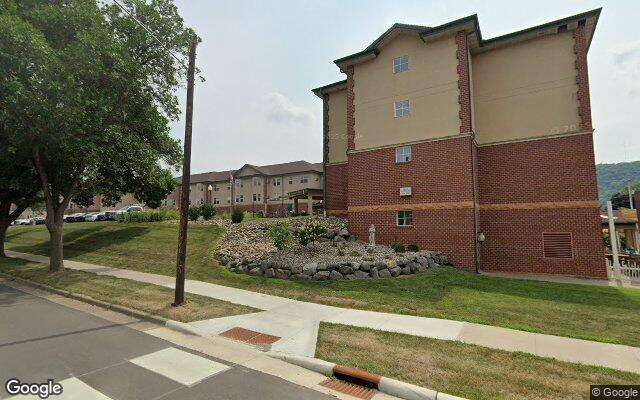
A large home, reviewed on public record.
Compared to 139 Minnesota facilities with a similar number of beds.
ALF memory care · 36-month window. Higher percentile = better performance on inspection record. Source: Minnesota Dept. of Health · Health Regulation Division.
among peers to rank.
Rankings based on 36-month MDH inspection data. Severity and frequency: fewer citations = higher percentile. Repeat rate: lower repeat citation share = higher percentile.
Citation history, plotted month by month.
1 deficiency on record. Each bar is a month with a citation.
Finding distribution
1 total · 36 monthsScope × Severity (CMS A–L)
Questions to ask before you visit.
A short pre-tour checklist tailored to Callista Court's record and state requirements.
The most recent Minnesota Department of Health inspection was on November 19, 2025, and recorded zero deficiencies — can you walk us through how staff maintain compliance with Minn. Stat. ch. 144G dementia care requirements, and what internal auditing or quality assurance processes are in place between state inspections?
Ask the operator on tour. Take notes and compare answers across facilities you visit.
MDH records show 3 complaints on file across 5 inspection reports — were any of those complaints substantiated by the state, and can you share the facility's own corrective action documentation or written response for any substantiated findings?
Ask the operator on tour. Take notes and compare answers across facilities you visit.
With 123 licensed beds and an Assisted Living Facility with Dementia Care designation under Minnesota law — what written policies does Callista Court maintain to describe its dementia care program, and can families review those policies during a tour?
Ask the operator on tour. Take notes and compare answers across facilities you visit.
Every inspection visit, verbatim.
3 inspections in the public record, most recent first. Plain-language summaries open first — click into any row for the full citation text.
2025-11-19Annual Compliance VisitNo findings
Plain-language summary
A standard licensing inspection of Callista Court on November 19, 2025 found one violation related to fire protection and physical environment requirements under Minnesota's assisted living facility rules. The facility was assessed a $500 fine for this violation and must document how it corrects the deficiency.
Read full citation textHide full citation text
Read raw inspector notesClose inspector notes
correction orders and document the actions taken to comply in the facility's records .The Department reserves the right to return to the facility at any time should the Department receive a complaint or deem it necessar yto ensure the health, safety, and welfare of residents in your care. STATE CORRECTIO ONRDERS The enclosed State Form documents the state correction orders. MDH documents state licensing correction orders using federal software. Tag numbers are assigned to Minnesota state statutes for Assisted Living Facilities .The assigned tag number appears in the far left column entitled "ID Prefix Tag". The state statute number and the corresponding text of the state statute out of compliance are listed in the "Summary Statement of Deficiencies "column. This column also includes the findings that are in violation of the state statute after the statement, "This MN Requiremen tis not met as evidenced by . . ." IMPOSITION OF FINES In accordance with Minn. Stat. § 144G3. 1, Subd .4, fines and enforcement actions may be imposed based on the level and scope of the violations and may be imposed immediately with no opportunity to correct the violation first as follows: Leve l1: no fines or enforcement; Leve l2: a fine of $500 per violation, in addition to any enforcement mechanism authorized in § 144G2. 0; Leve l3: a fine of $1,000 per incident, in addition to any enforcement mechanism authorized in § 144G2. 0; An equal opportunity employer . Letter ID: IS7N REVISE 0D9/13/2021 Callista Court Decembe r3, 2025 Page 2 Leve l4: a fine of $3,000 per incident, in addition to any enforcement mechanism authorized in § 144G2. 0; Leve l5: a fine of $5,000 per violation, in addition to any enforcement mechanism authorized in § 144G2. 0. Therefore ,in accordance with Minn. Stat. §§ 144G0. 1 to 144G9. 999, the following fines are assessed pursuant to this survey: St - 0 - 0775 - 144g.45 Subd. 2. (a) - Fire Protection And Physica lEnvironment - $500.00 Therefore ,in accordance with Minn. Stat. §§ 144G0. 1 to 144G9. 999, the total amount you are assesse dis $500.00. You will be invoiced approximately 30 days after receipt of this notice, subject to . appeal DOCUMENTATIO ONF ACTION TO COMPLY In accordance with Minn. Stat. § 144G3. 0, Subd .5(c), t he licensee must document actions taken to comply with the correction orders within the time period outlined on the state form; however, plans of correction are not required to be submitted for approval. The correction order documentation should include the following: x Identify how the area(s) of noncompliance was corrected related to the resident(s)/ employee(s) identified in the correction order. x Identify how the area(s) of noncompliance was corrected for all of the provider’s resident(s)/ employees that may be affected by the noncompliance. x Identify what changes to your systems and practices were made to ensure compliance with the specific statute(s). CORRECTIO ONRDER RECONSIDERATI OPRNOCESS In accordance with Minn. Stat. § 144G3. 2, Subd .2, you may challenge the correction order(s) issued, including the level and scope ,and any fine assesse dthrough the correction order reconsideration process .The request for reconsideration must be in writing and received by MDH within 15 calendar days of the correction order receipt date. To submit a reconsideration request, please visit: https:/ / forms.web.health.state.mn.us/form/ HRDAppealsForm REQUESTIN AG HEARING Alternatively, in accordance with Minn. Stat. § 144G3. 1, Subd .5(d), an assisted living provider that has been assesse da fine under this subdivision has a right to a reconsideration or a hearing under this section and chapter 14. Pursuan tto Minn. Stat. § 144G2. 0, Subd .14 and Subd .18, a request for a hearing must be in writing and received by the Department of Health within 15 business days of the correction order receipt date. The request must contain a brief and plain statement describing each matter or issue contested and any new information you believe constitutes a defense or mitigating Callista Court Decembe r3, 2025 Page 3 factor. To submit a hearing request, please visit: https:/ / forms.web.health.state.mn.us/form/ HRDAppealsForm To appea lfines via reconsideration ,please follow the procedure outlined above. Please note that you may request a reconsideration or a hearing, but not both. If you wish to contest tags without fines in a reconsideration and tags with the fines at a hearing, please submit two separate appeals forms at the website listed above. The MDH Health Regulation Division (HRD )values your feedback about your experience during the survey and/or investigation process .Please fill out this anonymous provider feedback questionnaire at your convenience at this link: https:/ / forms.office.com/g/Bm5uQEpHV.a Your input is important to us and will enable MDH to improve its processe sand communication with providers. If you have any questions regarding the questionnaire ,please contact Susan Winkelmann at susanw. inkelmann@state.mn.us or call 651-201-5952. You are encouraged to retain this document for your records. It is your responsibility to share the information contained in the letter and state form with your organizations’ Governing Body. If you have any questions ,please contact me. Sincerely, Jod iJohnson ,Supervisor State Evaluation Team Email: Jodi.Johnson@state.mn.us Telephone :507-344-2730 Fax :1-866-890-9290 HHH PRINTED: 12/03/2025 FORM APPROVED STATEMENT OF DEFICIENCIES (X1) PROVIDER/SUPPLIER/CLIA (X2) MULTIPLE CONSTRUCTION (X3) DATE SURVEY AND PLAN OF CORRECTION IDENTIFICATION NUMBER: COMPLETED A. BUILDING: ______________________ B. WING _____________________________ 20549 11/19/2025 NAME OF PROVIDER OR SUPPLIER STREET ADDRESS, CITY, STATE, ZIP CODE 1455 WEST BROADWAY STREET CALLISTA COURT WINONA, MN 55987 SUMMARY STATEMENT OF DEFICIENCIES PROVIDER'S PLAN OF CORRECTION (X4) ID ID (X5) (EACH DEFICIENCY MUST BE PRECEDED BY FULL (EACH CORRECTIVE ACTION SHOULD BE COMPLETE PREFIX PREFIX REGULATORY OR LSC IDENTIFYING INFORMATION) CROSS-REFERENCED TO THE APPROPRIATE DATE TAG TAG DEFICIENCY) 0 000 Initial Comments 0 000 *****ATTENTION***** Minnesota Department of Health is documenting the State Correction Orders ASSISTED LIVING PROVIDER LICENSING using federal software. Tag numbers have CORRECTION ORDER(S) been assigned to Minnesota State Statutes for Assisted Living Facilities. The In accordance with Minnesota Statutes, section assigned tag number appears in the 144G.08 to 144G.95, these correction orders are far-left column entitled "ID Prefix Tag." issued pursuant to a survey. The state Statute number and the corresponding text of the state Statute out Determination of whether violations are corrected of compliance is listed in the "Summary requires compliance with all requirements Statement of Deficiencies" column. This provided at the Statute number indicated below. column also includes the findings which When Minnesota Statute contains several items, are in violation of the state requirement failure to comply with any of the items will be after the statement, "This Minnesota considered lack of compliance. requirement is not met as evidenced by." Following the evaluators ' findings is the INITIAL COMMENTS: Time Period for Correction. SL20549016-0 PLEASE DISREGARD THE HEADING OF THE FOURTH COLUMN WHICH On November 17, 2025, through November 19, STATES,"PROVIDER'S PLAN OF 2025, the Minnesota Department of Health CORRECTION." THIS APPLIES TO conducted a full survey at the above provider and FEDERAL DEFICIENCIES ONLY. THIS the following correction orders are issued. At the WILL APPEAR ON EACH PAGE. time of the survey, there were 109 residents; 95 receiving services under the Assisted Living THERE IS NO REQUIREMENT TO Facility with Dementia Care license. SUBMIT A PLAN OF CORRECTION FOR VIOLATIONS OF MINNESOTA STATE STATUTES. THE LETTER IN THE LEFT COLUMN IS USED FOR TRACKING PURPOSES AND REFLECTS THE SCOPE AND LEVEL ISSUED PURSUANT TO 144G.31 SUBDIVISION 1-3. 0 480 144G.41 Subdivision 1 Subd. 1a (a-b) Minimum 0 480 SS=F requirements; required food services LABORATORY DIRECTOR'S OR PROVIDER/SUPPLIER REPRESENTATIVE'S SIGNATURE TITLE (X6) DATE STATE FORM 6899 EGLH11 If continuation sheet 1 of 9 PRINTED: 12/03/2025 FORM APPROVED STATEMENT OF DEFICIENCIES (X1) PROVIDER/SUPPLIER/CLIA (X2) MULTIPLE CONSTRUCTION (X3) DATE SURVEY AND PLAN OF CORRECTION IDENTIFICATION NUMBER: COMPLETED A. BUILDING: ______________________ B. WING _____________________________ 20549 11/19/2025 NAME OF PROVIDER OR SUPPLIER STREET ADDRESS, CITY, STATE, ZIP CODE 1455 WEST BROADWAY STREET CALLISTA COURT WINONA, MN 55987 SUMMARY STATEMENT OF DEFICIENCIES PROVIDER'S PLAN OF CORRECTION (X4) ID ID (X5) (EACH DEFICIENCY MUST BE PRECEDED BY FULL (EACH CORRECTIVE ACTION SHOULD BE COMPLETE PREFIX PREFIX REGULATORY OR LSC IDENTIFYING INFORMATION) CROSS-REFERENCED TO THE APPROPRIATE DATE TAG TAG DEFICIENCY) 0 480 Continued From page 1 0 480 (a) Except as provided in paragraph (b), food must be prepared and served according to the Minnesota Food Code, Minnesota Rules, chapter 4626.
2025-05-27Complaint InvestigationNo findings
Plain-language summary
A complaint investigation found that the facility failed to add a newly prescribed inhaler to the resident's medication administration record due to a transcription error, and the medication was not administered for approximately two months until the omission was discovered. The resident subsequently developed a viral respiratory illness and required urgent care and temporary therapy at another facility, though the investigation determined the delayed inhaler administration did not cause this illness. The allegation of neglect was not substantiated, as the error was isolated, corrected once identified, and did not result in harm attributable to the missed doses.
Read full citation textHide full citation text
Read raw inspector notesClose inspector notes
Finding: Not Substantiated Nature of Investigation: The Minnesota Department of Health investigated an allegation of maltreatment, in accordance with the Minnesota Reporting of Maltreatment of Vulnerable Adults Act, Minn. Stat. 626.557, and to evaluate compliance with applicable licensing standards for the provider type. Initial Investigation Allegation(s): The facility neglected the resident when they failed to implement and administer a new medication prescribed by the medical provider. Investigative Findings and Conclusion: The Minnesota Department of Health determined neglect was not substantiated. The resident received a new order for an inhaler, however facility made an error in transcribing the new order and it did not get added to the resident’s medication administration record. The error was an isolated incident, did not result in harm and, later when it was identified, was corrected. The investigator conducted interviews with facility staff members, including administrative staff, nursing staff, and unlicensed staff. The investigator contacted a family member. The investigation included review of the resident record(s), provider visit notes, pharmacy communication, internal investigation, staff schedules, and related facility policies and procedures. Also, the investigator observed how medications are stored at the facility. The resident resided in an assisted living memory care unit. The resident’s diagnoses included centrilobular emphysema (progressive lung disease) and Alzheimer’s disease. The resident’s service plan included assistance with medication management and administration. The progress note by nurse #1 indicated the resident was seen by the medical provider at the facility. The provider wrote two new oral medication orders, an order for some lab work, resident received an injection, and provider had asked facility if they had noticed the resident having a frequent cough or any signs of shortness of breath. This same progress note indicated nurse #1 updated the medication administration record for the two new medications and faxed the pharmacy. Nurse #1 indicated she replied to the medical provider via fax staff had not reported or witnessed the resident show signs of shortness of breath. Five days later, the progress notes by nurse #2 indicated a day after the provider visit a fax was received from the provider ordering an inhaler. The note the inhaler required a prior authorization from the insurance company or to consider a possible alternative prescription. Nurse #2 indicated she called the provider and left a message related to the order not having a diagnosis, which was required. The nurse #2 requested the provider return her phone call. A day later progress notes by nurse #2 indicated the pharmacy had delivered the ordered inhaler [this was seven days from the initial visit by the provider]. Nurse #2 indicated she placed the information on the report sheet to update staff and instructed the unlicensed medication passer for that shift to start the prescription that evening. The next day a progress note by nurse #2 a day after the inhaler arrived indicated nurse #2 completed an updated assessment, service plan, and individual assessment policy. Nurse #2 indicated she added the new diagnosis for the inhaler and the order for the inhaler. The resident’s assessment indicated facility staff were to manage and administer medications according to provider orders. This same assessment indicated the medical provider adding a new diagnosis of centrilobular emphysematous which was the reason the new inhaler with spacer was prescribed. Two months later the progress notes indicated the facility nurses had been in contact with the primary provider related to resident recently not feeling well, experiencing congestion, and cough. At this time, the facility became aware the inhaler was not being administered because it was not in the electronic medication administration record (EMAR). At that time order was placed onto the electronic medication administration record and administration of the inhaler was initiated. The resident was taken to urgent care for evaluation with orders to continue the previously ordered inhaler twice a day, given a nebulizer treatment, and returned to facility. While at the urgent care, the resident was diagnosed with a viral respiratory illness. Due to weakness from the viral infection, the resident spent a short time receiving therapy at a long-term care transition unit and returned to facility. Documented communication between the medical provider, pharmacy, and facility indicated that there had been a new inhaler order although there were issues that required clarification. While it was not clear exactly how the error occurred as multiple nurses were involved the medication did not get listed in the EMAR and the original order was misplaced. The facility conducted an internal investigation and reviewed its policies. During an interview, nurse #1 stated the provider was at the facility to see the resident for a follow up visit. Nurse #1 stated the provider writes up orders from the visit that go to the west nurse’s office to be reviewed. Nurse #1 stated she could remember the order coming back with a specific inhaler which needed a prior authorization. Nurse #1 stated she put the order back in the hold box in the west nurse’s office and was the last interaction she had with that order. The follow-up box in the nursing office was for orders which required action before it could be completed, and nursing was to check the follow-up box each shift. During an interview, nurse #2 stated when a resident is seen by a provider at the assisted living facility, the provider leaves a visit note which is processed by a nurse. Nurse #2 stated the new order was not complete since a diagnosis was needed along with a prior authorization for insurance coverage. Nurse #2 stated she called the provider’s nurse and left a message for a return call. Nurse #2 stated the person who received the order typically transcribes the order. Nurse #2 stated she did not know where the original came from and never saw the order to place onto the medication record. Nurse #2 stated the process had been adjusted so that all the orders went to the same office. During an interview, nurse #3 stated she had not seen the order, nor can they locate the original order. The incident was brought to her attention later when the resident was experiencing some cold/respiratory symptoms, and the medication error was identified. Nurse #3 stated the facility streamlined the process as a result of this occurrence to reduce the risk of recurrence. In conclusion, the Department of Health determined neglect was not substantiated. “Not Substantiated” means: An investigatory conclusion indicating the preponderance of evidence shows that an act meeting the definition of maltreatment did not occur. Neglect: Minnesota Statutes, section 626.5572, subdivision 17 “Neglect” means neglect by a caregiver or self-neglect. (a) "Caregiver neglect" means the failure or omission by a caregiver to supply a vulnerable adult with care or services, including but not limited to, food, clothing, shelter, health care, or supervision which is: (1) reasonable and necessary to obtain or maintain the vulnerable adult's physical or mental health or safety, considering the physical and mental capacity or dysfunction of the vulnerable adult; and (2) which is not the result of an accident or therapeutic conduct. (d) For purposes of this section, a vulnerable adult is not neglected for the sole reason that: (4) an individual makes an error in the provision of therapeutic conduct to a vulnerable adult which does not result in injury or harm which reasonably requires medical or mental health care; or (5) an individual makes an error in the provision of therapeutic conduct to a vulnerable adult that results in injury or harm, which reasonably requires the care of a physician, and: (i) the necessary care is provided in a timely fashion as dictated by the condition of the vulnerable adult; (ii) if after receiving care, the health status of the vulnerable adult can be reasonably expected, as determined by the attending physician, to be restored to the vulnerable adult's preexisting condition; (iii) the error is not part of a pattern of errors by the individual; (iv) if in a facility, the error is immediately reported as required under section 626.557, and recorded internally in the facility; (v) if in a facility, the facility identifies and takes corrective action and implements measures designed to reduce the risk of further occurrence of this error and similar errors; and (vi) if in a facility, the actions required under items (iv) and (v) are sufficiently documented for review and evaluation by the facility and any applicable licensing, certification, and ombudsman agency.
2024-07-12Complaint InvestigationSubstantiated Finding · 1 finding
Plain-language summary
A Minnesota Department of Health complaint investigation substantiated that the facility neglected a resident when staff failed to check on him after he did not place his safety sign outside his door at 9 a.m., and he was not seen again until family found him unresponsive on his bathroom floor at 3:45 p.m. the next day; the resident was hospitalized with a fall-related injury, MRSA bacteremia, and other acute conditions, and died two days later. The investigation found the facility was responsible for the neglect due to unclear assignment of daily tasks between staff members, uncertainty about which staff were responsible for the check program, and failure to monitor a resident known to have fall risks, hip mobility issues, and a history of not wearing his safety pendant.
Read full citation text (1)Hide full citation text
“MDH substantiated maltreatment or licensing violation finding”
Read raw inspector notesClose inspector notes
Finding: Substantiated, facility responsibility Nature of Investigation: The Minnesota Department of Health investigated an allegation of maltreatment, in accordance with the Minnesota Reporting of Maltreatment of Vulnerable Adults Act, Minn. Stat. 626.557, and to evaluate compliance with applicable licensing standards for the provider type. Initial Investigation Allegation(s): The alleged perpetrator (AP) neglected the resident when the AP did not check on the resident after he failed to flip his safety check sign. Family found the resident unresponsive in his apartment and required emergency services. Investigative Findings and Conclusion: The Minnesota Department of Health determined neglect was substantiated. The facility was responsible for the maltreatment. The allegation against the AP was not substantiated. Although the AP signed off on a service she did not complete, miscommunication occurred between the AP and another unlicensed personnel (ULP). The facility knew the resident had hip mobility issues, did not wear his pendant, and had a history of falls. Additionally, the facility did not pre-determine which tasks would be assigned to each ULP but instead relied on the ULPs to split up their daily tasks. Regarding the “I’m Okay” check program, staff were unable to confirm if the responsibility fell on all staff or just nursing prior to the incident. The investigator conducted interviews with facility staff members, including administrative staff, nursing staff, and unlicensed staff. The investigator contacted family. The investigation included review of the resident record, death record, hospital records, facility internal investigation, facility incident report, personnel file, staff schedules, law enforcement report, related facility policy and procedures. Also, the investigator observed residents’ doors for “I’m Okay” signs. The resident resided in an assisted living facility. The facility provided resident’s record did not identify diagnoses. The resident’s service plan included “I’m Okay” checks at 9:00 a.m. and 9:00 p.m. daily. The resident’s assessment indicated the resident had a pendant to request assistance 24 hours per day, but he did not wear it. Staff encouraged him to wear the call button and press it for assistance as needed. This assessment also indicated the resident used a wheelchair independently for mobility and transferred himself. The resident’s individual abuse prevention plan (IAPP) indicated the resident had a history of falls and hip immobility but used a wheelchair independently and transferred himself. The resident also had wounds on his coccyx but declined nursing assessment. This IAPP indicated staff would continue to encourage and educate on the importance of nursing monitoring wounds to avoid progression or infection. The resident’s record included a document titled “I’m Okay” Program, which included the process for I’m okay checks. This document indicated the resident would be given an “I’m Okay” card to be put outside his door each evening by 9:00 p.m. As staff completed their duties throughout the building, they were to look for the card indicating the resident was okay. If the resident did not place the card outside the door, staff were to knock and check in on the resident. Every morning by 9:00 a.m., the resident was supposed to take the card back inside the apartment. If the resident did not remove the sign from the outside of the door, staff would then knock on the door and check on the resident. The resident signed this document. A progress note in the resident’s record indicated the resident’s family member came to visit the resident and found him on his bathroom floor. The resident did not respond to the family member appropriately and could not answer questions about the fall. The family member called 911 and reported the incident to staff at 3:45 p.m. Emergency medical services (EMS) transported the resident to the emergency department (ED) and later admitted to the hospital. A second progress note in the resident’s record indicated the facility started an internal investigation regarding the incident. Staff last saw the resident at 9:50 p.m. the day before being found on the floor and not at 11:20 a.m., as signed by the AP on the service delivery record. The facility staff failed to check on the resident at the 9:00 a.m. I’m Okay check and was not seen between 9:50 p.m. the night before until family found him on the floor at 3:45 p.m. the next day. The resident’s hospital record indicated the resident arrived at the ED with a change in mental status after a fall and being found on the ground. He also had a fever of 103.3 degrees Fahrenheit. The resident’s hospital diagnoses included methicillin-resistant staphylococcus aureus (MRSA) bacteremia (the presence of bacteria in the bloodstream), rhabdomyolysis (an emergent medical condition in which the muscled are injured and cells burst, releasing proteins into the blood stream, evident by in being in the same position for a long period of time), acute kidney injury, and stage 2 pressure ulcer. The resident’s condition worsened despite medical intervention, and he became less responsive. The hospital staff and family transitioned the resident onto comfort cares, and the resident died two days after being found on the floor. The resident’s death record identified MRSA bacteremia as cause of death. The facility’s schedule indicated two unlicensed personnel (ULPs) were scheduled on the day shift, one day prior to the incident. The AP’s scheduled shift went from 6:30 a.m. to 3:00 p.m., and the other ULP’s shift went from 6:30 a.m. to 1:30 p.m. During an interview, the director of nursing (DON) identified the I’m Okay check program as something they provided for everyone unless the resident opted out. The DON stated there had been a misunderstanding between the AP and the other ULP regarding which floors were completed regarding the I’m Okay checks for the morning. The DON coached the AP on documenting services she did not complete. Additionally, all staff were educated on the I’m Okay check signs. The DON stated the facility re-educated all staff including culinary, housekeeping, and maintenance department staff regarding the I’m Okay program. The DON did not know if the responsibility of ensuring the I’m Okay signs were brought back in each morning fell on all staff prior to the incident. During a second interview, the DON stated in general, one to two ULPs were scheduled in the assisted living for the morning shift, depending on the current need. The day of the incident, the facility had a whole shift open for the morning shift. A ULP picked up to work part of the open shift, 6:30 a.m. to 9:00 a.m. that morning. The DON stated the two ULPs were supposed to talk at the beginning of the shift and delineate which tasks each ULP planned to complete. The facility did not pre-determine task assignments or have a process for how the tasks were supposed to be divided. The DON stated it was up to the ULPs to determine which tasks each of them were going to do. During an interview, the licensed assisted living director (LALD) stated walkies were supposed to be used more for quick communication, not for giving full reports between shifts. The internal investigation found there had been miscommunication between staff regarding the I’m Okay sign, and the AP documented a task she had not completed. The LALD stated every staff should be held accountable for the signs, not just nursing staff. Additionally, the LALD thought every staff being accountable had been part of the process the whole time, and they just needed to remind all staff of their responsibility. During an interview, a registered nurse (RN) stated she would hear a ULP over the walkies inform the other ULP which floor they completed and ask the ULP to complete the other floor. Overall, face-to-face reporting had been the standard process for end of shift reporting. During an interview, the AP stated she had been giving a shower to another resident. The other ULP came over the walkie, and the AP thought the ULP stated all the I’m Okay checks were completed. The AP stated she should not have assumed. Later that afternoon, the resident’s family member put on his call light. The family member informed the AP the I’m Okay sign had still been on the door. The AP apologized, called the nurse, and stayed until EMS arrived. The AP stated she received re-education and started walking the hallways multiple times per shift to ensure no signs were missed. During an interview, the resident’s family member stated she visited the resident and left about 5:30 p.m.
2 older inspections from 2022 are not shown above.
Get the complete record, translated into plain language — emailed to you.
Other facilities in Winona.
Other memory care facilities near Winona with similar care offerings.
Contract Decoder
Family reviews
No reviews yet — be the first to share your experience