The Legacy of St Michael.
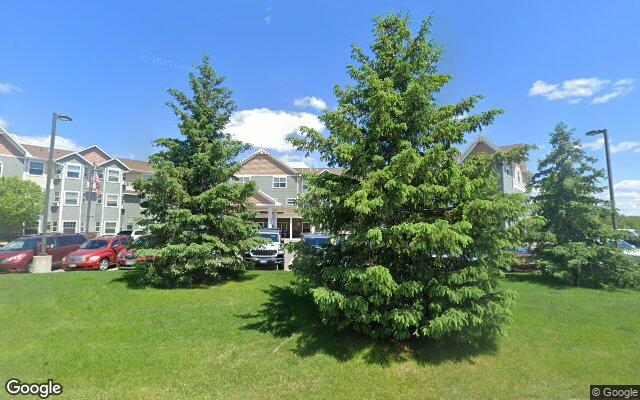
A large home, reviewed on public record.
Compared to 139 Minnesota facilities with a similar number of beds.
ALF memory care · 36-month window. Higher percentile = better performance on inspection record. Source: Minnesota Dept. of Health · Health Regulation Division.
among peers to rank.
Rankings based on 36-month MDH inspection data. Severity and frequency: fewer citations = higher percentile. Repeat rate: lower repeat citation share = higher percentile.
Citation history, plotted month by month.
1 deficiency on record. Each bar is a month with a citation.
Finding distribution
1 total · 36 monthsScope × Severity (CMS A–L)
Questions to ask before you visit.
A short pre-tour checklist tailored to The Legacy of St Michael's record and state requirements.
Minnesota Department of Health records show 1 complaint on file — can you describe what that complaint involved, whether MDH substantiated it, and what corrective steps the facility took in response?
Ask the operator on tour. Take notes and compare answers across facilities you visit.
The most recent MDH inspection on February 26, 2025 resulted in zero deficiencies — can you walk us through how the facility prepared for that inspection and what documentation MDH reviewed during the visit?
Ask the operator on tour. Take notes and compare answers across facilities you visit.
This community holds an Assisted Living Facility with Dementia Care license under Minnesota Statutes chapter 144G — can you provide families with a written copy of your dementia care program and explain how staff competency in dementia care is assessed and documented?
Ask the operator on tour. Take notes and compare answers across facilities you visit.
Every inspection visit, verbatim.
2 inspections in the public record, most recent first. Plain-language summaries open first — click into any row for the full citation text.
2025-02-26Annual Compliance VisitNo findings
Plain-language summary
A routine inspection of The Legacy of St. Michael on February 26, 2025 found violations in infection control program practices and fire protection and physical environment standards, resulting in two Level 2 fines totaling $1,000. The facility was issued state correction orders and must document within a specified timeframe how it corrected these deficiencies and made system changes to prevent future noncompliance.
Read full citation textHide full citation text
Read raw inspector notesClose inspector notes
correction orders and document the actions taken to comply in the facility's records. The Department reserves the right to return to the facility at any time should the Department receive a complaint or deem it necessary to ensure the health, safety, and welfare of residents in your care. STATE CORRECTION ORDERS The enclosed State Form documents the state correction orders. MDH documents state licensing correction orders using federal software. Tag numbers are assigned to Minnesota state statutes for Assisted Living Facilities. The assigned tag number appears in the far left column entitled "ID Prefix Tag." The state statute number and the corresponding text of the state statute out of compliance are listed in the "Summary Statement of Deficiencies" column. This column also includes the findings that are in violation of the state statute after the statement, "This MN Requirement is not met as evidenced by . . ." IMPOSITION OF FINES In accordance with Minn. Stat. § 144G.31, Subd. 4, fines and enforcement actions may be imposed based on the level and scope of the violations and may be imposed immediately with no opportunity to correct the violation first as follows: Level 1: no fines or enforcement. Level 2: a fine of $500 per violation, in addition to any enforcement mechanism authorized in § 144G.20 for widespread violations; Level 3: a fine of $3,000 per violation per incident, in addition to any enforcement mechanism authorized in § 144G.20. An equal opportunity employer. Letter ID: IS7N REVISED 09/13/2021 The Legacy Of St. Michael April 2, 2025 Page 2 Level 4: a fine of $5,000 per incident, in addition to any enforcement mechanism authorized in § 144G.20. Therefore, in accordance with Minn. Stat. §§ 144G.01 to 144G.9999, the following fines are assessed pursuant to this survey: 0510 - 144g.41 Subd. 3 - Infection Control Program - $500.00 0775 - 144g.45 Subd. 2. (a) - Fire Protection And Physical Environment - $500.00 Therefore, in accordance with Minn. Stat. §§ 144G.01 to 144G.9999, t he total amount you are assessed is $1,000.00. You will be invoiced approximately 30 days after receipt of this notice, subject to appeal. DOCUMENTATION OF ACTION TO COMPLY In accordance with Minn. Stat. § 144G.30, Subd. 5(c), the licensee must document actions taken to comply with the correction orders within the time period outlined on the state form; however, plans of correction are not required to be submitted for approval. The correction order documentation should include the following: Identify how the area(s) of noncompliance was corrected related to the resident(s)/employee(s) identified in the correction order. Identify how the area(s) of noncompliance was corrected for all of the provider’s resident(s)/employees that may be affected by the noncompliance. Identify what changes to your systems and practices were made to ensure compliance with the specific statute(s). CORRECTION ORDER RECONSIDERATION PROCESS In accordance with Minn. Stat. § 144G.32, Subd. 2, you may challenge the correction order(s) issued, including the level and scope, and any fine assessed through the correction order reconsideration process. The request for reconsideration must be in writing and received by MDH within 15 calendar days of the correction order receipt date. To submit a reconsideration request, please visit: https://forms.web.health.state.mn.us/form/HRDAppealsForm REQUESTING A HEARING Alternatively, in accordance with Minn. Stat. § 144G.31, Subd. 5(d), an assisted living provider that has been assessed a fine under this subdivision has a right to a reconsideration or a hearing under this section and chapter 14. Pursuant to Minn. Stat. § 144G.20, Subd. 14 and Subd. 18, a request for a hearing must be in writing and received by the Department of Health within 15 business days of the correction order receipt date. The request must contain a brief and plain statement describing each matter or issue contested and any new information you believe constitutes a defense or mitigating factor. The Legacy Of St. Michael April 2, 2025 Page 3 To submit a hearing request, please visit: https://forms.web.health.state.mn.us/form/HRDAppealsForm To appeal fines via reconsideration, please follow the procedure outlined above. P lease note that you may request a reconsideration o r a hearing, but not both. If you wish to contest tags without fines in a reconsideration and tags with the fines at a hearing, please submit two separate appeals forms at the website listed above. The MDH Health Regulation Division (HRD) values your feedback about your experience during the survey and/or investigation process. Please fill out this anonymous provider feedback questionnaire at your convenience at this link: h ttps://forms.office.com/g/Bm5uQEpHVa. Your input is important to us and will enable MDH to improve its processes and communication with providers. If you have any questions regarding the questionnaire, please contact Susan Winkelmann at susan.winkelmann@state.mn.us or call 651-201-5952. You are encouraged to retain this document for your records. It is your responsibility to share the information contained in the letter and state form with your organization’s Governing Body. If you have any questions, please contact me. Sincerely, Kelly Thorson, Supervisor State Evaluation Team Email: kelly.thorson@state.mn.us Telephone: 320-223-7336 Fax: 1 -866-890-9290 JMD PRINTED: 04/02/2025 FORM APPROVED STATEMENT OF DEFICIENCIES (X1) PROVIDER/SUPPLIER/CLIA (X2) MULTIPLE CONSTRUCTION (X3) DATE SURVEY AND PLAN OF CORRECTION IDENTIFICATION NUMBER: COMPLETED A. BUILDING: ______________________ B. WING _____________________________ 29185 02/26/2025 NAME OF PROVIDER OR SUPPLIER STREET ADDRESS, CITY, STATE, ZIP CODE 4400 LANGE AVENUE NE THE LEGACY OF ST MICHAEL SAINT MICHAEL, MN 55376 SUMMARY STATEMENT OF DEFICIENCIES PROVIDER'S PLAN OF CORRECTION (X4) ID ID (X5) PREFIX (EACH DEFICIENCY MUST BE PRECEDED BY FULL PREFIX (EACH CORRECTIVE ACTION SHOULD BE COMPLETE REGULATORY OR LSC IDENTIFYING INFORMATION) CROSS-REFERENCED TO THE APPROPRIATE DATE TAG TAG DEFICIENCY) 0 000 Initial Comments 0 000 ASSISTED LIVING PROVIDER LICENSING Minnesota Department of Health is CORRECTION ORDER(S) documenting the State Correction Orders using federal software. Tag numbers have In accordance with Minnesota Statutes, section been assigned to Minnesota State 144G.08 to 144G.95, these correction orders are Statutes for Assisted Living Facilities. The issued pursuant to a survey. assigned tag number appears in the far-left column entitled "ID Prefix Tag." The Determination of whether violations are corrected state Statute number and the requires compliance with all requirements corresponding text of the state Statute out provided at the Statute number indicated below. of compliance is listed in the "Summary When Minnesota Statute contains several items, Statement of Deficiencies" column. This failure to comply with any of the items will be column also includes the findings which considered lack of compliance. are in violation of the state requirement after the statement, "This Minnesota INITIAL COMMENTS: requirement is not met as evidenced by." Following the evaluators ' findings is the SL29185016-0 Time Period for Correction. On February 24, 2025, through February 26, PLEASE DISREGARD THE HEADING OF 2025, the Minnesota Department of Health THE FOURTH COLUMN WHICH conducted a full survey at the above provider. At STATES,"PROVIDER'S PLAN OF the time of the survey, there were 92 resident(s); CORRECTION." THIS APPLIES TO 73 receiving services under the Assisted Living FEDERAL DEFICIENCIES ONLY. THIS Facility with Dementia Care license. WILL APPEAR ON EACH PAGE. THERE IS NO REQUIREMENT TO SUBMIT A PLAN OF CORRECTION FOR VIOLATIONS OF MINNESOTA STATE STATUTES. THE LETTER IN THE LEFT COLUMN IS USED FOR TRACKING PURPOSES AND REFLECTS THE SCOPE AND LEVEL ISSUED PURSUANT TO 144G.31 SUBDIVISION 1-3. 0 480 144G.41 Subdivision 1 Subd. 1a (a-b) Minimum 0 480 SS=F requirements; required food services LABORATORY DIRECTOR'S OR PROVIDER/SUPPLIER REPRESENTATIVE'S SIGNATURE TITLE (X6) DATE STATE FORM 6899 FDF911 If continuation sheet 1 of 21 PRINTED: 04/02/2025 FORM APPROVED STATEMENT OF DEFICIENCIES (X1) PROVIDER/SUPPLIER/CLIA (X2) MULTIPLE CONSTRUCTION (X3) DATE SURVEY AND PLAN OF CORRECTION IDENTIFICATION NUMBER: COMPLETED A. BUILDING: ______________________ B. WING _____________________________ 29185 02/26/2025 NAME OF PROVIDER OR SUPPLIER STREET ADDRESS, CITY, STATE, ZIP CODE 4400 LANGE AVENUE NE THE LEGACY OF ST MICHAEL SAINT MICHAEL, MN 55376 SUMMARY STATEMENT OF DEFICIENCIES PROVIDER'S PLAN OF CORRECTION (X4) ID ID (X5) PREFIX (EACH DEFICIENCY MUST BE PRECEDED BY FULL PREFIX (EACH CORRECTIVE ACTION SHOULD BE COMPLETE REGULATORY OR LSC IDENTIFYING INFORMATION) CROSS-REFERENCED TO THE APPROPRIATE DATE TAG TAG DEFICIENCY) 0 480 Continued From page 1 0 480 (a) Except as provided in paragraph (b), food must be prepared and served according to the Minnesota Food Code, Minnesota Rules, chapter 4626. (b) For an assisted living facility with a licensed capacity of ten or fewer residents: (1) notwithstanding Minnesota Rules, part 4626.
2024-07-10Complaint InvestigationSubstantiated Finding · 1 finding
Plain-language summary
A complaint investigation substantiated that the facility neglected a resident by failing to provide wound care and monitoring for nearly one month after a stage 1 pressure ulcer was first reported; the wound deteriorated to stage 3 (full thickness tissue loss) with dead tissue and foul odor before the primary care provider was notified and home health services began. Staff did not follow the facility's own policy requiring weekly wound care monitoring, did not properly document or communicate the wound to the provider, and provided only minimal wound care during the month-long delay. The resident had diagnoses including multiple sclerosis and cognitive impairment and was supposed to receive repositioning assistance as part of the care plan.
Read full citation text (1)Hide full citation text
“MDH substantiated maltreatment or licensing violation finding”
Read raw inspector notesClose inspector notes
Finding: Substantiated, facility responsibility Nature of Investigation: The Minnesota Department of Health investigated an allegation of maltreatment, in accordance with the Minnesota Reporting of Maltreatment of Vulnerable Adults Act, Minn. Stat. 626.557, and to evaluate compliance with applicable licensing standards for the provider type. Initial Investigation Allegation(s): The facility neglected the resident when the facility staff failed to provide wound care and initiate interventions timely when the resident obtained a pressure wound. Investigative Findings and Conclusion: The Minnesota Department of Health determined neglect was substantiated. The facility was responsible for the maltreatment. The facility failed to initiate wound care and monitor the wound routinely for nearly one month. The resident first developed a new pressure ulcer at a stage 1 (unopened). After a month without monitoring or providing wound care, the wound deteriorated to a stage 3 (full thickness tissue loss) when staff notified the primary care provider (PCP) for wound care orders. The resident’s wound had a foul odor and continued to deteriorate when home health skilled nursing services began. The investigator conducted interviews with facility staff members, including administrative staff, nursing staff, and unlicensed staff. The investigator contacted the case worker. The investigation included review of the resident records, home health records, hospital records, wound care clinic records, facility internal investigation, facility incident reports, personnel files, staff schedules, and related facility policy and procedures. Also, the investigator observed other resident’s wound dressings while on site. The resident resided in an assisted living facility memory care unit. The resident’s diagnoses included multiple sclerosis and cognitive impairment. The resident’s service plan included assistance with toileting, transfers, and repositioning. The resident’s assessment indicated the resident had poor short-term memory and required a full body mechanical lift for transfers. The resident’s assessment prior to the wound indicated her skin condition was normal and she had no skin issues. The resident’s progress note indicated unlicensed personnel (ULP) reported to facility licensed practical nurse (LPN) 1 there was a reddened hard area [stage 1] on the resident’s buttock. LPN 1 instructed the evening ULP to notify her when the resident was laying down, however the evening ULP and lead ULP reported there was no area and LPN 1 did not observe the area nor document she reported to a registered nurse (RN) to assess the area. Two days later, the resident’s progress note indicated the RN noted an open area [stage 2 (open, partial tissue loss)] to the resident’s right buttock measuring 2 centimeters (cm) x 2 cm with a hard spot under the tissue near the opening. The RN cleansed the area, covered it with a medical dressing and left a note in a paper binder for the resident’s provider on the next rounds. Four days later, LPN 1 documented she updated the resident’s PCP of an open area to the resident’s left buttock (not right) and did not receive any new orders. Review of the resident’s PCP orders, notes and triage calls did not include communication from LPN 1 nor the RN. The RN failed to add wound care nursing orders to the resident’s service delivery record and failed to initiate weekly wound care monitoring per the facility’s policy. There was no record of wound care provided to the resident for 19 days. The resident’s progress notes indicated 19 days later a ULP notified LPN 2 the resident had an open area on her right buttock. LPN 2 documented the wound measured 2 cm x 2 cm with 4 millimeter (mm) depth. The wound bed had white/yellow slough (macerated tissue) with dark/black (dead) tissue. LPN 2 noted a slight foul odor. LPN 2 performed wound care by cleansing the area, applied skin prep and covered with a foam dressing. LPN 2 instructed ULP to reposition the resident every two hours. LPN 2 sent a note with wound order request to the resident’s PCP through the medical provider portal. That same day, LPN 2 received orders to cleanse the wound with wound cleanser, pat it dry, apply skin prep on the surrounding area, cover with a foam dressing every three days and as needed. Also, a referral for home health skilled nursing for wound care was received. Three days later, the resident’s progress notes indicated the RN changed the resident’s dressing due to soiling. The RN noted the wound bed had yellow/white slough with moderate amount of drainage. The resident’s service delivery record had the wound care orders received by LPN 2 and the RN’s documentation of providing the wound care that day, was the only documented wound care provided for the month by the facility on the service delivery record. The next day, the assistant director of nursing (ADON) completed a nursing assessment. The assessment indicated the resident required turning and repositioning. The assessment indicated the resident’s pressure ulcer to her buttocks was stage 3 (full thickness tissue loss). Weekly skin assessments were initiated the same day as the nursing assessment. The DON completed the initial weekly skin assessment and inaccurately documented the wound first started upon LPN 2’s observation (four days prior), when it had originated nearly a month prior. The skin assessment indicated the resident’s wound had moderate drainage with odor present. The assessment indicated both the facility and skilled nursing managed the wound care. Review of the resident’s home health skilled nursing visit notes and triage call notes indicated the home health skilled nursing completed intake of services with the resident five days after the RN completed the first wound care after receiving the PCP wound care orders. The records indicated the first skilled nursing wound care was provided nine days after the RN’s last wound care provided. The facility failed to provide two required dressing changes per the PCP’s orders to change the dressing every three days. Review of the resident’s home health skilled nursing visit notes, physician orders and wound care clinic notes indicated the resident’s wound continued to deteriorate and required several changes in wound care orders. The PCP face to face appointment with the resident occurred 13 days after LPN 2 requested and received wound care orders. The resident first went to the wound care clinic 30 days after home health initiated wound services for further intervention. The resident received three consecutive wound debridement’s at the wound clinic weekly appointments before the provider requested surgical consult. The resident’s condition deteriorated and required hospitalization for wound care and surgical intervention. After hospitalization, the resident was unable to return to the facility due to the need for higher acuity of care related to her wound care and wound V.A.C therapy (a negative pressure wound dressing applied to promote healing). The resident has resided at a skilled nursing facility since discharge from the hospital. During an interview, the DON stated staff should notify a provider of a new wound by calling them, not by a note left in a binder. The DON stated she started assessing the wound weekly in collaboration with home health nurse once they were involved. The DON stated staff should document wound prevention interventions on the service delivery record. During an interview, the RN stated staff used a binder to leave written communications to the PCP, including notifications of new wounds. The RN stated the provider would come to the facility twice weekly. The RN stated until the provider responded, she did not know what she should do for the wound. The RN stated she did not know how to reposition the resident when she was in her wheelchair. During an interview, LPN 1 stated she would leave a note in the binder for the provider only if she knew they were coming in the next day. LPN 1 stated the other nurses look on the communication board or check their email for notification of new wounds and what wound care staff completed. LPN 1 stated it was not typical to leave a note for a provider when there is a new open wound. LPN 1 stated it was not acceptable for staff to notify a provider a week after a new wound has developed. During an interview, a family member stated he did not feel comfortable returning the resident to the facility after her hospital stay due to negligent care. At the time of the interview, the family member stated the resident continued to require wound care. The resident was not able to complete an interview.
1 older inspection from 2022 are not shown above.
Get the complete record, translated into plain language — emailed to you.
Facility Watch · Premium
Family reviews
No reviews yet — be the first to share your experience
More options in neighboring cities
Licensed memory care in other cities within this county region — useful when your search radius crosses city limits.