Timber Pines Assisted Living.
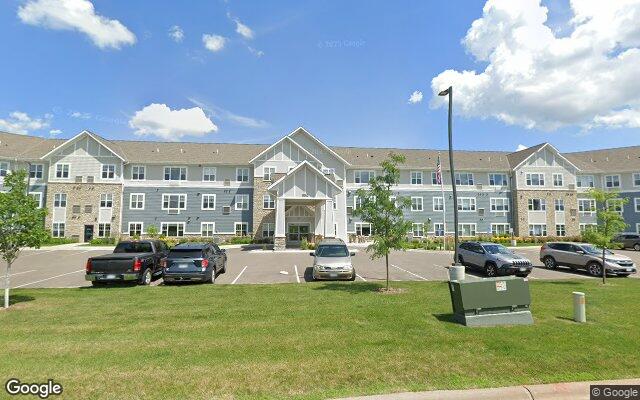
A large home, reviewed on public record.
Compared to 139 Minnesota facilities with a similar number of beds.
ALF memory care · 36-month window. Higher percentile = better performance on inspection record. Source: Minnesota Dept. of Health · Health Regulation Division.
among peers to rank.
Rankings based on 36-month MDH inspection data. Severity and frequency: fewer citations = higher percentile. Repeat rate: lower repeat citation share = higher percentile.
Citation history, plotted month by month.
No citations in the last 36 months.
Finding distribution
none · 36 monthsScope × Severity (CMS A–L)
Every inspection visit, verbatim.
2 inspections in the public record, most recent first. Plain-language summaries open first — click into any row for the full citation text.
2026-08-26Annual Compliance VisitNo findings
2025-10-17Complaint InvestigationNo findings
Plain-language summary
A complaint alleged that a staff member financially exploited a resident by intentionally withholding a dose of lorazepam (a controlled medication) scheduled for 10:30 p.m. The Minnesota Department of Health investigated and determined the allegation was not substantiated, finding instead that a documentation error occurred—the staff member's signature appeared on the medication removal log and bubble pack, but evidence showed he had left work before the 10:30 p.m. medication time and the controlled medication count was correct with no missing doses. The resident did receive her next scheduled lorazepam dose at 1:20 a.m., and this was the only occasion the resident reported not receiving a scheduled medication.
Read full citation textHide full citation text
Read raw inspector notesClose inspector notes
Finding: Not Substantiated Nature of Investigation: The Minnesota Department of Health investigated an allegation of maltreatment, in accordance with the Minnesota Reporting of Maltreatment of Vulnerable Adults Act, Minn. Stat. 626.557, and to evaluate compliance with applicable licensing standards for the provider type. Initial Investigation Allegation(s): The alleged perpetrator (AP) financially exploited the resident when the AP failed to provide the resident’s dose of lorazepam (controlled medication). Investigative Findings and Conclusion: The Minnesota Department of Health determined financial exploitation was not substantiated. There was a preponderance of evidence to support a documentation error occurred involving the resident’s dose of lorazepam on the date and time in question and not a drug diversion by the AP. The investigator conducted interviews with facility staff members, including nursing staff, unlicensed staff, and the AP. The investigation included review of the resident records, controlled medication records, shift to shift controlled medication count record, hospice records, facility internal investigation, an incident report, personnel files, staff schedules, and related facility policy and procedures. Also, the investigator observed medication cart storage, controlled medication storage, and shift to shift controlled medication counts. The resident resided in an assisted living memory care unit. The resident’s diagnoses included depression, anxiety, and mild cognitive impairment. The resident’s service plan included assistance with medication administration. The resident’s assessment indicated the resident was oriented to person, place, time, and situation. The resident received hospice services. The facility’s internal investigation indicated one day the resident reported she did not receive her 10:30 p.m., medications which included a dose of lorazepam. The resident’s medication administration record (MAR) indicated the 10:30 p.m. medications were missed without reason. The medication card (bubble pack) showed the AP initials indicating removal. The facility contacted the AP who stated he did not administer the resident’s 10:30 p.m. medications and did not recall putting his initials on the medication cards. Narcotic log records indicated the lorazepam was signed out appropriately with the AP’s signature. The resident received her next scheduled dose of lorazepam at 1:20 a.m. The resident’s MAR and hospice records indicated the resident had scheduled lorazepam at 10:30 p.m. for insomnia and anxiety. The resident also had lorazepam scheduled again at 2:00 a.m. The AP’s timecards indicated on the date in question, the AP clocked in at 1:58 p.m. and clocked out at 9:25 p.m. The resident’s MAR indicated the resident’s scheduled lorazepam at 10:30 p.m., as well as her other scheduled 10:30 p.m. medications were left blank indicating the medications were not administered. The resident’s lorazepam narcotic log for the date in question indicated at 10:20 p.m. a dose of lorazepam was removed with a staff signature. During an interview, leadership stated the staff signature was the AP’s. The AP’s timecards indicated the day prior, the AP clocked in at 2:01 p.m. and clocked out at 1:32 a.m. The resident’s MAR indicated on that day; the AP administered the resident’s 10:30 p.m. medications which included a dose of lorazepam. However, the resident’s lorazepam narcotic log for that day did not indicate the AP removed the 10:30 p.m. dose of lorazepam. A review of dates and times of the resident’s lorazepam narcotic log against the MAR indicated the AP’s signature for the resident’s lorazepam removal was the wrong date, a documentation error. The narcotic log demonstrated the narcotic count compared to the MAR administrations were correct and there was not a missing lorazepam pill, instead an administration dose was missed. During an interview, the AP denied he administered the resident’s 10:30 p.m. medications on the date in question. The AP said he was not at work at 10:20 p.m. The AP said he had left work early that day. The AP denied ever removing the resident’s lorazepam and not administering the medication to the resident. The AP also denied taking the resident’s medication out of the facility. During an interview, leadership stated staff had an hour before and an hour after scheduled medications to administer. Staff document their initials next to the bubble when they popped out a medication from a medication card (bubble pack). For controlled medications, staff sign out the medication in the narcotic log. Leadership said on the date in question the AP’s initials were on the lorazepam bubble pack which indicated removal and the AP’s signature was on the lorazepam narcotic log at 10:20 p.m. Leadership stated there had been no concerns raised before or after regarding the AP not providing the resident her lorazepam or concerns raised of the AP not providing controlled medications to any other residents. Leadership also said there had been no concerns raised by the resident or by any other resident stating they did not receive controlled medication by any other staff. During an interview, the resident’s family member stated the resident knew when her medications were scheduled. The family member stated the day the resident said she did not receive her 10:30 p.m. medications was the only occasion the resident had concern staff did not provide her medication. In conclusion, the Minnesota Department of Health determined financial exploitation was not substantiated. “Not Substantiated” means: An investigatory conclusion indicating the preponderance of evidence shows that an act meeting the definition of maltreatment did not occur. Financial exploitation: Minnesota Statutes, section 626.5572, subdivision 9 "Financial exploitation" means: (b) In the absence of legal authority a person: (1) willfully uses, withholds, or disposes of funds or property of a vulnerable adult; (3) acquires possession or control of, or an interest in, funds or property of a vulnerable adult through the use of undue influence, harassment, duress, deception, or fraud; Vulnerable Adult interviewed: No. The resident was deceased. Family/Responsible Party interviewed: Yes. Alleged Perpetrator interviewed: Yes. Action taken by facility: The facility conducted an internal investigation, verified all other controlled substance counts were reviewed and accurate, and implemented a new shift to shift count verification form for the medication carts. In addition, the facility had the AP complete additional training on medication administration and the facility nurse completed an additional medication administration competency skills check with medication punch cards with the AP. Action taken by the Minnesota Department of Health: No further action taken at this time. cc: The Office of Ombudsman for Long Term Care The Office of Ombudsman for Mental Health and Developmental Disabilities PRINTED: 10/24/2025 FORM APPROVED STATEMENT OF DEFICIENCIES (X1) PROVIDER/SUPPLIER/CLIA (X2) MULTIPLE CONSTRUCTION (X3) DATE SURVEY AND PLAN OF CORRECTION IDENTIFICATION NUMBER: COMPLETED A. BUILDING: ______________________ C B. WING _____________________________ 39712 09/25/2025 NAME OF PROVIDER OR SUPPLIER STREET ADDRESS, CITY, STATE, ZIP CODE 650 NORTHRIDGE DRIVE NORTHWEST TIMBER PINES ASSISTED LIVING PINE CITY, MN 55063 SUMMARY STATEMENT OF DEFICIENCIES PROVIDER'S PLAN OF CORRECTION (X4) ID ID (X5) (EACH DEFICIENCY MUST BE PRECEDED BY FULL (EACH CORRECTIVE ACTION SHOULD BE COMPLETE PREFIX PREFIX REGULATORY OR LSC IDENTIFYING INFORMATION) CROSS-REFERENCED TO THE APPROPRIATE DATE TAG TAG DEFICIENCY) 0 000 Initial Comments 0 000 On September 25, 2025, the Minnesota Department of Health initiated an investigation of complaint #HL397122542C/#HL397125364M. No correction orders are issued. LABORATORY DIRECTOR'S OR PROVIDER/SUPPLIER REPRESENTATIVE'S SIGNATURE TITLE (X6) DATE STATE FORM 6899 LL7P11 If continuation sheet 1 of 1
Other facilities in Pine City.
Other memory care facilities near Pine City with similar care offerings.
Full Inspection Record
Family reviews
No reviews yet — be the first to share your experience