Edgewood Egf Senior Living.
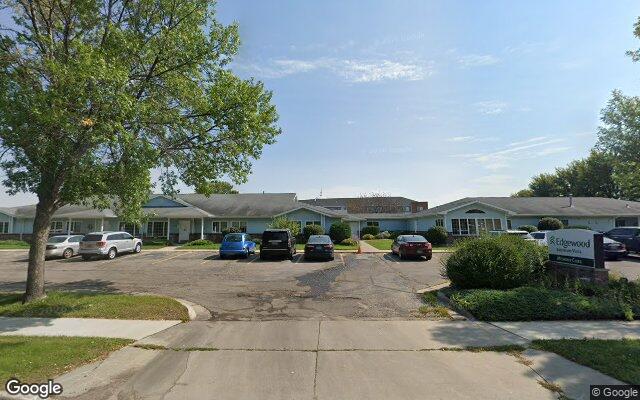
A medium home, reviewed on public record.
Compared to 187 Minnesota facilities with a similar number of beds.
ALF memory care · 36-month window. Higher percentile = better performance on inspection record. Source: Minnesota Dept. of Health · Health Regulation Division.
among peers to rank.
Rankings based on 36-month MDH inspection data. Severity and frequency: fewer citations = higher percentile. Repeat rate: lower repeat citation share = higher percentile.
Citation history, plotted month by month.
1 deficiency on record. Each bar is a month with a citation.
Finding distribution
1 total · 36 monthsScope × Severity (CMS A–L)
Questions to ask before you visit.
A short pre-tour checklist tailored to Edgewood Egf Senior Living's record and state requirements.
The most recent Minnesota Department of Health inspection on May 24, 2023 found zero deficiencies across 2 reports on file — can you walk us through how your dementia care policies and staffing practices are documented, and may we review a copy of your written dementia care program during the tour?
Ask the operator on tour. Take notes and compare answers across facilities you visit.
One complaint was filed with MDH during the period covered by the inspection reports on file — was that complaint substantiated, and what corrective steps did the facility document in response?
Ask the operator on tour. Take notes and compare answers across facilities you visit.
Your license designates this as an Assisted Living Facility with Dementia Care under Minnesota Statute Chapter 144G — can you provide families with a written summary of the specific dementia supports and environmental modifications that distinguish your memory care programming from general assisted living?
Ask the operator on tour. Take notes and compare answers across facilities you visit.
Every inspection visit, verbatim.
4 inspections in the public record, most recent first. Plain-language summaries open first — click into any row for the full citation text.
2026-04-01Annual Compliance VisitNo findings
2025-02-03Complaint InvestigationNo findings
Plain-language summary
A complaint investigation found that two registered nurses and the facility failed to ensure a resident received nine new heart failure medications after hospital discharge, resulting in the resident missing doses for ten days and being rehospitalized with worsening heart failure. The facility lacked a system to follow up on medication orders with the outside pharmacy or notify the resident's doctor and family when medications did not arrive as expected. The neglect was substantiated and responsibility was assigned to both the facility and the two individual nurses.
Read full citation textHide full citation text
Read raw inspector notesClose inspector notes
Finding: Substantiated, facility and individual responsibility Nature of Investigation: The Minnesota Department of Health investigated an allegation of maltreatment, in accordance with the Minnesota Reporting of Maltreatment of Vulnerable Adults Act, Minn. Stat. 626.557, and to evaluate compliance with applicable licensing standards for the provider type. Initial Investigation Allegation(s): The facility and the alleged perpetrators (AP), both registered nurses (RN) at the facility, neglected the resident when they failed to have a system in place to ensure availability of medication refills. The resident’s medications were not delivered immediately after new orders were received. AP/RN1 and AP/RN2 failed to notify the resident’s provider that medications were not available. The resident was hospitalized after missing ten days of prescribed medications. Investigative Findings and Conclusion: The Minnesota Department of Health determined neglect was substantiated. The facility and AP/RN1 and AP/RN2 were responsible for the maltreatment. The resident had been hospitalized and treated for congestive heart failure and was started on nine new medications. After returning to the facility, the new medications did not immediately arrive. AP/RN1 and AP/RN2 were aware of this but failed to contact the pharmacy to follow up and failed to notify the primary care provider (PCP) that new medications to treat heart failure had not been started. The facility did not have a process in place to ensure the family and primary care provider were updated or a process to ensure new orders were followed up on to ensure the medications arrived. The resident missed ten days of essential medications. The resident was re-hospitalized with exacerbation of congestive heart failure. The investigator conducted interviews with facility staff members, including administrative staff, nursing staff, and unlicensed staff. The investigator contacted the primary care provider. The investigation included review of the resident record, hospital records, pharmacy records, facility incident reports, personnel files, staff schedules, and related facility policy and procedures. Also, the investigator observed the medication procedures and storage for residents using outside pharmacies at the facility. The resident resided in an assisted living memory care unit. The resident’s diagnoses included vascular dementia, Alzheimer’s disease, and congestive heart failure. The resident’s service plan included assistance with medication administration. The resident’s assessment indicated the resident's medications were ordered by facility staff through an outside pharmacy. Progress notes in the resident’s record indicated the resident returned to the facility with orders for nine new medications after he was treated for heart failure. New medications included treatment for fluid retention, high blood pressure, heart failure, and other heart problems. The resident’s medication administration record (MAR) indicated over a ten-day period, the medications were marked as not given. Progress notes documented by AP/RN2 indicated she was aware the orders were being sent to an outside pharmacy and would be mailed to the facility. AP/RN1 and AP/RN2 failed to notify the PCP that medications would not arrive for 7 to 10 days and failed to offer alternatives to the resident’s family to obtain medications in a more timely manner. The facility failed to follow up and ensure the outside pharmacy received the new orders and progress notes later indicated the outside pharmacy never received the orders and were not processing them as they were not sent. The facility failed to document a change in condition for the resident or why he was sent to the hospital again. Hospital records indicated the resident came to the emergency room after having shortness of breath for two days, as well as chest pain. The resident’s oxygen in the emergency room was noted to be 88% (normal is above 95%). The resident was admitted for congestive heart failure exacerbation and spent four days in the hospital. During an interview, a facility nurse stated she was responsible for passing the resident’s medications and when she noticed the resident did not have the new medications he needed to treat his heart failure, she told both AP/RN1 and AP/RN2 that he didn't have any medications and they needed to do something as he should not be missing so many doses. The nurse stated she was told they were looking into it and that the medication was being sent. The nurse stated she voiced concerns about not giving the medications was neglect because the medications were for heart failure, but nursing management kept telling her the medications were ordered. The nurse stated she got into an argument with AP/RN2 because she didn't feel like they were doing any follow up to see if the resident's medications were coming. During an interview, the resident’s son stated the facility did not call to tell him his dad wasn't getting medications. The resident’s son stated he only found out about it after the resident was hospitalized and the hospital told him the resident hadn't received his medications which caused fluid buildup. The resident’s son stated he spoke with both AP/RN1 and AP/RN2 after he was re-hospitalized and they said the hospital screwed up and didn't send the prescriptions and was under the impression his dad had only missed a few medications. The resident’s son stated if he would have been made aware of the medications never arriving, he would have called the pharmacy himself or found a way to get the medications for his dad. During an interview, the resident’s daughter stated she wasn't aware the resident missed any medications until a nurse at the hospital told her the facility had reported he didn't get his new medications filled. The resident’s daughter stated she spoke with AP/RN1 after the resident was hospitalized and asked why someone didn’t call somebody to see if they could get medications filled elsewhere while they were waiting on the outside pharmacy instead of just marking it down as not available the whole time. The resident’s daughter stated if the facility had notified her that the medications never arrived, she would have taken action to get them filled immediately. The resident’s daughter stated she was not told about the outstanding bill at the local pharmacy that prevented them from being able to fill there but as soon as she was aware of it, she paid it and was able to get the medications filled until the outside pharmacy could send the medications. During an interview, AP/RN1 stated he was not sure why there was no documentation leading up to the resident's rehospitalization or when nursing was notified of concerns. AP/RN1 confirmed the facility did not reach out to the primary care provider about the new medications not being able to be started and the resident's family was not notified about the issues with obtaining the new prescriptions that had been started to treat the resident's congestive heart failure. AP/RN1 stated the hospital should have sent the new orders to the outside pharmacy but they never followed up or called the outside pharmacy in the days after he returned to the facility. AP/RN1 stated this was the first time he had worked with the outside pharmacy before and confirmed they did not have a process in place for when a new order was initiated but the outside pharmacy wasn't able to deliver for 7 to 10 days. During an interview, AP/RN2 stated the son was "well aware" the resident was not receiving the new medications to treat his heart failure because the son chose to use an outside pharmacy that took a while to deliver. AP/RN2 confirmed the PCP was not notified the medications would not be able to be started immediately and she was not aware they could ask to get a hold order and thought they were to just mark it as medication not available. AP/RN2 stated the resident's son would have been educated in the hospital about the risks of not starting the medications and that he was aware they did not have the medications. AP/RN2 stated she never followed up to see if the pharmacy got the new orders because the hospital said they sent it, and the outside pharmacy would take a few days to send it. During an interview, a registered nurse (RN) with the resident's primary care provider's office stated they had reviewed the resident's clinic record and visited with the PCP and did not see any evidence they were notified the resident's new medications could not be started immediately. The RN stated they would expect the facility to contact them to either hold the medication or find alternatives until the medications could be delivered.
2024-11-15Complaint InvestigationNo findings
Plain-language summary
The Minnesota Department of Health investigated a complaint that unlicensed staff emotionally abused a resident by treating him in a harassing and humiliating manner; the investigation concluded abuse was inconclusive because conflicting accounts were given and camera footage of the incident was not retained, though staff acknowledged laughing at the resident and conflicting statements were made about who recorded the interaction. While the investigator found insufficient evidence to substantiate abuse, staff members provided conflicting accounts of whether they taunted or mocked the resident during an incident where he became agitated and chased them down the hallway. The facility's internal investigation suggested staff may have antagonized the resident, and the investigator noted the resident had not received training interventions for managing his documented history of aggression.
Read full citation textHide full citation text
Read raw inspector notesClose inspector notes
Finding: Inconclusive Nature of Investigation: The Minnesota Department of Health investigated an allegation of maltreatment, in accordance with the Minnesota Reporting of Maltreatment of Vulnerable Adults Act, Minn. Stat. 626.557, and to evaluate compliance with applicable licensing standards for the provider type. Initial Investigation Allegation(s): The alleged perpetrators (AP), unlicensed personnel (ULP) at the facility, emotionally abused the resident when they treated him in a harassing and humiliating manner. Camera footage showed AP1 and AP2 being chased down the hallway by the resident and the two APs closed themselves behind a door. AP1 and AP2 could be seen watching a recording of the incident on AP1’s phone and laughing. Investigative Findings and Conclusion: The Minnesota Department of Health determined abuse was inconclusive. While AP1 and AP2 may have treated the resident in a discourteous manner, there was insufficient evidence to demonstrate abuse occurred. Conflicting reports were provided, and the facility did not retain camera footage of the incident. The investigator conducted interviews with facility staff members, including administrative staff, nursing staff, and unlicensed staff. The investigation included review of the resident record, facility internal investigation documentation, facility incident reports, personnel files, staff schedules, and related facility policies and procedures. Also, the investigator observed the resident’s room. The resident resided in an assisted living memory care unit. The resident’s diagnoses included cognitive decline and Parkinson's disease. The resident’s service plan included assistance with all activities of daily living and behavior management services. The resident’s assessment indicated the resident had dementia, memory loss, and cognitive impairment. The resident was at risk for aggression both to and from others during periods of high stress. The resident had a history of being physically aggressive, hallucinating, breaking property, hitting, slapping, and kicking his wife and staff, and become verbally aggressive. No interventions besides redirecting the resident were identified. The facility’s internal investigation indicated management was notified of an incident that occurred on an overnight shift where two unlicensed personnel, alleged perpetrator (AP1) and AP2 were laughing at the resident. The incident report indicated the resident was agitated, throwing objects, and chasing staff. Surveillance camera footage was reviewed. It appeared that staff were repeatedly antagonizing the resident and running away from him. At one point, he chased them down the hallway and they closed themselves behind the magnetic door. The camera in the hallway showed that they were laughing and viewing something on AP1’s phone. AP1 was interviewed by facility staff and reported she and AP2 entered the resident's room to help the resident’s wife when the resident became upset, began throwing objects and chasing them. AP1 denied intentionally aggravating the resident and stated she wanted to record the incident because the surveillance cameras don't always record everything. AP2 was interviewed by facility staff and stated AP1 mocked the resident which angered him, and he attempted to hit her with an object. AP1 and AP2 left the room and returned when they heard the resident’s wife screaming. The resident did not want AP1 or AP2 back in the room and became upset again. AP2 reported that AP1 taunted the resident, and he threw a hairbrush and a plastic bowling pin at them before chasing them down the hallway. AP2 acknowledged AP1 recorded the incident on her phone, taunting the resident and using profanity. AP2 denied recording or possessing any recording of the incident. AP2 acknowledged that they were laughing during the incident and laughed when reviewing AP1’s recording of the incident. Facility staff interviewed the resident who recounted two girls were taunting him and that one gave him the finger and they were laughing. He stated he chased them down the hallway and shut the door so they couldn't come back. The resident was interviewed by the investigator, but he was unable to recall any details from the incident. During an interview, AP1 stated they were not trying to play around but they ended up laughing because they didn't know why the resident was throwing things at them. AP1 stated she was trying to help the resident's wife when he became upset with them and was throwing items like a hairbrush and a bowling pin. AP1 denied recording the incident and stated that AP2 recorded a video, texted it to her and asked her to delete the video after AP2 was fired. AP1 stated she did have her phone out during the incident because AP2 told her to but she did not record anything. AP1 stated she took accountability for her actions that night and acknowledged laughing at the resident was not appropriate. AP1 stated they had not been trained on any interventions for dealing with the resident's behaviors so they were doing the best they could in a difficult situation. During an interview, AP2 stated the resident got very angry after they tried to help his wife and he chased her and AP1 down the hallway with a hairbrush and a bowling pin. AP2 stated they tried to run away from the resident and AP1 was trying to mimic the resident and was repeating things he said. AP2 stated she did not have her phone out and denied recording anything. AP2 stated AP1 showed her AP1's phone and that she had recorded the incident. AP2 stated they were laughing at the resident because they didn't know what else to do. AP2 stated she had not been trained on any interventions for dealing with the resident's behaviors. During an interview, facility management stated it seemed like AP1 and AP2 were intentionally antagonizing the resident and when they watched the surveillance footage, they could see them going in the room and coming back out a few times. Management stated that it was difficult to hear anything on the video, but the resident could be seen coming further and further out of his room until he chased the two staff members down the hallway. Facility management confirmed surveillance footage of the incident was not saved and not available for review. In conclusion, the Minnesota Department of Health determined abuse was inconclusive. Inconclusive: Minnesota Statutes, section 626.5572, Subdivision 11. "Inconclusive" means there is less than a preponderance of evidence to show that maltreatment did or did not occur. Abuse: Minnesota Statutes section 626.5572, subdivision 2. "Abuse" means: (a) An act against a vulnerable adult that constitutes a violation of, an attempt to violate, or aiding and abetting a violation of: (1) assault in the first through fifth degrees as defined in sections 609.221 to 609.224; (2) the use of drugs to injure or facilitate crime as defined in section 609.235; (3) the solicitation, inducement, and promotion of prostitution as defined in section 609.322; and (4) criminal sexual conduct in the first through fifth degrees as defined in sections 609.342 to 609.3451. A violation includes any action that meets the elements of the crime, regardless of whether there is a criminal proceeding or conviction. (b) Conduct which is not an accident or therapeutic conduct as defined in this section, which produces or could reasonably be expected to produce physical pain or injury or emotional distress including, but not limited to, the following: (1) hitting, slapping, kicking, pinching, biting, or corporal punishment of a vulnerable adult; (2) use of repeated or malicious oral, written, or gestured language toward a vulnerable adult or the treatment of a vulnerable adult which would be considered by a reasonable person to be disparaging, derogatory, humiliating, harassing, or threatening Vulnerable Adult interviewed: Yes Family/Responsible Party interviewed: Yes Alleged Perpetrator interviewed: Yes, AP1 and AP2 Action taken by facility: The facility investigated the incident and filed a MAARC report. AP1 was terminated. AP2 was placed on administrative leave and later terminated. Action taken by the Minnesota Department of Health: The facility was found to be in noncompliance. To view a copy of the Statement of Deficiencies and/or correction orders, please visit: https://www.health.state.mn.us/facilities/regulation/directory/provcompselect.html If you are viewing this report on the MDH website, please see the attached Statement of Deficiencies. You may also call 651-201-4200 to receive a copy via mail or email cc: The Office of Ombudsman for Long Term Care The Office of Ombudsman for Mental Health and Developmental Disabilities PRINTED: 11/19/2024 FORM APPROVED STATEMENT OF DEFICIENCIES (X1) PROVIDER/SUPPLIER/CLIA (X2) MULTIPLE CONSTRUCTION (X3) DATE SURVEY AND PLAN OF CORRECTION IDENTIFICATION NUMBER: COMPLETED A. BUILDING: ______________________ C B.
2024-09-11Complaint InvestigationSubstantiated Finding · 1 finding
Plain-language summary
A complaint investigation found that the facility and a registered nurse neglected a resident by failing to monitor or report a developing skin infection on her leg; staff had notified the nurse multiple times over at least a week that the resident's leg was increasingly red and swollen, and the nurse did not seek medical evaluation or direct staff to monitor for worsening symptoms, resulting in the resident developing sepsis, cellulitis, and a serious MRSA infection that required five days of hospitalization. The facility also failed to identify or treat an open wound on the resident's ankle that staff believed was caused by ill-fitting shoes, and lacked systems to track skin concerns or report changes to the resident's doctor. The investigation determined both the facility and the individual nurse were responsible for this maltreatment.
Read full citation text (1)Hide full citation text
“MDH substantiated maltreatment or licensing violation finding”
Read raw inspector notesClose inspector notes
Finding: Substantiated, facility and individual responsibility Nature of Investigation: The Minnesota Department of Health investigated an allegation of maltreatment, in accordance with the Minnesota Reporting of Maltreatment of Vulnerable Adults Act, Minn. Stat. 626.557, and to evaluate compliance with applicable licensing standards for the provider type. Initial Investigation Allegation(s): The facility neglected the resident when they failed to ensure the resident was provided appropriate treatment after the resident developed a fever and a red spot on her leg. Facility staff told the resident’s responsible party to not bring her to the emergency room and they’d check her in the morning. The responsible party returned the next day and noticed the redness had spread so took the resident to the emergency room. The resident was admitted to the hospital and treated for sepsis, cellulitis, MRSA (Methicillin-resistant Staphylococcus aureus, a drug resistant infection), and a UTI. Investigative Findings and Conclusion: The Minnesota Department of Health determined neglect was substantiated. The facility and the alleged perpetrator (AP), a registered nurse (RN), were responsible for the maltreatment. The facility had no system in place to monitor skin concerns and failed to report to the resident’s provider when skin concerns developed or worsened. The AP/RN failed to seek immediate treatment or notify the resident’s provider for an acute change in condition and failed to provide additional monitoring or supervision after they were notified of the resident’s leg redness. The resident had an ongoing open area to her ankle that the facility failed to identify, treat, or monitor, which became infected and developed into a cellulitis infection. The investigator conducted interviews with facility staff members, including administrative staff, nursing staff, and unlicensed staff. The investigator also contacted the resident’s physician. The investigation included review of resident records, hospital records, facility incident reports, personnel files, staff schedules, and related facility policies and procedures. Also, the investigator observed care, services, and medication administration in the facility. The resident resided in an assisted living memory care unit with a diagnosis of Alzheimer’s dementia. The resident’s service plan included assistance with behavior monitoring, dressing, grooming, toileting, incontinence care, medication administration, and safety checks three times per day. The resident’s assessment indicated the resident's skin was intact. No history of skin concerns or risk factors for skin concerns were identified in the assessment. The resident’s medical record lacked documentation of any changes with the resident’s skin in the weeks leading up to her hospitalization. Facility records indicated the AP/RN was notified by unlicensed personnel (ULP) on a Friday evening that the resident’s leg was red. Two photographs were sent to the AP/RN. The photographs showed the resident's right leg from the knee down. A scabbed over partially open area was observed on the top of the resident's ankle. A bright red rash went from above the scabbed area up to the resident's knee. The second photograph showed the resident's right leg that was taken from above the knee/thigh area. There was a large red patch covering the resident's kneecap that extended above the knee and around the side of the leg. The redness could be seen from the top of the knee down to the top of the scabbed over area on the ankle. The AP/RN failed to appropriately triage the situation and failed to notify the resident’s provider. The AP/RN failed to direct staff on what to monitor for to determine if the redness was spreading or getting worse and failed to direct ULP to collect vital signs. The AP/RN documented that he called the resident’s family and they “agreed that we would meet at the facility in the morning to discuss if she should be taken to the clinic to be evaluated.” The AP/RN and resident’s family met Saturday morning at 8:30 a.m. and agreed the resident should be taken to the emergency room to see if the resident had cellulitis. Hospital records indicated the resident admitted to the hospital on Saturday at 10:36 a.m. and the resident presented with generalized weakness, right leg redness, and extensive swelling, which was diagnosed as cellulitis. The hospital records indicated the excoriation/scabbed area on the resident's ankle "seems to be the port of entry for the infection." Testing on the ankle grew MRSA (staff infection). Lab testing indicated the resident also had a urinary tract infection with acute kidney injury (a sudden decrease in kidney function which can be caused by severe UTIs and lead to septic shock) and sepsis (systemic infection). The resident was hospitalized for five days and treated with antibiotics. During interviews, unlicensed personnel (ULP) reported they notified the AP/RN of concerns with the resident’s leg at least one week before she was hospitalized. ULP noted edema and swelling in the resident’s leg a few days before she was hospitalized and passed it on to the AP/RN. ULP stated the resident had a scabbed over open area to the top of her right ankle that had been there for a while, and thought the nurse was monitoring it. ULP stated the area on the ankle developed after staff put shoes on the resident that were too tight that rubbed and caused the area to develop. The ULP stated other staff told the AP/RN about the shoes that caused skin breakdown, but the shoes were never removed from the room. During an interview, one ULP stated the resident’s right leg was “red for a week, maybe two” and staff had reported this to the nurse. Staff noticed how red the leg was and wondered why nothing was being done about it. The ULP stated they were helping the resident get ready for bed on Friday night and noticed her knee was “super red, and it was like different spots on her leg were red. I felt them, they were super, really, hot and she was sweating and shivering”. The ULP stated the resident had a fever and they were trying to cool her down with a cold rag. The ULP contacted AP/RN and sent AP/RN pictures of the resident’s legs. The ULP asked the AP/RN if the resident should be sent to the hospital and he told them no, he would check on the resident the next morning. During an interview, the AP/RN stated the resident’s scabbed over area on the top of her foot had been a “longstanding issue. It was more like a dry calloused area, but there wasn't a treatment in place for it, just trying to use better fitting shoes." The AP/RN stated he was notified on Friday evening about the resident’s legs, and he called the resident's family to see what they wanted to do. The AP/RN stated he gave the family the option to send the resident for further evaluation and that he thought she would need to be evaluated and it was likely cellulitis. The AP/RN stated that the family asked if they could wait so we agreed to meet the next morning. The AP/RN was asked what information was gathered when ULP called to report the redness and text photographs of the resident's legs. The AP/RN confirmed he did not direct staff to collect vitals or have the staff mark where the redness was to see if it was spreading or getting worse. The AP/RN confirmed he did not direct staff to monitor overnight or to call back if it spread or got worse. The resident’s power of attorney (POA) stated they were called that Friday evening and asked if they needed to take the resident in [to the hospital] that night and the AP/RN said no, no it's not that bad, we'll check it in the morning. The POA stated that they were at the mercy of the nurse to know if the resident should be sent to the hospital because they were not there. The POA stated the resident was in the hospital for a week and they thought she was going to die. The POA stated that staff dressed her every night and this should have been noticed and if they noticed and told anyone, no one else said anything. The resident’s primary care provider (PCP) stated "it was surprising if she's being helped with bathing and changing clothes, that nobody had reported a change in status before it got to that point where it was so severe when she got to the hospital.
1 older inspection from 2023 are not shown above.
Get the complete record, translated into plain language — emailed to you.
Facility Watch · Premium
Family reviews
No reviews yet — be the first to share your experience