Gracepointe Crossing.
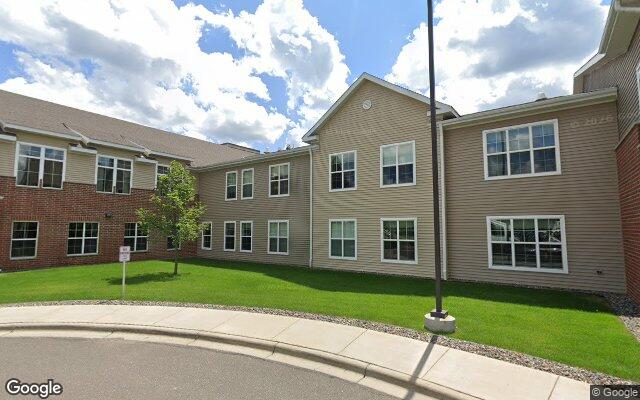
A large home, reviewed on public record.
Compared to 143 Minnesota facilities with a similar number of beds.
ALF memory care · 36-month window. Higher percentile = better performance on inspection record. Source: Minnesota Dept. of Health · Health Regulation Division.
among peers to rank.
Rankings based on 36-month MDH inspection data. Severity and frequency: fewer citations = higher percentile. Repeat rate: lower repeat citation share = higher percentile.
Citation history, plotted month by month.
1 deficiency on record. Each bar is a month with a citation.
Finding distribution
1 total · 36 monthsScope × Severity (CMS A–L)
Questions to ask before you visit.
A short pre-tour checklist tailored to Gracepointe Crossing's record and state requirements.
The most recent inspection on February 5, 2025 resulted in zero deficiencies — can you walk us through the facility's internal quality assurance process and show documentation of how you prepare for Minnesota Department of Health surveys?
Ask the operator on tour. Take notes and compare answers across facilities you visit.
One complaint was filed with MDH during the inspection period on record — was that complaint substantiated, and can you share the facility's written response or corrective action plan if one was required?
Ask the operator on tour. Take notes and compare answers across facilities you visit.
Minnesota statute chapter 144G requires a written dementia care program for facilities holding an Assisted Living Facility with Dementia Care license — can you provide a copy of that program and explain how staff training on dementia-specific interventions is documented?
Ask the operator on tour. Take notes and compare answers across facilities you visit.
Every inspection visit, verbatim.
2 inspections in the public record, most recent first. Plain-language summaries open first — click into any row for the full citation text.
2025-02-05Annual Compliance VisitNo findings
Plain-language summary
A routine inspection of Gracepointe Crossing on February 5, 2025 found a violation of fire protection and physical environment requirements under Minnesota law, resulting in a $3,000 fine assessed at Level 3. The facility must document the actions it took to correct this deficiency and has the right to request reconsideration or a hearing within 15 days of receiving the correction order.
Read full citation textHide full citation text
Read raw inspector notesClose inspector notes
CORRECTION ORDERS The enclosed State Form documents the state correction orders. MDH documents state licensing correction orders using federal software. Tag numbers are assigned to Minnesota state statutes for Assisted Living Facilities. The assigned tag number appears in the far left column entitled "ID Prefix Tag." The state statute number and the corresponding text of the state statute out of compliance are listed in the "Summary Statement of Deficiencies" column. This column also includes the findings that are in violation of the state statute after the statement, "This MN Requirement is not met as evidenced by . . ." IMPOSITION OF FINES In accordance with Minn. Stat. § 144G.31, Subd. 4, fines and enforcement actions may be imposed based on the level and scope of the violations and may be imposed immediately with no opportunity to correct the violation first as follows: Level 1: no fines or enforcement. Level 2: a fine of $500 per violation, in addition to any enforcement mechanism authorized in § 144G.20 for widespread violations; Level 3: a fine of $3,000 per violation per incident, in addition to any enforcement mechanism authorized in § 144G.20. Level 4: a fine of $5,000 per incident, in addition to any enforcement mechanism authorized in § 144G.20. Therefore, in accordance with Minn. Stat. §§ 144G.01 to 144G.9999, the following fines are assessed pursuant to this survey: An equal opportunity employer. Letter ID: IS7N REVISED 09/13/2021 Gracepointe Crossing March 7, 2025 Page 2 St - 0 - 0775 - 144g.45 Subd. 2. (a) - Fire Protection And Physical Environment - $3,000.00 Therefore, in accordance with Minn. Stat. §§ 144G.01 to 144G.9999, t he total amount you are assessed is $3,000.00. You will be invoiced approximately 30 days after receipt of this notice, subject to appeal. DOCUMENTATION OF ACTION TO COMPLY In accordance with Minn. Stat. § 144G.30, Subd. 5(c), the licensee must document actions taken to comply with the correction orders within the time period outlined on the state form; however, plans of correction are not required to be submitted for approval. The correction order documentation should include the following: Identify how the area(s) of noncompliance was corrected related to the resident(s)/employee(s) identified in the correction order. Identify how the area(s) of noncompliance was corrected for all of the provider’s resident(s)/employees that may be affected by the noncompliance. Identify what changes to your systems and practices were made to ensure compliance with the specific statute(s). CORRECTION ORDER RECONSIDERATION PROCESS In accordance with Minn. Stat. § 144G.32, Subd. 2, you may challenge the correction order(s) issued, including the level and scope, and any fine assessed through the correction order reconsideration process. The request for reconsideration must be in writing and received by MDH within 15 calendar days of the correction order receipt date. To submit a reconsideration request, please visit: https://forms.web.health.state.mn.us/form/HRDAppealsForm REQUESTING A HEARING Alternatively, in accordance with Minn. Stat. § 144G.31, Subd. 5(d), an assisted living provider that has been assessed a fine under this subdivision has a right to a reconsideration or a hearing under this section and chapter 14. Pursuant to Minn. Stat. § 144G.20, Subd. 14 and Subd. 18, a request for a hearing must be in writing and received by the Department of Health within 15 business days of the correction order receipt date. The request must contain a brief and plain statement describing each matter or issue contested and any new information you believe constitutes a defense or mitigating factor. To submit a hearing request, please visit: https://forms.web.health.state.mn.us/form/HRDAppealsForm To appeal fines via reconsideration, please follow the procedure outlined above. P lease note that you may request a reconsideration o r a hearing, but not both. If you wish to contest tags without fines in a reconsideration and tags with the fines at a hearing, please submit two separate appeals forms at Gracepointe Crossing March 7, 2025 Page 3 the website listed above. The MDH Health Regulation Division (HRD) values your feedback about your experience during the survey and/or investigation process. Please fill out this anonymous provider feedback questionnaire at your convenience at this link: h ttps://forms.office.com/g/Bm5uQEpHVa. Your input is important to us and will enable MDH to improve its processes and communication with providers. If you have any questions regarding the questionnaire, please contact Susan Winkelmann at susan.winkelmann@state.mn.us or call 651-201-5952. You are encouraged to retain this document for your records. It is your responsibility to share the information contained in the letter and state form with your organization’s Governing Body. If you have any questions, please contact me. Sincerely, Kelly Thorson, Supervisor State Evaluation Team Email: Kelly.Thorson@state.mn.us Telephone: 320-223-7336 Fax: 1-866-890-9290 HHH PRINTED: 03/07/2025 FORM APPROVED STATEMENT OF DEFICIENCIES (X1) PROVIDER/SUPPLIER/CLIA (X2) MULTIPLE CONSTRUCTION (X3) DATE SURVEY AND PLAN OF CORRECTION IDENTIFICATION NUMBER: COMPLETED A. BUILDING: ______________________ B. WING _____________________________ 30763 02/05/2025 NAME OF PROVIDER OR SUPPLIER STREET ADDRESS, CITY, STATE, ZIP CODE 1545 RIVERHILLS PARKWAY NW GRACEPOINTE CROSSING CAMBRIDGE, MN 55008 SUMMARY STATEMENT OF DEFICIENCIES PROVIDER'S PLAN OF CORRECTION (X4) ID ID (X5) PREFIX (EACH DEFICIENCY MUST BE PRECEDED BY FULL PREFIX (EACH CORRECTIVE ACTION SHOULD BE COMPLETE REGULATORY OR LSC IDENTIFYING INFORMATION) CROSS-REFERENCED TO THE APPROPRIATE DATE TAG TAG DEFICIENCY) 0 000 Initial Comments 0 000 ASSISTED LIVING PROVIDER LICENSING Minnesota Department of Health is CORRECTION ORDER(S) documenting the State Licensing Correction Orders using federal software. In accordance with Minnesota Statutes, section Tag numbers have been assigned to 144G.08 to 144G.95, these correction orders are Minnesota State Statutes for Assisted issued pursuant to a survey. Living License Providers. The assigned tag number appears in the far left column Determination of whether violations are corrected entitled "ID Prefix Tag." The state Statute requires compliance with all requirements number and the corresponding text of the provided at the Statute number indicated below. state Statute out of compliance is listed in When Minnesota Statute contains several items, the "Summary Statement of Deficiencies" failure to comply with any of the items will be column. This column also includes the considered lack of compliance. findings which are in violation of the state requirement after the statement, "This INITIAL COMMENTS: Minnesota requirement is not met as evidenced by." Following the surveyors' SL30763016 findings is the Time Period for Correction. On February 3, 2025, through February 5, 2025, PLEASE DISREGARD THE HEADING OF the Minnesota Department of Health conducted a THE FOURTH COLUMN WHICH full survey at the above provider. At the time of STATES,"PROVIDER'S PLAN OF the survey, there were 73 residents; 72 receiving CORRECTION." THIS APPLIES TO services under the Assisted Living Facility with FEDERAL DEFICIENCIES ONLY. THIS Dementia Care license. WILL APPEAR ON EACH PAGE. THERE IS NO REQUIREMENT TO SUBMIT A PLAN OF CORRECTION FOR VIOLATIONS OF MINNESOTA STATE STATUTES. The letter in the left column is used for tracking purposes and reflects the scope and level issued pursuant to 144G.31 subd. 1, 2, and 3. 0 480 144G.41 Subdivision 1 Subd. 1a (a-b) Minimum 0 480 SS=F requirements; required food services (a) Except as provided in paragraph (b), food LABORATORY DIRECTOR'S OR PROVIDER/SUPPLIER REPRESENTATIVE'S SIGNATURE TITLE (X6) DATE STATE FORM 6899 V3RB11 If continuation sheet 1 of 5 PRINTED: 03/07/2025 FORM APPROVED STATEMENT OF DEFICIENCIES (X1) PROVIDER/SUPPLIER/CLIA (X2) MULTIPLE CONSTRUCTION (X3) DATE SURVEY AND PLAN OF CORRECTION IDENTIFICATION NUMBER: COMPLETED A. BUILDING: ______________________ B. WING _____________________________ 30763 02/05/2025 NAME OF PROVIDER OR SUPPLIER STREET ADDRESS, CITY, STATE, ZIP CODE 1545 RIVERHILLS PARKWAY NW GRACEPOINTE CROSSING CAMBRIDGE, MN 55008 SUMMARY STATEMENT OF DEFICIENCIES PROVIDER'S PLAN OF CORRECTION (X4) ID ID (X5) PREFIX (EACH DEFICIENCY MUST BE PRECEDED BY FULL PREFIX (EACH CORRECTIVE ACTION SHOULD BE COMPLETE REGULATORY OR LSC IDENTIFYING INFORMATION) CROSS-REFERENCED TO THE APPROPRIATE DATE TAG TAG DEFICIENCY) 0 480 Continued From page 1 0 480 must be prepared and served according to the Minnesota Food Code, Minnesota Rules, chapter 4626. (b) For an assisted living facility with a licensed capacity of ten or fewer residents: (1) notwithstanding Minnesota Rules, part 4626.0033, item A, the facility may share a certified food protection manager (CFPM) with one other facility located within a 60-mile radius and under common management provided the CFPM is present at each facility frequently enough to effectively administer, manage, and supervise each facility's food service operation; (2) notwithstanding Minnesota Rules, part 4626.0545, item A, kick plates that are not removable or cannot be rotated open are allowed unless the facility has been issued repeated correction orders for violations of Minnesota Rules, part 4626.
2024-03-08Complaint InvestigationSubstantiated Finding · 1 finding
Plain-language summary
A complaint investigation found that a facility staff member financially exploited residents by obtaining their personal information and electronically withdrawing money from their bank accounts to a mobile payment app owned by the staff member; financial exploitation was substantiated for four residents, while allegations involving a fifth resident were not substantiated. The investigation included interviews with facility staff, residents, families, and law enforcement, and review of residents' records, facility investigations, and bank records showing unauthorized withdrawals ranging from $350 to $489 per resident.
Read full citation text (1)Hide full citation text
“MDH substantiated maltreatment or licensing violation finding”
Read raw inspector notesClose inspector notes
Finding: Substantiated, individual responsibility Nature of Investigation: The Minnesota Department of Health investigated an allegation of maltreatment, in accordance with the Minnesota Reporting of Maltreatment of Vulnerable Adults Act, Minn. Stat. 626.557, and to evaluate compliance with applicable licensing standards for the provider type. Initial Investigation Allegation(s): The alleged perpetrator (AP), a facility staff, financially exploited resident #1, resident #2, resident #3, and resident #4 when the AP either took money from and/or gained access to bank account information to remove money from the residents’ bank accounts. Investigative Findings and Conclusion: The Minnesota Department of Health determined financial exploitation was substantiated. The AP was responsible for the maltreatment. The AP was able to gather personnel information from resident #2, resident #3, resident #4, and an additional resident, resident #5, who resided at the facility. The information allowed the AP to electronically withdraw money from the residents’ bank accounts and deposit money into a mobile payment service account (cash application) owned by the AP. Due to information provided by resident #1’s family, it was not substantiated the AP financially exploited resident #1 by taking the resident’s wallet and $10.00. The investigator conducted interviews with facility staff members, including administrative staff, nursing staff, and unlicensed staff. The investigator also interviewed residents and residents’ family members. The investigator contacted law enforcement and interviewed the AP. The investigation included review of the residents’ records, facility internal investigations, the AP’s personnel file, staff schedules, the law enforcement report, and related facility policy and procedures. Also, the investigator observed staff and resident interactions. Resident #1 resided in an assisted living memory care unit. Resident #1’s diagnoses included dementia and mild cognitive impairment. Resident #1’s service plan included assistance problem solving. Resident #1 had moderately impaired memory, was at risk for financial abuse, and needed assistance from a family member with financial decisions. Resident #2 resided in an assisted living memory care unit. Resident #2’s diagnoses included Alzheimer’s dementia. Resident #2 had moderately impaired memory, was at risk for financial abuse, and needed assistance from a family member with financial decisions. Resident #3 resided in an assisted living facility. Resident #3’s diagnoses included heart failure. Resident #3’s service plan indicated the resident did not have scheduled services. Resident #3 had intact cognition, was independent with activities of daily living and finances. Resident #4 resided in an assisted living facility. Resident #4’s diagnoses included high blood pressure. Resident #4 service plan included assistance with homemaking and laundry. Resident #4 had intact cognition, was independent with activities of daily living and finances. Resident #5 resided in an assisted living facility. Resident #5’s diagnoses included macular degeneration (a disease that affects a person's central vision). Resident #5’s service plan included assistance with homemaking and medication administration. Resident #5 had intact cognition, was independent with activities of daily living and finances. Facility incident reports within one month, indicated the following investigations were completed by the facility involving the AP and financial exploitation of residents at the facility. A facility’s internal investigation revealed one day resident #1 reported the AP took his wallet and $10.00. The AP denied taking resident #1’s wallet. The facility notified law enforcement. A second facility internal investigation indicated resident #2 reported the AP asked for and was provided the resident’s personnel identification information, including resident #2’s social security number and date of birth. Resident #2 was able to describe the AP by her clothing and pointed the AP out to staff. Resident #2’s family monitored the resident’s debit card and were made aware the bank had blocked fraudulent electronic withdraws from the resident’s account to a cash application. The AP denied asking resident #2 about identification information. The facility notified law enforcement. A third facility internal investigation indicated, resident #3 reported missing $21.00 from his wallet. Ten days later, resident #3 noticed a $350.00 unauthorized electronic withdrawal from his bank account. At that time, the facility’s internal investigation was unable to determine an AP. The facility notified law enforcement for a third time. A fourth facility internal investigation indicated resident #4’s family member reported the resident was missing $80.00 from her wallet. After resident #4 passed away, her family noted fraudulent activity on resident #4’s bank account. The family reported someone withdrew $350.00 from resident #4’s bank account and transferred the money into a mobile cash application. The facility notified law enforcement for a fourth time. A fifth facility investigation indicated resident #5’s family member reported fraudulent credit card charges in the amount of $489.00 dollars. The family reported there had been four attempts to withdraw money from the resident’s credit card. During an interview, resident #5 stated she kept her purse in the bedroom and did not notice anyone go in her purse. Law enforcement was notified. Review of staff schedules, indicated during a 12-day period of attempted money removal from the resident's accounts, the AP was employed at the facility and on the schedule. During an interview, resident #1’s family member stated the resident often misplaced his wallet. The family member said resident #1 did not have cash in the wallet and the family later found the wallet. During an interview, resident #2 recalled having money missing a few months ago, however there had been no further concerns. During an interview, resident #3 stated he was checking his bank account and noticed a withdraw of $350.00. Resident #3 stated he went to the bank and the money was credited back to him, but he never found out who or how it was taken. Resident #3 stated he left his wallet on top of the microwave and came home one day and was missing $21.00 from his wallet. Resident #3 stated the money from the account and the money missing from his wallet all happened about the same time. Resident #3 stated he had not withdrawn the $350.00 from his account. During an interview, resident #4’s family member stated the resident was in and out of the hospital and during that time, the resident reported to family she was missing money from her purse. After the resident passed away, the family member reviewed the resident’s bank account and noticed a withdrawal of $350.00 from her bank account that was deposited into mobile cash application. The family member stated resident #4 did not have a mobile cash application or know how to use the application. The family member stated they were not reimbursed the #350.00. During an interview, resident #5’s family member stated when shopping with the resident, the resident’s credit card was declined. The family member called the resident’s bank and was notified the resident’s credit card was deactivated because of fraudulent charges. The bank told the family member multiple attempts had been made to withdraw $400.00 from resident #5’s credit card for electronic deposit into a mobile cash application. During an interview, leadership stated resident #2 identified the AP, and stated the AP asked for her social security number and date of birth. Leadership asked resident #2’s family member to monitor resident #2’s bank account information. The family reported to facility staff that three attempts had been made to remove money from resident #2’s bank account. Leadership stated following the incident with resident #2, the facility notified residents and/or family members of the fraudulent activity. Leadership stated staff selected five residents to interview about missing money. During the interviews, resident #3 stated he was missing $21.00, and someone had unsuccessfully attempted to withdraw $350.00 from his bank account. Resident #4’s family member reported the resident was missing $80.00 from her wallet. After resident #4 passed away, the family reviewed her finances and discovered an unauthorized withdraw of $350.00 from resident #4’s bank account. Leadership stated after the AP was no longer employed at the facility, there were no further incidences of fraud with any of the resident’s bank accounts or missing money. During an interview, the AP denied taking money from the residents. The AP also denied asking residents for identification information or taking money from resident’s bank accounts and transferring money into a mobile cash application. The law enforcement report indicated following their investigation it was determined the AP attempted or made fraudulent transactions from resident #2, resident #3, resident #4, and resident #5’s bank accounts.
Other facilities in Cambridge.
Other memory care facilities near Cambridge with similar care offerings.
Tour Prep
Family reviews
No reviews yet — be the first to share your experience