Sunrise View Assisted Living.
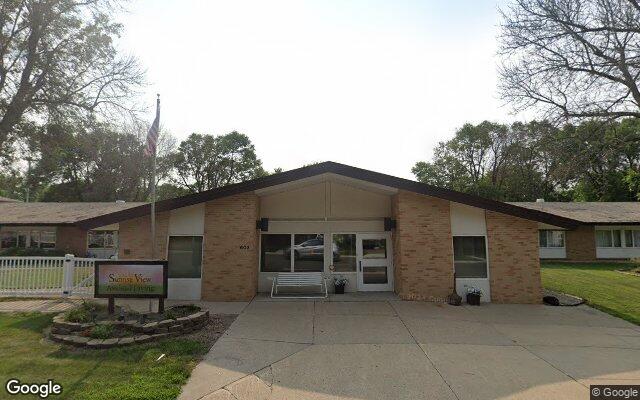
A medium home, reviewed on public record.
Compared to 187 Minnesota facilities with a similar number of beds.
ALF memory care · 36-month window. Higher percentile = better performance on inspection record. Source: Minnesota Dept. of Health · Health Regulation Division.
among peers to rank.
Rankings based on 36-month MDH inspection data. Severity and frequency: fewer citations = higher percentile. Repeat rate: lower repeat citation share = higher percentile.
Citation history, plotted month by month.
2 deficiencies on record. Each bar is a month with a citation.
Finding distribution
2 total · 36 monthsScope × Severity (CMS A–L)
Questions to ask before you visit.
A short pre-tour checklist tailored to Sunrise View Assisted Living's record and state requirements.
The facility holds an Assisted Living Facility with Dementia Care license under Minnesota Statute chapter 144G — can you walk us through the written dementia care program and explain how it differs from the general assisted living services provided to residents without memory loss?
Ask the operator on tour. Take notes and compare answers across facilities you visit.
MDH conducted its most recent inspection on May 1, 2025, and found zero deficiencies across all regulatory standards — can you show us the official inspection report and explain how the facility maintains compliance with Minnesota's assisted living and dementia care requirements?
Ask the operator on tour. Take notes and compare answers across facilities you visit.
Two complaints were filed with the Minnesota Department of Health during the inspection period on record — were either of those complaints substantiated, and can you share the facility's internal documentation of how those concerns were addressed?
Ask the operator on tour. Take notes and compare answers across facilities you visit.
Every inspection visit, verbatim.
3 inspections in the public record, most recent first. Plain-language summaries open first — click into any row for the full citation text.
2025-05-01Annual Compliance VisitNo findings
Plain-language summary
A follow-up survey on July 10, 2025, found that the facility had not corrected a violation from the May 1, 2025 inspection regarding background studies required under state law, resulting in a $3,000 fine. The facility must document actions taken to comply with the correction order, though a plan of correction does not need state approval.
Read full citation textHide full citation text
Read raw inspector notesClose inspector notes
correction orders issued pursuant to the May 1, 2025 survey. In accordance with Minn. Stat. § 144G.31 Subd. 4 (a), state correction orders issued pursuant to the last survey, completed on May 1, 2025, found not corrected at the time of the July 10, 2025, follow-up survey and/or subject to penalty assessment are as follows: 1290-Background Studies Required- 144g.60 Subdivision 1 - $1,000.00 The details of the violations noted at the time of this follow-up survey completed on July 10, 2025 (listed above), are on the attached State Form. Brackets around the ID Prefix Tag in the left hand column, e.g., {2 ----} will identify the uncorrected tags. Therefore, in accordance with Minn. Stat. §§ 144G.01 to 144G.9999, the total amount you are assessed is $1,000.00. You will be invoiced approximately 30 days after receipt of this notice, subject to appeal. DOCUMENTATION OF ACTION TO COMPLY In accordance with Minn. Sta t. § 144 G.30, Subd. 5(c), the licensee must document actions taken to comply with the correction orders outlined on the state form; however, plans of correction are not required to be submitted for approval. IMPOSITION OF FINES In accordance with Minn. Stat. § 144G.31, Subd. 4, fines and enforcement actions may be imposed based on the level and scope of the violations and may be imposed immediately with no opportunity to correct the violation first as follows: Level 1: no fines or enforcement; Level 2: a fine of $500 per violation, in addition to any enforcement mechanism authorized in An equal opportunity employer. Lette r ID : 8GKP Revised 04/14/2023 Sunrise View Assisted Living August 5, 2025 Page 2 § 144G.20; Level 3: a fine of $1,000 per incident, in addition to any enforcement mechanism authorized in § 144G.20; Level 4: a fine of $3,000 per incident, in addition to any enforcement mechanism authorized in § 144G.20; Level 5: a fine of $5,000 per violation, in addtion to any enforcement mechanism authorized in § 144G.20. CORRECTION ORDER RECONSIDERATION PROCESS In accordance with Minn. Stat. § 144G.32, Subd. 2, you may challenge the correction order(s) issued, including the level and scope, and any fine assessed through the correction order reconsideration process. The request for reconsideration must be in writing and received by MDH within 15 calendar days of the correction order receipt date. To submit a reconsideration request, please visit: https://forms.web.health. state.mn.us/form/HRDAppealsForm REQUESTING A HEARING Alternatively, in accordance with Minn. Stat. § 144G.31, Subd. 5(d), an assisted living provider that has been assessed a fine under this subdivision has a right to a reconsideration or a hearing under this section and chapter 14. Pursuant to Minn. Stat. § 144G.20, Subd. 14 and Subd. 18, a request for a hearing must be in writing and received by the Department of Health within 15 business days of the correction order receipt date. The request must contain a brief and plain statement describing each matter or issue contested and any new information you believe constitutes a defense or mitigating factor. To submit a hearing request, please visit: https://forms.web.health.state.mn.us/form/ HRDAppealsForm To appeal fines via reconsideration, please follow the procedure outlined above. Please note that you may request a reconsidera tion or a hearing, but not both . If you wish to contest tags without fines in a reconsideration and tags with the fines at a hearing, please submit two separate appeals forms at the website listed above. We urge you to review these orders carefully. If you have questions, please contact Jodi Johnson at You are encouraged to retain this document for your records. It is your responsibility to share the information contained in the letter and/or state form with your organization’s Governing Body. Sincerely, Jodi Johnson, Supervisor State Evaluation Team Email: Jodi.Johnson@state.mn.us Telephone: 507-344-2730 Fax: 1-866-890-9290 HHH P r o t e c t i n g , M a i n t a i n i n g a n d I m p r o v i n g t h e H e a l t h o f A l l M i n n e s o t a n s Electronically Delivered August 4, 2025 Licensee Sunrise View Assisted Living 603 Louisiana Avenue Adrian, MN 56110 RE: Project Number(s) SL32183016 Dear Licensee: On July 10, 2025, the Minnesota Department of Health (MDH) completed a follow-up survey of your facility to determine correction of orders found on the survey completed on May 1, 2025. This follow-up survey determined your facility had not corrected all of the state correction orders issued pursuant to the May 1, 2025 survey. In accordance with Minn. Stat. § 144G.31 Subd. 4 (a), state correction orders issued pursuant to the last survey, completed on May 1, 2025, found not corrected at the time of the July 10, 2025, follow-up survey and/or subject to penalty assessment are as follows: 1290-Background Studies Required-144g.60 Subdivision 1 - $3,000.00 The details of the violations noted at the time of this follow-up survey completed on July 10, 2025 (listed above), are on the attached State Form. Brackets around the ID Prefix Tag in the left hand column, e.g., {2 ----} will identify the uncorrected tags. Therefore, in accordance with Minn. Stat. §§ 144G.01 to 144G.9999, the total amount you are assessed is $3,000.00. You will be invoiced approximately 30 days after receipt of this notice, subject to appeal. DOCUMENTATION OF ACTION TO COMPLY In accordance with Minn. Sta t. § 144 G.30, Subd. 5(c), the licensee must document actions taken to comply with the correction orders outlined on the state form; however, plans of correction are not required to be submitted for approval. IMPOSITION OF FINES In accordance with Minn. Stat. § 144G.31, Subd. 4, fines and enforcement actions may be imposed based on the level and scope of the violations and may be imposed immediately with no opportunity to correct the violation first as follows: Level 1: no fines or enforcement; Level 2: a fine of $500 per violation, in addition to any enforcement mechanism authorized in § 144G.20; Level 3: a fine of $1,000 per incident, in addition to any enforcement mechanism authorized in § 144G.20; Level 4: a fine of $3,000 per incident, in addition to any enforcement mechanism authorized in § 144G.20; An equal opportunity employer. Lette r ID : 8GKP Revised 04/14/2023 Sunrise View Assisted Living August 4, 2025 Page 2 Level 5: a fine of $5,000 per violation, in addtion to any enforcement mechanism authorized in § 144G.20. CORRECTION ORDER RECONSIDERATION PROCESS In accordance with Minn. Stat. § 144G.32, Subd. 2, you may challenge the correction order(s) issued, including the level and scope, and any fine assessed through the correction order reconsideration process. The request for reconsideration must be in writing and received by MDH within 15 calendar days of the correction order receipt date. To submit a reconsideration request, please visit: https://forms.web.health. state.mn.us/form/HRDAppealsForm REQUESTING A HEARING Alternatively, in accordance with Minn. Stat. § 144G.31, Subd. 5(d), an assisted living provider that has been assessed a fine under this subdivision has a right to a reconsideration or a hearing under this section and chapter 14. Pursuant to Minn. Stat. § 144G.20, Subd. 14 and Subd. 18, a request for a hearing must be in writing and received by the Department of Health within 15 business days of the correction order receipt date. The request must contain a brief and plain statement describing each matter or issue contested and any new information you believe constitutes a defense or mitigating factor. To submit a hearing request, please visit: https://forms.web.health.state.mn.us/form/ HRDAppealsForm To appeal fines via reconsideration, please follow the procedure outlined above. Please note that you may request a reconsidera tion or a hearing, but not both . If you wish to contest tags without fines in a reconsideration and tags with the fines at a hearing, please submit two separate appeals forms at the website listed above. We urge you to review these orders carefully. If you have questions, please contact Jodi Johnson at You are encouraged to retain this document for your records. It is your responsibility to share the information contained in the letter and/or state form with your organization’s Governing Body. Sincerely, Jodi Johnson, Supervisor State Evaluation Team Email: Jodi.Johnson@state.mn.us Telephone: 507-344-2730 Fax: 1-866-890-9290 HHH PRINTED: 08/04/2025 FORM APPROVED STATEMENT OF DEFICIENCIES (X1) PROVIDER/SUPPLIER/CLIA (X2) MULTIPLE CONSTRUCTION (X3) DATE SURVEY AND PLAN OF CORRECTION IDENTIFICATION NUMBER: COMPLETED A.
2025-03-31Complaint InvestigationSubstantiated Finding · 1 finding
Plain-language summary
MDH investigated a complaint that the facility failed to monitor a resident's declining condition, including a 17-pound weight loss, repeated refusals of medication and food, and behavioral changes that led to hospitalization for dehydration. The investigation found the facility was responsible for neglect because nursing staff did not adequately notify the resident's doctor of the changes in condition, did not follow up when initial contact attempts went unanswered, and failed to assess or adjust the care plan to address the resident's needs. The resident was hospitalized nine days after the family first alerted the facility to concerns about dehydration and continued refusals.
Read full citation text (1)Hide full citation text
“MDH substantiated maltreatment or licensing violation finding”
Read raw inspector notesClose inspector notes
Finding: Substantiated, facility responsibility Nature of Investigation: The Minnesota Department of Health investigated an allegation of maltreatment, in accordance with the Minnesota Reporting of Maltreatment of Vulnerable Adults Act, Minn. Stat. 626.557, and to evaluate compliance with applicable licensing standards for the provider type. Initial Investigation Allegation(s): Failed to respond and monitor a known change in condition resulting in a 17-pound weight loss, multiple refusals of medications, skin changes, aggressive behaviors resulting in hospitalization. Investigative Findings and Conclusion: The Minnesota Department of Health determined neglect was substantiated. The facility was responsible for the maltreatment. Facility staff failed to notify the resident’s primary provider of a change in condition, weight loss, and refusals of care, services, medications, food, and water. In addition, the facility failed to complete an assessment and/or implement interventions to address the resident’s needs. The investigator conducted interviews with facility staff members, including administrative staff, nursing staff, unlicensed staff and a physician. The investigation included review of the resident record, hospital records, facility incident reports, staff schedules, and related facility policy and procedures. Also, the investigator observed resident cares and staff interactions. The resident resided in an assisted living memory care unit. The resident’s diagnoses included dementia, diabetes, and chronic kidney disease. The resident’s service plan included assistance with ambulation, transfers, bathing, dressing, grooming, incontinent care, meal reminders and medication administration. The resident’s assessment indicated the resident was cognitively impaired and was at risk for dehydration. Interventions included for staff to document the resident’s intake. The assessment also indicated nursing would provide consistent follow-up of health concerns with the resident’s primary care provider. Staff were directed to notify a supervisor if cares were not completed due to refusals. The resident’s medical record indicated that upon admission to the facility, the resident refused cares, meals, and medications daily. The facility nurse attempted to contact the resident’s primary care provider (PCP) twice via fax regarding the resident’s refusals, but no response was received, and the nurse did not attempt to call to update or follow-up with the resident’s PCP on the refusals. A fax was returned to the facility that did not address the resident concerns but the nurse did not follow up with the fax. Twenty-seven days after admission, the resident’s family contacted the facility nurse with concerns that the resident appeared dehydrated and continued to refuse cares, medications, food, and reported he did not like the facility water. The nurse recommended the resident be sent to the local emergency room (ER). The resident returned from the ER with no new orders. The facility did not complete an assessment or implement interventions after the ER visit. The medical record did not include documentation of meals or fluid consumed per the resident’s service plan. Nine days later, the PCP saw the resident via video conference appointment and was alerted of the 17-pound weight loss. The PCP discontinued most medications and ordered two medications for anxiety and agitation. The facility did not contact the PCP with notification of continued refusals of cares, medication, and food. Thirteen days later, the resident was hospitalized for dehydration, weight loss, and refusal of cares and services. During an interview, an unlicensed staff member stated the resident refused care, medications, meals, water, bathing, and grooming daily. The staff stated there was no direction to contact the nurse with resident refusals, but the nurse was aware, and it was the responsibility of the nurse to update the PCP. During an interview, the registered nurse (RN) stated she was only on site one or two days every other week and completed most of her work remotely including assessments. The RN stated since she was not onsite, she was at the mercy of what staff told her. The RN could not recall if she followed up with the resident’s PCP after faxes were sent or if any interventions were added to the care plan. During an interview, the resident’s PCP stated she began providing care for the resident 36 days after his admission to the facility. The PCP stated she was not notified the resident continued to refuse medications, food, and services. The PCP stated she felt that the facility admitted difficult residents without proper training to care for those residents and that the RN should be onsite to ensure quality care was provided. During an interview, the housing manger stated resident refusals could be seen on the dashboard remotely and the nurse was responsible to update the PCP. The housing manager also indicated that the nurse responsible for completing assessments and service plans and assessments should be on site. During an interview, management staff stated based on notes and daily meetings, the resident refused to eat and drink but management did not personally witness the continued refusals. If a resident’s PCP did not respond to faxes or communication, the nurse should have followed up daily. Management staff stated a change in condition assessment should have been completed if the resident required a change in services and that the assessment could be conducted via a phone system. During an interview, the resident’s family member stated the facility nurse should have been in constant communication with the resident’s PCP. The family stated the facility should have told them about the repeated refusals and weight loss and that the resident was not appropriate for assisted living. In conclusion, the Minnesota Department of Health determined neglect was substantiated. Substantiated: Minnesota Statutes, section 626.5572, Subdivision 19. “Substantiated” means a preponderance of evidence shows that an act that meets the definition of maltreatment occurred. Neglect: Minnesota Statutes, section 626.5572, subdivision 17 “Neglect” means neglect by a caregiver or self-neglect. (a) "Caregiver neglect" means the failure or omission by a caregiver to supply a vulnerable adult with care or services, including but not limited to, food, clothing, shelter, health care, or supervision which is: (1) reasonable and necessary to obtain or maintain the vulnerable adult's physical or mental health or safety, considering the physical and mental capacity or dysfunction of the vulnerable adult; and (2) which is not the result of an accident or therapeutic conduct. Vulnerable Adult interviewed: No, due to cognition. Family/Responsible Party interviewed: Yes Alleged Perpetrator interviewed: Not Applicable Action taken by facility: No action taken. Action taken by the Minnesota Department of Health: The responsible party will be notified of their right to appeal the maltreatment finding. The facility was found to be in noncompliance. To view a copy of the Statement of Deficiencies and/or correction orders, please visit: https://www.health.state.mn.us/facilities/regulation/directory/provcompselect.html If you are viewing this report on the MDH website, please see the attached Statement of Deficiencies. You may also call 651-201-4200 to receive a copy via mail or email cc: The Office of Ombudsman for Long Term Care The Office of Ombudsman for Mental Health and Developmental Disabilities Nobles County Attorney Adrian City Attorney Adrian Police Department PRINTED: 04/14/2025 FORM APPROVED STATEMENT OF DEFICIENCIES (X1) PROVIDER/SUPPLIER/CLIA (X2) MULTIPLE CONSTRUCTION (X3) DATE SURVEY AND PLAN OF CORRECTION IDENTIFICATION NUMBER: COMPLETED A. BUILDING: ______________________ C B. WING _____________________________ 32183 01/29/2025 NAME OF PROVIDER OR SUPPLIER STREET ADDRESS, CITY, STATE, ZIP CODE 603 LOUISIANA AVENUE SUNRISE VIEW ASSISTED LIVING ADRIAN, MN 56110 SUMMARY STATEMENT OF DEFICIENCIES PROVIDER'S PLAN OF CORRECTION (X4) ID ID (X5) PREFIX (EACH DEFICIENCY MUST BE PRECEDED BY FULL PREFIX (EACH CORRECTIVE ACTION SHOULD BE COMPLETE REGULATORY OR LSC IDENTIFYING INFORMATION) CROSS-REFERENCED TO THE APPROPRIATE DATE TAG TAG DEFICIENCY) 0 000 Initial Comments 0 000 ******ATTENTION****** ASSISTED LIVING PROVIDER CORRECTION ORDER In accordance with Minnesota Statutes, section 144G.08 to 144G.95, these correction orders are issued pursuant to a complaint investigation. Determination of whether a violation is corrected requires compliance with all requirements provided at the statute number indicated below. When a Minnesota Statute contains several items, failure to comply with any of the items will be considered lack of compliance. INITIAL COMMENTS: #HL321832201C/#HL321837182M On January 29, 2025, the Minnesota Department of Health conducted a complaint investigation at the above provider, and the following correction orders are issued. At the time of the complaint investigation, there were 27 residents receiving services under the Assisted Living with Dementia Care license. The following correction orders are issued for #HL321832201C/#HL321837182M, tag identification 1620, 2310, 2360. 01620 144G.70 Subd. 2 (c-e) Initial reviews, 01620 SS=F assessments, and monitoring (c) Resident reassessment and monitoring must be conducted no more than 14 calendar days after initiation of services.
2024-09-20Complaint InvestigationSubstantiated Finding · 1 finding
Plain-language summary
A complaint investigation found that facility staff confined a resident to his room and used furniture as barriers to restrict his movement on the memory care unit after he tested positive for a respiratory infection, which constituted substantiated abuse for which the facility was responsible. The investigation reviewed video surveillance footage, photographs, and staff interviews, which documented that staff placed multiple pieces of furniture wall-to-wall and in front of the resident's door with no gaps for him to exit, and locked his room door. Administrative staff directed staff to set up these barriers but did not consult with nursing staff or the facility nurse about this decision.
Read full citation text (1)Hide full citation text
“MDH substantiated maltreatment or licensing violation finding”
Read raw inspector notesClose inspector notes
Finding: Substantiated, facility responsibility Nature of Investigation: The Minnesota Department of Health investigated an allegation of maltreatment, in accordance with the Minnesota Reporting of Maltreatment of Vulnerable Adults Act, Minn. Stat. 626.557, and to evaluate compliance with applicable licensing standards for the provider type. Initial Investigation Allegation(s): The facility abused the resident when staff confined the resident in his room and within another area of the memory care unit. Facility staff used furniture to seclude and restrict the resident’s movement within the facility after the resident tested positive for a respiratory infection. Investigative Findings and Conclusion: The Minnesota Department of Health determined abuse was substantiated. The facility was responsible for the maltreatment. Facility staff confined the resident to his room and utilized multiple items of furniture to secure and block off the area to restrict the resident’s movement on the unit. The investigator conducted interviews with facility staff members, including administrative staff, nursing staff, and unlicensed staff. The investigation included review of the resident record, hospital records, facility internal investigation documentation, incident reports, personnel files, staff schedules, and related policies and procedures. Also, the investigator observed staff and resident interactions at the time of the onsite visit. The resident resided in an assisted living memory care unit. The resident’s diagnoses included dementia and history of physical and verbal aggression. The resident’s service plan included assistance with dressing, toileting, behavioral interventions, medication management, and safety checks. The resident’s assessment indicated the resident was independent with bed mobility, transfers, and ambulation. The assessment indicated the resident had a history of refusals for toileting assistance and required reminders to complete tasks. The resident was at also at risk for elopement and required safety checks. The resident’s medical record identified nursing and management staff initiated an internal investigation after they were informed of a concern about the resident being confined to his room with the door locked and furniture pushed up against the door as a barricade. The internal investigation documentation indicated staff utilized furniture to restrict the resident’s access on the unit and confine the resident to his room with the door locked after the resident tested positive for a respiratory infection. Facility video surveillance footage and pictures taken at the time of the incidents were reviewed by the investigator. One picture displayed a wall-to-wall line of furniture which included a couch, two recliners, two high back chairs, a dining room chair, an end table, and a dresser used to confine the resident to one area of the memory care unit which did not allow for space for the resident to move freely about the unit. Video footage reviewed matched the picture provided with furniture lined up wall-to-wall of the couch, chairs, end tables and dresser. Video footage displayed the resident was confined to the living room area space with no way to freely exit the area. A second picture taken the following day, displayed a couch was placed at an angle in front of the resident's room. On one side of the couch there was an end table and behind the couch there was a large dresser. There were no visible gaps to allow the resident to be able to enter or exit his room. Video surveillance footage matched the second picture of the couch angled in front of the resident’s room. The video footage audio indicated that staff questioned if they had permission to barricade the resident before moving the couch, end table, and dresser to block the area outside of the resident’s room. Before leaving the area, staff closed the resident’s door. There was no visible opening to allow the resident to exit the area. Two hours later, a visitor is seen on camera climbing over the couch and attempting to open the resident’s door without success. The visitor climbed back over the couch and returned to the area with staff. Staff told the visitor they did not know why [the furniture] was there and moved the couch out of the way to unlock the resident’s door. During an interview, administrative staff #1 stated she received a phone call from memory care staff and instructed staff to move furniture to detour the resident from going to the other side of memory care due to his respiratory infection. Administrative staff #1 stated she did not contact the facility nurse about this incident. Administrative staff #1 stated she was contacted by staff the next day about the resident’s family being upset that a barricade was placed in front of the resident’s door. Administrative staff #1 stated she did not receive a picture of the barricade nor was she involved in the internal investigation. During an interview, administrative staff #2 stated she was responsible to oversee the facility day to day operations, the employees, and residents. Administrative staff #2 stated there were two separate incidents involving the resident. Administrative staff #2 stated she was not informed of the first incident but went to the memory care unit the next morning and noticed furniture blocking off one area of the wall to the middle of the room. Staff informed her the furniture was set up during the night shift to restrict the resident’s movement on the unit due to his recent diagnosis of respiratory infection. Administrative staff #2 stated she instructed staff to put the furniture back and take down the barrier but stated she received a call later that evening from the resident’s family stating that the resident was locked in his room with a couch and dresser blocking the door. Administrative staff #2 stated it was never ok to barricade or lock a resident in their room or confine them in an area and that residents should be able to come and go as they please. Administrative staff #2 stated she was embarrassed about the incidents and stated that they should not have happened. During an interview, facility management staff stated that a barrier in front of the resident’s room, or a wall of furniture used to confine a resident was not acceptable. During an interview, the resident’s family stated they went to visit the resident and when they walked into memory care unit there as a sofa with a dresser behind it and the resident’s door was locked. The resident’s family stated there was no way for the resident to leave his room unless he climbed over the couch. The family stated that the facility tried to tell them there was enough space for the resident to come and go but the couch had to be moved out of the way to enter or exit the resident’s room. In conclusion, the Minnesota Department of Health determined abuse was substantiated. Substantiated: Minnesota Statutes, section 626.5572, Subdivision 19. “Substantiated” means a preponderance of evidence shows that an act that meets the definition of maltreatment occurred. Abuse: Minnesota Statutes section 626.5572, subdivision 2. "Abuse" means: (a) An act against a vulnerable adult that constitutes a violation of, an attempt to violate, or aiding and abetting a violation of: (1) assault in the first through fifth degrees as defined in sections 609.221 to 609.224; (2) the use of drugs to injure or facilitate crime as defined in section 609.235; (3) the solicitation, inducement, and promotion of prostitution as defined in section 609.322; and (4) criminal sexual conduct in the first through fifth degrees as defined in sections 609.342 to 609.3451. A violation includes any action that meets the elements of the crime, regardless of whether there is a criminal proceeding or conviction. (b) Conduct which is not an accident or therapeutic conduct as defined in this section, which produces or could reasonably be expected to produce physical pain or injury or emotional distress including, but not limited to, the following: (1) hitting, slapping, kicking, pinching, biting, or corporal punishment of a vulnerable adult; (2) use of repeated or malicious oral, written, or gestured language toward a vulnerable adult or the treatment of a vulnerable adult which would be considered by a reasonable person to be disparaging, derogatory, humiliating, harassing, or threatening; (3) use of any aversive or deprivation procedure, unreasonable confinement, or involuntary seclusion, including the forced separation of the vulnerable adult from other persons against the will of the vulnerable adult or the legal representative of the vulnerable adult; and (4) use of any aversive or deprivation procedures for persons with developmental disabilities or related conditions not authorized under section 245.825.
1 older inspection from 2022 are not shown above.
Get the complete record, translated into plain language — emailed to you.
Contract Decoder
Family reviews
No reviews yet — be the first to share your experience