Willowbrook Place
5 CDPHE citations on record, last inspected Mar 2026, license 23B432.
Willowbrook Place has 5 CDPHE citations on record; last inspected Mar 2026.
Memory-care basis not yet recorded from the state file.
Source: Colorado Department of Public Health and Environment
CDPHE recordLast inspection March 17, 2026
A large home, reviewed on public record.
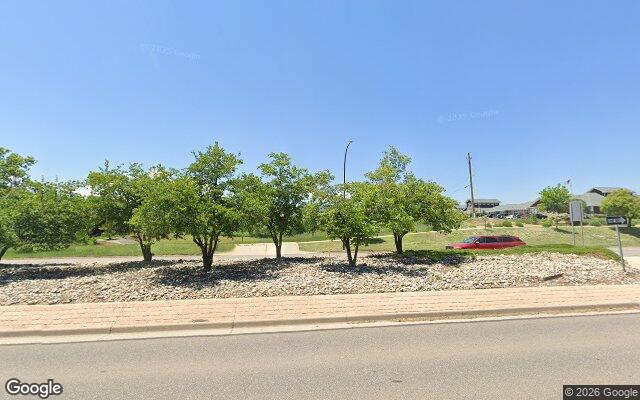
© Google Street View
Compared to 29 Colorado facilities with a similar number of beds.
Assisted living memory care · 36-month window. Higher percentile = better performance on inspection record. Source: Colorado Department of Public Health and Environment.
on file.
among peers to rank.
on file.
Rankings based on 36-month CDPHE inspection data. Severity and frequency: fewer citations = higher percentile. Repeat rate: lower repeat citation share = higher percentile.
Citation history, plotted month by month.
5 deficiencies on record. Each bar is a month with a citation.
Finding distribution
5 total · 36 monthsCDPHE Level A–E
The rules that apply to this facility.
State requirements with the exact regulation citation, plain-language explanation, and a question to ask on tour. Rules this facility has been cited for appear first.
Plain language
CDPHE licenses assisted living residences. A secure environment for residents who need one is optional under Chapter 7, Part 25. CDPHE does not publish a facility-level list of homes that have that option, so this page does not call the home state-verified memory care.
Ask on tour
“Ask whether the home has a secure environment, and ask to see the part of the license that says so.”
Questions to ask before you visit.
A short pre-tour checklist tailored to Willowbrook Place's record and state requirements.
Twelve inspections by the Colorado Department of Public Health and Environment since licensure have resulted in fifteen deficiency citations — can you walk us through the most common themes in those citations and share the corrective action plans the facility submitted to address them?
Ask the operator on tour. Take notes and compare answers across facilities you visit.
The most recent inspection was conducted on March 17, 2026 — what deficiencies, if any, were identified during that visit, and can you provide documentation showing how each deficiency was corrected?
Ask the operator on tour. Take notes and compare answers across facilities you visit.
Twelve complaints have been filed with CDPHE during the inspection period on file — were any of those complaints substantiated, and what specific changes did the facility implement in response to substantiated findings?
Ask the operator on tour. Take notes and compare answers across facilities you visit.
From this home's file.
Counts and lines from the state file we hold.
- Does Willowbrook Place provide memory care?
Memory-care basis not yet recorded from the state file.
- When was Willowbrook Place last inspected?
Willowbrook Place was last inspected on March 17, 2026. That visit is a complaint investigation.
- Has Willowbrook Place been cited by CDPHE?
Yes. Willowbrook Place has 5 deficiencies from CDPHE in the last three years. None are tagged immediate jeopardy.
- How many citations does Willowbrook Place have?
Willowbrook Place has 5 deficiencies across 4 inspections in the last three years. None are tagged immediate jeopardy.
- Who licenses Willowbrook Place?
Colorado Department of Public Health and Environment licenses Willowbrook Place. The license number is 23B432. State record: https://cdphe.colorado.gov/health-facilities/find-and-compare-facilities
Every inspection visit, verbatim.
4 inspections in the public record, most recent first. Plain-language summaries open first — click into any row for the full citation text.
2026-03-17Complaint InvestigationNo findings
Plain-language summary
This complaint investigation is in the Colorado Department of Public Health and Environment public file. No citation text was included for this visit.
2025-09-23Complaint InvestigationNo findings
Plain-language summary
This complaint investigation is in the Colorado Department of Public Health and Environment public file. No citation text was included for this visit.
2025-05-07Complaint InvestigationNo findings
Plain-language summary
This complaint investigation is in the Colorado Department of Public Health and Environment public file. No citation text was included for this visit.
2024-12-18Complaint Investigation5 findings
Plain-language summary
On this complaint investigation, the Colorado Department of Public Health and Environment file cites this requirement: 6 CCR 1011-1 CHAPTER 7 - ASSISTED LIVING RESIDENCES PART 7 - PERSONNEL - Personnel Files 7.13 Each personnel file shall include, but not be limited to, written documentation regarding the following items: (A) A description of the.
Read full citation text (5)Hide full citation text
“Prsnl-Prsnl Files Rq 6 CCR 1011-1 CHAPTER 7 - ASSISTED LIVING RESIDENCES PART 7 - PERSONNEL - Personnel Files 7.13 Each personnel file shall include, but not be limited to, written documentation regarding the following items: (A) A description of the employee or volunteer duties; (B) Date of hire or acceptance of volunteer service and date duties commenced; (C) Orientation and training, including first aid and CPR certification, if applicable; (D) Verification from the Department of Regulatory Agencies, or other state agency, of an active license or certification, if applicable; (E) Results of background checks and follow up, as applicable; and (F) Tuberculin test results, if applicable. (G) Documentation of initial dementia training and continuing education for direct-care staff members: (1) The residence shall maintain documentation of each employee's completion of initial dementia training and continuing education. Such records shall be available for inspection by representatives of the Department. (2) Completion shall be demonstrated by a certificate, attendance roster, or other documentation. (3) Documentation shall include the number of hours of training, the date on which it was received, and the name of the instructor and/or training entity. (4) Documentation of the satisfactory completion of an equivalent training as defined in sub-part 7.8(B)(2)(b) and as required in the criteria for an exception discussed in sub-part 7.8(B)(4), shall include the information required in this sub-part 7.12 (G)(2) and (3). (5) After the completion of training and upon request, such documentation shall be provided to the staff member for the purpose of employment at another covered facility. For the purpose of dementia training documentation, covered facilities shall include assisted living residences, nursing care facilities, and adult day care facilities as defined in Section 25.5-6-303(1), C.R.S.”
This is the rule that was cited, not the inspector’s specific finding.
“Res Care Srvs-Fall Mgt Pr 6 CCR 1011-1 CHAPTER 7 - ASSISTED LIVING RESIDENCES PART 12 - RESIDENT CARE SERVICES - Fall Management Program 12.15 The assisted living residence shall develop policies and procedures to establish a fall management program. The program shall include the following: (A) Providing fall management education and materials to residents and family members; (B) Detailing in each resident's care plan the individualized approach necessary to address fall risk related to deficits in strength, balance, and eyesight, or effects of medication as identified during the comprehensive resident assessment; (C) Providing resident engagement activities to improve strength and balance as specified in Part 12.22(C); (D) Routinely inspecting and maintaining a safe exterior and interior environment as specified in Parts 21 and 22; and (E) Providing staff training related to fall prevention as specified in Part 7.8(B)(6).”
This is the rule that was cited, not the inspector’s specific finding.
“Res Care Srvs-Lift As Tr Stff 6 CCR 1011-1 CHAPTER 7 - ASSISTED LIVING RESIDENCES PART 12 - RESIDENT CARE SERVICES - Lift Assistance 12.17 The assisted living residence shall ensure that it has trained staff available to evaluate residents who have fallen or are otherwise unable to independently get up off the floor and provide lift assistance when determined appropriate instead of relying on emergency medical responders. (A) Each situation shall be evaluated to determine if the resident can be assisted in a safe manner such as when the resident has no pain and/or there is no change from baseline, the resident's mental status is unchanged from baseline, and there is no, or minor, bleeding. (B) Once the situation has been evaluated, assisted living residence policy shall require staff to take the following actions: (1) Physically perform the lift assistance using techniques provided in staff training and monitor the resident; or (2) Not lift and call 911 when the resident is unconscious, the resident's physical or mental status has declined from baseline, the resident experiences an increase in pain when lifting is attempted, the resident wants 9-1-1 called, and/or the resident either can't assist in any way or refuses to assist because of pain, injury, or other physical complications. (C) The assisted living residence shall promptly notify the resident's practitioner, family and/or legal representative of the occurrence of either circumstance identified in Part 12.17(B)(1) or (2), along with information regarding the ALR's response.”
This is the rule that was cited, not the inspector’s specific finding.
“Res Rts-Inv Ab/Neg Alleg or Inj Unk Org IUO 6 CCR 1011-1 CHAPTER 7 - ASSISTED LIVING RESIDENCES PART 13 - RESIDENT RIGHTS - Investigation of Abuse and Neglect Allegations or Injuries of Unknown Origin 13.12 The assisted living residence shall develop and implement policies and procedures for the identification, reporting, and investigation of injuries of unknown origin. Such policies and procedures shall include, but not be limited to, the following requirements: (A) The assisted living residence shall identify and document resident injuries for which the origin of the injury was not observed by or otherwise known by staff, and either: (1) The resident cannot explain how the injury occurred; or (2) The resident can explain the source of the injury, but the source could be addressed to prevent future injuries. (B) The assisted living residence shall document the following: (1) The investigation and identification of any injury identified in (A), above. (2) The implementation and outcome of the following for injuries for which the investigation determines the source/origin: (a) Compliance with Part 13.11, when the source/origin of the injury is suspected to be abuse, neglect, or exploitation; or (b) The steps taken to prevent or mitigate future injuries of like nature for both the injured resident and other residents when the source/origin of the injury is not suspected abuse, neglect, or exploitation. Such steps may include, but not be limited to: (i) Staff or volunteer corrective action and/or additional training; or (ii) Modification of the assisted living residence's policies, procedures or physical environment. (3) When the source of the injury remains undetermined, the steps taken to monitor the resident in an effort identify and prevent similar injuries. (C) All documentation of the investigation, outcomes, and steps taken shall be retained by the assisted living residence, including, but not limited to, details of any interviews and/or records used in the investigation. Such documentation shall be made available for review at the Department's request. (1) Documentation on the investigation, outcomes, and steps taken may be maintained separately from the resident record, in which case a summary of the investigation and steps taken shall be included in the resident's care plan and progress notes. (D) The assisted living residence shall notify the resident's representative of the outcome of the investigation and steps taken.”
This is the rule that was cited, not the inspector’s specific finding.
“Sec Env-Enhncd Rsdnt CP Incld 6 CCR 1011-1 CHAPTER 7 - ASSISTED LIVING RESIDENCES PART 25 - SECURE ENVIRONMENT - Enhanced Resident Care Plan 25.10 In addition to the information required for a resident care plan at Part 12.10, the care plan for each resident in a secure environment shall include the following: (A) A description of the resident's wandering patterns and known behavioral expressions, along with individualized approaches to be implemented by staff to protect the resident and other residents with whom they have contact; (B) A description of how the resident will have continuous independent access to his or her individual room, along with the ALR's plan to protect the resident from unwanted visitation by other residents; (C) Identification of the type and level of staff oversight, monitoring, and/or accompaniment that the ALR deems necessary to meet the needs of the resident within the secure environment and secure outdoor area; and (D) Documentation describing the personal grooming and hygiene items that are determined safe for the resident to have in their own possession for self-care, and how those items are stored to prevent unauthorized access by other residents.”
This is the rule that was cited, not the inspector’s specific finding.
8 older inspections from 2019 are not shown above.
Get the complete record, translated into plain language — emailed to you.
Full Inspection Record
Family reviews
No reviews yet — be the first to share your experience