The Woodmark at Sun City.
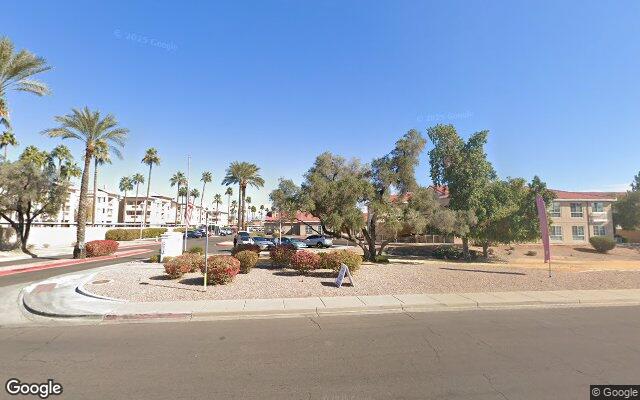
A large home, reviewed on public record.
© Google Street View
Compared to 116 Arizona facilities with a similar number of beds.
Care · 36-month window. Higher percentile = better performance on inspection record. Source: Arizona Dept. of Health Services · Bureau of Residential Facilities Licensing.
among peers to rank.
on file.
Rankings based on 36-month ADHS inspection data. Severity and frequency: fewer citations = higher percentile. Repeat rate: lower repeat citation share = higher percentile.
Citation history, plotted month by month.
68 deficiencies on record. Each bar is a month with a citation.
Finding distribution
68 total · 36 monthsScope × Severity (CMS A–L)
Every inspection visit, verbatim.
18 inspections in the public record, most recent first. Plain-language summaries open first — click into any row for the full citation text.
2026-08-31Complaint InvestigationNo findings
2026-08-26Complaint InvestigationNo findings
2026-04-08Complaint InvestigationEnforcement · 4 findings
“Based on documentation review and interview, the manager failed to ensure policies and procedures were implemented to protect the health and safety of a resident that covered specific steps for the assisted living facility to respond to a resident’s complaint. The deficient practice posed a risk as policies and procedures reinforce and clarify standards expected of employees. Findings include: 1. A review of facility documentation revealed a policy and procedure (P&P) titled “RESIDENT GRIEVANCES.” The P&P stated: “1. A resident, responsible party, or other person may communicate a concern or complaint about care and services, a violation of resident rights, or a recommendation for a change in policy and procedure, in person, in writing, or may be reported anonymously…7. Communicate the results of the investigation and the action being [taken] To resolve the situation to the complainant, preferably through a meeting in person. Send a follow-up letter to the complainant.” 2. In an interview, E1 reported recently receiving a complaint from a resident or the resident’s representative. E1 reported the complaint was investigated and resolved. When the Compliance Officer asked if facility personnel sent a follow-up letter to the complainant as required by P&Ps, E1 stated, “No, it was verbal.” 3. In the exit interview, the Compliance Officer reviewed the findings with E1 and E2 who offered no further comment.”
“Based on documentation review and interview, the manager failed to ensure an assisted living facility had a manager, caregivers, and assistant caregivers with the qualifications, experience, skills, and knowledge necessary to meet the needs of a resident and ensure the health and safety of a resident. The deficient practice posed a risk as personnel did not react to a resident's needs or emergencies in a timely manner. Findings include: 1. A review of facility documentation revealed an “INTERNAL OCCURRENCE REPORT.” The report indicated R1 had an incident on March 5, 2026 at 4:45 AM. The report stated: “Resident complained about being weak, shaky, and feeling like [R1’s] going to fall over and pass out. [R1] said [R1] needs help and to call 911. EMS said [R1’s] BP is high but not bad, [R1] chose to go to the hospital. [R1] said [R1] knows something is wrong.” 2. A review of facility documentation revealed a policy and procedure (P&P) titled Resident Alert Call System.” The P&P stated: “1. Each assisted Living resident will be provided with an alert device to use in the event that assistance is needed. 2. Alert devices include…d Resident alert call systems. 3. Resident call systems are used for care needs and medical emergencies…5. When a resident alert call system is activated, a Personal Care Assistant will respond. Staff may not be able to immediately respond to the resident alert call system activation.” The review further revealed a series of “Device Activity Report[s]” for R1 and R2 dated between January 1, 2026, and the date of the inspection. The reports included the times and dates of R1 and R2 using the resident alert call systems as well as the amount of time it took facility personnel to respond to the call and reset the devices. The reports revealed an “Incident Count” of 86 for R1 and 220 for R2, a “Total Time” of 1,461 minutes for R1 and 3,347 for R2, and an “Average Response [Time]” of 17 minutes for R1 and 15 for R2. The reports further revealed response times between less than one minute and over 145 minutes, including the following: - 35 instances of response times between 20 and 30 minutes, including the instance of the aforementioned incident involving R1; - 46 instances of response times between 30 and 40 minutes; - 18 instances of response times between 40 and 50 minutes; - 14 instances of response times between 50 and 60 minutes; - 8 instances of response times between 60 and 70 minutes; - 2 instances of response times between 70 and 80 minutes; - 4 instances of response times between 80 and 90 minutes; - 4 instances of response times between 90 and 100 minutes; - 2 instances of response times between 100 and 110 minutes; - 2 instances of response times between 140 and 150 minutes; and - 1 instance of response times between 170 and 180 minutes. 3. In an interview, when the Compliance Officer informed E1 of some of the longer response times, E1 stated they were “too much.” 4. In the exit interview, the Compliance Officer reviewed the findings with E1 and E2 who offered no further comment.”
“Based on documentation review, record review, and interview, the manager failed to ensure that a resident provided evidence of freedom from infectious tuberculosis (TB) before or within seven calendar days after the resident's date of occupancy and as specified in R9-10-113, for one of four sampled residents. The deficient practice posed a TB exposure risk to residents. Findings include: 1. R9-10-113(A)(2)(a)(iii) states: “A. If a health care institution is subject to the requirements of this Section, as specified in an Article in this Chapter, the health care institution's chief administrative officer shall ensure that the health care institution establishes, documents, and implements tuberculosis infection control activities that...2. Include: a. For each individual who is…admitted to the health care institution and who is subject to the requirements of this Section, screening, on or before the date specified in the applicable Article of this Chapter, that consists of: iii. Obtaining documentation of the individual's freedom from infectious tuberculosis according to subsection (B)(1).” 2. R9-10-113(B)(1)(a)(i) states: “B. A health care institution's chief administrative officer shall: 1. For an individual for whom baseline screening and documentation of freedom from infectious tuberculosis is required by an Article in this Chapter, as specified in subsection (A)(2)(a), obtain one of the following as evidence of freedom from infectious tuberculosis: a. Documentation of a negative Mantoux skin test or other tuberculosis screening test that: i. Is recommended by the U.S. Centers for Disease Control and Prevention (CDC).” 3. A review of R2’s medical record revealed R2 was admitted to the assisted living facility more than seven days prior to the dates of the inspection. The review revealed a document titled “PHYSICIAN REPORT AND ADMISSION ORDERS - ARIZONA” which included a place to document the results of a tuberculin skin test. However, that portion of the document was left blank. The review revealed no negative Mantoux skin test or other TB screening test recommended by the CDC. 4. In an interview, referring to the aforementioned document, E1 stated, “I don’t have the part that has the results for [R2].” When the Compliance Officer later asked if E1 found any documentation of a negative Mantoux skin test or other TB screening test recommended by the CDC, E1 stated, “No.” 5. In the exit interview, the Compliance Officer reviewed the findings with E1 and E2 who offered no further comment. Technical assistance was provided on this rule during the complaint inspections conducted on March 6, 2026; January 14, 2026; December 15, 2025; and November 4, 2025, and this is a repeat citation from the complaint and compliance inspection conducted on November 7-8 and 12, 2024.”
“Based on interview and documentation review, the manager failed to ensure equipment used at the assisted living facility was maintained in working order. Findings include: 1. In an interview, E3 stated one of the top-loading washers available for use by residents was down for maintenance for “about two weeks.” E3 stated the washer “had a faulty transmission.” 2. A review of facility documentation revealed a service receipt from the company that repaired the washer. The receipt revealed the washer was repaired on March 24, 2026. 3. In the exit interview, the Compliance Officer reviewed the findings with E1 and E2 who offered no further comment.”
2026-03-06Complaint InvestigationEnforcement · 1 finding
“Based on record review and interview, the manager failed to ensure a resident's medical record contained documentation of medication administered to the resident that included the date, time, and dosage of administration, for two of four sampled residents. The deficient practice posed a risk to the health and safety of a resident, as emergency personnel would not have the correct health data to make decisions regarding a resident's treatment in an emergency, and the Department was provided false and misleading information. Findings include: 1. A review of R1’s medical record revealed a medication administration record (MAR) dated February 2026. The MAR revealed R1 did not receive R1’s nystatin between 5:00 PM on February 10, 2026, and 8:00 AM on February 13, 2026, because the “MEDICATION [was] UNAVAILABLE” and as the facility was “WAITING ON PHARMACY DELIVERY.” However, the MAR indicated E3 administered R1’s nystatin at 5:00 PM on February 12, 2026, even though the medication was documented as not being available both before and afterward. 2. In an interview, E3 reported E3 did not administer R1’s nystatin at 5:00 PM on February 12, 2026, because the medication was not available. E3 reported E3 documented the medication as administered by mistake, stating, “ I think that was a med error.” 3. A review of R3’s medical record revealed a series of MARs dated between February 2026 and March 2026. The MARs revealed instructions to administer R3’s insulin on a sliding scale and included the scale used. The MAR revealed facility personnel administered R3’s insulin on February 1, 2026, through March 6, 2026, indicating R3’s blood glucose level each time. However, the MAR did not indicate the dosage (i.e. number of units) administered. 4. In an interview, E2 reported the electronic system used for the MARs did not give the caregivers an option to document the dosage. E2 reported R3’s medical record did not include the dosage of administration of R3’s sliding scale insulin in February 2026 and March 2026. 5. In the exit interview, the Compliance Officer reviewed the findings and E1 and E2 and neither offered further comment. This is an uncorrected citation from the complaint inspection conducted on January 14, 2026.”
2026-01-14Complaint InvestigationR9-10-808.A.3.c · 8 findings
“Based on record review and interview, the manager failed to ensure a resident had a service plan that was established and documented that included the amount, type, and frequency of assisted living services being provided to the resident, for one of two sampled residents. The deficient practice posed a risk as a service plan guides a resident’s care. Findings include: 1. A review of R2's medical record revealed a service plan dated January 7, 2026. The service plan revealed R2 required assistance with grooming, toileting, and medication administration. However, the service plan did not include the frequency of these services. 2. In an interview, E3 reported R2 received assistance with grooming two times per day. E3 acknowledged the service plan did not include the frequency of all services. This is a repeat citation from the complaint and compliance inspection conducted on August 9, 2023.”
“Based on record review and interview, the manager failed to ensure a resident had a service plan that was established and documented that, when initially developed and when updated, was signed and dated by all required parties, for one of two sampled residents. The deficient practice posed a health and safety risk if the required individuals did not acknowledge and agree to the services that were to be provided. Findings include: 1. A review of R2’s medical record revealed a service plan dated January 7, 2026. The service plan indicated R2 was to receive medication administration. However, the service plan was not signed by R2 or R2’s representative, the manager, or the nurse or medical practitioner who reviewed the service plan. 2. In an interview, E3 reported facility personnel sent the service plan to R2’s representative and were waiting for R2’s representative to sign it. E3 reported it was facility practice to have the resident or the resident’s representative sign the service plan before the manager and nurse would sign it. This is a repeat citation from the complaint and compliance inspection conducted on November 7-8 and 12, 2024.”
“Based on record review and interview, the manager failed to ensure a caregiver or an assistant caregiver documented the services provided to a resident in the resident's medical record, for two of two sampled residents. The deficient practice posed a risk as services could not be verified as provided against a service plan and the Department was provided false or misleading information. 1. A review of R1's medical record conducted at approximately 3:00 PM on January 14, 2026, revealed a service plan dated September 8, 2025. The service plan stated, “[R1] requires the support of one caregiver to assist with dressing in the morning and at bedtime.” The review further revealed documentation of assisted living services (ADLs) provided to R1 in January 2026. The ADLs revealed the following: - No documentation demonstrating R1 received assistance with dressing in the morning on January 1-3, 6-9, and 11, 2026; - No documentation demonstrating R1 received assistance with dressing at bedtime on January 3-5 and 11-12, 2026; and - Documentation demonstrating R1 received assistance with dressing from E4 at bedtime on January 14, 2026, in the future. 2. In an interview, when the Compliance Officer asked how many times R1 had received assistance dressing on the date of the inspection, E4 stated, “Just once.” E4 reported E4 has assisted R1 with dressing in the morning but had mistakenly documented the service as having been provided in the morning and at bedtime. 3. A review of R2's medical record revealed a service plan dated January 7, 2026. The service plan indicated R2 was to receive assistance with grooming. However, the service plan did not include the frequency of grooming assistance R2 required. 4. In an interview, E3 reported R2 received assistance with grooming two times per day. 5. A review of R2’s medical records revealed ADLs dated January 2026. The ADLs revealed documentation demonstrating R2 received assistance grooming only once per day. This is an uncorrected citation from the complaint and compliance inspections conducted on October 17, 2025, and November 7-8 and 12, 2024, and a repeat citation from the complaint inspection completed on April 22, 2024; the complaint and compliance inspection conducted on August 9, 2023; the complaint inspection conducted on August 29, 2022; the compliance inspection conducted on August 25, 2021; and the complaint inspection conducted on August 17, 2020.”
“Based on record review, interview, and observation, the manager failed to ensure a resident's medical record contained documentation of medication administered to the resident that included dosage, for two of two sampled residents. The deficient practice posed a risk as the Department was provided false or misleading information. Findings include: 1. A review of R1’s medical record revealed a current service plan which indicated R1 received medication administration. The review revealed a medication administration record (MAR) dated January 2026 and two “CONTROLLED DRUG USE RECORD[S]” dated December 2025 through January 2026. The MAR and controlled drug use record revealed documentation demonstrating the following: - R1 received 30 units of both Basaglar insulin and Lantus Solostar insulin on January 3-5, 10, 12-13, 2026, with the January 1, 6-7, and 9, 2026, notes for the Lantus stating the medication was a “duplicate;” - R1’s oxycodone/acetaminophen was last administered at 6:50 AM on January 4, 2026, with zero tablets remaining afterward; - Between 11:00 AM on January 4, 2026, and 3:00 PM on January 7, 2026, R1 did not receive oxycodone/acetaminophen eight times, as the facility was “WAITING ON PHARMACY DELIVERY;” - Between 11:00 AM on January 4, 2026, and 3:00 PM on January 7, 2026, R1 received oxycodone/acetaminophen six times, even though the facility did not have the medication; and - R1’s refill of oxycodone/acetaminophen was delivered on January 7, 2026, and was administered at 7:00 PM on the same day. 2. In an interview, E2 reported R1 did not receive 30 units of both Basaglar insulin and Lantus Solostar insulin on January 3-5, 10, 12-13, 2026. E2 reported R1 only received one of the two but the other was documented as administered by mistake. 3. The Compliance Officer observed R1’s oxycodone/acetaminophen in a pharmacy-provided multi-dose package. The Compliance Officer observed the package indicated the pharmacy dispensed the medication on January 7, 2026, confirming the controlled drug use record. 4. In a series of interviews, the Compliance Officer spoke to E5, E6, and E7, all caregivers who documented R1’s oxycodone/acetaminophen both as “WAITING OF PHARMACY DELIVERY” and as administered during the timeframe the facility did not have the medication. All three caregivers reported not knowing when the medication was last administered before running out, when the medication ran out, when the medication was refilled and delivered, and when the medication was administered again after the delivery. 5. A review of R2’s medical record revealed a current service plan which indicated R2 received medication administration. The review revealed a MAR dated January 2026 which indicated E3 administered amoxicillin/clavulanate potassium at 8:00 AM and 8:00 PM on January 2-3, 2026. 6. In an interview, E3 reported E3 did not administer R2’s amoxicillin/clavulanate potassium on January 2-3, 2026, as E3 was not present at the facility on those dates. E3 stated, “I did not give those meds.” E3 reported not knowing why E3’s initials showed up on the MAR.”
“Based on record review, observation, and interview, the manager failed to ensure a bell, intercom, or other mechanical means to alert employees to a resident’s needs or emergencies was available and accessible in a bedroom being used by a resident receiving personal care services. The deficient practice posed a risk if personnel could not react to a resident's needs or emergencies in a timely manner. Findings include: 1. A review of R3’s medical record revealed a current service plan which indicated R3 was receiving personnel care services. 2. The Compliance Officer observed a call button in the bathroom of R3’s residential unit. However, upon pushing the button and pulling the cord, the Compliance Officer observed no indication the device was functioning properly. 3. In an interview, E7 reported the device was not functioning. E7 stated E7 needed to “replace this battery.” 4. In a series of interviews, when the Compliance Officer asked what R3 would do if R3 needed assistance, R3 stated, “Call.” E1 reported R3 would call the front desk. E1 further stated, “[R3] does not have a pendant.””
“Based on record review, interview, observation, and documentation review, the manager failed to ensure a bell, intercom, or other mechanical means to alert employees to a resident's needs or emergencies was available in a bedroom being used by a resident receiving directed care services. The deficient practice posed a risk if personnel could not react to a resident's needs or emergencies in a timely manner. Findings include: 1. A review of R2’s medical record revealed a current service plan which indicated R2 was receiving directed care services. 2. In an interview, when the Compliance Officer asked if the residents in the memory care building had pendants, E3 stated, “No, [the residents] only have call lights.” E3 reported caregivers regularly checked on the residents. 3. The Compliance Officer observed the memory care building consisted of bedrooms and not residential units. In R2’s bathroom, the Compliance Officer observed a call light/button. However, the Compliance Officer observed no bell, intercom, or other mechanical means to alert employees to R2’s needs or emergencies in R2’s bedroom. The Compliance Officer observed the same setup in room 123. 4. In an interview, E3 reported room 120 had a doorbell on the nightstand in the bedroom. E3 reported no other bedrooms had bells, intercoms, or other mechanical means to alert employees to a resident’s needs or emergencies. 5. A review of facility documentation revealed a list of 21 residents receiving directed care services, not including the resident in room 120 with the doorbell.”
“Based on record review, observation, and interview, the manager failed to ensure a medication was administered in compliance with a medication order, for two of two sampled residents. The deficient practice posed a risk if the resident experienced a change in condition due to improper administration of medication. Findings include: 1. A review of R1’s medical record revealed a current service plan which indicated R1 received medication administration. The review revealed a medication order for “Gabapentin…300 mg…1 Tablet…three times a day” with a start date of January 30, 2025. The review further revealed a medication administration record (MAR) dated January 2026. However, the MAR revealed R1 was administered gabapentin 600 mg three times a day on January 1-13, 2026, and not 300 mg as ordered. The Compliance Officer observed no order for gabapentin 600 mg. 2. The Compliance Officer observed R1’s pharmacy-provided multi-dose package of gabapentin 600 mg. 3. A review of R2’s medical record revealed a current service plan which indicated R2 received medication administration. The review revealed a MAR dated January 2026 which indicated R2 received quetiapine 25 mg, quetiapine 50 mg, senna 8.6-50 mg, trazodone 50 mg, and lorazepam 0.5 mg in January 2026. However, the review revealed no signed medication orders for these medications. 4. In an interview, E3 stated, “There’s a bunch of holes in this.” When the Compliance Officer asked if R2 had signed medication orders for the aforementioned administered medications, E3 stated, “I don’t have a signed one.” This is an uncorrected citation from the complaint inspection conducted on November 4, 2025, and a repeat citation from the complaint and compliance inspection conducted on November 7-8 and 12, 2024.”
“Based on observation and interview, the manager failed to ensure garbage and refuse were stored in covered containers. The deficient practice posed a risk to the health and safety of the residents as an uncovered garbage container can lead to the possibility of infection. Findings include: 1. The Compliance Officer observed used gloves and used briefs in uncovered garbage containers in units 123 and 126. 2. In an interview, E1 acknowledged the aforementioned containers were not covered. Technical assistance was provided on this rule during the complaint inspection conducted on November 4, 2025.”
2025-12-15Complaint InvestigationNo findings
2025-11-04Complaint InvestigationR9-10-803.A.7 · 6 findings
“Based on documentation review and interview, the governing authority failed to notify the Department immediately when there was a change in the manager. The deficient practice posed a risk as the Department was unaware as to whether the facility maintained a qualified manager. Findings include: 1. A review of Department documentation revealed an email from E2 dated July 24, 2025, which indicated E2 was no longer the manager effective July 23, 2025. The email did not identify the name and qualifications of the new manager. The review revealed no other notification to the Department of a change in the manager thereafter, including one regarding the manager taking over after E2. 2. In an interview, E1 reported E1 took over as the manager on July 24, 2025. E1 reported the governing authority must not have notified the Department. E1 reported E1’s supervisor had told E1 back in July 2025 that E1’s supervisor had notified the Department. 3. A secondary review of Department documentation confirmed the Department received no notification of the change in manager between E2 and E1 in July 2025. Technical assistance was provided on this rule during the complaint and compliance inspection conducted on October 17, 2025.”
“Based on interview, documentation review, and observation, the manager failed to ensure the health, safety, or welfare of a resident was not placed at risk of harm. The deficient practice posed a risk as facility personnel were unaware of the whereabouts of a resident. Findings include: 1. In an interview E2 and E4 reported R2 eloped from the facility on November 2, 2025. 2. A review of facility documentation revealed an “UNUSUAL INCIDENT / INJURY REPORT” dated November 2, 2025. The report stated: “At around 8:50a.m., a staff member came to the dining area to pick up dishes. During that time, [R2] followed the dishwasher outside through the back side door and then out the secured back gate. Shortly after around 8:55 the dishwasher left and between 8:58 and 9am, [E4] noticed that [R2] was no longer inside the building. [E4] immediately went outside through the back gate, running past the kitchen area where the dishwasher was taking a smoke break. [E4] asked if [the dishwasher] had seen [R2], and [the dishwasher] replied that [R2] had been with [the dishwasher] and had walked to the left. [E4] then went in that direction and saw [R2] walking west on Bell Road. [R2] was observed walking in the middle of the road among traffic. [E4] was able to safely redirect [R2] across the street to the corner of 105th Avenue and Bell Road…[E4] then offered to take [R2] resident for a drive…and returned around 10:40 am, where [R2] was returned safely without further incident.” 3. The Compliance Officer observed both the door and gate the dishwasher and R2 went through. Both required a code to exit. 4. In an interview, E4 confirmed the information found in the incident report. E4 reported R2 did not sign out as required. E4 further reported R2 was sent out for further evaluation and was currently safe at a hospital.”
“Based on documentation review, interview, and observation, the manager failed to ensure policies and procedures were established, documented, and implemented to protect the health and safety of a resident to cover methods by which the assisted living facility was aware of the general or specific whereabouts of a resident, based on the level of assisted living services provided to the resident and the assisted living services the assisted living facility was authorized to provide. The deficient practice posed a risk as policies and procedures reinforce and clarify standards expected of employees and facility personnel were unaware of the whereabouts of a resident. Findings include: 1. A review of facility documentation revealed a policy and procedure (P&P) titled “Resident Sign-In / Sign-Out.” The P&P stated: “Resident sign in / sign out is conducted in order to keep a record of community residents whereabouts. Procedure: 1. Residents are asked to sign-out when leaving Community and to sign-in upon their return.” The review revealed several other P&Ps covering similar topics. However, the review revealed no P&P covering methods by which the assisted living facility was aware of the general or specific whereabouts of a resident based on the level of assisted living services provided to the resident and the assisted living services the assisted living facility was authorized to provide. 2. In an interview E2 and E4 reported R2 eloped from the facility on November 2, 2025. 3. A review of facility documentation revealed an “UNUSUAL INCIDENT / INJURY REPORT” dated November 2, 2025. The report stated: “At around 8:50a.m., a staff member came to the dining area to pick up dishes. During that time, [R2] followed the dishwasher outside through the back side door and then out the secured back gate. Shortly after around 8:55 the dishwasher left and between 8:58 and 9am, [E4] noticed that [R2] was no longer inside the building. [E4] immediately went outside through the back gate, running past the kitchen area where the dishwasher was taking a smoke break. [E4] asked if [the dishwasher] had seen [R2], and [the dishwasher] replied that [R2] had been with [the dishwasher] and had walked to the left. [E4] then went in that direction and saw [R2] walking west on Bell Road. [R2] was observed walking in the middle of the road among traffic. [E4] was able to safely redirect [R2] across the street to the corner of 105th Avenue and Bell Road…[E4] then offered to take [R2] resident for a drive…and returned around 10:40 am, where [R2] was returned safely without further incident.” 4. The Compliance Officer observed both the door and gate the dishwasher and R2 went through. Both required a code to exit. 5. In an interview, E4 confirmed the information found in the incident report. E4 reported R2 did not sign out as required. E4 further reported R2 was sent out for further evaluation and was currently safe at a hospital. This is a repeat citation from the complaint inspection conducted on May 21, 2024.”
“Based on documentation review and interview, and record review, the manager failed to ensure documentation was maintained for at least 12 months after the last date on the documentation of the caregivers and assistant caregivers working each day, including the hours worked by each. The deficient practice posed a risk as there was incomplete documentation identifying the staff present each day to ensure the health and safety of residents. Findings include: 1. A review of facility documentation revealed a series of personnel schedules dated between September 1, 2025, and the date of the inspection. However, a majority of the schedules did not include the hours worked by each caregiver and assistant caregiver. 2. In an interview, E2 and E3 acknowledged the personnel schedules did not include the hours worked by each caregiver and assistant caregiver. Technical assistance was provided on this rule during the complaint and compliance inspection conducted on November 7-8, and 12, 2024.”
“Based on documentation review and interview, and record review, the manager failed to ensure documentation was maintained for at least 12 months after the last date on the documentation of the caregivers and assistant caregivers working each day, including the hours worked by each. The deficient practice posed a risk as there was incomplete documentation identifying the staff present each day to ensure the health and safety of residents. Findings include: 1. A review of facility documentation revealed a series of personnel schedules dated between September 1, 2025, and the date of the inspection. However, a majority of the schedules did not include the hours worked by each caregiver and assistant caregiver. 2. In an interview, E2 and E3 acknowledged the personnel schedules did not include the hours worked by each caregiver and assistant caregiver. Technical assistance was provided on this rule during the complaint and compliance inspection conducted on November 7-8, and 12, 2024.”
“Based on record review and interview, the manager failed to ensure medication administered to a resident was documented in the resident's medical record, for two of three sampled residents. The deficient practice posed a risk to the health and safety of a resident as emergency personnel would not have correct health data to make decisions regarding a resident's treatment in an emergency and the Department was provided false or misleading information. Findings include: 1. A review of R1’s medical record revealed a series of medication administration records (MARs) dated October 2025 and November 2025. The MARs revealed R1 did not receive Aspercreme Lidocaine 18 times between October 21, 2025, and November 4, 2025, because the “MEDICATION [was] UNAVAILABLE.” However, the MAR indicated R1 received the Aspercreme Lidocaine 39 times between October 21, 2025, and November 4, 2025, even though the medication was unavailable. The MARs indicated E7 reportedly administered the medication nine times and marked the medication as unavailable another nine times during the aforementioned time frame. 2. In a telephonic interview, E7 reported R1’s Aspercreme Lidocaine had not been available since some time in October. E7 reported E7 tried to order it several times but was unable to get the medication in to administer it. When the Compliance Officer asked why E7 had initialed the MAR on the morning of the inspection as if E7 had administered the medication, E7 stated it was “maybe an error.” 3. A review of R2’s medical record revealed a MAR dated November 2025 which indicated R2 received pravastatin on November 1, 2025, but not on November 2, 2025, as the facility was “WAITING ON PHARMACY DELIVERY.” 4. In an interview, E6 reported R2 did not receive pravastatin on November 1-2, 2025. E6 stated, “I signed” when referring to the initials on November 1, 2025, but then stated “We didn’t have it.” E6 reported E6 signed off on the MAR in error. This is a repeat citation from the complaint and compliance inspection conducted on November 7-8, and 12, 2024.”
2025-10-17Complaint InvestigationR9-10-113.A · 8 findings
“Based on record review and interview, the health care institution failed to implement tuberculosis (TB) infection control activities including providing training and education related to recognizing the signs and symptoms of TB to individuals employed by the health care institution for four of five employees reviewed. The deficient practice posed a risk as the caregiver received no organized instruction or information related to TB surveillance. Findings include: 1. A review of E4's personnel record revealed E4 worked as a medical technician and had a hire date of January 18, 2025. The personnel record did not include documentation of training and education related to recognizing the signs and symptoms of TB. 2. A review of E5's personnel record revealed E5 worked as a caregiver and had a hire date of July 25, 2024. The personnel record did not include documentation of training and education related to recognizing the signs and symptoms of TB. 3. A review of E6's personnel record revealed E6 worked as a medical technician and had a hire date of September 22, 2023. The personnel record did not include documentation of training and education related to recognizing the signs and symptoms of TB. 4. A review of E7's personnel record revealed E7 worked as a caregiver and had a hire date of May 18, 2024. The personnel record did not include documentation of training and education related to recognizing the signs and symptoms of TB. 5. In an exit interview, the findings were reviewed with E1, E2, and E3, and no additional information was provided.”
“Based on documentation review and interview, after having a reasonable basis to believe abuse occurred on the premises, the manager failed to report the suspected abuse of a resident according to Arizona Revised Statutes (A.R.S.) § 46-454 and document the names of witnesses to the suspected abuse and the actions taken by the manager to prevent the suspected abuse from occurring in the future. The deficient practice posed a risk to the physical health and safety of a resident. Findings include: 1. A.R.S. § 46-454(A) states: "A health professional...or other person who has responsibility for the care of a vulnerable adult and who has a reasonable basis to believe that abuse, neglect or exploitation of the adult has occurred shall immediately report or cause reports to be made of such reasonable basis to a peace officer or to the adult protective services central intake unit...All of the above reports shall be made immediately by telephone or online." 2. Arizona Administrative Code (A.A.C.) R9-10-101(111) stated “Immediate” means without delay. 3. A review of department documentation revealed a report submitted by E3 about an incident that occurred on October 10, 2025, between R3 and R6. The report stated, “A sister of a memory care resident reported that another resident pushed her sister into the wall in the hallway…” 4. In an interview, E3 reported being informed of the incident between R3 and R6 on October 14, 2025, by R3’s family member. 5. In an interview, E3 reported having reported the suspected abuse to adult protective services (APS) on October 16, 2025. However, E3 confirmed E3 did not report the suspect abuse immediately. 6. In an exit interview, the findings were reviewed with E3, and no additional information was provided.”
“Based on documentation review, record review, and interview, the manager failed to ensure a caregiver or an assistant caregiver received orientation specific to the duties to be performed before providing assisted living services to a resident, for one of five caregivers sampled. The deficient practice posed a risk to the health and safety of residents if E4 was not oriented to the specific duties to be performed. Findings include: 1. A review of facility documentation revealed a policy titled "Orientation and Training." The policy stated "...1. An employee's initial training begins on the first day of work. 2. Initial orientation is designed to educate all employees...4.Document employee orientation and training in each staff member's personnel file..." 2. A review of E4's personnel record revealed a hire date of January 18, 2025. E4's documentation of orientation specific to the duties to be performed was not available for review. 3. In an exit interview, the findings were reviewed with E1, E2, and E3, and no additional information was provided.”
“Based on record review and interview, the manager failed to ensure a caregiver or assistant caregiver documented the services provided in the resident's medical record, for two of six residents sampled. The deficient practice posed a risk as the Department was provided false and misleading documentation as the facility pre-filled activities of daily living documentation. Findings include: 1. A review of R1's and R2's medical records revealed an "Activities of Daily Living" (ADL) form, which documented the services that were provided to R1 and R2 in October 2025. Further review of the documentation revealed all services on October 17, 2025 (the day of the inspection) had been prefilled with numbers and/or letters to indicate all services had been provided for the day. 2. In an interview, E3 acknowledged all of the services provided had been prefilled for October 17, 2025 for R1 and R2. 3. In an exit interview, the findings were reviewed with E1, E2, and E3, and no additional information was provided.”
“Based on record review and interview, the manager failed to ensure a resident's medical record contained documentation of the resident's orientation to exits from the assisted living facility, for six out of six residents reviewed. The deficient practice posed a risk if a resident was unaware of the evacuation path to be used in an emergency. Findings include: 1. A review of R1's, R2's, R3's, R4's, R5's, and R6's medical records revealed documentation of the residents' orientation to exits from the assisted living facility was not available for review at the time of inspection. 2. In an exit interview, the findings were reviewed with E1, E2, and E3, and no additional information was provided.”
“Based on record review and interview, the manager failed to ensure a service plan included skin maintenance to prevent and treat bruises, injuries, pressure sores, and infections, for three of three residents reviewed receiving personal care services. The deficient practice posed a risk to the physical health and safety of residents. Findings include: 1. A review of R1's medical record revealed a service plan dated October 9, 2025. However, the service plan did not include skin maintenance to prevent and treat bruises, injuries, pressure sores, and infections. 2. A review of R2's medical record revealed a service plan dated October 11, 2025. However, the service plan did not include skin maintenance to prevent and treat bruises, injuries, pressure sores, and infections. 3. A review of R4's medical record revealed a service plan dated June 3, 2025. However, the service plan did not include skin maintenance to prevent and treat bruises, injuries, pressure sores, and infections. 4. In an exit interview, the findings were reviewed with E1, E2, and E3, and no additional information was provided.”
“Based on record review and interview, the manager failed to ensure a service plan included skin maintenance to prevent and treat bruises, injuries, pressure sores, and infections, for three of three residents reviewed receiving directed care services. The deficient practice posed a risk to the physical health and safety of residents. Findings include: 1. A review of R3's medical record revealed a service plan dated August 29, 2025. However, the service plan did not include skin maintenance to prevent and treat bruises, injuries, pressure sores, and infections. 2. A review of R5's medical record revealed a service plan dated July 16, 2025. However, the service plan did not include skin maintenance to prevent and treat bruises, injuries, pressure sores, and infections. 3. In an exit interview, the findings were reviewed with E1, E2, and E3, and no additional information was provided.”
“Based on documentation review and interview, the manager failed to ensure disaster drills were conducted on each shift at least once every three months and documented. The deficient practice posed a risk if employees were unable to implement a disaster plan. Findings include: 1. A review of facility documentation revealed a document titled "Fire Drill Report," with the word "disaster" written underneath. The document, dated July 25, 2025, indicated a drill was conducted at 2 PM. No additional disaster drill documentation was available for the previous 12-month period. 2. In an interview, E1 did not know if any additional disaster drill documentation was available, as the maintenance director had conducted and documented the drills, but no longer worked at the facility at the time of the inspection. 3. In an exit interview, the findings were reviewed with E1, and no additional information was provided.”
2025-09-09Complaint InvestigationNo findings
2025-04-21Complaint InvestigationNo findings
2025-03-14Complaint InvestigationHigh Risk · 4 findings
“J. If a manager has a reasonable basis, according to A.R.S. § 46-454 , to believe abuse, neglect or exploitation has occurred on the premises or while a resident is receiving services from an assisted living facility's manager, caregiver, or assistant caregiver, the manager shall: 3. Document: a. The suspected abuse, neglect, or exploitation; b. Any action taken according to subsection (J)(1); and c. The report in subsection (J)(2);”
“K. A manager shall provide written notification to the Department of a resident's: 1. Death, if the resident's death is required to be reported according to A.R.S. § 11-593, within one working day after the resident's death; and”
“A. A manager shall ensure that: 8. A manager, a caregiver, and an assistant caregiver, or an employee or a volunteer who has or is expected to have more than eight hours per week of direct interaction with residents, provides evidence of freedom from infectious tuberculosis: a. On or before the date the individual begins providing services at or on behalf of the assisted living facility, and b. As specified in R9-10-113;”
“C. A manager shall ensure that: 1. A caregiver or an assistant caregiver: g. Documents the services provided in the resident's medical record; and”
2025-03-10Complaint InvestigationA.A.C. · 15 findings
“36-420.01. Health care institutions; fall prevention and fall recovery; training programs; definition A. Each health care institution shall develop and administer a training program for all staff regarding fall prevention and fall recovery. The training program shall include initial training and continued competency training in fall prevention and fall recovery. A health care institution may use information and training materials from the department's Arizona falls prevention coalition in developing the training program.”
“36-420.04. Emergency responders; patient information; hospitals; discharge planning; patient screenings; discharge document A. An assisted living center or assisted living home that contacts an emergency responder on behalf of a resident shall provide to the emergency responder a written document that includes all of the following: 1. The reason or reasons the emergency responder was requested on behalf of the resident. 2. Whether the resident receives medication services and, if the resident has provided this information to the assisted living center or assisted living home, a list of all the resident's prescription and over-the-counter medications, their dosages and how frequently they are administered. 3. The name, address and telephone number of the resident's current pharmacy. 4. A list of any known allergies to any medications, additives, preservatives or materials like latex or adhesive. 5. The name and contact information for the resident's primary care physician and power of attorney or authorized representative. 6. Basic information about the resident's physical and mental conditions and basic medical history, such as having diabetes or a pacemaker or experiencing frequent falls or cardiovascular and cerebrovascular events, as well as dates of recent episodes, if known. 7. The point-of-contact information for the assisted living center or assisted living home, including the telephone number, if available, cell phone number and email address. A point of contact must be available to respond to questions regarding the information provided twenty-four hours a day, seven days a week. 8. A copy of the resident's health insurance portability and accountability act release authorizing a receiving hospital to communicate with the assisted living center or assisted living home to plan for the resident's discharge. This paragraph does not preclude a resident from revoking the resident's health insurance portability and accountability act r”
“A. A manager shall ensure that: 4. A caregiver's or assistant caregiver's skills and knowledge are verified and documented: a. Before the caregiver or assistant caregiver provides physical health services or behavioral health services, and b. According to policies and procedures;”
“A. A manager shall ensure that: 8. A manager, a caregiver, and an assistant caregiver, or an employee or a volunteer who has or is expected to have more than eight hours per week of direct interaction with residents, provides evidence of freedom from infectious tuberculosis: a. On or before the date the individual begins providing services at or on behalf of the assisted living facility, and b. As specified in R9-10-113;”
“A. A manager shall ensure that: 10. Before providing assisted living services to a resident, a manager or caregiver provides current documentation of first aid training and cardiopulmonary resuscitation training certification specific to adults.”
“A. Except as provided in R9-10-808(B)(2), a manager shall ensure that a resident provides evidence of freedom from infectious tuberculosis: 1. Before or within seven calendar days after the resident's date of occupancy, and 2. As specified in R9-10-113.”
“A. Except as required in subsection (B), a manager shall ensure that a resident has a written service plan that: 5. When initially developed and when updated, is signed and dated by: a. The resident or resident's representative; b. The manager; c. If a review is required in subsection (A)(3)(d), the nurse or medical practitioner who reviewed the service plan; and d. If a review is required in subsection (A)(3)(e)(ii), the medical practitioner or behavioral health professional who reviewed the service plan.”
“C. A manager shall ensure that: 1. A caregiver or an assistant caregiver: g. Documents the services provided in the resident's medical record; and”
“A. A manager shall ensure that: 1. Policies and procedures for medication services include: e. Procedures for assisting a resident in procuring medication; and”
“B. If an assisted living facility provides medication administration, a manager shall ensure that: 3. A medication administered to a resident: b. Is administered in compliance with a medication order, and”
“B. If an assisted living facility provides medication administration, a manager shall ensure that: 3. A medication administered to a resident: c. Is documented in the resident's medical record.”
“A. A manager shall ensure that: 1. A disaster plan is developed, documented, maintained in a location accessible to caregivers and assistant caregivers, and, if necessary, implemented that includes: a. When, how, and where residents will be relocated; b. How a resident's medical record will be available to individuals providing services to the resident during a disaster; c. A plan to ensure each resident's medication will be available to administer to the resident during a disaster; and d. A plan for obtaining food and water for individuals present in the assisted living facility or the assisted living facility's relocation site during a disaster;”
“A. A manager shall ensure that: 6. Documentation of each evacuation drill is created, is maintained for at least 12 months after the date of the evacuation drill, and includes: a. The date and time of the evacuation drill; b. The amount of time taken for employees and residents to evacuate the assisted living facility; c. If applicable: i. An identification of residents needing assistance for evacuation, and ii. An identification of residents who were not evacuated; d. Any problems encountered in conducting the evacuation drill; and e. Recommendations for improvement, if applicable;”
“D. When a resident has an accident, emergency, or injury that results in the resident needing medical services, a manager shall ensure that a caregiver or an assistant caregiver: 1. Immediately notifies the resident's emergency contact and primary care provider; and”
“R9-10-113. Tuberculosis Screening A. If a health care institution is subject to the requirements of this Section, as specified in an Article in this Chapter, the health care institution's chief administrative officer shall ensure that the health care institution establishes, documents, and implements tuberculosis infection control activities that: 2. Include: a. For each individual who is employed by the health care institution, provides volunteer services for the health care institution, or is admitted to the health care institution and who is subject to the requirements of this Section, baseline screening, on or before the date specified in the applicable Article of this Chapter, that consists of: i. Assessing risks of prior exposure to infectious tuberculosis, ii. Determining if the individual has signs or symptoms of tuberculosis, and iii. Obtaining documentation of the individual's freedom from infectious tuberculosis according to subsection (B)(1);”
2024-11-07Complaint InvestigationA.A.C. · 15 findings
“Based on documentation review, record review, and interview, the governing authority failed to administer a training program for all staff regarding fall prevention and fall recovery. The deficient practice posed a risk if a staff member was not properly trained to assist a resident who had fallen and was unable to recover independently. Findings include: 1. A review of Department documentation revealed this statute went into effect on October 1, 2021. 2. A review of the personnel records of E2, E4, and E5 revealed the following: - E2 was hired in May 2024 and did not receive fall prevention and fall recovery training; - E4 was hired in May 2022 and did not receive fall prevention and fall recovery training until October 23, 2024; and - E5 was hired in March 2024 and did not receive fall prevention and fall recovery training until May 15, 2024. 3. In an interview, E1 reported E2 did not receive fall prevention and fall recovery training. E1 acknowledged E4 and E5 received the training late.”
“Based on documentation review and interview, the manager failed to provide a written document with all required information to an emergency responder who was contacted on behalf of a resident. The deficient practice posed a risk if the emergency responder was not aware of critical health information for the resident. Findings include: 1. A review of R1's medical record revealed an incident report dated September 9, 2024. The incident report revealed R1 had an accident, emergency, or injury, the facility contacted an emergency responder, and R1 was taken to the hospital. However, the documented form provided to the emergency responder did not include the following: - A copy of R1's health insurance portability and accountability act (HIPAA) release authorizing a receiving hospital to communicate with the assisted living center to plan for R1's discharge; - The name, address, and telephone number of R1's current pharmacy; - The resident's advanced directive; - The resident's physical and mental conditions; and - The resident's basic medical history. 1. A review of R2's medical record revealed an incident report dated April 26, 2024. The incident report revealed R2 had an accident, emergency, or injury, the facility contacted an emergency responder, and R2 was taken to the hospital. However, the documented form provided to the emergency responder did not include the following: - A copy of R2's health insurance portability and accountability act (HIPAA) release authorizing a receiving hospital to communicate with the assisted living center to plan for R2's discharge; - The resident's physical and mental conditions; and - The resident's basic medical history. 2. In an interview, E1 acknowledged the document provided to the emergency responder with the did not include the required information. This is repeat deficiency from the complaint inspection conducted on April 1, 2024.”
“Based on documentation review, interview, and record review, the manager failed to ensure a caregiver's skills and knowledge were verified and documented before the caregiver provided physical health services, for one of four sampled caregivers. The deficient practice posed a risk if a caregiver did not have the skills and knowledge necessary to meet a resident's needs. Findings include: 1. A review of facility documentation revealed no policy and procedure (P&P) covering how the manager would verify and document a caregiver or assistant caregiver's skills and knowledge. 2. In an interview, E1 reported the facility did not have a P&P covering how the manager would verify and document a caregiver or assistant caregiver's skills and knowledge. Referencing the staffing P&Ps given to and reviewed by the Compliance Officers, E1 stated, "These are all the P&P's we have for staffing." 3. A review of facility documentation revealed a series of personnel schedules which indicated E5 worked on a regular basis in April and May of 2024. 4. A review of E5's personnel record revealed E5 was hired as a caregiver/medication technician. The review revealed an untitled checklist used to document E5's skills and knowledge. However, the checklist indicated E5's skills and knowledge were not verified and documented until May 15, 2024, after E5 began providing physical health services. 5. In an interview, E1 acknowledged E5's skills and knowledge were not verified and documented before E5 provided physical health services.”
“Based on documentation review, record review, and interview, the manager failed to ensure an employee provided evidence of freedom from infectious tuberculosis (TB) on or before the date the individual began providing services at or on behalf of the assisted living facility as specified in Arizona Administrative Code (A.A.C.) R9-10-113, for one of seven sampled personnel members. The deficient practice posed a potential TB exposure risk to residents. Findings include: 1. A review of E2's personnel record revealed E2 was hired as a caregiver/medication technician. The review revealed a negative TB skin test dated as read more than one year before E2 was hired at this facility. The review further revealed a negative TB blood test dated after E2 began providing services at the assisted living facility. 2. In an interview, E1 acknowledged E2 did not have evidence of freedom from infectious TB on or before E2 began providing services at the assisted living facility. This is an uncorrected deficiency from the complaint inspection conducted on December 1, 2023, and completed on April 22, 2024.”
“Based on documentation review, record review, and interview, the manager failed to ensure a caregiver provided current documentation of first aid training and cardiopulmonary resuscitation (CPR) training certification specific to adults before providing assisted living services to a resident, for one of four sampled caregivers. The deficient practice posed a risk if a caregiver was unable to meet a resident's needs during an emergency. Findings include: 1. A review of facility documentation revealed a series of personnel schedules which indicated E5 worked on a regular basis between May 9, 2024, and October 13, 2024. 2. A review of E5's personnel record revealed E5 was hired as a caregiver/medication technician. The review revealed photocopies of E5's previous first aid training and CPR training certification dated as expired on May 9, 2024, and current training dated as issued on October 13, 2024. However, the review revealed E5 did not have current first aid training and CPR training certification for approximately five months. 3. In an interview, E1 acknowledged E5 did not provide current documentation of first aid training and CPR training certification specific to adults before providing assisted living services to a resident. This is a repeat citation from the complaint and compliance inspection conducted on August 9, 2023.”
“Based on documentation review, record review, and interview, the manager failed to ensure a resident provided documentation of freedom from infectious tuberculosis (TB) as specified in R9-10-113, for one of ten residents reviewed. The deficient practice posed a TB exposure risk to residents. Findings include: 1. A documentation review revealed a policy and procedures (P&P) titled "IC14-Tuberculosis: Residents", stating the following; - "Policy: The Community will screen all residents for tuberculosis (TB) infection and disease, per state regulations. 1. The Community will screen residents at time of admission for information regarding exposure to or symptoms of TB. a. Screening will be conducted by the resident's physician. i. Screening must be done before or within seven (7) calendar days of occupancy. 4. Documentation of TB test results, or evidence of the freedom from infectious TB are retained in the resident's record." 2. A review of R6's medical records revealed the following: - R6's TB test was ten days after R6's date of acceptance. 3. In an interview, E1 acknowledged R6's TB test was ten days after R6's date of acceptance.”
“Based on record review and interview, the manager failed to ensure that a resident's written service plan was signed by the resident or resident's representative, the manager, and the nurse who reviewed the service plan, for one of ten residents sampled. Findings include: 1. A review of R10's medical record revealed a service plan dated October 14, 2024. However, the service plan did not include a signature from R10 or R10's representative, the manager, and the nurse who reviewed the service plan. 2. In an interview, E1 acknowledged R10's service plan was not signed by the resident or resident's representative, the manager, and the nurse who reviewed the service plan.”
“Based on record review and interview, the manager failed to ensure a caregiver or assistant caregiver documented the services provided in the resident's medical record, for three of ten sampled residents. The deficient practice posed a risk as services could not be verified as provided against a service plan. Findings include: 1. A review of R3's, R5's, and R8's medical records revealed current service plans and documentation of assisted living services provided. A review of R3's, R5's, and R8's medical records revealed a service plan dated October 2024 titled "Needs and Services Plan"and "Service Plan Log" revealed the following: -R3 was to receive bathing standby assist on "Tuesday PM." However, the service plan log only showed documentation that this service was provided on October 1, 2024; -R5 was to receive bathing standby assist "Tuesday and Friday AM." However, the service plan log revealed no documentation of the service provided on October 25, 2024, and October 29, 2024; and -R8 was to receive the following: dressing assistance required, - bathing standby assistance on "Monday PM"and "Thursday PM"; - grooming standby assist; - ambulation "Requires 1 person total assist or wheelchair escort to and from activities, meals, etc."; and - toileting "Requires 1 person total assistance with toileting." However, the service plan log was blank for the month of October 2024. 2. In an interview, E1 was asked by the Compliance officers if R3 was provided showers. E1 stated, "It doesn't look like it was charted." 3. In an interview, E1 stated "The services were provided to the residents, but they were not documented correctly on the service plan logs." This is a repeat deficiency from the complaint investigation and compliance inspection conducted on August 9, 2023, the complaint investigation conducted on August 29, 2022, and the compliance inspection conducted on August 25, 2021.”
“Based on documentation review, record review, and interview, the manager failed to ensure policies and procedures for medication services included procedures for assisting a resident in procuring medication for four of 10 sampled residents. The deficient practice posed a health and safety risk if the facility did not implement procedures to ensure a resident's prescribed medications were available for administration, and a resident did not receive medication as ordered. Findings include: 1. In a documentation review of policies and procedures (P&P) dated December 1, 2023, and titled "MP02-Medication Services" revealed the following: - "Policy:The Community provides medication ordering and medication assistance/administration services." - "C. Administration i. The resident is completely incapable of self-directing their own medication care. 1. The administration category requires the resident to be on the Community's medication program which includes licensed nurse administration of injections. 9. The required level of assistance, and who is responsible for providing the assistance(e.g., the resident, Community staff, or family) will be documented in the resident's Service Plan." 2. A review of R5's, R6's, R7's and R10's medical records revealed medication administration records (MARs) dated October 2024. The MARs revealed the following: -R5's " AMLODIPINE 25 MG TAB" was documented on the MARs dated October 6, 2024, as "MEDICATION UNAVAILABLE"; -R6's " HYDROCORTISONE 1% CREAM" was documented on the MARs dated October 23, 2024, as "MEDICATION UNAVAILABLE"; -R7's "CHLORDIAZEPOXIDE 5MG CAPSULE" was documented on the MARs dated October 3, 2024, as "MEDICATION UNAVAILABLE"; -R10's "FLUOCINONIDE 0.05% CREAM" was documented on the MARs dated October 16-24, 30, 2024, as "MEDICATION UNAVAILABLE"; -R10's "TRIAMCINOLONE 0.1% OINTMENT" was documented on the MARs dated October 18, 2024, as "MEDICATION UNAVAILABLE";and -R10's " SENNOSIDES 8.6 MG" was documented on the MARs dated October 23, 2024, as "MEDICATION UNAVAILABLE". 2. In an interview, E1 acknowledged the MARs were documented as "MEDICATION UNAVAILABLE." 3. In an interview, E1 acknowledged R5, R6, R7, and R10 were not provided assistance in procuring these medications.”
“Based on record review and interview, the manager failed to ensure a medication administered to a resident was administered in compliance with a medication order, for four of ten sampled residents. The deficient practice posed a risk if the resident experienced a change in condition due to improper administration of medication. Findings include: 1. A review of R5's, R6's, R7's and R10's medical records revealed medication administration records (MARs) dated October 2024. The MARs revealed the following: -R5's " AMLODIPINE 25 MG TAB" was documented on the MARs dated October 6, 2024, as "MEDICATION UNAVAILABLE"; -R6's " HYDROCORTISONE 1% CREAM" was documented on the MARs dated October 23, 2024, as "MEDICATION UNAVAILABLE"; -R7's "CHLORDIAZEPOXIDE 5MG CAPSULE" was documented on the MARs dated October 3, 2024, as "MEDICATION UNAVAILABLE"; -R10's "FLUOCINONIDE 0.05% CREAM" was documented on the MARs dated October 16-24, 30, 2024, as "MEDICATION UNAVAILABLE"; -R10's "TRIAMCINOLONE 0.1% OINTMENT" was documented on the MARs dated October 18, 2024, as "MEDICATION UNAVAILABLE";and -R10's " SENNOSIDES 8.6 MG" was documented on the MARs dated October 23, 2024, as "MEDICATION UNAVAILABLE". 2. In an interview, E1 acknowledged the MARs were documented as "MEDICATION UNAVAILABLE." 3. In an interview, E1 acknowledged R5's, R6's, R7's, and R10's medication was not administered as ordered.”
“Based on record review and interview, the manager failed to ensure a medication administered to a resident was documented in the resident's medical record, for one of ten sampled residents who received medication administration. The deficient practice posed a risk to the health and safety of a resident as emergency personnel would not have correct health data to make decisions regarding a resident's treatment in an emergency. Findings include: 1. A review of R3's medical record revealed a medication order (dated June 29, 2024), for the following medications: - "LEVOTHYROXINE 50 MCG TABLET, TAKE 1 TABLET BY MOUTH ONCE DAILY, TAKE 1 HOUR BEFORE A MEAL ON AN EMPTY STOMACH Schedule: DAILY AT 06:00"; and - "LORAZEPAM 0.5 MG TABLET, TAKE 1/2 TABLET BY MOUTH TWICE DAILY Schedule DAILY AT 06:00, DAILY AT 17:00." 2. A review of R3's medical record revealed a medication administration record (MAR) for October 2024. The MAR revealed R3's medications were not documented as administered according to the medication orders on the following date and time: - "LEVOTHYROXINE 50 MCG TABLET, TAKE 1 TABLET BY MOUTH ONCE DAILY, TAKE 1 HOUR BEFORE A MEAL ON AN EMPTY STOMACH Schedule: DAILY AT 06:00" on October 14, 2024; and - "LORAZEPAM 0.5 MG TABLET, TAKE 1/2 TABLET BY MOUTH TWICE DAILY Schedule DAILY AT 06:00" on October 14, 2024. 3. In an interview, E1 acknowledged R3's medication was not documented in compliance with the medication orders on the MAR. E1 acknowledged R3's medication was administered.”
“Based on documentation review and interview, the manager failed to ensure the facility had a disaster plan that was developed and documented. Findings include: 1. A review of facility documentation revealed the facility did not have a disaster plan developed and documented for review. 3. In an interview, E1 acknowledged the facility did not have a specific disaster plan that was developed and documented for review.”
“Based on documentation review and interview, the manager failed to ensure documentation of each evacuation drill included the time of the evacuation drill; the amount of time taken for employees and residents to evacuate the assisted living facility; an identification of residents needing assistance for evacuation; and an identification of residents who were not evacuated, if applicable. The deficient practice posed a risk as an evacuation drill reinforces and clarifies standards expected of employees. Findings include: 1. A review of facility documentation revealed an evacuation drill was conducted on May 30, 2024, at "1:00PM." However, the documentation did not include the following required information: - Removal of residents to an outside location of the facility. 2. In an interview, E1 acknowledged the evacuation drill was completed. E1 stated, "We evacuated the residents to the activity room not outside the facility."”
“Based on documentation review, record review, and interview, the manager failed to ensure a caregiver or an assistant caregiver immediately notified the resident's primary care provider when a resident had an accident, emergency, or injury that resulted in the resident needing medical services, for one of ten residents sampled. The deficient practice posed a potential risk of re-injury if a resident did not receive adequate follow-up care. Findings include: 1. Arizona Administrative Code (A.A.C.) R9-10-101(111) states "[i]mmediate" means "without delay." 2. A documentation review revealed a documentation of the facility's Policy and Procedure P&P titled "DP04-Incident Reports." The documentation revealed the following: - "4. Incidents are immediately reported to the resident's family/responsible party and physician." 3. In a review of R2's medical record revealed an internal incident report dated April 26, 2024. The internal incident report revealed R2's primary care provider was not contacted by the facility. The internal incident report dated April 26, 2024, revealed R2 was found lying on the floor in the living room and 911 was contacted for cuts on R2's head and R2's right arm. R2 was taken to Boswell Hospital. 4. In an interview, E1 acknowledged the facility's P&P states a resident's physician is to be contacted immediately. E1 acknowledged R2's physician was not contacted.”
“Based on documentation review, record review, and interview, the healthcare institution failed to implement tuberculosis (TB) infection control activities as specified in R9-10-113, for two of ten sampled residents. The deficient practice posed a TB exposure risk to residents and staff. Findings include: 1. A documentation review revealed a policy and procedures (P&P) titled "IC14-Tuberculosis: Residents", stating the following; - "Policy: The Community will screen all residents for tuberculosis (TB) infection and disease, per state regulations. 1. The Community will screen residents at time of admission for information regarding exposure to or symptoms of TB. a. Screening will be conducted by the resident's physician. i. Screening must be done before or within seven (7) calendar days of occupancy. 4. Documentation of TB test results, or evidence of the freedom from infectious TB are retained in the resident's record." 2. A review of R3's and R6's medical records revealed the following: - R3's medical record did not have a documented TB test and an assessment of signs and symptoms of TB, and - R6's TB test was completed ten days after R6's date of acceptance. 3. In an interview, E1 acknowledged R3's medical record did not have a documented TB test and an assessment of signs and symptoms of TB, and R6's TB test was completed ten days after R6's date of acceptance. 4. In an interview, E1 stated, "I did not find a screening for the listed residents."”
2024-05-21Complaint InvestigationA.A.C. · 1 finding
“Based on record review, documentation review, and interview, the manager failed to ensure policies and procedures were implemented to protect the health and safety of a resident that covered methods by which the assisted living facility was aware of the general or specific whereabouts of a resident, based on the level of assisted living services provided to the resident and the assisted living services the assisted living facility was authorized to provide. The deficient practice prevented the facility's staff from ensuring the health and safety of the resident. Findings include: 1. In documentation review, a review of Department documentation revealed AL11305 was authorized to provide directed care services. E1 reported there is a personal care services building and a directed care services building. 2. A review of R1's medical record contained a service plan dated January 2024 for personal care services and documented residence at the personal care services building. 3. In documentation review, the facility submitted documentation, dated April and May 2024, which documented the following: - April 19, 2024: R1 "lost and no where to be found then found in another resident's bedroom". - April 29, 2024: R1 "went out of the building, please keep an eye on R1 as goes out the door when people open it". - April 30, 2024: POA called to report R1 is more forgetful and has been wandering and not knowing surroundings, said it would be time to move to memory care. - May 7, 2024: "Informed POA that R1 had to be re-directed several times...attempting to wander outside alone and confused...". 4. A review of the facility policies and procedures dated January 2023 contained a General Whereabouts of a Resident and a Missing Resident Policy that identified procedural steps until a resident is found. However, a system was not in place to ensure the general or specific whereabouts of a resident. 5. During an interview, E1 reported R1 had not signed out of the facility on April 29, 2024 and May 7, 2024 for the above listed incidents.”
2024-04-09Complaint InvestigationNo findings
2024-03-19Complaint InvestigationA.A.C. · 1 finding
“Based on record review and interview, the manager failed to ensure a written service plan was updated no later than 14 days after a significant change in a resident's physical, cognitive, or functional condition, for one of one resident reviewed who experienced a change of condition. The deficient practice posed a health and safety risk to the resident if the caregivers did not know what services the resident needed. Findings include: 1. Review of R1's medical record revealed written service plan dated November 2023. The service plan stated R1 required standby assist for bathing and toileting. However, the narrative charting notes dated December 2023 revealed Hospice services were started and R1 now requires full assist with bathing and toileting. 2. Review of R1's medical record revealed R1's service plan was not updated to show these changes. 3. In an interview, E1 reported R1 required the increased need for services and acknowledged R1's service plan was not updated.”
2024-02-20Complaint InvestigationA.A.C. · 1 finding
“Based on record review and interview, the manager of an assisted living center who contacted an emergency responder on behalf of a resident failed to provide to the emergency responder a written document that included all required documentation, for two of four residents sampled. Findings include: 1. A review of R3's medical record revealed an incident report dated January 30, 2024. The incident report revealed R3 had an accident, emergency, or injury, the facility contacted an emergency responder, and R3 was taken to the hospital. However, the documented information provided to the emergency responder did not include the following: -The reason or reasons the emergency responder was requested on behalf of R3; -The name, address and telephone number of the resident's current pharmacy; -The point-of-contact information for the assisted living center, including the cell phone number and email address; and -A copy of R3's health insurance portability and accountability act (HIPAA) release authorizing a receiving hospital to communicate with the assisted living center to plan for R3's discharge. 2. A review of R4's medical record revealed an incident report dated February 10, 2024. The incident report revealed R4 had an accident, emergency, or injury, the facility contacted an emergency responder, and R4 was taken to the hospital. However, the documented information provided to the emergency responder did not include the following: -The reason or reasons the emergency responder was requested on behalf of R4; -The name, address and telephone number of the resident's current pharmacy; -The point-of-contact information for the assisted living center, including the cell phone number and email address; and -A copy of R4's health insurance portability and accountability act (HIPAA) release authorizing a receiving hospital to communicate with the assisted living center to plan for R4's discharge. 3. In an interview, E1 reported E1 had not yet updated the facility documentation to include the required information.”
2023-12-01Complaint InvestigationHigh Risk · 4 findings
“Based on documentation review, record review, and interview, the manager failed to ensure if the manager had reasonable basis, according to A.R.S. \'a7 46-454, to believe abuse or neglect had occurred on the premises or while a resident was receiving services from an assisted living facility's manager, caregiver, or assistant caregiver, the manager documented the suspected abuse or neglect, any action taken according to subsection (J)(1), and the report in subsection (J)(2). The deficient practice posed a risk as the Center failed to properly investigate and document suspected abuse or neglect. Findings include: 1. A review of facility documentation revealed an incident report dated November 28, 2023. The incident report revealed R3 reported E3 inappropriately touched R3. 2. A review of E3's personnel file contained two documents titled "Employee Counseling Report". The first one dated November 30, 2023 stated " It has been reported that employee has been verbally abusive to residents, physically abusive by digging nails into the hands of residents, inappropriately touching residents, neglectful by not assisting residents and exploiting residents by allowing them to pay for the employee lunch...it was reported property was taken from a resident's room". 3. In an interview, E9 reported this employee counseling report was created on November 17, 2023. In interview, E9 reported on November 17, 2023, E2 was notified that E3 was in the office "and came in since needed to talk." E9 reported that E2 stated "I am in a meeting with a family member...not doing it until second shift starts...my morning is booked up". E9 reported the date on the employee counseling report kept changing so the document would be ready for review and signature. However, the counseling report was never reviewed or discussed with E3. E1 stated "I thought this write up had been done". 4. The second Employee Counseling Report also dated November 30, 2023 stated "It has been reported that employee has been verbally abusive to residents, physically abusive by inappropriate touching resident while changing their clothes and making verbal inappropriate comments..reported you took a canned drink from a resident's room...it has been reported that employee is not wearing proper PPE when entering Covid apartments". In an interview, E2 reported a note was found under E2's door about E3 took a can a soda from R3's room. E2 reported the note was not signed so E2 gathered staff up to ask who left the note. E2 reported during the discussion, staff reported the soda theft, and inappropriate touching to R3. E2 acknowledged not investigating the alleged sexual abuse. 5. In an interview, E1 reported E1 was aware of allegation made by E3 and stated "it was not reported to me until I returned to work the following week and then I immediately began the investigation." 6. In a joint interview, E1 acknowledged failed to document the suspected abuse or neglect timely; any action taken according to subsection (J)(1); and report timely in subsection (J)(2). 7. A review of documentation, received by the Department on February 26, 2024, revealed a Maricopa County Sheriff's Office Incident Report that identified a report was taken.”
“Based on documentation review, record review, and interview, the manager failed to provide written notification to the Department of a resident's death, if the resident's death is required to be reported according to A.R.S. \'a7 11-593, within one working day after the resident's death. Findings include: 1. ARS \'a7 11-593.B. states "Reporting is required in the following circumstances: 1. Death when not under the current care of a health care provider as defined pursuant to section 36-301. 2. Death resulting from violence. 3. Unexpected or unexplained death. 4. Death of a person in a custodial agency as defined in section 13-4401. 5. Unexpected or unexplained death of an infant or child. 6. Death occurring in a suspicious, unusual or nonnatural manner, including death from an accident believed to be related to the deceased person's occupation or employment. 7. Death occurring as a result of anesthetic or surgical procedures. 8. Death suspected to be caused by a previously unreported or undiagnosed disease that constitutes a threat to public safety. 9. Death involving unidentifiable bodies." 2. Review of R1's medical record revealed the following: -A document titled "Narrative Charting" dated July 25, 2023. The document stated "received order for UA and sent it out...results are pending...was prescribed an antibiotic but brought to facility without an order...daughter administered meds until order received...later 911 was called by one of the daughters...medics went to apartment and R1 answered all of their questions correctly....R1 refused to go to the hospital...a voice mail was left for R1's POA...POA called and explained that R1 has to go out and 911 was called again...daughter notified staff on July 28, 2023 that R1 passed away". E1 reported that R1 was not on hospice services and there were no previous concerns noted. 3. The Compliance Officer requested to review the facility's written notification to the Department of R1's death. However, the facility's written notification to the Department of R1's death was not provided for review. 4. A review of Department documentation revealed documentation to demonstrate AL11305 provided written notification to the Department of R1's death was not available for review. 5. In an interview, E1 acknowledged written notification of R1's death was not provided to the Department. This is a repeat deficiency from the complaint investigation and compliance inspection conducted on August 9, 2023.”
“Based on record review and interview, the manager failed to provided evidence of freedom from infectious tuberculosis (TB) as specified in R9-10-113, for two of eight employees reviewed. The deficient practice posed a TB exposure risk to residents. Findings include: 1. R9-10-113.A states "If a health care institution is subject to the requirements of this Section, as specified in an Article in this Chapter, the health care institution's chief administrative officer shall ensure that the health care institution establishes, documents, and implements tuberculosis infection control activities that...2. Include: a. For each individual who is employed by the health care institution, provides volunteer services for the health care institution, or is admitted to the health care institution and who is subject to the requirements of this Section, screening, on or before the date specified in the applicable Article of this Chapter, that consists of: i. Assessing risks of prior exposure to infectious tuberculosis, ii. Determining if the individual has signs or symptoms of tuberculosis, and iii. Obtaining documentation of the individual's freedom from infectious tuberculosis according to subsection (B)(1)..." 2. Review of the Centers for Disease Control and Prevention website revealed a web page titled "TB Screening and Testing of Health Care Personnel." The web page stated, "If the Mantoux tuberculin skin test (TST) is used to test health care personnel upon hire (preplacement), two-step testing should be used." 3. Review of E7 and E8's personnel record revealed a negative TB skin test that was less than 12 months old, however no additional documentation of freedom from infectious TB was available for review. Based on E7 and E8's hire date, this documentation was required. 4. In an interview, E1 acknowledged E7 and E8 did not provide documentation of freedom from infectious TB as specified in R9-10-113.”
“Based on record review and interview, the manager failed to ensure the caregiver documented the services provided in the resident's medical record, for one of five residents reviewed. The deficient practice posed a risk as services could not be verified as provided against a service plan. Findings include: 1. Review of R1's medical record revealed a current written service plan for personal care services dated February 2023. This service plan stated the following services were needed: "Bathing twice a week" "Requires stand-by assist with dressing". However, documentation was not available indicating these services were provided in May, June, July 2023. 2. In an interview, E2 acknowledged R1's medical record did not include documentation of the above listed services and reported the Activities of Daily Living Sheet were given to APS and copies were not made for the file. E2 reported the services were provided as indicated in the service plan. This is a repeat deficiency from the complaint investigation conducted on August 17, 2020, the compliance inspection conducted on August 25, 2021, the complaint investigation conducted on August 29, 2022, and the complaint investigation and compliance inspection conducted on August 9, 2023.”
1 older inspection from 2023 are not shown above.
Get the complete record, translated into plain language — emailed to you.
Other facilities in Sun City.
Other memory care facilities near Sun City with similar care offerings.
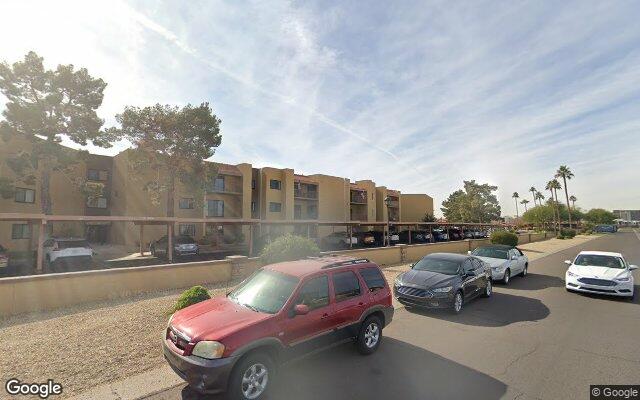
Full Inspection Record
Family reviews
No reviews yet — be the first to share your experience
Other memory care options nearby.
Open Wings Assisted Living Home Care
Sun City
Orange Garden Assisted Living LLC
Sun City
Arizuma Horizons Assisted Living Homes
Sun City
Royal Oaks Assisted Living Center
Sun City
Sun City West, Assisted Living & Memory Care
Sun City
Forever My Heart LLC
Sun City
Sun City Care LLC
Sun City
The Gardens of Sun City
Sun City