Well Heeled Adult Care 71 Street, LLC.
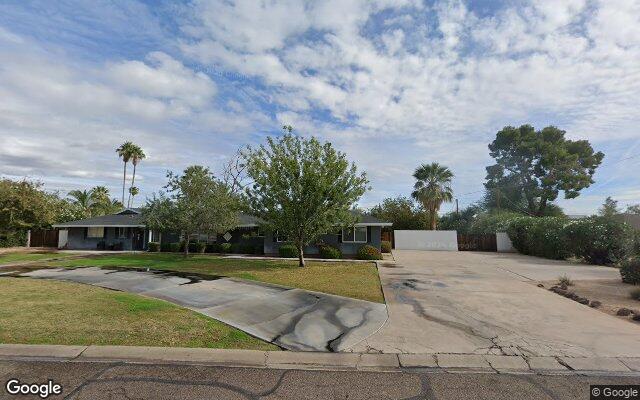
A medium home, reviewed on public record.
© Google Street View
Compared to 1,649 Arizona facilities with a similar number of beds.
Care · 36-month window. Higher percentile = better performance on inspection record. Source: Arizona Dept. of Health Services · Bureau of Residential Facilities Licensing.
among peers to rank.
Rankings based on 36-month ADHS inspection data. Severity and frequency: fewer citations = higher percentile. Repeat rate: lower repeat citation share = higher percentile.
Citation history, plotted month by month.
10 deficiencies on record. Each bar is a month with a citation.
Finding distribution
10 total · 36 monthsScope × Severity (CMS A–L)
Every inspection visit, verbatim.
3 inspections in the public record, most recent first. Plain-language summaries open first — click into any row for the full citation text.
2025-02-03Complaint InvestigationHigh Risk · 5 findings
“J. If a manager has a reasonable basis, according to A.R.S. § 46-454 , to believe abuse, neglect or exploitation has occurred on the premises or while a resident is receiving services from an assisted living facility's manager, caregiver, or assistant caregiver, the manager shall: 1. If applicable, take immediate action to stop the suspected abuse, neglect, or exploitation; 2. Report the suspected abuse, neglect, or exploitation of the resident according to A.R.S. § 46-454; 3. Document: a. The suspected abuse, neglect, or exploitation; b. Any action taken according to subsection (J)(1); and c. The report in subsection (J)(2); 4. Maintain the documentation in subsection (J)(3) for at least 12 months after the date of the report in subsection(J)(2); 5. Initiate an investigation of the suspected abuse, neglect, or exploitation and document the following information within five working days after the report required in subsection (J)(2): a. The dates, times, and description of the suspected abuse, neglect, or exploitation; b. A description of any injury to the resident related to the suspected abuse or neglect and any change to the resident's physical, cognitive, functional, or emotional condition; c. The names of witnesses to the suspected abuse, neglect, or exploitation; and d. The actions taken by the manager to prevent the suspected abuse, neglect, or exploitation from occurring in the future; and 6. Maintain a copy of the documented information required in subsection (J)(5) for at least 12 months after the date the investigation was initiated.”
“A. A manager shall ensure that: 8. A manager, a caregiver, and an assistant caregiver, or an employee or a volunteer who has or is expected to have more than eight hours per week of direct interaction with residents, provides evidence of freedom from infectious tuberculosis: a. On or before the date the individual begins providing services at or on behalf of the assisted living facility, and b. As specified in R9-10-113;”
“F. A manager of an assisted living facility authorized to provide directed care services shall ensure that: 2. There is a means of exiting the facility for a resident who does not have a key, special knowledge for egress, or the ability to expend increased physical effort that meets one of the following: a. Provides access to an outside area that: i. Allows the resident to be at least 30 feet away from the facility, and ii. Controls or alerts employees of the egress of a resident from the facility;”
“D. When a resident has an accident, emergency, or injury that results in the resident needing medical services, a manager shall ensure that a caregiver or an assistant caregiver: 2. Documents the following: a. The date and time of the accident, emergency, or injury; b. A description of the accident, emergency, or injury; c. The names of individuals who observed the accident, emergency, or injury; d. The actions taken by the caregiver or assistant caregiver; e. The individuals notified by the caregiver or assistant caregiver; and f. Any action taken to prevent the accident, emergency, or injury from occurring in the future.”
“A. A manager shall ensure that: 11. Poisonous or toxic materials stored by the assisted living facility are maintained in labeled containers in a locked area separate from food preparation and storage, dining areas, and medications and are inaccessible to residents;”
2024-12-04Complaint InvestigationHigh Risk · 5 findings
“Based on interview and record review, the manager failed to document an alleged incident of abuse/neglect according to Arizona Revised Statutes (A.R.S.) \'a7 46-454. The deficient practice posed a risk as the Department was unable to assess if there was an immediate health and safety concern for residents who resided in the assisted living facility. Findings include: 1. During an interview, O1 reported a concern that R1 fell at the facility on November 9, 2024, had an injury (a hip fracture), and was not treated until the following day. Additionally, O1 was not contacted until a day later. 2. During an interview, E1 reported an APS investigator (O2) visited the facility to investigate an allegation of abuse or neglect. E1 reported the allegation indicated R1 was not provided services timely following a fall. E1 reported R1 had a fall after breakfast (not time reported), was assessed by staff and seemed to be ok; however, approximately 45 minutes later R1 appeared to be exhibiting pain so the staff contacted R1's POA R1 was transported to the hospital. 3. In record review, R1's medical record included an incident report which documented R1 had a fall on November 10, 2024, at 2:14pm. The report indicated R1 did not sustain an injury, and O1 was notified of the fall at 11:30am (prior to the fall occurring). 4. During an interview, O2 reported [O2] investigated an allegation of abuse/neglect at the facility, related to R1, on November 26, 2024. During the investigation, E1 reported to O2 that at approximately 2:14pm (as indicated on the incident report), R1 got up from napping in bed (and possibly turned off the bed alarm), and fell while attempting to use the restroom. E1 showed O2 R1's bed, and the bed alarm, and where the accident happened. 5. During an interview, E1 reported R1 was anxious and agitated during breakfast on November 10, 2024, the caregivers calmed [R1], and left [R1] in [R1's] "favorite chair" by the entry way. The caregivers went to provide services for another resident, in the resident's bedroom, at which time R1 got up from the chair and wandered into another bedroom and fell. Approximately 45 minutes later, the resident exhibited pain and the facility contacted O1, and emergency medical services, and R1 was transported to the hospital, where it was determined R1 had a hip fracture. E1 reported the incident report was completed at 2:14pm; however, the resident fall was after breakfast, and reported the documentation in R1's record was inaccurate, and did not include the time of the accident/injury, and also did not include the action taken to prevent the accident/injury from occurring in the future. E1 did not provide the "time" of the incident, just stated sometime after breakfast.”
“Based on documentation review, observation, record review, and interview, for one of five caregivers reviewed, the manager failed to ensure an employee provided evidence of freedom from infectious tuberculosis (TB), as required by R9-10-113. The deficient practice posed a potential health and safety risk of TB exposure to residents and staff. Findings include: 1. R9-10-113.A states "If a health care institution is subject to the requirements of this Section, as specified in an Article in this Chapter, the health care institution's chief administrative officer shall ensure that the health care institution establishes, documents, and implements tuberculosis infection control activities that...2. Include: a. For each individual who is employed by the health care institution, provides volunteer services for the health care institution, or is admitted to the health care institution and who is subject to the requirements of this Section, screening, on or before the date specified in the applicable Article of this Chapter, that consists of: i. Assessing risks of prior exposure to infectious tuberculosis, ii. Determining if the individual has signs or symptoms of tuberculosis, and iii. Obtaining documentation of the individual's freedom from infectious tuberculosis according to subsection (B)(1)..." 2. A review of the Centers for Disease Control and Prevention website revealed a web page titled, "Guidelines for Preventing the Transmission of Mycobacterium tuberculosis in Health-Care Settings, 2005." The web page stated, "If TST (Mantoux Skin Test) is used for baseline testing, two-step testing is recommended for HCWs (Health Care Workers) whose initial TST results are negative. If the first-step TST result is negative, the second-step TST should be administered 1-3 weeks after the first TST result was read." 3. In observation, E4 was observed working at the facility during the inspection. 4. In record review, E4's personnel record (hired as a caregiver on April 30, 2024), did not include documentation of freedom from infectious TB, and did not include documentation of a baseline screening consisting of assessing risks of prior exposure to TB, and determining if the individual had signs or symptoms of TB, as required. 5. During an interview, E3 and E4 reported [E4] worked the night shifts alone Sundays - Thursdays from 11pm - 7am. E4 reported [E4] did not provide the facility with documentation of evidence from TB, and the required documentation of a screening and risk assessment for TB. E1 acknowledged E4's personnel record did not include documentation E4 provided evidence of freedom from TB, as required by R9-10-113.”
“Based on documentation review, observation, and interview, for a facility that provided directed care services, the manager failed to ensure there was a means of exiting the facility that provided access to an outside area which controlled or alerted employees of the egress of a resident from the facility. The deficient practice posed a risk if the facility was unaware of the general or specific whereabouts of a resident. Findings include: 1. A review of the license issued by the Department revealed the facility was licensed at the directed care level. 2. During an environmental inspection with E3, the Compliance Officer observed a hallway door to the backyard (by the laundry and resident bedrooms) did not control or alert employees of the egress of a resident. The door was unlocked, and did not have an alarm. 3. In an interview, E1 and E3 acknowledged the door to the backyard did not control or alert employees of the egress of a resident from the facility.”
“Based on interview and record review, for one resident who had an emergency resulting in the need for medical services, the manager failed to ensure when a resident had an accident/injury resulting in the resident needing medical services, a caregiver documented the time of the accident, and any action taken to prevent the accident/injury from occurring in the future. The deficient practice posed a risk if the facility did accurately document the time of the accident, did not take action to prevent an accident, emergency, or injury from occurring in the future to ensure the health and safety of residents, and the facility provided false or misleading information to the Department. Findings include: 1. During an interview, O1 reported a concern that R1 fell at the facility on November 9, 2024, had an injury (a hip fracture), and was not treated until the following day. Additionally, O1 was not contacted until a day later. 2. In record review, R1's medical record included an incident report which documented R1 had a fall on November 10, 2024, at 2:14pm. The report indicated R1 did not sustain an injury, and O1 was notified of the fall at 11:30am. The report did not include action taken to prevent the accident from occurring in the future. 3. During an interview, O2 reported [O2] investigated an allegation of abuse/neglect at the facility, related to R1, on November 26, 2024. During the investigation, E1 reported to O2 that at approximately 2:14pm (as indicated on the incident report), R1 got up from napping in bed (and possibly turned off the bed alarm), and fell while attempting to use the restroom. E1 showed O2 R1's bed, and the bed alarm, and where the accident happened. 4. During an interview, E1 reported R1 was anxious and agitated during breakfast on November 10, 2024, the caregivers calmed [R1], and left [R1] in [R1's] "favorite chair" by the entry way. The caregivers went to provide services for another resident, in the resident's bedroom, at which time R1 got up from the chair and wandered into another bedroom and fell. Approximately 45 minutes later, the resident exhibited pain and the facility contacted O1, and emergency medical services, and R1 was transported to the hospital, where it was determined R1 had a hip fracture. E1 reported the incident report was completed at 2:14pm; however, the resident fall was after breakfast, and reported the documentation in R1's record did not include the accurate time of the accident/injury, and action taken to prevent the accident/injury from occurring in the future. E1 did not provide the "time" of the incident, just stated sometime after breakfast.”
“Based on observation and interview, the manager failed to ensure toxic materials stored by the facility were stored in a locked area and inaccessible to residents. The deficient practice posed a risk to the physical health and safety of a resident if toxic materials were accessible. Findings include: 1. During an environmental inspection with E3, the Compliance Officer observed a hallway by resident rooms had an unlocked door to the laundry room. The laundry room contained cleaning supplies, to include, but not limited to; containers of Clorox, Fabulosa, Windex, Clorox spray, Pine Sol and Mold Armor. An unlocked cabinet under the kitchen sink had a bottle of Oven Grill and Fryer cleaner. An unoccupied bedroom was unlocked and had painting supplies on the floor, including a can of paint. 2. During an interview, E1 acknowledged the toxic materials were not stored in a locked area and inaccessible to residents.”
2024-01-29Annual Compliance VisitNo findings
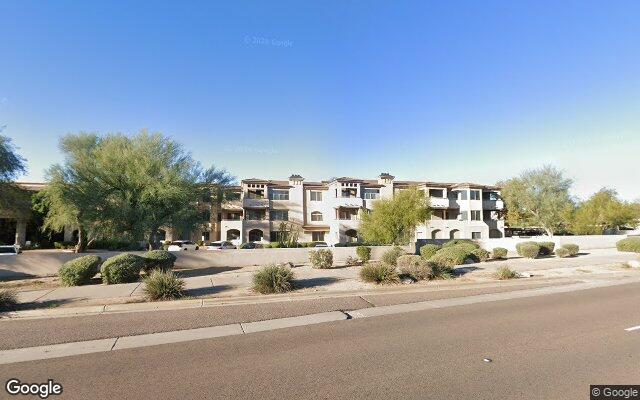
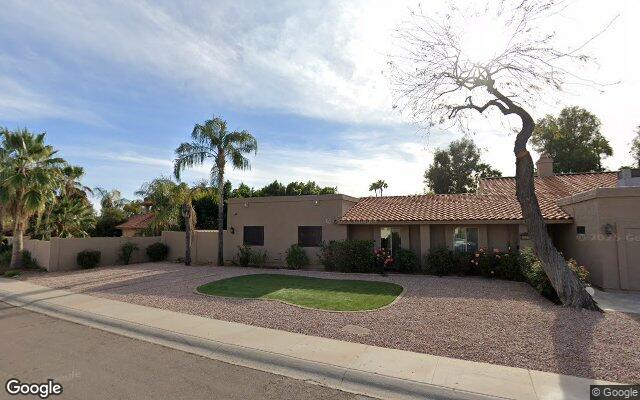
Other facilities in Scottsdale.
Other memory care facilities near Scottsdale with similar care offerings.
Contract Decoder
Family reviews
No reviews yet — be the first to share your experience