The Greenway Manor II.
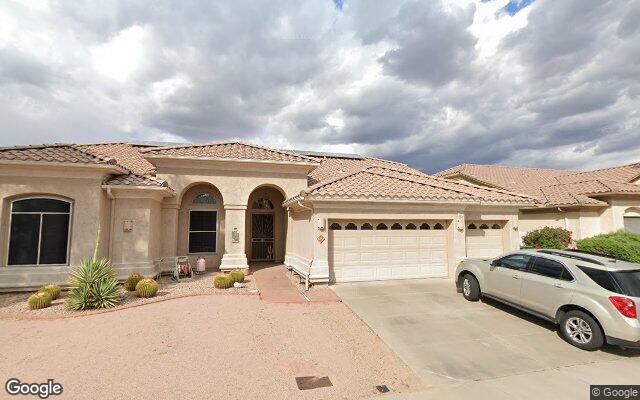
A medium home, reviewed on public record.
© Google Street View
Compared to 1,649 Arizona facilities with a similar number of beds.
Care · 36-month window. Higher percentile = better performance on inspection record. Source: Arizona Dept. of Health Services · Bureau of Residential Facilities Licensing.
among peers to rank.
on file.
Rankings based on 36-month ADHS inspection data. Severity and frequency: fewer citations = higher percentile. Repeat rate: lower repeat citation share = higher percentile.
Citation history, plotted month by month.
14 deficiencies on record. Each bar is a month with a citation.
Finding distribution
14 total · 36 monthsScope × Severity (CMS A–L)
Every inspection visit, verbatim.
2 inspections in the public record, most recent first. Plain-language summaries open first — click into any row for the full citation text.
2025-03-18Complaint InvestigationR9-10-806.A.4 · 5 findings
“Based on record review and interview, for two of two caregivers reviewed, the manager failed to ensure a caregiver's skills and knowledge were verified and documented before the caregiver provided physical health services to a resident. The deficient practice posed a health and safety risk to residents if a caregiver did not have the documented skills and knowledge to provide the required services for residents. Findings include: 1. In record review, R1's medical record included documentation of an "Activities of Daily Living Chart," (ADL) which indicated R1 received "iSOSOURCE HN 1.2 kcal/ml 8.45 oz." 2 cartons at 9am, and one carton at 12pm, administered by E1. The ADL chart indicated E1 or E2 administered the formula four times a day to R1 in March 2025. 2. In record review, the personnel records for E1 (hired as a caregiver on June 7, 2021) and E2 (hired as a caregiver on September 15, 2023) included documentation of a form titled "Employee Qualifications and Skills." The Employee Qualifications and Skills form documented "qualifications and skills verified" and included several areas of services, including but not limited to: "Feeding residents with swallowing difficulties and Feeding devices including feeding tubes..." and was signed as completed on the date of hire for E1 and E2. No other documentation of training on tube feeding services was found in the personnel records. 3. During an interview with E1 and E2, they reported that upon hire, the "qualifications and skills verified" checklist was completed based on the reported "experience" the employee had, and that actual training on tube feeding was not provided at the time of hire. E1 and E2 reported that when R1 started tube feeding services, E1 and E2 were provided training by a nurse, who provided the tube feeding equipment, and by a "person" from a home health agency. However, the documentation provided to the Compliance Officer did not indicate that E1 and E2 were trained on providing tube feeding services to R1. E1 and E2 reported they would obtain the documentation of the training; however, no further documentation was provided during the inspection. 4. During an interview, E1, E2, and E4 acknowledged the personnel records for the caregivers did not include documentation of the verification of the caregivers' skills and knowledge for providing tube feeding services to a resident, as required.”
“Based on documentation review, record review, and interview, for two of three residents reviewed, the manager failed to ensure a resident had a written service plan that included the correct level of service the resident was expected to receive. The deficient practice posed a risk as the service plan did not reinforce and clarify services to be provided to a resident. Findings include: A.R.S. § 36-401.A.50. defines "Supervisory care services" to mean general supervision, including daily awareness of resident functioning and continuing needs, the ability to intervene in a crisis and assistance in the self-administration of prescribed medications. A.R.S. § 36-401.A.41. defines "Personal care services" to mean assistance with activities of daily living that can be performed by persons without professional skills or professional training and includes the coordination or provision of intermittent nursing services and the administration of medications and treatments by a nurse who is licensed pursuant to title 32, chapter 15 or as otherwise provided by law. A.R.S. § 36-401.A.16. defines "Directed care services" means programs and services, including supervisory and personal care services, that are provided to persons who are incapable of recognizing danger, summoning assistance, expressing need or making basic care decisions. 1. In record review, R3's medical record included a service plan, dated January 28, 2025. The service plan documented R3 received directed care services; however, documented R3 was oriented to person, place, time, and situation. 2. During an interview, R3 presented as alert and oriented, and responded appropriately to questions. No confusion was observed. 3. During an interview, E1 and E2 reported R3 was alert and oriented, was able to make needs known, and was able to participate in directing (R3's) care. E1 and E4 acknowledged R3's service plan did not include the correct level of care required by R3. 4. In record review, R4's service plan, dated July 28, 2024, documented R4 received supervisory care services. However, R4's service plan documented, "Manager/caregiver responsible for filling mediset... Manager/caregiver will administer and document medications as ordered by PCP..." 5. During an interview, E1 and E2 reported R4 received supervisory care services; however, reported R4 received medication administration services, which required R4 to be at the personal care level of services provided. E1 and E4 acknowledged R4's service plan did not include the correct level of care required by R4.”
“Based on observation, record review, documentation review, and interview, for one of three residents who received medication administration services, the manager failed to ensure medication was stored by the assisted living facility. The deficient practice posed a risk to a resident, who was determined to need medication administration services, and medications were not stored by the facility. Findings include: 1. During an environmental inspection with E2, at approximately 9:10am the Compliance Officer (CO) observed medication tablets on R4's bedside table. 2. In record review, R4's service plan (received supervisory care services), dated July 28, 2024, included checkmarks which indicated the following, "Manager/Caregiver will administer and document medications as ordered by PCP." and "Resident Stores Medication in a Lock Box in their room and requires no assistance with medication," and "Manager/Caregiver Responsible for filling mediset." 3. In documentation review, a facility policy, titled "Medications....Part III - Medication Administration, Records and Monitoring," on page 5, documented, "Medication administration is provided to all residents unable to self-administer their medication or not receiving assistance in the self-administration of medication. The authorized caregiver is to provide the medication to the resident by placing the medication in a cup, spoon or appropriate container and then in the resident's mouth, as ordered by a medical practitioner. The facility is storing all the medication for residents receiving medication administration. 9. All scheduled medication will be administered to the residents no more than 60 minutes prior to the scheduled time of medication administration or no more than 60 minutes after the scheduled time of medication administration. 4. During an interview, E2 reported that R4 did not want to take the medications all at once, so the medications were left on the bedside table for R4 to take when R4 was ready. E1 and E2 reported R4's medications were stored by the facility, and administered to R4 by the caregivers, and R4's medications were not stored in a lock box in R4's room. E1, E2, and E4 acknowledged the resident's service plan indicated R4 received medication administration services, and received medication administration, and the medications were left on R4's bedside table and were not observed to be taken by R4 at the time of administration.”
“Based on documentation review, record review, and interview, for three of three residents reviewed, the facility failed to maintain a standardized form for each resident that included the information prescribed in A.R.S. 36-420.04. The deficient practice posed a risk as required patient information was not prepared in case of an emergency. Findings include: 1. A.R.S. 36-420.04.A states, "A. An assisted living center or assisted living home that contacts an emergency responder on behalf of a resident shall provide to the emergency responder a written document that includes all of the following: 1. The reason or reasons the emergency responder was requested on behalf of the resident. 2. Whether the resident receives medication services and, if the resident has provided this information to the assisted living center or assisted living home, a list of all the resident's prescription and over-the-counter medications, their dosages and how frequently they are administered. 3. The name, address and telephone number of the resident's current pharmacy. 4. A list of any known allergies to any medications, additives, preservatives or materials like latex or adhesive. 5. The name and contact information for the resident's primary care physician and power of attorney or authorized representative. 6. Basic information about the resident's physical and mental conditions and basic medical history, such as having diabetes or a pacemaker or experiencing frequent falls or cardiovascular and cerebrovascular events, as well as dates of recent episodes, if known. 7. The point-of-contact information for the assisted living center or assisted living home, including the telephone number, if available, cell phone number and email address. A point of contact must be available to respond to questions regarding the information provided twenty-four hours a day, seven days a week. 8. A copy of the resident's health insurance portability and accountability act (HIPAA) release authorizing a receiving hospital to communicate with the assisted living center or assisted living home to plan for the resident's discharge. This paragraph does not preclude a resident from revoking the resident's health insurance portability and accountability act release authorization. 9. A copy of the resident's advance directives, if any, on file at the assisted living center or assisted living home. This paragraph does not preclude a resident from revoking or modifying the resident's advance directives." 2. In record review the medical records for R1, R2, and R3 did not include a standardized form for each resident that included the information prescribed in A.R.S. 36-420.04, noted above. 3. During an interview, E1 and E4 acknowledged the documentation provided to the Compliance Officer did not include the required information prescribed in A.R.S. 36-420.04.A.”
“Based on documentation review, record review, and interview, for one resident who required emergency medical services (EMS), the assisted living home failed to maintain a copy of documentation provided to an emergency responder. The deficient practice posed a risk if the Department was unable to verify the required documentation was provided during a resident emergency. Findings include: 1. A.R.S. 36-420.04. requires: Emergency responders; patient information; hospitals; discharge planning; patient screenings; discharge document A. An assisted living center or assisted living home that contacts an emergency responder on behalf of a resident shall provide to the emergency responder a written document that includes all of the following: 1. The reason or reasons the emergency responder was requested on behalf of the resident. 2. Whether the resident receives medication services and, if the resident has provided this information to the assisted living center or assisted living home, a list of all the resident's prescription and over-the-counter medications, their dosages, and how frequently they are administered. 3. The name, address, and telephone number of the resident's current pharmacy. 4. A list of any known allergies to any medications, additives, preservatives or materials like latex or adhesive. 5. The name and contact information for the resident's primary care physician and power of attorney or authorized representative. 6. Basic information about the resident's physical and mental conditions and basic medical history, such as having diabetes or a pacemaker or experiencing frequent falls or cardiovascular and cerebrovascular events, as well as dates of recent episodes, if known. 7. The point-of-contact information for the assisted living center or assisted living home, including the telephone number, if available, cell phone number and email address. A point of contact must be available to respond to questions regarding the information provided twenty-four hours a day, seven days a week. 8. A copy of the resident's health insurance portability and accountability act release authorizing a receiving hospital to communicate with the assisted living center or assisted living home to plan for the resident's discharge. This paragraph does not preclude a resident from revoking the resident's health insurance portability and accountability act release authorization. 9. A copy of the resident's advance directives, if any, on file at the assisted living center or assisted living home. This paragraph does not preclude a resident from revoking or modifying the resident's advance directives. 2. In record review, R1's medical record (received directed care services) included documentation that emergency services were called for R1 on August 2, 2024, January 9, 2025, and March 9, 2025. R1's record did not include documentation that the facility provided the emergency responder with written documentation as required by A.R.S. 36-420, noted in paragraph #1. 3. During an interview, E1 reported the required documentation was provided to the emergency responder; however, a copy of the documentation provided to the emergency responder was not maintained by the facility. E1 and E4 acknowledged the facility was required to maintain a copy of the documentation provided to an emergency provider.”
2024-02-12Complaint InvestigationA.A.C. · 9 findings
“Based on record review and interview, for two of three residents reviewed, the manager failed to ensure a written service plan included the signature and date from the resident or resident's representative. The deficient practice posed a health and safety risk if the resident or the resident's representative did not acknowledge the services that were to be provided. Findings include: 1. In record review, R1's service plans (received directed care services), dated October 11, 2023, and January 1, 2024, were not signed by R1's representative. 2. In record review, R2's service plan (received directed care services), dated December 28, 2023, was not signed by R2's representative. 3. During an interview, E1 reported R1 and R2 had a representative/Power of Attorney, and acknowledged the residents' service plans were not signed and dated, by the residents' representatives.”
“Based on record review and interview, for two of three resident reviewed, the manager failed to ensure a resident's medical record contained a copy of the health care power of attorney (POA). The deficient practice posed a risk if the facility did not have the required legal documentation of the resident's responsible party. Findings include: 1. In record review, the medical records for R1 (received directed care services) and R3 (received personal care services) did not include documentation of a copy of their POA documentation. 2. In an interview, E1 reported R1 and R3 both had a POA, and was unable to locate the copy of the POA documentation.”
“Based on observation, record review, and interview, for one resident reviewed, who was unable to walk and receiving directed care services, the manager failed to ensure the resident's primary care provider (PCP) or other medical practitioner (MP) examined the resident at least every six months throughout the duration of the resident's condition, reviewed the facility's scope of services, and signed and dated a determination stating the resident's needs were being met by the facility. The deficient practice posed a health risk to a resident if a resident's condition was not reviewed by a PCP or MP, to approve a resident's stay at the facility. Findings include: 1. In observation, the surveyor observed R1 in bed during the inspection. 2. In record review, R1's medical record included a signed and dated determination on April 11, 2023; however, did not include documentation of a signed and dated determination every six months since. 3. During an interview, E1 reported R1 was unable to walk since acceptance at the facility, and the condition persisted. E1 and E2 acknowledged R1's record did not include documentation every six months from the PCP or MP, stating the resident's needs were being met by the facility.”
“Based on observation, documentation, review, and interview, the manager failed to ensure medication stored by the assisted living facility was stored in a separate locked room, closet, cabinet, or self-contained unit used only for medication storage. Findings include: 1. During an environmental inspection with E1, the Compliance Officer observed an unlocked refrigerator which stored food, had a package of Lorazepam oral medication (a schedule IV controlled substance) stored on a shelf in the refrigerator. 2. In documentation review, the facility's medication policies, page 3, documented, "...Medications that need refrigeration will be stored in a locked box, in the facility refrigerator or in a separate locked refrigerator dedicated only for medication storage. 3. During an interview, E1 reported the Lorazepam medication belonged to a resident who no longer resided at the facility. E1 and E2 acknowledged the medication was not stored in a separated locked area used only for medication storage. This is a repeat deficiency from the compliance inspection conducted on October 20, 2022.”
“Based on observation, documentation review, and interview, the manager failed to ensure policies and procedures were implemented for discarding medication. The deficient practice posed a health and safety risk if medications, including narcotics, were not disposed of, as required. Findings include: 1. During an environmental inspection with E1, the Compliance Officer observed an unlocked refrigerator which stored food, and had a package of Lorazepam oral medication syringes (a schedule IV controlled substance) stored on a shelf in the refrigerator. 2. In documentation review, a facility policy, titled, "... Disposal (discarding) of Medication Including Opioids and Narcotics..." page 9, documented, "... On a monthly basis the facility manager or ... designee will check all medication in the facility to identify and locate any discontinued medication (by physician's or medical practitioner's order), expired medication, including medication of deceased residents... Such medication will be disposed of by the facility manager or ... designee on the last day of the month, as follows: ... offered back to the resident's representative, ... returned to pharmacy, or ... disposed of by mixing the pills with hot water and cooking flour... The medication disposal will be recorded in the Medication Disposal Form..." 3. During an interview, E1 reported the Lorazepam medication belonged to a resident who was deceased E1 reported the residency was terminated on July 9, 2023. E1 and E2 acknowledged the medication was not discarded per the facility's policies and procedures.”
“Based on observation, record review, documentation review, and interview, for one of three residents reviewed, who received a controlled substance, the manager failed to ensure policies and procedures were implemented for inventorying controlled substances. The deficient practice posed a risk if controlled substances were not inventoried and accounted for by the facility. Findings include: 1. In observation, R1 had Morphine medication (a schedule II controlled substance) stored by the facility. 2. In record review, R1's medical record (received directed care and medication administration services), included a document titled, "PRN Medication Chart," which documented R2 received the Morphine medication on December 4 x 2, December 18, and December 20, 2023. The documentation did not include an inventory of the medication. 3. In documentation review, the facility's medication policies, page 3, documented, "... When the opioids and narcotic medications is received at the facility the manager designee will check the packaging... The opioids and narcotic medications will be inventoried and placed in the medication storage area. Daily narcotics or controlled substances administration will be recorded on each resident Narcotic Administration Record..." 4. During an interview, E1 and E2 acknowledged an inventory of R1's controlled substance was not maintained.”
“Based on observation, and interview, the manager failed to ensure soiled linen and soiled clothing stored by the facility were stored in closed containers. Findings include: 1. During an environmental inspection with E1, the compliance officer observed the laundry room had two linen containers including one container filled with soiled linen, which was not stored in a closed container. 2. During an interview, E1 and E2 acknowledged the soiled linen and clothing stored by the facility was not stored in a closed container.”
“Based on observation, documentation review and interview, for one pet observed on the premises, the manager failed to ensure pets were licensed consistent with local ordinances. Findings include: 1. During an environmental inspection, the surveyor observed one dog on the premises. 3. A review of documentation revealed D1 did not have documentation showing current licensing with the local ordinance (which is required annually by Maricopa County). 3. During an interview, E1 and E2 acknowledged the facility did not have documentation the dog was licensed consistent with the local ordinance.”
“Based on observation, record review, documentation review, and interview, for one of three residents reviewed, and receiving opioid medication, without an active malignancy or an end of life condition, the manager failed to ensure an individual, authorized to administer opioids, documented in the resident's medical record an identification of the resident's need for the opioid before the opioid was administered, and the monitoring of the effect of the opioid administered. The deficient practice posed a risk to a resident if a resident's pain was not identified, monitored and documented, as required. Findings include: 1. In observation, R1 had Morphine medication (a schedule II controlled substance and opioid) stored by the facility. 2. In record review, R1's medical record (received directed care and medication administration services) included a medication order for Morphine concentrate 5ml, every 1 hour as needed. R1's record included documentation R1 was administered the Morphine medication on December 4, (x2), December 18, and December 20, 2023. R1's record included documentation of an identification of the resident's need for the opioid before the opioid was administered, as "pain," which was a prefilled typed in statement, and did not include documentation of the monitoring of the effect of the opioid administered. 3. In documentation review, the facility's medication policies, page 6, documented, "... Facility personnel will provided opioid medication... will identify and document the level of pain and/or the resident's need for the opioid medication... all residents who are subject to receiving opioid medication will have their response to the opioid monitored by checking on the resident within the first half an hour after administration, and/or at two hours after administration, and/or then at 4 hours, or as often as is common sense and as the particular case requires. Effectiveness of the opioid administered will be documented in the NAR at the two hour mark or every time a check has been performed... Carefully document when and how much doses given and doses remaining... 4. During an interview, E1 reported the resident received opioid medication, and acknowledged the residents' record did not include documentation of an identification of the residents' need for the opioid before the opioid was administered, and monitoring of the effect of the opioid administered, according to the facility's policies and procedures.”
Other facilities in Scottsdale.
Other memory care facilities near Scottsdale with similar care offerings.
Full Inspection Record
Family reviews
No reviews yet — be the first to share your experience