Las Fuentes Assisted Living II.
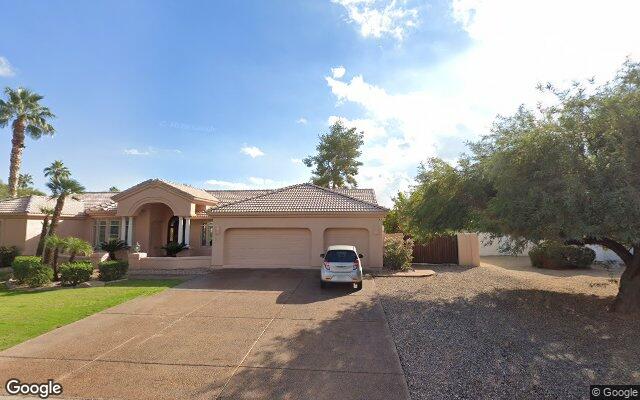
A medium home, reviewed on public record.
© Google Street View
Compared to 1,649 Arizona facilities with a similar number of beds.
Care · 36-month window. Higher percentile = better performance on inspection record. Source: Arizona Dept. of Health Services · Bureau of Residential Facilities Licensing.
among peers to rank.
Rankings based on 36-month ADHS inspection data. Severity and frequency: fewer citations = higher percentile. Repeat rate: lower repeat citation share = higher percentile.
Citation history, plotted month by month.
9 deficiencies on record. Each bar is a month with a citation.
Finding distribution
9 total · 36 monthsScope × Severity (CMS A–L)
Every inspection visit, verbatim.
3 inspections in the public record, most recent first. Plain-language summaries open first — click into any row for the full citation text.
2026-06-26Complaint InvestigationNo findings
2026-02-19Annual Compliance VisitA.A.C. · 3 findings
“Based on record review and interview, the assisted living home failed to maintain a standardized form for each resident that included the information prescribed in subsection A of this section, for one of three residents sampled. The deficient practice posed a risk if the emergency responder was not aware of critical health information for the resident. Findings include: 1. A review of R1's medical records revealed no documentation of the a standardized form that included the following: The reason or reasons the emergency responder was requested on behalf of the resident; Whether the resident receives medication services and, if the resident has provided this information to the assisted living center or assisted living home, a list of all the resident's prescription and over-the-counter medications, their dosages and how frequently they are administered; The name, address and telephone number of the resident's current pharmacy; A list of any known allergies to any medications, additives, preservatives or materials like latex or adhesive; The name and contact information for the resident's primary care physician and power of attorney or authorized representative; Basic information about the resident's physical and mental conditions and basic medical history, such as having diabetes or a pacemaker or experiencing frequent falls or cardiovascular and cerebrovascular events, as well as dates of recent episodes, if known; The point-of-contact information for the assisted living center or assisted living home, including the telephone number, if available, cell phone number and email address. A point of contact must be available to respond to questions regarding the information provided twenty-four hours a day, seven days a week; A copy of the resident's health insurance portability and accountability act release authorizing a receiving hospital to communicate with the assisted living center or assisted living home to plan for the resident's discharge. This paragraph does not preclude a resident from revoking the resident's health insurance portability and accountability act release authorization; A copy of the resident's advance directives, if any, on file at the assisted living center or assisted living home. This paragraph does not preclude a resident from revoking or modifying the resident's advance directives. 2. In an exit interview, findings were reviewed with E3, and no additional information was provided.”
“Based on record review and interview, the health care institution failed to ensure training and education related to recognizing the signs and symptoms of tuberculosis (TB) was provided annually to individuals employed by the health care institution, for one of two personnel sampled. The deficient practice posed a potential illness risk to residents. Findings include: 1. A review of E2’s personnel record revealed a hire date of March 13, 2024. The personnel record revealed no documentation of training on recognizing the signs and symptoms of TB. 2. In an exit interview, the findings were reviewed with E3, and no additional information was provided.”
“Based on observation and interview, the manager failed to ensure that poisonous or toxic materials stored by the assisted living facility were maintained in labeled containers in a locked area separate from food preparation and storage, dining areas, and medications, and were inaccessible to residents. The deficient practice posed a risk to physical health and safety of residents. Findings include: 1. During an environmental inspection of the facility, the Compliance Officer observed a gallon of "Downy Soft April Fresh Fabric Softener" on the table across from the laundry room. 2. The Compliance Officer also observed a bucket of an unknown powder-like substance on the ground next to the table across from the laundry room. 3. In an interview, E3 reported that the powder-like substance is used for laundry services. 4. In an exit interview, the findings were reviewed with E3, and no additional information was provided. 5. This is a repeat deficiency from the compliance inspection conducted on February 18, 2025.”
2025-02-18Annual Compliance VisitR9-10-811.C.13 · 6 findings
“Based on record review, and interview, for three of four residents reviewed, who received medication administration, the manager failed to ensure a resident's medical record included the dosage of medication administered to a resident and the name and signature of the individual administering medication. The deficient practice posed a risk if documentation of a medication administered to a resident did not include the dosage administered to the resident, ensuring the resident was administered the correct dosage per the resident's medication orders, and if the facility did not properly document medication administration for a resident with the name and signature of the individual administering medication. Findings include: 1. In record review, R1's medication administration record (MAR), dated February 2025, included documentation R1 received Insulin medication on a sliding scale. The resident's record included documentation of a medication order for "Give Humalog 10 units BEFORE every meal plus correction if PREMEAL glucose is over 150. 151-200 give additional 2 units 201-250 give additional 4 units 251-300 give additional 6 units 301-350 give additional 8 units 351-400 give additional 10 units Check glucose at bedtime: If glucose is over 200 at bedtime, give sliding scale: 201-250 give additional 2 units 251-300 give additional 4 units 301-350 give additional 6 units 351-400 give additional 8 units..." 2. In record review, R1's MAR, dated February 2025, indicated R1 received Humalog Insulin daily from February 1 through February 18, 2025. The documentation of Insulin administration for R1 did not include the dosage (Units) of Insulin administered to R1 on any dates of Insulin administration. Additionally, the MAR did not include documentation R1's blood sugar was checked/documented at the dinner meal on February 11, 2025, and at the lunch meal on February 12, and no documentation of any Insulin administration or caregiver's initials. 3. In record review, the MARs for R1, R3, and R4 indicated E4 administered medications to the residents during the month of February 2025; however, the medical records for the residents did not include the name and signature for E4. 4. During an interview, E6 reported being unaware of the need to document the dosage of Insulin which was administered to R1, and acknowledged the Insulin dosage administered to R1 was not documented by the caregiver, as required. E2 and E6 reported E4 administered medications to the residents and acknowledged the residents' medical records did not include the name and signature of E4.”
“Based on observation and interview, for a facility that provided directed care services, the manager failed to ensure there was a means of exiting the facility that provided access to an outside area that controlled or alerted employees of the egress of a resident from the facility. The deficient practice posed a risk if the facility was unaware of the general or specific whereabouts of a resident. Findings include: 1. A review of the license issued by the Department revealed the facility was licensed at the directed care level. 2. The Compliance Officer observed a common area patio door to the backyard did not control or alert employees of the egress of a resident. The door had a non-working alarm. 3. The Compliance Officer observed R5's bedroom had a patio door exiting to the backyard. The door had a working alarm; however, the alarm was turned off. 4. During an interview, E2 acknowledged the patio door was not controlled and did not alert the employees of the egress of a resident from the facility. E6 turned on the alarm to the door in R5's bedroom.”
“Based on observation, record review, and interview, for two of four residents reviewed, the manager failed to ensure a medication administered to a resident was documented in the resident's medical record. The deficient practice posed a health and safety risk to a resident if a manager or caregiver did not document a medication was administered. Findings include: 1. In observation, the Compliance Officer observed R3's and R4's medications were on site. 2. In record review, R3's medical record included a medication order for Lorazepam 1 mg tablet by mouth at 8pm bedtime for depression. R3's MAR, dated February 2025, did not include documentation of the signature of the caregiver indicating R1 received the Lorazepam medication on February 15 - 16, 2025. 3. In record review, R4's medical record included a medication order for Lorazepam 0.5 mg tablet, take one tablet by mouth two times a day. R4's MAR, dated February 2025, did not include documentation of the signature of the caregiver, on February 4, 13, and 14, 2025, indicating R4 was administered the medication. 4. During an interview, E6 reported the medications were administered to the residents; however, acknowledged the residents' MARs for February 2025, did not indicate the residents' medications were administered daily, as ordered, and signed by the caregivers to acknowledge medication administration.”
“Based on observation and interview, the manager failed to ensure medication stored by the assisted living facility was stored in a separate locked room, closet, cabinet, or self-contained unit used only for medication storage. The deficient practice posed a health and safety risk, if medications were accessible to residents. Findings include: 1. During an environmental inspection with E3, the Compliance Officer observed the residents' medications were stored in a cabinet in the kitchen/dining area. The cabinet was observed to be unlocked. A refrigerator in the same area contained a medication storage box, which was unlocked, and contained Insulin medications for R1. 2. During an interview, E1, acknowledged the medications were not stored in a locked manner and inaccessible to a resident.”
“Based on observation, record review, documentation review, and interview, for three of three residents reviewed, who received a controlled substance, the manager failed to ensure policies and procedures were implemented for inventorying controlled substances. The deficient practice posed a risk if controlled substances were not inventoried and accounted for by the facility. Findings include: 1. In observation, the Compliance Officer observed the medications for R2, R3 and R4 were on site, and included Lorazepam medication. 2. In record review, the MARs for R2, R3 and R4 included a prefilled document, for the month of February 2025, which included the date for each day of the month, the time (8:00pm), the amount given (1), and the remaining number of pills (count down each day through the end of February 2025, and into March 2025, for R2, R3 and R4). 3. In documentation review, a facility policy, titled "Medication Services," documented "... All controlled medications will be removed from the bubble pack punch cards from the highest number first to the lowest number and will not be removed by random or from lowest... to highest... The controlled substance sheet will be documented when a medication is removed from the bubble pack punch card and administered to a resident.... Each time a controlled medication is taken from the bubble pack or the medication bottle to administer the medication to the resident, the caregiver will document on the medication administration record that the medication was given and on the Controlled med count sheet to track the number of doses taken from the bubble pack or the Medication bottle..." 4. During an interview, E2 and E6 reported the caregiver prefilled the controlled substance documents to make it easier for them to document, and acknowledged medication administration was not documented, and an inventory of the controlled substances, was not implemented, as required.”
“Based on observation and interview, the manager failed to ensure toxic materials stored by the facility were stored in a locked area and inaccessible to residents. The deficient practice posed a risk to the physical health and safety of a resident if toxic materials were accessible. Findings include: 1. During an environmental inspection with E3 and E6, the Compliance Officer observed an unlocked cabinet beneath the kitchen sink, which contained several bottles of cleaners; including but not limited to, Pledge furniture cleaner (x2), Easy Off oven cleaner, Clorox bleach, Fabulosa, Lysol disinfectant spray (X 4), Lysol toilet bowl cleaner (x4), and Pine Sol. 2. During an interview, E1, and E6 acknowledged the toxic materials were not stored in a locked area and inaccessible to residents.”
Other facilities in Scottsdale.
Other memory care facilities near Scottsdale with similar care offerings.
Contract Decoder
Family reviews
No reviews yet — be the first to share your experience