Brookings.
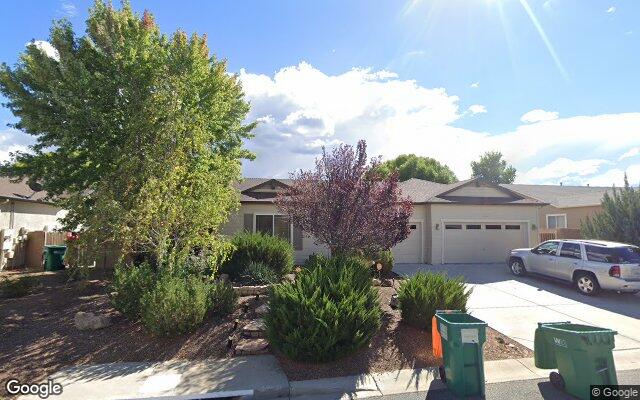
A medium home, reviewed on public record.
© Google Street View
Compared to 1,661 Arizona facilities with a similar number of beds.
Care · 36-month window. Higher percentile = better performance on inspection record. Source: Arizona Dept. of Health Services · Bureau of Residential Facilities Licensing.
among peers to rank.
Rankings based on 36-month ADHS inspection data. Severity and frequency: fewer citations = higher percentile. Repeat rate: lower repeat citation share = higher percentile.
Citation history, plotted month by month.
14 deficiencies on record. Each bar is a month with a citation.
Finding distribution
14 total · 36 monthsScope × Severity (CMS A–L)
Every inspection visit, verbatim.
2 inspections in the public record, most recent first. Plain-language summaries open first — click into any row for the full citation text.
2026-03-31Complaint InvestigationEnforcement · 13 findings
“Based on documentation review, record review, and interview, the governing authority failed to administer a training program for all staff regarding fall prevention and fall recovery, for three of three sampled staff. The deficient practice posed a risk if a staff member was not properly trained to assist a resident who had fallen and was unable to recover independently. Findings include: 1. A review of facility documentation revealed a policy and procedure (P&P) titled “Fall Prevention and Recovery.” The P&P stated, “Fall Prevention and Recovery Training is required upon hire and at least every 12 months thereafter.” The review further revealed a personnel schedule dated March 2026 which indicated E2 and E3 worked multiple shifts each week. The schedule did not include E1. 2. A review of E1’s personnel record revealed E1 was hired as the manager in 2015. The review revealed documentation of training regarding fall prevention and fall recovery dated November 10, 2022. However, the review revealed no such annual training after November 10, 2022. 3. In an interview, E1 reported E1’s last training regarding fall prevention and fall recovery was done in 2022. 4. A review of E2’s and E3’s personnel records revealed E2 and E3 were hired as caregivers on October 15, 2025, and September 8, 2025 respectively. However, the review revealed no documentation of training regarding fall prevention and fall recovery. 5. In an interview regarding E2’s personnel record, E1 stated, “It’s missing a lot and I’m in the process of fixing that.” 6. In the exit interview, the Compliance Officer reviewed the findings with E1, and E1 offered no further comment. This is a repeat citation from the compliance inspection conducted on March 10, 2025.”
“Based on record review, interview, and documentation review, the chief administrative officer failed to implement tuberculosis (TB) infection control activities, including annually providing training and education related to recognizing the signs and symptoms of TB, for one of one applicable sampled employee, and annually assessing the health care institution’s risk of exposure to infectious TB. The deficient practice posed a potential TB exposure risk to residents, and the required information could not be verified. Findings include: 1. A review of E1’s personnel record revealed E1 was hired as the manager in 2015. The review revealed documentation of training and education related to recognizing the signs and symptoms of TB dated November 10, 2022. However, the review revealed no such annual training after November 10, 2022. 2. In an interview, E1 reported that E1’s last TB training was done in 2022. 3. A review of facility documentation revealed no documentation demonstrating that facility personnel assessed the health care institution’s risk of exposure to infectious TB within the last two years. 4. In an interview, E1 reported that E1 normally stored documentation of the aforementioned assessments in E1’s Google Drive. However, E1 stated, “I don’t have that.” When the Compliance Officer asked if there might be documentation of the assessment elsewhere, E1 stated, “No, that would be it” in reference to the Google Drive folder. 5. In the exit interview, the Compliance Officer reviewed the findings with E1, and E1 offered no further comment. Technical assistance was provided on this rule during the compliance inspection conducted on March 10, 2025.”
“Based on documentation review, record review, and interview, the manager failed to ensure a caregiver’s skills and knowledge were verified and documented before the individual provided physical health services, for two of two sampled caregivers. The deficient practice posed a risk if a caregiver did not have the skills and knowledge necessary to meet a resident's needs. Findings include: 1. A review of facility documentation revealed a personnel schedule dated March 2026 which indicated E2 and E3 worked multiple shifts each week. 2. A review of E2’s and E3’s personnel records revealed E2 and E3 were hired as caregivers on October 15, 2025, and September 8, 2025 respectively. However, the review revealed no documentation of verification of E2’s and E3’s skills and knowledge. 3. A review of R1’s, R3’s, R4’s, R5’s, R6’s, R7’s, and R8’s medical records revealed documentation of assisted living services (ADLs) provided to the seven residents dated March 2026. The ADLs revealed E2 and E3 provided services to residents in March 2026, without documented verification of skills and knowledge. 4. In an interview regarding E2’s personnel record, E1 stated, “It’s missing a lot and I’m in the process of fixing that.” E1 further reported not being sure whether E2’s and E3’s skills and knowledge had been documented. 5. In the exit interview, the Compliance Officer reviewed the findings with E1, and E1 offered no further comment.”
“Based on documentation review, record review, and interview, the manager failed to ensure a caregiver provided evidence of freedom from infectious tuberculosis (TB) on or before the date the individual began providing services at or on behalf of the assisted living facility as specified in Arizona Administrative Code (A.A.C.) R9-10-113, for two of two sampled caregivers. The deficient practice posed a potential TB exposure risk to residents. Findings include: 1. R9-10-113(A)(2)(a)(i-iii) states: "If a health care institution is subject to the requirements of this Section, as specified in an Article in this Chapter, the health care institution's chief administrative officer shall ensure that the health care institution establishes, documents, and implements tuberculosis infection control activities that...2. Include: a. For each individual who is employed by the health care institution…and who is subject to the requirements of this Section, screening, on or before the date specified in the applicable Article of this Chapter, that consists of i. Assessing risks of prior exposure to infectious tuberculosis, ii. Determining if the individual has signs or symptoms of tuberculosis, and iii. Obtaining documentation of the individual's freedom from infectious tuberculosis according to subsection (B)(1)." 2. R9-10-113(B)(1)(a)(i) states: "B. A health care institution's chief administrative officer shall: 1. For an individual for whom baseline screening and documentation of freedom from infectious tuberculosis is required by an Article in this Chapter, as specified in subsection (A)(2)(a), obtain one of the following as evidence of freedom from infectious tuberculosis: a. Documentation of a negative Mantoux skin test or other tuberculosis screening test that: i. Is recommended by the U.S. Centers for Disease Control and Prevention (CDC)." 3. A review of the CDC website revealed a web page titled "Baseline Tuberculosis Screening and Testing for Health Care Personnel." The web page stated: "If the Mantoux tuberculin skin test (TST) is used for baseline testing of health care personnel, use two-step testing. Purpose: Two-step testing is recommended for the initial TB skin test for adults who may be tested periodically, such as health care personnel.” 4. A review of facility documentation revealed a personnel schedule dated March 2026 which indicated E2 and E3 worked multiple shifts each week. 5. A review of E2’s and E3’s personnel records revealed E2 and E3 were hired as caregivers on October 15, 2025, and September 8, 2025 respectively. However, the review revealed no documentation dated within the last year of assessing risks of prior exposure to infectious TB, determining if E2 and E3 had signs or symptoms of TB, or negative test(s). 6. A review of R1’s, R3’s, R4’s, R5’s, R6’s, R7’s, and R8’s medical records revealed documentation of assisted living services (ADLs) provided to the seven residents dated March 2026. The ADLs revealed E2 and E3 provided services to residents in March 2026, without documented verification of skills and knowledge. 7. In an interview regarding E2’s personnel record, E1 stated, “It’s missing a lot and I’m in the process of fixing that.” E1 reported E2 and E3 did not provide E1 with evidence of freedom from infectious TB. 8. In the exit interview, the Compliance Officer reviewed the findings with E1, and E1 offered no further comment. Technical assistance was provided on this rule during the compliance inspection conducted on March 10, 2025.”
“Based on record review and interview, the manager failed to ensure a manager provided current documentation of first aid (FA) training and cardiopulmonary resuscitation (CPR) training certification specific to adults before providing assisted living services to a resident, for one of one total manager. The deficient practice posed a risk if a manager was unable to meet a resident's needs during an emergency. Findings include: 1. A review of E1’s personnel record revealed E1 was hired as the manager in 2015. The review revealed documentation of FA and CPR training certification. However the training certification expired at the end of September 2025. The review revealed no current documentation of FA and CPR training certification. 2. A review of R1’s medical record revealed a service plan dated February 3, 2026, signed by E1. 3. In an interview, E1 reported E1 did FA and CPR training in October 2025. However, E1 reported the training was done online and did not include a demonstration of E1's ability to perform CPR. When the Compliance Officer asked if E1 had documentation of such training in October 2025, E1 stated, “I’m not going to be able to find that I don’t think.” 4. In the exit interview, the Compliance Officer reviewed the findings with E1, and E1 offered no further comment.”
“Based on documentation review, record review, and interview, the manager failed to ensure that a resident provided evidence of freedom from infectious tuberculosis (TB) before or within seven calendar days after the resident's date of occupancy and as specified in R9-10-113, for one of two residents sampled. The deficient practice posed a TB exposure risk to residents. Findings include: 1. R9-10-113(A)(2)(a)(iii) states: "A. If a health care institution is subject to the requirements of this Section, as specified in an Article in this Chapter, the health care institution's chief administrative officer shall ensure that the health care institution establishes, documents, and implements tuberculosis infection control activities that...2. Include: a. For each individual who is…admitted to the health care institution and who is subject to the requirements of this Section, screening, on or before the date specified in the applicable Article of this Chapter, that consists of: iii. Obtaining documentation of the individual's freedom from infectious tuberculosis according to subsection (B)(1)." 2. R9-10-113(B)(1)(a)(i) states: "B. A health care institution's chief administrative officer shall: 1. For an individual for whom baseline screening and documentation of freedom from infectious tuberculosis is required by an Article in this Chapter, as specified in subsection (A)(2)(a), obtain one of the following as evidence of freedom from infectious tuberculosis: a. Documentation of a negative Mantoux skin test or other tuberculosis screening test that: i. Is recommended by the U.S. Centers for Disease Control and Prevention (CDC)." 3. A review of R2's medical record revealed R2 was admitted to the assisted living facility more than seven days prior to the dates of the inspection. However, the review revealed no documentation of a negative Mantoux skin test or other TB screening test recommended by the CDC. 3. In an interview, when the Compliance Officer asked if E1 had R2’s TB test, E1 stated, “No.” 4. In the exit interview, the Compliance Officer reviewed the findings with E1, and E1 offered no further comment. Technical assistance was provided on this rule during the compliance inspection conducted on March 10, 2025.”
“Based on record review and interview, the manager failed to ensure a resident had a service plan that was established and documented, which included the amount, type, and frequency of assisted living services being provided to the resident, for one of two sampled residents. The deficient practice posed a risk as a service plan guided a resident’s care. Findings include: 1. A review of R1's medical record revealed a service plan dated February 3, 2026. The service plan indicated R1 required assistance with dressing and transferring, and received medication administration. However, the service plan did not include the frequency of these services. 2. In an interview, E1 reported R1 required assistance dressing two times per day and assistance transferring seven to eight times per day. E1 acknowledged that the service plan did not include the frequency of dressing, transferring, and medication administration. 3. In the exit interview, the Compliance Officer reviewed the findings with E1, and E1 offered no further comment. Technical assistance was provided on this rule during the compliance inspection conducted on March 10, 2025.”
“Based on record review and interview, the manager failed to ensure a caregiver or an assistant caregiver documented the services provided to a resident in the resident's medical record, for seven of ten total residents. The deficient practice posed a risk as services could not be verified as provided against a service plan and the Department was provided false or misleading information. Findings include: 1. A review of R1's medical record revealed a service plan dated February 3, 2026. The service plan indicated R1 required incontinence checks 12 times per day (“Q2 hour”), and assistance dressing and transferring. The review further revealed documentation of assisted living services (ADLs) provided to R1 dated March 2026. However, the ADLs revealed the following: - Documentation demonstrating R1 did not receive assistance dressing in the evening on March 15, 19, and 29, 2026; - Documentation demonstrating R1 did not receive incontinence checks at 12:00 AM, 4:00 AM, 6:00 PM, and 8:00 PM on March 15 and 29, 2026; - Documentation demonstrating R1 did not receive incontinence checks at 12:00 AM, 4:00 AM, and 8:00 PM on March 19, 2026; - Documentation demonstrating R1 did not receive incontinence checks at 12:00 AM and 4:00 AM on March 31, 2026; - No documentation demonstrating R1 received incontinence checks at 2:00 AM, 6:00 AM, and 10:00 PM; and - No documentation demonstrating R1 received assistance transferring. 2. In an interview, E1 reported R1 required assistance dressing two times per day and assistance transferring seven to eight times per day. Referring to the ADLs, E1 stated, “They [the caregivers] must have forgot to sign.” 3. A review of R1’s, R3’s, R4’s, R5’s, R6’s, R7’s, and R8’s medical records conducted at approximately 1:00 PM, revealed ADLs dated March. The ADLs indicated the seven residents received incontinence checks at 2:00 PM and 4:00 PM on the date of the inspection, in the future. 4. In an interview, E1 reported the caregivers signing the ADLs for services not yet provided was likely a mistake. 5. In the exit interview, the Compliance Officer reviewed the findings with E1, and E1 offered no further comment. Technical assistance was provided on this rule during the compliance inspection conducted on March 10, 2025.”
“Based on interview and record review, the manager failed to ensure a medication was administered in compliance with a medication order, for one of two sampled residents. The deficient practice posed a risk if the resident experienced a change in condition due to improper administration of medication. Findings include: 1. In an interview, E1 reported R2 received medication administration. 2. A review of R2’s medical record revealed a medication order for “Acetaminophen Extra Strength Oral Tablet 500 MG…Give 1000 mg by mouth every eight hours” and “Diclofenac Sodium External Gel 1%...Apply…topically four times a day” dated February 26, 2026. The review further revealed a medication administration record (MAR) dated March 2026. The MAR revealed R1 received R1’s acetaminophen between one and two times on March 11-14, 17-22, and 24-29, 2026, instead of every eight hours as ordered, and R1 did not receive R1’s diclofenac. 3. In an interview, E1 reported E1 did not know why R1 did not receive R1’s acetaminophen every eight hours as ordered. E1 reported R1 may have been asleep during the times R1 did not receive it. E1 reported R1’s diclofenac was on an as-needed basis. When the Compliance Officer pointed out the medication order did not say it was on an as-needed basis, E1 called to confirm the order. The representative stated the diclofenac was a “scheduled” medication. 4. In the exit interview, the Compliance Officer reviewed the findings with E1, and E1 offered no further comment. Technical assistance was provided on this rule during the compliance inspection conducted on March 10, 2025.”
“Based on observation and interview, the manager failed to ensure medication stored by an assisted living facility was stored in a separate locked room, closet, cabinet, or self-contained unit. The deficient practice posed a risk to the physical health and safety of residents with access to the medication. Findings include: 1. The Compliance Officer observed a magnet key attached to the dishwasher in the kitchen. The Compliance Officer observed a cabinet above the counter near the dishwasher. Using the magnet key, the Compliance Officer opened the cabinet. Inside the cabinet, the Compliance Officer observed a variety of resident medications. 2. In an interview, E1 reported not knowing the magnet key should not have been accessible to residents. 3. In the exit interview, the Compliance Officer reviewed the findings with E1, and E1 offered no further comment. Technical assistance was provided on this rule during the compliance inspection conducted on March 10, 2025.”
“Based on documentation review and interview, the manager failed to ensure a disaster drill for employees was conducted on each shift at least once every three months and documented. The deficient practice posed a risk if employees were unable to implement a disaster plan. Findings include: 1. A review of facility documentation revealed no documentation of disaster drills for employees dated within the last year. 2. In an interview, E1 stated, “I’m missing some of these for sure.” E1 reported E1 normally stored documentation of disaster drills in E1’s Google Drive. However, E1 stated, “I can’t find them.” When the Compliance Officer asked if there might be documentation of disaster drills elsewhere, E1 stated, “No, that would be it” in reference to the Google Drive folder. 3. In the exit interview, the Compliance Officer reviewed the findings with E1, and E1 offered no further comment. Technical assistance was provided on this rule during the compliance inspection conducted on March 10, 2025.”
“Based on documentation review and interview, the manager failed to ensure an evacuation drill for employees and residents was conducted at least once every six months. The deficient practice posed a risk if employees were unable to implement a disaster plan and safely evacuate residents during an emergency. Findings include: 1. A review of facility documentation revealed no documentation of evacuation drills for employees and residents dated within the last year. 2. In an interview, E1 stated, “I’m missing some of these for sure.” E1 reported E1 normally stored documentation of evacuation drills in E1’s Google Drive. However, E1 stated, “I can’t find them.” When the Compliance Officer asked if there might be documentation of evacuation drills elsewhere, E1 stated, “No, that would be it” in reference to the Google Drive folder. 3. In the exit interview, the Compliance Officer reviewed the findings with E1, and E1 offered no further comment.”
“Based on observation and interview, the manager failed to ensure poisonous or toxic materials stored by the assisted living facility were maintained in a locked area inaccessible to residents. The deficient practice posed a risk to the physical health and safety of residents. Findings include: 1. The Compliance Officer observed a bucket of paint on the front porch. 2. In an interview, E1 reported contractors recently painted part of the facility and must have left the paint on the front porch. 3. The Compliance Officer observed a magnet key attached to the dishwasher in the kitchen. The Compliance Officer observed a cabinet under the sink next to the dishwasher. Using the magnet key, the Compliance Officer opened the cabinet. Inside the cabinet, the Compliance Officer observed a variety of poisonous or toxic materials, including air freshener, disinfecting wipes, dishwasher tablets, glass cleaner, pesticide spray, and urine eliminator. 4. In the exit interview, the Compliance Officer reviewed the findings with E1, and E1 offered no further comment. Technical assistance was provided on this rule during the compliance inspection conducted on March 10, 2025.”
2025-03-10Annual Compliance VisitA.A.C. · 1 finding
“Based on documentation review, record review, and interview, the governing authority failed to administer a training program for all staff regarding fall prevention and fall recovery. The deficient practice posed a risk if a staff member was not properly trained to assist a resident who had fallen and was unable to recover independently. Findings include: 1. A review of facility documentation revealed a policy and procedure titled "Fall Prevention and Recovery" which stated, "Fall Prevention and Recovery Training is required upon hire and at least every 12 months thereafter." 2. A review of E1's personnel record revealed E1 was hired as the manager. The review revealed documentation demonstrating E1 received training regarding fall prevention and fall recovery on November 10, 2022. However, the review revealed E1 did not receive training for fall prevention and fall recovery at least every 12 months thereafter. 3. A review of E2's personnel record revealed E2 was hired as a caregiver. The review revealed documentation demonstrating E2 received training regarding fall prevention and fall recovery on November 8, 2023. However, the review revealed E2 did not receive training for fall prevention and fall recovery at least every 12 months thereafter. 4. In an interview, E1 acknowledged E1 failed to administer a training program for all staff regarding fall prevention and fall recovery.”
Other facilities in Prescott Valley.
Other memory care facilities near Prescott Valley with similar care offerings.

Contract Decoder
Family reviews
No reviews yet — be the first to share your experience