Young Life Assisted Living.
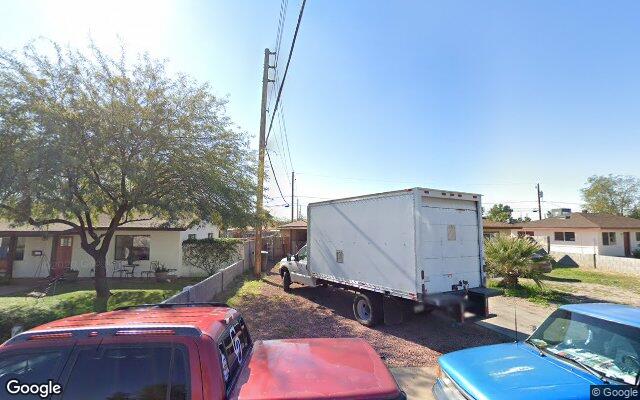
A medium home, reviewed on public record.
© Google Street View
Compared to 1,661 Arizona facilities with a similar number of beds.
Care · 36-month window. Higher percentile = better performance on inspection record. Source: Arizona Dept. of Health Services · Bureau of Residential Facilities Licensing.
among peers to rank.
Rankings based on 36-month ADHS inspection data. Severity and frequency: fewer citations = higher percentile. Repeat rate: lower repeat citation share = higher percentile.
Citation history, plotted month by month.
4 deficiencies on record. Each bar is a month with a citation.
Finding distribution
4 total · 36 monthsScope × Severity (CMS A–L)
Every inspection visit, verbatim.
2 inspections in the public record, most recent first. Plain-language summaries open first — click into any row for the full citation text.
2025-03-12Annual Compliance VisitR9-10-806.A.8 · 2 findings
“Based on record review and interview, the manager failed to ensure an employee provided documentation of freedom from infectious tuberculosis (TB) on or before the date the individual began providing services at or on behalf of the assisted living facility, as specified in R9-10-113, for two of three personnel reviewed. The deficient practice posed a potential TB exposure risk to residents. Findings include: 1. R9-10-113.A states "If a health care institution is subject to the requirements of this Section, as specified in an Article in this Chapter, the health care institution's chief administrative officer shall ensure that the health care institution establishes, documents, and implements tuberculosis infection control activities that...2. Include: a. For each individual who is employed by the health care institution, provides volunteer services for the health care institution, or is admitted to the health care institution and who is subject to the requirements of this Section, screening, on or before the date specified in the applicable Article of this Chapter, that consists of: i. Assessing risks of prior exposure to infectious tuberculosis, ii. Determining if the individual has signs or symptoms of tuberculosis, and iii. Obtaining documentation of the individual's freedom from infectious tuberculosis according to subsection (B)(1)..." 2. Review of the Centers for Disease Control and Prevention website revealed a web page titled "TB Screening and Testing of Health Care Personnel." The web page stated, "If the Mantoux tuberculin skin test (TST) is used to test health care personnel upon hire (preplacement), two-step testing should be used." 3. A review of E1's and E3's personnel record revealed completion of two-step TST testing. However, no documentation of a baseline screening consisting of assessing risks of prior exposure to infectious TB and determining if the E1 and E3 had signs or symptoms of TB was available for review. 4. In an interview, E1 acknowledged E2 did not provide documentation of freedom from infectious TB as specified in R9-10-113 on or before the date E2 began providing services at or on behalf of the assisted living facility.”
“Based on document review, observation, and interview, the manager failed to ensure that there was a means of exiting the facility that controlled or alerted employees of the egress of a resident from the facility. The deficient practice posed a risk if the facility was unaware of the general or specific whereabouts of a resident. Findings include: 1. A review of Department Documentation revealed the assisted living home is licensed for directed level of care. 2. During an environmental inspection, the Compliance Officer observed the back door of the home was not equipped with a control or an alert for employees of a resident's egress. During further inspection, a second back door was observed to not be equipped with a control or an alert for employees of a resident's egress. 3. In an interview, E1 acknowledged that the facility provided directed care services, and did not contain a way to control or alert employees of the egress of a resident from the facility.”
2024-07-23Complaint InvestigationA.A.C. · 2 findings
“Based on documentation review, record review, and interview, for one resident reviewed, the health care institution failed to provide appropriate first aid to a non-injured resident who had fallen, appeared to be uninjured, and was able to reasonably recover independently. The deficient practice posed a risk as the facility called 911 instead of providing first aid to a non-injured resident by assisting them off the floor after a fall. Findings include: 1. A review of facility policies and procedures revealed a policy titled "Fall Prevention and Fall Recovery," which documented, "... Fall Prevention and Recovery Training is required upon hire....CPR or first aid is rendered in good faith and consistent with certification standards." 2. In documentation review, the Department received a report from O1 which documented on October 28, 2023, "... Staff failed to restore patient... On arrival Engine 26 finds an adult [R1] at... home sitting upright on floor, and in no obvious distress or discomfort. [R1] states ... tripped and fell... denies pain anywhere... denies any loss of consciousness... denies any neck or back pain Staff on scene states they cannot lift patient by themselves. Patient weight approximately 300 pounds. Patient states... simply wants to be able to stand up. Patient was lifted up with assistance of a lift belt, and placed onto a chair and was left on scene." 3. During an interview, R1 reported [R1] had fallen and had a seizure and fall in the past, and went to the hospital. R1 did not seem to recall the specific incident of October 28, 2024. 4. A review of the staff schedules revealed E3 worked at the facility on October 28, 2024. 5. During an interview, E1 and E2 reported E3 worked as a caregiver at the at the facility on October 28, 2024, and did not report the call to emergency services to E1 or E2. E1 and E2 reported being unaware of the incident, and did not have documentation of the incident; however, reported R1 had seizures sometimes and fell, and the facility had called 911. E1 reported E3 no longer worked at the facility.”
“Based on record review, documentation review, and interview, for three of three staff records reviewed, the health care institution failed to develop a training program for all staff regarding fall prevention and fall recovery. The deficient practice posed a risk as organized instruction and information related to resident care and safety was not implemented. Findings include: 1. In record review, the personnel records for E3, E4 and E5, included documention the staff received training on fall prevention and fall recovery. 2. In documentation review, the facility did not have documentation of a training program for staff regarding fall prevention and fall recovery. A facility policy, titled, "Fall Prevention and Fall Recovery, " documented, "... Fall Prevention and Recovery Training is required upon hire and at least every 12 months thereafter... The facility's Fall Prevention and Recovery in service training program is developed using the Arizona Falls Prevention Coalition's information and training materials..." 3. During an interview, the findings were reviewed with E1, E2 and E6. E6 reported the facility "went over the information" with the staff; however, acknowledged the facility did not have documentation of a training program regarding fall prevention and fall recovery, as indicated by the facility's policy.”
Other facilities in Phoenix.
Other memory care facilities near Phoenix with similar care offerings.
Facility Watch · Premium
Family reviews
No reviews yet — be the first to share your experience