Paradise Valley Senior Living.

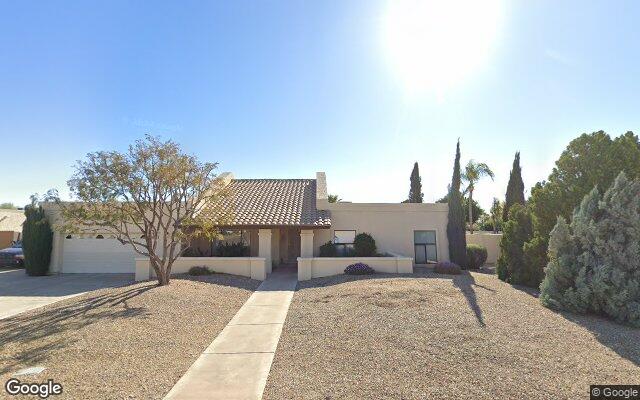
A large home, reviewed on public record.
© Google Street View
Compared to 116 Arizona facilities with a similar number of beds.
Care · 36-month window. Higher percentile = better performance on inspection record. Source: Arizona Dept. of Health Services · Bureau of Residential Facilities Licensing.
Rankings based on 36-month ADHS inspection data. Severity and frequency: fewer citations = higher percentile. Repeat rate: lower repeat citation share = higher percentile.
Citation history, plotted month by month.
54 deficiencies on record. Each bar is a month with a citation.
Finding distribution
54 total · 36 monthsScope × Severity (CMS A–L)
Every inspection visit, verbatim.
22 inspections in the public record, most recent first. Plain-language summaries open first — click into any row for the full citation text.
2026-09-10Complaint InvestigationNo findings
2026-09-08Complaint InvestigationNo findings
2026-09-01Complaint InvestigationNo findings
2026-08-06Complaint InvestigationNo findings
2026-06-25Complaint InvestigationNo findings
2026-05-01Complaint InvestigationEnforcement · 3 findings
“Based on documentation review, record review, and interview, the governing authority failed to ensure compliance with A.R.S. § 36-411 for one of five records sampled. The deficient practice posed a risk if the employee was a danger to a vulnerable population. Findings include: 1. A.R.S. § 36-411 states: C. Each residential care institution, nursing care institution and home health agency shall make documented, good faith efforts to: 4. On or before March 31, 2025, verify that each employee is not on the adult protective services registry pursuant to section 46-459. If an employee is found to be on the adult protective services registry, the residential care institution, nursing care institution or home health agency shall take action to terminate the employment of that employee. 2. A review of E3's personnel record revealed that E3 was hired on March 29, 2026. No documentation was available showing a good faith effort to verify E3's status on the adult protective services registry. 3. In an exit interview, the findings were reviewed with E2 and no additional information was provided.”
“Based on record review, documentation review, and interview, the manager failed to ensure that a caregiver provided documentation of completion of a caregiver training program approved by the Department or the Board of Examiners for Nursing Care Institution Administrators and Assisted Living Facility Managers (NCIA Board), for one of four sampled caregivers. The deficient practice posed a risk if an employee was unqualified to provide caregiving services. Findings include: 1. A review of E3’s personnel record revealed E3 was hired as a caregiver on March 29, 2026. Further review revealed no evidence of E3's caregiver's certificate. 2. The Compliance Officer conducted an online search on AZ CGFM Registry Search page at https://azcg.tmutest.com/search and was unsuccessful in locating a caregiver's certificate for E3. 3. Document review of the facility's work schedules revealed E3 worked during April 2026. 4 . In an interview, E2 reported that E3 was hired as a caregiver and not an assistant caregiver. 5. In an exit interview, the findings were reviewed with E2 and no additional information was provided.”
“Based on documentation review, record review, and interview, the manager failed to ensure an employee provided documentation of freedom from infectious tuberculosis (TB) as specified in R9-10-113, for one of five personnel sampled. The deficient practice posed a potential TB exposure risk to residents. Findings include: 1. R9-10-113.A states "If a health care institution is subject to the requirements of this Section, as specified in an Article in this Chapter, the health care institution's chief administrative officer shall ensure that the health care institution establishes, documents, and implements tuberculosis infection control activities that...2. Include: a. For each individual who is employed by the health care institution, provides volunteer services for the health care institution, or is admitted to the health care institution and who is subject to the requirements of this Section, screening, on or before the date specified in the applicable Article of this Chapter, that consists of: i. Assessing risks of prior exposure to infectious tuberculosis, ii. Determining if the individual has signs or symptoms of tuberculosis, and iii. Obtaining documentation of the individual's freedom from infectious tuberculosis according to subsection (B)(1)..." 2. A review of the Centers for Disease Control and Prevention website revealed a web page titled, "Guidelines for Preventing the Transmission of Mycobacterium tuberculosis in Health-Care Settings, 2005." The web page stated, "If TST (Mantoux Skin Test) is used for baseline testing, two-step testing is recommended for HCWs (Health Care Workers) whose initial TST results are negative. If the first-step TST result is negative, the second-step TST should be administered 1-3 weeks after the first TST result was read." 3. Review of E3's personnel record revealed a negative TB skin test that was less than 12 months old, however no additional documentation of freedom from infectious TB was available for review. 4. In an exit interview, findings were reviewed with E2, and no additional information was provided. 5. This is an uncorrected deficiency from the inspection conducted on April 21, 2026, and a repeat deficiency from the inspection conducted on April 30, 2025, and May 8, 2024.”
2026-04-21Complaint InvestigationR9-10-806.A.8 · 4 findings
“Based on documentation review, record review, and interview, the manager failed to ensure an employee provided documentation of freedom from infectious tuberculosis (TB) as specified in R9-10-113, for three of six personnel sampled. The deficient practice posed a potential TB exposure risk to residents. Findings include: 1. R9-10-113.A states "If a health care institution is subject to the requirements of this Section, as specified in an Article in this Chapter, the health care institution's chief administrative officer shall ensure that the health care institution establishes, documents, and implements tuberculosis infection control activities that...2. Include: a. For each individual who is employed by the health care institution, provides volunteer services for the health care institution, or is admitted to the health care institution and who is subject to the requirements of this Section, screening, on or before the date specified in the applicable Article of this Chapter, that consists of: i. Assessing risks of prior exposure to infectious tuberculosis, ii. Determining if the individual has signs or symptoms of tuberculosis, and iii. Obtaining documentation of the individual's freedom from infectious tuberculosis according to subsection (B)(1)..." 2. Review of E4's personnel record revealed no documentation of freedom from infectious TB. In addition, no documentation of a risk assessment of prior exposure to infectious TB or a determination if E4 had signs or symptoms of TB was available. Based on E4's hire date, this documentation was required. 3. Review of E5's personnel record revealed no documentation of freedom from infectious TB. In addition, no documentation of a risk assessment of prior exposure to infectious TB or a determination if E5 had signs or symptoms of TB was available. Based on E5's hire date, this documentation was required. 4. Review of E6's personnel record revealed no documentation of freedom from infectious TB. In addition, no documentation of a risk assessment of prior exposure to infectious TB or a determination if E6 had signs or symptoms of TB was available. Based on E6's hire date, this documentation was required. 5. Documentation review revealed staff schedules that documented that E4, E5, and E6 worked during the months of March and April 2026. 6. In an exit interview, findings were reviewed with E1 and no additional information was provided. 7. This is a repeat deficiency from the inspection conducted on May 8, 2024.”
“Based on documentation review, observation, and interview, the manager failed to ensure that a bell, intercom, or other mechanical means to alert employees to a resident's needs or emergencies was available in a bedroom being used by a resident receiving directed care services. The deficient practice posed a risk to the physical health and safety of a resident. Findings include: 1. A review of the facility license revealed the facility was licensed at the directed care level. 2. During the environmental inspection, the Compliance Officer (CO) observed a nonworking call bell system in cottage six. The CO observed E1 pull the call bell cord in several rooms located in the cottage and the alert light or bell did not work to alert staff to an emergency. 3. In an interview, E1 reported that E1 had notified the corporate office and obtained quotes for the repair, but the proposal has not been approved by the corporate office. 4. In an exit interview, findings were reviewed with E1 and no additional information was provided.”
“Based on documentation review, record review, and interview, the manager failed to ensure that when a resident had an incident that resulted in the resident needing medical services, a caregiver immediately notified the resident's emergency contact and primary care provider, for one resident sampled who had an incident that resulted in the resident needing medical services. The deficient practice posed a health and safety risk. Findings include: 1. R9-10-101.111 stated "Immediate" means without delay. 2. Record review revealed documentation for R1 dated April 8, 2025, at 1:05 AM. This documentation showed R1 was transported to the hospital. There was no documentation that the facility immediately notified the resident's emergency contact and primary care provider. 3. Record review revealed the facility's narrative summary written on April 8, 2025 at 8:00 AM with a late entry on April 8, 2025 at 10:39 PM, that stated, "At approximately 1:40 AM EMS transported the resident to Honor Health JCL for pain and ROM from baseline after resident observed [R1] lying on bedroom floor, reporting that [R1] fell off of [R1's] bed while attempting to fix a picture that was hanging on [R1's] wall. This writer contacted HH JCL for an update on the resident after receiving report from ED Carlos that the resident's [family] had contacted him regarding the resident's status. This writer contacted AZ at Home Inc to update the residents provider on the resident's status." 4. Document review revealed the facilities policy and procedures DP04 - Incident Reports. Section number five states, "Incidents are immediately reported to the resident's family / responsible party and physician." 5. In an exit interview, findings were reviewed with E1 and no additional information was provided.”
“Based on documentation review, observation, and interview, the manager failed to ensure that the premises and equipment used at the assisted living facility were free from a condition or situation that may cause a resident or other individual to suffer physical injury. Findings include: 1. Review of the facility's license revealed the facility was licensed at the directed care level. 2. During the environmental inspection, the Compliance Officer (CO) observed several wooden benches that were in an unsafe state. The benches were unstable and easy to shake and rock, even with metal fasteners that were used to secure the benches to the ground. The wood material was rotten in areas. 3. During the environmental inspection, the CO observed metal fasteners in the ground in an area where a bench had been removed, posing a tripping hazard. 4. In an exit interview, findings were discussed with E1 and no additional information was provided.”
2026-03-10Complaint InvestigationR9-10-803.A.10 · 2 findings
“Based on record review and interview, the manager failed to ensure the health, safety, or welfare of a resident was not placed at risk or harm, for one of eight residents sampled. The deficient practice posed a risk to health and safety as the resident's whereabouts were unknown. Findings include: 1. A review of R1's medical record revealed a document titled "Unusual Incident/Injury Report" that stated an incident occurred at 11:00 AM on December 26, 2025. This report stated, "It was reported that staff in cottage were unable to locate resident. CODE White was called, staff unable to locate resident on property. Community nurse, ED and community marketing director began diving around neighborhood and surrounding area, unable to locate resident. Community executive director called 911 to make a report and for assistance in locating resident Police were able to locate resident about 2 hours later in Scottsdale at Scottsdale Fashion Square Mall. Resident was retuned to the community by Phoenix Police Department. No injuries noted." 2. A review of R1's medical record revealed a service plan that reported R1 received directed care services and "receiving memory care services". Additionally, R1's service plan stated R1 had a diagnosis of "Major neurocognitive disorder; Vasular dementia; and Alzheimer." 3. In an interview with E1, E1 reported that R1 eloped from the community and a search was conducted. The facility contacted 911 when R1 could not be found on the facility's premises. 4. In an exit interview, findings were discussed with E1 and no additional information was provided.”
“Based on record review and interview, the manager failed to provide written notification to the Department of a resident’s elopement, within 24 hours of the elopement being discovered. The deficient practice posed a risk as the facility did not know the whereabouts of a resident. Findings include: 1. A review of R1's medical record revealed a document titled "Unusual Incident/Injury Report" that stated an incident occurred at 11:00 AM on December 26, 2025. This report stated, "It was reported that staff in cottage were unable to locate resident. CODE White was called, staff unable to locate resident on property. Community nurse, ED and community marketing director began diving around neighborhood and surrounding area, unable to locate resident. Community executive director called 911 to make a report and for assistance in locating resident Police were able to locate resident about 2 hours later in Scottsdale at Scottsdale Fashion Square Mall. Resident was retuned to the community by Phoenix Police Department. No injuries noted." 2. A review of R1's medical record revealed a service plan that reported R1 received directed care services and "receiving memory care services". Additionally, R1's service plan stated R1 had a diagnosis of "Major neurocognitive disorder; Vasular dementia; and Alzheimer." 3. A review of Department records revealed this elopement was reported to the Department on December 29, 2025 at 3:39 PM. 4. In an exit interview, findings were discussed with E1 and no additional information was provided.”
2025-12-24Complaint InvestigationNo findings
2025-06-16Complaint InvestigationR9-10-816.B.3.b · 2 findings
“Based on record review and interview, the manager failed to ensure medication administered to a resident was administered in compliance with a medication order, for two of six sampled residents. The deficient practice posed a risk if a resident experienced a change in condition due to improper administration of medication. Findings include: 1. A review of R1’s medical record revealed a service plan which indicated R1 received medication administration. The review revealed medication orders for “Gabapentin Oral Tablet 800 (MG)...Give 1 tablet by mouth every 8 hours” dated May 22, 2025, and "Gabapentin 800 mg Tab…1 tablet orally every 8 hours” dated June 5, 2025. The review revealed a series of medication administration records (MARs) dated between May 2025 and June 2025. However, the MARs revealed the following: - R1 received R1’s gabapentin at 8:00 AM, 3:00 PM, and 8:00 PM on May 23-30, 2025, instead of every eight hours as ordered; - R1 did not receive R1’s gabapentin between 3:00 PM on May 31, 2025, and 2:00 PM on June 6, 2025; and - R1 received R1’s gabapentin at 8:00 AM, 2:00 PM, and 10:00 PM on June 7-15, 2025, instead of every eight hours as ordered. 2. In an interview, E1 acknowledged R1’s gabapentin was not administered in compliance with the medication orders. E1 reported the pharmacy messed up when adding the times for R1’s gabapentin on R1’s MARs and facility personnel followed the times on the MARs. 3. A review of R2’s medical record revealed a service plan which indicated R2 received medication administration. The review revealed a medication order for “Pain Relief Roll-On 4 % Liquid” dated February 6, 2025. The review revealed a series of MARs dated between May 2025 and June 2025. However, the MARs revealed no documentation demonstrating R2 received “Pain Relief Roll-On 4 % Liquid.” 4. In an interview, E1 acknowledged R1’s and R2’s medications were not administered in compliance with the respective medication orders. This is an uncorrected deficiency from the complaint and compliance inspection conducted on April 30, 2025.”
“Based on observation, interview, and documentation review, the manager failed to ensure equipment used at the assisted living facility was maintained in working order. Findings include: 1. The Compliance Officer observed several portable air conditioning units and a swamp cooler in the common area of cottage seven. 2. In an interview, E1 reported the air conditioning for the common areas in cottage seven stopped working properly in early May 2025. E1 reported the main air conditioning unit for the common area was set to be replaced the day after the inspection. E1 reported a controller in the attic was set to be repaired at the same time. 3. A review of facility documentation revealed an email between E1 and an air conditioning repair company dated the date of the inspection. The email stated: “Here is the additional amount to get the cottage 7 AC unit replaced…[W]e plan on starting this tomorrow.””
2025-06-03Complaint InvestigationNo findings
2025-04-30Complaint InvestigationR9-10-113.A.2 · 15 findings
“Based on documentation review and interview, the health care institution's chief administrative officer failed to ensure the health care institution documented and implemented tuberculosis (TB) infection control activities required in R9-10-113(A)(2)(d). Findings include: 1. A review of facility documentation revealed no documentation of annually assessing the health care institution's risk of exposure to infectious tuberculosis per R9-10-113(A)(2)(d) was available for review. 2. In an interview, E2, E10, and E11 acknowledged that the health care institution had no documentation of annually assessing the health care institution's risk of exposure to infectious tuberculosis per R9-10-113(A)(2)(d) was available for review.”
“Based on record review and interview, the manager failed to ensure identification of the patient's need for the opioid before the opioid was administered or assistance in the self-administration of medication for a prescribed opioid was provided for two of the nine residents sampled. Findings include: 1. In record review, R3's medication administration record (MAR) included Tramadol, 1 tab by mouth, every 12 hours as needed. Documentation showed Tramadol being administered on the 7th, 9th, 10th,13th,18th,21st, 24th, 25th and 26th of March and on the 4th,5th,9th,12th, 27, and 28th of April. However, the MAR did not show documentation of the the patient's need for the opioid before the opioid was administered. The patient's response to Tramadol was documented. 2. In record review, R6's MAR included Hydrocodone/APAP 5-325 MG, 1 tab by mouth, twice daily as needed. Documentation showed Hydrocodone being administered on the 13th, 14th, 15th, 16th, 18th, 20th, 21st, 23rd, 24th, 25th, 28th, 29th, 30th and 31st of March and on the 18th of April. However, the MAR did not show documentation of the patient's need for the opioid before the opioid was administered. The patient's response to Hydrocodone/APAP was documented. 3. In an interview, E2 acknowledged there was no documentation for R3 and R6's need for the opioid before the opioid was administered, or assistance in the self-administration of medication for a prescribed opioid. This is a repeat deficiency from the compliance inspection conducted on December 18, 2023.”
“Based on documentation review, record review, and interview, the manager failed to ensure that personnel records for four of nine employees sampled included required documentation verifying compliance with A.R.S. § 36-411(A); valid fingerprint clearance cards issued pursuant to Title 41, Chapter 12, Article 3.1, and A.R.S. § 36-411(C)(1) documented efforts to contact previous employers for information relevant to each individual's fitness to work. This deficient practice posed a risk to the health and safety of residents, as there was no evidence demonstrating that E6, E7, E8, and E9 were fit to work at the assisted living facility. Findings include: 1. A.R.S. § 36-411(A) states, "... as a condition of licensure or continued licensure of a residential care institution, a nursing care institution or a home health agency and as a condition of employment in a residential care institution, a nursing care institution or a home health agency, employees and owners of residential care institutions, nursing care institutions or home health agencies, contracted persons of residential care institutions, nursing care institutions or home health agencies or volunteers of residential care institutions, nursing care institutions or home health agencies who provide medical services, nursing services, behavioral health services, health-related services, home health services or direct supportive services and who have not been subject to the fingerprinting requirements of a health professional's regulatory board pursuant to title 32 shall have a valid fingerprint clearance card that is issued pursuant to title 41, chapter 12, article 3.1 ..." 2. A.R.S. § 36-411(C)(1) states: "1. Contact previous employers to obtain information or recommendations that may be relevant to a person's fitness to work in a residential care institution, nursing care institution or home health agency." 3. A review of E6's, E7's, E8's, and E9's personnel records revealed no documentation of evidence of a good faith effort to contact previous employers to obtain information or recommendations that may be relevant to a person's fitness to work in a residential care institution. 4. A review of facility documentation revealed E6 was on the work schedule for February, March, and April. 5. A review of E6's personnel record revealed E6 was hired as a caregiver on February 27, 2024. E6's personnel record revealed a fingerprint clearance card (FCC) with an expiration date of January 08, 2025. However, no further documentation was available for the current FCC. 6. A review of the website from the Arizona Department of Public Safety revealed E6's fingerprint clearance card expired on January 08, 2025, and the new card was issued on March 13, 2025. However, no documentation was available showing E6 had applied for a new FCC before the previous one expired, and there was no valid FCC on file from the date of expiration until the new card was issued. E6 continued working at the facility during this period. 7. In an interview, E2, E10, and E11 acknowledged that E6’s personnel record had no documentation of a valid fingerprint clearance card as required by A.R.S. § 36-411(A), and E6, E7, E8, and E9 did not include documentation of efforts to contact previous employers to determine their fitness for employment, as required by A.R.S. § 36-411(C)(1). This is a repeat deficiency from the compliance inspection conducted on May 8, 2024.”
“Based on documentation review and interview, the manager failed to ensure that policies and procedures were reviewed at least once every three years and updated as needed. The deficient practice posed a risk as policies and procedures reinforce and clarify standards expected of employees. Findings include: 1. A review of facility documentation revealed a policy and procedure manual. However, documentation to indicate that the policies and procedures were reviewed at least once every three years and updated as needed was not available for review. 2. In an interview, E2, E10, and E11 acknowledged that documentation to indicate the policies and procedures were reviewed at least once every three years and updated as needed was not available for review.”
“Based on observation and interview, the manager failed to ensure that the location at which a copy of the most recent Department inspection report and any plan of correction resulting from the Department inspection could be found was conspicuously posted. Findings include: 1. During the environmental tour with E2, the Compliance Officers observed no posting indicating where the most recent inspection report could be located. 2. In an interview, E2, E10, and E11 acknowledged that documentation of the location at which a copy of the most recent Department inspection report and any plan of correction resulting from the Department inspection could be viewed was not posted.”
“Based on documentation review, record review, and interview, the manager failed to ensure a caregiver provided current documentation of first aid and cardiopulmonary resuscitation (CPR) training before providing assisted living services for one of nine personnel sampled. The deficient practice posed a risk if an employee was unable to meet a resident's needs during an emergency. Findings include: 1. A review of facility documentation revealed E6 was on the work schedule for February, March, and April. 2. A review of E6's personnel record revealed that E6 worked as a caregiver. The personnel record revealed a first aid and CPR card with an expiration date of December 09, 2024. There was no other current documentation of first aid and CPR training in E6's personnel record. 3. In an interview, E2, E10, and E11 acknowledged that E6 did not have current documentation of first aid and CPR training.”
“Based on documentation review, record review and interview, the manager failed to ensure that an employee provided documentation of freedom from infectious tuberculosis (TB) on or before the date the individual began providing services at or on behalf of the assisted living facility, as specified in R9-10-113, for five of nine employees sampled. The deficient practice posed a potential TB exposure risk to residents. Findings include: 1. R9-10-113.A states "If a health care institution is subject to the requirements of this Section, as specified in an Article in this Chapter, the health care institution's chief administrative officer shall ensure that the health care institution establishes, documents, and implements tuberculosis infection control activities that...2. Include: a. For each individual who is employed by the health care institution, provides volunteer services for the health care institution, or is admitted to the health care institution and who is subject to the requirements of this Section, screening, on or before the date specified in the applicable Article of this Chapter, that consists of: i. Assessing risks of prior exposure to infectious tuberculosis, ii. Determining if the individual has signs or symptoms of tuberculosis, and iii. Obtaining documentation of the individual's freedom from infectious tuberculosis according to subsection (B)(1)..." 2. A review of the Centers for Disease Control and Prevention (CDC) website revealed a web page titled, "Guidelines for Preventing the Transmission of Mycobacterium tuberculosis in Health-Care Settings, 2005." The web page stated, "If TST (Mantoux Skin Test) is used for baseline testing, two-step testing is recommended for HCWs (Health Care Workers) whose initial TST results are negative..." 3. A review of the Centers for Disease Control and Prevention (CDC) website revealed a web page titled, "Guidelines for Preventing the Transmission of Mycobacterium tuberculosis in Health-Care Settings, 2005." The web page stated, "All health-care workers (HCWs) should receive training on the prevention, transmission, and symptoms of TB disease that is appropriate to their work responsibilities and setting. Initial training should be provided to all new employees, with annual refresher training thereafter." 4. A review of E2's, E3's, E4's, E6's, and E7's personnel records revealed no documentation of negative TB skin tests, assessing risks of prior exposure to infectious TB, and determining if the individual has signs or symptoms of TB was available for review during the inspection. Based on E2's, E3's, E4's, E6's, and E7's hire dates, this documentation was required before providing services for the health care institution. 5. A review of E2's, E3's, E4's, E6',s and E7's personnel records revealed no documentation of initial TB training. Based on E2's, E3's, E4's, E6's, and E7's hire dates, this documentation was required. 6. A review of E2's, E3's, E4's, and E6's personnel records revealed no documentation of annual TB training. Based on E2's, E3's, E4's, and E6's hire dates, this documentation was required. 7. In an interview, E2, E10, and E11 acknowledged E2, E3, E4, E6, and E7 did not provide documentation in compliance with R9-10-113. E11 reported that E11 was new and was in the process of auditing the files to determine what was missing for all employees. This is a repeat deficiency from the compliance inspection conducted on May 8, 2024.”
“Based on record review and interview, the manager failed to ensure that a resident provided evidence of freedom from infectious tuberculosis (TB) as specified in R9-10-113 for five out of nine residents sampled. The deficient practice posed a TB exposure risk to residents. 1. A review of R1's and R7's medical records revealed no evidence of documentation of a negative TB skin test or blood test. 2. A review of R1, R3, R5, and R6's medical records revealed no evidence of signs, symptoms, or risk assessment. 3. In an interview, E1 acknowledged that R1, R3, R5, R6, and R7's medical records did not include documentation of freedom from infectious tuberculosis before or within seven calendar days after the resident's date of occupancy, as specified in R9-10-113.”
“Based on interview and record review, the manager failed to ensure a resident's written service plan included the amount, type, and frequency of assisted living services being provided to the resident for one of nine residents sampled. The deficient practice posed a risk as the service plans did not reinforce and clarify the services to be provided to R9. Findings include: 1. In an interview, E10 reported that the staff repositioned R9 every 2 hours since R9 had a wound to the coccyx. Repositioning was done even while in a wheelchair and a recliner chair. 2. A review of R9's medical record revealed a service plan dated December 26, 2024. The service plan stated, "[R9] was total assist. [R9] seen by Haven Home Health for Wound Care - Wound to Coccyx." However, there was no documentation of the need for repositioning. 3. A review of R9's medical record revealed a repositioning Log. The log revealed repositioning was done every 2 hours, even while R9 was in a wheelchair and a recliner chair. 4. In an interview, E2, E10, and E11 acknowledged R9's written service plans did not include the amount, type, and frequency of the services that were provided to R9. This is a repeat deficiency from the compliance inspection conducted on December 18, 2023.”
“Based on documentation review, record review and interview, the manager failed to ensure medication was administered to a resident in compliance with a medication order for one of nine residents sampled. The deficient practice posed a risk if the resident experienced a change in condition due to improper administration of the medication. Findings include: 1. A review of the facility’s policies and procedures revealed a section titled "MP17- Medication Refills", which states "Medication refills will be obtained in a timely manner to ensure residents have all physician or other healthcare practitioner ordered medications available.", "The Med Tech on-duty contacts the dispensing pharmacy to obtain a refill at least seven (7) days before a medication running out unless the medication is on a cycle refill with the pharmacy." 2. A review of the facility’s policies and procedures revealed a section titled MP20 - Missed or Refused Medications, which states "Residents cannot be forced to take any medication. Steps will be taken to avoid missed or refused doses of medications and related adverse reactions.", "The prescribing physician/practitioner is immediately notified of the missed or refused medications using the Refusal of Medication Notification Form.", "The Resident Care Director re-appraises the resident and contacts the resident's physician and responsible party if the resident continues to refuse medication(s)." 3. A review of R7's medical record revealed medication orders for various medications, such as Ferrous Gluconate 324mg 1 tab po bid, Polyethylene Glycol 3350 PWDR qd, and Rena-Vite RX 1 tab po qd. 4. A review of R7's medication administration record (MAR) revealed on April 1st, 9th, 17th, 19th, 23rd, and 25th at 8:00 pm Ferrous Gluconate was administered. However, Ferrous Gluconate showed no documentation as administered between April 1st and 30th at 8:00 am, an exception note showed a refill was requested. Ferrous Gluconate was also not administered on April 2nd-8th,10th,12th,14th-15th,18th, 20th-22nd, 24th, 26th-30th at 8:00 pm, an exception note showed a refill was requested. 5. A review of R7's MAR revealed on April 1st-24th and 27th-30th, Polyethylene Glycol was refused by the patient. No documentation showed if the primary care physician was contacted or the Resident Care Director reappraised the resident. 6. A review of R7's MAR revealed between April 1st and 30th, Rena-Vite RX showed no documentation of being administered. An exception note showed the family was notified to bring medication. 7. A review of R7's MAR revealed Senna-S was being administered on April 2nd, 5th, 9th,16th, and 23rd. The medication order did not show Senna-S. 8. In a review, E2 acknowledged medication was not administered to a resident in compliance with R7's medication order.”
“Based on observation and interview, the manager failed to ensure medication is stored in a separate locked room, closet, cabinet, or self-contained unit used only for medication storage. The deficient practice posed a risk to residents who were unable to self-administer medications. Findings Include: 1. A review of Department records revealed the facility was licensed to provide directed care services. 2. The Compliance Officers observed multiple ambulatory residents. 3. During an environmental inspection of a resident’s room in the secure memory care unit, the Compliance Officers observed a bottle Aleve, one bottle of Omeprazole, and Baza Antifungal Cream (prescribed to the resident). 4. In an interview, E1 acknowledged medication was not stored in a separate locked room, closet, cabinet, or self-contained unit used only for medication storage.”
“Based on documentation review and interview, the manager failed to ensure an evacuation drill for employees and residents was conducted at least once every six months. The deficient practice posed a risk if personnel members were unable to safely evacuate residents in an emergency situation. Findings include: 1. The Compliance Officers requested the evacuation drills conducted for the last 12 months. 2. A review of facility documentation revealed no documentation of evacuation drills conducted within the last 12 months. 3. In an interview, E2, E10, and E11 acknowledged the facility had no documentation at the time of the inspection to indicate evacuation drills for employees and residents were conducted at least once every six months. This is a repeat deficiency from the compliance inspection conducted on May 8, 2024.”
“Based on documentation review and interview, the manager failed to ensure that documentation of the current fire inspection was maintained. Findings include: 1. A review of facility documentation revealed that documentation of a current fire inspection was not available for review during the inspection. 2. In an interview, E2, E10, and E11 acknowledged the facility's current fire inspection report had not been provided for review during the inspection. This is a repeat deficiency from the compliance inspection conducted on May 8, 2024.”
“Based on observation and interview, the manager failed to ensure that poisonous or toxic materials stored by the assisted living facility are maintained in a locked area separate from food preparation and storage, dining areas, and medications, and are inaccessible to residents. The deficient practice posed a risk to the physical health and safety of a resident. Finding Include: 1. A review of Department records revealed the facility was licensed to provide directed care services. 2. The Compliance Officers observed multiple ambulatory residents. 3. During an environmental inspection of the facility, the Compliance Officers observed various materials in Cottages 1, 2, and 9 (secured memory care units) in the residents' bathrooms, such as Medline Aerosol Spray (included chemicals propane and alcohol), Lysol Multi-Purpose Cleaner (warning label stated "hazard to humans and domestic animals"). 4. In an interview, E2 acknowledged that the assisted living facility did not store poisonous or toxic materials in a locked area and were accessible to residents. This is a repeat deficiency from the complaint inspection conducted on December 18, 2023, and the compliance inspection conducted on May 8, 2024.”
“Based on documentation review, observation, and interview, the manager failed to ensure compliance with A.A.C. R3-8-201(C)(4), as pest control and pesticide materials were present without evidence that they were used by certified applicators. The deficient practice posed a risk to the health and safety of residents, as A.A.C. R3-8-201(C)(4) requires pest control applications to be conducted by a licensed applicator. The use of improperly handled pesticide products by unlicensed staff raised concerns and could have resulted in unsafe exposure. Findings include: 1. A.A.C. R3-8-201(C)(4) stated "C. Applicator licensure. 4. An individual may not provide pest management services at a school, child care facility, health care institution, or food-handling establishment unless the individual is a certified applicator in the certification category for which services are being provided." 2. During the environmental tour with E2, the Compliance Officers observed the following pest control and pesticide materials stored in a locked maintenance room: -Hot Shot Bed Bug Killer (multiple containers) -Hot Shot Bed Bug Killer with Egg Kill -d-CON Rat Bait Pellets -Amdro Mole & Gopher Bait -Amdro Quick Kill Home Perimeter Insect Killer Granules -BioAdvanced Carpenter Ant & Termite Killer Plus -two hand-labeled “Ant Spray" The use of such products by unlicensed individuals raised concerns. According to A.A.C. R3-8-201(C)(4), pest control applications were required to be conducted by a licensed applicator. The use of improperly handled pesticide products by unqualified staff could have resulted in unsafe exposure. 3. In an interview, E2 reported that there was no licensed applicator among the facility staff. 4. In an interview, E2, E10, and E11 acknowledged that unqualified staff used pesticides, which could have caused unsafe exposure. Per A.A.C. R3-8-201(C)(4), only certified applicators may provide pest control in health care settings.”
2025-03-05Complaint InvestigationR9-10-808.A.4.b. · 3 findings
“Based on record review and interview, for one of the four residents sampled, the manager failed to ensure a resident's written service plan was reviewed and updated at least once every three months. The deficient practice posed a risk if a caregiver was not aware of the services to be provided for a resident. Findings include: A review of R4's medical record revealed a service plan dated September 5, 2024. The service plan stated R4's care level was directed. A service plan after September 5, 2024 was not available for review. In an interview, E1 acknowledged that R4's record did not include a written service plan that was updated at least once every three months.”
“Based record review and interview, for three of the four residents sampled, the manager failed to ensure a caregiver documented the services provided in the resident's medical record. The deficient practice posed a risk if services were not provided for residents and/or the services provided could not be verified. Findings include: A review of R1's medical record revealed a service plan dated July 18, 2024, for directed care services. The service plan documented R1 received assistance with activities of daily living (ADL). However, documentation was not available showing that assistance was provided daily for July and August 2024. A review of R3's medical record revealed a service plan dated January 13, 2025. The service plan documented R3 received assistance with ADLs. However, documentation was not available showing that assistance was provided daily for February 2025. A review of R4's medical record revealed a service plan dated September 5, 2024. The service plan documented R3 received assistance with ADLs. However, documentation was not available showing that assistance was provided daily for January 2025. In an interview, E1 acknowledged R1's, R3's, and R4's medical records did not include documentation of the assisted living services provided.”
“Based on documentation review, observation, and interview, for a facility authorized to provide directed care services, the manager failed to ensure there was a means of exiting the facility that provided access to an outside area which allowed a resident to be at least 30 feet away from the facility and controlled or alerted employees of the egress of a resident from the facility. The deficient practice posed a risk if the facility was unaware of the general or specific whereabouts of a resident. Findings include: A documentation review revealed the facility was licensed at the directed care level by the Department. During an environmental inspection of the facility in Cottage 2 (Sedona), the Compliance Officers observed an uncontrolled door with a deactivated alarm system. In an interview, E1 reported E1 did not know why the alarm was deactivated and E1 turned it back on. E1 acknowledged there were means of exiting the facility to an outside area which did not control or alert employees of the egress of a resident from the facility.”
2024-12-20Complaint InvestigationA.A.C. · 2 findings
“Based on record review, documentation review, and interview, the manager failed to ensure the health care institution developed and administered a training program for all staff regarding fall prevention and fall recovery that included initial training and continued competency training. The deficient practice posed a risk to the physical health and safety of a resident. Findings include: 1. A review of E2's personnel record revealed documentation of fall prevention and fall recovery dated May 2022. However, no current documentation of fall prevention fall recovery training was available for review. 2. A review of the facility's policies and procedures revealed no policy on fall prevention and fall recovery training at the time of inspection. 3. In an interview, E1 acknowledged E2 did not have current fall prevention and fall recovery training available for review.”
“Based on record review and interview, the manager failed to ensure when a resident had an incident resulting in the resident needing medical services, a caregiver documented any action taken to prevent the incident from occurring in the future, for one of two residents reviewed who had an incident resulting in the resident needing medical services. The deficient practice posed a health and safety risk. Findings include: 1. A review of R1's medical record revealed an incident report dated May 2024 that indicated R1 sustained an injury and medical services were required. The documentation did not include any action taken to prevent the incident from occurring in the future. A section labeled, "Action taken or planned (By whom and anticipated results)" was left blank. 2. In an interview, E1 acknowledged R1's medical record did not include documentation of any action taken to prevent the incident from occurring in the future.”
2024-12-17Other VisitNo findings
2024-09-27Complaint InvestigationNo findings
2024-09-12Complaint InvestigationNo findings
2024-09-09Complaint InvestigationHigh Risk · 1 finding
“Based on documentation review and interview, after having a reasonable basis to believe abuse occurred on the premises, the manager failed to document the names of witnesses to the suspected abuse and the actions taken by the manager to prevent the suspected abuse from occurring in the future. The deficient practice posed a risk of the suspected abuse occurring in the future. Findings include: 1. A review of facility documentation revealed an "INTERNAL OCCURRENCE REPORT" for R2 dated August 29, 2024. The document revealed the manager had a reasonable basis to believe abuse occurred on the premises, took immediate action to stop the suspected abuse, and reported the suspected abuse appropriately. However, no report included the name(s) of witness(es) to the suspected abuse and the action(s) taken by the manager to prevent the suspected abuse from occurring in the future. 2. In an interview, E1 reported the facility was taking action to prevent the suspected abuse in the future, but did not document it or the name(s) of the witness(es).”
2024-08-23Complaint InvestigationHigh Risk · 1 finding
“Based on record review and interview, the manager failed to ensure if the manager had reasonable basis, according to A.R.S. \'a7 46-454, to believe abuse or neglect had occurred on the premises or while a resident was receiving services from an assisted living facility's manager, caregiver, or assistant caregiver, the manager reported the suspected abuse or neglect. The deficient practice posed a risk as the Center failed to properly report suspected abuse. Findings include: 1. A.R.S. \'a7 46-454(A) stated "...person who has responsibility for the care of a vulnerable adult and who has a reasonable basis to believe that abuse, neglect or exploitation of the adult has occurred shall immediately report or cause reports to be made of such reasonable basis to a peace officer or to the adult protective services central intake unit ... All of the above reports shall be made immediately by telephone or online." 2. R9-10-101.111 stated "Immediate" means without delay. 3. A review of R1's medical record contained a service plan dated August 2, 2024. The service plan identified cognitive impairment and wandering behavior that resulted in a move over to the memory care area. 4. During an interview, E1 reported R1 used to reside in the Assisted Living building for personal care residents. However, due to increased wandering, a service plan was completed for a change of condition. E1 reported R1's POA told E1 about a conversation with R1 after the meeting, who reported another resident wandering into the bedroom and laying next to R1 naked. E1 reported being unaware of the need to report the suspected abuse according to A.R.S. \'a7 46-454 or to document the incident.”
2024-07-02Complaint InvestigationNo findings
2024-05-08Complaint InvestigationA.A.C. · 10 findings
“Based on documentation review, record review, and interview, the manager failed to ensure compliance with Arizona Revised Statutes (A.R.S.) \'a7 36-411(A), for two of eight sampled employees. The deficient practice posed a risk if the employees were a danger to a vulnerable population. Findings include: 1. A.R.S. \'a7 36-411(A) states: "A. Except as provided in subsection F of this section, as a condition of licensure or continued licensure of a residential care institution, a nursing care institution or a home health agency and as a condition of employment in a residential care institution, a nursing care institution or a home health agency, employees and owners of residential care institutions, nursing care institutions or home health agencies, contracted persons of residential care institutions, nursing care institutions or home health agencies or volunteers of residential care institutions, nursing care institutions or home health agencies who provide medical services, nursing services, behavioral health services, health-related services, home health services or direct supportive services and who have not been subject to the fingerprinting requirements of a health professional's regulatory board pursuant to title 32 shall have valid fingerprint clearance cards that are issued pursuant to title 41, chapter 12, article 3.1 or shall apply for a fingerprint clearance card within twenty working days of employment or beginning volunteer work or contracted work." 2. A review of facility documentation revealed staff schedules for the previous 12 months. The schedules revealed E6 was scheduled for multiple shifts at the facility each month between November 2023-March 2024, and E7 was scheduled for multiple shifts at the facility each month between April 2023-May 2024. E7 was also working at the facility on May 8, 2024 during the inspection. 3. A review of E6's personnel record revealed a fingerprint clearance card which expired on October 27, 2023, and a new fingerprint clearance card issued on March 28, 2024. E6 had no current, valid fingerprint clearance card from October 28, 2023 to March 27, 2024. 4. A review of E7's personnel record revealed no fingerprint clearance cards or applications for a fingerprint clearance card. 5. In an interview E1 acknowledged E6 did not have a valid fingerprint clearance card from October 28, 2023 to March 27, 2024, and E7 did not have a fingerprint clearance card.”
“Based on documentation review, observation, record review, and interview, the manager failed to ensure an assistant caregiver interacted with residents under the supervision of a manager or caregiver. The deficient practice posed a risk as E5 and E7 were not qualified to provide the required services unsupervised. Findings include: 1. Arizona Revised Statutes (A.R.S.) \'a7 36-401(A)(49) states "[s]upervision" means "directly overseeing and inspecting the act of accomplishing a function or activity." 2. During the environmental inspection of the facility, the Compliance Officer observed E5 in cottage 2 and E7 in cottage 1 working alone at the facility and providing direct care services to residents. 3. A review of E5's and E7's personnel records revealed E5 and E7 were both hired as assistant caregivers. There was no documentation in E5's and E7's personnel records to indicate E5 and E7 completed an approved caregiver training program. 4. In an interview, E1 acknowledged E5 and E7 were assistant caregivers and E5 and E7 provided services to residents without being under the direct supervision of a caregiver or manager.”
“Based on documentation review, record review, and interview, the manager failed to ensure an assistant caregiver's skills and knowledge were verified and documented before the caregiver provided physical health services on behalf of the facility, for three of four sampled assistant caregivers. The deficient practice posed a risk if employees did not have the skills and knowledge necessary to ensure the health and safety of residents. Findings include: 1. A review of facility documentation staffing schedules revealed staffing schedules for the previous 12 months. The schedules revealed E3, E4, and E5 were each scheduled to work at the facility as assistant caregivers on multiple shifts throughout February-May 2024. 2. A review of E3's, E4's, and E5's personnel records revealed no documented verification of E3's, E4's, or E5's skills and knowledge. 3. In an interview, E1 acknowledged E4's, E3 and E5's personnel records did not contain documentation of verification of skills and knowledge. This is a repeat citation from the complaint inspection conducted on October 10, 2023.”
“Based on documentation review, record review, and interview, the administrator failed to ensure a personnel member provided evidence of freedom from infectious tuberculosis (TB), as specified in Arizona Administrative Code (A.A.C.) R9-10-113(B)(1)(a)(i), for four of six sampled personnel members. The deficient practice posed a potential TB infection risk to residents. Findings include: 1. A.A.C. R9-10-113(B)(1)(a)(i) states: "B. A health care institution's chief administrative officer shall: 1. For an individual for whom baseline screening and documentation of freedom from infectious tuberculosis is required by an Article in this Chapter, as specific in subsection (A)(2)(a), obtain one of the following as evidence of freedom from infectious tuberculosis: a. Documentation of a negative Mantoux skin test or other tuberculosis screening test that: i. Is recommended by the U.S. Centers for Disease Control and Prevention (CDC)..." 2. A review of the CDC website revealed a web page titled "TB Screening and Testing of Health Care Personnel." The web page stated "If the Mantoux tuberculin skin test (TST) is used to test health care personnel upon hire (preplacement), two-step testing should be used." The web page indicated two-step testing involves an initial TST, and if negative, a second TST administered one to three weeks after the initial TST. 3. A review of E1's, E4's, and E5's personnel records revealed no documentation of completed TSTs. A review of E3's, E6's, and E7's personnel records revealed documentation of completed initial TSTs for each employee. However, there was no documentation of a second completed TST for E3, E6 and E7 available for review. 4. In an interview, E1 acknowledged documentation of evidence of freedom from infectious TB, as specified in A.A.C. R9-10-113(B)(1)(a)(i), was not available for review at the time of the inspection for E1, E3, E4, E5, E6, or E7.”
“Based on record review and interview, the manager failed to ensure a resident had a written service plan completed no later than 14 calendar days after the resident's date of acceptance, for one of six sampled residents. The deficient practice posed a risk as there was no service plan to direct services to be provided to a resident. Findings include: 1. A review of R2's medical record revealed no service plan for R2 was available for review at the time of the inspection. Based on R2's admission date, this documentation was required. 2. In an interview, E1 acknowledged there was no service plan for R2 available for review at the time of the inspection. This is a repeat citation from the complaint inspection conducted on December 18, 2023, and the compliance inspections conducted on June 5, 2023 and April 26, 2022.”
“Based on record review and interview, the manager failed to ensure a resident's written service plan was reviewed and updated at least once every three months, for two of six sampled residents who received directed care services. The deficient practice posed a risk if the service plan did not reinforce and clarify services to be provided to a resident. Findings include: 1. A review of R5's medical record revealed a service plan for directed care services dated November 3, 2023. No more recent service plan for R5 was available for review at the time of the inspection. 2. A review of R6's medical record revealed a service plan for directed care services dated January 29, 2024. No more recent service plan for R6 was available for review at the time of the inspection 3. In an interview, E1 acknowledged there was no updated service plan for R5 and R6 available for review at the time of the inspection. This is a repeat citation from the complaint inspections conducted on December 18, 2023, and July 3, 2023.”
“Based on documentation review and interview, the manager failed to ensure a disaster drill for employees was conducted on each shift at least once every three months and documented. The deficient practice posed a risk if employees were unable to implement a disaster plan. Findings include: 1. A review of facility documentation revealed a staff schedule. The schedule indicated the facility operated on three shifts: -"1st shift" from 7:00 AM to 3:00 PM; -"2nd shift" from 3:00 PM to 11:00 PM; and -"3rd shift" from 11:00 PM to 7:00 AM. 2. A review of facility documentation revealed the most recent documented disaster drill was conducted on June 30, 2023 on the first shift. No other documentation of disaster drills conducted at the facility was provided for review. 3. In a interview, E1 reported the employee responsible for documenting the disaster drills took the documentation for dates after June 30, 2023, and the documentation was unavailable for review at the time of the inspection.”
“Based on documentation review and interview, the manager failed to ensure an evacuation drill for employees and residents was conducted at least once every six months. The deficient practice posed a risk if personnel members were unable to safely evacuate residents in an emergency situation. Findings include: 1. A review of facility documentation revealed revealed no documentation of evacuation drills conducted at the facility within the last 12 months. 2. In an interview, E1 acknowledged there was no other documentation available for review at the time of the inspection to indicate evacuation drills for employees and residents were conducted at least once every six months.”
“Based on documentation review and interview, the manager failed to ensure a fire inspection was conducted by the local fire department according to the time-frame established by the local fire department. The deficient practice posed a potential fire safety risk. Findings include: 1. A review of facility documentation revealed documented fire inspection reports. However, the most recent documented fire inspection from the City of Phoenix was conducted on May 4, 2022 and expired May 4, 2024. 2. In an interview, E1 acknowledged the most recent fire inspection was conducted on May 4, 2022 and expired May 4, 2024.”
“Based on observation and interview, the manager failed to ensure poisonous or toxic materials stored by the facility were stored in a locked area and inaccessible to residents. The deficient practice posed a health and safety risk to residents with access to the poisonous or toxic materials. Findings include: 1. During the environmental inspection of the facility, the Compliance Officer observed "Lysol", "Liquid Green Pot & Pan Detergent" and "Ecotemp Ultra Klene Detergent" stored in accessible cabinets under the common area kitchen sinks in cottages 1, 2, 7, and 9. The cabinets did not have a locking device installed and the doors to the kitchens were unlocked. 2. In an interview, E1 acknowledged the aforementioned poisonous or toxic materials were not stored in a locked location and inaccessible to residents. This is a repeat citation from the complaint inspection conducted on December 18, 2023.”
2023-12-18Complaint InvestigationA.A.C. · 11 findings
“Based on observation, record review, documentation review, and interview, the manager failed to ensure policies and procedures were established, documented, and implemented to protect the health and safety of a resident that covered methods by which the assisted living facility was aware of the general or specific whereabouts of a resident, based on the level of assisted living services provided to the resident and the assisted living services the assisted living facility was authorized to provide. The deficient practice prevented the facility's staff from ensuring the health and safety of the resident, as R1 wandered away from the facility and the personnel members were unaware R1 had left the facility. Findings include: 1. In observation, the facility was observed to have six buildings "Cottages," designated as Memory Care; for residents who received directed care services. Each cottage had two wings, with a door exiting the end of the wing. The door exiting the wing had an alarm that alerted staff to the entry or exit of a resident. The facility also had an "Assisted Living" building for residents who received personal care of supervisory care services. 2. In documentation review, a review of Department documentation revealed AL6981 was authorized to provide directed care services. 3. In documentation review, the facility submitted an incident report, dated December 7, 2023, which documented, ".[R1] ... diagnosis is Primary Degenerative Dementia was found by state police and returned to the community. Claimed... was looking for ... girlfriend and would not disclose how ... was able to leave the controlled access community... was not evaluated as an elopement risk..." Further documentation indicated the time of the event was 10:51 PM. 4. In documentation review, the facility did not have policies and procedures that covered methods by which the facility was aware of the general or specific whereabouts of a resident. 5. During an interview, E4 reported being the only caregiver working in the cottage when R1 eloped, and reported there was another caregiver working, who was on break. E4 reported R1 was in bed at 9:00pm, and [E4] was working with three other residents who were wandering. E4 did not hear the door alarm, and was unaware R1 exited the building, until R1 was returned to the facility by the police around 11:00pm. 6. During an interview, E1 and E2 reported being unaware of how R1 exited from the locked gated entry to the cottage. E1 reported the facility did not have policies and procedures that covered methods by which the facility was aware of the general or specific whereabouts of a resident. 7. This is a repeat deficiency from the compliance inspection and complaint investigation conducted on June 5, 2023.”
“Based on record review, documentation review, and interview, for two of five residents reviewed, the manager failed to ensure a resident had a written service plan completed no later than 14 calendar days after the resident's date of acceptance. Findings include: 1. In record review, based on R1's acceptance date, R1's medical record did not include a written service plan completed no later than 14 calendar days after the resident's date of acceptance. 2. In record review, R3's record did not include any written service plans. Upon request, the Compliance Officer was provided a service plan for R3, dated November, 2023. Based on R3's acceptance date, R3's medical record did not include a written service plan completed no later than 14 calendar days after the resident's date of acceptance 3. In documentation review, a facility policy, titled, "Resident Assessment and Service Plan," documented, "...The Resident Care Director creates the Service Plan at the time of admission. The family, resident, and any other significant individuals are included in the development of the Service Plan... the resident's Service Plan must be initiated prior to move in and completed no later than 14 calendar days after the resident's date of acceptance..." 4. During an interview, E1, E2, and E3 acknowledged the service plans for R1 and R3 were completed more than 14 calendar days after the resident's date of acceptance. 5. This is a repeat deficiency from the compliance inspection conducted on April 12, 2022, and the compliance inspection and complaint investigation conducted on June 5, 2023.”
“Based on record review and interview, for three of five residents reviewed, the manager failed to ensure a resident's written service plan included the amount, type, and frequency of assisted living services provided to the resident. The deficient practice posed a risk to the health and safety of a resident if the service plan did not specify the amount, type, and frequency of services to be provided by caregivers, as required by a resident. Findings include: 1. In record review, R1's service plan, dated December 8, 2023, (received directed care services), included documentation R1 had diagnoses of Degenerative Dementia, Dyslipidemia, and Hypertension. The service plan documented the resident required reminders for dressing, stand by assist for grooming, total assist with laundry, received verbal cues for bathing, "ensure client maintains adequate fluid intake... ensure skin is clean and dry at all times...," required assistance with dressing, and was an elopement risk. The service plan did not include the amount, type and frequency of services provided to the resident. 2. In record review, R2's service plan, dated September 8, 2023, (received directed care services) included documentation R2 had diagnoses of Atherosclerotic heart disease of native coronary artery... and Hypertension. R2's "Physician's Report," documented R2 had Dementia. R2's service plan documented R2 required assistance and or reminders with bathing, dressing, grooming, toileting. The service plan did not include the amount, type and frequency of services provided to the resident. 3. In record review, R5's service plan, dated March 20, 2023, (received directed care services) included documentation R3 had diagnoses of Alzheimer's Disease, abnormal weight loss BHP, Sleeplessness and Constipation. R3 required total assist with grooming, dressing, bathing, housekeeping, laundry, was incontinent, wandered, and at risk for falls. The service plan did not include the amount, type and frequency of services provided to the resident. 4. In documentation review, a facility policy, titled, "Resident Assessment and Service Plan," documented, "... An Executive Director shall ensure that a resident has a written service plan that: ...includes the following: ... The amount, type, and frequency of assisted living services being provided to the resident..." 5. During an interview, the findings were reviewed with E1, E2, and E3, who acknowledged the resident service plans did not include the amount, type and frequency of assisted living services provided for the resident.”
“Based on record review, documentation review, and interview, for two of five residents reviewed, the manager failed to ensure a resident's written service plan was reviewed and updated at least once every three months, for residents sampled receiving directed care services. The deficient practice posed a risk if a resident's service plan was not updated as required to reinforce and clarify services. Findings include: 1. In record review, R3's medical record (received directed care services) did not include documentation of any service plans. Upon request, the Compliance Officer was provided with a service plan for R3; dated November 2023. Based on R3's date of acceptance, prior service plans were due every three months. 2. In record review, R5's medical record (received directed care services) included a service plan dated March 20, 2023. The record did not include documentation the service plan was updated at least once every three months for R5, who received directed care services. 3. In documentation review, a facility policy, titled, "Resident Assessment and Service Plan," documented, "...The Resident Care Director updates the Service Plan whenever a change is noted and service changes are necessary. 4. Formal review takes place: ... Once every three months for residents receiving personal care services..." 4. During an interview, the findings were reviewed with E2, who acknowledged the resident records did not include documentation the resident's service plans were reviewed and updated at least once every three months. 5. This is a repeat deficiency from the complaint investigation conducted on July 3, 2023.”
“Based on observation and interview, the manager failed to ensure a calendar of activities was posted in a location easily seen by residents and updated to reflect substitutions. The deficient practice posed a risk if residents were not treated with dignity, respect, and consideration, in having the opportunity to be informed of the activities to be provided. Findings include: 1. In observation, the facility was observed to have six buildings "Cottages," designated as Memory Care, for residents who received directed care services. The facility also had an "Assisted Living," building, designated for residents who received personal or supervisory care services. 2. During an environmental inspection, the Compliance Officer observed three of the six memory care cottages did not have a calendar of activities posted for the residents. Additionally, the calendars posted were all the same and included activities which were conducted at other cottages. 3. During an interview, E1 and E2 acknowledged the calendar of activities was not posted in a location easily seen by residents, and updated to accurately reflect activities to be provided for the residents.”
“Based on record review and interview, for two of three resident's reviewed, the manager failed to ensure a resident's written service plan included strategies to ensure the resident's personal safety. The deficient practice posed a risk if employees were unable to ensure the health and safety of the resident. Findings include: 1. In record review, R2's service plan, dated September 8, 2023, (received directed care services) included documentation R2 had diagnoses of Atherosclerotic heart disease of native coronary artery... and Hypertension. R2's "Physician's Report," documented R2 had Dementia. The service plan indicated R2 was at risk for falls; however, did not include strategies to ensure the resident's personal safety. 2. In record review, R5's service plan, dated March 20, 2023, (received directed care services) included documentation R3 had diagnoses of Alzheimers Disease, abnormal weight loss BHP, Sleeplessness and Constipation. The service plan indicated R3 wandered, and was at risk for falls. The service plan did not include strategies to ensure the resident's personal safety. 3. During an interview, the findings were reviewed with E1, E2, and E3, who acknowledged the service plans did not include strategies to ensure the resident's personal safety.”
“Based on observation, documentation review, record review, and interview, for one resident who wandered and eloped from the facility, the manager of an assisted living facility authorized to provide directed care services failed to implement policies and procedures to ensure the safety of a resident who may wander. Findings include: 1. In observation, the facility was observed to have six buildings "Cottages," designated as Memory Care, for residents who received directed care services. Each cottage had two wings, with a door exiting at the end of the wing. The door exiting the wing had an alarm that alerted staff to the entry or exit of a resident. 2. In documentation review, a review of Department documentation revealed AL6981 was authorized to provide directed care services. 3. In documentation review, the facility submitted an incident report, dated December 7, 2023, which documented, "[R1] ... diagnosis is Primary Degenerative Dementia was found by state police and returned to the community. Claimed... was looking for ... girlfriend and would not disclose how ... was able to leave the controlled access community... was not evaluated as an elopement risk..." Further documentation indicated the time of the event was 10:51 PM. 4. In documentation review, a facility policy titled "Elopement," dated December 5, 2022, documented, "... 1. Residents will be screened prior to admission for significant elopement risk. 2. If the resident has a diagnosis of dementia or a history of elopement, a physician's statement regarding leaving the building unescorted will be obtained..." A facility policy titled "... Wandering or Walking About," dated December 1, 2023, documented, "The Memory Care Director or designee will assess residents prior to admission to determine if a resident has a history or wandering behaviors... The ... staff will monitor each resident's whereabouts routinely allowing for maximum physical freedom within a safe environment... Staff shift assignments will designate residents at risk who require close monitoring... The ... Director will assign a staff member to physically make checks through the Legacies Community each hour... For nighttime wandering residents staff should: ... Re-check the resident in fifteen minute intervals until the resident is sleeping..." 5. During an interview, E4 reported being the only caregiver working in the cottage when R1 eloped, and reported another caregiver was working; however, was on break. E4 reported R1 was in bed at 9:00pm, and [E4] was working with three other residents who wandered. E4 did not hear the door alarm, and was unaware E4 exited the building, until R1 was returned to the facility by the police at around 11:00pm. 6. During an interview, E1 and E2 reported being unaware of how R1 exited the facility premises. E4 was suspended from work for two days. E1 and E2 acknowledged R1 had a diagnosis of Dementia, and was not screened for an elopement risk prior to admission per the facility's policy.”
“Based on observation and interview, the manager failed to ensure that a food menu was conspicuously posted at least one calendar day before the first meal on the food menu is served. The deficient practice posed a potential residents' rights violation if residents were not treated with dignity, respect, or consideration. Findings include: 1. During a environmental inspection with E1 and E2, the Compliance Officer observed there were no current menus conspicuously posted in four of the six cottages observed. Some cottages had the prior week's menu posted, and in some cases, the menu was posted in the kitchen area; which the residents were not allowed access to. 2. During an interview, E1 and E2 acknowledged a current food menu was not conspicuously posted, as required.”
“Based on observation, documentation review, and interview, the manager failed to ensure garbage and refuse were stored in covered containers lined with plastic bags. The deficient practice posed a health and safety risk to residents if garbage and refuse was not stored in a covered manner. Findings include: 1. During an environmental inspection with E1 and E2, the Compliance Officer observed an uncovered garbage can (containing discarded food) in House 6. Other trash containers were observed that were not lined with plastic bags. 2. In documentation review, a facility policy, titled, "Environmental," page 47, documented, "... Garbage and refuse are stored in covered containers lined with plastic bags..." 3. During an interview, the findings were reviewed with E1, E2, and E22 who acknowledged trash containers in House 6 were not covered, and some trash containers lacked liners as required.”
“Based on observation, and interview, the manager failed to ensure poisonous or toxic materials were maintained in a locked area and were inaccessible to residents. The deficient practice posed a risk to the physical health and safety of residents. Findings include: 1. During an environmental inspection with E1 and E2, the Compliance Officer observed an unattended laundry cart in an area accessible to residents. The laundry cart had chemicals stored unlocked on the cart: an unlabeled bottle of yellow liquid (reported to be Pine Sol), two bottles of Lysol toilet bowl cleaner, a bottle labeled as Pine Sol (reported to be Windex), a bottle of Pine Sol. 2. During an interview, E1, and E2 acknowledged the laundry cart was unattended and had cleaning supplies stored in an unlocked manner and accessible to residents.”
“Based on record review, documentation review, and interview, for one of four residents reviewed, who received opioid medication, without an active malignancy or an end of life condition, the manager failed to ensure an individual authorized to administer opioids documented in the resident's medical record; an identification of the resident's need for the opioid before the opioid was administered, and the monitoring of the effect of the opioid administered. The deficient practice posed a risk to a resident's health and safety if the facility did not appropriately assess and monitor opioid administration for a resident. Findings include: 1. In record review, R2's medical record (received directed care and medication administration services) included a medication order for Oxycodone (a Schedule II Controlled Substance) 5mg, take one tablet oral every 6 hours for pain. R2's record included a "Narcotic Medication Record," which included documentation R2 received the Oxycodone medication daily from September 9, through October 11, 2023. R2's record did not include documentation of an identification of the need for the opioid medication, and the monitoring of the effect of the opioid administered. 2. During an interview, E3 reported the facility monitored the response of the effect of the opioid administered, for PRN medications only, and acknowledged the facility did not document in the resident's medical record the resident's need for the opioid before the opioid was administered, and the monitoring of the effect of the opioid administered, as required by R9-10-120.F.”
2 older inspections from 2023 are not shown above.
Get the complete record, translated into plain language — emailed to you.
Other facilities in Phoenix.
Other memory care facilities near Phoenix with similar care offerings.
Facility Watch · Premium
Family reviews
No reviews yet — be the first to share your experience