Paradise Valley Premier Care LLC.
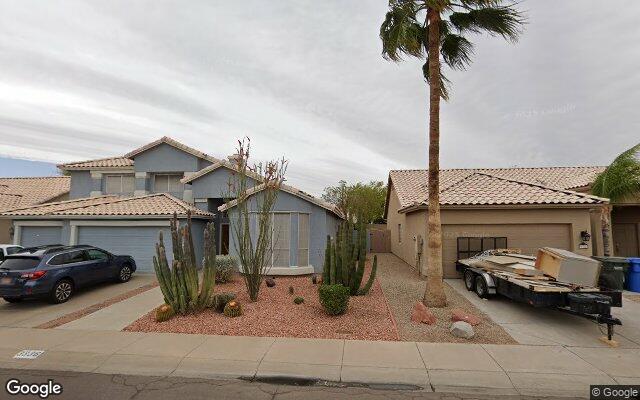
A medium home, reviewed on public record.
© Google Street View
Compared to similar Arizona facilities.
Care · 36-month window. Higher percentile = better performance on inspection record. Source: Arizona Dept. of Health Services · Bureau of Residential Facilities Licensing.
Citation history, plotted month by month.
18 deficiencies on record. Each bar is a month with a citation.
Finding distribution
none · 36 monthsScope × Severity (CMS A–L)
Every inspection visit, verbatim.
3 inspections in the public record, most recent first. Plain-language summaries open first — click into any row for the full citation text.
2026-07-10Complaint InvestigationNo findings
2026-05-26Complaint InvestigationNo findings
2024-10-10Complaint InvestigationA.A.C. · 18 findings
“Based on documentation review and interview, the manager failed to ensure the facility's policies and procedures were reviewed at least once every three years and updated as needed. The deficient practice posed a risk as policies and procedures dictate the care and services to be provided for residents. Findings include: 1. In documentation review, the facility's policies and procedures included documentation the policies were last reviewed in August 2021, and required updating. 2. During an interview, E1 acknowledged the facility's policies and procedures were not reviewed at least once every three years, and updated as needed.”
“Based on documentation review and interview, the manager failed to ensure the facility's policies and procedures for a quality management (QM) program were implemented. The deficient practice posed a risk as a quality management program documents and tracks the necessary information required to effectively evaluate and manage services provided. Findings include: 1. In documentation review, the facility's "Quality Management Policy and Procedure," documented, on page 65 - 66, "The Manager or Designee shall document monthly: Number/type of incidents; - Patterns across residents; Number of residents experiencing falls; Number of residents experiencing weight loss; Number of residents with decubitus ulcers; Number of residents with possible HCAI's; Number of residents reporting the loss of personal property/clothing; Number of errors in the documentation of medications (MARs), treatments, ADL's etc. provided to residents... Maintain a line graph for each of the above to identify trends from month to month. Monthly meetings between the licensee or representative, the manager, any designees, service plan nurse, caregivers, and others as needed to discuss each month's findings and any identified trends..." 2. In documentation review, the facility's QM documentation revealed reports dated January 2, 2024, and June 1, 2024; both of which documented, "no concerns this year, no changes made." The facility had documents titled, "Quality Management (QM) Tracking Form..." dated July through December 2023, and January through June 2024. The QM tracking forms included four sections only; "a Resident who is unable to direct self care wandered outside, resident infection MRSA, resident infection CDIFF, and Medication Error Occurrence." The four sections had a "0" documented for each month, from June 2023, through June 2024, which indicated no incidents occurred. The facility had no documentation of monthly QM tracking or reports since June 2024, and no documentation of the "Number of residents experiencing falls; Number of residents experiencing weight loss; Number of residents with decubitus ulcers; Number of residents with possible HCAI's; Number of residents reporting the loss of personal property/clothing; Number of errors in the documentation of medications (MARs), treatments, ADL's etc. provided to residents... and documentation the facility maintained a line graph for each of the above to identify trends from month to month, or an indication of held monthly meetings between the licensee or representative, the manager, any designees, service plan nurse, caregivers, and others as needed to discuss each month's findings and any identified trends." 3. During an interview, E1 and E5 acknowledged the facility's QM program was not implemented and documented according to the established policies and procedures.”
“Based on documentation review, observation, and interview, for one of two assistant caregivers reviewed, the manager failed to ensure an assistant caregiver interacted with residents under the supervision of a manager or caregiver. The deficient practice posed a risk as the individual was not qualified to provide the required services unsupervised. Findings include: 1. Arizona Revised Statutes (A.R.S.) \'a7 36-401.A.42. states "Supervision" means "direct overseeing and inspection of the act of accomplishing a function or activity." 2. During the inspection, the facility had a resident census of nine residents. A manager designee (E1) was on site, with one caregiver (E2) and two assistant caregivers, E3 and E4. Another individual (E6) was in a caregiver bedroom. 3. During an interview, E2 reported being a lead caregiver, and worked Monday through Friday from 7:00am - 5:00pm. E3 reported E3 provided the following assistance for residents, i.e., cooking, cleaning, feeding, bathing, skin maintenance. E3 reported E3 cared for five residents and E2 cared for five residents (splitting the caseload), during the day shift. E4 reported being a housekeeper and worked Monday through Thursday 8am - 5pm. E6 cooked and cleaned on the weekends. When asked who covered the night shifts, the Compliance Officer was informed the caregivers rotated the nights, and some of the caregivers lived at the facility. 4. During an interview with E1 and R6, R6 reported E3 provided care and skin maintenance services for R6. "[E3] lotions my body and carves the scabs off my body." Another caregiver sometimes assisted E3; however, E3 provided services independently too. 5. In documentation review, the Compliance Officer (CO) requested to review documentation of the caregivers who worked each day, and the hours worked. The CO was provided the "Personnel Schedules," which documented E1 (Manager designee/co owner) worked from 5:00pm - 8:00am every day during the months of July 2024, through October 2024. 6. During an interview, E1 reported E1 and E5 were managers and co owners, and worked at the facility, and E2 was the only certified caregiver who worked at the facility. E5 was out town during the inspection. E1 acknowledged the personnel schedules did not accurately reflect the days/hours worked by personnel. E1 and E2 acknowledged E3 was an assistant caregiver and interacted with residents alone, and assistant caregivers were required to interact with residents only under the visual supervision of a manager or caregiver.”
“Based on documentation review, and interview, the manager failed to ensure documentation was maintained of the caregivers working each day, including the hours worked by each. The deficient practice posed a health and safety risk to residents if the facility did not maintain staffing schedules, with documentation of facility staffing coverage for residents, and an identification of the caregivers who provided services. Findings include: 1. In observation, E1, E2, E3, E4 and E6 were present at the facility during the inspection. 2. During an interview, E2 reported being a lead caregiver, and worked Monday through Friday from 7:00am - 5:00pm. During an interview, E3 reported E3 provided the following assistance for residents, i.e., cooking, cleaning, feeding, bathing, skin maintenance. E3 reported E3 cared for five residents and E2 cared for five residents, (splitting the caseload) during the day shift. E4 reported being a housekeeper, and worked Monday through Thursday 8am - 5pm. E6 cooked and cleaned on the weekends. When asked who covered the night shifts, the Compliance Officer was informed the caregivers rotated the nights and some of the caregivers lived at the facility. 3. In documentation review, the Compliance Officer (CO) requested to review documentation of the caregivers who worked each day, and the hours worked. The CO was provided the "Personnel Schedules," which documented E1 (Manager designee/co owner) worked alone from 5:00pm - 8:00am every day during the months of July 2024, through October 2024. 4. During an interview, E1 acknowledged the facility did not maintain documentation of the caregivers working each day, including the hours worked by each.”
“Based on record review and interview, for two of three residents reviewed, the manager failed to ensure a written service plan included the signature and date from the resident or resident's representative. The deficient practice posed a health and safety risk if the resident or the resident's representative did not acknowledge the services to be provided. Findings include: 1. In record review, R1's service plan (received directed care services), dated September 23, 2024, did not include the signature and date from the resident's representative. R1 had a Power of Attorney. 2. In record review, R2's service plan (received directed care services), dated September 23, 2024, did not include the signature and date from the resident's representative. R2 had a Power of Attorney. 3. During an interview, E1 acknowledged the service plans for R1 and R2 were not signed and dated, by the resident's representative.”
“Based on record review, and interview, for one of three residents reviewed, the manager failed to ensure a caregiver documented the services provided in the resident's medical record. The deficient practice posed a risk if services were not provided for residents and/or the services provided could not be verified. Findings include: 1. In record review, R1's service plan, dated September 23, 2024 (received directed care and medication administration services), documented R1 had Senile Degeneration of Brain, weakness, "DM," was bedbound, had thin/frail skin, scab right heel, redness to buttocks, "Requires positioning Q 2-3 hours." 2. In record review, R1's "Activities of Daily Living" form had a section for documenting the repositioning of R1; however, the section was blank on each day of R1's stay at the facility. 3. During an interview, E2 reported R1 had redness on the buttocks and a small pressure sore developed. E2 reported R1 was repositioned, as required. E1 and E2 acknowledged R1's service plan indicated R1 required repositioning every 2-3 hours, and R1's record did not include documentation R1 was repositioned.”
“Based on record review and interview, for two of three residents reviewed, the manager failed to ensure a resident's medical record contained a copy of the health care power of attorney (POA). The deficient practice posed a risk if the facility did not have the required legal documentation of the resident's responsible party. Findings include: 1. In record review, the medical records for R1 and R2 included documentation the residents' received directed care services. The medical records did not include a copy of the POA documentation. 2. During an interview, E1 reported R1 and R2 had a POA, and acknowledged the residents' records did not include a copy of the POA documentation. E1 acquired R2's POA documentation prior to the end of the inspection.”
“Based on record review and interview, for two of three residents reviewed, who were confined to a bed or chair, and unable to ambulate, even with assistance, the manager failed to ensure the facility did not accept or retain a resident who was confined to a bed or chair because of an inability to ambulate even with assistance, unless the facility obtained a written determination from a medical practitioner, upon acceptance, that stated the resident's needs could be met by the facility, and the resident's needs were within the facility's scope of services. The deficient practice posed a safety risk to a residents, if a facility retained a resident without the required authorization. Findings include: 1. In record review, R1's medical record included a written determination dated September 21, 2024; however, the determination indicated R1 was not confined to a bed or chair because of an inability to ambulate even with assistance. Additionally, the determination was signed by the manager and R1's POA, and not by a medical practitioner. 2. During an interview, E1 and E2 reported R1 was confined to a bed or chair and unable to ambulate, even with assistance. E1 acknowledged the written determination did not accurately reflect R1's condition, and was not signed and dated by a medical practitioner, upon R1's acceptance at the facility. 3. In record review, R2's service plan dated September 23, 2024, documented R2 required a one person assist to the wheelchair. R2's record did not include a written determination from a medical practitioner, upon acceptance, that stated the resident's needs could be met by the facility and the resident's needs were within the facility's scope of services. 4. During an interview, E1 and E2 acknowledged R2 was confined to a bed or chair, and unable to ambulate, even with assistance and acknowledged the facility did not obtain a written determination from the medical practitioner, upon acceptance, that stated the resident's needs could be met by the facility, and the resident's needs were within the facility's scope of services.”
“Based on record review and interview, for one of three residents reviewed, the manager failed to ensure the service plan, for a resident receiving directed care services, included skin maintenance to prevent and treat bruises, injuries, pressure sores, and infections. Findings include: 1. In record review, R1's medical record included a service plan, dated September 23, 2024, (received directed care and medication administration services). The service plan documented "thin/frail skin... scab R heel, redness to Buttocks... CG assist with prevention of Bruises, injuries, pressure sores and infections;" however, did not include the skin maintenance services provided. 2. During an interview, E2 reported R1 had a wound on the heel, and "sometimes diaper rash on the top of buttocks," which became a small sore. E2 reported the caregivers cleaned, applied cream, and changed the bandage on the resident's skin every morning. 3. During an interview, E1 and E2 acknowledged R1's service plan did not indicate the skin maintenance services provided for R1, to treat and prevent skin breakdown.”
“Based on observation, and interview, for two residents, who received directed care, the manager failed to ensure a bell, intercom, or other mechanical means to alert employees to a resident's needs or emergencies was available and accessible in a bedroom being used by a resident receiving directed care services. The deficient practice posed a risk to the physical health and safety of residents. Findings include: 1. During an environmental inspection with E1, the Compliance Officer observed the resident bedrooms for R2 and R7 did not include a bell, intercom or other mechanical means was available, to alert employees to a resident's needs or emergencies. 2. During an interview, E1 and E2 acknowledged the facility did not have a bell, intercom, or other mechanical means to alert employees to a resident's needs or emergencies; available and accessible in a bedroom being used by two residents receiving directed care services.”
“Based on record review, and interview, for one of two residents reviewed, the manager failed to ensure medications were administered to a resident in compliance with a medication order. The deficient practice posed a health and safety risk to residents, if the facility did not administer medications in compliance with a medication order, and a resident did not receive medication as ordered. Findings include: 1. In record review, R1's medical record included medication orders, dated September 21, 2024, for Donepezil, 10mg QD (AM) take 1 tablet po once a day, Memantine 10mg, take 1 tablet BID po, Quetiapine 50 mg, take 1 tablet po tree times a day, and Glucose Blood Sugar QD AM. 2. R1's medication administration record (MAR) for September and October 2024, indicated the following: - Donepezil not administered on October 2 and 3, 2024. - Memantine not administered: no second dose on October 1, no doses on October 2, 3, 2024, and no second dose on October 4, 2024. - Quetiapine not administered on September 27 - 30, 2024. - Blood Sugar not documented September 26 - 30, 2024, and October 1 - 5, and October 9, 2024. 3. During an interview, E2 reported the medications were not administered because they were not available, and the facility did not have glucose strips to measure R1's blood sugar. E5 reported the facility thought the hospice agency was going to refill the medications, and acknowledged R1's medications ran out, and R1 did not receive the medications, as ordered.”
“Based on record review, and interview, for one of three residents reviewed, the manager failed to ensure a medication administered to a resident was administered by an individual under direction of a medical practitioner, was administered in compliance with a medication order, and was documented in the resident's medical record. Findings include: 1. In record review, R1's medical record included a document titled, "ADMISSION ORDER FORM." The document stated, "Trained caregivers and managers may set up medication/narcotics/opioids for delivery to the resident in medication organizers and other equipment necessary for medication delivery... Trained caregivers and managers may administer medications/narcotics/opioids from medication organizers and per facility policy and procedures..." The document had a line which indicated "Physician (PA or NP) Signature and Date;" however the document was not signed and dated, as indicated. 2. In record review, R1's medical record (received directed care services), included a medication administration record (MAR) for September and October 2024, which indicated the caregivers administered the following medications to R1: Donepezil, Haldol, Memantine, Quetiapine, Senna, and Augmentin. 3. During an interview, E1 acknowledged R1's admission order form was not signed, and R1's record did not include documentation the caregiver administered medication to a resident under the direction of a medical practitioner.”
“Based on documentation review and interview, the manager failed to ensure a disaster plan included where residents will be relocated. This posed a health and safety risk to residents if the facility did not have a predesignated location site to safely relocate residents during a disaster. Findings include: 1. A review of the facility's polices and procedures revealed a disaster and evacuation plan; however, the plan did not include a specific relocation site. 2. During an interview, E5 reported the residents would be relocated to other facilities. E1 and E5 acknowledged the facility's disaster plan did not include a specific relocation site.”
“Based on documentation review and interview, the manager failed to ensure the facility's disaster plan was reviewed at least once every 12 months. The deficient practice posed a health and safety risk to residents and employees if the disaster plan was not up-to-date to adequately meet the needs of the residents during a disaster. Findings include: 1. In documentation review, the facility's disaster plan did not indicate the plan was reviewed at least once every 12 months, as required. 2. During an interview, E1 acknowledged the facility did not have documentation the disaster plan was reviewed at least once very 12 months.”
“Based on documentation review and interview, the manager failed to ensure documentation of each evacuation drill included the amount of time taken for employees and residents to evacuate the assisted living facility. The deficient practice posed a health and safety risk. Findings include: 1. In documentation review, the documentation of evacuation drills revealed a drill was conducted on January 1, 2024, May 1, 2024, June 1, 2024, July 29, 2024, and September 22, 2024. However, the documentation did not include the amount of time taken for employees and residents to evacuate the assisted living facility. 2. During an interview, E1 and E5 acknowledged the evacuation drill documentation did not include the amount of time taken for employees and residents to evacuate the assisted living facility.”
“Based on documentation review and interview, the manager failed to ensure documentation of each evacuation drill included an identification of residents who were not evacuated. Findings include: 1. In documentation review, the documentation of facility evacuation drills indicated a drill was conducted on January 1, 2024, May 1, 2024, June 1, 2024, July 29, 2024, and September 22, 2024, and all residents did not participate in the evacuation drills. The documentation did not include an identification of residents who were not evacuated. 2. During an interview, E5 reported two residents were not evacuated, and acknowledged the documentation of the evacuation drills did not identify the residents who were not evacuated.”
“Based on observation, record review, and interview, for four of nine residents observed at the facility, the manager failed to ensure a resident was free from a condition that may cause a resident to suffer physical injury. The deficient practice posed a health and safety risk to a resident. Findings include: 1. During an environmental inspection, the Compliance officer (CO) observed bed rails on the beds of R2, R3, R5 and R6. 2. During an interview, E2 reported the bed rails were on the residents' beds to prevent the residents from falling out of bed at night, and reported the residents were at risk for falls. 3. During an interview, E1, E2 and E5 acknowledged the residents were not able to lower the bed rails, and the rails could pose a hazard.”
“Based on observation and interview, the manager failed to ensure toxic materials stored by the facility were stored in a locked area and inaccessible to residents. The deficient practice posed a risk to the physical health and safety of a resident if toxic materials were accessible. Findings include: 1. During an environmental inspection with E1 and E3, the Compliance Officer observed a cabinet beneath the kitchen sink had a locking mechanism; however, the mechanism was in an unlocked position, and allowed access. The cabinet contained cleaning supplies to include: Comet, Windex, All purpose cleaner, Stainless Steel Cleaner, Endust, Drain Cleaner, and Hot Shot insect repellant. An unlocked shed in the back yard contained two one gallon containers of Fabuloso, and a bucket with Hot Shine Tire Coating, RainX Glass Cleaner, Armor All cleaning wipes and Tuff Stuff Multi-Purpose Cleaner. 2. During an interview, E1 and E2 acknowledged the poisonous and toxic materials were not stored in a locked area, and inaccessible to residents.”
Other facilities in Phoenix.
Other memory care facilities near Phoenix with similar care offerings.
Facility Watch · Premium
Family reviews
No reviews yet — be the first to share your experience