Orchid Park Care Home.

A medium home, reviewed on public record.
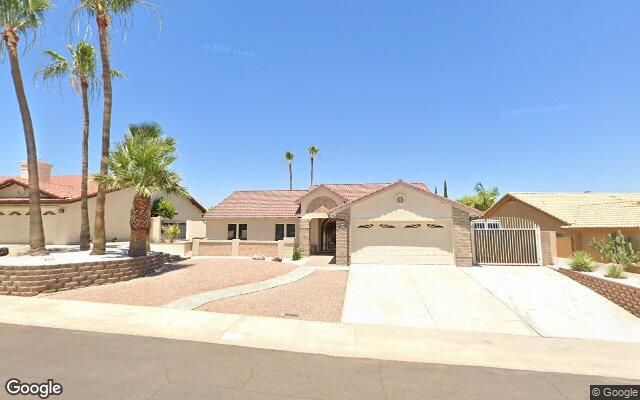
© Google Street View
Compared to 1,661 Arizona facilities with a similar number of beds.
Care · 36-month window. Higher percentile = better performance on inspection record. Source: Arizona Dept. of Health Services · Bureau of Residential Facilities Licensing.
among peers to rank.
on file.
Rankings based on 36-month ADHS inspection data. Severity and frequency: fewer citations = higher percentile. Repeat rate: lower repeat citation share = higher percentile.
Citation history, plotted month by month.
10 deficiencies on record. Each bar is a month with a citation.
Finding distribution
10 total · 36 monthsScope × Severity (CMS A–L)
Every inspection visit, verbatim.
1 inspection in the public record, most recent first. Plain-language summaries open first — click into any row for the full citation text.
2025-07-29Complaint InvestigationA.A.C. · 10 findings
“Based on interview, documentation review, and record review, the manager of an assisted living home who contacted an emergency responder on behalf of a resident failed to provide a written document with all required information to the emergency responder (EMS). The deficient practice posed a risk if the emergency responder was not aware of critical health information for the resident. Findings include: 1. In an interview, E1 reported R3 had an accident, emergency, or injury on July 17, 2025, that resulted in facility personnel contacting EMS on behalf of R3. 2. A review of facility documentation revealed a “REPORT OF UNUSUAL OCCURRENCE” dated July 17, 2025. The report stated, “Called 911, [R3] transferred to ER.” 3. In an interview, E1 reported facility personnel provided EMS with R3’s EMS face sheet, the first page of R3’s service plan, R3’s face sheet for the facility, R3’s July 2025 medication administration record, and copies of R3’s medical insurance cards. 4. A review of R3’s medical record revealed the EMS face sheet titled “ASSISTED LIVING RESIDENT TRANSFER CHECKLIST” used by the facility for compliance with this rule as well as the other documentation provided to EMS. However, the packet did not include the following: - The name, address, and telephone number of R3’s current pharmacy; - A list of any known allergies to any medications, additives, preservatives or materials like latex or adhesive; - The point-of-contact information for the assisted living home, including the email address; and - A copy of R3’s health insurance portability and accountability act (HIPAA) release authorizing a receiving hospital to communicate with the assisted living home to plan for R3’s discharge. 5. In an interview, when the Compliance Officer asked if E1 provided EMS with R3’s HIPAA release form, E1 stated, “No.” When the Compliance Officer asked if E1 had R3’s HIPAA release, E1 also stated, “No.” 6. In a separate interview, E1 reported R2 had an accident, emergency, or injury on July 23, 2025, that resulted in facility personnel contacting an emergency responder on behalf of R2. 7. A review of facility documentation revealed a “REPORT OF UNUSUAL OCCURRENCE” dated July 23, 2025. The report stated, “Called 911 and sent [R2] to the ER.” 8. In an interview, E1 reported E1 provided EMS with the same types of documents for R2’s incident as E1 had for R3’s incident. 9. A review of R2’s medical record revealed the EMS face sheet titled “ASSISTED LIVING RESIDENT TRANSFER CHECKLIST” used by the facility for compliance with this rule as well as the other documentation provided to EMS. However, the packet did not include the following: - The address and telephone number of R2’s current pharmacy; - A list of any known allergies to any medications, additives, preservatives or materials like latex or adhesive; - The point-of-contact information for the assisted living home, including the email address; and - A copy of R2’s HIPAA release authorizing a receiving hospital to communicate with the assisted living home to plan for R2’s discharge. 10. In an interview, E1 acknowledged facility personnel did not provide EMS with all items required by this statute for the two aforementioned incidents.”
“Based on record review and interview, the manager of an assisted living home failed to maintain a standardized form for each resident that included the information prescribed in Arizona Revised Statutes (A.R.S.) § 36-420.04(A)(1-9). The deficient practice posed a risk if the emergency responder was not aware of critical health information for a resident. Findings include: 1. A review of R2’s and R3’s medical records revealed a document titled “ASSISTED LIVING RESIDENT TRANSFER CHECKLIST” used by the facility for compliance with this rule. The checklist contained places for facility personnel to fill out information required by this statute. However, facility personnel did not input the information. 2. In an interview, E1 reported facility personnel created and filled out a new form each time facility personnel contacted an emergency responder on behalf of a resident. E1 confirmed facility personnel did not maintain a standardized form in compliance with this statute for each resident.”
“Based on interview and documentation review, the manager of an assisted living home failed to maintain a copy of the document provided to the emergency responder which included the items listed in Arizona Revised Statutes (A.R.S.) § 36-420.04(A)(1-9). Findings include: 1. In an interview, E1 reported R3 had an accident, emergency, or injury on July 17, 2025, that resulted in facility personnel contacting EMS on behalf of R3. 2. A review of facility documentation revealed a “REPORT OF UNUSUAL OCCURRENCE” dated July 17, 2025. The report stated, “Called 911, [R3] transferred to ER.” 3. In an interview, E1 reported facility personnel provided EMS with R3’s EMS face sheet, the first page of R3’s service plan, R3’s face sheet for the facility, R3’s July 2025 medication administration record, and copies of R3’s medical insurance cards. 4. A review of R3’s medical record revealed the original versions of R3’s EMS face sheet dated July 17, 2025, the first page of R3’s service plan, R3’s face sheet for the facility, and R3’s July 2025 MAR, instead of copies as required by this statute. Furthermore, the MAR revealed documentation of medication administered through July 23, 2025, several days after the incident. 5. In an interview, E1 reported R2 had an accident, emergency, or injury on July 23, 2025, that resulted in facility personnel contacting an emergency responder on behalf of R2. 6. A review of facility documentation revealed a “REPORT OF UNUSUAL OCCURRENCE” dated July 23, 2025. The report stated, “Called 911 and sent [R2] to the ER.” The report revealed the “TIME OF INCIDENT” to be 7:58 AM. 7. In an interview, E1 reported E1 provided EMS with the same types of documents for R2’s incident as E1 had for R3’s incident. 8. A review of R2’s medical record revealed the original versions of R2’s EMS face sheet dated July 23, 2025, the first page of R2’s service plan, R2’s face sheet for the facility, and R2’s July 2025 MAR, instead of copies as required by this statute. Furthermore, the MAR revealed documentation of medication administered through July 23, 2025, at 12:00 PM, several hours after the incident. 9. In an interview, E1 reported facility personnel did not maintain copies of the documents provided to the emergency responders for the two aforementioned incidents.”
“Based on record review, interview, and documentation review, the manager failed to ensure the health, safety, or welfare of a resident was not placed at risk of harm. The deficient practice posed a risk as the resident was placed at risk of harm. Findings include: 1. A review of R2’s medical record revealed a medication order for “ LOSARTAN POTASSIUM 25 MG - take 1/2 tab (12.5 MG) PO QD / HOLD IF SBP < 110” and “METOPROLOL SUCC ER 50 MG ER - take 1 tab PO QD/ HOLD IF SBP < 110” dated June 10, 2025. The review revealed a “BLOD [sic] PRESSURE/WEIGHT CHART” dated July and August 2025. The blood pressure chart revealed facility personnel checked and documented R2’s blood pressure on July 8, 12, and 28-29, 2025, and on no other dates in July. The review further revealed a medication administration record (MAR) dated July 2025. The MAR revealed R2 received R2’s losartan and metoprolol on July 1-7, 9-11, and 13-23, 2025, without facility personnel first checking R2’s blood pressure. 2. In an interview, E1 reported R2 often refused blood pressure checks. However, E1 confirmed caregivers did not document the refusals and administered the losartan and metoprolol anyway. E1 reported R2’s blood pressure had often been low in the past when caregivers were able to check it. E1 reported R2 was recently sent to the hospital for low blood pressure. 3. A review of facility documentation revealed an untitled document dated July 24, 2025, which stated, “[R2] was sent to the ER one day before [July 23, 2025] for UTI symptoms like bad odor, weakness and low blood pressure.””
“Based on documentation review, record review, and interview, the manager failed to ensure a caregiver's or assistant caregiver’s skills and knowledge were verified and documented before the caregiver or assistant caregiver provided physical health services, for two of three sampled applicable personnel. The deficient practice posed a risk if a caregiver or assistant caregiver did not have the skills and knowledge necessary to meet a resident's needs. Findings include: 1. A review of facility documentation revealed no policy and procedure (P&P) covering how the manager would verify and document a caregiver’s or assistant caregiver's skills and knowledge. The review further revealed a series of personnel schedules which indicated E2 and E3 worked several shifts in July 2025. 2. A review of E2's personnel record revealed E2 was hired as a caregiver. However, the review revealed no documentation demonstrating the manager verified and documented E2’s skills and knowledge before E2 began providing services. 3. A review of E3's personnel record revealed E2 was hired as an assistant caregiver. However, the review revealed no documentation demonstrating the manager verified and documented E3’s skills and knowledge before E3 began providing services. 4. In an interview, E1 acknowledged the facility did not have a P&P covering this rule. E1 reported E1 verified E2’s skills and knowledge but did not document the verification.”
“Based on record review, interview, and documentation review, the manager failed to ensure medication administered to a resident was administered in compliance with a medication order, for one of three sampled residents. The deficient practice posed a risk if a resident experienced a change in condition due to improper administration of medication. Findings include: 1. A review of R2’s medical record revealed a current service plan which indicated R2 received medication administration. The review revealed a medication order for “ LOSARTAN POTASSIUM 25 MG - take 1/2 tab (12.5 MG) PO QD / HOLD IF SBP < 110” and “METOPROLOL SUCC ER 50 MG ER - take 1 tab PO QD/ HOLD IF SBP < 110” dated June 10, 2025. The review revealed a “BLOD [sic] PRESSURE/WEIGHT CHART” dated July and August 2025. The blood pressure chart revealed facility personnel checked and documented R2’s blood pressure on July 8, 12, and 28-29, 2025, and on no other dates in July. The review further revealed a medication administration record (MAR) dated July 2025. The MAR revealed R2 received R2’s losartan and metoprolol on July 1-7, 9-11, and 13-23, 2025, without facility personnel first checking R2’s blood pressure. The MAR further revealed the following: - R2 received digoxin on July 29, 2025, without a signed medication order; - R2 received Eliquis on July 28-29, 2025, without a signed medication order; and - R2 received metoprolol on July 28, 2025, at 8:00 PM, without a signed medication order. 2. In an interview, E1 reported R2 often refused blood pressure checks. However, E1 confirmed caregivers did not document the refusals and administered the losartan and metoprolol anyway. E1 reported R2’s blood pressure had often been low in the past when caregivers were able to check it. E1 reported R2 was recently sent to the hospital for low blood pressure. E1 reported R2 was given new orders for the digoxin, Eliquis, and metoprolol (two times a day) from the hospital. However, E1 acknowledged the orders were not signed. 3. A review of facility documentation revealed an untitled document dated July 24, 2025, which stated, “[R2] was sent to the ER one day before [July 23, 2025] for UTI symptoms like bad odor, weakness and low blood pressure.””
“Based on record review, interview, and documentation review, the manager failed to ensure medication administered to a resident was documented in the resident's medical record, for one of three sampled residents. The deficient practice posed a risk to the health and safety of a resident and the Department was provided false or misleading information. Findings include: 1. A review of R2's medical record conducted at approximately 1:40 PM revealed a current service plan which indicated R2 was to receive medication administration. The review revealed a medication administration record (MAR) dated July 2025. However, the MAR revealed no documentation demonstrating R2 received metoprolol on July 28, 2025, at 8:00 PM and on July 29, 2025, at 8:00 AM. 2. In an interview, E1 reported E2 administered R2’s metoprolol on July 28, 2025, at 8:00 PM and on July 29, 2025, at 8:00 AM but did not document the administration. 3. A review of R2’s medical record revealed a MAR dated July. The MAR revealed documentation demonstrating R2 received 14 medications on July 23, 2025, at 8:00 AM and one medication on the same date at 12:00 PM. 4. A review of facility documentation revealed a “REPORT OF UNUSUAL OCCURRENCE” dated July 23, 2025. The report stated R2 was “unable to take [R2’s] medications” and facility personnel “Called 911 and sent [R2] to the ER.” The report revealed the “TIME OF INCIDENT” to be 7:58 AM. This is a repeat citation from the compliance inspection completed on May 9, 2023.”
“Based on interview and documentation review, the manager failed to ensure a caregiver or an assistant caregiver immediately notified the resident's primary care provider when a resident had an accident, emergency, or injury that resulted in the resident needing medical services. The deficient practice posed a potential risk of re-injury if a resident did not receive adequate follow-up care. Findings include: 1. In an interview, E1 reported R3 had an accident, emergency, or injury that resulted in R3 needing medical services on July 17, 2025. 2. A review of facility documentation revealed a “REPORT OF UNUSUAL OCCURRENCE” dated July 17, 2025. The report revealed R3 had an accident, emergency, or injury that resulted in R3 needing medical services. The report further revealed R3’s primacy care provider was notified on July 17, 2025, at an undocumented time. 3. In an interview, when the Compliance Officer asked whether facility personnel notified R3’s primary care provider of the incident, E1 stated, “No.” E1 reported R3’s family notified R3’s primary care provider so facility personnel did not do it.”
“Based on interview and documentation review, the manager failed to ensure when a resident had an accident, emergency, or injury that resulted in the resident needing medical services, a caregiver or an assistant caregiver documented any action taken to prevent the accident, emergency, or injury from occurring in the future. The deficient practice posed a potential risk of re-injury. Findings include: 1. In an interview, E1 reported R2 had an accident, emergency, or injury that resulted in R2 needing medical services on July 23, 2025. 2. A review of facility documentation revealed a “REPORT OF UNUSUAL OCCURRENCE” dated July 23, 2025. The report revealed R2 had an accident, emergency, or injury that resulted in R2 needing medical services. However, the report did not include any action taken to prevent the accident, emergency, or injury from occurring in the future. 3. In an interview, when the Compliance Officer pointed out the incident report was missing the aforementioned item, E1 stated, “I know.””
“Based on documentation review, observation, interview, and record review, the manager failed to ensure a pest control program that complied with Arizona Administrative Code (A.A.C.) R3-8-201(C)(4) was implemented. Findings include: 1. A.A.C. R3-8-201(C)(4) states, “An individual may not provide pest management services at a school, child care facility, health care institution, or food-handling establishment unless the individual is a certified applicator in the certification category for which services are being provided.” 2. The Compliance Officer observed a can of “Raid Flying Insect” spray in the cabinet under the sink in a hall bathroom. 3. In an interview, E1 reported the facility had a pest control program. However, E1 reported facility personnel without applicator licenses sprayed in between pest control service calls, stating, “We do [spray] once in a while.” 4. A review of E1’s, E2’s, and E3’s personnel records revealed no documentation demonstrating E1, E2, or E3 were certified applicators. Technical assistance was provided on this rule during the compliance inspection conducted on May 9, 2023.”
Other facilities in Phoenix.
Other memory care facilities near Phoenix with similar care offerings.
Contract Decoder
Family reviews
No reviews yet — be the first to share your experience