Laurel Assisted Living Home LLC.
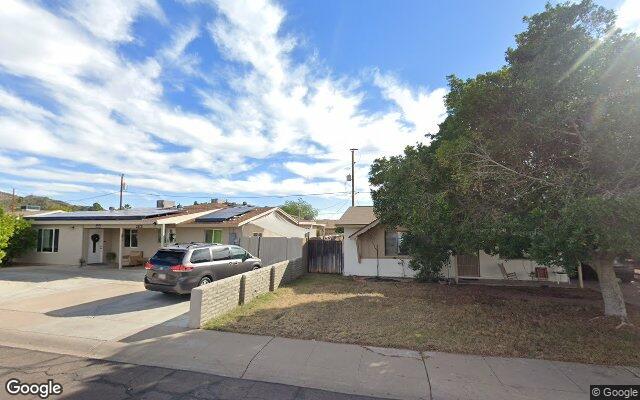
A medium home, reviewed on public record.
© Google Street View
Compared to 1,661 Arizona facilities with a similar number of beds.
Care · 36-month window. Higher percentile = better performance on inspection record. Source: Arizona Dept. of Health Services · Bureau of Residential Facilities Licensing.
among peers to rank.
Rankings based on 36-month ADHS inspection data. Severity and frequency: fewer citations = higher percentile. Repeat rate: lower repeat citation share = higher percentile.
Citation history, plotted month by month.
13 deficiencies on record. Each bar is a month with a citation.
Finding distribution
13 total · 36 monthsScope × Severity (CMS A–L)
Every inspection visit, verbatim.
1 inspection in the public record, most recent first. Plain-language summaries open first — click into any row for the full citation text.
2025-08-19Annual Compliance VisitA.A.C. · 13 findings
“Based on documentation review, interview, and record review, the governing authority failed to develop and administer a training program for all staff regarding fall prevention and fall recovery. Findings include: 1. A review of Department documentation revealed this statute went into effect on October 1, 2021. 2. A review of facility documentation revealed a policy and procedure (P&P) titled “FALL PREVENTION AND FALL RECOVERY TRAINING PROGRAM.” The P&P stated: “a. The assisted living facility shall develop and administer a comprehensive training program for all staff concerning fall prevention and fall recovery. b. The training program shall encompass initial training for newly hired staff and continued competency training for existing staff.” However, the P&P did not clearly include a time frame for continued competency training. 3. In an interview, E1 clarified facility personnel received the training upon hire and annually thereafter. 4. A review of E2’s personnel record revealed E2 was hired as the manager in 2025. The review revealed documentation demonstrating E2 received training regarding fall prevention and fall recovery through a third party company on January 7, 2025, before E2 was hired, and not by the facility upon hire as stated in the P&P. 5. A review of E3’s personnel record revealed E3 was hired as a caregiver before this statute went into effect. The review revealed E3 received training regarding fall prevention and fall recovery through a third party company on November 11, 2021, and February 15, 2024, and not by the facility as stated in the P&P. The review revealed E3 received training regarding fall prevention and fall recovery by the facility on July 7, 2025. The review further revealed more than one year between the trainings on November 11, 2021, and February 15, 2024, as well as between the trainings on February 15, 2024, and July 7, 2025. 6. A review of E5’s personnel record revealed E5 was hired as an assistant caregiver in March 2025 then promoted to caregiver in April 2025. However, the review revealed E5 did not receive training regarding fall prevention and fall recovery until July 7, 2025, and not upon hire as stated in the P&P. 7. In an interview, when the Compliance Officer brought up the issue of E2’s, E3’s, and E5’s fall prevention and fall recovery training, E1 offered no comment.”
“Based on documentation review, record review, and interview, the chief administrative officer failed to implement tuberculosis (TB) infection control activities including annually providing training and education related to recognizing the signs and symptoms of TB, for two of five sampled employees. The deficient practice posed a potential TB exposure risk to residents. Findings include: 1. A review of Department documentation revealed this rule went into effect on May 4, 2022. 2. A review of CDC.gov revealed a webpage titled "Tuberculosis Screening, Testing, and Treatment of U.S. Health Care Personnel: Recommendations from the National Tuberculosis Controllers Association and CDC, 2019," published by the U.S. Department of Health and Human Services. The webpage stated: "The 2005 CDC recommendations for testing U.S. health care personnel have been updated and now include…6) annual TB education of all health care personnel." The review of the website revealed the 2005 CDC recommendations on a webpage titled “Guidelines for Preventing the Transmission of Mycobacterium tuberculosis in Health-Care Settings, 2005.” The webpage stated: “The setting should document that all HCWs [Health-Care Workers]...have received initial TB training relevant to their work setting and additional occupation-specific education. The level and detail of baseline training will vary according to the responsibilities of the HCW and the risk classification of the setting…Initial TB training should be provided before the HCW starts working.” 3. A review of E3’s personnel record revealed E3 was hired as a caregiver before this rule went into effect. The review revealed E3 received training and education related to recognizing the signs and symptoms of TB on January 15, 2024, and March 17, 2025, and not initially or annually thereafter. 4. A review of E5’s personnel record revealed E5 was hired as an assistant caregiver in March 2025 then promoted to caregiver in April 2025. However, the review revealed E5 did not receive training and education related to recognizing the signs and symptoms of TB until April 8, 2025, and not upon hire. 5. In an interview, when the Compliance Officer brought up the issue of E3’s and E5’s TB training, E1 offered no comment. Technical assistance was provided on this rule during the compliance inspection conducted on August 16, 2023.”
“Based on documentation review, record review, and interview, the governing authority failed to ensure compliance with Arizona Revised Statutes (A.R.S.) § 36-411(C), for one of five sampled employees. The deficient practice posed a risk if the employees were a danger to a vulnerable population. Findings include: 1. A.R.S. § 36-411(C)(3) states: "C. Each residential care institution, nursing care institution and home health agency shall make documented, good faith efforts to: 3. Beginning January 1, 2025, verify that a potential employee is not on the adult protective services registry pursuant to section 46-459.” 2. A review of E5's personnel record revealed E5 was hired after January 1, 2025. The review revealed a printout from the Adult Protective Services (A.P.S.) registry dated March 26, 2025, after E5 was hired. The printout revealed E5 was not on the A.P.S. registry. However, the review revealed facility personnel did not check the A.P.S. registry until after E5 was hired. 3. In an interview, E1 confirmed facility personnel did not check the A.P.S. registry for E5 until after E5 was hired.”
“Based on documentation review, observation, and interview, the manager failed to ensure a list of resident rights was conspicuously posted. The deficient practice posed a risk if residents were not properly informed of their rights. Findings include: 1. Arizona Administrative Code (A.A.C.) R9-10-101(54)(a-b) states: "'Conspicuously posted' means placed: a. At a location that is visible and accessible; and b. Unless otherwise specified in the rules, within the area where the public enters the premises of a health care institution." 2. The Compliance Officer observed a document titled "RESIDENT'S RIGHTS" posted where the public entered the premises of the health care institution. 3. A review of the facility's "RESIDENT'S RIGHTS" posting revealed it stated: "B. A resident has the following rights: 7. To receive a referral to another health care institution if the assisted living in [sic] unable to provide physical health services or behavioral health services for the residents." However, this statement was contrary or inconsistent with the required resident rights listed in A.A.C. R9-10-810(C)(7) which states: "C. A resident has the following rights: 7. To receive a referral to another health care institution if the assisted living facility is not authorized or not able to provide physical health services or behavioral health services needed by the patient." 4. In an interview, E1 acknowledged the posted resident rights did not match those required by rule. This is a repeat citation from the compliance inspection conducted on August 16, 2023.”
“Based on documentation review, record review, and interview, the manager failed to ensure a caregiver provided documentation of completion of a caregiver training program approved by the Department or the Board of Examiners for Nursing Care Institution Administrators and Assisted Living Facility Managers (NCIA Board), for two of four caregivers sampled. The deficient practice posed a risk if the individual was not qualified to provide the required services and the Department was provided false or misleading information. Findings: 1. A review of Department documentation revealed a Plan of Correction (POC) for this deficiency from the compliance inspection conducted on August 16, 2023. The POC indicated this deficiency was corrected on November 15, 2023. The POC stated: “Starts August 20, 2023, the Manager put [E4] as an Assistant Caregiver and no longer works by [E4’s self], rather a Certified Caregiver works with [E4] and under the supervision of the Delegated Manager. Work Schedule has been changed and [E4], and 2 others [E1 and E3] were enrolled in November 15, 2023 at CAREE, a Certified Caregiving Training Program…[E1, E3, and E4 are] supposed to take the test on January 2024.” 2. A review of E3's personnel record revealed E3 was hired as a caregiver in 2021. However, the review revealed E3’s caregiver certificate was not issued until June 25, 2025. 3. A review of E4's personnel record revealed E4 was hired as a caregiver in 2022. However, the review revealed E4’s caregiver certificate was not issued until November 23, 2024. 4. A review of the caregiver certificate verification website (azcg.tmutest.com) revealed the following: - E1 received a caregiver certificate on January 27, 2024, as reported in the POC; - E3 did not receive a caregiver certificate until June 25, 2025, in contradiction with the POC; and - E4 did not receive a caregiver certificate until November 23, 2024, in contradiction with the POC. 5. A review of facility documentation revealed a series of personnel schedules dated between June 2024 and November 2024. The schedule revealed the following: - On 25 occasions in June 2024, E3 and E4 worked the morning shift (7:00 AM to 7:00 PM) without a certified caregiver present; - On four occasions in June 2024, E4 worked the night shift (7:00 PM to 7:00 MM) without a certified caregiver present; - On 27 occasions in July 2024, E3 and E4 worked the morning shift without a certified caregiver present; - On 27 occasions in August 2024, E3 and E4 worked the morning shift without a certified caregiver present; - On 25 occasions in September 2024, E3 and E4 worked the morning shift (7:00 AM to 7:00 PM) without a certified caregiver present; - On 28 occasions in October 2024, E3 and E4 worked the morning shift without a certified caregiver present; and - On 20 occasions in November 2024, E3 and E4 worked the morning shift without a certified caregiver present. 6. In an interview, when the Compliance Officer brought up the issue of E3 and E4 working alone without caregiver certificates, E1 offered no comment. This is a repeat citation from the compliance inspection conducted on August 16, 2023.”
“Based on documentation review, record review, and interview, the manager failed to ensure a caregiver's or assistant caregiver’s skills and knowledge were verified and documented before the caregiver or assistant caregiver provided physical health services, for one of four sampled applicable personnel. The deficient practice posed a risk if a caregiver or assistant caregiver did not have the skills and knowledge necessary to meet a resident's needs. Findings include: 1. A review of facility documentation revealed a policy and procedure (P&P) titled “EMPLOYEE ORIENTATION” dated October 2018. The P&P stated, “New staff will be given an orientation form/skills/knowledge verification form and it will be completed by the manager or manager’s designee and the employee before providing services to residents.” The review further revealed a series of personnel schedules which indicated E5 worked several shifts each month between May 2025 and August 2025. 2. A review of R1’s, R2’s, R3’s, R4’s, R5’s, R6’s, R7’s, R8’s, R9’s, and R10’s medical records revealed documentation of assisted living services provided to the ten residents (ADLs) and medication administration records (MARs) dated August 2025. The ADLs and MARs revealed E5 provided assisted living services and medication administration to all ten residents in August 2025. 3. A review of E5’s personnel record revealed E5 was hired as an assistant caregiver in March 2025 then promoted to caregiver in April 2025. The review revealed an orientation and skills and knowledge checklist. However, the “EMPLOYEE SKILLS CHECKED” portion was blank.” The review revealed no documentation of E5’s skills and knowledge as an assistant caregiver or as a caregiver. 4. In an interview, E1 reported the manager had not verified and documented E5’s skills and knowledge.”
“Based on record review, documentation review, and interview, the manager failed to ensure an assisted living facility had caregivers and assistant caregivers with the qualifications, experience, skills, and knowledge necessary to meet the needs of a resident and ensure the health and safety of a resident. The deficient practice posed a risk if the employees were unable to ensure the health and safety of a resident. Findings include: 1. A review of E3's personnel record revealed E3 was hired as a caregiver in 2021. However, the review revealed E3’s caregiver certificate was not issued until June 25, 2025. 2. A review of E4's personnel record revealed E4 was hired as a caregiver in 2022. However, the review revealed E4’s caregiver certificate was not issued until November 23, 2024. 3. A review of the caregiver certificate verification website (azcg.tmutest.com) confirmed E3 did not receive a caregiver certificate until June 25, 2025, and E4 did not receive a caregiver certificate until November 23, 2024. 4. A review of facility documentation revealed a series of personnel schedules dated between June 2024 and November 2024. The schedule revealed the following: - On 25 occasions in June 2024, E3 and E4 worked the morning shift (7:00 AM to 7:00 PM) without a certified caregiver present; - On four occasions in June 2024, E4 worked the night shift (7:00 PM to 7:00 MM) without a certified caregiver present; - On 27 occasions in July 2024, E3 and E4 worked the morning shift without a certified caregiver present; - On 27 occasions in August 2024, E3 and E4 worked the morning shift without a certified caregiver present; - On 25 occasions in September 2024, E3 and E4 worked the morning shift (7:00 AM to 7:00 PM) without a certified caregiver present; - On 28 occasions in October 2024, E3 and E4 worked the morning shift without a certified caregiver present; and - On 20 occasions in November 2024, E3 and E4 worked the morning shift without a certified caregiver present. 5. In an interview, when the Compliance Officer brought up the issue of E3 and E4 working alone without caregiver certificates, E1 offered no comment. 6. A review of E5’s personnel record revealed E5 was hired as an assistant caregiver in March 2025 then promoted to caregiver in April 2025. The review revealed an orientation and skills and knowledge checklist. However, the “EMPLOYEE SKILLS CHECKED” portion was blank.” The review revealed no documentation of E5’s skills and knowledge as an assistant caregiver or as a caregiver. 7. A review of facility documentation revealed a series of personnel schedules which indicated E5 worked several shifts each month between May 2025 and August 2025. 8. In an interview, E1 reported the manager had not verified and documented E5’s skills and knowledge.”
“Based on observation, documentation review, record review, and interview, the manager failed to ensure documentation was maintained for at least 12 months after the last date on the documentation of the caregivers and assistant caregivers working each day, including the hours worked by each. The deficient practice posed a risk as the Department was provided false or misleading information. Findings include: 1. When the Compliance Officer arrived at the facility at approximately 9:45 AM, the Compliance Officer observed E3 and E4 working at the facility and no other personnel. Shortly thereafter, the Compliance Officer observed E1 arrive. 2. A review of facility documentation revealed a personnel schedule dated August 2025. The schedule indicated E3 and E5 were scheduled to work between 7:00 AM and 7:00 PM on the date of the inspection with E4 being scheduled to work between 7:00 PM and 7:00 AM, in contradiction with the Compliance Officer’s observation. 3. A review of R1’s, R2’s, R3’s, R4’s, R5’s, R6’s, R7’s, R8’s, R9’s, and R10’s medical records revealed documentation of assisted living services provided to all 10 residents (ADLs) dated August 2025. The ADLs revealed documentation demonstrating the following: - On August 1, 4-8, and 11, 2025, E5 provided all services, day and night; - On August 2-3, 9-10, 12-16, and 18, 2025, E4 provided all services, day and night; and - On August 17, 2025, E3 provided all services, day and night. 4. A review of facility documentation revealed a personnel schedule dated August 2025. The schedule revealed documentation demonstrating the following in contradiction with the ADLs: - E3 did not work on August 17, 2025; - E4 did not work on August 2-3, 9-10, and 16, 2025; - E4 did not work from 7:00 AM to 7:00 PM on August 12-15 and 18, 2025; and - E5 did not work from 7:00 PM to 7:00 AM on August 1 and 4-8, 2025. 5. In an interview, E1 acknowledged the personnel schedule was inaccurate. E1 reported E6 was out and E3 was with E1 at a training during the day on August 17, 2025. E1 reported E4 covered E5’s morning shifts on August 18-19, 2025. E1 reported caregivers from E1’s other home often came and helped at this facility and vice versa. E1 acknowledged E1 did not update the personnel schedule to reflect the changes. The Compliance Officer requested an accurate personnel schedule. 6. A review of facility documentation revealed a newly created personnel schedule dated August 2025. The schedule revealed documentation demonstrating the following in contradiction with the ADLs: - E3 did not work from 7:00 AM to 7:00 PM on August 17, 2025; - E4 did not work from 7:00 AM to 7:00 PM on August 2-3, 9-10, and 12-16, 2025; - E4 did not work from 7:00 PM to 7:00 AM on August 18, 2025; and - E5 did not work from 7:00 PM to 7:00 AM on August 1, 4-8, and 11, 2025. 7. A review of R1’s, R2’s, R3’s, R4’s, R5’s, R6’s, R7’s, R8’s, R9’s, and R10’s medical records revealed medication administration records (MARs) dated August 2025. The MARs revealed E3 administered all medications at all documented times to all ten residents on August 17, 2025. 8. A review of facility documentation revealed the original personnel schedule dated August 2025 which indicated E3 did not work on August 17, 2025. Instead, the schedule revealed E6 and E7 worked from 7:00 AM to 7:00 PM and E8 worked from 7:00 PM to 7:00 AM. The review further revealed the newly created personnel schedule dated August 2025 which indicated E3 did not work from 7:00 AM to 7:00 PM on August 17, 2025. Instead, the schedule revealed E6 and E8 worked from 7:00 AM to 7:00 PM and E3 and E4 worked from 7:00 PM to 7:00 AM. Both the original and newly created personnel schedules were in contradiction with the MARs. 9. In an interview, when the Compliance Officer asked if E3 had worked on Sunday, August 17, 2025, E3 stated, “No.” When the Compliance Officer showed E3 the MARs with E3’s initials under August 17, 2025, E3 paused and reported E3 administered the morning medications at approximately 7:30 AM then left the facility at approximately 9:00 AM for a training. E1 reported E3 returned at approximately 12:00 PM to administer the lunch medications, left again at approximately 1:00 PM to continue the training, then returned again shortly before 4:00 PM. 10. A comparison between all ten residents’ ADLS, MARs, and both the original and newly created personnel schedules revealed contradictions on August 1-18, 2025. 11. In an interview, E1 reported the newly created schedule was accurate. When the Compliance Officer pointed out the discrepancies between the schedule, what E1 and E3 had already reported, the ADLs, and the MARs, E1 reported the caregivers lived at the facility and helped out whenever needed, even when the caregiver was not on the schedule. When the Compliance Officer informed E1 that doing so meant the schedule was inaccurate, E1 again argued the schedule was accurate, despite the discrepancies between the newly created schedule, what E1 and E3 had already reported, the ADLs, and the MARs. When the Compliance Officer again explained the schedule did not match what E1 and E3 had already reported, the ADLs, or the MARs, E1 offered no comment.”
“Based on record review and interview, the manager failed to ensure a resident had a service plan that was established and documented that included the amount, type, and frequency of assisted living services being provided to the resident, for two of two sampled residents. Findings include: 1. A review of R1's medical record revealed a current service plan. The service plan indicated R1 was incontinent and was to receive “Total [incontinence] care.” However, the service plan did not include the frequency of incontinence care. The review revealed documentation of assisted living services provided to R1 (ADLs) dated August 2025. The ADLs revealed R1 received frequent assistance with ambulation, checks on R1’s whereabouts throughout the day, night checks, partial baths, and turns while in bed. However, R1’s service plan did not include these five services. 2. A review of R2's medical record revealed a current service plan. The service plan indicated R2 was to receive assistance with feeding, mobility, and toileting. However, the service plan did not include the frequency of these three services. The review revealed ADLs dated August 2025. The ADLs revealed R2 received frequent checks on R2’s whereabouts throughout the day, night checks, partial baths, and turns while in bed. However, R2’s service plan did not include these four services. The service plan further indicated R2 was to receive assistance with dressing and hygiene on a daily basis. 3. In an interview, E1 reported R2 received assistance with dressing and hygiene twice per day. E1 acknowledged R1’s and R2’s service plans did not include the accurate amount, type, and frequency of assisted living services being provided to R1 and R2. This is a repeat citation from the compliance inspection conducted on August 16, 2023.”
“Based on interview and observation, the manager failed to ensure a resident's medical record was protected from loss, damage, or unauthorized use. The deficient practice posed a risk of protected and sensitive resident health information being disclosed without the resident's consent or knowledge. Findings include: 1. In an interview, the Compliance Officer requested the resident medical records. E4 reported the medical records were kept in a closet in the office area. 2. The Compliance Officer observed E4 reach into a small basket on a shelf in the office area and retrieve a set of keys. The Compliance Officer observed E4 use one of the keys to unlock a closet in the office. Inside the closet, the Compliance Officer observed resident records. The Compliance Officer observed a binder containing resident records sitting on a shelf in the office area, separate from the closet. 3. In an interview, E4 reported the binder contained documentation of medications and assisted living services provided to the residents. 4. The Compliance Officer observed other binders containing resident records on the shelf below the first binder. 5. In an interview, E1 reported the other binders on the lower shelf were resident hospice binders. This is a repeat citation from the compliance inspections conducted on August 16, 2023, and March 10, 2022.”
“Based on record review, interview, and documentation review, the manager failed to ensure a resident’s medical record contained documentation of assisted living services provided to the resident, for ten of ten total residents. The deficient practice posed a risk as the Department was provided false or misleading information. Findings include: 1. A review of R1’s medical record conducted at approximately 10:15 AM revealed documentation of assisted living services provided to R1 (ADLs) dated August 2025. However, the ADLs revealed R1 had already received oral care twice, assistance with dressing twice, incontinence brief changes three times, as well as fluid intake encouragement and incontinence care for the entire day on the date of the inspection. The review further revealed R1 had already watched a movie or participated in a memory care game on the date of the inspection. 2. In an interview, E1 reported R1 had not watched any movies or participated in any memory care games on the date of the inspection. E1 further reported the facility personnel had only provided oral care and assistance dressing one time on the date of the inspection, and not twice as documented on the ADLs. 3. A review of R3’s, R7’s, and R8’s medical records conducted at approximately 10:15 AM revealed ADLs dated August 2025. However, the ADLs revealed R3, R7, and R8 had already received oral care twice, assistance with dressing twice, incontinence brief changes three times, as well as fluid intake encouragement and incontinence care for the entire day on the date of the inspection. 4. A review of R2’s, R4’s, R5’s, R6’s, R9’s, and R10’s medical records conducted at approximately 10:15 AM revealed ADLs dated August 2025. However, the ADLs revealed R2, R4, R5, R6, R9, and R10 had already received oral care twice, assistance with dressing twice, incontinence brief changes three times, as well as fluid intake encouragement, incontinence care, and wheelchair transfers for the entire day on the date of the inspection. 5. In an interview, E1 acknowledged caregivers signed for services not yet provided. E1 reported the caregiver signing off on the ADLs was not always the caregiver providing the services. E1 reported E3 was usually assigned to R4, R5, R7, and R8; E4 was usually assigned to R2, R3, R6, R9, and R10; and the night shift caregiver was assigned to all residents. E1 reported the caregiver providing the services to the resident would tell the caregiver assigned to document services that day that the service had been provided and that caregiver would then document those services. 6. A review of all ten residents’ ADLs for August 2025 revealed documentation demonstrating the following: - On August 1, 4-8, and 11, 2025, E5 provided all services, day and night; - On August 2-3, 9-10, 12-16, and 18, 2025, E4 provided all services, day and night; and - On August 17, 2025, E3 provided all services, day and night. 7. A review of facility documentation revealed a personnel schedule dated August 2025. The schedule revealed documentation demonstrating the following in contradiction with the ADLs: - E3 did not work on August 17, 2025; - E4 did not work on August 2-3, 9-10, and 16, 2025; - E4 did not work from 7:00 AM to 7:00 PM on August 12-15 and 18, 2025; and - E5 did not work from 7:00 PM to 7:00 AM on August 1 and 4-8, 2025. 8. In an interview, E1 acknowledged the personnel schedule was inaccurate. E1 reported E6 was out and E3 was with E1 at a training during the day on August 17, 2025. E1 reported caregivers from E1’s other home often came and helped at this facility and vice versa. The Compliance Officer requested an accurate personnel schedule. 9. A review of facility documentation revealed a newly created personnel schedule dated August 2025. The schedule revealed documentation demonstrating the following in contradiction with the ADLs: - E3 did not work from 7:00 AM to 7:00 PM on August 17, 2025; - E4 did not work from 7:00 AM to 7:00 PM on August 2-3, 9-10, and 12-16, 2025; - E4 did not work from 7:00 PM to 7:00 AM on August 18, 2025; and - E5 did not work from 7:00 PM to 7:00 AM on August 1, 4-8, and 11, 2025.”
“Based on record review, documentation review, and interview, the manager failed to ensure a resident's medical record contained documentation of medication administered to the resident that included the date and time of administration or assistance and the name and signature of the individual administering the medication, for ten of ten total residents. The deficient practice posed a risk as the Department was provided false or misleading information. Findings include: 1. A review of R1’s, R2’s, R3’s, R4’s, R5’s, R6’s, R7’s, R8’s, R9’s, and R10’s medical records revealed medication administration records (MARs) dated August 2025. The MARs revealed E3 administered all medications at all documented times to all ten residents on August 17, 2025. 2. A review of facility documentation revealed a personnel schedule dated August 2025 which indicated E3 did not work on August 17, 2025. Instead, the schedule revealed E6 and E7 worked from 7:00 AM to 7:00 PM and E8 worked from 7:00 PM to 7:00 AM. 3. In an interview, when the Compliance Officer asked if E3 had worked on Sunday, August 17, 2025, E3 stated, “No.” When the Compliance Officer showed E3 the MARs with E3’s initials under August 17, 2025, E3 paused and reported E3 administered the morning medications at approximately 7:30 AM then left the facility at approximately 9:00 AM for a training. E1 reported E3 returned at approximately 12:00 PM to administer the lunch medications, left again at approximately 1:00 PM to continue the training, then returned again shortly before 4:00 PM. 4. In an interview, E1 acknowledged the personnel schedule was inaccurate. E1 reported E6 was out and E3 was with E1 at a training during the day on August 17, 2025. E1 reported caregivers from E1’s other home often came and helped at this facility and vice versa. The Compliance Officer requested an accurate personnel schedule. 5. A review of facility documentation revealed a newly created personnel schedule dated August 2025 which indicated E3 did not work from 7:00 AM to 7:00 PM on August 17, 2025. Instead, the schedule revealed E6 and E8 worked from 7:00 AM to 7:00 PM and E3 and E4 worked from 7:00 PM to 7:00 AM. 6. In an interview, E1 reported the newly created schedule was accurate. When the Compliance Officer pointed out the discrepancies between the schedule, what E1 and E3 had already reported, and the MARs, E1 reported the caregivers lived at the facility and helped out whenever needed, even when the caregiver was not on the schedule. When the Compliance Officer informed E1 that doing so meant the schedule was inaccurate, E1 again argued the schedule was accurate, despite the discrepancies between the newly created schedule, what E1 and E3 had already reported, and the MARs. When the Compliance Officer again explained the schedule did not match what E1 and E3 had already reported or the MARs, E1 offered no comment. 7. A review of R1’s medical record revealed a MAR dated August 2025. The MAR indicated E3 administered risperidone to R1 at 2:00 PM on August 17, 2025, even though E3 was not present at the facility at that time. 8. A review of R2’s medical record revealed a MAR dated August 2025. The MAR indicated R2’s systolic blood pressure was 108 at 7:00 AM on August 17, 2025. However, the MAR revealed E3 administered “amloDIPINE…HOLD IF SBP<110” to R2 at 7:00 AM on August 17, 2025. 9. In an interview, E3 reported the medication had been held. E3 confirmed E3 had erroneously documented the medication as administered. 10. A review of R3’s medical record revealed a “CONTROLLED NARCOTIC LOG.” The log indicated E3 administered tramadol to R3 at 10:00 AM on August 17, 2025, even though E3 was not present at the facility at that time. 11. A review of R4’s and R5’s medical records revealed MARs dated August 2025. The MARs indicated E3 administered levothyroxine to R4 and R5 at 6:00 AM on August 17, 2025. 12. A review of R6’s medical record revealed a MAR dated August 2025. The MAR indicated E3 administered tetrabenazine to R6 at 6:00 AM, 10:00 AM, and 2:00 PM on August 17, 2025, even though E3 was not present at the facility at 10:00 AM and 2:00 PM. The MAR further indicated E3 administered hydroxyzine pamoate to R6 at 10:00 AM and 2:00 PM on August 17, 2025, even though E3 was not present at the facility at those times. 13. A review of R9’s medical record revealed a MAR dated August 2025. The MAR indicated E3 administered acetaminophen to R9 at 2:00 PM on August 17, 2025, even though E3 was not present at the facility at that time. 14. A comparison between all ten residents’ MARs and both the original and newly created personnel schedules revealed contradictions on August 1-18, 2025. 15. In an interview, E1 reported E6 administered all applicable medications at 6:00 AM and 2:00 PM on August 17, 2025, and not E3 as documented on the MARs. E1 reported the caregiver signing off on the MARs was not always the caregiver administering the medications. E1 reported E3 was usually assigned to R4, R5, R7, and R8; E4 was usually assigned to R2, R3, R6, R9, and R10; and the night shift caregiver was assigned to all residents. However, E1 stated, “Whoever feeds [the resident] is the one who gives the medication.” E1 reported the caregiver administering the medication would tell the caregiver assigned to document the administration that day that the medication had been administered and that caregiver would then document the administration.”
“Based on documentation review, record review, and interview, the manager failed to ensure a means of exiting the facility for a resident who did not have a key, special knowledge for egress, or the ability to expend increased physical effort that monitored or alerted employees of the egress of a resident from the facility. The deficient practice posed a risk as the facility was unaware of the egress of a resident from the facility. Findings include: 1. A review of Department documentation revealed the facility was authorized to provide directed care services. 2. A review of facility documentation revealed a “QUALITY MANAGEMENT REPORT” dated March 2025. The report revealed R1 had eloped from the facility on March 15, 2025. 3. A review of R1’s medical record revealed a progress note dated March 15, 2025. The progress note stated: “at 10:35 in the Morning we Found Out that [R1] was Missing. Caregivers were Busy For Accomodating the need’s oF the Other’s Residence. And key For the Main Door is inside the Drawer Close to the kitchen. An we did not expert that [R1] took the key and open the Door and [R1] Switch oFF the ALam and that’s why nobody noticed [R1] skip. One oF the caregivers Found out the Door is SLightLy open and the keys left inserted in the Door Lock. and caregiver PromptLy search [R1]. in the Street. And in about 20 Minutes searching [R1] we decide to call police to inform and Report what happen. Then one oF the caregivers Cantinue to search [R1] and Finally Found [R1] walking along the Street closed to the post oFFice. We called police to inform them that [R1] Found.” 4. A review of E4’s personnel record revealed an “Employee Warning Letter” dated March 15, 2025. The letter stated: “10:35 the Caregiver noticed that the door is slightly open Caregivers immediately locate [R1] because [R1] is the only one ambulate and have a history of escaping.Caregivers immediately called the Manager to report the incident and then 3 Staffs starts searching [R1], after 20minutes of searching caregivers failed to find [R1] the Manager seek the help of the Police…Around 12:30 one of the Caregivers found [R1] infront of the USPS Shaw Bute location walking.” 5. A review of Google Maps revealed the Unites States Postal Service Phoenix Shaw Butte Station was 0.6 miles walking distance from the facility. 6. In an interview, E1 confirmed the details of the incident.”
1 older inspection from 2023 are not shown above.
Get the complete record, translated into plain language — emailed to you.
Other facilities in Phoenix.
Other memory care facilities near Phoenix with similar care offerings.



Facility Watch · Premium
Family reviews
No reviews yet — be the first to share your experience