Happy Gallery Assisted Living LLC.
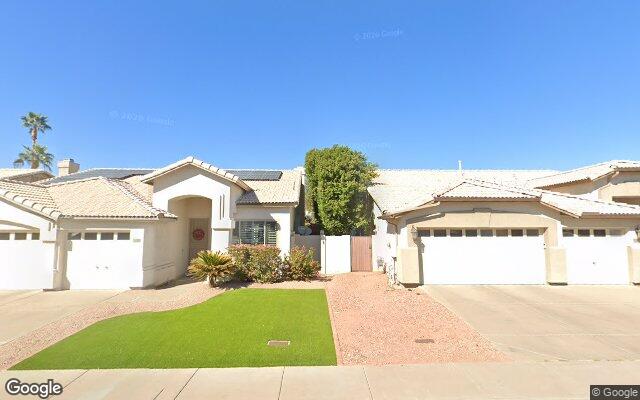
A small home, reviewed on public record.
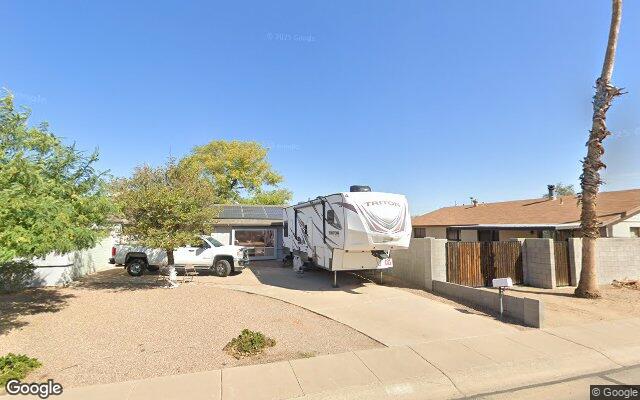
© Google Street View
Compared to 1,661 Arizona facilities with a similar number of beds.
Care · 36-month window. Higher percentile = better performance on inspection record. Source: Arizona Dept. of Health Services · Bureau of Residential Facilities Licensing.
among peers to rank.
on file.
Rankings based on 36-month ADHS inspection data. Severity and frequency: fewer citations = higher percentile. Repeat rate: lower repeat citation share = higher percentile.
Citation history, plotted month by month.
4 deficiencies on record. Each bar is a month with a citation.
Finding distribution
4 total · 36 monthsScope × Severity (CMS A–L)
Every inspection visit, verbatim.
2 inspections in the public record, most recent first. Plain-language summaries open first — click into any row for the full citation text.
2026-05-14Complaint InvestigationNo findings
2024-01-11Complaint InvestigationHigh Risk · 4 findings
“Based on documentation review and interview, after the manager had a reasonable basis, according to Arizona Revised Statutes (A.R.S.) \'a7 46-454, to believe abuse had occurred on the premises, the manager failed to take immediate action to stop the suspected abuse, report the suspected abuse according to A.R.S. \'a7 46-454, document the suspected abuse, including the dates, times, and description of the suspected abuse, a description of any injury to the resident related to the suspected abuse, any change to the resident's physical, cognitive, functional, or emotional condition, the names of witnesses to the suspected abuse, and actions taken by the manager to prevent the suspected abuse, maintain the documentation in subsection (J)(3) for at least 12 months after the date of the report in subsection (J)(2), and maintain a copy of the documentation required in subsection (J)(5) for at least 12 months after the date the investigation was initiated. The deficient practice posed a risk if the facility did not take any action to stop suspected abuse of a resident. Findings include: 1. A.R.S. \'a7 46-454(A) states: "A. A health professional, emergency medical technician, home health provider, hospital intern or resident, speech, physical or occupational therapist, long-term care provider, social worker, peace officer, medical examiner, guardian, conservator, fire protection personnel, developmental disabilities provider, employee of the department of economic security or other person who has responsibility for the care of a vulnerable adult and who has a reasonable basis to believe that abuse, neglect or exploitation of the adult has occurred shall immediately report or cause reports to be made of such reasonable basis to a peace officer or to the adult protective services central intake unit. The guardian or conservator of a vulnerable adult shall immediately report or cause reports to be made of such reasonable basis to the superior court and the adult protective services central intake unit. All of the above reports shall be made immediately by telephone or online." 2. In an interview, R1 reported former employee O1 kicked R1 in R1's lower back three times and hit R1 on the side of the head. R1 reported telling E1 about the allegations, however, there was no other discussion regarding the allegation. 3. A review of facility documentation revealed there was no documentation that included the dates, times, and description of the suspected abuse, a description of any injury to the resident related to the suspected abuse, any change to the resident's physical, cognitive, functional, or emotional condition, the names of witnesses to the suspected abuse, and actions taken by the manager to prevent the suspected abuse. 4. In an interview, E1 confirmed R1 did disclose the allegations about O1, however no additional task was completed regarding an investigation. E1 acknowledged the alleged abuse was not investigated, reported, or documented.”
“Based on documentation review, record review, and interview, the manager failed to ensure an individual who required continuous behavioral health services was not accepted or retained. The deficient practice posed a risk as the health care institution was not authorized to provide behavioral health services. Findings include: 1. Arizona Revised Statutes (A.R.S.) \'a7 36-401(11) states "Behavioral health services" means "services that pertain to mental health and substance use disorders and that are either: (a) Performed by or under the supervision of a professional who is licensed pursuant to title 32 and whose scope of practice allows for the provision of these services. (b) Performed on behalf of patients by behavioral health staff as prescribed by rule." 2. A.R.S. \'a7 36-401(13) states "Continuous" means "available at all times without cessation, break or interruption." 3. A review of Department documentation revealed the facility was not authorized to provide behavioral health services. 4. A review of R1's medical record revealed a document titled "Determination for Residency/Continued Residency" dated and signed by a physician on July 20, 2023. The document stated " [R1] requires continuous Behavioral Health Services under the direction of a behavioral health professional." 5. In an interview, E1 reported E1 believed R1 required behavioral services.”
“Based on a record review, observation, and interview, the manager failed to ensure a written service plan included a description of the resident's medical or health problems, including physical, behavioral, cognitive, or functional conditions or impairments, for one of one resident sampled. The deficient practice posed a risk if a resident's needs were not accurately reflected on the resident's service plan. Findings include: 1. A review of R3's medical record revealed a service plan dated September 30, 2023, for supervisory level of care. R3's service plan reflected R3 required a wheelchair as an assistive device for ambulation. 2. During the inspection, the Compliance Officer observed R3 ambulating in the facility without assistance or the use of a wheelchair. 3. In an interview, E1 reported R3 was ambulatory and did not use any assistive devices such as a wheelchair.”
“Based on observation and interview, the manager failed to ensure medications stored by the facility were stored in a locked area. The deficient practice posed a risk to residents who were not prescribed the accessible medication. Findings include: 1. During the environmental inspection of the facility, the Compliance Officer observed "Aspirin 81 mg" (milligrams) stored in the kitchen cabinet above the stove. The cabinet was not locked and was accessible to residents. 2. In an interview, E2 acknowledged the medication found in the kitchen cabinet was not stored in a locked location inaccessible to residents.”
Other facilities in Phoenix.
Other memory care facilities near Phoenix with similar care offerings.
Full Inspection Record
Family reviews
No reviews yet — be the first to share your experience