Happy Days Assisted Living.
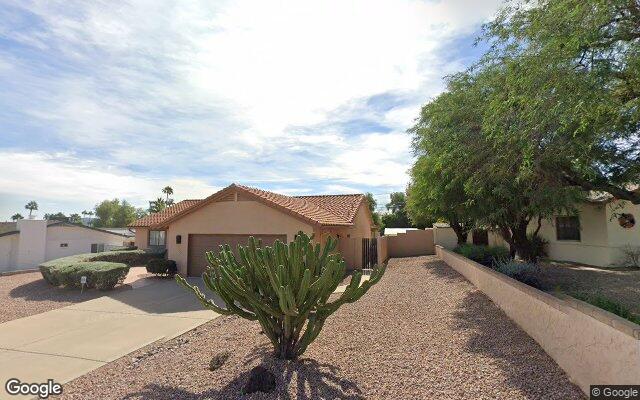
A medium home, reviewed on public record.
© Google Street View
Compared to 1,661 Arizona facilities with a similar number of beds.
Care · 36-month window. Higher percentile = better performance on inspection record. Source: Arizona Dept. of Health Services · Bureau of Residential Facilities Licensing.
among peers to rank.
on file.
Rankings based on 36-month ADHS inspection data. Severity and frequency: fewer citations = higher percentile. Repeat rate: lower repeat citation share = higher percentile.
Citation history, plotted month by month.
30 deficiencies on record. Each bar is a month with a citation.
Finding distribution
30 total · 36 monthsScope × Severity (CMS A–L)
Every inspection visit, verbatim.
2 inspections in the public record, most recent first. Plain-language summaries open first — click into any row for the full citation text.
2026-02-10Complaint InvestigationR9-10-803.A.7 · 21 findings
“Based on documentation review, observation, and interview, the governing authority failed to ensure that the Department was notified when there was a change in the manager. Findings include: 1. A review of Department documentation revealed that there was no manager listed or designated as the facility manager. 2. Further review of Department documentation revealed that effective October 10, 2025, O2 was no longer the owner or manager of the home. 3. While on-site for the complaint inspection, the Compliance Officers observed E1’s expired manager's license posted within the facility. The certificate expired on August 31, 2025. 4. In an interview, E1 reported E1 took over ownership and management of the facility from O2. 5. An on-line check of the Nursing Care Institution Administrators and Assisted Living Facility Managers revealed that E1 had a current manager's license. 6. In an exit interview, the findings were reviewed with E1, and no additional information was provided.”
“Based on observation, documentation review, and interview, the governing authority failed to ensure that a caregiver who was able to read, write, understand, and communicate in English was on the assisted living facility’s premises. The deficient practice posed a risk as residents and the Compliance Officer could not effectively communicate with the caregiver. Findings include: 1. Upon arrival to the facility for the complaint inspection, the Compliance Officer observed E2 to be the only care staff on-site. The Compliance Officer observed the inability for residents to communicate with E2 due to E2 being unable to understand and communicate in English. 2. A review of Department documentation revealed that O1 was unable to effectively communicate with E2 the day prior during an emergency situation because E2 could not speak fluent English. 3. In an interview, the Compliance Officer was unable to effectively communicate with E2 about the reason for the inspection and the required documentation that needed to be reviewed. 4. In an interview, R3 stated E2 couldn't understand or speak English and therefore, could not meet the residents' needs. When the Compliance Officer explained to R3 that the Compliance Officer needed to review documentation of incident reports, especially those pertaining to the incident involving the power being out the day prior, R3 stated there won't be any notes to review from E2 because E2 doesn't know how to write in English. 5. In an exit interview, the findings were reviewed with E1, and no additional information was provided.”
“Based on observation, interview, record review, and documentation review, the governing authority failed to ensure the health, safety, or welfare of a resident was not placed at risk of harm, for all residents. The deficient practice posed a risk to the physical health and safety of the residents. Findings include: 1. While on-site for the complaint inspection, the Compliance Officers observed the back door to the facility left ajar with a set of the facility keys in the deadbolt of the door; R2 was laying on a mattress on the floor with his body halfway off the bottom of the mattress and was unable to communicate with the Compliance Officer if R2 was ok; R2's call bell was on a dresser and inaccessible to R2, therefore, R2 was left laying on the floor with the bedroom door closed and no way to notify staff if R2 needed assistance; the facility's refrigerator and freezer were broken; the medication cabinet was unlocked and accessible to residents; and the storage cabinet at the end of the hall was open that contained poisonous and toxic substances. E2 was the only staff member present at the home. 2. In an interview, the Compliance Officers were unable to effectively communicate with E2 because E2 was unable to understand and communicate in English. 3. In an interview, R3 stated that R3 was without oxygen for at least an hour the previous day because there was no power at the house. R3 stated R3 was required to be on oxygen. R3 stated that R3 suffered an excruciatingly painful headache due to the lack of oxygen during the time the power was off. 4. In an interview with O1, O1 stated the power was off at the home when O1 arrived the previous day. O1 stated two residents at the home told O1 that the power had already been off for an hour. O1 was unable to communicate with the only caregiver present due to the caregiver's limited English. Approximately "20 plus minutes" after O1 had arrived, O1 eventually made contact via telephone with E1 to report the situation, in which E1 advised that E1 was already aware of. O1 reported that O1 expressed concern to E1 and told E1 that this was a life-threatening emergency for the resident without oxygen. O1 stated that E1 dismissed any concern for the resident. 5. A review of R3's medical record revealed a service plan dated November 11, 2025. Under the section titled "Medication/Treatment," it included "Oxygen administered via nasal cannula as ordered." 6. A review of Department documentation revealed that effective October 10, 2025, O2 was no longer the owner or manager of the home, and that E1 and E3 had assumed ownership. Further review of Department documentation revealed that the Department was never notified of who was taking over as manager for O2. 7. A review of personnel records revealed E2 did not have a personnel record and E1 only had a partial record. 8. In an interview, E1 stated that E1 was the manager. E1 also reported that E2 was a live-in caregiver. When asked, E1 confirmed that E2 did not have a personnel record and did not have a caregiver certificate; and therefore, was not a licensed caregiver. Neither E1 nor E2 could say exactly when E2 moved into the home and started working, except that it was "sometime in January." E1 then acknowledged that there was no licensed caregiver in the home at the time the Compliance Officer arrived for the complaint inspection. 9. In an exit interview, the findings were reviewed with E1, and no additional information was provided.”
“Based on observation, documentation review, record review, and interview, the manager failed to designate in writing a caregiver who was present on the assisted living home’s premises and accountable for the assisted living facility when the manager was not present. The manager also failed to ensure a certified caregiver was present on the assisted living facility’s premises and accountable for the assisted living facility when the manager was not present. The deficient practice posed a risk as no individual was designated to act on behalf of the governing authority in the on-site management of the assisted living facility. The deficient practice also posed a risk to the physical health and safety of the residents as there was no certified caregiver on-site. Findings include: 1. Upon arrival, the Compliance Officer observed E2 working alone at the home. Further observation revealed a posting on the wall titled "DELEGATION OF AUTHORITY." The document read as follows: "I, [O2], Manager of Happy Days Assisted Living Homes, LLC, give permission to: O2, O3, O6, Who is trained caregiver [sic] to act on my behalf and to sign all the documents as if I were physically present." The document was signed and dated by O2 on June 1, 2023. There was second posting hung on the wall titled, "MANAGER'S DESIGNATION." The document read as follows: "I, [O2], designate ALL THE BELOW STAFF to act as a Manager on my behalf for any period less than 30 days during which I am absent from my assisted living home." The document again listed O3 and O6, and was signed and dated by O2 on June 1, 2023. 2. A review of Department documentation revealed that O2 submitted written notification to the Department, stating that effective October 10, 2025, O2 was no longer the owner or manager of the home, and that the license had been transferred to E1 and E3. The notification also stated, "All operational responsibilities, management duties, and compliance obligations will henceforth be under the directions of the new owners." Further review of Department documentation revealed the Department was never notified of who was taking over as the designated manager for the home under the new ownership. 3. A review of facility documentation revealed a binder titled "Happy Days Assisted Living Home Employee Profile." On the cover of the binder, the following names were listed as having personnel records contained within the binder: O2, O3, O4, O5, and O6. Further review of facility documentation revealed a "Working Schedule" for October, November, and December of 2025, and for January 2026. Beginning October 12, 2025, which was just after the transfer of ownership, O2, O3, O4, O5, and O6 were no longer documented as being on the schedule. A review of the January 2026 schedule indicated that E1, E4, and E5 worked that month. There was not a current schedule for the month of February 2026. 4. In an interview, E1 stated E1 "didn't know who those people are," referring to O3, O4, O5, and O6 from the employee profile binder. 5. A review of current personnel records revealed that E1 only had a partial personnel record, and E2, E4, and E5 did not have personnel records available for review. 6. In an interview, E2 was able to communicate that E2 came to the home sometime about one month ago as a live-in caregiver. E2 was unable to tell the Compliance Officers where E2 came from; however, E2 was able to say that E2 came on a plane. 7. In an interview, E1 confirmed that E2 was not a certified caregiver and did not have a personnel record. 8. A review of R1's and R3's medical records revealed residency agreements. The residency agreements stated, "18. We provide at least one trained and certified caregiver on the premises 24 hours a day..." 9. In an exit interview, the findings were reviewed with E1, and no additional information was provided. This is an uncorrected deficiency from the complaint investigation and compliance inspection conducted on September 25, 2025.”
“Based on observation, documentation review, and interview, the manager failed to ensure documentation was maintained of the caregivers and assistant caregivers working each day, including the hours worked by each. The deficient practice posed a risk as there was no documentation to identify if qualified staff were present each day to ensure the health and safety of residents. Findings include: 1. While on-site for the complaint inspection, the Compliance Officer observed E2 working alone. 2. In an interview, E2 was asked what E2's work schedule was because there wasn't a posted schedule available for review. E2 communicated in broken English that E2 lived at the home so E2 worked all of the time. E2 also confirmed that E2 worked alone. E2 also communicated that E2 moved in and started working at the home about one month ago, but E2 could not say when. 3. In an interview, R1 and R3 confirmed that E2 worked at the home alone. R3 stated that, "On occasion, E4 would stop by." 4. A review of facility documentation revealed a binder titled "Happy Days Assisted Living Monthly Logs," which contained monthly work schedules. The most recent schedule available for review was January 2026. There was not a February 2026 schedule available for review. A review of the January 2026 schedule indicated that only E1, E4, and E5 worked that month, but the schedule did not include the hours worked by each. In addition, there was no documentation of when E2 worked in the month of January. 5. In an interview, E1 and E2 confirmed that E2 arrived to the home to live and work there "approximately one month ago" and "sometime in January." 6. In an exit interview, the findings were reviewed with E1, and no additional information was provided.”
“Based on observation, interview, documentation review, and record review, the manager failed to ensure that the manager or a caregiver was present at the assisted living home when a resident was present. The deficient practice posed a risk as a trained caregiver was not present to ensure residents received the care they needed. Findings include: 1. While on-site for the complaint inspection, the Compliance Officers observed E2 as the only care staff working at the home. 2. In an interview, R1 and R3 confirmed that E2 worked at the home alone and served as the residents' primary care staff. R3 also stated that E4 came by the facility "on occasion." 3. A review of facility documentation revealed there was no employee work schedule for February 2026. Further review revealed a work schedule for January 2026, but E2 was not listed on that schedule. The only employees listed as working on the January 2026 schedule were E1, E4, and E5. 4. In an interview, E1 and E2 confirmed that E2 arrived at the home to live and work there "approximately one month ago" and "sometime in January." 5. A review of personnel records revealed that E2 did not have a personnel record. 6. In an exit interview, the findings were reviewed with E1, and no additional information was provided.”
“Based on observation, interview, documentation review, and record review, the manager failed to ensure that all employees had a personnel record as required, for four of four personnel records reviewed. The deficient practice posed a risk as required information could not be verified for E1, E2, E3, and E4. Findings include: 1. While on-site for the complaint inspection, the Compliance Officers observed E2 as the only care staff working at the home. 2. In an interview, R1 and R3 confirmed that E2 worked at the home alone and served as the residents' primary care staff. R3 also stated that E4 came by the facility "on occasion." 3. A review of facility documentation revealed there was no employee work schedule for February 2026. Further review revealed a work schedule for January 2026, but E2 was not listed on that schedule. The only employees listed as working on the January 2026 schedule was E1, E4, and E5. 4. In an interview, E1 and E2 confirmed that E2 arrived to the home to live and work there "approximately one month ago" and "sometime in January." 5. A review of personnel records revealed E1 only had a partial personnel record. E2, E3, E4, and E5 did not have personnel records available for review. 6. In an exit interview, the findings were reviewed with E1, and no additional information was provided. This is an uncorrected deficiency from the complaint investigation and compliance inspection conducted on September 25, 2025.”
“Based on record review and interview, the manager failed to ensure that before or at the time of acceptance of an individual, the individual submitted documentation that was dated within 90 calendar days before the individual was accepted by the assisted living facility that included if the individual was expected to receive supervisory care services, personal care services, or directed care services; if the individual required continuous medical services, continuous or intermittent nursing services, or restraints; and was dated and signed by a physician, registered nurse practitioner, registered nurse, or physician assistant for one of three residents reviewed. The deficient practice posed a risk if the facility was unable to meet a resident's needs. Findings include: 1. A review of R2's medical record revealed there was no documentation available for review dated within 90 calendar days before R2 was accepted by the assisted living home, that indicated if R2 was expected to receive supervisory care services, personal care services, or directed care services; whether or not R2 required continuous medical services, continuous or intermittent nursing services, or restraints; and that was dated and signed by a physician, registered nurse practitioner, registered nurse, or physician assistant. 2. In an exit interview, the findings were reviewed with E1, and no additional information was provided.”
“Based on record review and interview, the manager failed to ensure there was a documented residency agreement with the assisted living home before or at the time of an individual’s acceptance by the assisted living home that met the requirements of R9-10-807.D.1-10 , for two of three residents reviewed. The deficient practice posed a risk if the resident was not informed of the terms of residency. Findings include: 1. A review of R1's medical record revealed a Residency Agreement in which the date of occupancy was left blank along with R1's financial responsibilities (i.e. the monthly fee). 2. A review of R2's medical record revealed a Residency Agreement from "House of Butterfly Assisted Living." The date of admission for the House of Butterfly Assisted Living did not match R2's date of admission to the current assisted living home. There was no other documentation of a Residency Agreement for the current assisted living home. 3. In an exit interview, the findings were reviewed with E1, and no additional information was provided.”
“Based on record review, interview, and observation, the manager failed to ensure that a caregiver or assistant caregiver provided a resident with the assisted living services in the resident’s service plan; was only assigned to provide the assisted living services the caregiver or assistant caregiver had the documented skills and knowledge to perform; provided assistance with activities of daily living (ADL's) according to the resident’s service plan; encouraged a resident to participate in activities planned according to subsection (E); and documented the services provided in the resident’s medical record, for three of three residents reviewed. The deficient practice posed a risk as services could not be verified as provided against a service plan. Findings include: 1. A review of R1's medical record revealed a service plan dated December 22, 2025. The service plan indicated that R1 required "blood sugar reading, monitoring, [and] recording done by trained caregiver" and "If blood sugar is less than 60, give an immediate source of sugar followed by complex carbohydrates." The service plan also indicated that R1's grooming needed to be completed by a "Trained Caregiver." E2, the live-in staff and only staff working at the time of the inspection, was not a certified caregiver and had no documentation of verified skills and knowledge. Furthermore, the service plan indicated that "Cognitive Stimulation" was to be provided by the caregiver. E2 was unable to read or articulate what cognitive stimulation was supposed to be provided to R1, and therefore, would have been unable to provide the above services listed in R1's service plan. 2. A review of R2's medical record revealed a service plan dated April 23, 2025. The service plan indicated that R2 received personal care services, which would have required R2's service plan to be updated in October 2025; however, there was no updated or current service plan available for review at the time of the inspection. The outdated service plan indicated that R2's bathing and grooming services needed to be completed by a "Trained Caregiver." E2 was not a certified caregiver. The service plan indicated that R2 was "Alert With Confusion," which required "simplified conversations and questions," and night checks every 3 to 4 hours. The service plan also indicated that "Cognitive Stimulation" was to be provided by the caregiver, which consisted of "Talking to the resident during service (feeding, incontinence checks/change; morning and evening change). E2 was unable to read, write, understand, and communicate in English, and therefore, would have been unable to provide the above services listed in R2's service plan. 3. A review of R3's medical record revealed a service plan dated November 11, 2025. The service plan indicated that R3 was diagnosed with Type 2 diabetes and chronic kidney disease, and "If blood sugar is less than 60, give an immediate source of sugar followed by complex carbohydrates." The service plan instructed the caregiver to call the physician if "pulse greater than 108 or less than 56." E2 was not a certified caregiver. The service plan also indicated that "Cognitive Stimulation" was to be provided by the caregiver, which consisted of "Talking to the resident during service (feeding, incontinence checks/change; morning and evening change). E2 was unable to read, write, understand, and communicate in English, and therefore, would have been unable to provide the above services listed in R3's service plan. 4. Further review of R1's, R2's, and R3's medical records revealed there were no documented ADL services for the current month or any previous months. In addition, there was no documentation of blood sugar checks for R1 and R3, or pulse readings for R3. 5. In an interview, R1 and R3 stated that E2 worked at the home alone. R3 stated that, "On occasion, E4 would stop by." R3 also stated that E2 can't communicate with the residents because R2 doesn't speak English. 6. While on-site for the complaint inspection, the Compliance Officer did not observe E2 engage with any of the residents or provide assistance to any of the residents. 7. In an exit interview, the findings were reviewed with E1, and no additional information was provided.”
“Based on record review and interview, the manager failed to ensure that a resident’s medical record contained documentation of medication administered to the resident that included the date and time of administration; the name, strength, dosage, and route of administration; and the name and signature of the individual administering the medication, for three of three residents reviewed. The deficient practice posed a risk as medication administration could not be verified against a medication order. Findings include: 1. A review of R1's medical record revealed a service plan dated December 22, 2025. The service plan indicated that R1 received medication administration. Further review revealed medication administration records (MAR) for December 2025 and February 2026. The December 2025 MAR only listed one medication - "Pantoprazole 40 MG, 1 Tab PO QD @ 8:00 AM." The rest of the MAR was blank, in that no administration of the medication had been documented for the entire month, and no caregiver or manager had signed the bottom of the form at the indicated spots. There was no January 2026 MAR. The February 2026 MAR was done on a form for "Joycare Dignity LLC." The MAR listed the following: - "Pantoprazole 40 MG, 1 Tab PO QD @ 8:00 AM"; - "Clopidogrel"; - "Amlodipine"; - "Carvedilol"; - "Tamsulosin"; - "Aspirin"; - "Sena"; and - "Tramadol". There was no strength, dosage, route of administration, or time for administration for the Clopidogrel, Amlodipine, Carvedilol, Tamsulosin, Aspirin, Senna, and Tramadol. The medication had been signed off as being administered from February 1-9, 2026. E2 signed off as administering all of R1's medications at the time the Compliance Officer had requested the MAR's. Although there was no strength, dosage, route of administration, or time for administration listed for the Tamsulosin, the MAR provided two slots for it to be administered and signed off, which indicated it was to be given twice a day. E2 signed off on both slots, which would have been prior to administering R1's second dose for the day. Therefore, E2 provided false or misleading information to the Department. 2. A review of R2's medical record revealed a service plan dated April 23, 2025. The service plan indicated that R2 received medication administration. Further review revealed a MAR for September 2025 and February 2026. There were no other MAR's available for review at the time of the inspection. The February 2026 MAR indicated medication administration had been signed off as being administered from February 1-9, 2026, except for the Haloperidol 1 MG at 8:00 PM on February 5, 2026, which was left blank. Medication administration for February 10, 2026, had not yet been documented as of 3:00 PM on February 10, 2026. 3. A review of R3's medical record revealed a service plan dated November 11, 2025. The service plan indicated that R3 received medication administration. Further review revealed a MAR for December 2025 and February 2026. The December 2025 MAR included the following medications: - "Tamsulosin 0.4 MG, 1 Tab PO QD @ 8:00 AM"; - "Acetamin 650 MG, 1 Tab PO TID @ 8:00 AM and 8:00 AM"; - "Lisinopril 5 MG, 1 Tab PO HS @ 8:00 AM"; - "Aspirin 81 MG, 1 Tab PO QD @ 8:00 AM"; - "Trazodone 150 MG, 1 Tab PO QD @ 8:00 PM"; - "Loperamide 2 MG, 1 Tab PO QD, Needed"; - "Furosemide 20 MG, 1/2 Tab PO QD, "Needed"; and - "Glimepiride 1 gm, 1 Tab PO QD". The rest of the MAR was blank, in that no administration of the medication had been documented for the entire month, and no caregiver or manager had signed the bottom of the form at the indicated spots. The February 2026 MAR included the same medications as the December 2025 MAR; however, the medications on the February 2026 MAR had been signed off as being administered from February 1-9, 2026, except for the Trazadone 150 MG on February 6, 2026, which was left blank. Medication administration for February 10, 2026, had not yet been documented as of 3:00 PM on February 10, 2026. 4. In an exit interview, the findings were reviewed with E1, and no additional information was provided.”
“Based on observation and interview, the manager failed to ensure that medications stored by the facility were stored in a locked room, closet, cabinet, or self-contained unit used only for medication storage. The deficient practice posed a health and safety risk for medications to be stored inappropriately. Findings Included: 1. During an environmental tour with E1, the Compliance Officers observed medication in the small refrigerator located in the common living room area that was not locked. The medications were: Four boxes of “Insulin Lispro Kwik Pen Injection”, Four boxes of “Lantus Insulin Glargine Injection”, Twenty Lorazepam 2MG/mL 0.25 mL (05.MG) per syringe, Four Morphine 20MG/mL 0.75 mL (15.MG) per syringe Five Morphine 20MG/mL 0.25 mL (5.MG) per syringe and 2. During an environmental tour with E1, the Compliance Officers observed two grocery bags and two paper bags full of medication for past residents and current residents located on top of a storage cabinet in the common living room area. 3. In an interview, E1 reported that the medication located on top of a storage cabinet in the common living room area was supposed to be disposed of. 4. In an exit interview, the findings were reviewed with E1 and E2, and no additional information was provided.”
“Based on observation and interview, the manager failed to ensure that food that was prepared, stored, and served to residents was free from spoilage, filth, or other contamination and was safe for human consumption. The deficient practice posed a risk to the physical health and safety of a resident. Findings include: 1. While on-site for the complaint inspection, the Compliance Officer observed the facility's main refrigerator and freezer (located in the kitchen) to be malfunctioning and/or broken. The thermometer in the refrigerator indicated the temperature was 60° F, and the thermometer in the freezer indicated the temperature was 39° F. There were two 30-count egg carton trays with approximately 40 eggs, plus additional bulk egg containers full of eggs; a gallon of milk; several loaves of bread; chicken broth; and exposed leftovers; juice; and iced tea stored in the refrigerator. There were also items being kept in the freezer that would typically be refrigerated, such as another gallon of milk, three bulk-sized coffee creamers, canned peaches, imitation crabmeat, and beef brats. The package of beef brats was open and the brats were exposed. There were also Tyson Chicken Patties in the freezer that were meant to be stored frozen, but the package was wide open, the chicken patties were exposed, and the patties were not frozen to the touch. 2. The Compliance Officer observed a plastic container of shrimp on the bedroom shelf in R3's room that was room temperature. 3. In an interview, R3 stated R3 couldn't keep the shrimp in the main refrigerator because it was broken and because E2 would eat it. R3 stated R3 was planning to eat the shrimp later that day. R3 also reported that the refrigerator and freezer in the kitchen had been broken since R3 was admitted into the facility. 4. In an exit interview, the findings were reviewed with E1, and E1 reported that R3 had a mini refrigerator in R3's room that R3 could have put the shrimp in. No other additional information was provided.”
“Based on observation and interview, the manager failed to ensure that food that was stored and served to residents was protected from potential contamination. The deficient practice posed a risk to the physical health and safety of a resident. Findings include: 1. While on-site for the complaint inspection, the Compliance Officer observed the facility's main refrigerator and freezer (located in the kitchen) to be malfunctioning and/or broken. The thermometer in the refrigerator indicated the temperature was 60° F, and the thermometer in the freezer indicated the temperature was 39° F. There were two 30-count egg carton trays with approximately 40 eggs, plus additional bulk egg containers full of eggs; a gallon of milk; several loaves of bread; chicken broth; and exposed leftovers; juice; and iced tea stored in the refrigerator. There were also items being kept in the freezer that would typically be refrigerated, such as another gallon of milk, three bulk-sized coffee creamers, canned peaches, imitation crabmeat, and beef brats. The package of beef brats was open and the brats were exposed. There were also Tyson Chicken Patties in the freezer that were meant to be stored frozen, but the package was wide open, the chicken patties were exposed, and the patties were not frozen to the touch. 2. The Compliance Officer observed a plastic container of shrimp on the bedroom shelf in R3's room that was room temperature. 3. In an interview, R3 stated R3 couldn't keep the shrimp in the main refrigerator because it was broken and because E2 would eat it. R3 stated R3 was planning to eat the shrimp later that day. R3 also reported that the refrigerator and freezer in the kitchen had been broken since R3 was admitted into the facility. 4. In an exit interview, the findings were reviewed with E1, and E1 reported that R3 had a mini refrigerator in R3's room that R3 could have put the shrimp in. No other additional information was provided.”
“Based on observation, documentation review, and interview, the manager failed to ensure that foods requiring refrigeration were maintained at 41° F or below, including potentially hazardous food. The deficient practice posed a risk to the physical health and safety of a resident. Findings include: 1. While on-site for the complaint inspection, the Compliance Officer observed the facility's main refrigerator and freezer (located in the kitchen) to be malfunctioning and/or broken. The thermometer in the refrigerator indicated the temperature was 60° F, and the thermometer in the freezer indicated the temperature was 39° F. The refrigerator and freezer settings were both set to "7 - Coldest." There were two 30-count egg carton trays with approximately 40 eggs, plus additional bulk egg containers full of eggs; a gallon of milk; several loaves of bread; chicken broth; exposed leftovers; juice; and iced tea stored in the refrigerator. There were also items being kept in the freezer that would typically be refrigerated, such as another gallon of milk, three bulk-sized coffee creamers, canned peaches, imitation crabmeat, and beef brats. 2. A review of the facility's policies and procedures revealed a policy titled "Equipment Maintenance and Kitchen Safety." The policy stated, "Facility staff...shall maintain all kitchen equipment in a safe and sanitary condition and in compliance with all applicable regulations...1. Inform all food service staff that kitchen equipment that is not kept clean or properly maintained can lead to food-related illnesses. 2. Check gauges on all refrigerators and freezers every day to prevent food spoilage and minimize any needed repair costs. Staff should complete a daily temperature log for refrigerators, freezers...and must immediately inform the...manager if a temperature is outside the acceptable range. Refrigerators should maintain temperatures of 41° F...Freezers should maintain temperatures of on F or below [sic]." 3. In an interview, R3 reported that the refrigerator and freezer in the kitchen had been broken since R3 was admitted into the facility. 4. In an exit interview, the findings were reviewed with E1, and no additional information was provided.”
“Based on observation, documentation review, and interview, the manager failed to ensure that frozen foods were stored at a temperature of 0° F or below. The deficient practice posed a risk to the physical health and safety of a resident. Findings include: 1. While on-site for the complaint inspection, the Compliance Officer observed the facility's main refrigerator and freezer (located in the kitchen) to be malfunctioning and/or broken. The thermometer in the refrigerator indicated the temperature was 60° F, and the thermometer in the freezer indicated the temperature was 39° F. The refrigerator and freezer settings were both set to "7 - Coldest." There were items being kept in the freezer that would typically be refrigerated, such as a gallon of milk, several coffee creamers, canned peaches, a "Ready to Eat Fully Cooked Turkey Breast", imitation crabmeat, and beef brats. There were also Tyson Chicken Patties in the freezer that were meant to be stored frozen, but the package was wide open, the chicken patties were exposed, and the patties were not frozen to the touch. 2. A review of the facility's policies and procedures revealed a policy titled "Equipment Maintenance and Kitchen Safety." The policy stated, "Facility staff...shall maintain all kitchen equipment in a safe and sanitary condition and in compliance with all applicable regulations...1. Inform all food service staff that kitchen equipment that is not kept clean or properly maintained can lead to food-related illnesses. 2. Check gauges on all refrigerators and freezers every day to prevent food spoilage and minimize any needed repair costs. Staff should complete a daily temperature log for refrigerators, freezers...and must immediately inform the...manager if a temperature is outside the acceptable range. Refrigerators should maintain temperatures of 41° F...Freezers should maintain temperatures of on F or below [sic]." 3. In an interview, R3 reported that the refrigerator and freezer in the kitchen had been broken since R3 was admitted into the facility. 4. In an exit interview, the findings were reviewed with E1, and no additional information was provided.”
“Based on documentation review, interview, observation, and record review, the manager failed to ensure that the premises and equipment used at the assisted living facility were free from a condition or situation that may cause a resident or other individual to suffer physical injury. The deficient practice posed a potential life-threatening emergency to a resident. Findings include: 1. A review of Department documentation revealed an incident from the day prior in which O1 arrived to the assisted living home to find that the electricity was shut off and there were alarms going off. Two residents reported to O1 that the electricity had been off for an hour. O1 called E1 to report the incident and to make E1 aware that a resident was without oxygen and that this was a life-threatening emergency. According to the report, "E1 dismissed concern for resident." 2. In an interview with O1, O1 stated the power was off at the home when O1 arrived the previous day. O1 stated two residents at the home told O1 that the power had already been off for an hour. O1 was unable to communicate with the only caregiver present due to the caregiver's limited English. Approximately "20 plus minutes" after O1 had arrived, O1 eventually made contact via telephone with E1 to report the situation, in which E1 advised that E1 was already aware of. O1 reported that O1 expressed concern to E1 and told E1 that this was a life-threatening emergency for the resident without oxygen. O1 stated that E1 dismissed any concern for the resident. 3. In an interview, the Compliance Officers were unable to effectively communicate with E2 because E2 was unable to understand and communicate in English. 4. In an interview, both R1 and R3 confirmed that the power was off for at least an hour the day prior. R3 stated that R3 was required to be on oxygen and had to go without oxygen for at least an hour the previous day due to the house being without power. R3 stated that R3 suffered an excruciatingly painful headache due to the lack of oxygen during the time the power was off. 5. While on-site for the complaint inspection, the Compliance Officers observed R3 to be on oxygen. 6. A review of R3's medical record revealed a service plan dated November 11, 2025. Under the section titled "Medication/Treatment," it included "Oxygen administered via nasal cannula as ordered." 7. In an exit interview, the findings were reviewed with E1, and no additional information was provided.”
“Based on observation and interview, the manager failed to ensure that poisonous or toxic materials stored by the assisted living home were maintained in a locked area and were inaccessible to residents. The deficient practice posed a risk to the physical health and safety of the residents. Findings include: 1. While on-site for the complaint inspection, the Compliance Officer observed a cabinet at the end of a hallway unsecured and open. The following was observed in the cabinet: 81 fluid ounce bottle of Clorox Bleach; a 19 ounce can of Lysol Disinfectant Spray; and a 2.8 ounce tube of Advanced Silicone (100% Silicone). 2. In an interview, E2 non-verbally acknowledged that the cabinet was not secured and left open. 3. In an exit interview, the findings were reviewed with E1, and no additional information was provided.”
“Based on observation, documentation review, and interview, the manager failed to ensure that equipment used at the assisted living home was maintained in working order and was used according to the manufacturer’s recommendations. The deficient practice posed a risk to the physical health and safety of a resident. Findings include: 1. While on-site for the complaint inspection, the Compliance Officer observed the facility's main refrigerator and freezer (located in the kitchen) to be malfunctioning and/or broken. The thermometer in the refrigerator indicated the temperature was 60° F, and the thermometer in the freezer indicated the temperature was 39° F. The refrigerator and freezer settings were both set to "7 - Coldest." The Compliance Officer also observed exposed components of the inside of the freezer (lightbulbs, wiring, and metal pieces) that would typically be covered. The freezer was being used as a refrigerator for the following items: a gallon of milk; three bulk-sized coffee creamers; canned peaches; a "Ready to Eat Fully Cooked Turkey Breast"; imitation crabmeat; and beef brats. 2. A review of the facility's policies and procedures revealed a policy titled "Equipment Maintenance and Kitchen Safety." The policy stated, "Facility staff...shall maintain all kitchen equipment in a safe and sanitary condition and in compliance with all applicable regulations...1. Inform all food service staff that kitchen equipment that is not kept clean or properly maintained can lead to food-related illnesses. 2. Check gauges on all refrigerators and freezers every day to prevent food spoilage and minimize any needed repair costs. Staff should complete a daily temperature log for refrigerators, freezers...and must immediately inform the...manager if a temperature is outside the acceptable range. Refrigerators should maintain temperatures of 41° F...Freezers should maintain temperatures of on F or below [sic]." 3. In an interview, R3 reported that the refrigerator and freezer in the kitchen had been broken since R3 was admitted into the facility. 4. In an exit interview, the findings were reviewed with E1, and no additional information was provided.”
“Based on observation and documentation review, the manager failed to ensure that a pet was vaccinated against rabies. Findings include: 1. While on-site for the complaint inspection, the Compliance Officer observed R3 to have a cat. 2. A review of facility documentation revealed there was no documentation available for review at the time of the inspection to indicate that R3's cat had been vaccinated against rabies. 3. In an exit interview, the findings were reviewed with E1, and no additional information was provided.”
“Based on observation, record review, and interview, the manager failed to ensure that a resident's sleeping area had a bed, consisting of at least a frame and a mattress for one of three residents reviewed. Findings include: 1. While on-site for the complaint inspection, the Compliance Officer observed R2 laying on a mattress on the floor under the window on the opposite side of the room as the bed frame. R2's body was halfway off the bottom of the mattress and R2 was unable to communicate with the Compliance Officer if R2 was ok. R2's call bell was on a dresser and inaccessible to R2. The bedroom door was kept closed so there was no way for R2 to notify staff if R2 needed assistance. 2. A review of R2's medical record revealed a service plan dated April 23, 2025. The service plan indicated that R2 received personal care services, which would have required R2's service plan to be updated in October 2025; however, there was no updated or current service plan available for review at the time of the inspection. The outdated service plan indicated that R2 was mobile and could transfer independently without assistance. There was nothing marked under the section "Safety Monitoring and Precautionary Measures;" however, available options under that section included "Supervision and Assistance Throughout the Day"; "Bed Alarm"; "High/Low Bed"; "Fall Mattress/Pad"; and "Monitoring Device." There was nothing in the service plan or in R2's medical record to indicate that R2 was a fall risk. 3. In an interview, E1 stated that E1 had to place R2's mattress across the room on the floor because R2 continued to fall from R2's bed. When asked if there were any incident reports, E1 stated there were none available for review. 4. In an exit interview, the findings were reviewed with E1, and no additional information was provided.”
2025-09-25Complaint InvestigationR9-10-803.A.9 · 9 findings
“Based on record review, documentation review, and interview, the manager failed to ensure that a personnel record for each employee or volunteer included documentation of compliance with the requirements in A.R.S. § 36-411(C). The deficient practice posed a risk if E1, E2, or E3 were a danger to a vulnerable population. Findings include: 1. A.R.S. § 36-411.C states: "C. Owners shall make documented, good faith efforts to: 1. Contact previous employers to obtain information or recommendations that may be relevant to a person's fitness to work in a residential care institution, nursing care institution or home health agency. 2. Verify the current status of a person's fingerprint clearance card. 3. Beginning January 1, 2025, verify that a potential employee is not on the adult protective services registry pursuant to section 46-459. If a potential employee is found to be on the adult protective services registry, the residential care institution, nursing care institution or home health agency may not hire the potential employee. 4. On or before March 31, 2025, verify that each employee is not on the adult protective services registry pursuant to section 46-459. If an employee is found to be on the adult protective services registry, the residential care institution, nursing care institution or home health agency shall take action to terminate the employment of that employee. 5. Beginning March 31, 2025, annually reverify that each employee is not on the adult protective services registry pursuant to section 46-459." 2. A record review of E1's and E3's personnel records revealed that an APS Central Registry check was not available for review. E2 did not have a personnel file available for review. 3. A documentation review by the Compliance Officer on September 25, 2025, of the Department’s website, AZ Care Check https://azcarecheck.azdhs.gov/s/, revealed that E1, E2, and E3 were not on the APS Central registry. 4. In an interview, E1 acknowledged that the manager failed to ensure that a personnel record for each employee or volunteer included documentation of compliance with the requirements in A.R.S. § 36-411(C).”
“Based on observation, documentation review, and interview, the manager failed to designate, in writing, a caregiver who was present on the assisted living facility’s premises and accountable for the assisted living facility when the manager was not present. The deficient practice posed a risk if the employees were unable to meet a resident's needs. Findings include: 1. Upon entering the facility, the Compliance Officer was greeted by E2. No other employees were present at the time. 2. During the inspection, the Compliance Officer observed the manager designee list hanging on the wall. E2 was not listed on the form. 3. A review of the facility's "Manager's Delegation" form stated, "ALL THE STAFF below to act as Manager on my behalf for any period less than 30 days during which I am absent from my assisted living home." 4. In an interview, E2 revealed the employee was a licensed caregiver but had no personnel record available for review. 5. In an interview, E2 acknowledged that the manager did not ensure a designated caregiver was present on the assisted living premises when the manager was not present.”
“Based on record review, documentation review and interview, the manager failed to ensure that an employee provided documentation of freedom from infectious Tuberculosis (TB) as specified in R9-10-113, for E1, E2, and E3. Findings include: 1. A record review of E1 and E3's personnel records revealed that the employees did not have a TB screening assessment form available for review. E3 provided one negative TB skin test and was missing the second required negative test. E2 did not have a personnel record available for review. 2. A documentation review of the facility's Policies and Procedures manual titled, "TB Screening", stated, "For each individual employed by, or provides volunteer services for, or is admitted to Espinoza & Co. Healthcare LLC, baseline screening will be performed that includes the following- a. Assessment risks of prior exposure to infectious tuberculosis, b. Determining if the individual has signs or symptoms of tuberculosis, and c. Obtain documentation of the individual's freedom from infectious tuberculosis." 3. In a phone interview, E1 acknowledged that the manager did not ensure E1, E2, and E3 provided documentation of freedom from infectious Tuberculosis (TB) as specified in R9-10-113.”
“Based on record review and interviews, the manager failed to ensure that a personnel record for each employee included documentation of cardiopulmonary resuscitation (CPR) training for three of three sampled employees. The deficient practice posed a risk if an employee was unable to meet a resident's needs during an emergency. Findings include: 1. A record review of E1 and E3's personnel records revealed that the employees' Cardiopulmonary Resuscitation (CPR) and First Aid (FA) certification expired on May 8, 2025 (E3) and June 8, 2025 (E1). 2. E2 did not have a personnel file available for review. 3. In an interview, E1 acknowledged that E1, E2, and E3 did not have current documentation of first aid training and cardiopulmonary resuscitation training certification specific to adults.”
“Based on record review and interview, the manager failed to ensure that a personnel record for each employee included the documentation required by this rule for one of three sampled employees. The deficient practice posed a risk as the required information for a personnel member could not be verified. Findings include: 1. A record review of personnel records revealed that a personnel record for E2 was not available for review at the time of the inspection. 2. In an interview, E2 revealed the employee was hired on September 23, 2025. 3. In a phone interview, E1 acknowledged that the manager failed to ensure that a personnel record for E2 included documentation required by this rule.”
“Based on record review and interview, the manager failed to ensure that a resident's service plan included the level of service the resident was expected to receive for one of three sampled residents. The deficient practice posed a risk as the service plan did not reinforce and clarify the services to be provided to a resident. Findings include: 1. A record review of R1's service plan revealed that the service plan dated June 6, 2025, did not list the level of service. 2. In a phone interview, E1 acknowledged that the manager failed to ensure the service plan for R1 listed the level of service.”
“Based on record review, documentation review, and interview, the manager failed to ensure that a resident's service plan was signed and dated by the resident or the resident’s representative. The deficient practice posed a risk if the service plan was not developed to articulate decisions and agreements. Findings include: 1. A record review of R2's medical record revealed the resident received Personal Care services per the resident’s service plan. 2. A record review of R2's medical record revealed that the resident's service plan dated April 23, 2025, was not signed by the resident or the resident's representative. 3. In a phone interview, E1 acknowledged that the manager did not obtain the signature of R2 or R2’s representative on the service plan as required.”
“Based on observation and interview, the manager failed to ensure that a medical record was maintained for 1 of 4 residents reviewed. The deficient practice posed a risk as the required information could not be verified. Findings include: 1. During the compliance inspection, the Compliance Officer requested to review the medical records for R1, R2, R3, and R4. 2. The medical record for R4 was not available for review. 3. In a phone interview, E1 acknowledged that a medical record was not maintained for R4.”
“Based on record review, documentation review and interview, the manager retained a resident confined to a bed or chair without meeting the requirements in R9-10-814.B.2.a.b.i-iii., including documentation to demonstrate the resident's primary care provider or other medical practitioner examined the resident at least once every six months throughout the duration of the resident's condition, reviewed the facility's scope of services, and signed and dated a determination stating the resident's needs were being met by the facility. The deficient practice posed a risk if the facility was unable to meet a resident's needs. 1. A record review of the “Determination For Continued Residency” form for R1 revealed that it was last completed and signed by a physician on December 1, 2023. 2. A record review of R1's Service Plan dated June 6, 2025, revealed that R1 was wheelchair bound. 3. A documentation review of the facility's “Determination For Continued Residency form” stated, "Licensee shall ensure that before or at the time of acceptance of an individual, the individual submits documentation that is dated within 30 calendars before the individual is accepted by an this facility and at least once every 6 months throughout the duration of the resident's condition." 4. In a phone interview, E1 acknowledged the manager did not obtain documentation to demonstrate that R1's primary care provider or other medical practitioner examined the resident at least once every six months throughout the duration of the resident's condition, reviewed the facility's scope of services, and signed and dated a determination stating the resident's needs were being met by the facility.”
1 older inspection from 2023 are not shown above.
Get the complete record, translated into plain language — emailed to you.
Other facilities in Phoenix.
Other memory care facilities near Phoenix with similar care offerings.


Full Inspection Record
Family reviews
No reviews yet — be the first to share your experience