Everlasting Services at Estrella Center.

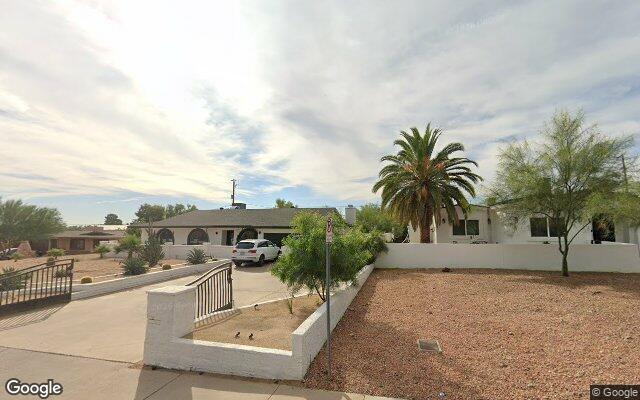
A large home, reviewed on public record.
© Google Street View
Compared to 116 Arizona facilities with a similar number of beds.
Care · 36-month window. Higher percentile = better performance on inspection record. Source: Arizona Dept. of Health Services · Bureau of Residential Facilities Licensing.
among peers to rank.
on file.
Rankings based on 36-month ADHS inspection data. Severity and frequency: fewer citations = higher percentile. Repeat rate: lower repeat citation share = higher percentile.
Citation history, plotted month by month.
35 deficiencies on record. Each bar is a month with a citation.
Finding distribution
35 total · 36 monthsScope × Severity (CMS A–L)
Every inspection visit, verbatim.
21 inspections in the public record, most recent first. Plain-language summaries open first — click into any row for the full citation text.
2026-05-29Complaint InvestigationNo findings
2026-05-21Complaint InvestigationNo findings
2026-04-15Complaint InvestigationA.A.C. · 2 findings
“36-420.04. Emergency responders; patient information; hospitals; discharge planning; patient screenings; discharge document A. An assisted living center or assisted living home that contacts an emergency responder on behalf of a resident shall provide to the emergency responder a written document that includes all of the following: 1. The reason or reasons the emergency responder was requested on behalf of the resident. 2. Whether the resident receives medication services and, if the resident has provided this information to the assisted living center or assisted living home, a list of all the resident's prescription and over-the-counter medications, their dosages and how frequently they are administered. 3. The name, address and telephone number of the resident's current pharmacy. 4. A list of any known allergies to any medications, additives, preservatives or materials like latex or adhesive. 5. The name and contact information for the resident's primary care physician and power of attorney or authorized representative. 6. Basic information about the resident's physical and mental conditions and basic medical history, such as having diabetes or a pacemaker or experiencing frequent falls or cardiovascular and cerebrovascular events, as well as dates of recent episodes, if known. 7. The point-of-contact information for the assisted living center or assisted living home, including the telephone number, if available, cell phone number and email address. A point of contact must be available to respond to questions regarding the information provided twenty-four hours a day, seven days a week. 8. A copy of the resident's health insurance portability and accountability act release authorizing a receiving hospital to communicate with the assisted living center or assisted living home to plan for the resident's discharge. This paragraph does not preclude a resident from revoking the resident's health insurance portability and accountability act r”
“A. A manager shall ensure that: 10. Before providing assisted living services to a resident, a manager or caregiver provides current documentation of first aid training and cardiopulmonary resuscitation training certification specific to adults.”
2026-02-19Complaint InvestigationA.A.C. · 2 findings
“Based on documentation review and interview, the assisted living home failed to maintain a copy of the document provided to the emergency responder as prescribed in A.R.S. § 36-420.04.A.1-9, for two of two applicable residents reviewed. The deficient practice posed a risk as the designated standards were not followed and the department was unable to ensure compliance with the applicable statute. Findings include: 1. A review of facility documentation revealed several incident reports for the month of February 2026 for both R2 and R3, in which EMS services were requested. 2. Further review of facility documentation revealed the facility had created and maintained the required pre-filled standardized EMS Transport forms and all of the necessary attachments for R2, R3, and the other residents. However, there were no copies of the EMS Transport forms that were completed at the time of each of the incidents that included the date and reason for the EMS request. 3. In an interview, E1 and E2 were certain that the EMS Transfer forms and required attachments were provided to emergency responders for each of the incidents involving R2 and R3, as that was part of the facility's standard process when a resident required EMS services. In addition, E1 and E2 were able to confirm with E3 that E3 provided EMS responders with the required paperwork for the incident in question involving R2. However, E1 stated that E1 was not aware of the requirement to make and maintain a copy of the specific EMS Transfer forms provided to EMS responders at the time of the incident/transfer, and therefore, had not made or maintained copies. 4. In an exit interview, the findings were reviewed with E1 and E2, and no additional information was provided.”
“Based on observation and interview, the governing authority failed to ensure the health, safety, or welfare of a resident was not placed at risk of harm, for one of one applicable resident reviewed. Findings include: 1. While on-site, the Compliance Officer observed the main entrance of the facility to be secured from the inside and outside, requiring an individual at the front desk to push a button to allow the door to open. Staff members with badges could also badge themselves out, which allowed the doors to open as well. 2. In an interview, E1 explained that R1 must have walked out the door when someone else was walking in or walking out, likely visitors or family members of other residents. R1 was personal care and required a POA/Guardian to sign R1 out and to accompany R1 on any outings; therefore, R1 should not have been able to leave the facility unaccompanied. Although R1 was not injured during this incident, R1's health, safety, and welfare were placed at risk of harm. E1 explained that this incident was a shock to the care staff, and that due to this incident, R1's level of care will be increased to directed care and R1 will be moved to a secure area of the building. 3. In an exit interview, the findings were reviewed with E1 and E2, and no additional information was provided. 4. This is a repeat deficiency from the complaint inspection conducted on October 6, 2025.”
2026-02-13Complaint InvestigationNo findings
2026-01-29Complaint InvestigationNo findings
2026-01-09Complaint InvestigationHigh Risk · 1 finding
“Based on record review, documentation review, and interview, the manager failed to provide written notification to the Department of a resident’s elopement, within 24 hours of the elopement being discovered. Findings include: 1. A record review of an incident report dated January 5, 2026 revealed, R1 was discovered missing at 09:00 AM. Upon review of security camera it was discovered that R1 eloped from the facility at 6:00 PM on January 4, 2026. The incident report stated, "[E1] submitted complaint to DHS at 4:46pm notifying of elopement." However, a review of Department records revealed written notification to the Department was not provided. 2. In an interview, E2 acknowledged the manager failed to provide written notification to the Department of a resident’s elopement, within 24 hours of the elopement being discovered.”
2026-01-07Complaint InvestigationHigh Risk · 1 finding
“Based on documentation review, record review, and interview, after the manager had a reasonable basis, according to A.R.S. § 46-454, to believe abuse, neglect, or exploitation had occurred on the premises, the manager failed to report the suspected abuse, neglect, or exploitation of the resident according to A.R.S. § 46-454. The deficient practice posed a risk as the Department was unable to assess if there was an immediate health and safety concern for residents who resided in the assisted living facility. Findings include: 1. A.R.S. § 46-454(A) states: "A health professional... or other person who has responsibility for the care of a vulnerable adult and who has a reasonable basis to believe that abuse, neglect or exploitation of the vulnerable adult has occurred shall immediately report or cause reports to be made of such reasonable basis to a peace officer or to the adult protective services central intake unit...The reports required by this subsection shall be made immediately by telephone or online." 2. Arizona Administrative Code (A.A.C.) R9-10-101(111) states, "'Immediate' means without delay." 3. A review of Department documentation revealed an altercation had occurred between R1 and R2 on December 17, 2025. 4. A review of facility documentation revealed a document titled "Resident Emergency Transfer Record," dated December 17, 2025. The document revealed R1 was "taken out by Emergency Medical Technicians (EMTs) for further evaluation..." 5. A review of facility documentation revealed a report dated December 17, 2025. The documentation indicated E1 was made aware of an allegation of abuse immediately following the incident. However, documentation of the immediate notification of a peace officer or Adult Protective Services (APS) was not available for review. 6. In an exit interview, the findings were reviewed with E1 and E2. E1 reported adult protective services was not notified of the incident, and no additional information was provided.”
2026-01-05Complaint InvestigationR9-10-806 · 3 findings
“Based on documentation review, record review, and interview, the manager failed to ensure a caregiver provided documentation of completion of a caregiver training program approved by the Department or the Board of Examiners for Nursing Care Institution Administrators and Assisted Living Facility Managers (NCIA Board), for one of three caregivers sampled. Findings include: 1. A review of documentation contained work schedules dated December 1, 2025, through December 7, 2025; December 8, 2025, through December 14, 2025; December 15, 2025, through December 21, 2025; and December 22, 2025, which reflected that E6 and E7 were scheduled to work as caregivers on various days. 2. A review of E6’s personnel record revealed a caregiver training certificate issued by "Arizona Caregiver Services" with program license number ALTP0131, issued November 10, 2009. E6’s record contained an undated verification from the NCIA Board's website, which reflected ALTP0131 expired January 31, 2009. 3. A review of the NCIA Board’s website stated ALTP0131 expired January 31, 2009. 4. A review of E7’s personnel record did not contain documentation of completion of a caregiver training program approved by the Department or the NCIA board. 5. In an interview, E1 acknowledged there was no documentation to reflect that E6 and E7 were issued documentation of completion of a caregiver training program approved by the Department or the NCIA board. E1 reported E6 worked as an assistant caregiver, despite the facility's work schedule reflecting E6 was scheduled to work as a caregiver.”
“Based on documentation review, record review, and interview, the manager failed to ensure a caregiver’s or assistant caregiver’s skills and knowledge were verified and documented before the caregiver or assistant caregiver provided physical health services or behavioral health services, and according to policies and procedures, for two of six caregivers' records reviewed. Findings include: 1. A review of documentation contained a policy titled “Employee Orientation” which stated “all caregivers, managers, and assistant caregivers (if applicable) skills and knowledge are verified and documented during new employee orientation and completed before providing assisted living services, which may include but not limited the following: (See facility new employee orientation)… Credentials verified: i.e caregiver certified, managers certification etc”. 2. A review of documentation contained work schedules dated December 1, 2025, through December 7, 2025; December 8, 2025, through December 14, 2025; December 15, 2025, through December 21, 2025; and December 22, 2025, which reflected that E6 and E7 were scheduled to work as caregivers on various days. 3. A review of E6’s personnel record revealed a caregiver training certificate issued by "Arizona Caregiver Services" with program license number ALTP0131, issued November 10, 2009. E6’s record contained an undated verification from the Arizona Nursing Care Institution Administrators and Assisted Living Facility Manager board website (NCIA Board), which reflected ALTP0131 expired January 31, 2009. 4. A review of the NCIA Board’s website stated ALTP0131 expired January 31, 2009. 5. A review of E7’s personnel record did not contain documentation of orientation or any other documentation that E7's skills and knowledge were verified before the caregiver provided physical health services. 6. In an interview, E1 acknowledged that E6’s skills and knowledge were not verified according to the above policy and procedure, and documentation of verification was documented in E6’s personnel record. Despite E6’s lack of verification, E6 continued to work on various days. 7. In an interview, E1 reviewed E7’s personnel record and acknowledged that there was no documentation that E7's skills and knowledge were verified at the time of the survey. This is a repeat deficiency from the complaint investigation and compliance inspections conducted on April 11, 2024, and May 8 and 9, 2025.”
“Based on record review and interview, the manager failed to ensure a caregiver provided a resident with the assisted living services in the resident's service plan and documented the services provided in the resident's medical record, for two of three sampled residents. The deficient practice posed a risk as the Department was provided with false or misleading information. Findings include: 1. A review of R1’s medical record revealed a service plan dated June 30, 2025. R1's service plan revealed R1 would be provided the following assistance: dressing and undressing, and grooming on every day and evening shift. 2. A review of R1’s medical record contained documentation of services provided dated December 2025, which stated R1 was not provided dressing assistance on the day shift on December 22, 2025, and December 29, 2025; and on the evening shift on December 10, 2025, December 16, 2025, December 22, 2025, and December 23, 2025. R1’s documentation reflected that grooming was not provided on December 16, 2025, December 25, 2025, and December 29, 2025. 3. A review of R2’s medical record contained documented titled “Progress Notes” which reflected “[R2] was taken to Banner ER” dated December 16, 2025; and “[R2] returned from hospital stay with two antibiotics” dated December 22, 2025. 4. A review of R2’s medical record contained documentation of services provided, which reflected that R2 was aided with activities of daily living between December 17, 2025, through December 21, 2025, despite R2 being unavailable, and was admitted into the hospital. 5. In an interview, E1 reviewed R1’s and R2’s medical records and acknowledged that the manager failed to ensure a caregiver provided a resident with the assisted living services in the resident's service plan and documented the services appropriately. This is a repeat deficiency from the complaint investigation and compliance inspection conducted on May 8 and 9, 2025.”
2025-10-06Complaint InvestigationR9-10-803.A.10 · 2 findings
“Based on documentation review, record review, observation, and interview, the governing authority failed to ensure the health, safety, or welfare of a resident was not placed at risk of harm. The deficient practice posed a risk to the physical health, safety, and overall welfare of the residents. Findings include: 1. Review of Department documentation revealed the facility was licensed for directed care. 2. Review of R1’s medical record revealed an incident report which stated, “Was called over by the caregivers to assess [R1]. Was told [R1] was acting strange. Upon assessing [R1], it was obvious that [R1] was intoxicated, and [R1] confirmed that [R1] was and where [R1] got [R1’s] hands on the hand sanitizer. Stated that [R1] got the hand sanitizer from another resident and let me know where to find it.” The report later revealed, “911 was called and [R1] was taken to the hospital for an evaluation.” 3. The Compliance Officer observed two unlocked housekeeper carts that contained the following: - A spray bottle of Odoban, - Two spray cans of Lisol; and - Two spray bottles of Windex. 4. The Compliance Officer observed an unlocked telecom room that contained the following: - Two spray cans of Scrub Free bathroom cleaner, - A bottle of Fabuloso, - A bottle of Bona hard surface cleaner, - A bottle of Spic Span disinfecting all purpose cleaner and glass cleaner; and - A bottle of Cloralen Bleach 5. In an exit interview, the findings were reviewed with E1, and no additional information was provided.”
“Based on documentation review, observation, and interview the manager failed to ensure poisonous or toxic materials were maintained in a locked area and inaccessible to residents. The deficient practice posed a risk to the physical health and safety of a resident. Findings include: 1. Review of Department documentation revealed the facility was licensed for directed care. 2. The Compliance Officer observed two unlocked housekeeper carts that contained the following: - A spray bottle of Odoban, - Two spray cans of Lisol; and - Two spray bottles of Windex. 3. The Compliance Officer observed an unlocked telecom room that contained the following: - Two spray cans of Scrub Free bathroom cleaner - A bottle of Fabuloso - A bottle of Bona hard surface cleaner - A bottle of Spic Span disinfecting all purpose cleaner and glass cleaner. - A bottle of Cloralen Bleach 4. Review of the facility’s policy and procedures revealed a policy titled, “Cleaning Supplies: Poisonous or toxic materials,” which stated, “2. Locked area separate from food preparation/ storage areas, dining areas, and medications. 3. Not accessible to residents,” 5. In an exit interview, the findings were reviewed with E1, and no additional information was provided.”
2025-09-25Complaint InvestigationR9-10-814.E · 2 findings
“Based on record review, observation, and interview, the manager failed to ensure a bell, intercom, or other mechanical means to alert employees to a resident’s needs or emergencies was available and accessible in a bedroom being used by a resident receiving personal care services. The deficient practice posed a risk if personnel could not react to a resident's needs or emergencies in a timely manner. Findings include: 1. A review of R2’s and R3’s medical records revealed service plans which indicated R2 and R3 were to receive personal care services. 2. The Compliance Officer observed call buttons in R2’s and R3’s bathrooms. However, the Compliance Officer observed no bells, intercoms, or other mechanical means to alert employees to R2’s and R3’s needs or emergencies in R2’s and R3’s bedrooms. 3. In an interview, E1 reported all bathrooms contained call buttons. However, E1 acknowledged R2’s and R3’s bedrooms did not have bells, intercoms, or other mechanical means to alert employees to R2’s and R3’s needs or emergencies.”
“Based on record review, observation, and interview, the manager failed to ensure a bell, intercom, or other mechanical means to alert employees to a resident's needs or emergencies was available in a bedroom being used by a resident receiving directed care services. The deficient practice posed a risk if personnel could not react to a resident's needs or emergencies in a timely manner. Findings include: 1. A review of R1’s medical record revealed a service plan which indicated R1 was to receive directed care services. 2. The Compliance Officer observed a call button in R1’s bathroom. However, the Compliance Officer observed no bell, intercom, or other mechanical means to alert employees to R1’s needs or emergencies in R1’s bedroom or on R1’s person. 3. In an interview, when the Compliance Officer asked how R1 summoned assistance, R1 reported R1 had to leave R1’s room to go find a caregiver. 4. In an interview, E1 reported all bathrooms contained call buttons. However, E1 acknowledged R1’s bedroom did not have a bell, intercom, or other mechanical means to alert employees to R1’s needs or emergencies.”
2025-06-18Complaint InvestigationNo findings
2025-05-19Complaint InvestigationA.A.C. · 2 findings
“Based on documentation review, record review, and interview, the governing authority failed to administer a training program for all staff regarding fall prevention and fall recovery. The deficient practice posed a risk if a staff member was not properly trained to assist a resident who had fallen and was unable to recover independently. Findings include: 1. A review of facility documentation revealed a policy and procedure (P&P) titled "Fall Prevention and Fall Recovery." The P&P stated: “The training program shall include initial training and continued competency training in Fall Prevention and Fall Recovery…2. Ongoing (continued competency training) will be provided and mandated annually.” 2. A review of E3’s personnel record revealed E3 was hired as a caregiver. The review revealed E3 received training regarding fall prevention and fall recovery on March 5, 2024, and March 10, 2025, and not annually as required per P&P. 3. In an interview, E1 confirmed E3 did not receive training regarding fall prevention and fall recovery between March 5, 2024, and March 10, 2025.”
“Based on documentation review, record review, and interview, the manager failed to ensure a caregiver provided current documentation of first aid training and cardiopulmonary resuscitation (CPR) training certification specific to adults before providing assisted living services to a resident, for one of two sampled caregivers. The deficient practice posed a risk if a caregiver was unable to meet a resident's needs during an emergency. Findings include: 1. A review of facility documentation revealed a policy and procedure (P&P) titled “Caregiver Employment Requirements.” The P&P stated: “The Manager will audit and verify that all caregivers hired meet the following criteria…8. CPR and First Aid is updated/renewed [within] the time-frame of the training provider.” 2. A review of E3's personnel record revealed E3 was hired as a caregiver. The review revealed a “Employee Screening/File CHECKLIST” which stated E3’s previous “CPR/First Aid Certification” expired on September 1, 2024, and E3’s current “CPR/First Aid Certification” was set to expire on October 22, 2026. The review revealed documentation of E3’s previous first aid and CPR training certification dated as expired on September 1, 2024, and E3’s current first aid and CPR training certification dated as issued on October 22, 2024, nearly two months after E3’s recent first aid and CPR training certification expired. 3. A review of facility documentation revealed a series of personnel records which indicated E3 worked on September 23-26, and 29-30, 2024, and October 1-3, 6-10, 13-17, and 20-21, 2025, without current first aid and CPR training certification. 4. In an interview, E1 acknowledged E3 provided services without current first aid and CPR training certification. This is an uncorrected deficiency from the complaint and compliance inspection conducted on May 8-9, 2025, and the complaint inspection conducted on November 8, 2024.”
2025-05-16Complaint InvestigationA.A.C. · 4 findings
“A. A manager shall ensure that: 4. A caregiver's or assistant caregiver's skills and knowledge are verified and documented: a. Before the caregiver or assistant caregiver provides physical health services or behavioral health services, and”
“A. A manager shall ensure that: 9. Before providing assisted living services to a resident, a caregiver or an assistant caregiver receives orientation that is specific to the duties to be performed by the caregiver or assistant caregiver; and”
“B. If an assisted living facility provides medication administration, a manager shall ensure that: 3. A medication administered to a resident: b. Is administered in compliance with a medication order, and”
“D. When a resident has an accident, emergency, or injury that results in the resident needing medical services, a manager shall ensure that a caregiver or an assistant caregiver: 1. Immediately notifies the resident's emergency contact and primary care provider; and”
2025-05-13Complaint InvestigationR9-10-808.A.3.e. · 1 finding
“Based on record review and interview, for two of three residents reviewed who required behavioral care, the manager failed to ensure a resident's written service plan was reviewed by a medical practitioner or behavioral health professional. The deficient practice posed a risk if a resident's behavioral care needs and services were not directed by a qualified professional. Findings include: 1. In record review, R1's service plan, dated December 9, 2024, indicated R1 received personal care and behavioral care services. The service plan documented, "Behaviors... Will be able to identify factors/interventions that help to prevent/minimize inappropriate behaviors... Behavior medications per O1... " R1's service plan was not signed by a medical practitioner or a behavioral health professional. 2. In record review, R3's service plan, dated December 8, 2024, indicated R3 received personal care and behavioral care services. The service plan documented, "Behaviors related to dx of TBI, evidence of episodes of being manipulative... Behavior Meds... Behavior Other... Seeks and consumes alcohol and alcohol products to drink...," including "hand sanitizer." R3's service plan was not signed by a medical practitioner or a behavioral health professional. 3. During an interview, E1 and E2 reported R1 and R3 received behavioral care services, and acknowledged the residents' service plans did not indicate a review by a medical practitioner or a behavioral health professional.”
2025-05-08Complaint InvestigationR9-10-113.A.2 · 6 findings
“Based on record review and interview, the manager failed to ensure that individuals employed and admitted by the facility completed a screening that consisted of assessing risks of prior exposure to infectious tuberculosis and determining if the individual had signs or symptoms of tuberculosis for two of five residents sampled and two of eight employees sampled. Findings include: 1. According to the CDC’s website (https://www.cdc.gov/tb/hcp/testing-diagnosis/tuberculin-skin-test.html), reflected “Two-step testing if the first TB (tuberculosis) skin test result is negative, a second TB skin test should be done 1 to 3 weeks later.” 2. A review of R1’s and R2’s records revealed there was no documentation of a screening assessing the residents’ risks of prior exposure to infectious tuberculosis and determining if the individual had signs or symptoms of tuberculosis. 3. E6's and E8’s personnel records revealed there was no documentation of a screening assessing the residents’ risks of prior exposure to infectious tuberculosis and determining if the individual had signs or symptoms of tuberculosis. 4. A review of E8’s medical record revealed there was no documentation of the individual's freedom from infectious tuberculosis. 5. In an interview, E1 reviewed E6’s and E8’s personnel records, and R1’s and R2’s medical records, and acknowledged that the above required documentation was not available for review.”
“Based on observation, record review and interview, the manager failed to ensure before providing personal care services or directed care services to a resident, a caregiver provided documentation of valid cardiopulmonary resuscitation (CPR) training certification specific to adults, for one of three caregivers sampled. The deficient practice posed a risk if an employee was unable to meet a resident's needs during an emergency. Findings include: 1. A review of E2’s personnel record showed that E2 was hired as a caregiver. 2. A review of E2's personnel record revealed CPR training certification dated February 23, 2024, from the NationalCPRFoundation. However, this was an online-only course that did not include a return demonstration of the employee's ability to perform CPR as required in A.A.C. R9-10-803.C.1.e.i. This training was therefore invalid. 3. In an interview, E1 acknowledged E2's CPR training certification was from the NationalCPRFoundation, and there was no additional documentation available for review. This is an uncorrected deficiency from the complaint investigation conducted on November 8, 2024.”
“Based on record review and interview, the manager failed to ensure that an assistant caregiver's skills and knowledge were verified and documented before the assistant caregiver provided physical health services, for one of nine sampled caregivers and assistant caregivers. The deficient practice posed a risk if the employee did not have the skills and knowledge required to ensure the health and safety of residents. Findings include: 1. A review of the facility work schedule dated February 10, 2025, through February 16, 2025, reflected that E8 was scheduled to work as an assistant caregiver from 2:00 PM to 10:00 pm shift on various days. 2. A review of E8's personnel record revealed no documentation of a completed skills assessment to reflect that E8's skills and knowledge were verified before E8 provided physical health services. 3. In an interview, E2 acknowledged that there was no documentation available for review to reflect that E8's skills assessment was completed. This is an uncorrected deficiency from the compliance inspection and complaint investigation conducted on April 11, 2024.”
“Based on record review and interview, the manager failed to ensure a resident's written service plan was reviewed and updated at least once every three months, for one of two sampled residents who received directed care services. Findings include: 1. A review of R2's medical record revealed a service plan dated January 29 of 2025, for directed level of care services. Based on R2's latest service plan date, R2's service plan was required to be updated. 3. In an interview, E1 acknowledged that there was no documentation available to reflect that R2's service plan was updated at least once every three months.”
“Based on record review and interview, the manager failed to ensure that a caregiver provided a resident with the assisted living services in the resident's service plan and documented the services provided in the resident's medical record, for four of six sampled residents. Findings include: 1. A review of R2's medical record revealed a service plan dated March 3, 2025, for directed level of care. R2's service plan revealed R2 required total assistance with bathing weekly, dressing twice daily, personal hygiene/ oral care three times daily, and toileting assistance three times daily. R2's documentation of services provided reflected from March 1, 2025, through March 30, 2025, R2 was not assisted with bathing weekly, dressing twice daily, personal hygiene/ oral care three times daily, or toileting assistance three times daily as required by R2’s service plan. 2. A review of R3's medical record revealed a service plan dated January 29, 2025, for personal Care. R3's service plan revealed that R3 required safety checks and ADL care every shift. R3's documentation of services provided reflected from March 1, 2025, through March 30, 2025, R3 was not assisted with safety checks and ADL care every shift as required by R3’s service plan. 3. A review of R4's medical record revealed a service plan dated March 6, 2025, for personal level of care. R4's service plan revealed R4 required assistance with personal hygiene/oral care and a safety check on every shift. R4's documentation of services provided reflected from March 1, 2025, through March 30, 2025, R4 was not assisted with personal hygiene/oral care and a safety check on every shift as required by R4’s service plan. 4. A review of R6's medical record revealed a service plan dated February 7, 2025, for directed level of care. R6's service plan revealed R6 required assistance with safety checks, ADL care every shift. R6's documentation of services provided reflected from March 1, 2025, through March 30, 2025, R6 was not assisted with safety checks and ADL care every shift as required by R6’s service plan. 5. In an interview, E1 reviewed and acknowledged R2’s, R3’s, R4’s, and R6’s documentation of services provided and the residents' service plans, and acknowledged that the documentation reflected the services were not provided according to the above residents' service plans. This is a repeat deficiency from the complaint investigation conducted on May 11, 2022.”
“Based on record review and interview, the manager failed to ensure medication was administered to a resident in compliance with a medication order, and was documented in the resident's medical record, for three of six sampled residents who received medication administration services. The deficient practice posed a risk if the resident experienced a change in condition due to improper administration of medication. Findings include: 1. A review of R1’s, R2’s, and R3’s service plans reflected R1, R2, and R3 received medication administration services. 2. A review of R1’s medical record revealed medication orders dated February 4, 2025, for Atorvastatin 40mg once daily, Docusate 100mg twice daily, Eliquis 5 mg twice daily, and Famotidine 20mg twice daily. A review of R1’s March 2025 medication administration record (MAR) reflected that R1 was not administered the above medications on March 30, 2025. A review of R1’s March 2025 MAR reflected that R1 was not administered Levothyroxine 75 mcg on March 2, 2025, and March 14, 2025. R1’s record contained a medication order dated February 4, 2025, for Levothyroxine 75 mcg once daily. 3. A review of R2's medical record revealed medication orders dated January 17, 2025, for Carb/Levo 25-100mg three times daily, and Risperidone 0.5mg twice daily at 12 pm and 8 pm. A review of R2’s March 2025 MAR reflected that R2 was not administered Risperidone 0.5mg and Carb/Levo 25-100mg three times daily on March 30, 2025. 4. A review of R3’s medical record revealed the following medication orders dated October 18, 2024, for Famotidine 20mg once daily, Lamotrigine 100mg once daily, and Methyphenidate 5mg twice daily. A review of R3’s March 2025 MAR reflected R3 was not administered Famotidine 20mg once daily on March 13, 2025, and March 27, 2025; Lamotrigine 100mg once daily on March 13, 2025, and March 27, 2025; and Methyphenidate 5mg twice daily on March 13, 2025, March 17, 2025, March 18, 2025, and March 27, 2025, through March 30, 2025. 5. In an interview, E1 reviewed and acknowledged that there was no documentation to reflect that the aforementioned medications were administered in compliance with the residents’ medication orders. This is an uncorrected deficiency from the compliance inspection and complaint investigation conducted on April 11, 2024.”
2025-01-21Complaint InvestigationA.A.C. · 2 findings
“Based on documentation review, record review, and interview, the manager failed to ensure that an assistant caregiver interacted with residents under the supervision of a manager or caregiver. The deficient practice posed a risk if the individuals were not trained to provide the required services. Findings include: 1. A.R.S. \'a7 36-401.A.49. "Supervision" means direct overseeing and inspection of the act of accomplishing a function or activity. 2. A review of R1's medical record contained an incident report dated January 15, 2025 that revealed R1 reported E3 "saying inappropriate things and followed to R1's room." 3. A review of E3's personnel record revealed a job title of "Assistant Caregiver." E3's personnel record did not contain documentation of a caregiver training program approved by the Department or the Board of Examiners for Nursing Care Institution Administrators and Assisted Living Facility Managers. 4. In an interview, E2 reported E3 was an assistant caregiver, and did not possess a caregiver license. E2 indicated E3 was paired with E5, a certified caregiver, however, E5 stepped away to attend to a resident need and E3 went into R1's room without supervision. E2 acknowledged E3 interacted with a resident not under the supervision of a manager or caregiver.”
“Based on record review and interview, the manager failed to provided evidence of freedom from infectious tuberculosis (TB) as specified in R9-10-113, for three of six employees reviewed. The deficient practice posed a TB exposure risk to residents. Findings include: 1. R9-10-113.A states "If a health care institution is subject to the requirements of this Section, as specified in an Article in this Chapter, the health care institution's chief administrative officer shall ensure that the health care institution establishes, documents, and implements tuberculosis infection control activities that...2. Include: a. For each individual who is employed by the health care institution, provides volunteer services for the health care institution, or is admitted to the health care institution and who is subject to the requirements of this Section, screening, on or before the date specified in the applicable Article of this Chapter, that consists of: i. Assessing risks of prior exposure to infectious tuberculosis, ii. Determining if the individual has signs or symptoms of tuberculosis, and iii. Obtaining documentation of the individual's freedom from infectious tuberculosis according to subsection (B)(1)..." 2. Review of the Centers for Disease Control and Prevention website revealed a web page titled "TB Screening and Testing of Health Care Personnel." The web page stated, "If the Mantoux tuberculin skin test (TST) is used to test health care personnel upon hire (preplacement), two-step testing should be used." 3. Review of E3, E4, and E5's personnel records revealed a negative TB skin test that was less than 12 months old, however no additional documentation of freedom from infectious TB was available for review. Based on the aforementioned personnel hire dates, this documentation was required. Additionally, there was no documentation of a risk assessment of prior exposure to infectious TB or a determination if E3, E4, or E5 had signs or symptoms of TB. 4. In an interview, E1 acknowledged the aforementioned personnel files did not contain documentation of freedom from infectious TB as specified in R9-10-113.”
2024-11-08Complaint InvestigationA.A.C. · 2 findings
“Based on documentation review, record review, and interview, the assisted living facility failed to provide the required documentation to an emergency responder, for one of one sampled resident, and three of three randomly selected residents for whom an emergency responder could have been contacted. Findings include: 1. A review of facility documentation revealed an incident report dated June 30, 2024, the incident report stated 911 was called. The incident report indicated R2 had been transported to the hospital due to difficulty breathing. The following information was not provided to emergency responders: the name, address and telephone number of the resident's current pharmacy, a copy of the resident's health insurance portability and accountability act release authorizing a receiving hospital to communicate with the assisted living center. 2. A review of facility's documentation revealed an emergency service binder, which contained a standardized forms and packet of information to be given to emergency medical service upon arrival to the facility upon request. The randomly selected packets of R2, R3, and R4 did not include the name, address and telephone number of the residents' current pharmacy, a copy of the residents' health insurance portability and accountability act release authorizing a receiving hospital to communicate with the assisted living center. 3. In an interview, E1 and E2 acknowledged being unaware the above information was required to be given, and would implement the requirements for all packets given to emergency responders.”
“Based on observation, record review and interview, the manager failed to ensure before providing personal care services or directed care services to a resident, a caregiver provided documentation of valid cardiopulmonary resuscitation (CPR) training certification specific to adults, for one of three caregivers sampled. The deficient practice posed a risk if an employee was unable to meet a resident's needs during an emergency. Findings include: 1. In an interview, E1 reported E2 and E3 were the caregivers on-site when emergency medical services arrived for R1. 2. A review of E2's personnel record revealed CPR training certification dated February 23, 2024, from the NationalCPRFoundation. However, this was an online-only course that did not include a return demonstration of the employee's ability to perform CPR as required in A.A.C. R9-10-803.C.1.e.i. This training was therefore invalid. 3. In an interview, E1 acknowledged E2's CPR training certification was from the NationalCPRFoundation, and there was no additional documentation available for review.”
2024-10-08Complaint InvestigationNo findings
2024-04-24Complaint InvestigationA.A.C. · 1 finding
“Based on record review and interview, the manager failed to ensure when a resident had an accident, emergency, or injury resulting in the resident needing medical services, a caregiver immediately notified the resident's primary care provider (PCP) and emergency contact. The deficient practice posed a risk of potential re-injury if the resident did not receive adequate follow-up care. Findings include: 1. A review of R1's medical record revealed an incident report dated April 15, 2024, which reflected R1 had a small laceration on R1's head, marks on chest, and left rib pain. R1 was transported to the hospital via emergency transport services. R1's incident report did not reflect R1's PCP was notified. 2. A review of R1's medical record revealed a document titled "Move In Record" which reflected R1's PCP was O1, and a document titled "Medication Administration Record" which reflected R1's PCP was O2. 3. In an interview, E1 reported R1 did not have a PCP and neither O1 nor O2 listed on the aforementioned documentation were R1's primary care provider, therefore a PCP was not notified after the incident on April 15, 2024.”
2024-04-11Complaint InvestigationA.A.C. · 4 findings
“Based on observation, record review, and interview, the manager failed to ensure a caregiver's skills and knowledge were verified and documented before the caregiver provided physical health services on behalf of the facility, for one of seven sampled caregivers. The deficient practice posed a risk if the caregiver did not possess the skills and knowledge necessary to meet the needs of residents. Findings include: 1. The Compliance Officer observed E5 on-site during the inspection. 2. A review of E5's personnel record revealed E5 was employed as a caregiver. However, there was no documentation to reflect E5's skills and knowledge were verified before providing caregiving services on behalf of the facility. 3. In an interview, E5 reported being a caregiver for the facility. 4. In an interview, E11 reviewed E5's personnel record and acknowledged there was documentation to reflect E5's skills and knowledge were verified.”
“Based on record review, interview, and observation, the manager failed to ensure a caregiver or an assistant caregiver received orientation specific to the duties to be performed before providing assisted living services to a resident, for one of seven sampled caregivers. The deficient practice posed a risk if the caregiver was unable to meet the needs of residents. Finding include: 1. The Compliance Officer observed E5 on-site during the inspection. 2. A review of E5's personnel record revealed E5 was employed as a caregiver. However, there was no documentation to reflect E5's orientation was completed before providing caregiving services on behalf of the facility. 3. In an interview, E5 reported being a caregiver for the facility. 4. In an interview, E11 reviewed E5's personnel record and acknowledged there was documentation to reflect E5's orientation was completed.”
“Based on record review and interview, the manager failed to ensure medication administered to a resident was administered in compliance with a medication order, for two of eight sampled residents. The deficient practice posed a risk if a resident experienced a change in condition due to improper administration of medication. Findings include: 1. A review of R1's medical record revealed medication orders dated March 16, 2024 for "Dicyclomine 20 mg (milligrams) three times daily", "Genifibrizil 600 mg one tablet twice daily", and "Sertraline 100 mg two tablets once daily." Further review of R1's medical record revealed a medication administration record (MAR) for March 2024. The MAR reflected the following: -R1 was not administered the 2:00 PM dose of "Dicyclomine" on March 5, 2024 and March 11, 2024; -R1 was not administered the 6:00 PM dose of "Genifibrizil" on March 20, 2024; and -R1 was not administered "Sertraline" on March 7 and 8, 2024. 2. A review of R4's medical record revealed a medication order for "Trazadone 100 mg one tablet every night at bedtime" dated February 16, 2024. Further review of R4's medical record revealed a MAR dated March 2024. The MAR reflected R4 was not administered "Trazadone" on March 2, 3, 9, 10, 16, and 17, 2024. 3. In an interview, E11 and E12 reviewed R1's and R2's March 2024 MARs and medication orders and acknowledged there was no documentation to reflect the aforementioned medications were administered or withheld according to a medication order on the noted dates and times.”
“Based on documentation review, record review, and interview, the manager failed to ensure when a resident had an incident resulting in the resident needing medical services, a caregiver immediately notified the resident's primary care provider (PCP) and emergency contact. The deficient practice posed a risk of potential re-injury if the resident did not receive adequate follow-up care. Findings include: 1. According to Arizona Administrative Code (A.A.C.) R9-10-101(111), "Immediate" means "without delay." 2. A review of facility documentation revealed an incident report for R7 dated January 25, 2024, which reflected R7 fell and emergency medical services were requested. The report reflected R7's PCP was contacted on January 26, 2024. The review further revealed an incident report for R8 dated March 18, 2024. The incident report did not indicate R8's PCP was contacted. 3. A review of R8's medical record revealed a document titled "Progress Note"dated March 20, 2024, which reflected R8 fell and was transported to the emergency room. R8's progress note did not reflect R8's PCP was contacted. 4. In an interview, E1 reviewed R7's and R8's incident reports and acknowledged R7's and R8's PCPs were not immediately notified of the incidents.”
Other facilities in Phoenix.
Other memory care facilities near Phoenix with similar care offerings.

Full Inspection Record
Family reviews
No reviews yet — be the first to share your experience