Desert Sierra Assisted Living.

A medium home, reviewed on public record.
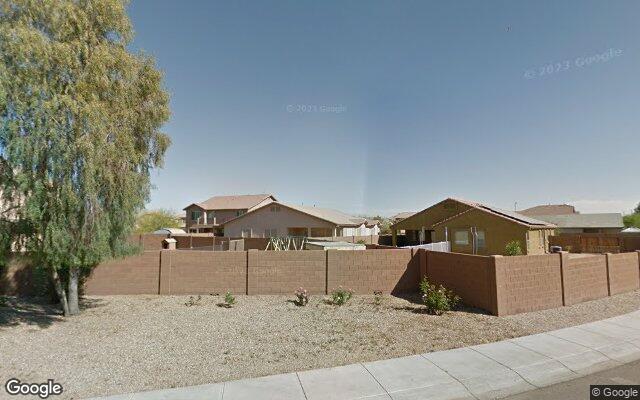
© Google Street View
Compared to 1,661 Arizona facilities with a similar number of beds.
Care · 36-month window. Higher percentile = better performance on inspection record. Source: Arizona Dept. of Health Services · Bureau of Residential Facilities Licensing.
among peers to rank.
Rankings based on 36-month ADHS inspection data. Severity and frequency: fewer citations = higher percentile. Repeat rate: lower repeat citation share = higher percentile.
Citation history, plotted month by month.
18 deficiencies on record. Each bar is a month with a citation.
Finding distribution
18 total · 36 monthsScope × Severity (CMS A–L)
Every inspection visit, verbatim.
5 inspections in the public record, most recent first. Plain-language summaries open first — click into any row for the full citation text.
2026-05-28Complaint InvestigationNo findings
2025-12-23Complaint InvestigationNo findings
2025-12-10Complaint InvestigationR9-10-807.A · 3 findings
“Based on record review and interview, the manager failed to ensure a resident provided documentation of freedom from infectious tuberculosis (TB) as specified in R9-10-113, for one of three residents reviewed. The deficient practice posed a TB exposure risk to residents. Findings include: 1. R9-10-113.A states "If a health care institution is subject to the requirements of this Section, as specified in an Article in this Chapter, the health care institution's chief administrative officer shall ensure that the health care institution establishes, documents, and implements tuberculosis infection control activities that...2. Include: a. For each individual who is employed by the health care institution, provides volunteer services for the health care institution, or is admitted to the health care institution and who is subject to the requirements of this Section, screening, on or before the date specified in the applicable Article of this Chapter, that consists of: i. Assessing risks of prior exposure to infectious tuberculosis, ii. Determining if the individual has signs or symptoms of tuberculosis, and iii. Obtaining documentation of the individual's freedom from infectious tuberculosis according to subsection (B)(1)." 2. A review of R1's medical record revealed no documentation of a risk assessment, signs and symptoms screening, and freedom from infectious tuberculosis. Based on the date of admission, this documentation was required. 3. In an interview. E2 acknowledged that R1 did not have the required documentation.”
“Based on observation and interview, the manager failed to ensure a food menu included any substitution no later than the morning of the day of the meal service with a food substitution. Findings include: 1. During an environmental inspection of the facility, the Compliance Officer noticed a food menu posted and a food substitution list posted as well. However, the substitution list was blank. 2. In an interview, R3 reported that the food menu posted is not always followed, and the food substitution list is never filled. 3. In an interview, the findings were discussed with E2, and no additional information was provided.”
“Based on observation and interview, the manager failed to ensure food was free from spoilage, filth, or other contamination and was safe for human consumption. Findings include: 1. During an environmental inspection of the facility, the Compliance Officer observed two banquet chicken pot pies on a tray in the kitchen sink. 2. In an interview, the findings were discussed with E2, and no additional information was provided.”
2025-08-21Complaint InvestigationR9-10-803.A.9 · 2 findings
“Based on record review and interview, the manager failed to ensure that each employee had a valid fingerprint clearance card. 1. ARS 36-411(A) states, “A. Except as provided in subsection F of this section…employees and owners...contracted persons…or volunteers…shall have valid fingerprint clearance cards …or shall apply for a fingerprint clearance card within twenty working days of employment or beginning volunteer work or contracted work.” 2. A record review of E2's personnel record (hired March 16, 2025) revealed no fingerprint clearance card. 3. In an interview, E1 acknowledged that E2 did not have a fingerprint clearance card.”
“Based on documentation review, record review, and interview, the manager failed to ensure before providing assisted living services to a resident, a manager or caregiver provides current documentation of first aid training and cardiopulmonary resuscitation training certification specific to adults. Findings include: 1. A review of policies and procedures revealed a document titled "FIRST AID AND CPR TRAINING", that stated: "1. The hiring person, on the date of hire, each new employee or volunteer is required to have CPR training specific for adults. 2. Each employee will demonstrate and perform CPR by going through the motions of performing cardio pulmonary resuscitation. 3. The hiring person, on the date of hire or starting work, each new employee or volunteer is required to have First Aid training. 4. Each employee or volunteer will present proof of training of CPR and First Aid. A copy will be made of such cards and placed with the employee or volunteer records." 2. A review of E2's personnel record revealed no documentation of Cardio Pulmonary Resuscitation (CPR) and First Aid training. 3. In an interview, E1 acknowledged E2 did not have documentation of CPR and First Aid.”
2024-05-28Annual Compliance VisitA.A.C. · 13 findings
“Based on interview, record review, and observation, for one individual, the manager failed to ensure evidence of freedom from infectious tuberculosis (TB) was maintained for an individual residing in the assisted living home who was not a resident, a manager, a caregiver, or an assistant caregiver. Findings include: 1. During an environmental inspection, the surveyor observed a facility bedroom, reported to be a caregiver bedroom, was occupied by O1, an individual who was over 12 years old. 2. In record review, the facility had no documentation of a TB test for O1. 3. During an interview, E5 reported O1 was E5's daughter visiting the facility. E1 reported not being aware evidence of freedom from TB was required for O1.”
“Based on record review and interview, for two of two residents reviewed, the manager failed to ensure before or at the time of acceptance there was a documented residency agreement with the assisted living facility which included the date of occupancy or expected date of occupancy. Findings include: 1. In record review, the medical records for R1 and R2 included a residency agreement; however, the residency agreement did not include the date of occupancy or expected date of occupancy for the residents. 2. During an interview, the findings were reviewed with E1, who acknowledged the documented residency agreements for R1 and R2 did not include the date of occupancy or expected date of occupancy. The residents' date of occupancy was provided to the Compliance Officer.”
“Based on record review, and interview, for one of two residents reviewed, the manager failed to ensure a documented residency agreement included the manager's signature and date signed. Findings include: 1. In record review, R2's medical record included a residency agreement; however, the residency agreement did not include the manager's signature and date signed. Based on the residents' date of acceptance this documentation was required. 2. During an interview, E1 acknowledged R2's residency agreement was not signed and dated by the manager.”
“Based on record review and interview, for one of two residents reviewed, the manager failed to ensure a documented residency agreement included the signature of the resident, the resident's representative, the resident's legal guardian, or another individual designated to make health care decisions, and date signed. Findings include: 1. In record review, R2's medical record (received personal care services) included a residency agreement; however, the residency agreement did not include the signature of the resident, the resident's representative, the resident's legal guardian, or another individual designated to make health care decisions, and date signed. Based on R2's acceptance date, this document was required to be signed. 2. During an interview, E1 acknowledged R2's residency agreement did include the signature of the resident, the resident's representative, the resident's legal guardian, or another individual designated to make health care decisions, and date signed.”
“Based on record review, documentation review, and interview, for one of two residents reviewed, the manager failed to ensure a resident had a written service plan to include the level of service the resident was expected to receive. The deficient practice posed a risk as the service plan did not reinforce and clarify services to be provided to a resident. Findings include: A.R.S. \'a7 36-401.A.50. defines "Supervisory care services" to mean general supervision, including daily awareness of resident functioning and continuing needs, the ability to intervene in a crisis and assistance in the self-administration of prescribed medications. A.R.S. \'a7 36-401.A.41. defines "Personal care services" to mean assistance with activities of daily living that can be performed by persons without professional skills or professional training and includes the coordination or provision of intermittent nursing services and the administration of medications and treatments by a nurse who is licensed pursuant to title 32, chapter 15 or as otherwise provided by law. A.R.S. \'a7 36-401.A.16. defines "Directed care services" means programs and services, including supervisory and personal care services, that are provided to persons who are incapable of recognizing danger, summoning assistance, expressing need or making basic care decisions. 1. In record review, R1's medical record included documentation R1 received Hospice services beginning on March 4, 2024. R1's medical record included a service plan dated February 2, 2024, which documented R1 received personal care services, had Dementia, Arthritis and Anxiety, was alert, oriented, confused at times, agitated at times, paranoid at times, and forgetful at times. 2. In observation, R1 was observed curled up in a chair with head to the side. R1 responded once to the Compliance Officer, during an interview, but the Compliance Officer was unable to understand R1's response. R1 was observed sitting at the lunch table; however, did not interact with others. 3. During an interview, E1 reported R1 became more confused and R1's condition declined around March, 2024, at which time R1 received Hospice services. E1 reported R1's care was directed by the facility. E1 reported R1 was capable of recognizing danger; however, was unable to make basic care decisions, and received directed care services.”
“Based on record review, and interview, for one of two residents reviewed, the manager failed to ensure a resident had a written service plan that was reviewed and updated after a significant change in the resident's condition. The deficient practice posed a risk to a resident if the service plan did not include a description of the resident's condition, for which services were to be provided. Findings include: "Service plan" means a written description of a resident's need for supervisory care services, personal care services, directed care services, ancillary services, or behavioral health services and the specific assisted living services to be provided to the resident. 1. In record review, R1's medical record included documentation R1 received Hospice services beginning on March 4, 2024. R1's medical record included a service plan dated February 2, 2024, which documented R1 received personal care services, had Dementia, Arthritis and Anxiety, was alert, oriented, confused at times, agitated at times, paranoid at times, and forgetful at times. 2. In observation, R1 was observed curled up in a chair with head to the side. R1 responded once to the Compliance Officer, during an interview, but the Compliance Officer was unable to understand R1's response. R1 was observed sitting at the lunch table; however, did not interact with others. 3. During an interview, E1 reported R1 became more confused, and R1's condition declined around March, 2024, at which time R1 began receiving Hospice services. E1 reported R1's care was directed by the facility. E1 reported R1 was capable of recognizing danger; however, was unable to make basic care decisions, and received directed care services. E1 acknowledged R1's service plan was not reviewed and updated to reflect R1's change of condition.”
“Based on observation, record review, and interview, for two of two records reviewed, the manager failed to ensure documentation of medication administration included the date and time of administration, the strength, dosage, and route of administration, and the name and signature of the individual administering medication. The deficient practice posed a health and safety risk to a resident if the facility did not properly document medication administration for a resident. Findings include: 1. In record review, R1's medical record included a medication order for Seroquel 25 mg, take one tablet by mouth one time daily in the morning and 2 tablet (50mg) at bedtime. R1's medication administration record (MAR), dated May 2024, included documentation of "Quetiapine 50 mg tabs 1 tab Po qHS," with a time documented as "HS," and was initialed by a caregiver as administered at "HS" once daily May 1-27, 2024. The MAR did not include the time of administration, documentation the medication was administered twice daily, as ordered, and the name of the individuals who administered the medication. 2. During an interview, E1 reviewed R1's MAR, and reported E1 filled the resident's medication organizer according to the medication order, and R1 was given the Seroquel medication as ordered twice daily. 3. In record review, R1's medical record included a medication order for "Escitalopram 5 mg tab, take 1 tab po." R1's MAR, dated May 2024, included documentation the medication was administered at "AM," daily May 1 - 28, 2024. The MAR did not include the time of administration, or the name of the individuals who administered the medication. 4. In observation, R2's medications included a bottle of Alprazolam medication (a schedule IV controlled substance), which indicated 14 tablets were dispensed on May 9, 2024. The bottle had 7 tablets remaining. 5. In record review, R2's MAR, dated May, 2024, did not include documentation R2 was administered the Alprazolam medication. 6. During an interview, E1, and E5 reported R2 was administered the Alprazolam medication when Hospice employees gave R2 a shower. E1 acknowledged the medical records for R1 and R2, did not include documentation of medication administration to include the date and time of administration, the strength, dosage, and route of administration, and the name and signature of the individual administering medication.”
“Based on record review and interview, for three of six residents reviewed, the manager failed to ensure a resident's medical record contained documentation of notification of the resident of the availability of the pneumonia vaccination. The deficient practice posed a health and safety risk if a resident or representative did not have knowledge of the availability of the vaccination. The statute reads: A.R.S. \'a7 36-406(1)(d). Powers and duties of the department In addition to its other powers and duties: 1. The department shall: Require as a condition of licensure that nursing care institutions and assisted living facilities make vaccinations for influenza and pneumonia available to residents on site on a yearly basis. The department shall prescribe the manner by which the institutions and facilities shall document compliance with this subdivision, including documenting residents who refuse to be immunized. The department shall not impose a violation on a licensee for not making a vaccination available if there is a shortage of that vaccination in this state as determined by the director. Findings include: 1. In record review, R1's medical record did not include documentation of notification of the resident or representative of the availability of the vaccination for pneumonia, since October 10, 2022. 2. During an interview, E1 acknowledged the R1's record did not include documentation the vaccinations were made available to the resident.”
“Based on observation, documentation review, and interview, for the facility which provided directed care services, the manager failed to ensure there was a means of exiting the facility that provided access to an outside area which controlled or alerted employees of the egress of a resident from the facility. The deficient practice posed a health and safety risk to residents as an unlocked door provided access to the outside and street area, without alerting employees. Findings include: 1. In documentation review, the facility was licensed at the directed level of care. 2. During an environmental inspection with E3, the Compliance Officer observed an unlocked door, which exited to an outside backyard patio. The door did not control or alert employees of the egress of a resident. The bedroom for R3 was observed to have a door (able to be unlocked) leading to the outside side yard, which did not control or alert employees of the egress of a resident. A gate, which allowed exit from the back and side yard) leading to the front of the facility was observed to be unlocked and did not have an alarm. 3. During an interview, E3 reported the facility was working on getting a lock for the outside gate. E1 and E3 acknowledged the doors exiting the facility to the outside, did not control or alert employees of the egress of a resident from the facility, as required.”
“Based on observation, documentation review, and interview, for one of two residents reviewed, who received a controlled substance, the manager failed to ensure policies and procedures were implemented for inventorying controlled substances. The deficient practice posed a risk if controlled substances were not inventoried and accounted for by the facility. Findings include: 1. In observation, R2's medications included a bottle of Alprazolam medication (a schedule IV controlled substance), which indicated 14 tablets were dispensed on May 9, 2024. The bottle had 7 tablets remaining. 2. In documentation review, a facility policy titled, "Storing, Inventorying and Dispensing of Controlled Medications, P page 56, documented, "... Medication containers for all narcotic medications must be marked with a "C: on the label to indicate that the medication is a "controlled substance."... For every medication marked with a "C,: a Narcotic Inventory Sheet should be maintained... When a controlled medication is received from the pharmacy.. the RN or other designated staff person should count the number of tablets/capsules and enter this number on the Narcotic Inventory Sheet in the "Amount Received" column. The date, time, and signature of the person should also be entered on this form... Maintain Narcotic Inventory Sheets with the resident's current medication record... When assisting a resident in taking a controlled medication, a staff member should: ... Write in the date, time and signature" on the next blank line... Count the number of tablets/capsules available... enter ... number in the "Amount on Hand" column..." 3. In record review, R2's medical record did not include documentation of an inventory of the Alprazolam medication. 4. During an interview, E1, and E5 reported R2 was administered the Alprazolam medication when Hospice employees gave R2 a shower. E1 reported being unaware Alprazolam was a controlled substance, and acknowledged the medication was not inventoried according to the facility's policies and procedures.”
“Based on observation and interview, the manager failed to ensure toxic materials stored by the facility were stored in a locked area and inaccessible to residents. The deficient practice posed a risk to the physical health and safety of a resident if toxic materials were accessible. Findings include: 1. During an environmental inspection with E1, the Compliance Officer observed toxic materials were stored in an unlocked manner and accessible: - An unlocked resident bathroom had an unlocked cabinet which contained bottles of All Purpose Cleaner, Lysol x 2, Liquid Plumr, Windex and Febreze Air Freshener. - A bottle of CLR (Calcium, Lime, & Rust Remover) was in an unlocked cabinet beneath the kitchen sink. - A caregiver bedroom had several items stored, including, but not limited to Febreze cans, and two bottles of Lysol toilet bowl cleaner. The caregiver bedroom was unable to be locked to prevent entry into the bedroom. - A salon room was unlocked and had a can of hairspray and a bottle of nail polish remover. 2. During an interview, E1 and E3 acknowledged the toxic materials were stored in an unlocked manner, and accessible to residents.”
“Based on observation and interview, the manager failed to ensure the facility had an outside activity space with an available shaded area. The deficient practice posed a risk to residents who wanted access to the outside. Findings include: 1. During an environmental inspection, the Compliance Officer observed the facility had a back patio. The patio was uncovered, and had a closed umbrella; thereby offering no shade. 2. During an interview, E1 reported the umbrella offered shade when opened; however, acknowledged the umbrella was closed, and the residents were not allowed to go on the patio without staff. E1 acknowledged the facility must have an outside activity space with a shaded area.”
“Based on observation and interview, for three of seven resident bedrooms, the manager failed to ensure that each sleeping area had clean linen, including a mattress pad. Findings include: 1. During an environmental inspection with E3, the compliance officer observed the beds for R3, R4, and R5 did not have mattress pads. 2. During an interview, E3 reported the linens were furnished by the facility. E1 and E3 acknowledged the residents' beds were required to have a mattress pad.”
Other facilities in Phoenix.
Other memory care facilities near Phoenix with similar care offerings.

Tour Prep
Family reviews
No reviews yet — be the first to share your experience