Desert Palm at the Park.
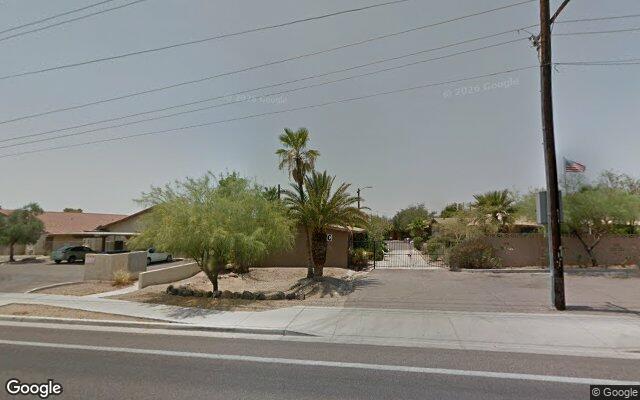
A large home, reviewed on public record.
© Google Street View
Compared to 72 Arizona facilities with a similar number of beds.
Care · 36-month window. Higher percentile = better performance on inspection record. Source: Arizona Dept. of Health Services · Bureau of Residential Facilities Licensing.
on file.
Rankings based on 36-month ADHS inspection data. Severity and frequency: fewer citations = higher percentile. Repeat rate: lower repeat citation share = higher percentile.
Citation history, plotted month by month.
82 deficiencies on record. Each bar is a month with a citation.
Finding distribution
82 total · 36 monthsScope × Severity (CMS A–L)
Every inspection visit, verbatim.
19 inspections in the public record, most recent first. Plain-language summaries open first — click into any row for the full citation text.
2026-07-23Complaint InvestigationNo findings
2026-05-07Complaint InvestigationNo findings
2026-03-19Complaint InvestigationEnforcement · 2 findings
“Based on documentation review, record review, and interview, the manager failed to ensure a resident had a service plan that was established and documented that included the amount, type, and frequency of assisted living services being provided to the resident, for two of two sampled residents. The deficient practice posed a risk as a service plan guides a resident’s care. Findings include: 1. A review of facility documentation revealed a policy and procedure (P&P) titled “PROVISION OF SERVICES.” The P&P stated: “The SERVICE PLAN shall include the following: The level of service, amount, type, and frequency of services needed by the resident, including medication administration, storage, control of medications and personnel responsible for the services.” 2. A review of R1's medical record revealed a service plan dated December 14, 2025. The service plan indicated R1 required assistance transferring and received medication administration. However, the service plan did not include the frequency of transferring or medication administration. The review further revealed documentation of assisted living services (ADLs) provided to R1 dated March 2026. The ADLs revealed documentation demonstrating R1 received assistance transferring at least two times per day. 3. In an interview, R1 confirmed facility personnel assisted R1 with transferring and provided medication administration. 4. A review of R2's medical record revealed a service plan dated December 26, 2025. The service plan indicated R2 required assistance transferring and received medication administration. However, the service plan did not include the frequency of transferring or medication administration. The review further revealed ADLs provided to R2 dated January 2026 and February 2026. The ADLs revealed documentation demonstrating R2 received assistance transferring at least two times per day. 5. In a telephonic interview, when the Compliance Officers asked how often facility personnel transferred R1, E2 stated, “Couple times a day at least.” Regarding the service plans not including the frequency of transferring and medication administration, E2 stated, “You told us to add it” and “I know it’s not on there.” 6. In the exit interview, the Compliance Officers reviewed the findings and E2 and E3 and neither offered further comment. This is an uncorrected citation from the complaint inspection conducted on February 12, 2026; technical assistance was provided on this rule during the complaint inspection conducted on November 20, 2025; and this is a repeat citation from the complaint inspection conducted on January 20, 2023.”
“Based on documentation review, record review, and interview, the manager failed to ensure a caregiver or an assistant caregiver documented the services provided to a resident in the resident's medical record, for one of two sampled residents. The deficient practice posed a risk as services could not be verified as provided against a service plan. Findings include: 1. A review of facility documentation revealed a policy and procedure (P&P) titled “PROVISION OF SERVICES.” The P&P stated: “A manager shall ensure that a caregiver or Assistant caregiver: Documents the services provided in the resident’s medical record.” 2. A review of R1's medical record revealed a service plan dated December 14, 2025. The service plan indicated R1 required assistance brushing R1’s teeth daily. The review further revealed documentation of assisted living services (ADLs) provided to R1 dated March 2026. However, the ADLs revealed no documentation demonstrating R1 received assistance brushing R1’s teeth. 3. In an interview, R1 confirmed facility personnel assisted R1 in brushing R1’s teeth. 4. In a telephonic interview, when the Compliance Officers asked if facility personnel brushed R1’s teeth, E2 reported facility personnel assisted, stating caregivers “just set it up for [R1].” E2 reported facility personnel assisted R1 in brushing R1’s teeth but did not document it. Referring to the ADLs, E2 stated E2 needed to “check the oral hygiene box.” 5. In the exit interview, the Compliance Officers reviewed the findings and E2 and E3 and neither offered further comment. This is an uncorrected citation from the complaint inspections conducted on February 12, 2026, and November 20, 2025, and this is a repeat citation from the complaint and compliance inspections conducted on February 27, 2024, and April 13, 2023.”
2026-02-12Complaint InvestigationEnforcement · 14 findings
“Based on documentation review, record review, and interview, the manager failed to ensure documentation was maintained for at least 12 months after the last date on the documentation of the caregivers and assistant caregivers working each day, including the hours worked by each. The deficient practice posed a risk as there was incomplete documentation identifying the staff present each day to ensure the health and safety of residents. Findings include: 1. A review of facility documentation revealed a series of personnel schedules dated between December 29, 2025, and the date of the inspection. The schedules indicated the following: - E3 did not work on January 1-4, 11, 18, and 25, 2026, or on February 1 and 8, 2026; 2026; - E4 did not work on January 3, 10, 17, 24, and 31, 2026, or February 7, 2026; - E5 did not work on January 5-11, 17-18, and 25, 2026, or February 1, 2026; - E6 did not work on January 1, 8, 12, 24, and 31, 2026; - E7 did not work on January 6, 13, 23, and 25, 2026; - E8 did not work on January 4-5, 15, 19-20, 22, and 26-27, 2026, or February 1-3, 2026; and - E9 did not work on January 2, 7, 9, 14, 16, 21-24, and 28-31, 2026, or February 4-11, 2026. 2. A review of R1’s, R2’s, R3’s, and R4’s medical records revealed documentation of assisted living services (ADLs) provided to the four residents, dated January 2026 and February 2026. However, the review revealed inconsistencies between the ADLs and the personnel schedules. These inconsistencies include, but are not limited to, the following: - E5 provided services on January 5, 11, and 17-18, 2026, and February 1, 2026, in contradiction with the personnel schedules; - E6 provided services on January 1, 8, and 31, 2026, in contradiction with the personnel schedules; - E7 provided services on January 6, 13, and 25, 2026, in contradiction with the personnel schedules; and - E8 provided services on January 26-27, 2026, and February 2-3, 2026, in contradiction with the personnel schedules. 3. In a telephonic interview, E2 reported the ADLs were correct, and facility personnel likely did not update the schedule to reflect necessary changes. 4. In the exit interview, the Compliance Officers reviewed the findings and E2 and E3, and E2 and E3 offered no further comment. This is an uncorrected citation from the complaint inspection conducted on November 20, 2025, and a repeat citation from the complaint inspection conducted on October 28, 2024, and the complaint and compliance inspection conducted on April 13, 2023.”
“Based on record review and interview, the manager failed to ensure a resident had a service plan that was established and documented that included the amount, type, and frequency of assisted living services being provided to the resident, for one of four sampled residents. The deficient practice posed a risk as a service plan guides a resident’s care. Findings include: 1. A review of R4's medical record revealed a service plan dated January 2, 2026. The service plan indicated R4 required assistance with transferring and received medication administration. However, the service plan did not include the frequency of transferring or medication administration. The service plan further revealed R4 required assistance combing R4’s hair daily. The review further revealed documentation of assisted living services (ADLs) provided to R4 dated January 2026 and February 2026. The ADLs revealed documentation demonstrating R4 received assistance transferring at least two times per day in January 2026, zero times per day in February 2026, and R4 did not receive assistance combing R4’s hair. 2. In an interview, R4 confirmed facility personnel transferred R4 out of R4’s wheelchair and into bed and vice versa. When the Compliance Officers asked if facility personnel combed R4’s hair, R4 stated, “No.” 3. In a separate interview, when the Compliance Officers asked if facility personnel transferred R4, E3 stated, “Yes.” E3 reported facility personnel transferred R4 six to eight times a day on average. 4. In a telephonic interview, when the Compliance Officer asked if R4’s service plan included the frequency of transferring, E2 stated, “No.” When the Compliance Officers asked if facility personnel combed R4’s hair, E2 stated, “No.” 5. In the exit interview, the Compliance Officers reviewed the findings and E2 and E3, and E2 and E3 offered no further comment. Technical assistance was provided on this rule during the complaint inspection conducted on November 20, 2025.”
“Based on record review and interview, the manager failed to ensure a caregiver or an assistant caregiver provided a resident with the assisted living services in the resident's service plan, for one of four sampled residents. The deficient practice posed a risk as services were not provided per a resident's service plan. Findings include: 1. A review of R4's medical record revealed a service plan dated January 2, 2026. The service plan indicated R4 required assistance combing R4’s hair daily. The review further revealed documentation of assisted living services (ADLs) provided to R4 dated January 2026 and February 2026. The ADLs revealed documentation demonstrating R4 did not receive assistance combing R4’s hair. 2. In an interview, when the Compliance Officers asked if facility personnel combed R4’s hair, R4 stated, “No.” 3. In a telephonic interview, when the Compliance Officers asked if facility personnel combed R4’s hair, E2 stated, “No.” 4. In the exit interview, the Compliance Officers reviewed the findings and E2 and E3, and E2 and E3 offered no further comment. Technical assistance was provided on this rule during the complaint inspection conducted on November 20, 2025.”
“Based on record review and interview, the manager failed to ensure a caregiver or an assistant caregiver documented the services provided to a resident in the resident's medical record, for one of four sampled residents. The deficient practice posed a risk as services could not be verified as provided against a service plan. Findings include: 1. A review of R4's medical record revealed a service plan dated January 2, 2026. The service plan indicated R4 required assistance transferring. The review further revealed documentation of assisted living services (ADLs) provided to R4 dated February 2026. However, the ADLs revealed no documentation demonstrating R4 received assistance transferring. 2. In an interview, R4 confirmed facility personnel transferred R4 out of R4’s wheelchair and into bed and vice versa. 3. In a separate interview, when the Compliance Officers asked if facility personnel transferred R4, E3 stated, “Yes.” E3 reported facility personnel transferred R4 six to eight times a day on average. 4. In a telephonic interview, when the Compliance Officer informed E3 that the ADLs did not include documentation of transferring in February 2026, E2 stated, “I don’t know how we missed that.” 5. In the exit interview, the Compliance Officers reviewed the findings and E2 and E3, and E2 and E3 offered no further comment. This is an uncorrected citation from the complaint inspection conducted on November 20, 2025, and a repeat citation from the complaint and compliance inspections conducted on February 27, 2024, and April 13, 2023.”
“Based on documentation review, record review, and interview, the manager failed to ensure a resident's medical record contained documentation of a medication administered to a resident that included the name and signature of the individual administering the medication, for four of four residents reviewed. The deficient practice posed a health and safety risk to residents if the facility did not properly document medication administration for a resident. Findings include: 1. A review of facility documentation revealed a series of personnel schedules dated between December 29, 2025, and the date of the inspection. The schedules indicated the following: - E3 did not work at 12:00 AM on January 1, 2026, through February 11, 2026; - E3 did not work at 8:00 PM on January 19-31, 2026, and February 2-7, 9-11, 2026; - E3 did not work on January 1-4, 11, 18, and 25, 2026, or on February 1 and 8, 2026; - E4 did not work at 12:00 AM on January 1-15 and 17-31, 2026, and February 1-11, 2026; - E4 did not work at 8:00 PM on January 14, 19-23, and 25-30, 2026, and February 1-6, and 8-11, 2026; and - E4 did not work on January 3, 10, 17, 24, and 31, 2026, or February 7, 2026. 2. A review of R1’s, R2’s, R3’s, and R4’s medical records revealed medication administration records (MARs) dated January 2026 and February 2026. However, the review revealed inconsistencies between the MARs and the personnel schedules. These inconsistencies include, but are not limited to, the following: - E3 administered medication at 12:00 AM on January 5-10, 12-17, 19-24, and 26-31, 2026; and February 2-11, 2026, even though E3 did not work at that time on those dates; - E3 administered medication at 8:00 PM on January 19-24, and 26-31, 2026, and February 2-7, 9-11, 2026, even though E3 did not work at that time on those dates; - E4 administered medication at 12:00 AM on January 4, 11, and 25, 2026, and February 1, 2026, even though E4 did not work at that time on those dates; and - E4 administered medication at 8:00 PM on January 25, 2026, and February 1, 8, and 10, 2026, even though E4 did not work at that time on those dates. 3. In an interview, when the Compliance Officers asked if E3 worked the night shift (7:00 PM to 7:00 AM), E3 reported E3 never worked the night shift. E3 reported E3 did not stay past 7:00 PM. E3 reported E3 often pre-fills the residents’ medication cups and documents the administration on the MARs so the caregiver on the night shift can more easily administer the medications. E3 confirmed E3 did not administer medications as aforementioned. When the Compliance Officers asked if E4 worked the night shift in February 2026, E3 reported E4 did not. 4. In a telephonic interview, E2 reported E7 worked the night shift, administered medications at night, and should have been the one documenting on the MARs instead of E3 and E4. 5. In the exit interview, the Compliance Officers reviewed the findings and E2 and E3, and E2 and E3 offered no further comment.”
“Based on record review, observation, and interview, the manager failed to ensure a bell, intercom, or other mechanical means to alert employees to a resident’s needs or emergencies was available and accessible in a bedroom being used by a resident receiving personal care services. The deficient practice posed a risk if personnel could not react to a resident's needs or emergencies in a timely manner. Findings include: 1. A review of R1’s, R3’s, and R4’s medical records revealed service plans that indicated R1, R3, and R4 were at the personal level of care and received personal care services. R1’s and R4’s service plans stated, “Call Bell: Yes” and “Call bell within reach.” 2. The Compliance Officers observed 21 segregated, single-point entry, condominium-style units, each containing between one and three individual bedrooms able to be occupied by one to two residents each. The Compliance Officers entered each of the 21 units and observed no working call buttons, intercoms, or other mechanical means to alert employees to a resident’s needs or emergencies in any of the bedrooms or units, including those of R1, R3, and R4. 3. At 9:04 AM, 9:34 AM, 10:01 AM, 10:33 AM, and 11:09 AM, the Compliance Officers pressed a call button in units 2, 5, 8, 12, and 19 respectively. However, the Compliance Officers observed no personnel come to the units to answer the calls. 4. In a series of interviews, when the Compliance Officers asked if R1’s call button worked, R1 stated, “No.” When the Compliance Officers asked if R4 had a bell, intercom, or other mechanical means to alert employees to R4’s needs or emergencies available in R4’s bedroom, R4 stated, “No.” When the Compliance Officers asked how R4 would get help from facility personnel if R4 needed it, R4 reported R4 would have to call on R4’s phone. When the Compliance Officers asked how R5 would call caregivers for assistance, R5 stated, “I go to the medical office.” When the Compliance Officers asked if R6 had a call button or another way to alert employees to R6’s needs, R6 stated, “No” and “Even if we have it there’s not enough people.” R8 stated R8’s call button “doesn’t work. When the Compliance Officers asked how R9 would call caregivers for assistance, R9 stated, “You don’t.” When the Compliance Officers asked how R10 would call caregivers for assistance, R10 stated, “Get up and go.” Referring to the call button in R11’s bedroom, R11 stated, “That doesn't work.” When the Compliance Officers asked if R12’s call button worked, R12 stated, “I don’t know.” R13 reported R13’s call button did not work. R14 and R15 reported not knowing whether R14’s and R15’s call buttons worked. When the Compliance Officers asked if R18 had a call button or another way to alert employees to R18’s needs, R18 stated, “No” 5. In a telephonic interview, E2 reported the call buttons in the facility did not work, and personal call pendants would not work due to the size and construction of the facility. E2 reported the facility was in the process of installing hotline phones in some of the bedrooms. 6. In the exit interview, the Compliance Officers reviewed the findings and E2 and E3, and E2 and E3 offered no further comment. This is an uncorrected citation from the complaint inspection conducted on November 20, 2025.”
“Based on interview, record review, observation, and documentation review, the manager failed to ensure a bell, intercom, or other mechanical means to alert employees to a resident's needs or emergencies was available in a bedroom being used by a resident receiving directed care services. The deficient practice posed a risk if personnel could not react to a resident's needs or emergencies in a timely manner. Findings include: 1. In a telephonic interview, E2 reported R2, R16, and R17 were the only residents at the directed level of care. 2. A review of R2’s medical record revealed a service plan that indicated R2 was at the directed level of care and received directed care services. 3. The Compliance Officers observed 21 segregated, single-point entry, condominium-style units, each containing between one and three individual bedrooms able to be occupied by one to two residents each. The Compliance Officers entered each of the 21 units and observed no working call buttons, intercoms, or other mechanical means to alert employees to a resident’s needs or emergencies in any of the bedrooms or units, including those of R2, R16, and R17. 4. The Compliance Officers observed a bell in R2’s bedroom. However, the Compliance Officers observed the bell was hanging from the wall out of reach behind a dresser. At 10:01 AM, the Compliance Officers pressed a call button in R17’s unit. However, the Compliance Officers observed no personnel come to the unit to answer the call. 5. In an interview, when the Compliance Officers asked a resident in R2’s unit if that unit had working call buttons, the resident stated, “No” 6. In a telephonic interview, E2 reported the call buttons in the facility did not work, and personal call pendants would not work due to the size and construction of the facility. E2 reported the facility was in the process of installing hotline phones in some of the bedrooms. 7. In the exit interview, the Compliance Officers reviewed the findings and E2 and E3, and E2 and E3 offered no further comment. This is an uncorrected citation from the complaint inspection conducted on November 20, 2025, and a repeat citation from the complaint inspection conducted on July 10, 2025.”
“Based on documentation review, observation, and interview, the manager failed to ensure a means of exiting the facility for a resident who did not have a key, special knowledge for egress, or the ability to expend increased physical effort that monitored or alerted employees of the egress of a resident from the facility. The deficient practice posed a risk if the facility was unaware of the egress of a resident from the facility. Findings include: 1. A review of Department documentation revealed the facility was authorized to provide directed care services. 2. The Compliance Officers observed 21 separate condominium-style units (numbered 1-12, 14-21, and A-4), each containing between one and three individual bedrooms able to be occupied by one to two residents each. The Compliance Officers observed each unit had one door leading from an indoor common area to the secured outdoor courtyard, which allowed residents to be at least 30 feet away from the facility. The Compliance Officers observed the following: - The door for unit 3 had an alert installed and set to the “Off” position; - The door for unit 5 did not have an alert installed; - The door for unit 9 had an improperly installed alert; and - The doors for units 12, 15, 17, and 20 had alerts installed and set to the “Chime” position. However, upon opening each of the seven aforementioned doors, the Compliance Officers heard no alerts. The Compliance Officers further observed no monitoring system in place. 3. In the exit interview, the Compliance Officers reviewed the findings and E2 and E3, and E2 and E3 offered no further comment. This is an uncorrected citation from the complaint inspection conducted on November 20, 2025, and a repeat citation from the complaint inspections conducted on July 10, 2025; July 8, 2025; and May 14, 2024, and the complaint and compliance inspection conducted on February 27, 2024.”
“Based on documentation review, interview, and observation, the manager failed to ensure a designated caregiver was available in each building and each segregated area at all times. The deficient practice posed a risk if personnel could not react to a resident's needs or emergencies in a timely manner. Findings include: 1. A review of Department documentation revealed the facility was authorized to provide directed care services. 2. In an interview, E4 reported three caregivers were working during the inspection. 3. A review of facility documentation revealed a personnel schedule dated February 9-15, 2026. The schedule revealed four personnel members were scheduled to work between 7:00 AM and 7:00 PM on the date of the inspection, with one other personnel member and an administrator being available on call. 4. The Compliance Officers observed 21 segregated, single-point entry, condominium-style units, each containing between one and three individual bedrooms able to be occupied by one to two residents each. The Compliance Officers entered each of the 21 units and observed residents in 20 of the 21 units. However, other than in the medication room in unit 14, the Compliance Officers observed no caregivers in any of the units while the Compliance Officers were in the units. 5. In a series of interviews, R7 reported there was no caregiver in R7’s unit while the Compliance Officers were in the unit. When the Compliance Officers asked if R6 and R7 had call buttons or another way to alert employees to R6’s and R7’s needs, R6 stated, “No” and “Even if we have it there’s not enough people.” 6. In a telephonic interview, E2 acknowledged the facility did not have a designated caregiver in each segregated unit at all times. E2 reported such staffing was unrealistic 7. In the exit interview, the Compliance Officers reviewed the findings and E2 and E3, and E2 and E3 offered no further comment. This is an uncorrected citation from the complaint inspection conducted on November 20, 2025.”
“Based on record review and interview, the manager failed to ensure a medication was administered in compliance with a medication order, for two of four sampled residents. The deficient practice posed a risk if the resident experienced a change in condition due to improper administration of medication. Findings include: 1. A review of R1’s medical record revealed a current service plan that indicated R1 received medication administration. The review revealed a series of medication administration records (MARs) dated January 2026 and February 2026. The MARs indicated facility personnel administered medications to R1 up to three times a day on January 1, 2026, through February 11, 2026. However, the review revealed no signed medication orders for any of the medications. 2. A review of R4’s medical record revealed a current service plan that indicated R4 received medication administration. The review revealed a medication order for “baclofen 20 mg tablet Take 1 tablet(s) 3 times a day by oral route for 30 days” dated January 9, 2026. The review further revealed a series of MARs dated January 2026 and February 2026. The MARs revealed facility personnel administered R1’s baclofen on January 10-22, 2026, for a total of approximately 13 days instead of the 30 days as ordered. The MARs further revealed facility personnel administered other medications to R1, including aripiprazole 10 mg, baclofen 20 mg four times a day, losartan potassium 25 mg, pregabalin 100 mg, tamsulosin 0.4 mg, trazodone 150 mg, and venlafaxine 75 mg. However, the review revealed no signed medication orders for these six medications, and no discontinue order for R1’s “baclofen 20 mg tablet Take 1 tablet(s) 3 times a day by oral route for 30 days.” 3. In a telephonic interview, E2 reported the facility had medication orders for the aforementioned medications. However, facility personnel did not provide such medication orders to the Compliance Officers. 4. In the exit interview, the Compliance Officers reviewed the findings and E2 and E3, and E2 and E3 offered no further comment. This is an uncorrected citation from the complaint inspection conducted on November 20, 2025, and a repeat citation from the complaint inspections conducted on July 15, 2024, and November 2, 2023.”
“Based on observation, documentation review, and interview, the manager failed to ensure medication stored by an assisted living facility was stored in a separate locked room, closet, cabinet, or self-contained unit used only for medication storage. The deficient practice posed a risk to the physical health and safety of residents with access to the medication. Findings include: 1. The Compliance Officers observed a mini fridge in the living room of unit 19. Sitting on the mini fridge, the Compliance Officers observed a round brown tablet with “W2” imprinted on it. 2. A review of drugs.com revealed the tablet as senna 8.6 mg. 3. In an interview, E3 reported the tablet should not have been on the mini fridge. 4. The Compliance Officers observed a dresser in R5’s bedroom. On top of the dresser, the Compliance Officers observed the following: - One red capsule, - One white capsule; - One round white tablet, - One oblong white tablet, - One oblong white tablet with “511” imprinted on it, - One oblong white tablet with “APO” imprinted on it, and - Four oblong white tablets with “114” on one side and “H” with a bar dividing the tablets in half on the other side imprinted on them. 5. A review of drugs.com revealed the oblong white tablet with “511” imprinted on it was divalproex sodium 125 mg, and the four oblong white tablets with “114” and “H” imprinted on them were methocarbamol 500 mg. 6. In an interview, R5 reported facility personnel gave R5 and medications and R5 had forgotten to take them. 7. In an interview, E3 reported R5 received medication administration. 8. In a telephonic interview, E2 reported medication should be locked up and never just left in a resident’s room. 9. In the exit interview, the Compliance Officers reviewed the findings and E2 and E3, and E2 and E3 offered no further comment. This is an uncorrected citation from the complaint inspection conducted on November 20, 2025, and a repeat citation from the complaint inspections conducted on July 10, 2025, and October 28, 2024.”
“Based on observation and interview, the manager failed to ensure garbage and refuse were stored in covered containers. The deficient practice posed a risk to the health and safety of the residents as an uncovered garbage container can lead to the possibility of infection. Findings include: 1. The Compliance Officer observed garbage stored in uncovered garbage containers in units 4, 9, 14, 17, 18. The Compliance Officers observed an overturned garbage container with garbage on the floor next to it in the bathroom of unit A-4. The Compliance Officers further observed garbage in an uncovered container in the common area between units 2 and 3. 2. In a telephonic interview, E2 reported many of the garbage cans at the facility did not have lids. E2 reported the facility was in the process of obtaining new trash cans with lids. 3. In the exit interview, the Compliance Officers reviewed the findings and E2 and E3, and E2 and E3 offered no further comment. This is an uncorrected citation from the complaint inspection conducted on November 20, 2025.”
“Based on observation and interview, the manager failed to ensure oxygen containers were secured. The deficient practice posed a risk to the physical health and safety of residents. Findings include: 1. The Compliance Officers observed an unsecured-but-upright oxygen container in unit 19. 2. In an interview, E3 acknowledged the oxygen container was not secured. 3. In the exit interview, the Compliance Officers reviewed the findings and E2 and E3, and E2 and E3 offered no further comment. Technical assistance was provided on this rule during the complaint inspection conducted on November 20, 2025.”
“Based on observation and interview, the manager failed to ensure poisonous or toxic materials stored by the assisted living facility were maintained in a locked area inaccessible to residents. The deficient practice posed a risk to the physical health and safety of residents. Findings include: 1. The Compliance Officers observed a housekeeping cart in the living room of unit 2. On top of the cart, the Compliance Officers observed air freshener, “Comet” cleaner, disinfectant spray, and glass cleaner, along with several unlabeled bottles containing unidentified liquids. The Compliance Officers observed the housekeeping cart was unattended while the housekeeper was in another room. 2. The Compliance Officers observed an unattended maintenance cart next to a storage shed between units 4 and 5, accessible from the common area. On the cart, the Compliance Officers observed a bottle of “Concrete Bonding Adhesive” and a tube of “Dap All Purpose Acrylic Latex Caulk Plus Silicone.” 3. In an interview, when the Compliance Officers asked if the facility had a locked place to store poisonous or toxic materials. E3 stated, “Yes.” 4. The Compliance Officers observed a door in unit 14 with a sign that read “STAFF ONLY.” However, the Compliance Officers observed that the door was not locked. Upon opening the door, the Compliance Officers observed a container of disinfectant wipes on a shelf and an unlocked closet containing 13 spray cans of air freshener. 5. In an interview, E3 reported that the poisonous or toxic materials on the housekeeping cart, maintenance cart, and in the break room should have been supervised or maintained in locked areas inaccessible to residents. 6. In the exit interview, the Compliance Officers reviewed the findings and E2 and E3, and E2 and E3 offered no further comment. This is an uncorrected citation from the complaint inspection conducted on November 20, 2025.”
2025-11-20Complaint InvestigationEnforcement · 24 findings
“Based on documentation review, record review, and interview, the governing authority failed to administer a training program for all staff regarding fall prevention and fall recovery. The deficient practice posed a risk if a staff member was not properly trained to assist a resident who had fallen and was unable to recover independently. Findings include: 1. A review of Department documentation revealed A.R.S. § 36-420.01(A) went into effect on October 1, 2021. 2. A review of facility documentation revealed a policy and procedure (P&P) titled “FALL MITIGATION.” The P&P stated: “The facility will conduct an in-service training for trained caregivers. The training will take place upon hire and will be repeated annually thereafter.” 3. A review of E5’s personnel record revealed E5 was hired as a caregiver after this statue went into effect. The review revealed E5 received training regarding fall prevention and fall recovery upon hire, on January 19, 2024, then again more than one year later on January 21, 2025. 4. In a telephonic interview, E2 confirmed training regarding fall prevention and fall recovery was to be conducted annually. When the Compliance Officer informed E2 that E5’s training regarding fall prevention and fall recovery was not completed annually, E2 stated, “Okay.” 5. A review of E6’s personnel record revealed E6 was hired as a caregiver after this statue went into effect. However, the review revealed no documentation demonstrating E6 received training regarding fall prevention and fall recovery upon hire. 6. In a telephonic interview, E2 reported E6 received the training at another location where E6 worked and not at this facility. 7. A review of E8’s personnel record revealed E8 was hired as an assistant caregiver after this statue went into effect. However, the review revealed no documentation demonstrating E8 received training regarding fall prevention and fall recovery upon hire. 8. In a telephonic interview, when the Compliance Officer informed E2 that E8 did not have training regarding fall prevention and fall recovery, E2 stated, “Okay.” 9. In an interview, when the Compliance Officer asked if the facility had any more documentation in the personnel records to provide, E3 stated, “No. It’s all there.” This is an uncorrected citation from the complaint inspection conducted on October 28, 2024; and a repeat citation from the complaint inspection conducted on and May 14, 2024; the complaint and compliance inspection conducted on February 27, 2024; and the complaint inspection conducted on January 20, 2023.”
“Based on documentation review, record review, and interview, the chief administrative officer failed to implement tuberculosis (TB) infection control activities including annually providing training and education related to recognizing the signs and symptoms of TB, for five of five sampled employees. The deficient practice posed a potential TB exposure risk to residents. Findings include: 1. A review of CDC.gov revealed a webpage titled "Tuberculosis Screening, Testing, and Treatment of U.S. Health Care Personnel: Recommendations from the National Tuberculosis Controllers Association and CDC, 2019," published by the U.S. Department of Health and Human Services. The webpage stated: "The 2005 CDC recommendations for testing U.S. health care personnel have been updated and now include…6) annual TB education of all health care personnel." The review of the website revealed the 2005 CDC recommendations on a webpage titled "Guidelines for Preventing the Transmission of Mycobacterium tuberculosis in Health-Care Settings, 2005." The webpage stated: "The setting should document that all HCWs [Health-Care Workers]...have received initial TB training relevant to their work setting and additional occupation-specific education. The level and detail of baseline training will vary according to the responsibilities of the HCW and the risk classification of the setting." 1. A review of E1’s personnel record revealed E1 was hired as the manager more than one year before the date of the inspection. However, the review revealed no documentation of training and education related to recognizing the signs and symptoms of TB upon hire or annually thereafter. 2. A review of E5’s and E7’s personnel records revealed E5 and E7 were hired as caregivers more than one year before the date of the inspection. However, the review revealed no documentation of training and education related to recognizing the signs and symptoms of TB upon hire or annually thereafter. 3. A review of E6’s personnel record revealed E6 was hired as a caregiver less than one year before the date of the inspection. However, the review revealed no documentation of training and education related to recognizing the signs and symptoms of TB upon hire. 4. A review of E8’s personnel record revealed E8 was hired as an assistant caregiver less than one year before the date of the inspection. However, the review revealed no documentation of training and education related to recognizing the signs and symptoms of TB upon hire. 5. In a telephonic interview, when the Compliance Officer informed E2 that E1, E5, E6, E7, and E8 were missing the training, E2 stated, “Okay.” 6. In an interview, when the Compliance Officer asked if the facility had any more documentation in the personnel records to provide, E3 stated, “No. It’s all there.””
“Based on documentation review, record review, and interview, the governing authority failed to ensure compliance with Arizona Revised Statutes (A.R.S.) § 36-411(A) and (C), for two of five sampled personnel members. The deficient practice posed a risk if the employees were a danger to a vulnerable population. Findings include: 1. A.R.S. § 36-411(A) states: "A. Except as provided in subsection F of this section, as a condition of licensure or continued licensure of a residential care institution, a nursing care institution or a home health agency and as a condition of employment in a residential care institution, a nursing care institution or a home health agency, employees and owners of residential care institutions, nursing care institutions or home health agencies, contracted persons of residential care institutions, nursing care institutions or home health agencies or volunteers of residential care institutions, nursing care institutions or home health agencies who provide medical services, nursing services, behavioral health services, health-related services, home health services or direct supportive services and who have not been subject to the fingerprinting requirements of a health professional's regulatory board pursuant to title 32 shall have a valid fingerprint clearance card that is issued pursuant to title 41, chapter 12, article 3.1 or shall apply for a fingerprint clearance card within twenty working days after employment or beginning volunteer work or contracted work." 2. A.R.S. § 36-411(C)(1) and (2) states: "C. Each residential care institution, nursing care institution and home health agency shall make documented, good faith efforts to: 1. Contact previous employers to obtain information or recommendations that may be relevant to a person's fitness to work in a residential care institution, nursing care institution or home health agency. 2. Verify the current status of a person's fingerprint clearance card." 3. A review of facility documentation revealed a policy and procedure (P&P) titled "FINGERPRINTING." The P&P stated: “The manager shall ensure as a condition of continued licensure of a residential care institution and as a condition of employment in a residential care institution, personnel and owner of residential care or contracted persons who provide direct care and who have not been subject to the fingerprinting requirements of a health professional's regulatory board shall have valid fingerprint clearance card or apply for a fingerprint clearance card…Procedure: Verify the current status of a person's fingerprint clearance card.” 4. A review of E1's personnel record revealed E1 was hired as the manager. The review revealed a fingerprint clearance card (FCC) dated as expired on September 13, 2025, and an application for another FCC dated September 22, 2025, after the previous card had already expired. The review revealed an “APPLICATION FOR EMPLOYMENT” which indicated E1 had previous employment. However, the review revealed no documentation demonstrating a representative of the facility contacted E1’s previous employers. The review further revealed documentation demonstrating a facility representative did not verify E1’s FCC until January 10, 2025, several months after E1’s date of hire. 5. A review of the Department of Public Safety (DPS) website confirmed E1's FCC expired on September 13, 2025. The website revealed DPS did not receive the application for the new FCC until September 25, 2025, and did not approve it until September 29, 2025. The review revealed E1 did not have a valid FCC for more than two weeks. 6. In a telephonic interview, when the Compliance Officer informed E2 that E1 did not have a valid FCC for more than two weeks, E2 stated, “Okay.” E2 reported E2 contacted E1’s previous employers, stating, “I did it,” but reported E2 did not document the contact. E2 further reported E2 verified E1’s FCC upon hire but did not document it. 7. A review of E7's personnel record revealed E7 was hired as a caregiver. The review revealed a current FCC. However, the review revealed documentation demonstrating a facility representative did not verify E7’s FCC until January 10, 2025, several months after E7’s date of hire. 8. In a telephonic interview, when the Compliance Officer informed E2 that E7’s FCC was verified late, E2 stated, “Okay.” 9. In an interview, when the Compliance Officer asked if the facility had any more documentation in the personnel records to provide, E3 stated, “No. It’s all there.” This is an uncorrected citation from the complaint inspection conducted on October 28, 2024, and a related rule was cited during the complaint and compliance inspection conducted on April 13, 2023, and the complaint inspection conducted on January 20, 2023.”
“Based on documentation review, observation, and interview, the manager failed to ensure a list of resident rights was conspicuously posted. The deficient practice posed a risk if residents were not properly informed of their rights. Findings include: 1. Arizona Administrative Code (A.A.C.) R9-10-101(54)(a-b) states: "'Conspicuously posted' means placed: a. At a location that is visible and accessible; and b. Unless otherwise specified in the rules, within the area where the public enters the premises of a health care institution." 2. The Compliance Officers observed a document titled "RESIDENT'S RIGHTS" posted on the back wall of a small office area near where the public entered the premises of the health care institution. However, the Compliance Officers observed the small office area was not accessible to residents. The Compliance Officers did not observe the rights posted in any other area of the facility. 3. In an interview, E3 and E4 acknowledged the small office area was not accessible to residents. Technical assistance was provided on this rule during the complaint inspection conducted on July 10, 2025.”
“Based on documentation review, record review, and interview, the manager failed to ensure a caregiver’s and assistant caregiver's skills and knowledge were verified and documented before the individual provided physical health services, for two of five sampled personnel members. The deficient practice posed a risk if a caregiver or an assistant caregiver did not have the skills and knowledge necessary to meet a resident's needs. Findings include: 1. A review of facility documentation revealed a series of personnel schedules which indicated E6 worked several shifts before September 17, 2025, and E8 worked on a regular basis between July 2025 and November 2025. 2. A review of E6's personnel record revealed E6 was hired as a caregiver. The review revealed an unnamed supervisor verified E6’s skills and knowledge on September 17, 2025. 3. A review of E8's personnel record revealed E8 was hired as an assistant caregiver. However, the review revealed no documentation demonstrating the manager verified E8’s skills and knowledge. 4. In a telephonic interview, when the Compliance Officer informed E2 that E6’s and E8’s skills and knowledge were not verified before E6 and E8 began providing services at the facility, E2 stated, “Okay.” 5. In an interview, when the Compliance Officer asked if the facility had any more documentation in the personnel records to provide, E3 stated, “No. It’s all there.””
“Based on record review, interview, and documentation review, the manager failed to ensure documentation was maintained for at least 12 months after the last date on the documentation of the caregivers and assistant caregivers working each day, including the hours worked by each. The deficient practice posed a risk as there was incomplete documentation identifying the staff present each day to ensure the health and safety of residents and the Department was provided false or misleading information. Findings include: 1. A review of R1’s, R2’s, R3’s, R4’s, and R5’s medical records revealed documentation of assisted living services (ADLs) provided to R1, R2, R3, R4, and R5 and medication administration records (MARs). The ADLs and MARs revealed the following: - E5 provided assisted living services on September 27, 2025; - E7 provided assisted living services on September 18, 2025; - E9 provided assisted living services on September 8, 2025, and administered medication on October 13, 2025; and - E10 provided assisted living services on July 14, 2025. 2. In an interview, E3 reported facility personnel updated the personnel schedules daily as needed and added the final schedules to the schedule binder at the end of the week. E3 confirmed the schedules in the schedule binder were correct. 3. A review of facility documentation revealed a schedule binder which included a series of personnel schedules dated between November 2024 and November 2025. The schedules revealed the following: - E5 did not work on September 27, 2025; - E7 did not work on September 18, 2025; - E9 did not work on September 8, 2025, and October 13, 2025; - E9 did not work on October 13, 2025; and - E10 did not work on July 14, 2025. The schedule for April 7-13, 2025, revealed E7 worked from 2:00 PM to 6:00 AM on April 9, 2025, and E9 worked from 6:00 AM to 9:00 PM on April 9, 2025. However, below the main schedule portion, the document stated “April 9th: [E7] left home sick, [E9] to cover rest of shift.” However, the schedule did not indicate the time E7 left or the time(s) E9 covered for E7. The schedules did not include accurate documentation of the caregivers and assistant caregivers working each day, including the hours worked by each. 4. In an interview, E3 reported E7 left the facility between 4:00 PM and 5:00 PM on April 9, 2025. E3 acknowledged the personnel schedules were not accurate. This is an uncorrected citation from the complaint inspection conducted on October 28, 2024, and a repeat citation from the complaint and compliance inspection conducted on April 13, 2023.”
“Based on documentation review, record review, and interview, the manager failed to ensure a manager, a caregiver, and an assistant caregiver provided evidence of freedom from infectious tuberculosis (TB) on or before the date the individual began providing services at or on behalf of the assisted living facility as specified in Arizona Administrative Code (A.A.C.) R9-10-113, for five of five sampled personnel members. The deficient practice posed a potential TB exposure risk to residents. Findings include: 1. R9-10-113(A)(2)(a)(i-iii) states: "If a health care institution is subject to the requirements of this Section, as specified in an Article in this Chapter, the health care institution's chief administrative officer shall ensure that the health care institution establishes, documents, and implements tuberculosis infection control activities that...2. Include: a. For each individual who is employed by the health care institution…and who is subject to the requirements of this Section, screening, on or before the date specified in the applicable Article of this Chapter, that consists of i. Assessing risks of prior exposure to infectious tuberculosis, ii. Determining if the individual has signs or symptoms of tuberculosis, and iii. Obtaining documentation of the individual's freedom from infectious tuberculosis according to subsection (B)(1)." 2. R9-10-113(B)(1)(a)(i) states: "B. A health care institution's chief administrative officer shall: 1. For an individual for whom baseline screening and documentation of freedom from infectious tuberculosis is required by an Article in this Chapter, as specified in subsection (A)(2)(a), obtain one of the following as evidence of freedom from infectious tuberculosis: a. Documentation of a negative Mantoux skin test or other tuberculosis screening test that: i. Is recommended by the U.S. Centers for Disease Control and Prevention (CDC)." 3. A review of the CDC website revealed a web page titled "Baseline Tuberculosis Screening and Testing for Health Care Personnel." The web page stated: "If the Mantoux tuberculin skin test (TST) is used for baseline testing of health care personnel, use two-step testing. Purpose: Two-step testing is recommended for the initial TB skin test for adults who may be tested periodically, such as health care personnel." 4. A review of facility documentation revealed a policy and procedure titled “INFECTION CONTROL.” The P&P stated: “All personnel…of this facility are required to provide one of the following on acceptance and annually thereafter. Evidence of freedom from infectious tuberculosis.” 5. A review of E1's personnel record revealed E1 was hired as the manager. However, the review revealed no documentation assessing risks of prior exposure to infectious TB and determining if E1 had signs or symptoms of TB. 6. In a telephonic interview, when the Compliance Officer informed E2 that E1 was missing the assessment and screening, E2 stated, “Okay.” 7. A review of E5’s personnel record revealed E5 was hired as a caregiver. The review revealed a TST dated as read within one year before E5’s hire date. However, the TST did not include the results of the test, including whether E5 tested negative for infectious tuberculosis. The review revealed a negative TST dated as read approximately 11 months after E5 began providing services at the facility and another negative TST dated as read more than one year after the first negative TST and nearly two years after E5 began providing services at the facility. The review further revealed documentation assessing risks of prior exposure to infectious TB and determining if E5 had signs or symptoms of TB dated approximately 11 months after E5 began providing services at the facility. 8. In a telephonic interview, when the Compliance Officer informed E2 that one of E5’s TSTs was missing the result, and the other two TSTs, assessment, and screening were late, E2 stated, “Okay.” 9. A review of E6’s personnel record revealed E6 was hired as a caregiver. The review revealed a negative TST dated as read more than one year before E6 began providing services at the facility and a second negative TST dated as read within one year before E6 began providing services at the facility. However, the review revealed no second negative TST dated within one year before E6 began providing services at the facility. 10. A review of E7’s personnel record revealed E7 was hired as a caregiver. The review revealed a negative TST dated as read within one year before E7 began providing services at the facility. However, the review revealed no second negative TST. 11. In a telephonic interview, when the Compliance Officer informed E2 that E6 and E7 did not have two negative TSTs dated within one year before providing services, E2 stated, “Okay.” 12. A review of E8’s personnel record revealed E8 was hired as an assistant caregiver. However, the review revealed no documentation assessing risks of prior exposure to infectious TB, determining if E8 had signs or symptoms of TB, or negative TB test(s). 13. In a telephonic interview, when the Compliance Officer asked if E8 had the aforementioned documentation, E2 reported E2 did not have anything in E2’s email. 14. In an interview, when the Compliance Officer asked if the facility had any more documentation in the personnel records to provide, E3 stated, “No. It’s all there.””
“Based on documentation review, record review, and interview, the manager failed to ensure an assistant caregiver received orientation specific to the duties to be performed by the assistant caregiver before providing assisted living services to a resident, for one of one sampled assistant caregiver. The deficient practice posed a risk if an assistant caregiver was unable to meet a resident's needs. Findings include: 1. A review of facility documentation revealed a policy and procedure (P&P) titled “ORIENTATION AND TRAINING.” The P&P stated: “Personnel will be provided with orientation and training specific to their duties to cover the needs of the residents, promote their health and well being, safety and topics relevant to facility operations. The ORIENTATION AND TRAINING FORM will be used and kept in the individual’s personnel file.” The review further revealed a series of personnel schedules which indicated E8 worked on a regular basis between July 2025 and November 2025. 2. A review of E8's personnel record revealed E8 was hired as an assistant caregiver. However, the review revealed no documentation of E8’s orientation. 3. In a telephonic interview, when the Compliance Officer informed E2 that E8 did not have orientation, E2 stated, “Okay.” 4. In an interview, when the Compliance Officer asked if the facility had any more documentation in the personnel records to provide, E3 stated, “No. It’s all there.” This is a repeat citation from the complaint and compliance inspection conducted on February 27, 2024.”
“Based on documentation review, record review, and interview, the manager failed to ensure a caregiver provided current documentation of first aid training and cardiopulmonary resuscitation (CPR) training certification specific to adults before providing assisted living services to a resident, for one of three sampled caregivers. The deficient practice posed a risk if a caregiver was unable to meet a resident's needs during an emergency. Findings include: 1. A review of facility documentation revealed a policy and procedure (P&P) titled “CARDIOLULMONARY RESUSCITATION AND FIRST AID TRAINING.” The P&P stated: “No caregiver will be able to provide services to a resident with an expired or invalid CPR documentation” The review further revealed a series of personnel schedules which indicated E5 worked on July 1-2, 2025. 2. A review of E5’s personnel record revealed E5 was hired as a caregiver. The review revealed documentation of first aid and CPR certification dated as expired at the end of June 2025 as well as current documentation of first aid and CPR certification dated as issued on July 3, 2025. However, the review revealed E5 did not have current first aid and CPR certification for two days. 3. In a telephonic interview, when the Compliance Officer informed E2 that E5 worked for two days with expired first aid and CPR certification, E2 stated, “Okay.” 4. In an interview, when the Compliance Officer asked if the facility had any more documentation in the personnel records to provide, E3 stated, “No. It’s all there.” This is an uncorrected citation from the complaint inspection conducted on July 10, 2025.”
“Based on documentation review, record review, and interview, the manager failed to ensure a personnel record for each employee included the individual’s starting date of employment, for one of five employees sampled. Findings include: 1. A review of facility documentation revealed a policy and procedure (P&P) titled “PERSONNEL RECORDS.” The P&P stated: “A personnel record for each individual includes: The starting date of service.” 2. A review of E8’s personnel record revealed E8 was hired as an assistant caregiver. However, the review revealed no documentation of E8’s starting date of employment. 3. In an interview, when the Compliance Officer asked if the facility had any more documentation in the personnel records to provide, E3 stated, “No. It’s all there.” This is a repeat citation from the complaint and compliance inspection conducted on April 13, 2023.”
“Based on record review and interview, the manager failed to ensure a caregiver or an assistant caregiver documented the services provided to a resident in the resident's medical record for four of five sampled residents. The deficient practice posed a risk as services could not be verified as provided against a service plan and the Department was provided false or misleading information. 1. A review of R1's medical record revealed a service plan for personal care dated as completed on January 9, 2025, and updated on July 9, 2025, and October 30, 2025. The service plan stated the following services were to be provided: - "Elimination: Incontinent – Both, Uses disposable undergarment – change every two hours/PRN, Peri care PRN;” - “Bathing: Shower - Hospice CNA, Complete bath 2X week/PRN, + 1 Staff 1x1 week.” The updated service plan stated “10-30-2025: Continue previous care plan. Resident discharged from hospice care;” - “Goals to be Met: Maintain skin integrity…, apply lotion and creams to maintain skin integrity, CG assist prevention of bruise injuries, pressure sores, and infections;” and - “Strategies to Maintain Personal Safety: Caregiver to do frequent checks on patient.” The review further revealed documentation of assisted living services (ADLs) provided to R1 dated October 2025 and November 2025. The ADLs revealed no documentation demonstrating R1 received incontinence care and frequent checks between October 1, 2025, and the date of the inspection. 2. A review of R3's medical record revealed a service plan for personal care dated as completed on January 30, 2025, and updated on May 19, 2025, and July 28, 2025. The service plan stated R3 was to receive assistance with “Mobility: Wheelchair, Transfer assistance: 1x assist to W/C or power chair.” The review further revealed ADLs dated September 2025 through November 2025. The ADLs revealed no documentation demonstrating R3 received assistance with mobility between October 1, 2025, and the date of the inspection. However, the ADLs did indicate R3 received “Shaving,” “Moisturiz[ing],” and “Nail Care” on September 1-30, 2025, and November 1-20, 2025. 3. In a telephonic interview, E2 reported caregivers did not assist R3 with shaving, moisturizing, and nail care daily as documented on the ADLs. 4. A review of R4's medical record revealed a service plan for personal care dated October 8, 2025. The service plan stated the following services were needed: - “Bathing: Shower - Complete Bath 2X week/PRN; Wash Hair, With Shower, Peri Care – Daily & PRN;” and -“Goals to be Met: Maintain skin integrity [and] Apply lotions and creams to maintain skin integrity…CG Assist with prevention of bruises, injuries, infections, pressure sores, and infections.” The review further revealed ADLs dated October 2025. The ADLs revealed no documentation demonstrating R4 received assistance with bathing and skin care on October 1-31, 2025. 5. A review of R5's medical record revealed a service plan for personal care dated August 2, 2025. The service plan stated the following services were needed: - “Bathing: Shower - Complete bath 2X week/PRN, Wash Hair, With shower, Peri care – Daily & PRN;” and -“Goals to be Met: Maintain skin integrity [and] Apply lotions and creams to maintain skin integrity…CG Assist prevention of bruises, injuries, pressure sores, & infections.” The review further revealed ADLs dated September 2025 and October 2025. The ADLs revealed R5 received assistance bathing on September 3, 9, 14, 18, 21, and 27, 2025, and not two times per week as required by the service plan. The ADLs further revealed no documentation demonstrating R5 received assistance bathing on October 1-31, 2025. 6. In the telephonic exit interview, the Compliance Officers reviewed the findings with E2 and E3 and E2 and E3 offered no further comment. This is a repeat citation from the complaint and compliance inspections conducted on February 27, 2024, and April 13, 2023.”
“Based on interview and observation, the manager failed to ensure a resident was treated with dignity, respect, and consideration. The deficient practice posed a risk as residents believed they were not treated with dignity, respect, and consideration. Findings include: 1. In a series of interviews, R3 reported believing an employee took R3’s shoes and the filters for R3’s nebulizer, stating, “Stuff comes up missing.” R5 shared complaints about employees taking R5’s bandaids and vitamins, stating, “I have no rights.” R6 reported the call button in R6’s bedroom did not work and R6 was often unable to get a hold of a caregiver. R6 reported R6 did not get help due to the call button not working. When the Compliance Officer asked what R7 would do if R7 required assistance from a caregiver, R7 stated, “I don’t know.” R8 reported the facility seemed run down. R8 stated R8 frequently had to hold up R8’s hands during lunch “like we’re children.” R9 shared a complaint about the low temperature inside, stating, “We need heat.” R9 reported R9 had complained to facility personnel twice over the last week. 2. One of the Compliance Officers observed R6’s call button. The Compliance Officer pressed the call button and waited for a caregiver to come to the room. However, no caregiver came. The Compliance Officers observed R8’s unit did not appear to be in good shape. The Compliance Officers observed dents, scraped off paint, and black marks on the walls in R8’s unit. The Compliance Officers observed several portions of the walls and doors in R8’s unit were covered by painted and unpainted, unfinished Oriented Strand Board (OSB). The Compliance Officers further observed the temperature in R9’s unit measured as low as 64° F in some areas. 3. In a telephonic interview, E2 reported R3’s and R5’s complaints were unfounded. E2 reported the call buttons did not work. This is an uncorrected citation from the complaint inspections conducted on July 10, 2025, and July 15, 2024.”
“Based on documentation review, observation, and interview, the manager failed to ensure a resident's medical record was protected from loss, damage, or unauthorized use. The deficient practice posed a risk of protected sensitive resident health information being disclosed without the resident's consent or knowledge. Findings include: 1. A review of facility documentation revealed a policy and procedure (P&P) titled “MEDICAL RECORD MAINTENANCE." The P&P stated, "A manager shall ensure that a resident's medical record is protected from loss, damage or unauthorized use." 2. The Compliance Officers observed a posting on a wall in the common area of unit 14. The Compliance Officer observed the posting included the first and last names of 13 residents along with the residents’ unit number and/or allergies. 3. In the exit interview, the Compliance Officer reviewed the findings and E2 and E3, and E2 and E3 offered no comment. Technical assistance was provided on this rule during the complaint inspection conducted on July 10, 2025.”
“Based on record review, interview, and observation, the manager failed to ensure a bell, intercom, or other mechanical means to alert employees to a resident’s needs or emergencies was available and accessible in a bedroom being used by a resident receiving personal care services. The deficient practice posed a risk if personnel could not react to a resident's needs or emergencies in a timely manner. Findings include: 1. A review of R1’s, R2’s, R3’s, R4,’s and R5’s medical records revealed the five residents were at the personal level of care and received personal care services. Each of the five service plans stated, “Call Bell: Yes” and “Call bell within reach.” 2. In a series of interviews, R6 reported the call button in R6’s bedroom did not work and R6 was often unable to get a hold of a caregiver. R6 reported R6 did not get help due to the call buttons not working. When the Compliance Officer asked what R7 would do if R7 required assistance from a caregiver, R7 stated, “I don’t know.” R11 reported R11’s call button did not work either, stating, “It doesn’t work.” 3. The Compliance Officers observed no working call buttons, intercoms, or other mechanical means to alert employees to a resident’s needs or emergencies in any of the bedrooms or units, including in those of R1, R2, R3, R4, and R5. 4. In a telephonic interview, when the Compliance Officers asked if any of the rooms had working call systems, E2 stated, “No.” When the Compliance Officers asked if any of the residents had call pendants, E2 stated, “No.” Technical assistance was provided on this rule during the complaint and compliance inspection conducted on February 27, 2024, and this is a repeat citation from the complaint inspections conducted on January 20, 2023.”
“Based on documentation review, interview, and observation, the manager failed to ensure a bell, intercom, or other mechanical means to alert employees to a resident's needs or emergencies was available in a bedroom being used by a resident receiving directed care services. The deficient practice posed a risk if personnel could not react to a resident's needs or emergencies in a timely manner. Findings include: 1. A review of Department documentation revealed R10 received directed care services. 2. In a telephonic interview, E2 reported R10 was at the directed level of care and received directed care services. 3. The Compliance Officers observed no working call button, intercom, or other means to alert employees to R10’s needs or emergencies in R10’s bedroom or in R10’s unit. 4. In a telephonic interview, when the Compliance Officers asked if any of the rooms had working call systems, E2 stated, “No.” When the Compliance Officers asked if any of the residents had call pendants, E2 stated, “No.” This is an uncorrected citation from the complaint inspection conducted on July 10, 2025.”
“Based on documentation review, observation, and interview, the manager failed to ensure a means of exiting the facility for a resident who did not have a key, special knowledge for egress, or the ability to expend increased physical effort that monitored or alerted employees of the egress of a resident from the facility. The deficient practice posed a risk if the facility was unaware of the egress of a resident from the facility. Findings include: 1. A review of Department documentation revealed the facility was authorized to provide directed care services. 2. The Compliance Officers observed 21 separate condominium-style units (numbered 1-12, 14-21, and A-4), each containing between one and three individual bedrooms able to be occupied by one to two residents each. The Compliance Officers observed each unit had one door leading from an indoor common area to the secured outdoor courtyard which allowed residents to be at least 30 feet away from the facility. The Compliance Officers observed the following: - The door for unit 5 did not have an alert installed; - The doors for units 3, 12, and A-4 had alerts installed and set to the “Off” position; - The doors for units 6, 9, 15-17, and 20 had alerts installed and set to the “Chime” position; - The door for units 11 and 19 did not have alerts properly installed (i.e. the magnet portions of the alerts were several inches below the alerts and were not within range); and - The doors for units 10 and 21 had alerts installed and set to an unknown position. However, upon opening each of the 14 aforementioned doors, the Compliance Officers heard no alerts. The Compliance Officers further observed no monitoring system in place. 3. In a telephonic interview, E2 stated, “We’re not using the door alarms anymore for our egress.” This is an uncorrected citation from the complaint inspection conducted on July 10, 2025, and a repeat citation from the complaint inspections conducted on July 8, 2025, and May 14, 2024, and the complaint and compliance inspection conducted on February 27, 2024.”
“Based on documentation review, observation and interview, the manager failed to ensure a designated caregiver was available in each building and each segregated area at all times. The deficient practice posed a risk if personnel could not react to a resident's needs or emergencies in a timely manner. Findings include: 1. A review of Department documentation revealed the facility was authorized to provide directed care services. 2. A review of facility documentation revealed a personnel schedule dated November 2025. The schedule revealed no more than four personnel members were scheduled to work at any given time on the date of the inspection, with one other personnel member and an administrator being available on call. 3. The Compliance Officers observed 21 segregated, single-point entry, condominium-style units, each containing between one and three individual bedrooms able to be occupied by one to two residents each. The Compliance Officers entered each of the 21 units and observed residents in each unit. However, other than in the medication room in unit 14, the Compliance Officers observed no caregivers in any units while the Compliance Officers were in the units. 4. In a series of interviews, R6 reported R6 was often unable to get a hold of a caregiver. When the Compliance Officer asked what R7 would do if R7 required assistance from a caregiver, R7 stated, “I don’t know.” 4. In an interview, E3 acknowledged there was not a designated caregiver available in each of the segregated units at all times. 5. In a telephonic interview, E2 reported the facility did not have enough caregivers to have a caregiver in each segregated unit at all times. Technical assistance was provided on this rule during a provider phone call on November 18, 2025.”
“Based on record review and interview, the manager failed to ensure a medication was administered in compliance with a medication order, for three of five sampled residents. The deficient practice posed a risk if the resident experienced a change in condition due to improper administration of medication. Findings include: 1. A review of R1's medical record revealed a current service plan which indicated R1 received medication administration. The review revealed a medication administration record (MAR) dated November 2025 which indicated R1 received carbamazepine, donepezil, and olanzapine on November 7-11, 2025. However, the review revealed no signed medication orders for the three medications. 2. A review of R3's medical record revealed a current service plan which indicated R3 received medication administration. The review revealed MARs dated October 2025 and November 2025 which indicated R3 received cephalexin, Systane eye drops, and tolterodine. However, the review revealed no signed medication orders for the three medications. 3. A review of R5's medical record revealed a current service plan which indicated R5 received medication administration. The review revealed MARs dated October 2025 and November 2025 which indicated R5 received valsartan. However, the review revealed no signed medication orders for the medication. 4. In a telephonic interview, E2 reported caregivers administered the aforementioned medications as documented on the MARs. E2 further reported the facility used an electronic system for medication orders. 5. In the telephonic exit interview, the Compliance Officers reviewed the findings with E2 and E3 and E2 and E3 offered no further comment. This is a repeat citation from the complaint inspections conducted on July 15, 2024, and November 2, 2023.”
“Based on record review, observation, and interview, the manager failed to ensure medication administered to a resident was documented in the resident’s medical record, for one of five sampled residents. The deficient practice posed a risk as the medication could not be verified as administered against a medication order. Findings include: 1. One of the Compliance Officers observed R4’s morning and evening pharmacy-provided multi-dose packs included R4’s duloxetine. 2. A review of R4's medical record revealed an order for “Duloxetine HCL 30 MG – TAKE 1 TAB BY MOUTH TWICE A DAY.” The review further revealed a medication administration record (MAR) dated November 2025 which did not include a place to document the administration of R4’s duloxetine. 3. In a telephonic interview, E2 reported facility personnel administered R4’s duloxetine as ordered but did not document it. E2 reported not knowing why the medication did not populate on the MAR. This is a repeat citation from the complaint inspection conducted on October 18, 2024.”
“Based on documentation review, observation, and interview, the manager failed to ensure medication stored by an assisted living facility was stored in a separate locked room, closet, cabinet, or self-contained unit used only for medication storage. The deficient practice posed a risk to the physical health and safety of residents with access to the medication. Findings include: 1. A review of facility documentation revealed a policy and procedure (P&P) titled “STORAGE OF MEDICATION." The P&P stated, "Medication is stored in a separate locked room, closet, cabinet, or self contained unit used only for medication storage." 2. The Compliance Officers observed the door leading into unit 11 was not locked. On a stand in R4’s unlocked bedroom, the Compliance Officers observed a bottle of acetaminophen and a bottle of bismuth subsalicylate. 3. The Compliance Officers observed the door leading into unit 16 was not locked. On a nightstand in R2’s unlocked bedroom, the Compliance Officers observed a pharmacy bottle of escitalopram. 4. The Compliance Officers observed the door leading into unit 18 was not locked. On a table in R12’s unlocked bedroom, the Compliance Officers observed an Albuterol Sulfate inhaler. 5. In a telephonic interview, E2 reported the medications found in R2’s, R4’s, and R12’s units should have been stored in a locked area and not accessible in the units. 6. The Compliance Officers observed the door leading into unit 21 was not locked. On a dresser in the common area, the Compliance Officers observed three bottles of ammonium lactate lotion. On a side table in the common area, the Compliance Officers observed a bottle of sodium hypochlorite. 7. In a telephonic interview, E2 reported the medications belonged to R3 and were not supposed to be left out. 8. The Compliance Officers observed the door leading into unit A-4 was not locked. Within unit A-4, the Compliance Officers observed an unlocked shower room. In the shower room, on a shelf in the shower, the Compliance Officers observed three bottles of ketoconazole shampoo. This is a repeat citation from the complaint inspection conducted on July 10, 2025, and an uncorrected citation from the complaint inspection conducted on October 28, 2024.”
“Based on observation and interview, the manager failed to ensure the premises was free from a condition or situation that may have caused a resident or other individual to suffer physical injury. The deficient practice posed a risk to the health and safety of a resident. Findings include: 1. The Compliance Officers observed two small fences on either side of the walkway to the door of unit 5. However, the Compliance Officers observed one of the fences was broken and detached in several places, exposing sharp edges. The Compliance Officers observed many residents using walkers and motorized wheelchairs. However, the Compliance Officers observed the outdoor common areas and several of the ramps leading into the units had cracks and uneven surfaces. 2. In a series of interviews, R3, R12, and R14 reported struggling to enter the units in wheelchairs due to the ramps having cracks and uneven surfaces. R3 reported R3’s wheelchair had been damaged by the uneven and coarse asphalt of the outdoor common areas. This is a repeat citation from the complaint inspection conducted on July 10, 2025.”
“Based on documentation review, observation, and interview, the manager failed to ensure garbage and refuse were stored in covered containers. The deficient practice posed a risk to the health and safety of the residents as an uncovered garbage container can lead to the possibility of infection. Findings include: 1. A review of facility documentation revealed a policy and procedure (P&P) titled “ENVIRONMENTAL.” The P&P stated, “Garbage and refuse are stored in covered containers lined with plastic bags and removed from the premises at least once a week.” 2. The Compliance Officer observed garbage in uncovered garbage containers in units 3, 4, 9, 11, 12, 17, and 21, as well as in the bedroom in unit A-4 and near the vending machine in the main building. 3. In a telephonic interview, E2 reported believing the rules only required the garbage cans in bathrooms to be covered and not the garbage cans in bedrooms and common areas. Technical assistance was provided on this rule during the complaint inspection conducted on July 10, 2025.”
“Based on documentation review, interview, and observation, the manager failed to ensure heating and cooling systems not controlled by a resident maintained the assisted living facility at a temperature between 70° F and 84° F at all times. The deficient practice posed a risk to the health and safety of a resident. Findings include: 1. A review of facility documentation revealed a policy and procedure (P&P) titled “ENVIRONMENTAL.” The P&P stated, “Heating and cooling systems maintain the facility at a temperature between 70F and 84 F at all times, unless individually controlled by a resident.” 2. In an interview, R9 reported R9’s unit was too cold, stating, “We need heat.” R9 reported R9 had complained to facility personnel twice over the last week. 3. The Compliance Officers observed the temperature in R9’s unit measured as low as 64° F in some areas. 4. In an interview, an unnamed employee reported the control unit to the heater was not within R9’s unit. 5. In a telephonic interview regarding the temperature in R9’s unit, E2 stated, “Residents don’t control it at all.” This is an uncorrected citation from the complaint inspection conducted on July 15, 2024.”
“Based on documentation review, observation, and interview, the manager failed to ensure poisonous or toxic materials stored by the assisted living facility were maintained in a locked area inaccessible to residents. The deficient practice posed a risk to residents with access to the poisonous or toxic materials. Findings include: 1. A review of facility documentation revealed a policy and procedure (P&P) titled “ENVIRONMENTAL.” The P&P stated, “Poisonous or toxic [materials] stored by the facility are maintained in labeled containers in a locked area separate from food preparation and storage, dining areas, and medications [and] are inaccessible to residents.” 2. The Compliance Officers observed an unlocked medicine cabinet in the bathroom in unit 1. Upon opening the medicine cabinet, the Compliance Officers observed a spray can of air freshener. 3. In an interview, R8 reported the air freshener did not belong to anyone in the unit and R9 stated, “It was here when I got here.” 4. The Compliance Officers observed the door leading into unit A-4 was not locked. Within unit A-4, the Compliance Officers observed an unlocked shower room. In the shower room, the Compliance Officers observed an unlocked cabinet with three spray cans of air freshener inside. 5. In an interview, E3 reported the facility had a designated and locked area to store poisonous or toxic materials. E3 acknowledged the air freshener was not stored in that designated and locked area. 6. The Compliance Officers observed a maintenance cart between building B and the main building. The Compliance Officers observed no personnel within sight. On the cart, the Compliance Officers observed a variety of poisonous or toxic materials, including air freshener, degreaser, disinfectant spray, and two unlabeled bottles. 7. In a telephonic interview regarding the unlabeled bottles, E2 stated, “I know they need to be labeled.” Technical assistance was provided on this rule during the complaint inspection conducted on July 10, 2025, and the complaint and compliance inspection conducted on April 13, 2023; and this is a repeat citation from the complaint inspections conducted on January 20, 2023.”
2025-07-10Complaint InvestigationR9-10-806.A.10 · 8 findings
“Based on a record review and interviews, the manager failed to ensure that a personnel record for each employee included current documentation of cardiopulmonary resuscitation (CPR) training for one of the two reviewed employee records. The deficient practice posed a risk if an employee was unable to meet a resident's needs during an emergency. Findings include: 1. A review of the personnel file for E4 revealed that the employee’s Cardiopulmonary resuscitation (CPR) and First Aid (FA) certification was issued on March 28, 2025. However, E4 was hired on December 12, 2024. 2. In an interview, E2 acknowledged E4 worked at the facility without a CPR and First Aid certification from December 12, 2024, to March 28, 2025. 3. In an interview, E2 reported the facility was under the impression they had a grace period to allow the caregiver to go and get the CPR and FA certification.”
“Based on observation and interview, the manager failed to ensure a resident was treated with dignity, respect, and consideration. The deficient practice posed a risk as a resident's rights were violated. Findings include: 1. During the environmental inspection with E3, the Compliance Officers observed R4 outside on the courtyard wearing only an incontinent brief, a tank top, and slippers. The resident was visible to male and female residents, visitors, and employees in the area. When approached by the Compliance Officers, the resident was not cognitively aware of their state of dress. 2. In an interview, E3 reported that the caregivers had just bathed R4 and may not have dressed R4 completely. 3. The Compliance Officers observed that the dining room doors were locked and inaccessible to residents. Upon further investigation, the Compliance Officers observed that the facility was attempting to provide lunch for the residents outside, where the temperature was 96°F at the time. Residents were served hot soup while seated at tables and chairs that had been placed outside for the meal. The Compliance Officers requested E3 to allow the residents to come inside the dining room for lunch. 4. In separate interviews, multiple residents reported they were not allowed to use the dining room for meals. 5. In an interview, E3 reported that residents were allowed to use the dining room; however, during Department inspections, the dining room was kept closed. The Compliance Officers informed E3 that inspections may be conducted anywhere in the facility and that residents and their needs come first. 6. In a telephonic interview the findings were reviewed with E2, and no additional information was provided.”
“Based on documentation review, observation, and interview, the manager failed to ensure a bell, intercom, or other mechanical means to alert employees to a residents needs or emergencies was available in a bedroom being used by a resident receiving directed care services or had implemented another means to alert a caregiver or assistant caregiver to a resident's needs or emergencies. The deficient practice posed a risk to the physical health and safety of a resident. Findings include: 1. A review of Department records revealed the facility was licensed to provide directed care services. 2. During the environmental tour, the Compliance Officers observed that the facility had units for residents, with each unit housing three residents in separate bedrooms. The Compliance Officers observed bedrooms in units 14, 15,16, and 17; however, none of the residents had a bell or other mechanical means to alert the staff of their needs. Upon further investigation, it was identified that none of the residents' rooms were equipped with a bell, intercom, or any other mechanical means for residents to alert employees in the event of a need or emergency. 3. In an interview, E3 acknowledged that the residents’ bedrooms did not have a bell, intercom, or any other mechanical means available to alert employees to a resident’s needs or emergencies. 4. In separate interviews, R3 and R4 reported that if assistance is needed, residents must flag down a staff member in the courtyard. For non-ambulatory residents, they would have to call out to their roommate to get help from a staff member. 5. In a telephonic interview, E2 acknowledged that a bell, intercom, or other mechanical means to alert employees to a residents needs or emergencies was not available in all bedrooms being used by residents.”
“Based on documentation review, observation, and interviews, the manager failed to ensure there was a means of exiting the facility for a resident who did not have a key, special knowledge for egress, or the ability to expend increased physical effort, which provided access to a secured outside area that monitored or alerted employees of the resident’s egress from the facility. This deficient practice posed a risk if the facility was unaware of the general or specific whereabouts of a resident. Findings include: 1 . A review of Department documentation revealed the facility is licensed to provide directed care services. 2. The Compliance Officers observed multiple ambulatory residents. 3. During the environmental tour, the Compliance Officers observed that the facility had units for residents, with each unit housing three residents in separate bedrooms. The doors leading from each unit to the secured courtyard were equipped with devices intended to alert employees of a resident’s egress to the outside area. However, the door alerts for units 14, 15, and 17 were either turned off or not installed properly. 4. In an interview, E3 reported that the residents often turn off the alerts or take them down. 5. In a telephonic interview, E2 reported that residents often turn off or remove the alerts. E2 acknowledged that a means of exiting the facility to a secure outside area did not monitor or alert employees of a resident’s egress from the facility. This is a repeat citation from the compliance/complaint inspection conducted on February 27, 2024, on-site investigation of complaint May 14, 2024 and July 8, 2025.”
“Based on observation and interview, the manager failed to ensure medication was stored in a separate locked room, closet, cabinet, or self-contained unit used only for medication storage. The deficient practice posed a risk to the physical health and safety of residents with access to the unsecured medication. Findings include: 1. The Compliance Officers observed multiple ambulatory residents throughout the facility. 2. During the environmental inspection, the Compliance Officers observed that a medication room in Cottage 14 was unlocked. The room contained medications for forty-eight residents. 3. In a telephonic interview, E2 acknowledged that medication was not stored in a separate locked room, closet, cabinet, or self-contained unit used only for medication storage. This is a repeat deficiency from the on-site complaint investigation conducted on October 28, 2024.”
“Based on documentation review, observation, and interview, the manager failed to ensure the premises at the assisted living facility were free from a condition or situation that may cause a resident or other individual to suffer physical injury. The deficient practice posed potential dangers to residents. Findings include: 1. A review of Department records revealed the facility was licensed to provide directed care services. 2. The Compliance Officers observed multiple ambulatory residents. 3. During the environmental inspection with E3, the Compliance Officers observed in the bathroom of Unit 16 that water was actively dripping from an exposed wall-mounted electrical unit, with a white bucket placed below to collect the water. This condition created an immediate risk of electrical shock, fire, and serious physical injury to residents. 4. During the environmental inspection with E3, the Compliance Officers observed that the bathroom floors of units 16 and 17 were warped and damaged from excessive water spilling out of the showers, and residents reported that the facility did not provide waterproof liners. The warped flooring created uneven surfaces that posed a tripping hazard, while the water damage increased the likelihood of mold growth. 5. During the environmental inspection with E3, the Compliance Officer observed that one of the back outside gates was unlocked. Although staff were present in the area, the Compliance Officer was able to open the padlock and exit the facility grounds undetected, walking toward the road while passing stacked furniture and trash cans. This condition created a risk of residents leaving the facility unsupervised and exposed individuals to potential injury from the cluttered pathway. 6. During the environmental inspection with E3, the Compliance Officers observed that most residents used walkers or motorized wheelchairs; however, the ramps leading into the units had cracks and uneven surfaces. R3 was observed struggling to enter a unit using a walker due to the damaged flooring. These conditions created a risk of residents tripping, falling, or being unable to safely access their living areas. 7. In a telephonic interview, E2 acknowledged that the above-mentioned conditions could create a situation that may cause a resident or other individual to suffer physical injury.”
“Based on observation, documentation review, and interview, the manager allowed more than two individuals to reside in a bedroom. The deficient practice violated a resident's rights. Findings include: 1. A review of Department documentation revealed that the facility’s license was effective April 14, 2022. 2. During the environmental inspection with E3, the Compliance Officers observed that Unit A4 contained three beds, housing three residents, with the beds separated by curtains. 3. In an interview, the Compliance Officers spoke with the three residents and obtained the names of the residents occupying the bedroom. 4. A review of Department documentation revealed that the floor plan submitted to the Department identified Unit A4 as a storage room. 5. In an exit interview, E2 and E3 acknowledged that more than two individuals were allowed to reside in a bedroom.”
“Based on observation and interview, the manager failed to ensure that each sleeping area had adjustable window covers that provide resident privacy. The deficient practice violated a resident's rights. 1. During the environmental inspection with E3, the Compliance Officers observed that residents’ rooms 14, 15, 16, and 17 did not have functioning shades or blinds. Residents reported that the rooms became excessively hot due to direct sunlight. To cover the windows, some residents resorted to taping black trash bags and other materials over the windows, while others had broken or makeshift coverings that did not provide privacy. 2. In an interview, E3 reported that the facility is working on getting blinds for the residents' rooms.”
2025-07-08Complaint InvestigationR9-10-815.F.2 · 1 finding
“Based on documentation review, observation, and interview, the manager failed to ensure there was a means of exiting the facility for a resident who does not have a key, special knowledge for egress, or the ability to expend increased physical effort, which provided access to an outside area which monitored or alerted employees of the egress of a resident from the facility. The deficient practice posed a risk if the facility was unaware of the general or specific whereabouts of a resident. Findings include: 1 . A review of Department documentation revealed the facility is licensed to provide directed care services. 2 . During an environmental tour of the facility, the Compliance Officer observed door alerts on all doors leading to an outside area from resident homes in the facility. However, the alerts on doors 21, 20, 12, and 11 were turned off at the time of inspection. 3 . In an interview, E2 reported the residents often turn off the alerts. E2 acknowledged the alerts on doors 21, 20, 12, and 11 were turned off at the time of inspection.”
2025-07-01Complaint InvestigationNo findings
2025-05-06Complaint InvestigationNo findings
2025-04-01Complaint InvestigationNo findings
2025-03-18Complaint InvestigationNo findings
2025-02-04Complaint InvestigationNo findings
2024-12-19Complaint InvestigationNo findings
2024-10-28Complaint InvestigationA.A.C. · 9 findings
“Based on documentation review, record review, and interview, the health care institution failed to initiate cardiopulmonary resuscitation (CPR) for a resident before the arrival of emergency medical services. The deficient practice posed a risk to the physical health and safety of a resident. Findings include: 1. A review of facility policies and procedures revealed a policy titled, "DUTY OF CARE." The policy stated " \'b7 The facility has implemented a policy for trained caregivers to assess an injury and provide basic life-saving emergency measures like CPR and 1st aid, if necessary, to anyone in need if they are injured or unwell before the arrival of emergency medical services." 2. A review of Department documentation revealed a complaint intake report which included a sworn testimony which stated " On Scene Narrative (Author): Rescue seven arrived on scene to find patient lying in bed. Supine pulseless and apneic. Medical staff on scene was not doing compressions or any resuscitation efforts on patient. Medical staff on scene also stated they were not aware of when the last time they saw [R1] alive and well was. Patient did not have DNR orders. Rescue seven crew started resuscitation efforts at this time with compressions and an airway. As engine 33 arrived on scene, patient was moved to the ground. Staff on scene was unable to tell us about any medical history on patient. ACLS protocols were followed by R7 and E33. Rescue seven and engine 33 did four rounds of CPR and three rounds of epi on this patient. Patient was asystole before we started and on every single pulse check that we did. After four rounds of CPR rescue seven engine 33 called the doctor asking to stop resuscitation efforts in the field. At this time Dr. Turner agreed and called time of death 0740." 3. A review of facility documentation revealed an incident report involving R1 dated July 4, 2024. The incident report stated "...Resident was found non-responsive, paramedics were called resident stopped breathing before paramedics arrived and staff performed CPR until they arrived. They did CPR for 20 plus minutes and called TOD at 7:40 AM." 4. In an interview, E1 reported R1 had a Do Not Resuscitate (DNR), which was not provided for inspection. E1 then reported R1 did not have a DNR and staff had provided CPR to R1 prior to emergency services arriving at the facility.”
“Based on documentation, record review, and interview, the governing authority failed to administer a training program for four of four staff members regarding fall prevention and fall recovery. The deficient practice posed a risk if a staff member was not properly trained to assist a resident who had fallen and was unable to recover independently. Findings include: 1. A review of facility documentation revealed no documentation was available for review for a training program for fall prevention and fall recovery. 2. A review of E5's, E7's, E8's, and E9's personnel records revealed no documentation of training in fall prevention and fall recovery. 3. In an interview, E1 acknowledged documentation of training in fall prevention and fall recovery was unavailable for review.”
“Based on documentation review, record review, and interview, the manager failed to ensure compliance with Arizona Revised Statutes (A.R.S.) \'a7 36-411(A), for one of four sampled employees. The deficient practice posed a risk if the employees were a danger to a vulnerable population. Findings include: 1. A.R.S. \'a7 36-411(A) states: "A. Except as provided in subsection F of this section, as a condition of licensure or continued licensure of a residential care institution, a nursing care institution or a home health agency and as a condition of employment in a residential care institution, a nursing care institution or a home health agency, employees and owners of residential care institutions, nursing care institutions or home health agencies, contracted persons of residential care institutions, nursing care institutions or home health agencies or volunteers of residential care institutions, nursing care institutions or home health agencies who provide medical services, nursing services, behavioral health services, health-related services, home health services or direct supportive services and who have not been subject to the fingerprinting requirements of a health professional's regulatory board pursuant to title 32 shall have valid fingerprint clearance cards that are issued pursuant to title 41, chapter 12, article 3.1 or shall apply for a fingerprint clearance card within twenty working days of employment or beginning volunteer work or contracted work." 2. A review of facility documentation revealed staff schedules for February, May, July, August of 2024. The schedules revealed E7 worked in February, May, July, and August, 2024 on every Monday, Wednesday, Thursday, and Friday from 6:00 am to 3:00 pm and Tuesdays and Sunday from 6:00 am to 10:00 pm. No other staff schedules were provided for review. 3. A review of E7's personnel record revealed a fingerprint clearance card which expired on March 13, 2024. No updated fingerprint clearance card documentation was in the personnel file. The compliance Officer was able to verify E7 did have a valid fingerprint clearance card through the State of Arizona Department of Public Safety website which was issued of May 28, 2024. 4. In an interview E1 acknowledged E7 did not have a valid fingerprint clearance card from March 14, 2024, to May 27, 2024. E1 reported E7 worked at the facility in March, April and May, 2024 without a valid fingerprint clearance card. This is a repeat deficiency from the on-site compliance/complaint inspection conducted on April 13, 2023.”
“Based on documentation review and interview, the manager failed to submit a documented report to the governing authority that included an identification of each concern about the delivery of services related to resident care, and any change made or action taken as a result of the identification of a concern about the delivery of services related to resident care. The deficient practice posed a risk as a quality management program documents the necessary information required to effectively manage services provided. Findings include: 1. A review of the facility's policies and procedures revealed a policy titled "SECTION 2 - QUALITY MANAGEMENT PROGRAM.... QUALITY MANAGEMENT.....POLICY STATEMENT: " This policy stated "...-A manager shall ensure a plan is established, documented and implemented for an ongoing quality management program that includes and records as follows. [...] Identify and document unusual incidents on the Incident Report form. \'b7 Falls, Bruises, Skin Tears, Infections, Complaints to Management, Verbal Abuse, Physical Abuse, Medication Errors, Medical Emergency and Hospitalization, Bed Sores, Wandering and Elopement, facility Incident, Opioid Related Adverse Reaction, 911 Calls, Death in facility > Document and write a report every 4 months, on the QUALITY MANAGEMENT REPORT form to identify a pattern in incidents related to resident care or environmental concerns, if applicable. Data can be collected from the Service Notes, ADL, MAR and INCIDENT REPORT FORMS. > Quality Management Reports are submitted to the governing authority every 4 months..." 2. A review of facility quality management report revealed no documentation was provided to the Compliance Officer for review. 3. In an interview, E1 acknowledged no quality management report were available as required by the facility's quality management policy.”
“Based on documentation review, observation, record review, and interview, the manager failed to ensure an assistant caregiver interacted with residents under the supervision of a manager or caregiver. The deficient practice posed a risk as E4 and E6 were not qualified to provide the required services unsupervised. Findings include: 1. Arizona Revised Statutes (A.R.S.) \'a7 36-401(A)(49) states "[s]upervision" means "directly overseeing and inspecting the act of accomplishing a function or activity." 2. During the environmental inspection of the facility, the Compliance Officer observed E3 who is a caregiver and E4 and E6 who are assistant caregiver working at the facility. The Compliance Officer observed E4 and E6 providing direct services to residents without the supervision of E3. During the environmental inspection of the facility, the Compliance Officer observed E4 and E6 were both showering a resident without the supervision of a manager or caregiver. 3. In an interview, E1, E2, E4 and E6 all reported E4 and E6 were hired as assistant caregivers and were not certified caregivers. E4 and E6 acknowledged they were providing direct care services without the supervision of a manager or certified caregiver.”
“Based on observation, documentation review, and interview, the manager failed to ensure documentation was maintained of the caregivers and assistant caregivers working each day, including the hours worked. The deficient practice posed a risk as there was no documentation to identify the staff present each day to ensure the health and safety of residents. Findings include: 1. The Compliance Officer observed E3, E4, E5 and E6 working at the facility at the time of the inspection. 2. A review of facility documentation revealed personnel schedules available for review for February, May, July, and August 2024. No schedules were provided for the months of November, December 2023, January, March, April, June, September, and October 2024. 3. In an interview, E1 and E2 acknowledged E1 and E2 were unable to confirm which personnel were scheduled for that day. E1 acknowledged documentation was not maintained of the caregivers and assistant caregivers working each day, including the hours worked.”
“Based on record review, observation, and interview, the manager failed to ensure a medication administered to a resident was documented in the resident's medical record, for one of two sampled residents who received medication administration. Findings include: 1. A review of R4's medical record revealed a service plan, updated February 2, 2024, for personal care services. R4's medical record revealed a medication list for the following: -Zonisamide 100 Milligram (MG) capsule - Take two tables at bedtime; -Miralax powder for reconstitution - Take 17 grams mixed with water. juice or coffee daily; -Atorvastin 40 MG tablet - One by mouth at bed time; -Nitroglycerin 0.4 MG - one tablet by mount under the tongue as needed for chest pain. May repeat 3 doses with 15 mins and call 911; -Carbamazepine 200 MG tablet - 2 tablets by mouth twice a day. 2. A review of R4's medical record revealed a services plan which did not indicate which medication services R4 was receiving. R4's medical record did not contain a medication administration record (MAR). 3. In an interview, E1 reported R4 was receiving medication adminstration services. E1 acknowledged documentation of medication administered to a R4 was not provided to the Compliance Officer before the end of the inspection.”
“Based on observation, documentation review, and interview, the manager failed to ensure medication was stored in a separate locked room, closet, cabinet, or self-contained unit used only for medication storage. The deficient practice posed a risk to the physical health and safety of residents with access to the unsecured medication. Findings include: 1. During the environmental inspection of the facility, the Compliance Officer observed the following medications on the night stand in R5's room: one bubble pack of "Atorvastatin Tablet (TAB) 80 Milligram (MG)" and "Trazodone TAB 100 MG." The medications were not in a locked container or cabinet and the room door was also open. 2. A review of facility documentation revealed a policy titled "SELF ADMINISTRATION OF MEDICATION POLICY STATEMENT" which states" [...] If a resident is self-administering his/her medications (both prescription and over-the-counter) it may be stored in a locked container or cabinet in his/her room with a medical provider's order. " 3. In an interview, E1 and E2 acknowledged medication was not stored in a separate locked room, closet, cabinet, or self-contained unit used only for medication storage.”
“Based on documentation review, record review, and interview, when a resident had an accident, emergency, or injury that resulted in the resident needing medical services, the manager failed to ensure that a caregiver or an assistant caregiver accurately documented the actions taken by the caregiver or assistant caregiver. The deficient practice posed a risk as false or misleading documentation was provided to the Department. Finding include: 1. A review of Phoenix Fire Department Emergency Services Report obtained by the Department stated "Medical staff on scene was not doing compressions or any resuscitation efforts on patient. Medical staff on scene also stated they were not aware of when the last time they saw [R1] alive and well was. Patient did not have DNR orders. Rescue seven crew started resuscitation efforts at this time with compressions and an airway. As engine 33 arrived on scene, patient was moved to the ground. Staff on scene was unable to tell us about any medical history on patient." 2. A review of facility documentation revealed an incident report involving R1 dated July 4, 2024. The incident report stated "...Resident was found non-responsive, paramedics were called resident stopped breathing before paramedics arrived and staff performed CPR until they arrived. They did CPR for 20 plus minutes and called TOD at 7:40 AM." 3. In an interview, E1 reported R1 had a Do Not Resuscitate (DNR), which was not provided for inspection. Then, E1 reported R1 did not have a DNR and staff had provided CPR to R1 prior to emergency services arriving at the facility.”
2024-08-12Complaint InvestigationA.A.C. · 5 findings
“36-420.01. Health care institutions; fall prevention and fall recovery; training programs; definition A. Each health care institution shall develop and administer a training program for all staff regarding fall prevention and fall recovery. The training program shall include initial training and continued competency training in fall prevention and fall recovery. A health care institution may use information and training materials from the department's Arizona falls prevention coalition in developing the training program.”
“J. If a manager has a reasonable basis, according to A.R.S. § 46-454 , to believe abuse, neglect or exploitation has occurred on the premises or while a resident is receiving services from an assisted living facility's manager, caregiver, or assistant caregiver, the manager shall: 3. Document: a. The suspected abuse, neglect, or exploitation; b. Any action taken according to subsection (J)(1); and c. The report in subsection (J)(2);”
“A. A manager shall ensure that: 1. A caregiver: b. Provides documentation of: i. Completion of a caregiver training program approved by the Department or the Board of Examiners for Nursing Care Institution Administrators and Assisted Living Facility Managers;”
“F. A manager of an assisted living facility authorized to provide directed care services shall ensure that: 2. There is a means of exiting the facility for a resident who does not have a key, special knowledge for egress, or the ability to expend increased physical effort that meets one of the following: a. Provides access to an outside area that: i. Allows the resident to be at least 30 feet away from the facility, and ii. Controls or alerts employees of the egress of a resident from the facility;”
“A. A manager shall ensure that: 1. The premises and equipment used at the assisted living facility are: a. Cleaned and, if applicable, disinfected according to policies and procedures designed to prevent, minimize, and control illness or infection; and”
2024-07-15Complaint InvestigationA.A.C. · 4 findings
“Based on interview, the manager failed to ensure a resident was treated with dignity, respect and consideration. Findings include: 1. The compliance officer observed one fan being used inside R1's bedroom. The compliance officer the temperature of 87.8\'b0F using a Department-issued Infrared thermometer. 2. The compliance officer observed the thermostat to be locked controlling the environment in both buildings. 3. In an interview, R3 reported informing E5 the temperature in R3's bedroom was too high. R3 acknowledged R3 not being treated with dignity and consideration. 4. In an interview, E5 reported being aware of R3's complaint regarding R3's room temperature.”
“Based on record review and interview, the manager failed to ensure an entry in a resident's medical record was authenticated, for four of four residents sampled. The deficient practice posed a risk as the Department was unable to ensure the facility's compliance. Findings include: 1. A review of R1's, R2's, R3's, and R4's medical records revealed a document titled "ADL sheet (activities of daily living)" dated July 2024 for each resident. The ADL sheets of R1, R2, R3, and R4 contained check marks and "x" to reflect the services were provided to each resident. However, the entries on the ADL sheets were not authenticated by the individual(s) who provided the services to the residents. 2. In an interview, E1 and E2 reviewed and acknowledged the documentation of the services being provided to the residents were not authenticated.”
“Based on record review and interview, the manager failed to ensure a medication was administered in compliance with a medication order, for four of four sampled residents. Findings include: 1. A review of R1's, R2's, R3's, and R4's service plans reflected R1, R2, R3, and R4 received medication administration services. 2. A review of R1's medical record revealed the following medication orders: - Aripiprazole 15mg one tablet at bedtime dated May 30, 2024; - Fluoxetine 40mg one capsule once daily dated May 30, 2024 ; - Melatonin 3mg daily dated May 30, 2024 ; - Senexon-s 8.6-5.0mg daily dated May 30, 2024 ; and - Vitamin D3 25mcg one tablet once daily dated May 30, 2024. 3. A review R1's medication Administration record dated July 2024 reflected R1 was not administered Aripiprazole, Fluoxetine 40mg, Melatonin 3mg, Senexon-s 8.6-5.0mg, and Vitamin D3 25mcg on July 2 through July 3, 2024, and July 9, 2029. 4. A review of R2's medical record revealed the following medication orders: - Actamin 500mg one tablet three times daily dated Apr 25, 2023; - Amlodipine 10mg one tablet daily dated June 30, 2022 ; - Atorvastatin 10mg one tablet at night dated June 22, 2023; - Baclofen 20mg one tablet three time daily dated February 21, 2024; - Bumetanide 2mg one tablet twice daily dated October 4, 2023; - Divalproex 250mg one tablet twice daily dated May 30, 2024; - Famotidine 20mg one tablet twice daily dated June 20, 2023; - Gabapentin 800mg one tablet three times daily dated July 28, 2024; - Levetiracetam 500mg twice daily dated May 30, 2024; - Lurasidone 40mg one tablet every evening dated May 31, 2024; - Memantine 5mg one tablet twice daily dated May 30, 2024; - Nabumetone 500mg one tablet twice daily dated May 4, 2023; - Tizanidine 4mg one tablet three times daily dated May 4, 2023; - Trazodone one tablet every evening dated December 6, 2024; and -Triamcinolon cream 0.1 apply thin layer twice daily dated June 13, 2024. 5. A review R2's medication Administration record dated July 2024 reflected R2 was not administered the following medications: - Acetamin 500mg was not administered R2's 8am dosage on July 3, 2024 and 4pm dosage on July 2, 2024 and July 13, 2024; - Amlodipine 10mg 8pm dosage on July 3, 2024; - Atorvastatin 10mg 8pm dosage on July 2 through July 3, 2024; - Baclofen 20mg 8am dosage on July 3, 2024 and R2's 4pm dosage on July 2, 2024 and July13, 2024; - Bumetanide 2mg 8am dosage on July 3, 2024 and R2's 4pm dosage on July 2, 2024 and July13, 2024; - Divalproex 250mg 8am dosage on July 3, 2024 and R2's 4pm dosage on July 2, 2024 and July13, 2024; - Famotidine 20mg 8am dosage on July 3, 2024 and R2's 4pm dosage on July 2, 2024 and July13, 2024; - Gabapentin 100mg 8am dosage on July 2 through July 3, 2024, July 6 through July 7, 2024, July 9 through July 10, 2024, July 12 through July 14, 2024 and R2's 12pm dosage on July 1, 2024 through July 14, 2024, R2's 4pm dosage on July 1 through July 2, 2024, July 4, 2024 through July 5, 2024, July 9 through July 13, 2024, R2's 8pm dosage from July 1 through July 4, 2024 and July 8 through July 13, 2024; - Levetiracetam 500mg 8am dosage on July 3, 2024 2024 and R2's 4pm dosage on July 2, 2024, July 4, 2024, and July 13, 2024; - Lurasidone 40mg 8am dosage on July 3, 2024 and July 13, 2024; - Memantine 5mg 8am dosage on July 3, 2024 and July 13, 2024; - Nabumetone 500mg 8am dosage on July 3, 2024 and July 13, 2024; - Tizanidine 4mg 8am dosage on July 3, 2024,12pm dosage on July 1, 2024, R2's 4pm dosage on July 2, 2024 and July 13, 2024; - Trazodone 8am dosage on July 1, 2024, July 3, 2024, July 5, 2024, July 7, 2024, and July 14, 2024, R2's 4pm dosage on July 2, 2024 and July 13, 2024; and - Triamcinolon cream 8am dosage on July 1, 2024, July 3, 2024, July 5, 2024, July 7, 2024, and July 14, 2024, R2's 4pm dosage on July 2, 2024 and July 13, 2024. 6. A review of R3's medical record revealed the following medication orders: - Aripiprazole 5mg one tablet three times daily dated Apr 25, 2023; - Doxepin 10mg one tablet at bedtime dated June 30, 2022; and - Carvedilol 6.25mg; - Baclofen 20mg one tablet three times daily dated February 21, 2024; - Bumetanide 2mg one tablet twice daily dated October 4, 2023. 7. A review R3's medication Administration record dated July 2024 reflected R3was not administered the following medications: - Aripiprazole 5mg 8am dosage on July 3, 2024, July 6, 2024 and July 8, 2024 and July 10, 2024 through July 14, 2024; - Doxepin 10mg 8pm dosage on July 2, 2024, July 7, 2024, and July 9, 2024 through July 14, 2024; - Atorvastatin 10mg 8pm dosage on July 2 through July 3, 2024; and - Venlafaxine 150mg 8am dosage on July 3, 2024 and R2's 4pm dosage on July 2, 2024 and July13, 2024. 8. A review of R4's medical record revealed the following medication orders: - Albuterol inhale one vial three times a day dated July 11, 2024; - Carvedilol 6.25mg one tablet twice daily dated June 24, 2024; - Escitalopram 10mg one tablet daily dated June 24, 2024; - Metoformin 500mg one tablet twice daily dated June 24, 2024; and -Olanzapine 5mg one tablet at every night dated June 24, 2024. 9. A review R4's medication Administration record dated July 2024 reflected R4 was not administered the following medications: - Albuterol R4's 8am, 12pm and 4pm dosage from July 1, 2024 through July 12, 2024; -Carvedilol 6.25mg150mg 8am dosage on July 3, 2024 and R2's 4pm dosage on July 2, 2024; - Escitalopram 10mg 8am dosage on July 3, 2024; - Metformin 500mg 8am dosage on July 3, 2024 and R2's 4pm dosage on July 2, 2024; and - Olanzapine 5mg 8pm dosage on July 2, 2024 through July 4, 2024. 10. In an interview, E1 reviewed and acknowledged R1's, R2's, R3's, and R4's July 2024 MAR did not reflect the above medications were administered according to the medication orders.”
“Based on observation and interview, the manager failed to ensure the central heating and cooling system maintained the facility's temperature between 70 \'b0F and 84 \'b0F at all times. Findings include: 1. The compliance officer observed one fan being used inside R1's bedroom. The compliance officer the temperature of 87.8\'b0F using a Department-issued Infrared thermometer. 2. The compliance officer observed the thermostat to be locked controlling the environment in both buildings. 3. In an interview, R3 reported informing E5 the temperature in R3's bedroom was too high, however E5 refused to correct R3's concern. 4. In an interview, E5 reported being aware of R3's complaint regarding R3's room temperature.”
2024-05-14Complaint InvestigationA.A.C. · 5 findings
“Based on documentation review, record review, and interview, the governing authority failed to administer a training program for all staff regarding fall prevention and fall recovery. The deficient practice posed a risk if facility staff were not properly trained to assist a resident who had fallen and was unable to recover independently. Findings include: 1. A review of facility documentation revealed a policy titled "Fall mitigation." The policy stated "The facility will conduct an IN-SERVICE TRAINING for trained caregivers." 2. A review of E1's and E2's personnel records revealed no documentation of training in fall prevention and fall recovery. 3. A review of E3's and E4's personnel records revealed documentation of training in fall prevention and fall recovery dated November 4, 2021, however, documentation of training after 2021 was not available. 4. In an interview, E5 reported that the documents were in a binder, however, E5 and E6 were not able to provide the documents for review. E5 acknowledged that documentation was not available for review at the time of the inspection that indicated a training program regarding fall prevention and fall recovery was administered to all staff. This is a repeat citation from the compliance/complaint inspection conducted on February 27, 2024.”
“Based on interview and documentation review, the manager failed to document the suspected abuse and any action taken to immediately stop the suspected abuse when the manager had a reasonable basis to believe abuse had occurred on the premises or while a resident is receiving services from an assisted living facility. The deficient practice posed a risk as the facility failed to properly document the report of suspected abuse. Findings include: 1. In an interview, E5 reported that Adult Protective Services had been to the facility to investigate an abuse allegation for R2 two days before the Department complaint investigation. 2. A review of facility incident report documentation revealed no documentation of the suspected abuse or actions taken to immediately stop the suspected abuse. 3. In an interview, E5 acknowledged that the suspected abuse or actions taken to immediately stop the suspected abuse had not been documented.”
“Based on record review, documentation review, and interview, the manager failed to ensure a caregiver provided documentation of completing a caregiver training program approved by the Department or the Board of Examiners for Nursing Care Institution Administrators and Assisted Living Facility Managers (NCIA Board), for one of four caregivers reviewed. The deficient practice posed a health and safety risk to the residents if the employee was not trained. Findings include: 1. Review of E1's personnel record revealed a document titled "Certified Nationally - Caregiver". However, this document was a certificate for continuing education units, not documentation showing that E1 had completed a caregiver training program approved by the Department or the NCIA Board. No other documentation of completing a caregiver training program approved by the Department or the NCIA Board was available. 2. A review of the NCIA verification of caregiver training portal (https://az.tmuniverse.com/) revealed E1 had not completed a caregiver training program after August 3, 2013. 3. Review of the personnel schedule dated May 2024 showed the following: E1 was scheduled to work the "CG 6AM to 3PM" shift on Tuesdays, Wednesdays, and Saturdays and scheduled to work the "CG 1PM to 10PM" shift Mondays through Saturdays. 4. In an interview, E5 reported being unaware that the document was not a valid caregiver certificate. E5 acknowledged E1 did not provide documentation of completing a caregiver training program approved by the Department or the NCIA Board.”
“Based on documentation review, observation, and interview, the manager failed to ensure, for a facility authorized to provide directed care services, a means of exiting the facility controlled or alerted employees of the egress of a resident from the facility. The deficient practice posed a risk if employees were unaware of the egress of a resident from the facility. Findings include: 1. A review of Department documentation revealed the facility was authorized to provide directed care services. 2. During the environmental inspection of the facility, the Compliance Officer observed several facility buildings where residents lived on the facility property, and a central facility building where the facility office, kitchen, dining room, and front desk were located. However, the Compliance Officer observed none of the buildings had any alert or control installed on the doors. 3. In an interview, E5 reported that adding alarms would create too much noise. E5 acknowledged a means of exiting the facility did not control or alert employees of the egress of a resident from the facility. This is a repeat citation from the compliance/complaint inspection conducted on February 27, 2024.”
“Based on observation and interview, the manager failed to ensure the premises were kept clean. Findings include: 1. During the facility tour with E6, the Compliance Officer observed the bathroom in R2's residential unit. The toilet area had a strong urine odor and a dried yellow/brown substance was observed on the floor. 2. During the facility tour with E6, in the dining room, the Compliance Officer observed five fly paper devices covered in dead flies, as well as several live flies on the dining tables. 3. During an interview, E5 acknowledged the premises were not kept clean.”
2024-02-27Complaint InvestigationA.A.C. · 9 findings
“Based on documentation review, record review, and interview, the governing authority failed to administer a training program for all staff regarding fall prevention and fall recovery. The deficient practice posed a risk if facility staff were not properly trained to assist a resident who had fallen and was unable to recover independently. Findings include: 1. A review of facility documentation revealed a policy titled "Fall mitigation." The policy stated "The facility shall provide an in-service training for trained caregivers for fall mitigation and fall prevention." 2. A review of E2's and E3's personnel record revealed documentation of training in fall prevention and fall recovery was not available for review. 3. In an interview, E1 reported having the documents on E1's computer, but the computer had stopped working, so E1 was unable to produce the documentation for review at the time of the inspection. E1 acknowledged the documentation available for review at the time of the inspection indicated a training program regarding fall prevention and fall recovery was not administered to all staff.”
“Based on documentation review and interview, the manager failed to establish, document, and implement policies and procedures to protect the health and safety of a resident to cover qualifications, including required skills and knowledge, education, and experience for employees and volunteers. The deficient practice posed a risk if facility staff were not qualified to meet the needs of residents. Findings include: 1. A review of facility documentation revealed a policy on how skills and knowledge were verified and documented was not available for review. 2. In an interview, E1 acknowledged policies and procedures to protect the health and safety of a resident to cover qualifications, including required skills and knowledge, education, and experience for employees and volunteers were not established, documented, and implemented.”
“Based on documentation review and interview, the manager failed to ensure the quality management report required in Arizona Administrative Code (A.A.C.) R9-10-804(2) and the supporting documentation for the report was maintained for at least 12 months after the date the report was submitted to the governing authority. Findings include: 1. A review of facility documentation revealed a policy titled "Quality Management Program." The policy stated "document and write a report every 4 months, on the Quality Management Report form to identify a pattern in incidents...Quality Management Reports are submitted to the governing authority every 4 months." 2. A review of facility documentation revealed quality management reports and the supporting documentation for the reports were not available for review. 3. In an interview, E1 reported having the documents on E1's computer, but the computer had stopped working, so E1 was unable to produce the documentation for review at the time of the inspection. E1 acknowledged the quality management reports and the supporting documentation for the reports were not available for review at the time of the inspection.”
“Based record review and interview, the manager failed to ensure a caregiver or an assistant caregiver received orientation specific to the duties to be performed before providing assisted living services to a resident, for one of two caregivers sampled. Findings include: 1. A review of E3's personnel record revealed a document titled "Employee Orientation Checklist." However, the checklist was not initialed or signed by the manager to verify the caregiver had completed orientation. 2. In an interview, E1 reported not knowing why E3's orientation documentation was not initialed or signed. E1 acknowledged documentation of E3's orientation was not completed.”
“Based on record review and interview, the manager failed to ensure a caregiver or an assistant caregiver documented the services provided to a resident in the resident's medical record, for one of six current residents sampled. The deficient practice posed a risk as services could not be verified as provided against a service plan. Findings include: 1. A review of R4's medical record revealed a service plan with services including "Toileting: Incontinent Bladder...Incontinent Bowel." 2. A review of R4's medical record revealed a document dated February 2024 used to indicate assistance with activities of daily living (ADLs) provided to R4. The ADL documentation included "Toileting" with a check mark on "Incontinence care." However, there were no marks from February 1, 2024 through February 26, 2024 to indicate incontinence care was provided to R4. 3. In an interview, E1 stated incontinence care was provided daily and reported being unsure why it was not marked on R4's ADL sheet. E1 acknowledged services provided to R4 were not documented. This is a repeat citation from the compliance and complaint inspection conducted on April 13, 2023.”
“Based on documentation review, observation, and interview, the manager failed to ensure, for a facility authorized to provide directed care services, a means of exiting the facility controlled or alerted employees of the egress of a resident from the facility. The deficient practice posed a risk if employees were unaware of the egress of a resident from the facility. Findings include: 1. A review of Department documentation revealed the facility was authorized to provide directed care services. 2. During the environmental inspection of the facility, the Compliance Officer observed several facility buildings where residents lived on the facility property, and a central facility building where the facility office, kitchen, dining room, and front desk were located. However, the Compliance Officer observed none of the buildings had any alert or control installed on the doors. 3. In an interview, E1 acknowledged means of exiting the facility did not control or alert employees of the egress of a resident from the facility.”
“Based on documentation review and interview, the manager failed to ensure the disaster plan required in subsection (A)(1) was reviewed at least once every 12 months. The deficient practice posed a risk if employees were unable to implement the disaster plan in an emergency. Findings include: 1. A review of facility documentation revealed no documented review of the facility's disaster plan conducted at least once every 12 months. 2. In an interview, E1 reported having the documentation on E1's computer, but the computer had stopped working, so E1 was unable to produce the documentation. E1 acknowledged there was no documentation available for review at the time of the inspection to indicate the disaster plan required in subsection (A)(1) was reviewed at least once every 12 months.”
“Based on documentation review and interview, the manager failed to ensure a fire inspection was conducted by the local fire department or the State Fire Marshal according to the time-frame established by the local fire department or the State Fire Marshal. Findings include: 1. A review of facility documentation revealed documentation of a fire inspection conducted by the local fire department or the State Fire Marshal according to the time-frame established by the local fire department or the State Fire Marshal was not available for review. 2. In an interview, E1 reported to have called the City of Phoenix fire department, and the permit would be sent to E1 via email. However, E1 reported the computer had stopped working, so E1 was unable to produce the documentation for review at the time of the inspection. E1 acknowledged there was no documentation available for review at the time of the inspection to indicate a fire inspection was conducted by the local fire department or the State Fire Marshal according to the time-frame established by the local fire department or the State Fire Marshal.”
“Based on observation and interview, the manager failed to ensure combustible or flammable liquids and hazardous materials stored by the assisted living facility were stored in a locked area inaccessible to residents. The deficient practice posed a risk to the physical health and safety of residents with access to the materials. Findings include: 1. During the environmental inspection of the facility, the Compliance Officer observed a container of lighter fluid sitting on top of R5's night stand. 2. In an interview, E3 reported E5 should not have the lighter fluid in E5's room. E1 acknowledged combustible or flammable liquids and hazardous materials were not stored in a locked area inaccessible to residents.”
2023-11-02Complaint InvestigationA.A.C. · 1 finding
“Based on record review and interview, the manager failed to ensure a medication administered to a resident was administered in compliance with a medication order, for two of six residents sampled. The deficient practice posed a risk if the resident experienced a change in condition due to improper administration of medication. Findings include: 1. A review of R4's medical record revealed a "Physician's Orders" sheet. The sheet listed Brilinta Tab 60mg take 1 tablet by mouth twice daily. 2. A review of electronic documentation revealed a medication administration record (MAR) for R4. However, Brilinta had not been documented as administered on October 30, 2023 at 4PM. 3. A review of R6's medical record revealed a "Physician's Orders" sheet. The sheet listed Amantadine Cap 100MG take 1 capsule by mouth twice daily. 4. A review of electronic documentation revealed a MAR for R6. However, Amantadine had not been documented as administered on October 30, 2023 at 4PM. 5. In an interview, E1 acknowledged E1 failed to ensure a medication administered to a resident was administered in compliance with a medication order.”
1 older inspection from 2023 are not shown above.
Get the complete record, translated into plain language — emailed to you.
Other facilities in Phoenix.
Other memory care facilities near Phoenix with similar care offerings.
Facility Watch · Premium
Family reviews
No reviews yet — be the first to share your experience