Cest Lavie Home.
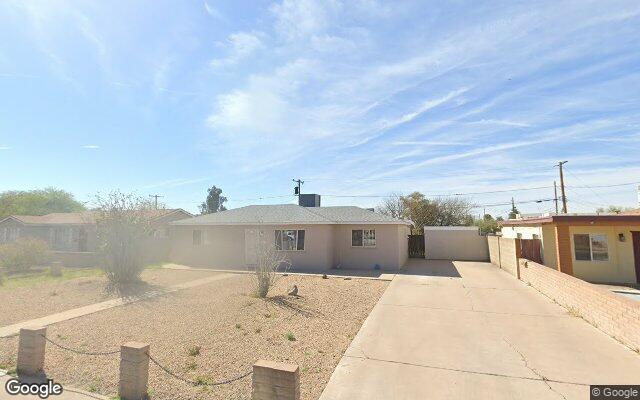
A medium home, reviewed on public record.
© Google Street View
Compared to 1,661 Arizona facilities with a similar number of beds.
Care · 36-month window. Higher percentile = better performance on inspection record. Source: Arizona Dept. of Health Services · Bureau of Residential Facilities Licensing.
among peers to rank.
Rankings based on 36-month ADHS inspection data. Severity and frequency: fewer citations = higher percentile. Repeat rate: lower repeat citation share = higher percentile.
Citation history, plotted month by month.
21 deficiencies on record. Each bar is a month with a citation.
Finding distribution
21 total · 36 monthsScope × Severity (CMS A–L)
Every inspection visit, verbatim.
6 inspections in the public record, most recent first. Plain-language summaries open first — click into any row for the full citation text.
2026-08-28Complaint InvestigationNo findings
2026-05-04Complaint InvestigationEnforcement · 12 findings
“Based on record review and interview, the assisted living home failed to maintain a standardized form for each resident that included the information prescribed in A.R.S § 36-420.04.A.1-9, for two of two residents sampled. Findings include: A.R.S. 36-420.04.A states, "A. An assisted living center or assisted living home that contacts an emergency responder on behalf of a resident shall provide to the emergency responder a written document that includes all of the following: 1. The reason or reasons the emergency responder was requested on behalf of the resident. 2. Whether the resident receives medication services and, if the resident has provided this information to the assisted living center or assisted living home, a list of all the resident's prescription and over-the-counter medications, their dosages and how frequently they are administered. 3. The name, address and telephone number of the resident's current pharmacy. 4. A list of any known allergies to any medications, additives, preservatives or materials like latex or adhesive. 5. The name and contact information for the resident's primary care physician and power of attorney or authorized representative. 6. Basic information about the resident's physical and mental conditions and basic medical history, such as having diabetes or a pacemaker or experiencing frequent falls or cardiovascular and cerebrovascular events, as well as dates of recent episodes, if known. 7. The point-of-contact information for the assisted living center or assisted living home, including the telephone number, if available, cell phone number and email address. A point of contact must be available to respond to questions regarding the information provided twenty-four hours a day, seven days a week. 8. A copy of the resident's health insurance portability and accountability act release authorizing a receiving hospital to communicate with the assisted living center or assisted living home to plan for the resident's discharge. This paragraph does not preclude a resident from revoking the resident's health insurance portability and accountability act release authorization. 9. A copy of the resident's advance directives, if any, on file at the assisted living center or assisted living home. This paragraph does not preclude a resident from revoking or modifying the resident's advance directives." 1. A review of R3’s and R4’s medical records revealed documentation of a “Resident Transfer Form”. However, the document was blank and did not include the aforementioned information. 2. In an exit interview, the findings were discussed with E1 and no additional information was provided.”
“Based on documentation review and interview, after having a reasonable basis to believe abuse had occurred on the premises, the manager failed to report the suspected abuse of a resident according to Arizona Revised Statutes (A.R.S.) § 46-454. The deficient practice posed a risk as the Department was unable to assess if there was an immediate health and safety concern for residents who resided in the assisted living facility. Findings include: 1. A.R.S. § 46-454(A) states: "A health professional...or other person who has responsibility for the care of a vulnerable adult and who has a reasonable basis to believe that abuse, neglect or exploitation of the vulnerable adult has occurred shall immediately report or cause reports to be made of such reasonable basis to a peace officer or to the adult protective services central intake unit...The reports required by this subsection shall be made immediately by telephone or online." 2. Arizona Administrative Code R9-10-101(111) states, "'Immediate' means without delay." 3. A review of facility documentation revealed no documentation of a report to Adult Protective Services (APS) and an investigation was not conducted by the manager. 4. A review of facility policies and procedures revealed a policy titled, “Abuse, Neglect, and Exploitation Policy and Procedure“. The policy stated, “If a manager has reasonable basis to believe abuse, neglect, or exploitation occurred on the premises… the manager shall document suspected abuse, neglect, or exploitation. Shall immediately report to (APS).” 5. In an interview, E1 reported that APS came out as a report may have been made. 6. In an exit interview, the findings were discussed with E1 and no additional information was provided.”
“Based on documentation review and interview, the manager failed to ensure that a plan was implemented for an ongoing quality management program. The deficient practice posed a risk as a quality management program documents the necessary information required to effectively manage services provided. Findings include: 1. A review of the facility’s quality management documentation revealed no documentation of a quality management report created for the months of January 2026 to April 2026. 2. A review of the facility’s policies and procedures revealed a policy titled "Quality Management Plan”. The policy stated, “The monthly report shall be completed and maintained on a quarterly basis.” 3. In an exit interview, the findings were discussed with E1 and no additional information was provided.”
“Based on documentation review, record review, and interview, the manager failed to ensure a manager provided evidence of freedom from infectious tuberculosis (TB) on or before the date the individual began providing services at the assisted living facility and as specified in R9-10-113, for one of two personnel sampled. The deficient practice posed a potential TB risk to residents. Findings include: R9-10-113.A states, "If a health care institution is subject to the requirements of this Section, as specified in an Article in this Chapter, the health care institution's chief administrative officer shall ensure that the health care institution establishes, documents, and implements tuberculosis infection control activities that...2. Include: a. For each individual who is employed by the health care institution, provides volunteer services for the health care institution, or is admitted to the health care institution and who is subject to the requirements of this Section, screening, on or before the date specified in the applicable Article of this Chapter, that consists of: i. Assessing risks of prior exposure to infectious tuberculosis, ii. Determining if the individual has signs or symptoms of tuberculosis, and iii. Obtaining documentation of the individual's freedom from infectious tuberculosis according to subsection (B)(1)..." 1. A review of facility policies and procedures revealed a policy titled "Tuberculosis (“TB”) Testing”. The policy stated, “The TB must be BOTH administered AND read prior to the individual being accepted as a resident, providing services to residents…” 2. A review of the facility's employee work schedule revealed a schedule for May 2026. The schedule indicated E2 was scheduled to work Monday through Friday from 9:00 AM - 6:00 PM. 3. A review of E2’s personnel record revealed no documentation of a completed risk assessment and only one completed TB skin test. After further review, it was revealed that the second TB skin test had not been read. 4. In an exit interview, the findings were discussed with E1 and no additional information was provided.”
“Based on documentation review, record review, and interview, the manager failed to ensure that a resident provided evidence of freedom from infectious tuberculosis (TB) as specified in R9-10-113 before or within seven calendar days after the resident’s date of occupancy, for two of two residents sampled. The deficient practice posed a potential TB risk to residents. Findings include: R9-10-113.A states, "If a health care institution is subject to the requirements of this Section, as specified in an Article in this Chapter, the health care institution's chief administrative officer shall ensure that the health care institution establishes, documents, and implements tuberculosis infection control activities that...2. Include: a. For each individual who is employed by the health care institution, provides volunteer services for the health care institution, or is admitted to the health care institution and who is subject to the requirements of this Section, screening, on or before the date specified in the applicable Article of this Chapter, that consists of: i. Assessing risks of prior exposure to infectious tuberculosis, ii. Determining if the individual has signs or symptoms of tuberculosis, and iii. Obtaining documentation of the individual's freedom from infectious tuberculosis according to subsection (B)(1)..." 1. A review of facility policies and procedures revealed a policy titled "Tuberculosis (“TB”) Testing”. The policy stated, “The TB must be BOTH administered AND read prior to the individual being accepted as a resident…” 2. A review of R3’s medical record revealed no documentation of a TB risk assessment, signs and symptoms of TB, or a TB skin test before or within seven days from R3’s admission date. 3. A review of R4’s medical record revealed no documentation of a TB risk assessment. 4. In an exit interview, the findings were discussed with E1 and no additional information was provided.”
“Based on record review, documentation review, and interview, the manager failed to ensure that before or at the time of acceptance of an individual, the individual submitted documentation that was dated 90 calendar days before the individual was accepted by an assisted living facility and included whether the individual required continuous medical services, continuous or intermittent nursing services, or restraints and was signed and dated by a medical practitioner, for one of two residents sampled. The deficient practice posed a risk if the facility was unable to meet a resident’s needs. Findings include: 1. A review of R3’s and R4’s medical records revealed no documentation that included whether the individuals required continuous medical services, continuous or intermittent nursing services, or restraints before or at the time of admission. 2. A review of facility policies and procedures revealed a policy titled "Residency Agreement”. The policy stated, “The individual shall submit documentation dated within 90 calendar days before admission that indicates the type of services requested or is expected to receive, and whether the individual requires continuous medical services, continuous or intermittent nursing services, or restraints. ” 3. In an exit interview, the findings were discussed with E1 and no additional information was provided.”
“Based on record review, documentation review, and interview, the manager failed to issue a 14- calendar-day written notice of termination for nonpayment of fees, charges, or deposit, for one of two residents sampled. The deficient practice posed a risk if a resident was not aware of the terms of termination. Findings include: 1. A review of R2’s medical record revealed no documentation of a written 14-calendar-day termination of residency. 2. A review of facility policies and procedures revealed a policy titled "Termination of Residency”. The policy stated, “2. Manager may terminate with a 14 calendar day written notice of termination of residency as follows: a. For nonpayment of fees, charges, or deposits…” 3. In an interview, E1 reported a written 14 day notice was not given. 4. In an exit interview, the findings were discussed with E1 and no additional information was provided. This is a repeat deficiency from the compliant inspection conducted on June 16, 2025.”
“Based on record review, documentation review, and interview, the manager failed to ensure a resident had a established and documented service plan no later than 14 calendar days after the resident's date of acceptance, for one of four residents sampled. The deficient practice posed a risk as there was no service plan to direct services to be provided to a resident. Findings include: 1. A review of R1’s medical record revealed documentation of a service plan. However, the document did not contain any information as it was not filled out. Based on R2's date of admission, a written service plan was required. 2. A review of facility policies and procedures revealed a policy titled "Service Plan”. The policy stated, “The Service Plan will be completed within 14 days of the resident’s admit…” 3. In an exit interview, the findings were discussed with E1 and no additional information was provided. This is a repeat deficiency from the complaint inspection conducted on June 16, 2025.”
“Based on record review and interview, the manager failed to ensure that a resident had a service plan that was established, documented, and implemented that included the level of service the resident was expected to receive, for one of four residents sampled. The deficient practice posed a risk as the service plan did not reinforce and clarify services to be provided to a resident. Findings include: 1. A review of R3’s medical record revealed a service plan dated April 2, 2026. However, the service plan did not include R3’s expected level of care. 2. In an interview, E1 reported originally believing R3 to be supervisory care, but due to the facility providing medication administration, E1 reported that R3 was personal care. 3. In an exit interview, the findings were discussed with E1 and no additional information was provided. This is a repeat deficiency from the complaint inspection conducted on July 24, 2025.”
“Based on record review, documentation review, and interview, the manager failed to ensure that a resident had a service plan that was signed and dated by the manager and the nurse or medical practitioner who reviewed the service plan, for one of four residents sampled. The deficient practice posed a risk if the service plan was not developed to articulate decisions and agreements. Findings include: 1. A review of R3’s medical record revealed a service plan dated April 2, 2026. However, the service plan did not include a signature and date from the nurse or medical practitioner and manager. 2. A review of facility policies and procedures revealed a policy titled "Service Plan”. The policy stated, “Written notations of Service Plan reviews with Caregiver(s) shall be made and shall include: b. The signature of the Manager or Manager Designee… d. The signature of the Manager or Registered Nurse completing the service plan." 3. In an exit interview, the findings were discussed with E1 and no additional information was provided.”
“Based on observation, record review, documentation review, and interview, the manager failed to ensure a resident’s medical record contained a medication order from a medical practitioner for each medication that was administered to the resident, for one of four residents sampled. The deficient practice posed a risk as medication administered could not be verified against a medication order. Findings include: 1. The Compliance Officer observed prescription bottles for the following medication: Carvedilol 6.25 milligrams (mg), 1 tablet, by mouth (po), daily (qd) Cetirizine hcl 10mg, 1 tab, po, qd Divalproex Extended 500mg, 2 tabs, po, two times daily (bid) Guafacine, 1mg, 1 tab, po, at bedtime (qhs) Losartan Pot, 25mg, 1 tab, po, qd Trazodone, 100mg, 1 tab, po, qhs Trulicity .75mg/.5 milliliters, pen inject, once a week Amlodipine Besylate, 5mg, 1 tab, po, qd Aripiprazole, 20mg, 1 tab, po, qd Atrovastatin, 80mg, 1 tab, po, qd 2. A review of R1's medical record revealed a medication administration record (MAR) for May 2026. R1 was administered the following medications May 1, 2026 through May 3, 2026: Carvedilol 6.25 milligrams (mg), 1 tablet, by mouth (po), daily (qd) Cetirizine hcl 10mg, 1 tab, po, qd Divalproex Extended 500mg, 2 tabs, po, two times daily (bid) Guafacine, 1mg, 1 tab, po, at bedtime (qhs) Losartan Pot, 25mg, 1 tab, po, qd Trazodone, 100mg, 1 tab, po, qhs Trulicity .75mg/.5 milliliters, pen inject, once a week Amlodipine Besylate, 5mg, 1 tab, po, qd Aripiprazole, 20mg, 1 tab, po, qd Atrovastatin, 80mg, 1 tab, po, qd 3. A review of R3's medical record revealed documentation of a medication list for R3. However, the medication list was not signed by a medical practitioner. 4. A review of facility policies and procedures revealed a policy titled “Obtaining and Refilling Medication”. The policy stated, “A medication administered to a resident must be administered by an individual under direction of a medical practitioner." 5. In an interview, E1 reported E1 would get the medication list signed. 6. In an interview, the findings were discussed with E1 and no additional information was provided.”
“Based on observation, documentation review, and interview, the manager failed to ensure poisonous or toxic materials stored by the assisted living facility were maintained in a locked area and were inaccessible to residents. The deficient practice posed a risk to the physical health and safety of a resident. Findings include: 1. During an environmental tour, the Compliance Officer observed the following: Glass Cleaner on an open shelf, in a resident’s bathroom Lysol spray, Ajax, and Cleaning Vinegar in an unlocked cabinet under the kitchen sink 2. A review of facility policies and procedures revealed a policy titled "Facility Grounds Safe and Free of Hazards”. The policy stated, “The facility manager and/or that owner and staff will ensure that all poisonous or toxic materials (this is to include all cleaning supplies) will be stored and maintained in labeled containers in a locked area separate from food preparation and storage, dining areas, and medications.” 3. In an exit interview, the findings were discussed with E1 and no additional information was provided.”
2025-07-24Complaint InvestigationR9-10-808.C.1.g · 3 findings
“Based on record review and interview the manager failed to ensure a caregiver or assistant caregiver documented the services in the resident's medical record. Findings include: 1. A review of R1's medical record revealed a service plan last updated February 28, 2025 (Supervisory Care). Further review revealed various services provided, including complete bathing three times a week, partial bath on days when complete was not given, and incontinence checks every four hours with the application of a skin barrier. 2. A review of R1's activities of daily living for June and July revealed complete bathing, partial bathing, and incontinence checks services not documented as provided on the following days: Bathing Assistance- June: 13th-30th July: 6th-7th, and 9th-23rd Incontinence Care- June: 1st,3rd-5th,7th-8th,10th-11th, and13th-30th July: 1st-23rd 3. A review of R2's medical record revealed a service plan last updated May 10, 2025 (Personal Care). Further review revealed various services provided, including a complete bath 3 times a week, a partial bath on days when a complete bath was not given, and incontinence checks every four hours. 4. A review of R2's activities of daily living for June and July revealed complete bathing, partial bathing, and incontinence checks services not documented as provided on the following days: Bathing Assistance- June: 15th-18th, and 20th-30th July: 1st-23rd Incontinence Care- June: 1st-30th July: 1st-4th,6th-9th and 10th-16th 5. In an interview, R1 reported that they were assisted with bathing and got help to use the bathroom. 6. In an interview, E1 acknowledged that services were not documented in the resident's medical record but had provided the services to the residents.”
“Based on record review and interview, the manager failed to ensure the level of service the resident is expected to receive. Findings include: 1. A review of R1's medical record revealed a service plan last updated February 28, 2025 and showing Supervisory Care. 2. A review of R1's service plan revealed various Personal Care services, including complete bathing three times a week, partial bath on days when complete was not given, and incontinence checks every four hours with the application of a skin barrier. 3. In an interview, R1 reported that they were assisted with bathing and got help to use the bathroom. 4. In an interview, the findings were reviewed with E1, and no additional information was provided.”
“Based on observation and interview, the manager failed to ensure that a resident was treated with dignity, respect, and consideration. Findings include: 1. During an environmental inspection of R3's room, the Compliance Officer did not see toilet paper or paper towels in the bathroom. 2. In an interview, R3 revealed that there was no toilet paper or paper towels in the bathroom, had not showered since moving in, and was not able to speak about concerns due to fear of retaliation. 3. In an interview, E1 acknowledged there was no toilet paper or paper towels in R3's bathroom.”
2025-06-16Complaint InvestigationA.A.C. · 6 findings
“Based on record review and interview, the manager failed to maintain a standardized form for each resident that included the information prescribed in A.R.S. § 36-420.04.A. The deficient practice posed a risk to the physical health and safety of a resident. Findings include: 1. A review R2's medical records revealed no prefilled Emergency Medical Services (EMS) Face Sheet readily available. 2. In an interview, E1 acknowledged that the facility did not maintain a standardized form for R2 that included the information as prescribed.”
“Based on record review and interview, the governing authority failed to ensure compliance with A.R.S. § 36-411. The deficient practice posed a risk if E1 was a danger to a vulnerable population. Findings include: 1. A review of E1’s personnel record, revealed no documentation of the Adult Protective Services (APS) Central Registry check completed as required. 2. Review of https://des.az.gov/APSRegistry revealed that E1 did not appear to be on the APS Central registry. 3. In an interview, E1 acknowledged the manager failed to ensure that E1's personnel record was in compliance with the APS central registry requirements.”
“Based on record review, documentation review and interview, the manager terminated a resident without notice who was not exhibiting behaviors that were an immediate threat to the health and safety of the resident or other individuals in the assisted living facility. Findings include: 1. A review of the residency agreement signed by R1 on May 9, 2025 revealed that the residency agreement could be terminated by the facility without notice "the resident's behavior poses a threat to the health or safety of others in the facility". 2. A review of R1's "Communication Log"', revealed that the resident was not exhibiting out-of-control behaviors when the facility had the resident transported to the hospital on June 6, 2025. 3. A documentation review of the facility's Policies and Procedures titled, "Termination of Residency" stated that "a residency may be terminated without notice for out-of-control behaviors, 14 days notice for non payment, and 30 days notice for any other reason. 4. In an interview, E1 revealed that R1 should have been given a 14 days notice of termination for non payment. There was no written documentation to show that the resident was given a 14-day notice for non payment. E1 acknowledged that R1 was terminated without notice but not exhibiting out-of-control behaviors.”
“Based on record review and interview, the manager failed to ensure a written service plan was completed no later than 14 calendar days after the resident's date of acceptance, for R2. The deficient practice posed a risk as there was no service plan to direct the services to be provided to a resident. Findings include: 1. A review of R2's medical records revealed no written service plan. Based on R2's date of admission, a written service plan was required. 2. In an interview, E1 acknowledged that there was no service plan completed within 14 days after R2's date of acceptance.”
“Based on observation and interview the manager failed to ensure that food was obtained, prepared, served, and stored with potentially hazardous food being refrigerated at a temperature maintained at 41° F or below. The deficient practice posed a risk for potential food borne illnesses. Findings include: 1. During an environmental inspection, the Compliance Officer observed that a package of raw ground beef on the kitchen counter. 2. In an interview, E1 revealed that the food was thawing in preparation for dinner. E1 acknowledged that potentially hazardous food was not maintained at 41° F or below.”
“Based on record review, documentation review, and interview, the manger failed to ensure that a caregiver immediately notified a resident’s emergency contact, primary care provider, and document the date and time of the accident or emergency, a description of the accident, emergency, or injury, actions taken by the caregiver, the individuals notified by the caregiver, and action taken to prevent the accident, emergency or injury from occurring in the future. Findings include: 1. A review of R1's medical record revealed progress notes which reported that R1 sustained a bloody face from scratching wounds. EMS was called because the resident was in pain. The resident was transported to the hospital. 2. A review of the facility's Policies and Procedures revealed a policy titled, " Accident, Incident, or Injury", which included a standardized 'Incident Report Form" that was to be completed following an incident. 3. A review of R1’s medical records revealed no incident report made regarding R1's need to be transported to the hospital. 4. In an interview, E1 acknowledged that there was not an incident report regarding R1's injuries and transportation by EMS to the hospital.”
2025-03-27Annual Compliance VisitNo findings
2024-10-01Annual Compliance VisitNo findings
Other facilities in Phoenix.
Other memory care facilities near Phoenix with similar care offerings.
Tour Prep
Family reviews
No reviews yet — be the first to share your experience