Bridgewater Assisted Living.
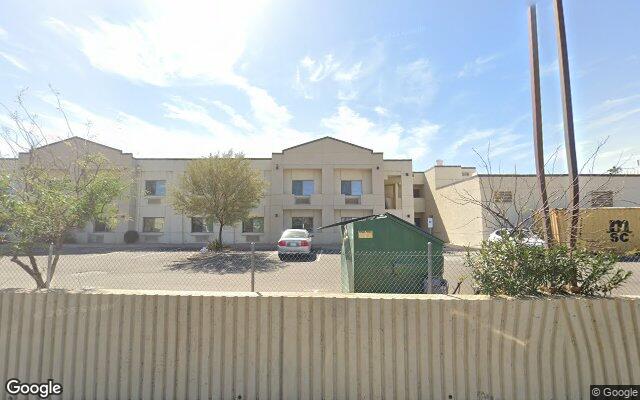
A large home, reviewed on public record.
© Google Street View
Compared to 116 Arizona facilities with a similar number of beds.
Care · 36-month window. Higher percentile = better performance on inspection record. Source: Arizona Dept. of Health Services · Bureau of Residential Facilities Licensing.
among peers to rank.
on file.
Rankings based on 36-month ADHS inspection data. Severity and frequency: fewer citations = higher percentile. Repeat rate: lower repeat citation share = higher percentile.
Citation history, plotted month by month.
37 deficiencies on record. Each bar is a month with a citation.
Finding distribution
37 total · 36 monthsScope × Severity (CMS A–L)
Every inspection visit, verbatim.
17 inspections in the public record, most recent first. Plain-language summaries open first — click into any row for the full citation text.
2026-09-15Complaint InvestigationNo findings
2026-08-04Complaint InvestigationNo findings
2026-07-22Complaint InvestigationNo findings
2026-05-28Complaint InvestigationNo findings
2026-03-31Complaint InvestigationR9-10-808.A.3.c · 2 findings
“Based on record review and interview, a manager failed to ensure that a resident had a service plan that included the correct level of medication services the resident received for one of seven residents sampled. The deficient practice posed a risk if a resident's service plan did not reinforce and clarify services to be provided to a resident. Findings include: 1. A review of R3's service plan dated October 9, 2025, revealed R3 received personal care services and stated "Trained Wellness Med Tech will provide resident with assistance in managing and taking medications as prescribed. Trained Wellness Associates will administer medications/treatments according to providers orders." 2. A review of R3's medical record revealed a document titled "Referral" dated October 9, 2025. This document was signed by a medical practitioner and stated: "the facility is to administer pt's medications as of October of 2025 due to [R3's] extreme noncompliance with self medication administration." 3. A review of R3's March 2026 medication administration record (MAR) revealed the following medications were self-administered by R3 March 1st - 31st: Aspirin EC 81 mg once a day Bupropion HCL SR 150 mg twice a day Duloxetine HCL DR 30 mg once a day Furosemide 20 mg every other day Pioglitazone HCL 45 mg once a day Sertraline HCL 50 mg once a day 4. In an interview, E1 reported that R3 was incorrectly self-administering medication, and the facility obtained a doctor's order for the facility to administer R3's medication. E1 reported that R3 used other physicians and pharmacies to obtain medications to self-administer. 5. In an exit interview, findings were reviewed with E1 and no additional information was provided.”
“Based on record review, observation, and interview, the manager failed to ensure medications were administered in compliance with medication orders and documented in the medical record for one of seven residents sampled. The deficient practice posed a risk if the resident experienced a change in condition due to improper administration of medication. Finding include: 1. A review of R3's service plan dated October 9, 2025, revealed R3 received personal care services and stated "Trained Wellness Med Tech will provide resident with assistance in managing and taking medications as prescribed. Trained Wellness Associates will administer medications/treatments according to providers orders." 2. A review of R3's medical record revealed a March 2026 medication administration record (MAR). This MAR revealed that Oxycodone HCL (IR) 15 MG tab was administered three times a day, March 1 through March 31, 2026. 3. A review of R3's medical record revealed no signed or verbal order for Oxycodone HCL (IR) 15 MG tab, take one tablet three times a day. 4. The Compliance Officer observed E7 administer R3 Oxycodone HCL (IR) 15 MG tab. A review of the medication label revealed Oxycodone HCL (IR) 15 MG tab, take one tablet three times a day, and stated that it was filled on March 9, 2026. 5. In an interview, E1 reported that there was no medication order available for R3's Oxycodone HCL (IR) 15 MG tab, take one tablet three times a day. 6. A review of R3's medical record revealed signed medication orders dated February 12, 2026. These orders stated the following: Isosorbide Mononitrate ER 30 mg Tab ER 24hr sig: Take 1 tablet by mouth every day Jardiance 25 mg Tab Lantus SoloStar 100 Unit/ml solution Pen-injector Subcutaneous sig: 45u sq daily Lisinopril 20 mg Tab sig: Take 1 tablet by mouth every day *Hold for systolic blood pressure less than 100 or heart rate less than 60 7. A review of R3's March 2026 medication administration record (MAR) revealed no documentation that Isosorbide Mononitrate ER 30 mg, Jardiance 25 mg, Lantus SoloStar 100 Unit/ml solution 45 units, and Lisinopril 20 mg were administered. 8. During an observation of R3's medications, Isosorbide Mononitrate ER 30 mg, Jardiance 25 mg, and Lisinopril 20 mg were available. 9. A review of R3's medical record revealed a document titled "Referral" dated October 9, 2025. This document was signed by a medical practitioner and stated: "the facility is to administer pt's medications as of October of 2025 due to [R3's] extreme noncompliance with self medication administration." 10. A review of R3's medical record revealed signed medication orders dated February 12, 2026. These orders stated the following: Aspirin 325 mg Tab delayed rel sig: 1 tablet orally daily Pioglitazone 45 mg Tab sig: Take 1 tablet by mouth every day Furosemide 20 mg Tab sig: 1 tablet orally every 48 hours Additionally, signed medication orders dated December 12, 2025, stated: Bupropion HCL SR 150 mg Tab tack 1 tablet by mouth twice daily Duloxetine HCL DR 30 mg Cap Take 1 capsule by mouth once a day Sertraline HCL 50 mg Tablet Take 1 tablet by mouth once a day 11. A review of R3's March 2026 MAR revealed the following medications were self-administered by R3 March 1st - 31st: Aspirin EC 81 mg once a day Pioglitazone HCL 45 mg once a day Furosemide 20 mg every other day Bupropion HCL SR 150 mg twice a day Duloxetine HCL DR 30 mg once a day Sertraline HCL 50 mg once a day 12. The Compliance Officer observed a conversation between E1 and E7, E7 stated that R3 had medications in R3's room that R3 was self-administering. E1 stated that all R3's medication should be removed from R3's room and that staff should be administering all medication. 13. In an interview, R3 reported that R3 was not receiving all of R3's medication and that all medications were removed from R3's room. 14. In an interview, E1 reported that R3 was incorrectly self-administering medication, and the facility obtained a doctor's order for the facility to administer R3's medication. E1 reported that R3 used other physicians and pharmacies to obtain medications to self-administer. 15. In an exit interview, the findings were reviewed with E1 and no additional information was provided. 16. This is a repeat deficiency from the inspection conducted on February 27, 2024.”
2026-01-27Complaint InvestigationNo findings
2025-12-24Complaint InvestigationNo findings
2025-12-23Complaint InvestigationHigh Risk · 1 finding
“Based on documentation review, interview, and record review, the manager failed to immediately report suspected abuse according to A.R.S. § 46-454. The deficient practice posed a risk to the physical health and safety of a resident. Findings include: 1. A.R.S. § 46-454(A) states: "A health professional... or other person who has responsibility for the care of a vulnerable adult and who has a reasonable basis to believe that abuse, neglect or exploitation of the vulnerable adult has occurred shall immediately report or cause reports to be made of such reasonable basis to a peace officer or to the adult protective services central intake unit...The reports required by this subsection shall be made immediately by telephone or online." 2. Arizona Administrative Code R9-10-101(111) states, "'Immediate' means without delay." 3. Documentation review revealed the facility's policy and procedure title, "GP03 - Abuse, Neglect and Exploitation," that stated "...Procedure 4. Upon the notice of reported, observed suspected, or at imminent risk of any form of abuse: a. Immediate steps will be taken to ensure the resident is protected from potential future abuse and neglect while the investigation is conducted. b. The alleged perpetrator will have NO CONTACT with any residents during the investigation. c. A thorough investigation will be conducted by the Wellness Director or Executive Director." 4. In an interview, E1 reported that E1 was aware of the altercation between R3 and E3 and that R3 reported E3 assaulted R3 during the altercation. 5. Documentation review revealed a copy of the facility's Internal Incident Report dated December 11, 2025 at 3:17 pm. The report provided a summary of an incident involving R3 and E3 in which E3 was listed as being assaulted. The case manager for R3 was notified on December 11, 2025 at 2:05 pm. 6. Record review of R3's Medication Administration Record revealed Bridgewater Deer Valley Observations form that included progress notes. The December 11, 2025, 3 pm notes stated, "It was reported to this nurse that the resident was observed attempting to collect mop water from the housekeeping mop bucket using a pickle jar. Maintenance staff intervened and retrieved the jar due to the resident stating [R3] was alleger to the chemicals in the mop water. During the retrieval, the resident attempted to snatch the jar back from staff, resulting in maintenance staff sustaining a scratch. Following the incident, the resident reported that [R3] called the police, claiming that staff had assaulted [R3]. No assault was observed by any other staff member present at the time, staff intervened out of concern for the resident's safety related to potential allergic reaction. Resident was monitored and no further issues were observed at this time." 7. Documentation review revealed a letter received from R3's case manager dated December 17, 2025 "(RE: Reported Assault by ALF Staff and Request of No Contact - R3, DOB (XX/XX/XXXX)." The letter read: "[E1] - During my scheduled visit with [R3] on 12/17/2025 at 8:15 a.m. [R3] alleges that [R3] was assaulted by Bridgewater ALF staff member [E3] and [E3's] assistant [E5] on 12/11/25 while attempting to enter [R3's] apartment unit. [R3] also reports that since the incident [E3] has been harassing [R3] and threatening to enter [R3's] apartment on (and) discard [R3's] personal belongings. [R3] reports contacting Phoenix Police on 12/14/2025 to report the assault. As a result of this incident [R3] reports being in fear for [R3's] safety. I respectfully request that [E3] and [E5] have no further physical or verbal contact with [R3]. Thank you for your prompt attention to this mater as always, thank you for your continue care and support for our mutual client [R3.]" 8. The Compliance Officer provided E1 with the Onsite Complaint Survey Documents Request form. Requested documents included: Medical records for R1, R2, R3, and R4 "Incident report and investigation document for allegation of abuse, neglect, exploitation AND/OR accidents, emergencies, or injuries that resulted in the resident needing medical services for any of the above resident." 9. The Compliance Officer did not receive any documentation showing the manager took immediate action to stop the suspected abuse or the actions taken by the manager to prevent the suspected abuse from occurring in the future. 10. In an exit interview, the findings were reviewed with E1, and no additional information was provided.”
2025-12-02Complaint InvestigationR9-10-113.A · 3 findings
“Based on documentation review, record review, and interview, the health care institution failed to implement tuberculosis (TB) infection control activities that included initial training and education related to recognizing the signs and symptoms of TB to individuals employed by the health care institution. The deficient practice posed a risk as the caregiver received no organized instruction or information related to TB surveillance. Findings include: 1. A review of the Centers for Disease Control and Prevention (CDC) website revealed a web page titled, "Guidelines for Preventing the Transmission of Mycobacterium tuberculosis in Health-Care Settings, 2005." The web page stated, "All health-care workers (HCWs) should receive training on the prevention, transmission, and symptoms of TB disease that is appropriate to their work responsibilities and setting. Initial training should be provided to all new employees, with annual refresher training thereafter." 2. Review of E2’s, E3’s, E4’s, E5’s, E6’s, E7’s, E8’s, and E9’s personnel records revealed no current documentation of training and education related to recognizing the signs and symptoms of TB. Based on the hire dates, this documentation was required. 3. In an interview, the finding was reviewed with E1 and no additional information was provided. 4. This is a repeat deficiency from the inspection conducted on December 2, 2024.”
“Based on documentation review, record review, and interview, the manager failed to ensure a personnel record for each employee included documentation of compliance with the requirements in A.R.S. § 36-411(C)(1), for four of ten personnel sampled. The deficient practice posed a risk to the health and safety of residents, as there was no evidence to show the employees were fit to work at the assisted living facility. Findings include: 1. A.R.S. § 36-411(C)(1) states: "C. Each residential care institution, nursing care institution and home health agency shall make documented, good faith efforts to: 1. Contact previous employers to obtain information or recommendations that may be relevant to a person's fitness to work in a residential care institution, nursing care institution or home health agency. 2. A review of E7’s, E8’s, E9’s, and E10’s personnel records revealed no documentation of evidence to indicate a good faith effort to contact previous employers to obtain information or recommendations that may be relevant to a person's fitness to work in a residential care institution. 3. In an exit interview, the findings were reviewed with E1, and no additional information was provided.”
“Based on documentation review, record review, and interview, the manager failed to ensure a caregiver’s or assistant caregiver's skills and knowledge were verified and documented before the caregiver or assistant caregiver provided physical health services, for three of eight caregivers and assistant caregivers reviewed. The deficient practice posed a risk if a caregiver or assistant caregiver did not have the skills and knowledge necessary to meet a resident's needs. Findings include: 1. A review of the facility’s policies and procedures revealed a policy titled, “Orientation and training Policy & Procedure" which stated, “4. Caregivers will be given a Skills Checklist to be completed by the Supervisor and/or team member who is working with the new caregiver... will be kept in the caregiver’s personnel record.” 2. A review of E3’s personnel records revealed a hire date of September 23, 2025. E3's record revealed a skills checklist signed and dated October 16, 2025. 3. A review of E8’s personnel records revealed a hire date of September 16, 2025. E8's record revealed a skills checklist signed and dated September 25, 2025. 4. A review of the personnel schedules revealed the following employees were not scheduled with a supervisor or team member on the following days before the skills checklist was completed: - E3 worked October 5th, 9th, and 11th of 2025, and - E8 worked September 24th of 2025. 5. A review of E10’s personnel record revealed E10 was hired as an assistant caregiver. However, the review revealed no documentation of E10’s skills checklist. Based on E10’s hire date, this documentation was required. 6. In an interview, the finding was reviewed with E1 and no additional information was provided.”
2025-10-27Complaint InvestigationA.A.C. · 1 finding
“Based on documentation review and interview, the assisted living center that contacted an emergency responder (EMS) on behalf of a resident failed to provide to the emergency responder a written document that included all of the information required in A.R.S. § 36-420.04.A.1-9, for two of three residents reviewed. The deficient practice posed a risk if the emergency responder was not aware of critical health information for the resident. Findings include: 1. A review of R1's medical records revealed that the facility contacted emergency services on October 17, 2025. The EMS documentation did not include the following: The name, address and telephone number of the resident's current pharmacy. 2. A review of R1's medical records revealed that the facility contacted emergency services on October 21, 2025. The EMS documentation did not include the following: The name, address and telephone number of the resident's current pharmacy. A copy of the resident's health insurance portability and accountability act release authorizing a receiving hospital to communicate with the assisted living center or assisted living home to plan for the resident's discharge. 3. A review of R3's medical record revealed that the facility contacted emergency services on October 17, 22, and 23, 2025. The EMS documentation did not include the following: The name, address and telephone number of the resident's current pharmacy. 4. In an interview, findings were discussed with E1, and no additional information was provided.”
2025-10-20Complaint InvestigationR9-10-810.B.1 · 2 findings
“Based on Record review, documentation review, and interview, the manager failed to ensure that a resident was treated with dignity, respect, and consideration. The deficient practice posed a risk as a resident's rights were violated. Findings include: 1. A record review of an incident report dated June 30, 2025 revealed, R4 went to the hospital on June 2, 2025. On June 12, 2025, E4 went in to the resident's room and removed some of the resident's personal property and took it to the employee's home. On June 12th and June 14, 2025, E4 was seen on camera exiting the facility with the resident's belongings. E4 was on vacation until August 8, 2025 while the investigation was taking place. E4 was terminated on July 8, 2025, and told to return the property immediately. E4 met with the facility's security staff and returned all of R4's property. 2. A documentation review of the facility's Policies and Procedures titled, "Personal Rights" stated, "2. Community Management ensures: a. Residents are treated with dignity, respect, and consideration; b. Residents are not subject to: xi. Misappropriation of personal and private property by Community Staff." 3. In an interview, E1 acknowledged the manager failed to ensure, R4 was treated with dignity, respect, or consideration.”
“Based on record review, documentation review, and interview, the manager failed to ensure that a resident was not subjected to misappropriation of personal and private property by the assisted living facility's manager, caregivers, assistance caregivers, employees, or volunteers. The deficient practice posed a risk as a resident's rights were violated. Findings include: 1. A record review of an incident report dated June 30, 2025 revealed, R4 went to the hospital on June 2, 2025. On June 12, 2025, E4 went in to the resident's room and removed some of the resident's personal property and took it to the employee's home. On June 12th and June 14, 2025, E4 was seen on camera exiting the facility with the resident's belongings. E4 was on vacation until August 8, 2025 while the investigation was taking place. E4 was terminated on July 8, 2025, and told to return the property immediately. E4 met with the facility's security staff and returned all of R4's property. 2. A documentation review of the facility's Policies and Procedures titled, "Personal Rights" stated, "2. Community Management ensures: a. Residents are treated with dignity, respect, and consideration; b. Residents are not subject to: xi. Misappropriation of personal and private property by Community Staff." 3. In an interview, E1 acknowledged the manager failed to ensure, R4 was not subjected to misappropriation of personal and private property by the assisted living facility's manager, caregivers, assistance caregivers, employees, or volunteers.”
2025-09-30Complaint InvestigationNo findings
2025-05-20Complaint InvestigationA.A.C. · 9 findings
“Based on documentation review, record review, and interview, for one of five residents reviewed, the health care institution failed to provide appropriate first aid to a resident who was in distress, who had fallen, and was able to reasonably recover independently. The deficient practice posed a risk as the facility called 911 and failed to provide first aid to the resident, and recover the resident from the floor. Findings include: 1. In documentation review, a facility progress note dated January 6, 2025, documented, "... saw the resident on the floor between the air conditioner and bed... had running blood in outside nose and mouth, few CG were there aroud the resident, I checked the resident, and moved the electric chair behind to make room, I called 911 in order to send resident to hospital and checked vitals that were as follow: BP 114/76, pulse 77, temp 97, O2 96, when paramedic arrived there picked the resident to bed and cleaned the resident face but they wanted to leave to hospital, but the resident refused to go." 2. During an interview, E1 acknowledged the facility failed to provide appropriate first aid to the resident prior to calling 911.”
“Based on interview and record review, for one of five residents reviewed, the manager failed to ensure a resident had a written service plan which included a description of the resident's medical or health problems, including physical, behavioral, cognitive, or functional conditions or impairments. The deficient practice posed a risk to residents if the service plan did not include documentation of the resident's condition and services to be provided for the resident. Findings include: 1. During an interview, R1 reported [R1] lost balance in the bedroom and fractured hip. R1 was unable to remember the date of the injury. 2. In record review, R1's medical record (received personal care services) included documentation of an incident, dated November 19, 2024, "The resident... believes... broke ... leg... hit... right lower leg against the wall and heard a crack... Called AMR." 3. In record review, progress notes for R1 documented: "11/21/2024, Resident came back with AMR... unable to transfer or bare any weight. AR said they help [R1] because ... cannot bare any weight on ... Rt leg. Resident said ... broke ...RT leg and in a lot of pain. ... AMR took [R1] back to emergency room for unsafe discharge." "12/26/2024... While visiting Coronado Health care to do an assessment on another patient there, this nurse spoke with nurse... stated resident is doing well, does sometimes refuse to do therapy... there is no plan for discharge at this time... CM stated they would reach out to this nurse once plans of discharge are given from provider." "01/03/2025... it was reported by staff that this resident this morning had an aggressive attitude and looked very anxious... left the room screaming...needed to pick up ... mail, I asked. [R1] to wait for help and [R1] yelled at staff." 4. In record review, R1's service plan dated March 11, 2025, did not include documentation of R1's injury or reported Fracture. The service plan documented, "Fall Risk: Low... [R1] is a low fall risk for falls and has not had a fall in the last 90 days." 5. During an interview, E1 acknowledged the resident's service plan did not include documentation of the resident's recent medical or health problems.”
“Based on observation, record review, and interview, for one of five residents reviewed, the manager failed to ensure a bell, intercom, or other mechanical means to alert employees to a resident's needs or emergencies was available in a bedroom being used by a resident receiving personal care services. The deficient practice posed a risk to the physical health and safety of a resident if there was no means to alert employees of an emergency. Findings include: 1. During observation and an interview, R1 was observed in [R1's] residential unit. R1 reported having no call bell or other means to alert staff or call for help in R1's residential unit. R1 reported that the residents were given a watch to wear to alert staff of the need for assistance. However, R1's watch had broken and R1 did not have a method to call for assistance for approximately four months. R1 had reported the broken watch to a caregiver. The Compliance Officer did not observe R1 had a watch to alert staff of an emergency. 2. During an interview, E1 acknowledged R1's report of not having a means to alert employees to R1's needs or emergencies available in R1's bedroom.”
“Based on record review, observation, and interview, for one of five residents reviewed, the manager failed to ensure the service plan for a resident receiving personal care services included skin maintenance to prevent and treat bruises, injuries, pressure sores, and infections. The deficient practice posed a health and safety risk to residents if staff were unaware of the skin maintenance services needed by a resident. Findings include: 1. In observation, R1's hands were reddened in appearance. 2. During an interview, R1 reported [R1] had skin issues, and had a rash on both hands; cream was applied by the caregivers twice daily. 3. In record review, R1's medical record included a medication order for Nystatin Cream dated February 24, 2025, to be applied to the affected area. A progress note dated January 27, 2025, documented "resident has a rash under ... abdomen, very red, irritated, and has a bad smell." R1's service plan dated March 11, 2025, had a section titled, "Skin Management," which documented "Resident will have skin care needs met... Staff to be aware that a care specialist will complete skin evaluation and bathing services... PRN/As needed... Staff will assess [R1's] skin and make notes of any changes or new bruising, rashes, cuts, skin tears or bumps." R1's service plan did not include documentation of R1's rash and skin maintenance services provided. 4. During an interview, E1 acknowledged R1's service plan did not include the skin maintenance services to prevent and treat R1's skin breakdown.”
“Based on documentation review and interview, the manager failed to ensure policies and procedures for medication services included procedures for assisting a resident in procuring medication. The deficient practice posed a health and safety risk if the facility did not have procedures to ensure a resident's prescribed medications were available for administration, and a resident did not receive medication as ordered. Findings include: 1. In documentation review, the Compliance Officer requested to review the facility's medication policies and procedures for procuring medication for residents. No policy was provided for review. 2. During an interview, R3 reported not having [R3's] medications for a period of time in April 2025, because the medications were delivered to R3's prior address. 3. During an interview, E1 and E6 acknowledged the facility did have [R3's] prescribed medications in April 2025, because the medications were delivered to R3's prior address, and were unable to be located. The facility was unable to procure R3's medications timely and administer the medication to R3. E1 was unable to locate a policy and procedure for assisting a resident in procuring medication.”
“Based on record review and interview, for one of five residents reviewed and receiving medication administration services, the manager failed to ensure a medication administered to a resident was administered in compliance with a medication order. The deficient practice posed a risk if the facility did not have orders for medication administered to a resident. Findings include: 1. In record review, R3's medical record (received personal care services) included a medication administration record dated March 2025, which included documentation R3 received Atorvastatin, once daily from March 26 - 28, and on March 30, Jardiance once daily from March 27 - 30, and Lantus Solost Pen 30 units twice daily from March 27 - March 30, 2025. R3's April 2025 MAR documented R3 received the following medications in April 2025: Aripiprazole, Atorvastatin, Insulin Glargine, Jardiance, Lantus Solost Pen, Omeprazole, Trulicity, and Venlafaxine. 2. During an interview, the Compliance Officer requested to review R3's medication orders. E1 provided a "Physician's Order Report" for review, which listed resident medications; however, the document was not signed or dated by a medical practitioner. No further documentation of medication orders for R3 was provided for review. This is a repeat deficiency from the inspection conducted on February 27, 2024.”
“Based on observation and interview, the manager failed to ensure medication stored by the assisted living facility was stored in a separate locked room, closet, cabinet, or self-contained unit used only for medication storage. The deficient practice posed a health and safety risk, if medications were accessible to residents. Findings include: 1. During an environmental inspection with E6, the Compliance Officer observed an unlocked and unattended medication cart stored in a hallway by resident residential units. The medication cart had several drawers which were able to be opened and contained the medications for several residents. 2. During an interview, E3 reported [E3] had gone to the restroom, and acknowledged the medication cart was left unlocked and resident medications were accessible. The findings were reviewed with E1, who acknowledged the medications stored by the facility were required to be stored in a locked manner and inaccessible to residents. This is a repeat deficiency from the inspection conducted on December 2, 2024.”
“Based on record review and interview, for one of three residents reviewed who had an emergency resulting in the need for medical services, the manager failed to ensure when a resident had an accident, emergency, or injury resulting in the resident needing medical services, a caregiver documented; the names of individuals who observed the accident, emergency, or injury; the individuals notified by the caregiver, and any action taken to prevent the accident, emergency, or injury from occurring in the future. The deficient practice posed a risk if the facility did not document all required information to ensure the health and safety of residents. Findings include: 1. In record review, a facility progress note dated January 6, 2026, documented, "... saw the resident [R2] on the floor between the air conditioner and bed... had running blood in outside nose and mouth, few CG were there around the resident, I checked the resident, and moved the electric chair behind to make room, I called 911 in order to send resident to hospital and checked vitals that were as follow: BP 114/76, pulse 77, temp 97, O2 96, when paramedic arrived there picked the resident to bed and cleaned the resident face but they wanted to leave to hospital, but the resident refused to go." 2. During an interview, R2 did not recall the incident and said it happened over a year ago. R2 did not provide information related to the incident. 3. During an interview, E1 and E6 reported R2 had a fall, and emergency services were contacted. The caregiver did not complete the documentation, as required. per R9-10-818.D. This is a repeat deficiency from the inspection conducted on February 27, 2024.”
“Based on observation and interview, for one of five resident rooms observed, the manager failed to ensure the facility premises were cleaned and disinfected. The deficient practice posed a health risk to residents if the environment was not kept clean. Findings include: 1. In observation, R1's residential unit was odorous. The room was observed to be cluttered with personal items and clothing. Two uncovered garbage cans were observed, and one contained soiled briefs. A liquid was observed on the floor by the counter. 2. During an interview, R1 reported being incontinent at times and put the soiled briefs in the garbage cans. 3. In an observation, R1's microwave inside below the tray was observed to be either burned or stained a brown color, and was not maintained in a clean manner. 4. In an interview, E1 and E6 acknowledged R1's room was not found to be clean.”
2024-12-02Complaint InvestigationA.A.C. · 7 findings
“Based on documentation review, observation, record review, and interview, for one of 10 employees reviewed, the manager failed to ensure an employee provided evidence of freedom from infectious tuberculosis (TB), as required by R9-10-113. The deficient practice posed a potential health and safety risk of TB exposure to residents and staff. Findings include: 1. R9-10-113.A states "If a health care institution is subject to the requirements of this Section, as specified in an Article in this Chapter, the health care institution's chief administrative officer shall ensure that the health care institution establishes, documents, and implements tuberculosis infection control activities that...2. Include: a. For each individual who is employed by the health care institution, provides volunteer services for the health care institution, or is admitted to the health care institution and who is subject to the requirements of this Section, screening, on or before the date specified in the applicable Article of this Chapter, that consists of: i. Assessing risks of prior exposure to infectious tuberculosis, ii. Determining if the individual has signs or symptoms of tuberculosis, and iii. Obtaining documentation of the individual's freedom from infectious tuberculosis according to subsection (B)(1)..." 2. A review of the Centers for Disease Control and Prevention website revealed a web page titled, "Guidelines for Preventing the Transmission of Mycobacterium tuberculosis in Health-Care Settings, 2005." The web page stated, "If TST (Mantoux Skin Test) is used for baseline testing, two-step testing is recommended for HCWs (Health Care Workers) whose initial TST results are negative. If the first-step TST result is negative, the second-step TST should be administered 1-3 weeks after the first TST result was read." 3. In observation, E9 was observed working at the facility during the inspection. 4. In record review, E9's personnel record (hired as a housekeeper on February 12, 2024, through an outside agency) did not include documentation E9 provided evidence of freedom from infectious TB. 5. During an interview, E1 and O1 acknowledged E9's personnel record did not include documentation E9 provided evidence of freedom from TB, as required by R9-10-113.”
“Based on record review and interview, for one residency terminated, the manager failed to ensure a written notice of termination of residency in subsection (G) included the policy for refunding fees, charges, or deposits; the deposition of a resident's fees, charges, and deposits; and the contact information for the State Long-Term Care Ombudsman. The deficient practice posed a risk as a resident was not informed of the terms of termination. Findings include: 1. In record review, R7's medical record included a termination notice dated March 1, 2024, which documented residency would terminate on March 14, 2024. The written notice did not include the policy for refunding fees, charges, or deposits; the deposition of a resident's fees, charges, and deposits; and contact information for the State Long-Term Care Ombudsman. 2. During an interview, E1 and O1 acknowledged the notice of termination did not include the policy for refunding fees, charges, or deposits; the deposition of a resident's fees, charges, and deposits; and the contact information for the State Long-Term Care Ombudsman, as required.”
“Based on record review and interview, for one residency terminated, the manager failed to ensure the written notice of termination of residency in subsection (G) included a copy of the resident's current service plan, and documentation of the resident's freedom from infectious tuberculosis. Findings include: 1. In record review, R7's medical record included a termination notice dated March 1, 2024, which documented residency would terminate on March 14, 2024. R7's termination notice did not include documentation the resident was provided a copy of the resident's current service plan, and documentation of the resident's freedom from infectious tuberculosis. 2. During an interview, E1 and O1 acknowledged R7's notice of termination did not include documentation the resident was provided a copy of the resident's current service plan, and documentation of the resident's freedom from infectious tuberculosis.”
“Based on interview and record review, for one of 10 residents reviewed, the manager failed to ensure the facility did not accept or retain a resident who was confined to a bed or chair because of an inability to ambulate even with assistance, unless the facility obtained a written determination from the resident's primary care provider (PCP) or other medical practitioner (MP), every six months, stating the resident's needs could be met by the facility and the resident's needs were within the facility's scope of services. The deficient practice posed a safety risk to a resident, if a facility retained a resident without the required authorization. Findings include: 1. During an interview, E1 reported R9 was unable to ambulate, even with assistance. 2. In record review, R9's service plan, (dated November 16, 2024, and received personal care services) documented "Hemiplegia, unspecified affecting unspecified side..." and R9 used a scooter to self propel. R9's record did not include a written determination from a MP or PCP every six months, stating R9's needs could be met by the facility, and were within the facility's scope of services. Based on R9's acceptance date and condition, this documentation was required. 3. During an interview, E1 and O1 acknowledged R9 was unable to walk, even with assistance, and the facility did not obtain a written determination from a MP or PCP every six months, stating R9's needs could be met by the facility, and were within the facility's scope of services.”
“Based on observation, and interview, the manager failed to ensure medication stored by the assisted living facility was stored in a separate locked room, closet, cabinet, or self-contained unit used only for medication storage. The deficient practice posed a risk to residents who could access the medication. Findings include: 1. Upon arrival, the Compliance Officer entered an unlocked facility conference room. The conference room table had stacks of prepackaged resident medications (blister packs). 2. During an interview, E1 reported the medications were no longer needed by residents, and the facility was waiting for the medications to be picked up. E1 acknowledged the conference room was unlocked and the medications were not stored in a locked manner, inaccessible to residents.”
“Based on observation and interview, the manager failed to ensure poisonous and toxic materials stored by the facility, were stored in a locked area and inaccessible to residents. The deficient practice posed a risk to the physical health and safety of a resident if toxic materials were accessible. Findings include: 1. During an environmental inspection with E1 and E12, the Compliance Officer observed a hallway behind the kitchen, accessible from the kitchen, and also accessible from an elevator used by residents, staff and visitors. The hallway had a storage room (maintenance shop) which had a door propped open, and the room contained multiple poisonous and/or toxic materials to include; but not limited to, cans of paint, WD-40, CLR Mold & Mildew, Profect HP Hydrogen Peroxide Disinfectant, Petroleum Stripping Paint, Raid Ant & Roach Spray, other bug spray, Wood Stain, cans of Kilz. Several cans of paint were observed against a wall in the hallway. 2. During an interview, E1 and E4 acknowledged the poisonous and toxic materials were not stored in a locked area and inaccessible to residents.”
“Based on documentation review, record review, and interview, for four of 10 employees reviewed, the health care institution failed to implement tuberculosis (TB) infection control activities including annually providing training and education related to recognizing the signs and symptoms of TB to individuals employed by the health care institution. The deficient practice posed a risk as the caregiver received no organized instruction or information related to TB surveillance. Findings include: 1. In documentation review, a review of facility's documents revealed the facility established and documented infection control activities. 2. In record review, the personnel records for E3 (hired on December 4, 2024), E4 (hired on May 10, 2024), E6 (hired on May 30, 2024), and E9 (hired on February 12, 2024), did not include documentation of training and education related to recognizing the signs and symptoms of TB. 3. During an interview, E1 and O1 acknowledged the personnel records for E3, E4, E6 and E9, did not include documentation of training on recognizing the signs and symptoms of TB.”
2024-04-05Complaint InvestigationNo findings
2024-03-12Complaint InvestigationNo findings
2024-02-26Complaint InvestigationA.A.C. · 12 findings
“Based on documentation review, record review, and interview, the health care institution failed to administer a training program for all staff regarding fall recovery. The deficient practice posed a risk as organized instruction and information related to resident care and safety was not implemented. Findings include: 1. A review of facility documentation revealed the facility had a Fall Prevention and Fall Recovery Program (FPFR). However, the documentation did not include procedures for training employees on fall recovery. 2. During an interview, E10 reported the newly hired employees received the (FPFR) packet, and watched a video on fall prevention. 3. In record review, the personnel records for E1, E2, E3, E4, E5, E6, E7, E8, and E9 did not include documention the personnel received training on fall recovery. 4. During an interview, the findings were reviewed with E1, E2, E10, and O1 who acknowledged the FPFR program did not include procedures for training personnel on fall recovery. O1 reported the facility had a policy which included procedures for employees to follow in fall recovery; however, the procedures had not been included in the training on FPFR.”
“Based on record review, documentation review, and interview, for one resident whose residency was terminated, the manager failed to implement the facility's policy and procedures for terminating a residency, in compliance with A.A.C. R9-10-807(G). The deficient practice posed a risk to a resident who was without residency and not given written notice of termination of residency. Findings include: 1. In record review, R9's medical record (received personal care services) included a documented residency agreement. The residency agreement documented, "... A manager may terminate residency of a resident as follows: 1. Without notice, if the resident exhibits behavior that is an immediate threat to the health and safety of the resident or other individuals in the assisted living facility. 2. With a 14 calendar day written notice of termination of residency: a. For nonpayment of fees, charges or deposits; or b. Under any condition in subsection (C) or 3. With a 30 calendar day written notice of termination of residency, for any other reason. Subsection (G) C. A manager shall not accept or retain an individual if: 1. The individual requires continuous a. Medical Services; Be. Nursing Services.... c. Behavioral health services. 2. The assisted living services needed by the individual are not with the assisted living facility's scope of services..." 2. During an interview, E1 reported R9 was sent to the hospital and the facility reported to the hospital the facility was unable to accept R1 back at the facility. E1 reported R9 had frequent falls, and did not call for help as directed by the facility caregivers. E1 reported the resident needed a different level of care; possibly a rehab facility. E1 reported being unaware a termination notice was required when a resident was sent to the hospital, and acknowledged the resident should have been given a 14 day written notice of termination, per the facility's policy and procedures for terminating residency.”
“Based on record review, interview, and documentation review, for three of nine residents reviewed, the manager failed to ensure policies and procedures for assisting a resident in procuring medication were implemented, which posed a risk if a resident did not have the prescribed medications available for administration. Findings include: 1. In record review, R1's medical record (received personal care and medication administration services) included medication orders for Adderall XR 15mg, take on capsule po every day in the morning upon awakening. - R1's Medication Administration Record (MAR) documented; Adderall medication on January 28 - 31, 2024, "Medication not available". 2. In record review, R2's medical record (received personal care and medication administration services) included medication orders for Ingrezza 80mg, take one capsule po every night at bedtime, Finasteride 5mg , take one tablet po once daily, Pantoprazole DR 40 mg, take one tablet po once daily, Baclofen 5 mg, take one tablet po three times daily. - R2's MAR documented the resident's medications were not available: - January 2024: Baclofen on January 1 - 6, 2024, "Medication not available." Ingrezza on January 1 - 4, 2024, "Medication not available." - February, 2024: Finasteride on February 17-20, 2024, "Medication not available." Pantoprazole on February 17- 20, "Medication not available." 3. In record review, R3's medical record (received personal care and medication administration services) included medication orders for Benztropine Mes 0.5 mg tab po twice daily, Cholestyramine, mix 1 packet in 8 oz liquid , take by mouth twice daily, and Duloxetine HCL Dr 60 mg, one cap by mouth every morning. - R3's MAR documented the resident's medications were not available: Benztropine medication on February 2 - 5, 2024 "Medication not available." Cholestyramine Packet on February 10 - 12, 15-26, 2024, "Medication not available." Duloxetine medication February 4-5, 2024, "Medication not available." 4. In documentation review, the facility had a policy titled, "Medication Refills," which documented, "... Medication refills will be obtained in a timely manner to ensure residents have all physician ordered medication available... The Nurse/Med Tech ... contacts the dispensing pharmacy to obtain a refill at least seven days prior to running out of a medication unless medication is on a cycle refill with the pharmacy. The medication is entered on the Refill/New Order Roster... If necessary, the prescribing physician is contacted for a new order... Nurses/Med Techs work to ensure medications are not allowed to run out, unless directed to do so by the physician. This is done by coordinating refills with the pharmacy and responsible party... Each shift of Nurses/Med Techs is responsible to make any necessary reminder and follow up calls to assist with receipt of medications..." 5. During an interview, the findings were reviewed with E1 and E2, who acknowledged the residents did not receive their medications as ordered, because the medications were not available. They reported having several issues with the pharmacy, and/or the ordering physician, etc., and an upcoming meeting was scheduled, to review and resolve the issues with the facility not having medications available to administer to the residents, as ordered.”
“Based on observation, record review and interview, for one resident who received medication administration, the manager failed to ensure medication was stored by the facility. The deficient practice posed a risk as R1 received medication administration, and access to a medication was not restricted. Findings include: 1. During an environmental inspection, the Compliance Officer observed R1's residential unit had a bottle of Lithium medication stored in a kitchen drawer, and a bottle of Acetaminophen stored on a bathroom counter. 2. During an interview, R1 reported the facility stored R1's other medications. 3. In record review, R1's medical record (received personal care services) included a service plan which documented "Medication Assistance... Staff will assist the resident with medication as needed per physician's orders." 4. During an interview, E1 acknowledged R1 received medication administration, and medications were stored in R1's unit, and not stored by the facility, as required. This is a repeat deficiency from the compliance inspection conducted on April 25, 2023.”
“Based on record review, documentation review, and interview, for three of seven residents reviewed, the manager failed to ensure medications were administered to a resident in compliance with a medication order. The deficient practice posed a health and safety risk to residents, if the facility did not administer medications in compliance with a medication order, and a resident did not receive the required medication. Findings include: 1. In record review, R1's medical record (received personal care and medication administration services) included medication orders for Adderall XR 15mg, take on capsule po every day in the morning upon awakening, - R1's Medication Administration Record (MAR) documented the Adderall medication was not administered on January 28 - 31, 2024, "Medication not available". 2. In record review, R2's medical record (received personal care and medication administration services) included medication orders for Buspirone HCL 15 mg, take on tablet po twice daily, Divalproex SOD DR 500 mg, take one tablet po twice daily, Mirtazapine 30 mg, take one tablet po at bedtime, Risperidone 0.5 mg, take one tablet po twice daily, with 1mg to total 1.5 mg, Clonazepam 0.5mg, take one tablet po every night at bedtime, Ingrezza 80mg, take one capsule po every night at bedtime, Finasteride 5mg , take one tablet po once daily, Pantoprazole DR 40 mg, take one talent po once daily, Baclofen 5 mg, take one tablet po three times daily. - R2's MAR documented the resident did not receive the medications as ordered: September, 2023; Buspirone medication not administered September 11 - 16, 2023 Divalproex was not administered September 11-15, 2023 Mirtazapine was not administered September 12-13, 2023 Risperidone was not administered September 1, 2, 3-13, 15-20, 22 - 30, Note: the medication was administered once instead of twice on some days. - October 2023: Clonazepam was not administered October 11-5, 17, 2023. Ingrezza was not administered October 1 - 29, 2024, no reason was documented. Risperidone was not administered October 1, 4-14, 17-29, 31, 2023, Note: administered once instead of twice on some days. - January 2024: Baclofen not administered as ordered on January 1 - 6, 2024, "Medication not available." Ingrezza not administered on January 1 - 4, 2024, "Medication not available. - February, 2024: Finasteride was not administered February 17-20, 2024, "Medication not available." MAR was blank February 27-29. 2024 no reason was documented. Pantoprazole was not administered February 17- 20, "Medication not available." MAR blank February 27-29, no reason documented. 3. In record review, R3's medical record (received personal care and medication administration services) included medication orders for Benztropine Mes 0.5 mg tab po twice daily, Cholestyramine, mix 1 packet in 8 oz liquid , take by mouth twice daily, Duloxetine HCL Dr 60 mg, one cap by mouth every morning, and Trazadone 100 mg , take two tablets po every evening. - R3's MAR documented the resident's medications were not administrated, as ordered: Benztropine medication on February 2 - 5, 2024 "Medication not available." Cholestyramine Packet on February 10 - 12, 15-26, 2024, "Medication not available." Duloxetine medication February 4-5, 2024, "Medication not available." February 27-29, MAR was blank Trazadone medication February 26-29, 2024, MAR was blank. 4. In documentation review, the facility had a policy titled, "Medication Refills," which documented, "... Medication refills will be obtained in a timely manner to ensure residents have all physician ordered medication available... The Nurse/Med Tech ... contacts the dispensing pharmacy to obtain a refill at least seven days prior to running out of a medication unless medication is on a cycle refill with the pharmacy. The medication is entered on the Refill/New Order Roster... If necessary, the prescribing physician is contacted for a new order... Nurses/Med Techs work to ensure medications are not allowed to run out, unless directed to do so by the physician. This is done by coordinating refills with the pharmacy and responsible party... Each shift of Nurses/Med Techs is responsible to make any necessary reminder and follow up calls to assist with receipt of medications..." 5. During an interview, the findings were reviewed with E1 and E2, who acknowledged the residents did not receive their medications as ordered, and reported having several issues with the pharmacy, and/or the ordering physician, etc. An upcoming meeting was scheduled, to review and resolve the issues with the facility not having medications available to administer to the residents, as ordered.”
“Based on observation and interview, the manager failed to ensure food was protected from potential contamination. Findings include: 1. During an environmental inspection, the Compliance Officer observed a handled scoop was stored inside the sugar and flour containers, which allowed for contamination after each handling of the scoop by personnel. 2. During an interview, E1 and E8 acknowledged the risk for contamination, if the scoops were handled by personnel and then stored inside the food containers.”
“Based on documentation review and interview, the manager failed to ensure an employee disaster drill was conducted on each shift at least once every three months and documented. The deficient practice posed a health and safety risk to residents if the employees were not trained to implement the facility's disaster plan. Findings include: 1. In documentation review, the facility had documentation a disaster drill was conducted on April 19, 2023, at 2:20pm, for the AM, PM and NOC shifts, on July 28, 2023, at 2:05pm, for the AM, PM and NOC shifts, on October 19, 2023, for the AM, PM, and NOC shifts, and on January 18, 2024, for the PM shift, and another for the AM and NOC shift. The facility's documentation of disaster drills did not include documentation a disaster drill was conducted on each shift at least once every three months. 2. During an interview, E1 reported the facility had three shifts, and acknowledged a disaster drill was not conducted on each shift at least once every three months, as required.”
“Based on record review and interview, for two residents reviewed, who had an emergency that resulted in the resident needing medical services, the manager failed to ensure a caregiver documented any action taken to prevent the accident, emergency, or injury from occurring in the future. The deficient practice posed a health and safety risk to a resident if action to prevent an accident, emergency or injury was not identified, documented, and implemented, to ensure a resident's safety. Findings include: 1. In record review, R1's medical record (received personal care services) included an "Internal Incident Report," which documented the facility called 911 because R1 was slurring words, would lose [R1's] balance, was wobbling, was not comprehending, and was "highly confused" and incoherent. The resident refused assistance from the fire department, and was not transported to the hospital. 2. In documentation review, the Department received a report from O1, which reported the caregiver was directed by the provider to have the fire department perform drug screening on the resident, and had concerns the resident was purchasing drugs and bringing them to the facility, and was operating a vehicle, when off the premises. 3. During an interview, E1 reported the caregivers called 911, as this was unusual behavior for R1 and wanted to ensure R1's safety. E1 reported the facility was unable to determine if R1 was incapacitated due to drug usage. E1 and E3 acknowledged the caregiver did not document any action taken to prevent the emergency from occurring in the future. 4. In record review, R5's medical record (received personal care services) included an "Internal Incident Report," which documented the facility called 911 because R5 was having difficulty speaking, numbness in the arm and symptoms of a stroke. R5 was taken to the hospital. 5. During an interview, E1 and E2 reported R5 was administered Narcan at the hospital, and appeared to recover. E2 followed up on the incident, and was unable to determine the cause of R5's emergency. E2 acknowledged the caregiver did not document any action taken to prevent the emergency from occurring in the future.”
“Based on observation, and interview, the manager failed to ensure garbage and refuse were stored in covered containers. The deficient practice posed a health and safety risk to residents if garbage and refuse was not stored in a covered manner. Findings include: 1. During an environmental inspection with E1, the Compliance Officer observed two uncovered garbage cans (containing discarded food and items) in the kitchen, and an uncovered garbage container in the dining room. 2. During an interview, E1 acknowledged garbage containers were not covered.”
“Based on documentation review and interview, for three dogs on the premises, the manager failed to ensure the pets were licensed consistent with local ordinances. The deficiency practice posed a health and safety risk to residents if an animal was not licensed, as required. Findings include: 1. A review of documentation for the facility pets, revealed three dogs, (D1, D2, and D3), did not have documentation showing current licensing with the local ordinance (which is required annually by Maricopa County). 2. In documentation review, a facility policy, titled "Pet Services," documented, "... Current county registration and rabies vaccines are required..." 3. During an interview, E1 acknowledged the facility did not have documentation the dogs were licensed, consistent with the local ordinance.”
“Based on documentation review, and interview, the manager failed to ensure one cat was vaccinated against rabies. The deficient practice posed a health and safety risk to residents, if an animal was not vaccinated against rabies. Findings include: 1. A review of documentation for the facility pets, revealed a cat (C1) did not have documentation of vaccination against rabies. 2. In documentation review, a facility policy, titled "Pet Services," documented, "... Current county registration and rabies vaccines are required..." 3. During an interview, E1 acknowledged the facility did not have documentation the cat was vaccinated against rabies.”
“Based on documentation review, record review, and interview, for four of four residents reviewed, and receiving opioid medication, without an active malignancy or an end of life condition, the manager failed to ensure an individual authorized by policies and procedures to administer an opioid, documented in the resident's medical record the identification of the resident's need for the opioid, and the effect of the opioid administered. The deficient practice posed a risk to the physical health and safety of a resident if opioid rules and policies were not implemented. Findings include: 1. In record review, R5's medical record included documentation R5 received Oxycodone HCL 15 mg Tablet, every 8 hours for pain, and received the medication daily in February 2024. R5's record did not include documentation of the effect of the opioid administered, and did not include documentation R5 had an active malignancy or an end of life condition. 2. In record review, R6's medical record included documentation R6 received Oxycodone HCL 10 mg tablet three times daily, and received the medication in January 2024. R5's record did not include documentation of the identification of the resident's need for the opioid, and documentation of the effect of the opioid administered. The record did not include documentation R6 had an active malignancy or an end of life condition. 3. In record review, R7's medical record revealed R7 received Tramadol HCL every twelve hours as needed, and received the medication on February 4, 5, 10, 12, 13, 15 17, 18 19, 21 - 26, 2024. R2's record did not include documentation of the identification of the resident's need for the opioid, and did not include documentation R7 had an active malignancy or an end-of-life condition. 4. In record review, R8's medical record included documentation R8 received Oxycodone HCL 10 mg, every 6 hours as needed, and received the medication daily in February 2024. R8's record did not include documentation of the identification of the resident's need for the opioid, and did not include documentation R8 had an active malignancy or an end-of-life condition. 5. During an interview, E1 acknowledged the residents received opioid medication, and the med techs did not document both the identification of the need for the opioid and the effect of the opioid administered.”
1 older inspection from 2023 are not shown above.
Get the complete record, translated into plain language — emailed to you.
Other facilities in Phoenix.
Other memory care facilities near Phoenix with similar care offerings.

Facility Watch · Premium
Family reviews
No reviews yet — be the first to share your experience