Acacia Health Center.
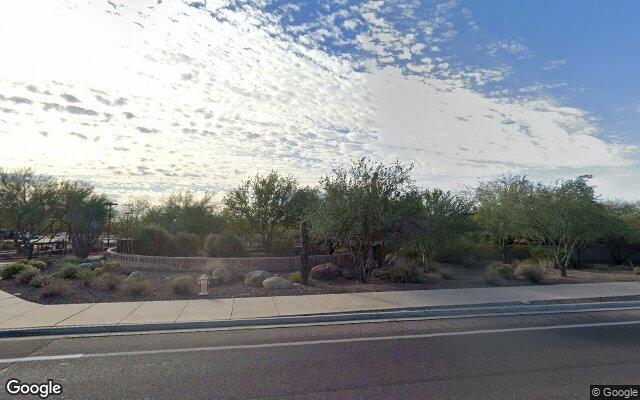
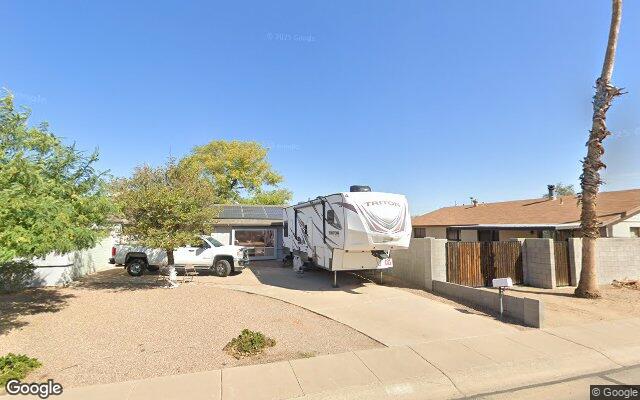
A large home, reviewed on public record.
© Google Street View
Compared to 75 Arizona facilities with a similar number of beds.
Care · 36-month window. Higher percentile = better performance on inspection record. Source: Arizona Dept. of Health Services · Bureau of Residential Facilities Licensing.
among peers to rank.
on file.
Rankings based on 36-month ADHS inspection data. Severity and frequency: fewer citations = higher percentile. Repeat rate: lower repeat citation share = higher percentile.
Citation history, plotted month by month.
10 deficiencies on record. Each bar is a month with a citation.
Finding distribution
10 total · 36 monthsScope × Severity (CMS A–L)
Every inspection visit, verbatim.
5 inspections in the public record, most recent first. Plain-language summaries open first — click into any row for the full citation text.
2026-02-25Complaint InvestigationNo findings
2025-12-01Complaint InvestigationA.A.C. · 4 findings
“Based on record review and interview, the assisted living center failed to maintain a standardized form for each resident that included the information prescribed in subsection A of this section, except for the information prescribed in subsection A, paragraph 1 of this section, which shall be provided at the time the emergency responder was contacted. Findings include: 1 . A review of R1's, R2's, R3's, R4's, R5's, R6's and R7's medical record revealed documentation of a maintained standardized form for the emergency responder was not available for review at the time of inspection. 2 . In an interview, E1 reported the facility had standardized forms, but filled them out after calling emergency medical services, along with printing face sheets and other documents. 3 . In an exit interview, the findings were discussed with E1 and no additional information was provided.”
“Based on observation and interview, the manager failed to ensure if an assisted living facility maintained residents’ medical records electronically, that safeguards exist to prevent unauthorized access. Findings include: 1 . During an environmental inspection of the facility, the Compliance Officer observed a laptop on top of a medication cart on the second floor. The screen for the Medication Administration Record (MAR) was hidden from view. However, there was a second tab open that allowed the Compliance Officer to access resident medical records. Further inspection of the facility revealed an unlocked desktop computer located on the second floor of the facility. The Compliance Officer was able to launch internet explorer and access resident medical records. 2 . In an exit interview, the finding was discussed with E1 and no additional information was provided.”
“Based on documentation review and interview, the manager failed to ensure documentation of a disaster plan review included the time of the review, a critique of the disaster plan review, and, if applicable, recommendations for improvement. Findings include: 1 . A review of facility documentation revealed an "Annual Policy Review." The documentation included the date of the review and name of each employee participating. However, the documentation did not include a time of the review, any critiques of the review, and any recommendations of improvement, if applicable. 2 . In an exit interview, the findings were discussed with E1 and no additional information was provided.”
“Based on observation and interview, the manager failed to ensure poisonous or toxic materials stored by the assisted living facility were inaccessible to residents. Findings include: 1 . During an environmental inspection of the facility, the Compliance Officers observed a container of "Tide" laundry detergent located in an unlocked cabinet of an unlocked laundry room on the second floor of the facility. 2 . In an exit interview, the findings were discussed with E1 and no additional information was provided.”
2025-04-01Complaint InvestigationNo findings
2025-03-19Complaint InvestigationHigh Risk · 3 findings
“J. If a manager has a reasonable basis, according to A.R.S. § 46-454, to believe abuse, neglect or exploitation has occurred on the premises or while a resident is receiving services from an assisted living facility's manager, caregiver, or assistant caregiver, the manager shall: 5. Initiate an investigation of the suspected abuse, neglect, or exploitation and document the following information within five working days after the report required in subsection (J)(2): a. The dates, times, and description of the suspected abuse, neglect, or exploitation; b. A description of any injury to the resident related to the suspected abuse or neglect and any change to the resident's physical, cognitive, functional, or emotional condition; c. The names of witnesses to the suspected abuse, neglect, or exploitation; and d. The actions taken by the manager to prevent the suspected abuse, neglect, or exploitation from occurring in the future; and”
“A. A manager shall ensure that: 5. A resident's medical record is protected from loss, damage, or unauthorized use.”
“A. A manager shall ensure that: 4. A disaster drill for employees is conducted on each shift at least once every three months and documented;”
2024-12-04Complaint InvestigationHigh Risk · 3 findings
“Based on interview and documentation review, if a manager had a reasonable basis, according to A.R.S. \'a7 46-454, to believe abuse, neglect or exploitation had occurred while a resident was receiving services from an assisted living facility, the manager failed to initiate an investigation of the suspected exploitation and document the information required in R9-10-803.J.5.a-d, within five working days, which posed a health and safety risk. Findings include: 1. In an interview, R5 reported to the Compliance Officers that APS had come out to interview R5 regarding a family matter that involved finances. R5 reported that APS told R5 a detective would be coming out to interview R5 sometime in the future. R5 reported R5 had shared this information with the assisted living facility and wished there was more the facility could do to help R5. 2. In an interview, when asked for additional information regarding the incident with R5, E1 reported that APS had come to the assisted living home on November 7, 2024, to speak with R5. Per E1, APS reported to E1 that R5 had requested a welfare check of R5's daughter because R5 could not get in contact with her. E1 answered some billing questions for APS. Per E1, APS came out for a follow-up visit to meet with R5 a short time later but E1 was not available to talk with APS. However, E1 reported that APS reported there was no need to speak with E1 regarding the follow-up visit. 3. The Compliance Officers asked E1 if E1 initiated an internal investigation of the suspected abuse, neglect, or exploitation and documented the information required in subsection (J)(5) within five working days of APS coming to the facility on November 7, 2024. E1 reported E1 did not know E1 was required to conduct an investigation based on the information reported back to E1 from APS, and therefore an investigation had not been conducted. However, when asked, E1 acknowledged that APS coming to the facility to interview R5 was a reasonable basis to believe abuse, neglect, or exploitation could have occurred. E1 acknowledged the manager failed to conduct an investigation and document the information required in subsection (J)(5) within five working days of having a reasonable basis to believe abuse, neglect, or exploitation could have occurred.”
“Based on observation and interview, the manager failed to ensure that a resident's medical record was protected from unauthorized use. The deficient practice posed a risk of protected, sensitive resident health information being disclosed without the resident's consent or knowledge. Findings include: 1. During an environmental inspection of the facility with E5, the Compliance Officers observed three common area work stations. Inside an unlocked cabinet at one of the stations were binders labeled "Desert Willow - Service Plans - First Floor" and "ADL Sheets - Activities of Daily Living - Desert Willow - 1st Floor." Inside an unlocked cabinet at another station were binders labeled "Desert Willow - Service Plans - Second Floor" and "ADL Sheets - Activities of Daily Living - Desert Willow - 2nd Floor." On a counter at the third work station was a binder labeled "ADL Sheets - Activities of Daily Living - Rosewood." Inside of each of the binders were corresponding service plans and ADL's for residents at the assisted living facility. 2. In an interview, E5 reported E5 was in the process of trying to find and order appropriate locks for the cabinets. E1 and E5 acknowledged the manager failed to ensure that a resident's medical record was protected from potential unauthorized use.”
“Based on documentation review and interview, the manager failed to ensure that a disaster drill for employees is conducted on each shift at least once every three months and documented. The deficient practice posed a risk if employees were unable to implement a disaster plan. Findings include: 1. A review of the facility's documents revealed no documentation of disaster drills conducted on each shift at least once every three months. 2. In an interview, E5 reported E5 believed evacuation drills and fire drills counted as disaster drills as well. The Compliance Officers explained the difference between evacuation and disaster drills, as well as the reason for both. E1 and E5 acknowledged a disaster drill for employees was not conducted on each shift at least once every three months and documented.”
Other facilities in Phoenix.
Other memory care facilities near Phoenix with similar care offerings.
Contract Decoder
Family reviews
No reviews yet — be the first to share your experience