The Montecito Senior Living.
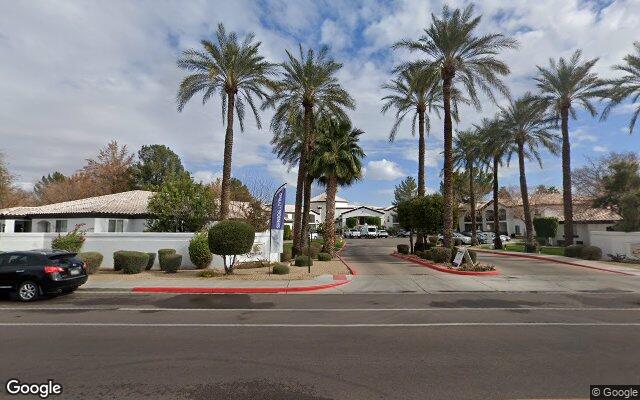
A large home, reviewed on public record.
© Google Street View
Compared to 116 Arizona facilities with a similar number of beds.
Care · 36-month window. Higher percentile = better performance on inspection record. Source: Arizona Dept. of Health Services · Bureau of Residential Facilities Licensing.
among peers to rank.
on file.
Rankings based on 36-month ADHS inspection data. Severity and frequency: fewer citations = higher percentile. Repeat rate: lower repeat citation share = higher percentile.
Citation history, plotted month by month.
13 deficiencies on record. Each bar is a month with a citation.
Finding distribution
13 total · 36 monthsScope × Severity (CMS A–L)
Every inspection visit, verbatim.
11 inspections in the public record, most recent first. Plain-language summaries open first — click into any row for the full citation text.
2026-07-14Complaint InvestigationNo findings
2026-06-09Complaint InvestigationNo findings
2026-04-21Complaint InvestigationR9-10-817.F.1 · 4 findings
“Based on record review, documentation review, and observation, the manager failed to ensure that medication was stored in a separate locked room, closet, cabinet, or self-contained unit used only for medication storage. The deficient practice posed a risk to the physical health and safety of a resident. Findings include: 1. A review of R2's medical records revealed documentation stating that "Staff perform medication management for resident. Medications will be stored in a locked med cart located in the med room." 2. During the environmental inspection, the Compliance Officer observed the following medications in R2's unit: Azelastine Hydrochloride Nasal Spray; A bottle of CVS Stool Softener plus stimulant laxative; A bottle of Bayer Chewable 81 milligram aspirin; A box containing albuterol sulfate; and Three inhalers. 3. A review of the facility's memory care policies and procedures revealed a policy titled "Environmental Safety". The policy stated, "Potentially dangerous items will be secured when not in use by Community staff. Potentially dangerous items include but are not limited to: Chemicals such as bleach, cleaners, aerosol sprays, laundry detergent, etc…. Medications" 4. In an exit interview, the findings were reviewed with E1 and E2, and no additional information was provided.”
“Based on observation and interview, the manager failed to ensure that food was protected from potential contamination. The deficient practice posed a risk for potential foodborne illnesses. Findings include: 1. During the environmental inspection, the Compliance Officer observed asparagus sitting on top of a box on a shelf and an uncovered portable sheet pan rack with raw food placed above cooked food in the walk-in refrigerator in the kitchen. 2. In an interview with E11, E11 reported that the portable sheet pan rack should have been covered. 3. In an exit interview, the findings were reviewed with E1 and E2, and no additional information was provided.”
“Based on observation and interview, the manager failed to ensure that the premises and equipment used at the assisted living facility were free from a condition or situation that may cause a resident or other individual to suffer physical injury. The deficient practice posed a risk to the physical health and safety of a resident. Findings include: 1. During the environmental inspection, the Compliance Officers observed residents ambulating independently in the facility. 2. During the environmental inspection, the Compliance Officers observed the following conditions that may cause a resident or other individual to suffer physical injury: A broken electrical panel cover in an unlocked stairwell; Three unlocked rooms on the second floor in the stairwell with ladders leading up to the roof; An unlocked room in the pool area with access to electric wiring; and An unlocked room outside of an unlocked exit with electrical wiring. 3. In interviews with E1 and E3, E1 and E3 reported that the doors to the aforementioned unlocked rooms were usually locked. 4. In an exit interview, the findings were reviewed with E1 and E2, and no additional information was provided.”
“Based on observation and interview, the manager failed to ensure that poisonous or toxic materials stored by the assisted living facility were maintained in labeled containers in a locked area separate from food preparation and storage, dining areas, and medications and were inaccessible to residents. The deficient practice posed a risk to the physical health and safety of a resident. Findings include: 1. During an environmental inspection, the Compliance Officer observed a bottle of caulk in an unlocked mechanical room and two cans of paint in an unlocked mechanical room in the pool area. 2. In an interview with E3, E3 reported that the unlocked doors to the aforementioned mechanical rooms should be locked. 3. In an exit interview, the findings were reviewed with E1 and E2, and no additional information was provided.”
2026-01-02Complaint InvestigationNo findings
2025-11-14Complaint InvestigationNo findings
2025-10-09Complaint InvestigationR9-10-803.A.10 · 2 findings
“Based on documentation review, record review, and interview, the governing authority failed to ensure the health, safety, or welfare of a resident was not placed at risk of harm. The deficient practice posed a risk as the facility was unable to meet a resident's needs, which resulted in harm. Findings include: 1. A review of facility documentation revealed a facility investigation report. The report stated, "On the evening of September 10, 2025, between 7:00–8:00 PM, [R2] experienced a fall. Med Tech [E3], on duty at the time, assisted [R2] to the couch. It was reported to [E3] that [R2] was in pain; however, no treatment was provided, and no communication regarding the fall or [R2's] pain was passed on to the night shift. [E2] , the night shift Med Tech, was unaware of the fall but did assess [R2] when [R2] later expressed pain. [E2] administered a PRN dose of lorazepam, which helped [R2] sleep temporarily. Around 4:00 AM, [R2] awoke again complaining of continued pain. [E2] comforted [R2] but did not notify the on-call physician or the Health Services Director. When [E4] arrived for the AM shift, [E4] promptly assessed the situation, called 911, and [R2] was transported to the ER early on September 11. [R2] is currently receiving care outside the community and has been diagnosed with a fracture... A meeting with [R3] was held on September 15 at 4:00 PM to provide clarification about [R2's] condition overnight and to review what had occurred. It was determined that [E3] was aware of [R2's] pain following [R2's] fall but failed to report it to the next shift..." 2. A review of facility policies and procedures revealed a policy titled "C15 Falls," the policy stated, "2. If a resident falls, Resident Care Associates are instructed to summon immediate assistance from the Health & Wellness Director or Med Aide/Tech on duty. a. Resident Care Associates will not move the resident, except to protect against further injury, as in the case of a dangerous environment. b. The Health & Wellness Director or Med Aide/Tech will perform a brief overview and inspection for head injury, bleeding, or obvious deformities. c. The Health & Wellness Director or Med Aide/Tech checks for range of motion ability. 3. The Health & Wellness Director or Resident Care Associates will call Emergency Medical Services (911) when: a. The resident has trauma resulting in deformity, exhibits any change in level of consciousness, or received obvious head or significant trauma. b. If the resident is on anticoagulants and there is a question of head trauma." 3. A review of E3's personnel record revealed a document titled "Progressive coaching" dated September 10, 2025. The document stated, "Reason for notice - Policy violation: Failure to report and record proper pain assessment according to the policy and procedure of falls/Pain." A further review revealed E3 was placed on a three-day suspension and, following the conclusion of the investigation, will also be terminated. 4. A review of E2's personnel record revealed a document titled "Progressive coaching" dated September 16, 2025. The document stated, "Reason for notice - Policy violation: Failure to report and record pain. [E2] did not contact supervisor when resident or contact physician [E2] failed to document and stated to next resident didn't fall on [E2] shift so why send [E2] out." A further review revealed [E2] had been terminated for failure to take appropriate action. 5. In an exit interview, the findings were reviewed with E1, and E1 reported that the incident was immediately reported to APS, and the facility terminated both involved staff members following the investigation.”
“Based on record review and interview, the manager failed to ensure that, before providing assisted living services to a resident, a caregiver provided current documentation of valid cardiopulmonary resuscitation (CPR) training certification specific to adults for one of two personnel sampled. The deficient practice posed a risk if an employee was unable to meet a resident's needs during an emergency. Findings include: 1. A review of E3’s personnel record revealed that E3 was hired as a caregiver in November 2024 and provided physical health services to residents at the facility. The record included a CPR and first aid training certification from "AMERICAN HEALTH CARE ACADEMY, American CPR Care Association" dated November 05, 2024, and valid until November 05, 2026. However, the training certificate stated that "Internet based activity..." the CPR was online only and did not include a demonstration of the employee's ability to perform CPR. Therefore, valid documentation of current CPR certification for E3 could not be verified from the date of hire to the present. 2. A review of the website "cprcare.com" revealed the following: "American CPR Care Association Offers Internationally and nationally recognized online courses for Adult, Child, and Infant CPR certification of high quality, suitable for schools, communities, and workplaces..." 3. In a telephonic interview, a representative from the American CPR Care Association reported that the CPR course was conducted online only. 4. In an interview, E1 acknowledged E3's CPR was completed online and did not include a demonstration of E3's ability to perform CPR.”
2025-09-15Complaint InvestigationA.A.C. · 3 findings
“Based on documentation review, record review, and interview, the manager failed to ensure that an assisted living center maintained a copy of the document provided to the emergency responders and documentation of the actions required for a period of two years after the date of the emergency. The deficient practice posed a risk if the emergency responder was not aware of critical health information for the resident. Findings include: 1. A.R.S. § 36-420.04.A.1-9 states, “Emergency responders; patient information; hospitals; discharge planning; patient screenings; discharge document A. An assisted living center or assisted living home that contacts an emergency responder on behalf of a resident shall provide to the emergency responder a written document that includes all of the following: (...).” 2. A review of R1’s medical record revealed no copies of the packet given to Emergency Services (EMS) for the incident on August 29, 2025, at 1:00 pm. 3. In an interview, E3 reported that the staff did complete a packet for EMS but forgot to save a copy. 4. In an exit interview, the findings were reviewed with E3 and E4, and no additional information was provided.”
“Based on record review, documentation review, and interview, the manager failed to ensure that when a resident had an incident resulting in the resident needing medical services, a caregiver immediately notified the resident's primary care provider, for one of one resident. The deficient practice posed a health and safety risk. Findings include: 1. A review of R1’s medical record revealed the following: A progress note for August 29, 2025, at 1:00 pm stated, “Resident finished lunch in the dining area, when [R1] asked staff if [R1] could go lay down in her room. Caregiver was walking resident to [R1's] room with a chair behind [R1] for safety precautions due to new onset of weakness. Resident sat down in the chair and began to have seizure like activity, became unresponsive with shallow breathing, an shortly after lifesaving measures were started. Paramedics and POA were contacted. Once paramedics arrived on scene they took over lifesaving measures and resident was transported to Arrowhead hospital where [R1] was later pronounced deceased.” There was no documentation that the physician was notified of the August 29, 2025, incident at 1:00 pm. 2. A review of the facility’s policies and procedures revealed a policy titled “Incident Reports.” The policy stated, “Incidents are immediately reported to the resident’s family/responsible party and physician.” 3. In an interview, E3 reported not being aware whether the staff contacted R1’s physician after the incident. 4. In an exit interview, the findings were reviewed with E3 and E4, and no additional information was provided.”
“Based on record review, documentation review, and interview, the manager failed to ensure when a resident had an incident resulting in the resident needing medical services, a caregiver documented the date and time of the incident; a description of the incident; the names of individuals who observed the incident; the action taken by the caregiver; the individuals notified by the caregiver; and any action taken to prevent the incident from occurring in the future, for one of one resident. The deficient practice posed a health and safety risk. Findings include: 1. A review of R1’s medical record revealed the following: An incident report for August 29, 2025, at 11:15 am stated, “Resident was being escorted by staff to the common area when [R1] collapsed to the floor, hitting the back of [R1's] head. EMS came and assessed resident and POA declined to send resident to hospital for further evaluation. No visible injury no complaint of pain to head. POA, Physician and supervisor.” A progress note for August 29, 2025, at 1:00 pm stated, “Resident finished lunch in the dining area, when [R1] asked staff if [R1] could go lay down in [R1] room. Caregiver was walking resident to [R1] room with a chair behind [R1] for safety precaution due to new onset of weakness. Resident sat down in the chair and began to have seizure like activity, became unresponsive with shallow breathing, an shortly after lifesaving measures were started. Paramedics and POA were contacted. Once paramedics arrived on scene they took over lifesaving measures and resident was transported to Arrowhead hospital where [R1] was later pronounced deceased.” However, the progress note was missing the names of individuals who observed the incident and any action taken to prevent the incident from occurring in the future. 2. A review of the facility’s policies and procedures revealed a policy titled “Incident Reports.” The policy stated, “An Internal Occurrence Report is completed by staff for all unusual occurrences, injuries, injuries of unknown origin, and incidents.” 3. In an interview, E3 acknowledged that the progress note did not include the action taken to prevent the incident in the future. 4. In an exit interview, the findings were reviewed with E3 and E4, and no additional information was provided.”
2025-06-03Complaint InvestigationNo findings
2025-02-14Complaint InvestigationR9-10-120.F.4 · 3 findings
“Based on documentation review, record review, and interview, the manager failed to ensure an individual authorized to administer opioids documented in the resident's medical record an identification of the resident's need for the opioid before the opioid was administered, and the effect of the opioid administered, for one of two resident sampled who received an opioid. Findings include: 1. A review of facility documentation revealed a policy and procedure titled "MP31 - Pain Management and Opioid Medications" last revised December 2024. The Policy stated "f. Opioid Administration and Assistance with self-administration must include: i. Identification and documentation of the resident's pain level prior to medication using the pain scale. 1. The Pain Rating forms may be used. ii. Monitoring resident's response to medication. iii. Documenting the effectiveness of medication forty-five (45) minutes after administration in resident's record. g. Document on the MAR the resident's need, monitoring, and response to the medication. This documentation shall include: i. The name of the staff member responsible for administering/assisting the resident with the opioid medication, ii. The resident's level of pain prior to administering the medication, iii. How the resident's level of pain was assessed, iv. How the resident's response was monitored, including the time and person(s) responsible for monitoring, and v. The resulting effect of the medication on the resident." 2. A review of R9's medical record revealed a service plan for personal care services and received medication administration. A review of R9's medication orders dated February 2025 revealed "Morphine Sulf 15MG Tablet, Take 1 Tab by Mouth Twice Daily for chronic back pain." A review of R9's medication administration record (MAR) for February 2025 revealed "Morphine Sulf 15MG Tablet," was documented as administered. However, documentation to include an identification of R9's need for the opioid before the opioid was administered and the effectiveness of the opioid administered was not available for review. 3. A review of R9's medical record revealed no documentation stating R9 had an end of life condition or an active malignancy. 4. In an interview, E1 acknowledged R9's medical record did not contain documentation of identification of the need for the opioid before the opioid was administered, and the effectiveness of the opioid administered.”
“Based on record review, observation, and interview, the manager failed to ensure medication administered to a resident was documented in the resident's medical record, for one of eleven residents sampled receiving medication administration. The deficient practice posed a risk as medication could not be verified as administered against a medication order. Findings include: 1. A review of R11's medical record revealed a signed medication order dated January 13, 2025. The medication order stated the following: "Insulin Lispro (1 Unit Dial) 100 UNIT/ML Solution Pen-injector Subcutaneous sig: inject insulin SQ based on sliding scale three times a day after meals, inject SQ 2 units if BS is 151-199, 3 units if BS is 200-249, 4 units if BS is 250-299, 5 units if BS is 300-349, 6 units 350-399, call PCP if BS is greater than 400." 2. A review of R11's medical record revealed a February 2025 medication administration record (MAR) that showed Insulin Lispro (1 Unit Dial) 100 UNIT/ML was administered from February 01, 2025, to the present and R11's blood sugar reading was taken at 12:00 PM, 4:00 PM and 8:00 AM. However, documentation was not available showing how many units of insulin were administered on the days listed above according to the medication order. 3. During the environmental tour with E1, the Compliance Officer observed Insulin Lispro (1 Unit Dial) 100 UNIT/ML Solution Pen-injector was available with R11's medication. 4. In an interview, E1 reported the medication was administered per the medication order. However, the exact units that were given to the resident were not documented on the MAR.”
“Based on documentation review, observation, and interview, the manager failed to ensure poisonous or toxic materials stored by the assisted living facility were maintained in a locked area, labeled and inaccessible to residents. The deficient practice posed a risk to the physical health and safety of a resident. Findings include: 1. A review of Department records revealed the facility was licensed to provide directed care services. 2. The Compliance Officer observed multiple ambulatory residents. 3. During the environmental tour with E1, the Compliance Officer observed the following poisonous and toxic materials in an unlocked kitchen pantry cabinet in the secured memory care unit: - one Lysol Clean & Fresh Multi-Surface Cleaner, 144 Oz Bottle - one Pine-Sol Cleaner Lemon Scent, 80 oz Bottle 4. In an interview, E1 acknowledged poisonous and toxic materials stored by the assisted living facility were not maintained in a locked area inaccessible to residents.”
2024-12-13Complaint InvestigationNo findings
2024-05-06Complaint InvestigationA.A.C. · 1 finding
“Based on record review, documentation review, and interview, the manager failed to ensure the facility had sufficient caregivers with the qualifications, skills, and knowledge necessary to provide the assisted living services in the facility's scope of services, to meet the needs of a resident, and to ensure the health and safety of a resident. The deficient practice posed a health and safety risk to a resident, who suffered an arm fracture during a transfer, by a caregiver. Findings include: 1. In documentation review, the Department received notification from O1, which documented, "... has only lived a facility two days. Is Bedbound, has left sided weakness/paralysis. Facility staff did not use lift provided by family for transfers. A single staff member responded to patient when ... called to use the bathroom - did not use the lift - resulted in patient injuring ... dangling arm - as it is paralyzed. Pt complained of pain - was given ice - hours later they called 911 - after pt ' s son requested pt be sent to ER where it was determined left arm was broken during incident. Patient also shared earlier that night same staff member witnessed pt hitting ... head on wall during transfer and also did not address head injury -patient has bruise to right side of her head, left arm fracture confirmed by radiologist. right sided head bruising near eyebrow." 2. In record review, R1's medical record included documentation as follows: - Note, "5/2/2024 7:42 am... Incident... resident left arm has a skin tear on writs when ... was transferring back into ... wheel chair from the toilet... left arm got caught between [R1] and the wheelchair, the forearm is swollen, ice was applied incident happen around 4:30am resident asked to see the doctor today explained there is not a doctor here... it... wishes to see a doctor I would need to send out... stated ... would wait for the nurse, but ... thinks it might be broken. When asked if ... armed hurt... stated no due to it being numb. resident was asked about x 3 if ... wanted to go to the ER.. stated. want to wait for the nurse" 3. During an interview, E1 reported facility had Sara Lift brought to facility with R1; however, [E1] visited R1 at prior facility and assessed [R1] required only a one person assist with transfers. 4. During an interview, R1 reported [R1] was recovering from a recent stroke which left the left arm numb and hanging, and a weakened left let. R1 was unable move the arm or leg independently. R1 had two incidents during transfers for toileting, by a caregiver on May 2, 2024. R1 was unable to recall the caregiver name(s). During the first toileting transfer, (by one caregiver), R1 fell forward and hit forehead "on a bar, said ouch," and told the caregiver. At 4:00am, during the second toileting transfer, (by one caregiver), R1's arm got caught, "I heard a crack," and thought it was broken. "I can only use one arm to hold the bar during toileting transfer, so my other arm was just hanging." R1 told the caregiver the arm might be broken and asked the caregiver to call [R1's] son and POA, and the caregiver "shrugged it off," so R1 called ... son, who came to the facility. 5. During an interview, O2 reported R1 called [O2], and informed of the incidents and possible broken arm. At approximately 6:00am, O2 went to the facility, and observed a bump on R1's head, and R1's arm was swollen. O2 requested R1 be sent to the hospital to be treated. O2 reported the Sara Lift was brought for R1 from the rehab facility where the staff used the lift, and were able to transfer the resident with a one person assist. O1 thought the facility would either use the lift or have two persons to transfer R1. 6. In documentation review, a follow up report from the hospital documented an arm fracture and bruising on the forehead. 7. During an interview, E1 reported the facility was unaware R1 hit [R1's] head during the first toileting transfer incident, and R1's medical record did not include documentation [R1] hit head or had a bump. "No one saw a bump." E1 acknowledged the findings reported by the Compliance Officer, based on interviews, and a review of documentation, and reported that following R1's injury, the facility trained the staff on the use of the Sara Lift, and now require R1 to be transferred by two persons.”
1 older inspection from 2023 are not shown above.
Get the complete record, translated into plain language — emailed to you.
Other facilities in Peoria.
Other memory care facilities near Peoria with similar care offerings.
Contract Decoder
Family reviews
No reviews yet — be the first to share your experience