Salter Springs Assisted Living LLC.
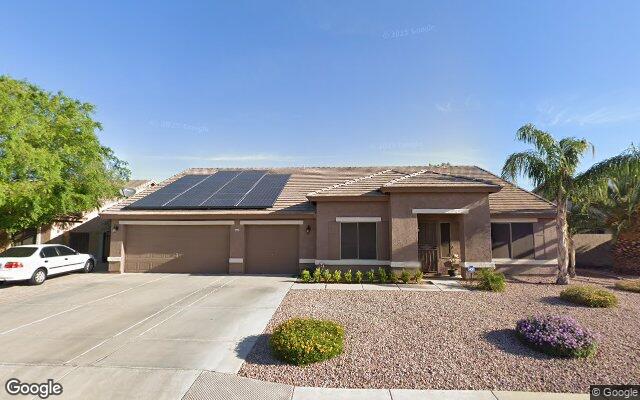
A medium home, reviewed on public record.
© Google Street View
Compared to 1,661 Arizona facilities with a similar number of beds.
Care · 36-month window. Higher percentile = better performance on inspection record. Source: Arizona Dept. of Health Services · Bureau of Residential Facilities Licensing.
among peers to rank.
Rankings based on 36-month ADHS inspection data. Severity and frequency: fewer citations = higher percentile. Repeat rate: lower repeat citation share = higher percentile.
Citation history, plotted month by month.
3 deficiencies on record. Each bar is a month with a citation.
Finding distribution
3 total · 36 monthsScope × Severity (CMS A–L)
Every inspection visit, verbatim.
4 inspections in the public record, most recent first. Plain-language summaries open first — click into any row for the full citation text.
2026-03-24Annual Compliance VisitR9-10-817.F.1 · 1 finding
“Based on observation, documentation review, and interview, the manager failed to ensure medication was stored in a separate locked room, closet, cabinet, or self-contained unit used only for medication storage. The deficient practice posed a risk to the resident’s health and safety. Findings include: 1. During an environmental tour of the facility, the Compliance Officer observed an unlocked cabinet containing resident medications. The cabinet was located in a laundry room. The Compliance Officer observed that the door leading into the laundry room was also unlocked. The cabinet contained a variety of medications in bags and boxes, including Metoprolol, Amlodipine, Cephalexin, Sertraline, Lorazepam, Olanzapine, Pantoprazole, Albuterol Sulfate, Oxybutynin, and numerous other medications. 2. A review of the facility’s policies and procedures revealed a policy titled, “Medication and Medication Services Policies and Procedures” which stated the following: · “The policy for storing medications is that the facility will store medications for residents in a locked area. · The procedures for discarding medications are: a. When a resident has terminated residency or the mediations have expired, medications purchased by the resident’s representative or family, [sic] will be offered back to the resident’s representative or family and as follows: 1) If the family refuses to accept the medications, the medications will be returned to the pharmacy where the medications were purchased; 2) If the medications are not able to be returned to the pharmacy or it is impractical to return medications, the facility will dispose of the medications; 3) The facility will dispose of the medications by mixing the medications with hydrogen peroxide and kitty litter. The mixture of medications, hydrogen peroxide and kitty litter will be bagged and put in the trash. If kitty litter and hydrogen peroxide are not available, the medications will be placed in water until they are partially dissolved, then bagged and place [sic] in the trash; 4) Disposal of medications will be documented on the Medication Disposal Log and signed and dated by the person disposing of the medications and whenever possible, signed and dated by a witness.” 2. In an interview, E1 reported the medications were stored in the laundry room for disposal. E1 also reported the laundry room door was always locked. 3. In the exit interview, the findings were reviewed with E1, and no additional information was provided.”
2025-04-15Complaint InvestigationHigh Risk · 1 finding
“Based on documentation review and interview, after the manager had a reasonable basis, according to Arizona Revised Statutes (A.R.S.) § 46-454, to believe abuse, neglect, or exploitation had occurred on the premises, the manager failed to report the suspected abuse, neglect, or exploitation, initiate an investigation of the alleged abuse, neglect, or exploitation, and maintain documentation including all requirements of this rule for at least 12 months after the date the investigation was initiated. The deficient practice posed a risk if a resident was not protected from abuse, neglect, or exploitation. Findings include: 1. In an interview, E1 reported being aware of an incident involving R1 on March 18, 2025. E1 stated that on the morning of the incident, R1 had a hospice nurse give R1 a bed bath. The hospice nurse observed bruises on R1's chest and arms, and the nurse mentioned it to the caregivers. The caregivers checked up on R1 and saw the bruises. The caregiver contacted the manager, but the incident was not reported in compliance with A.R.S. § 46-454. 2. A review of facility incident reports revealed a report created for the incident involving R1 on March 18, 2025. However, the report did not indicate that the manager or any other employee reported the suspected abuse according to A.R.S. § 46-454. 3. In an interview, E1 acknowledged the incident was not reported as required.”
2025-02-13Complaint InvestigationNo findings
2024-11-06Complaint InvestigationA.A.C. · 1 finding
“Based on observation and interview, the manager failed to ensure poisonous or toxic materials were maintained in a locked area and inaccessible to residents. The deficient practice posed a risk to the physical health and safety of a resident. Findings include: 1. The Compliance Officer observed ambulatory residents. 2. The Compliance Officer observed toxic materials stored in an unlocked cabinet located in a bedroom. This cabinet did not have a locking mechanism and was accessible to residents. The following toxic materials that were observed: - Disinfecting wipes; - A bottle of Pine-Sol multi surface cleaner; - A bottle of Great Value Toilet Bowl Cleaner; and - A spray bottle of Odoban disinfectant. 3. In an interview, E1 acknowledged the toxic materials listed above were not locked and were accessible to residents.”
1 older inspection from 2023 are not shown above.
Get the complete record, translated into plain language — emailed to you.
Other facilities in Peoria.
Other memory care facilities near Peoria with similar care offerings.
Tour Prep
Family reviews
No reviews yet — be the first to share your experience